Where is Aster restricted?
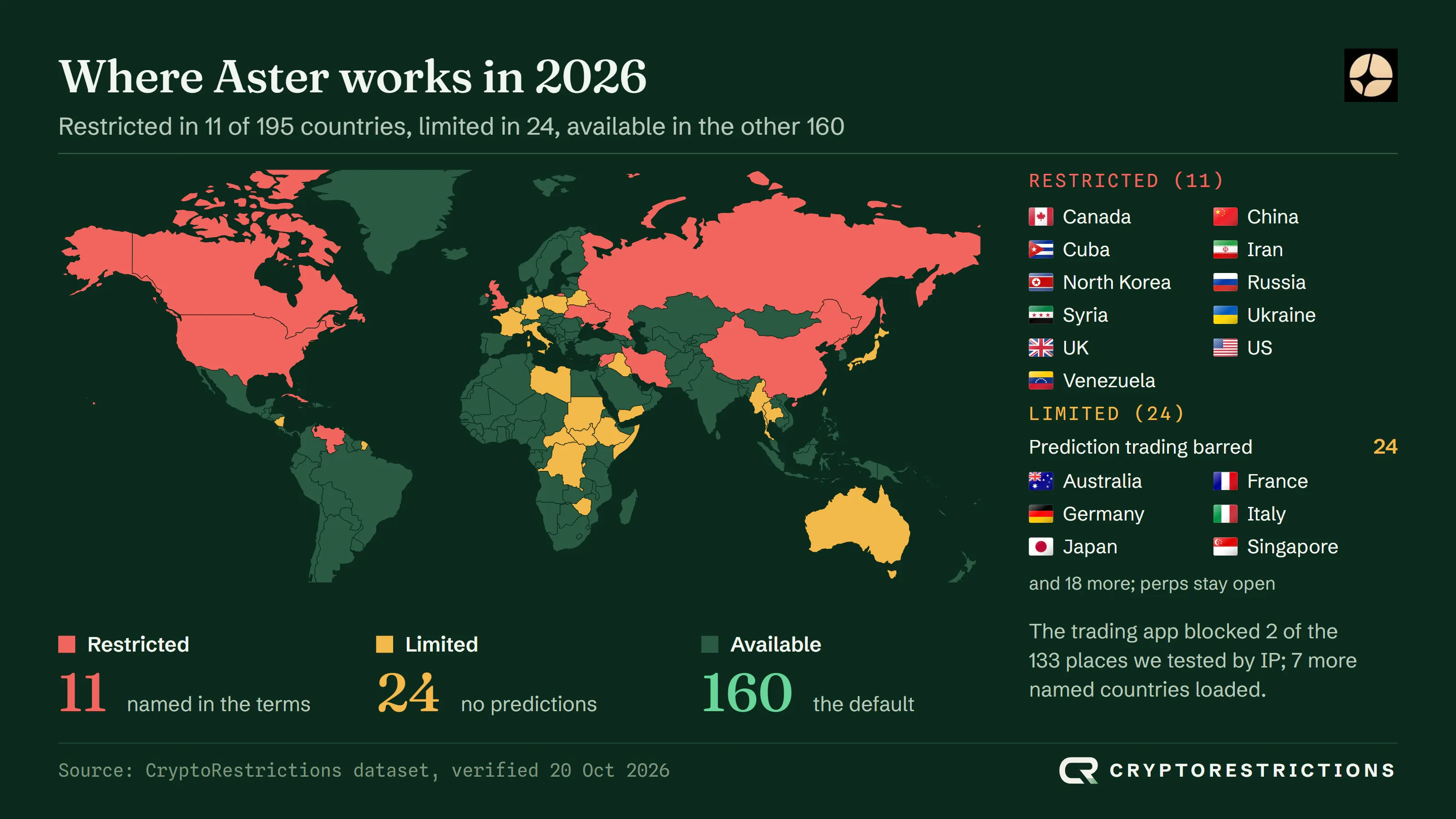
Aster is restricted in 11 of the 195 countries we cover, every one of them named in its terms: the United States, Canada, the United Kingdom, China, North Korea, Russia, Ukraine, Cuba, Iran, Venezuela and Syria.
The list sits in section 2.1 of Aster’s terms and conditions (last updated 25 February 2026), which bar anyone who lives in, is located in or is incorporated in a “Prohibited Jurisdiction”. The ban extends to places under comprehensive country-wide or regional sanctions, or designated as “terrorist supporting” by the UN, the EU, the UK or the US, but every country we track that fits those words is already named. The terms say nothing about citizenship, so an Iranian living in Germany is not barred by nationality.
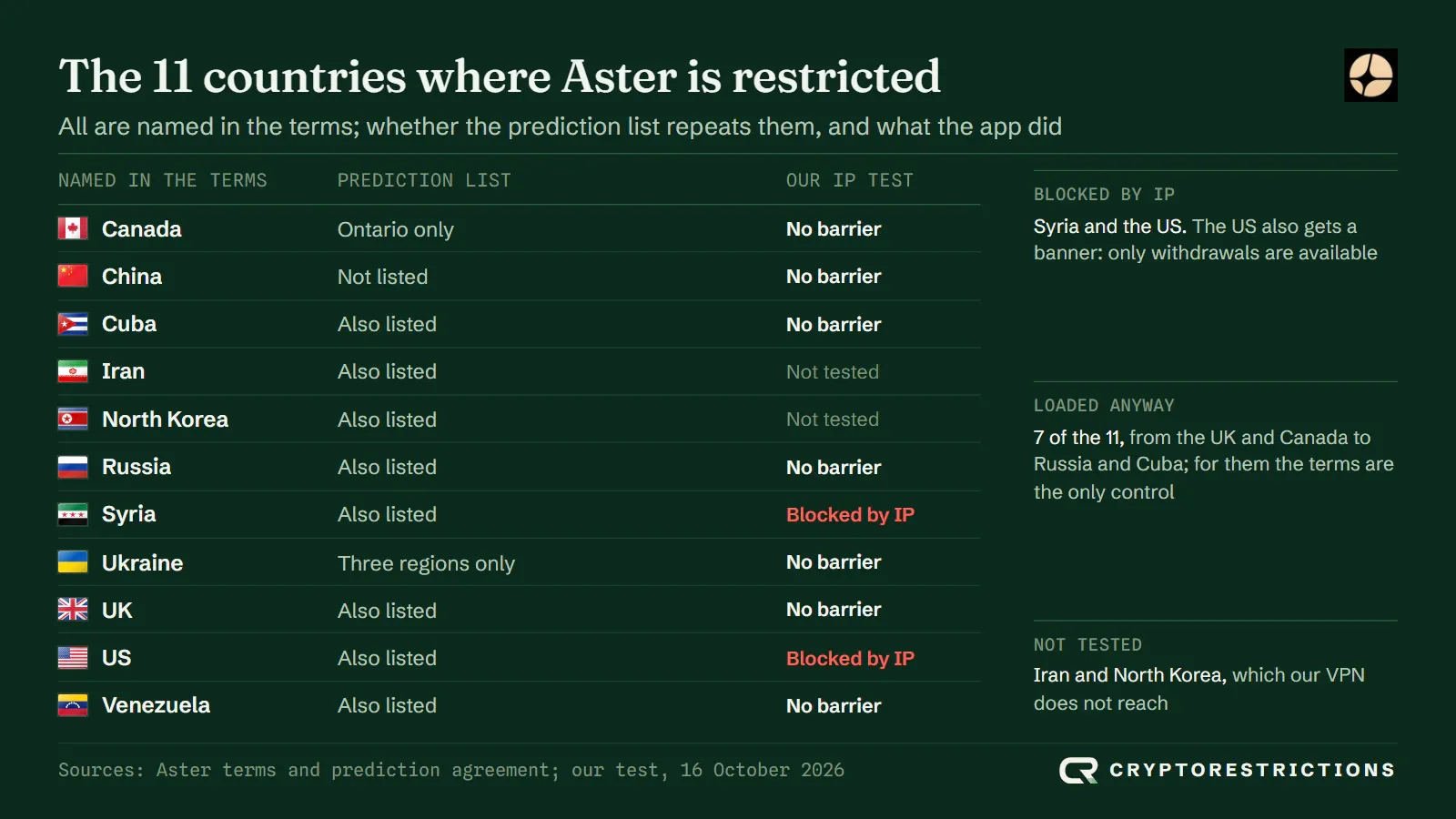
Two things set Aster’s list apart from most exchanges: it names three large regulated markets, the US, Canada and the UK, and the whole of Ukraine rather than only its occupied regions. The trading app enforces only part of it. In our test it refused US and Syrian IP addresses and let the other seven we could reach load as normal. The full list is below.
| Category | Countries | Context | Last verified |
|---|---|---|---|
| Geographic block | Named as a prohibited jurisdiction in Aster's terms; the trading app loaded with no barrier in our geo-access test. | 17 Oct 2026 | |
| Geographic block | Named as a prohibited jurisdiction in Aster's terms; the trading app also refused this location in our geo-access test. | 17 Oct 2026 | |
| Geographic block | Named as a prohibited jurisdiction in Aster's terms. | 17 Oct 2026 | |
| Geographic block | Named as a prohibited jurisdiction in Aster's terms (updated 25 February 2026); the trading app loaded with no barrier in our geo-access test. | 19 Oct 2026 |
 Iran
 North Korea
Where is Aster limited?
Aster is limited in 24 countries where its prediction trading is closed but perpetuals and spot are open, among them  Germany,
 France,
 Japan,
 Australia and
 Singapore.
Prediction trading has its own rules. Section 2.4 of the prediction user agreement (updated 2 June 2026) bars users in 34 countries and four regions, from Australia to Zimbabwe, plus Ontario, Crimea, Donetsk and Luhansk. Aster’s service region page repeats the list and says orders from those places “will be rejected”, based on IP geolocation. Eight of the 34 are already prohibited by the terms and two, Taiwan and the US Minor Outlying Islands, are territories outside our 195; the other 24 are the ones recorded here, under the rule we apply to every platform: a product the platform itself refuses in a country makes the country limited, with that product restricted. France also carries a warning: the AMF put asterdex.com on its blacklist of unauthorised crypto derivatives sites on 27 February 2026.
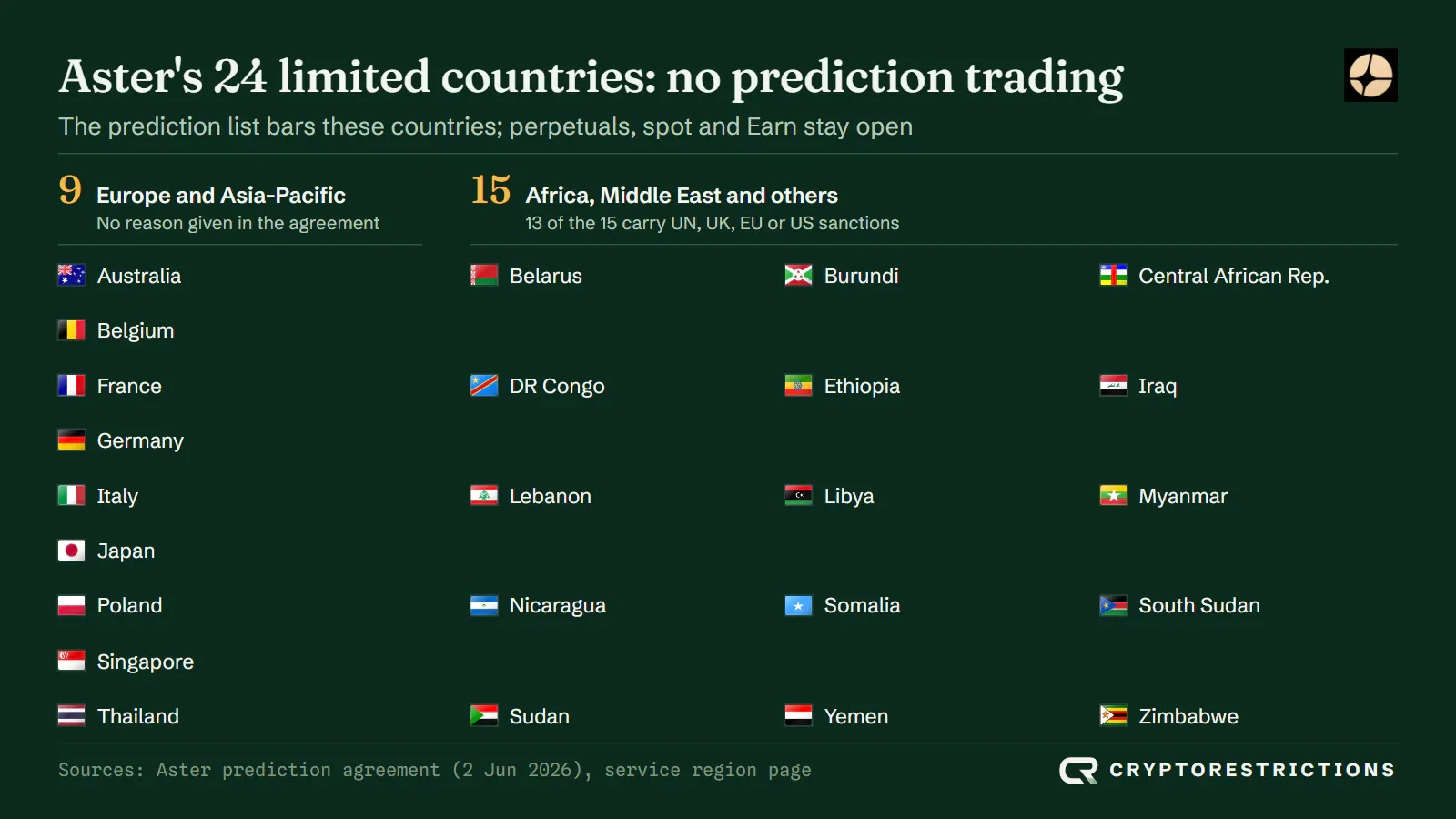
Aster gives no reason for any country on the prediction list. It mixes nine large markets in Europe and Asia-Pacific with 15 countries in Africa, the Middle East and elsewhere, 13 of them under UN, UK, EU or US sanctions. Our test cannot see this cut: the app showed its Predictions tab everywhere, even in the blocked US, because the check happens when an order is placed. The groups are below.
| Category | Countries | Context | Last verified |
|---|---|---|---|
| Partial service | Prediction trading is barred here under Aster's prediction rules; perps and spot are not. | 17 Oct 2026 | |
| Partial service | Prediction trading is barred here; perps and spot are not. The AMF blacklisted asterdex.com in February 2026 for offering crypto derivatives without authorisation. | 17 Oct 2026 |
 Belarus
 Burundi
 Central African Republic
 DR Congo
 Ethiopia
 Iraq
 Lebanon
 Libya
 Myanmar
 Nicaragua
 Somalia
 South Sudan
 Sudan
 Taiwan
 Thailand
 Yemen
 Zimbabwe
Where is Aster available?
Aster is available in the other 160 of the 195 countries we cover, from the  Netherlands and
 Spain to
 South Korea,
 Nigeria and
 Brazil.
None of them rests on a licence, because Aster holds none. In 101 the terms and prediction rules do not exclude the country and our test loaded the trading app; the other 59 are available under our coverage rule, since no Aster document excludes them and we could not test them. We found no regulator that blocks Aster in any of the 160.
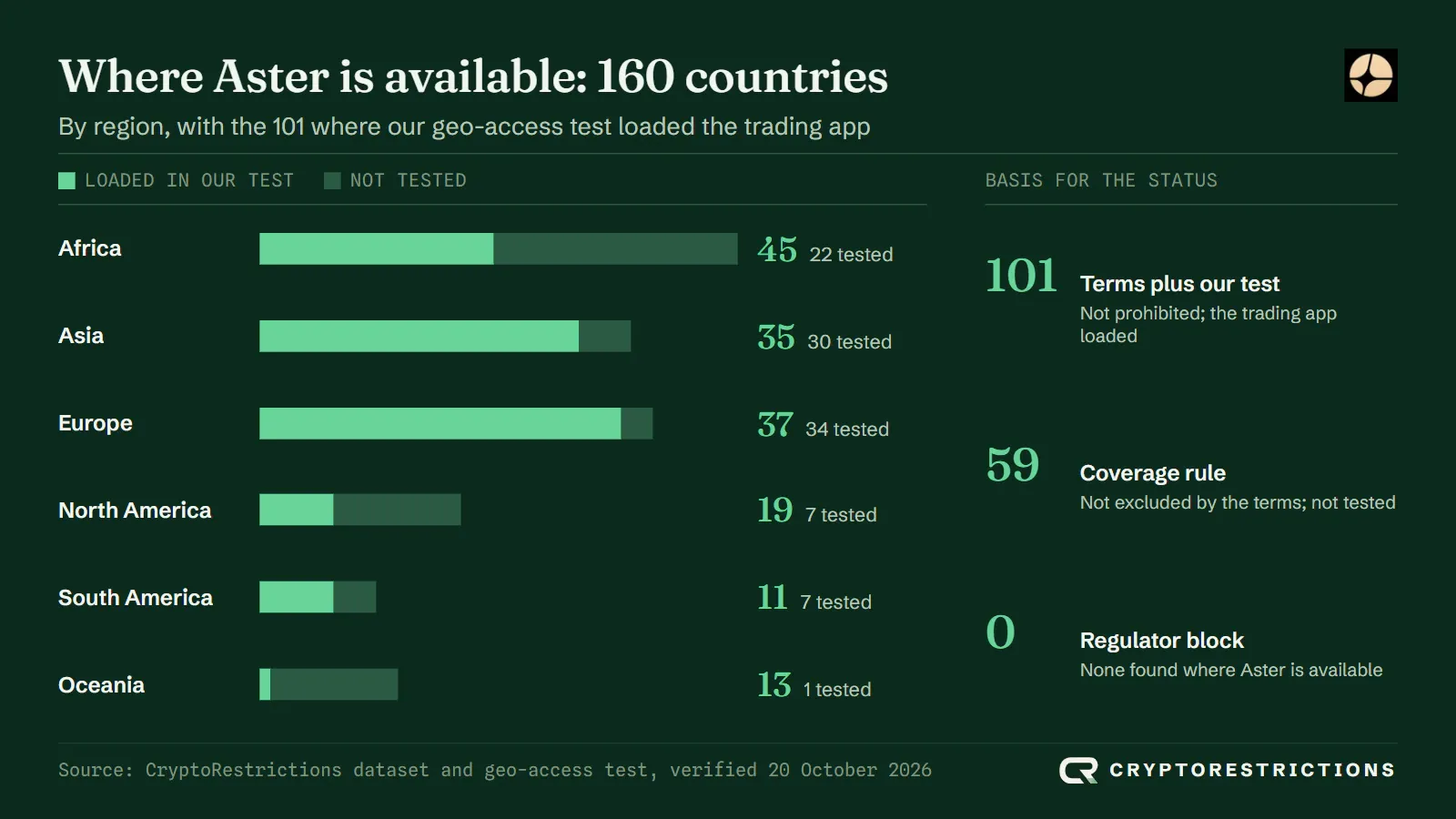
Available means Aster serves the country, not that local law allows leveraged crypto trading. The list is below.
| Category | Countries | Context | Last verified |
|---|---|---|---|
| No restriction |
| Not on Aster's prohibited-jurisdictions list; the trading app loaded in our geo-access test. | 07 Nov 2026 |
| No restriction | Not on Aster's prohibited-jurisdictions list (terms of 25 February 2026), and the trading app loaded in our geo-access test. | 19 Oct 2026 | |
| No restriction | Not on Aster's prohibited-jurisdictions list, and the trading app loaded in our geo-access test. | 07 Nov 2026 | |
| No restriction | Not on Aster's prohibited-jurisdictions list; the trading app loaded in our test. | 20 Oct 2026 | |
| No restriction | Not on Aster's prohibited-jurisdictions list. | 17 Oct 2026 |
 Argentina
 Bahrain
 Chile
 Colombia
 Costa Rica
 Cyprus
 Czechia
 Denmark
 El Salvador
 Ghana
 Hong Kong
 Hungary
 India
 Indonesia
 Israel
 Kazakhstan
 Kenya
 Liechtenstein
 Luxembourg
 Malaysia
 Morocco
 Pakistan
 Panama
 Peru
 Portugal
 Qatar
 Romania
 Saudi Arabia
 Slovakia
 South Africa
 Sweden
 Switzerland
 United Arab Emirates
 Uruguay
 Vietnam
 Dominican Republic
 Malta
Where do Aster’s visitors come from?
Prohibited countries sit near the top of both traffic estimators we checked: the United States and Russia lead one, and the US and Canada are in the other’s top five.
Similarweb puts the US at 17.96% of visits in September 2026 and Russia at 14.02%, ahead of Japan, Germany and  Austria. Semrush counts 1.1 million visits in September, 21.54% more than in August, led by
 Bangladesh at 19.73%, then Japan, the US, Canada and Germany.
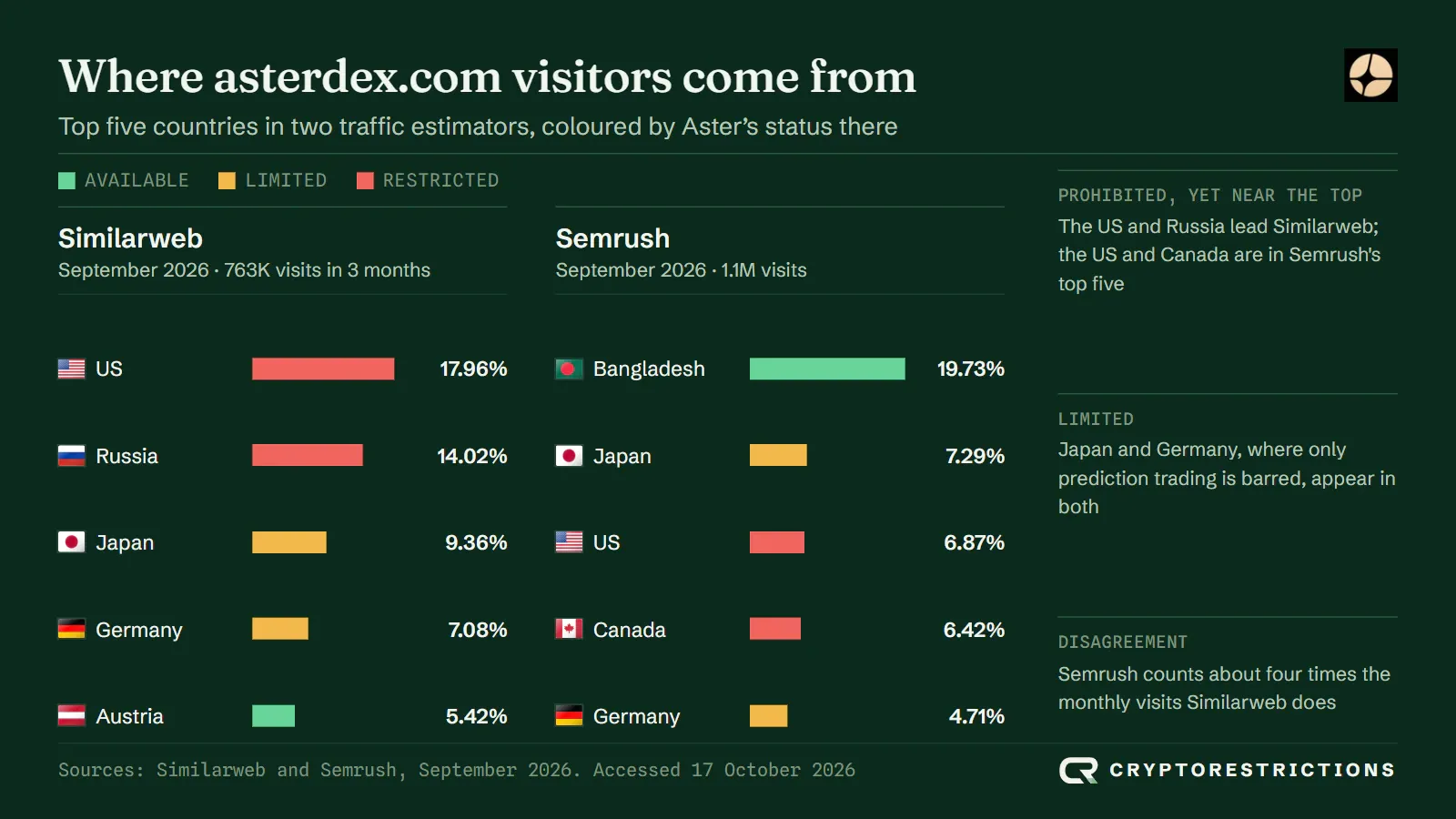
The shares are estimates and the two tools disagree on scale: Similarweb counts about 763,000 visits over three months, Semrush 1.1 million in one. Russia and Canada load the app without a barrier, so their visitors meet only the terms, not a block.
Aster geo-access test: what we saw from 133 places
The trading app blocked 2 of the 133 places we tested by IP address: the United States and Syria.
We ran the test ourselves on 16 October 2026. A browser with a VPN connected to one place at a time and loaded the asterdex.com home page and the BTCUSDT perpetual in the trading app, each time in a fresh private window with no cookies and no wallet connected. Banners were never accepted and bot checks never solved, and every run saved the page text and a screenshot.
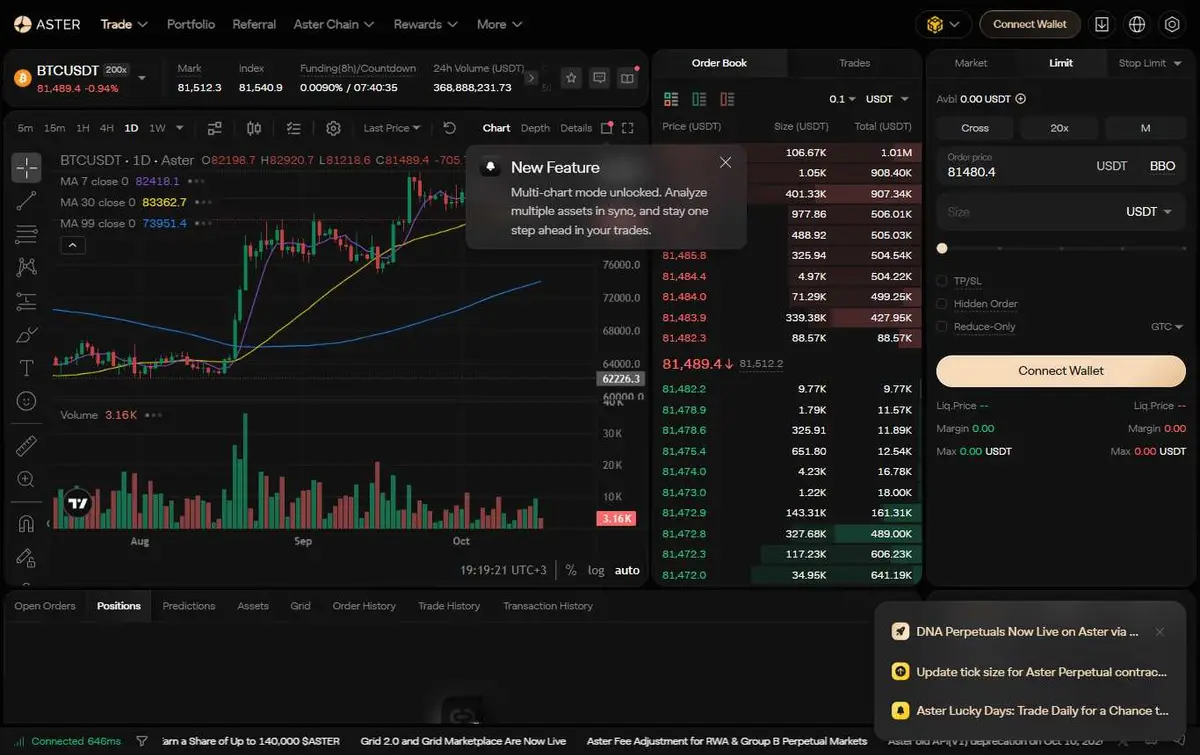
Of the 133 places, 129 are among our 195 countries and four are territories: Hong Kong, Macau, Puerto Rico and Taiwan. 61 runs used servers in the country and 72 used virtual locations, IP addresses registered to a country but hosted elsewhere. The app places visitors by where their IP address is registered: a US address was blocked, while Venezuelan and Dominican addresses hosted in Miami were not.
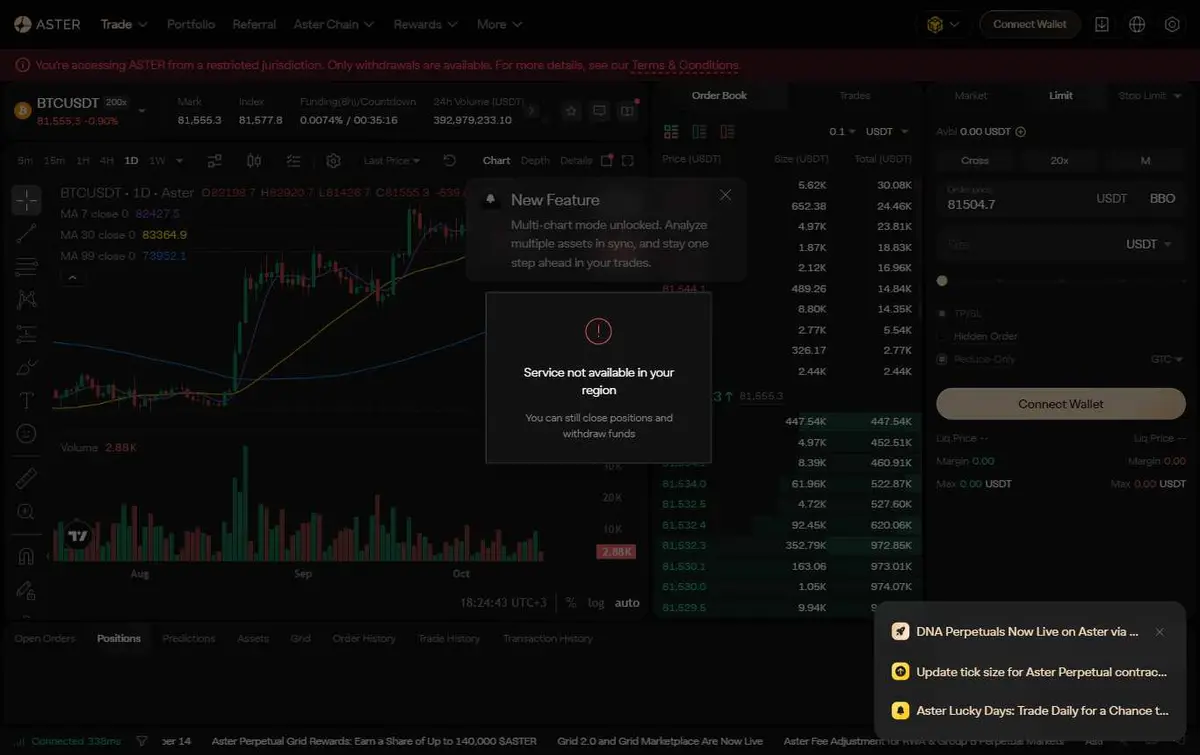
Blocked United States · Trading app
A US address: the trading app shows a red banner and a block over the chart; only withdrawals are allowed
“You're accessing ASTER from a restricted jurisdiction. Only withdrawals are available.”
No barrierUnited States · Home page
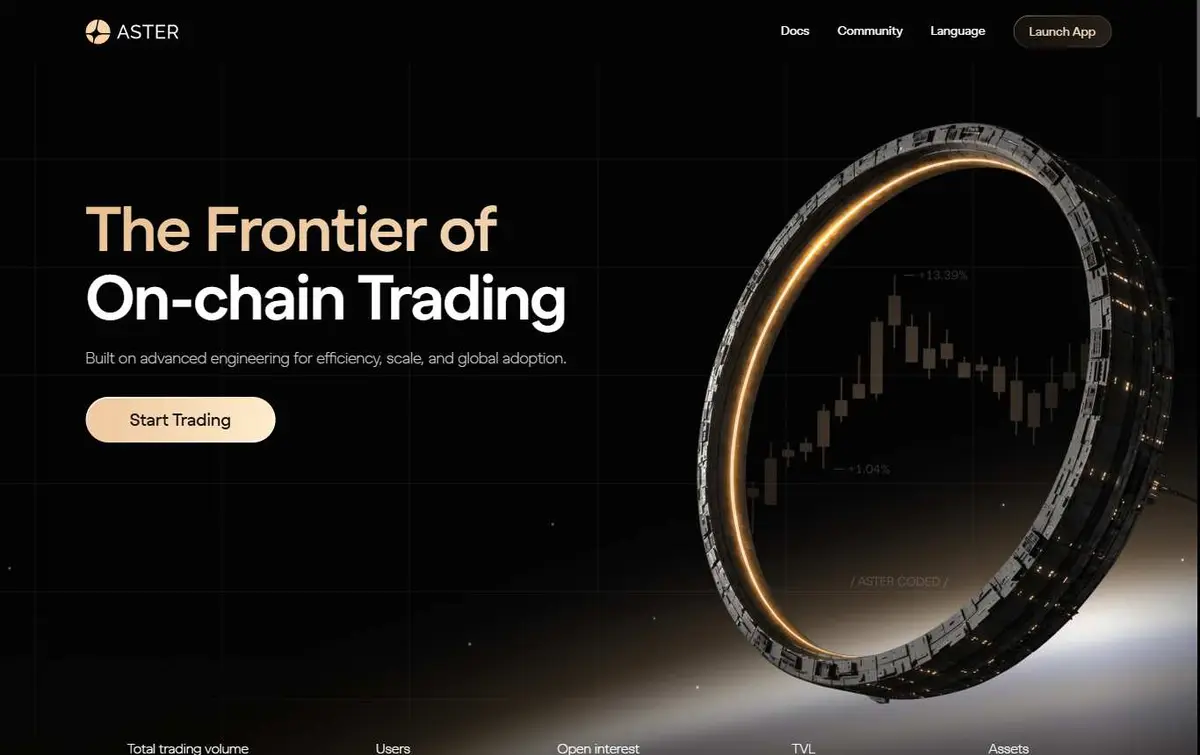
The asterdex.com home page has no gate, even from the US
Blocked Syria · Trading app
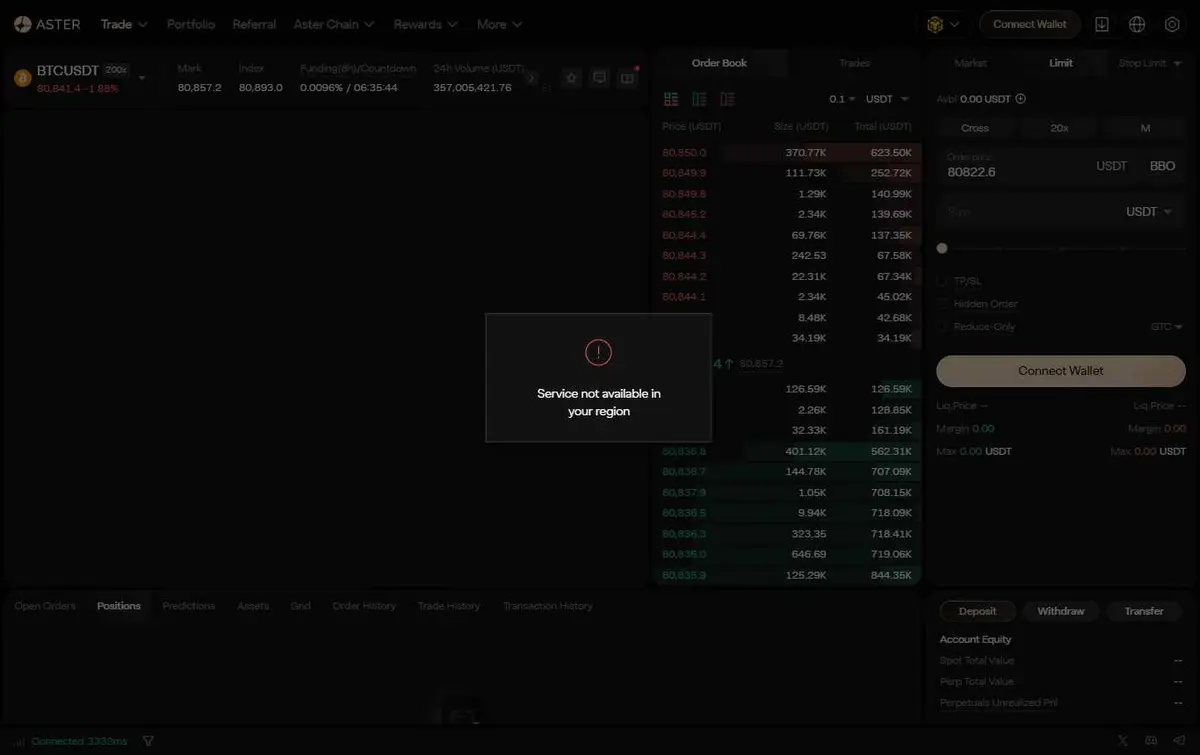
Syria: the same block over the chart, without the banner
“Service not available in your region”
No barrier United Kingdom · Trading app
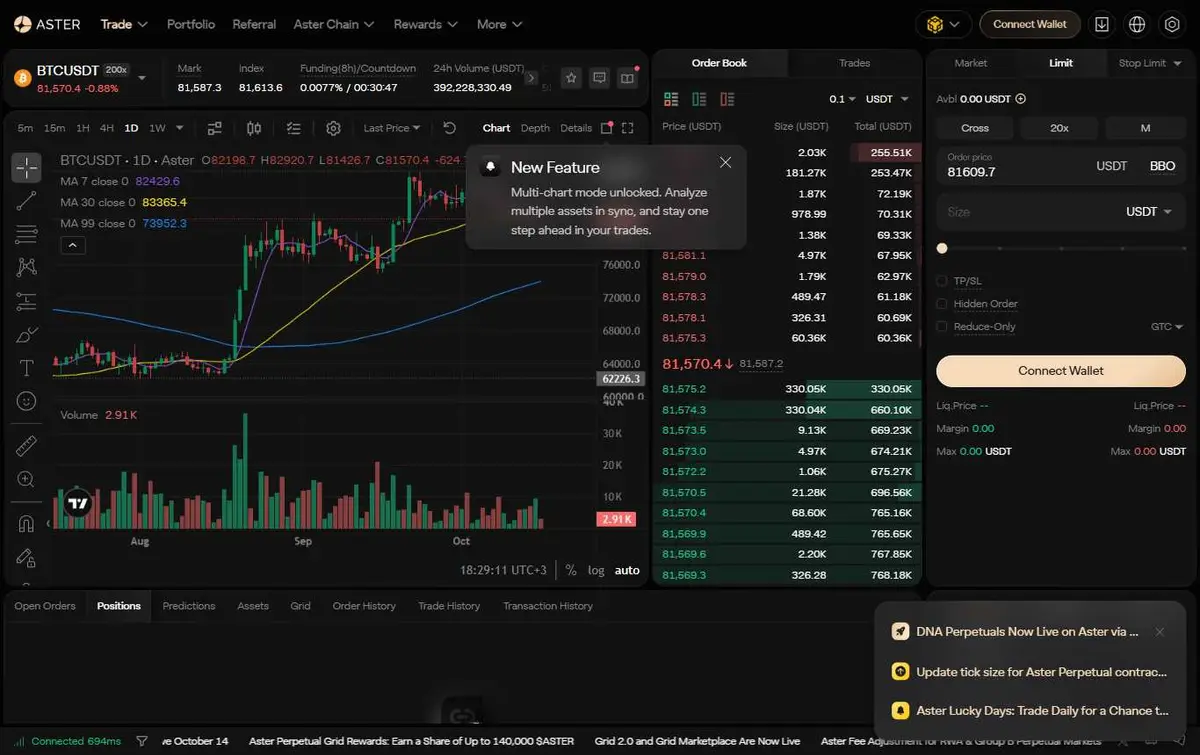
The UK is named in the terms, yet the trading app loads with no barrier
No barrier Canada · Trading app
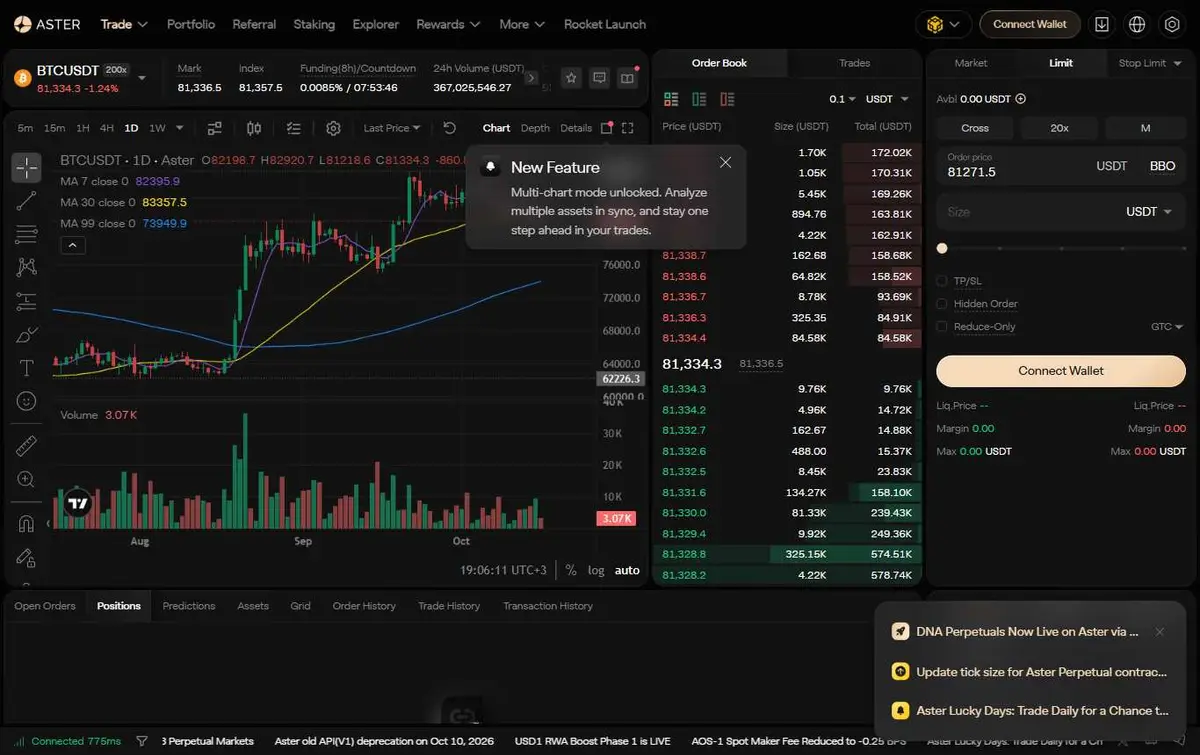
Canada, also named in the terms: no barrier
No barrier China · Trading app
China, named in the terms: the app loads in full
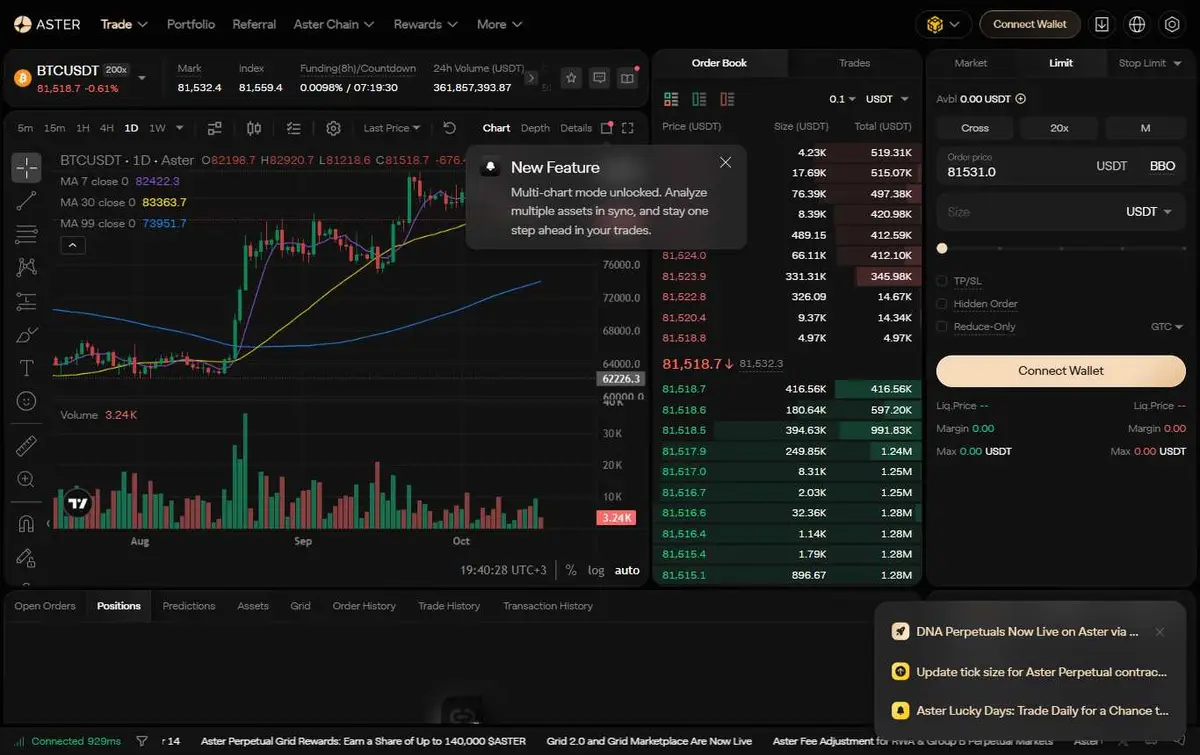
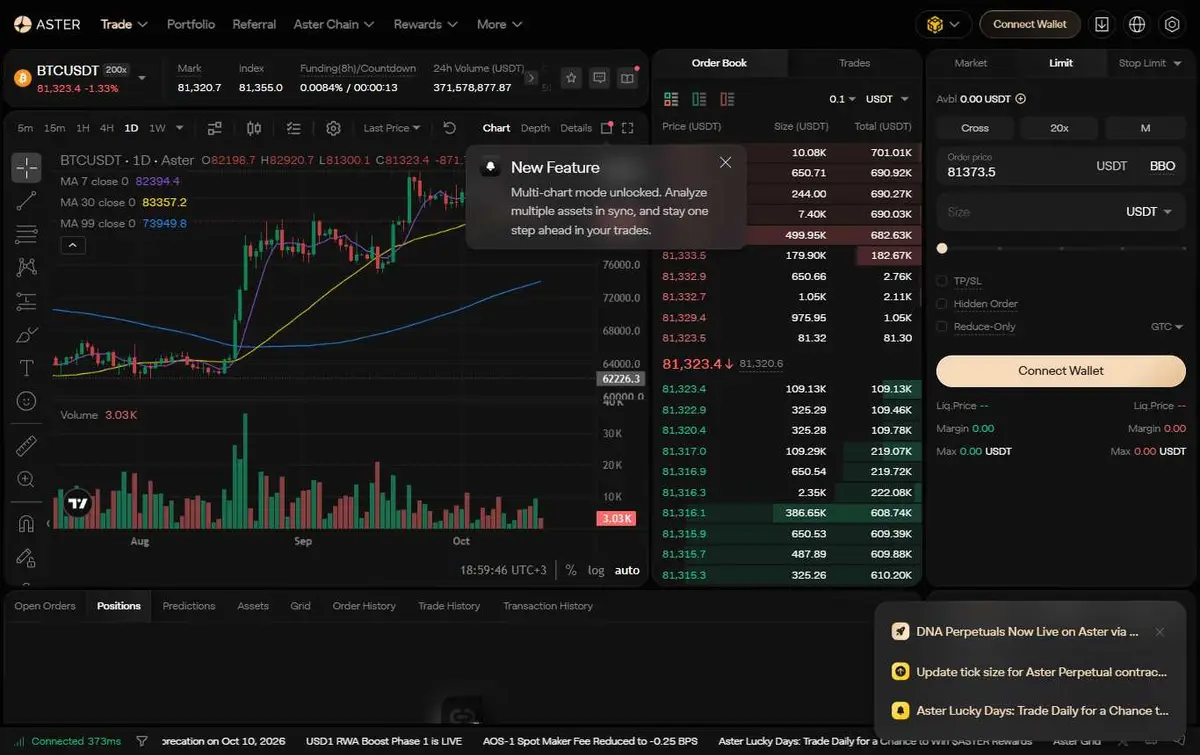
No barrier Russia · Trading app
Russia, named in the terms: no barrier from a Russian address
No barrier Ukraine · Trading app
Ukraine, named as a whole country in the terms: no barrier
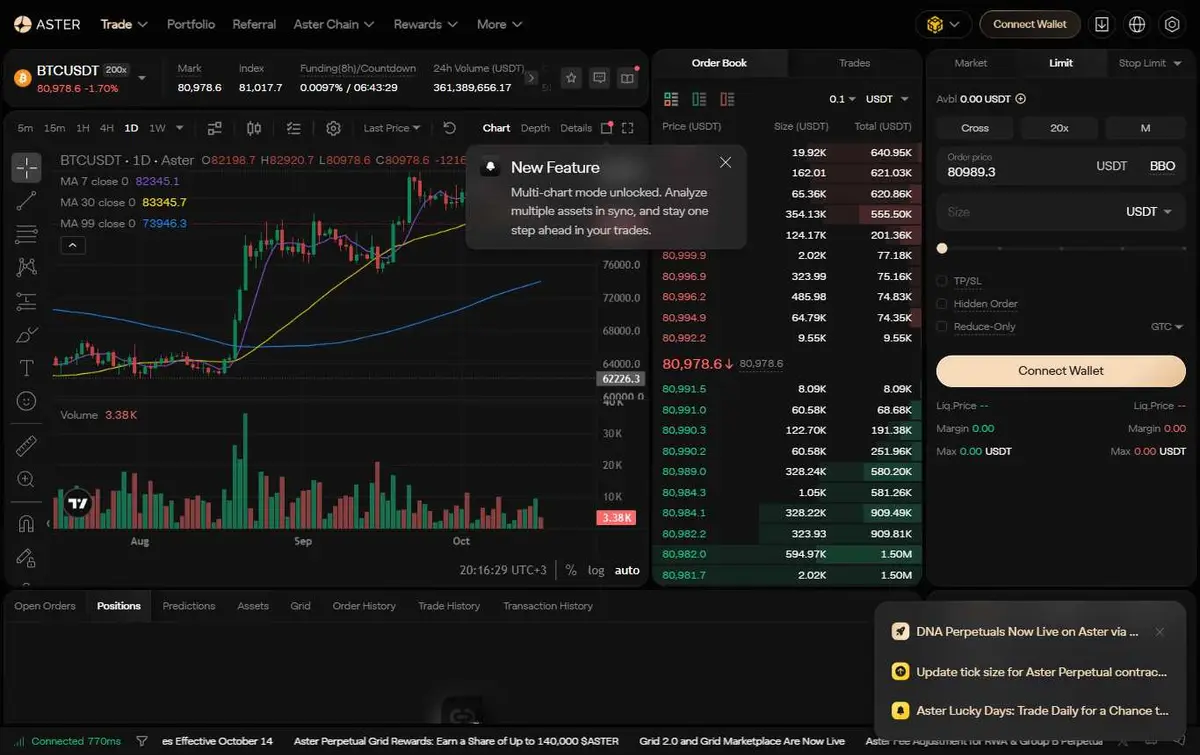
No barrier Cuba · Trading app
Cuba, under a US embargo and named in the terms: no barrier
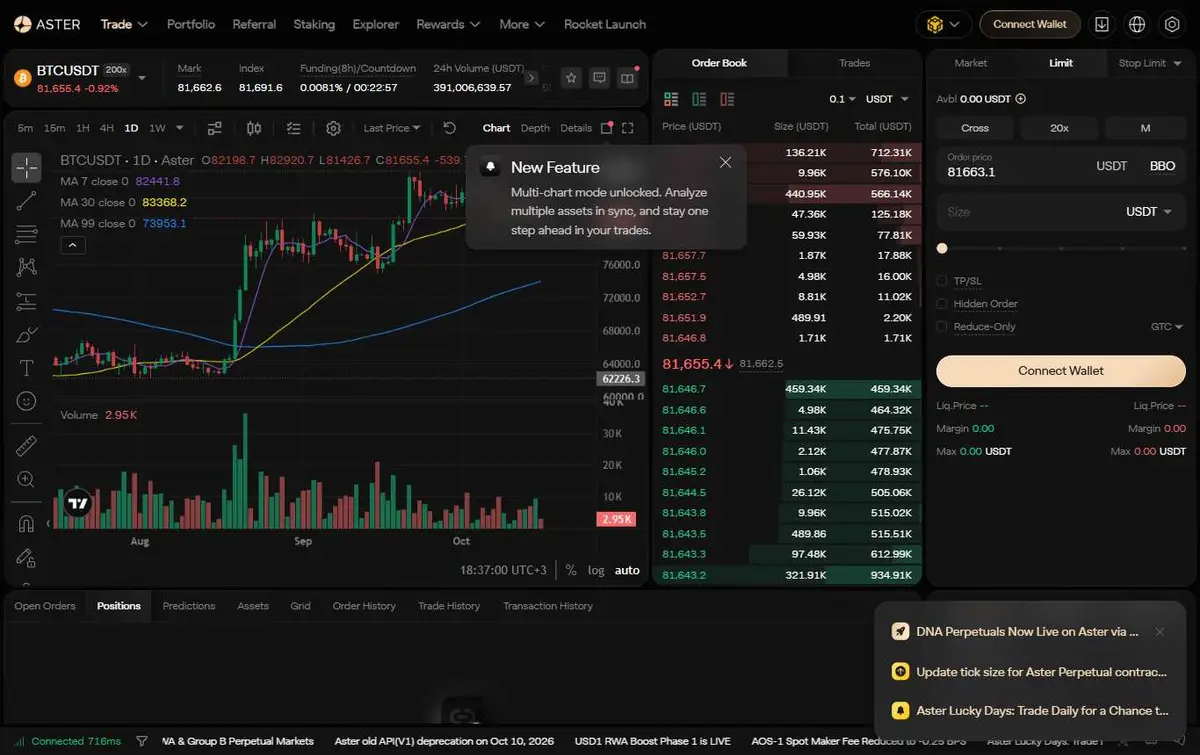
No barrierFrance · Trading app
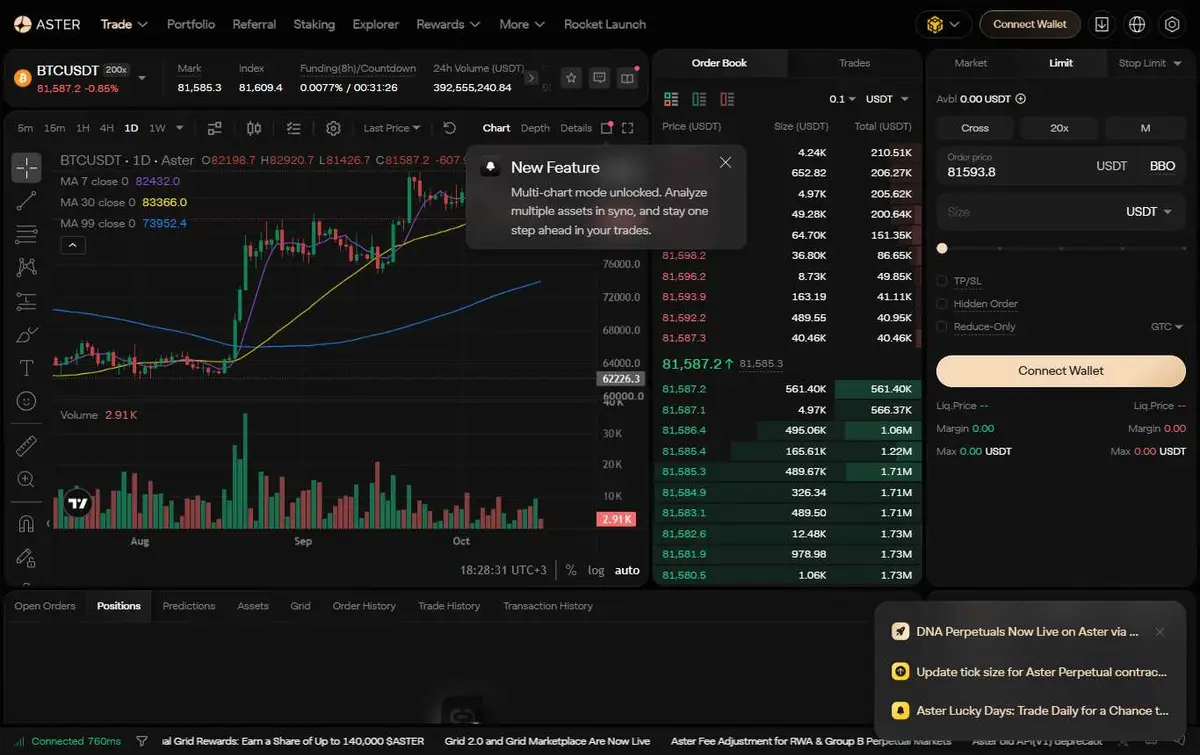
France, where prediction trading is barred: the app loads, Predictions tab included
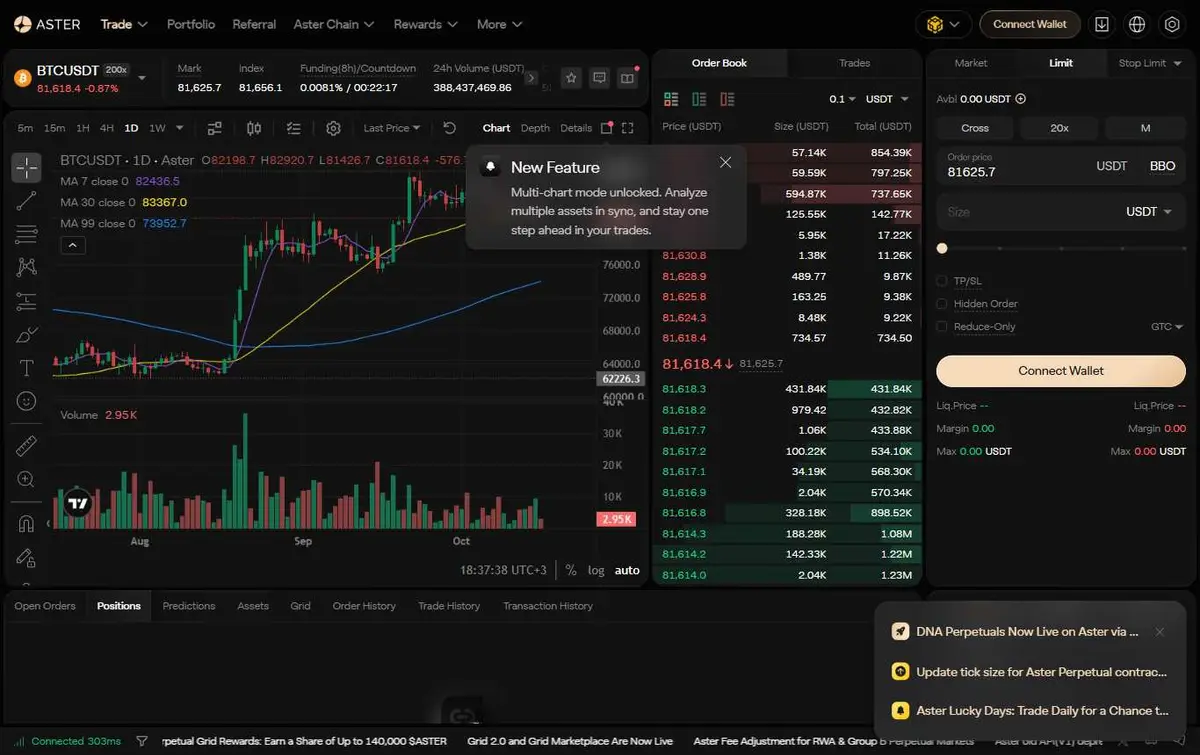
No barrierNetherlands · Trading app
The Netherlands: the trading app loads with no block
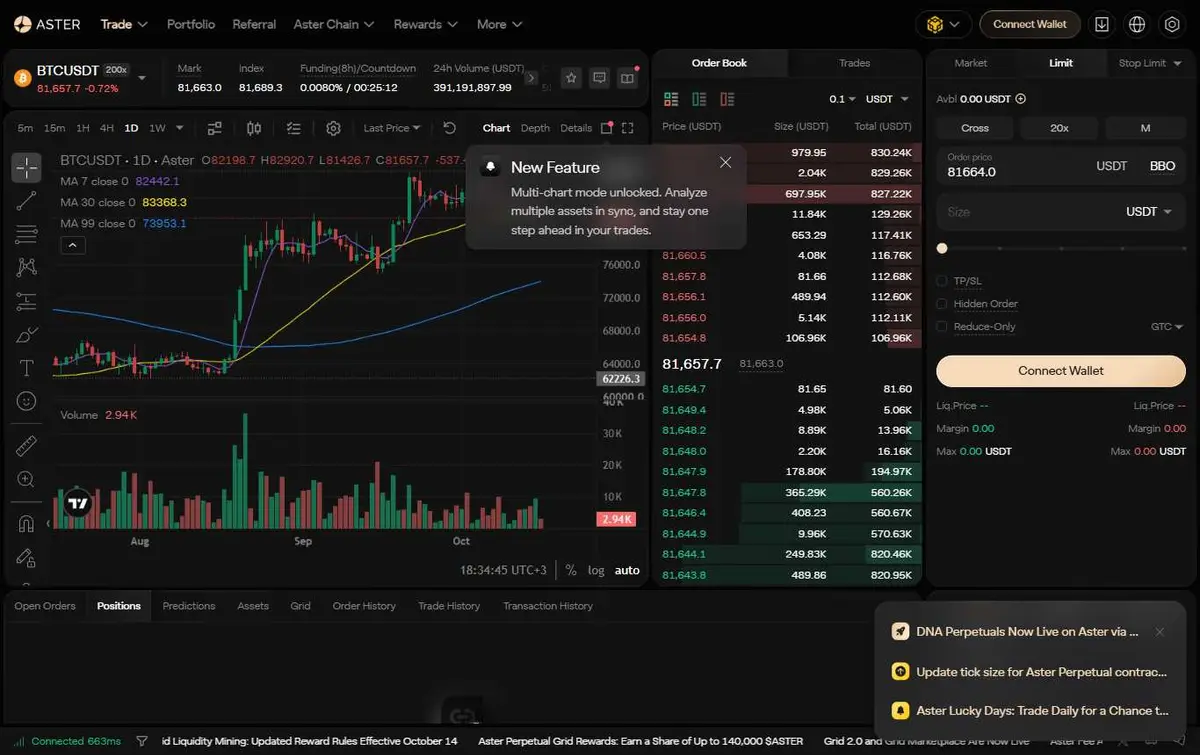
No barrier Turkey · Trading app
Turkey: the trading app loads with no notice
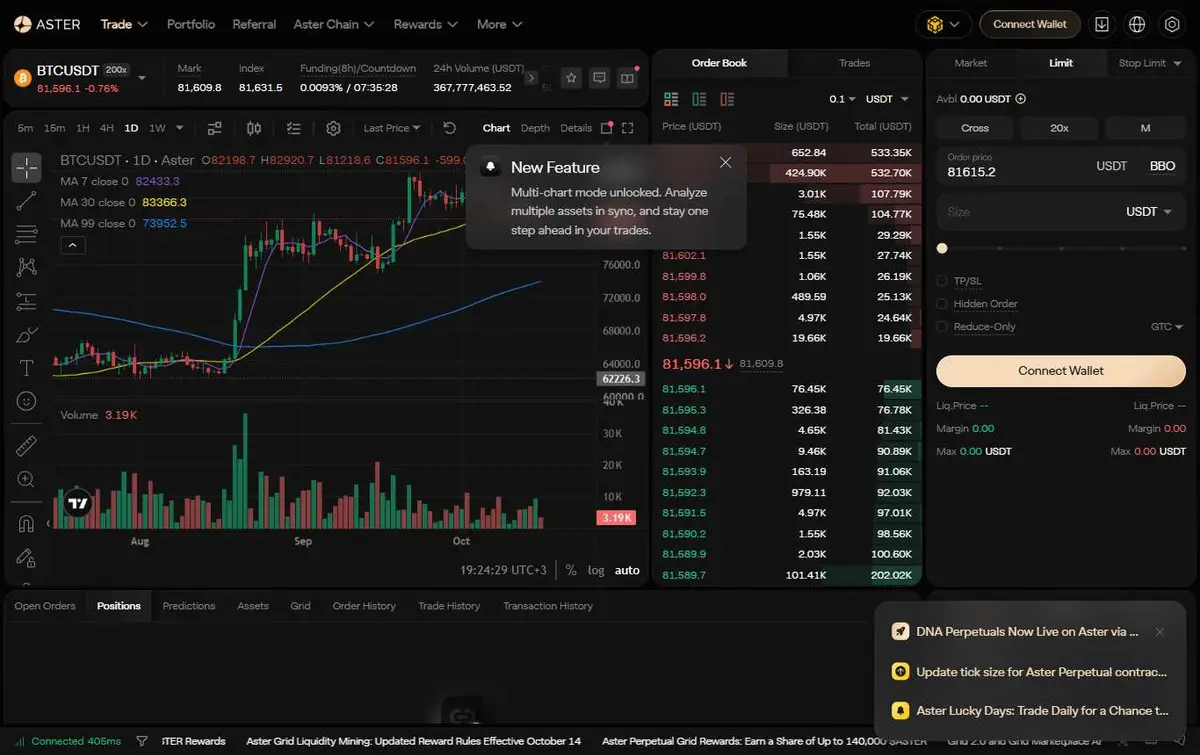
No barrier Philippines · Home page
The trading app loaded with no barrier
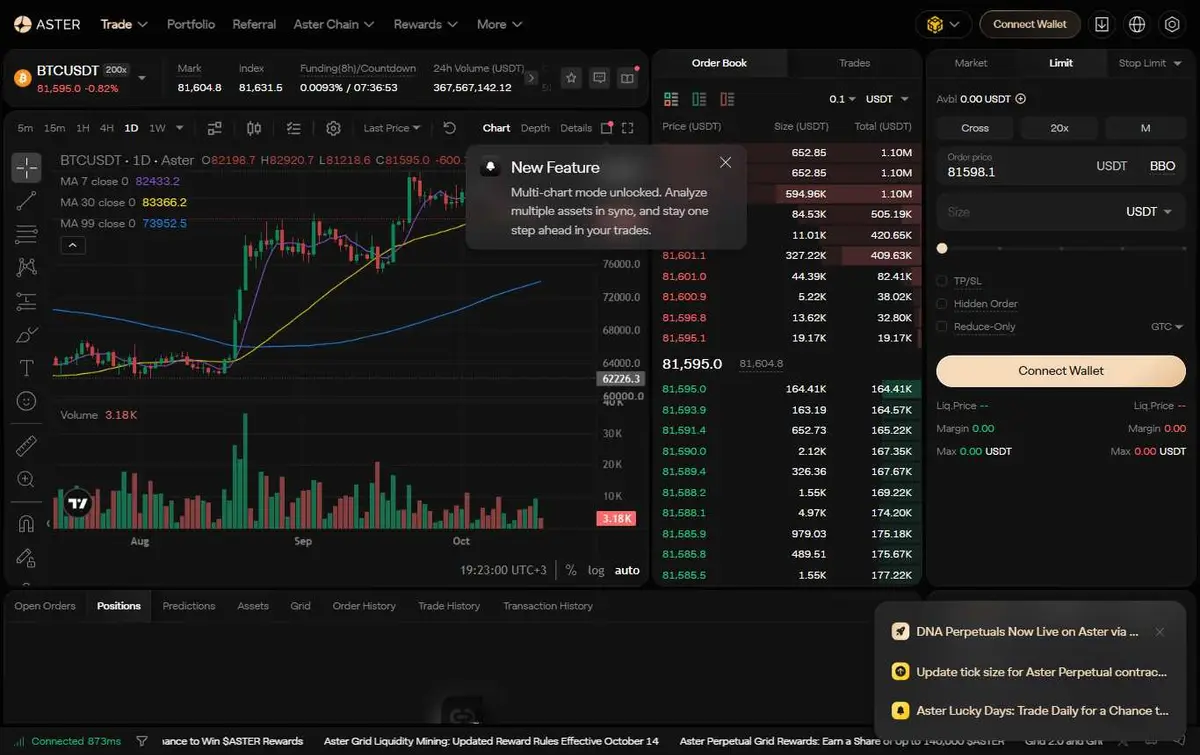
No barrier Mexico · Trading app
Mexico: the trading app loads with no barrier
“Aster”
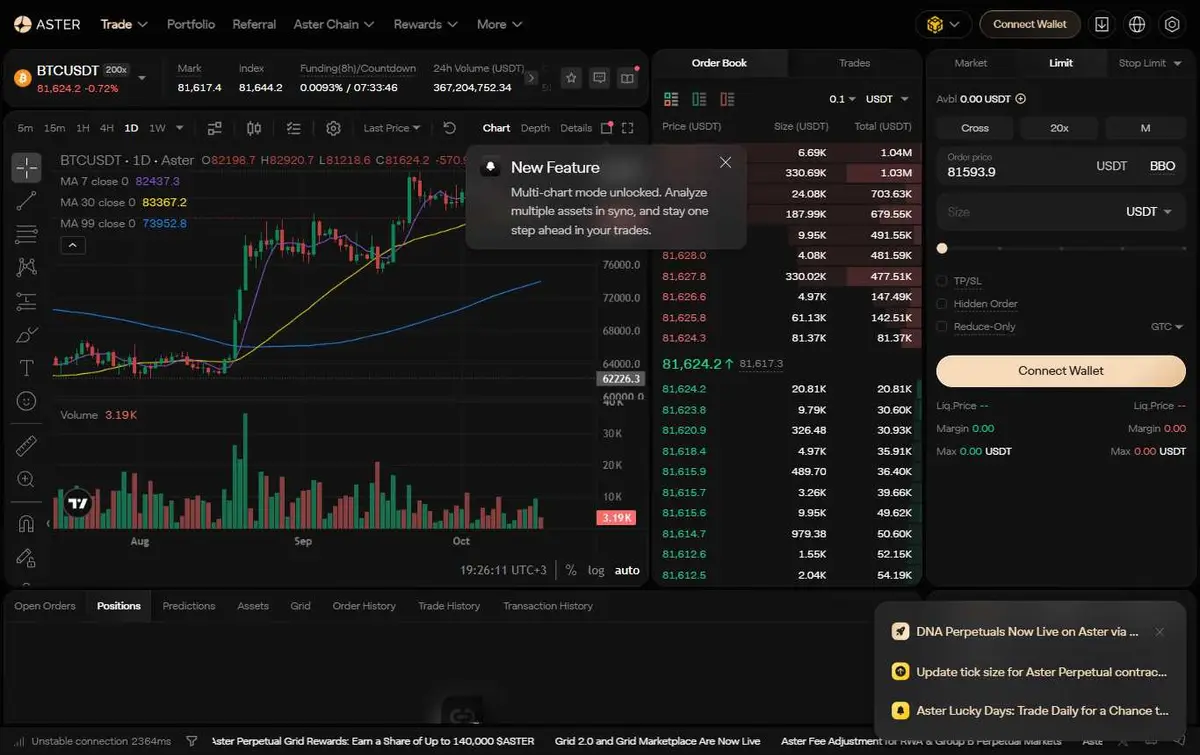
No barrier Ireland · Trading app
Ireland: the trading app loads with no notice
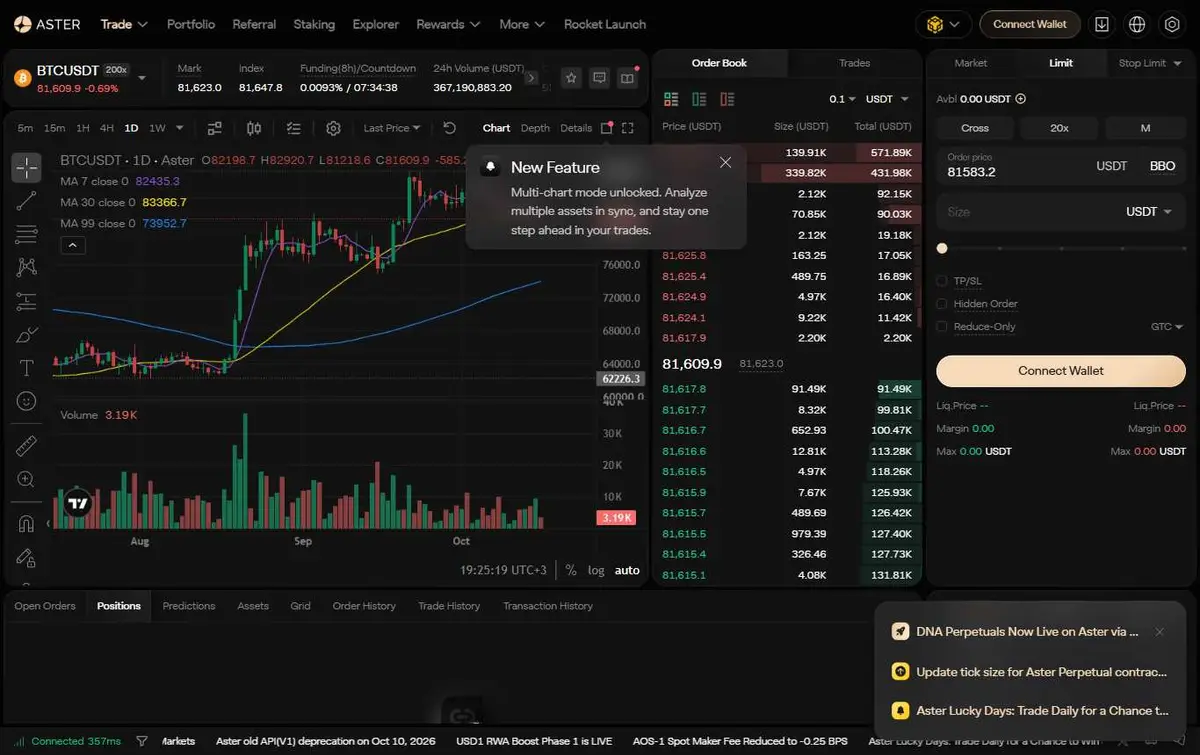
No barrier New Zealand · Trading app
New Zealand: the trading app loads with no notice
No barrier Norway · Trading app
Norway: the trading app loads with no notice
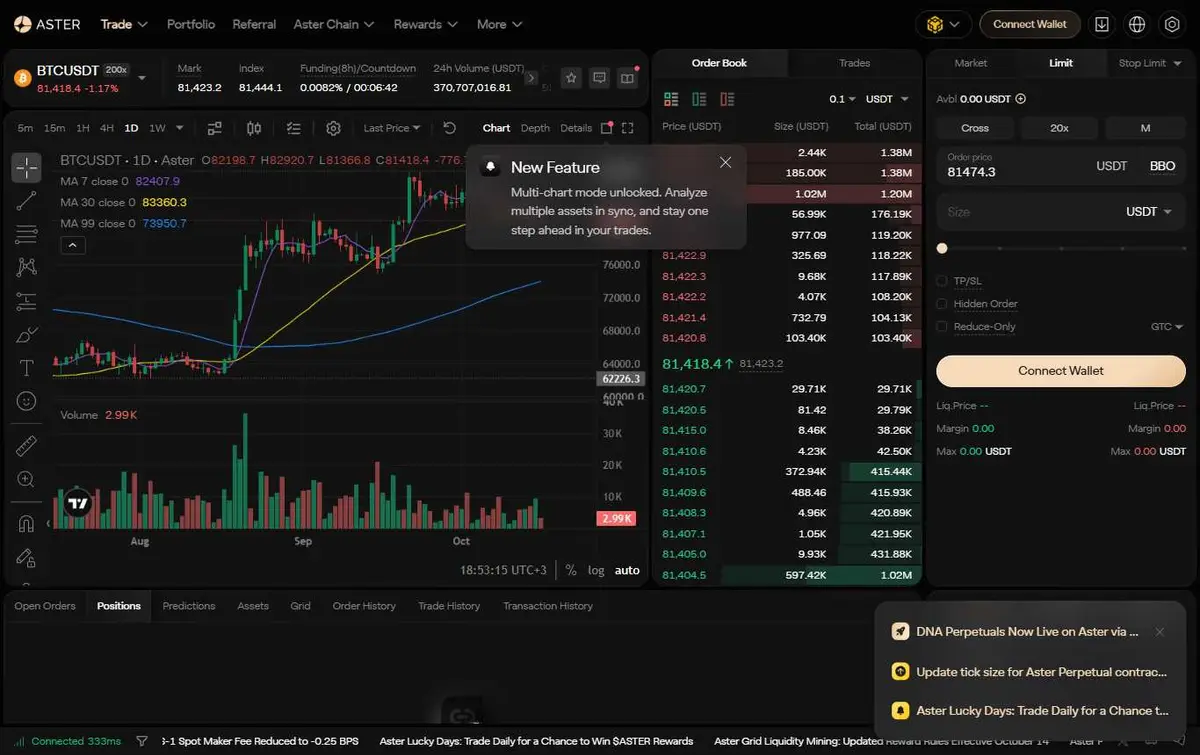
No barrier Finland · Trading app
Finland: the trading app loads with no notice
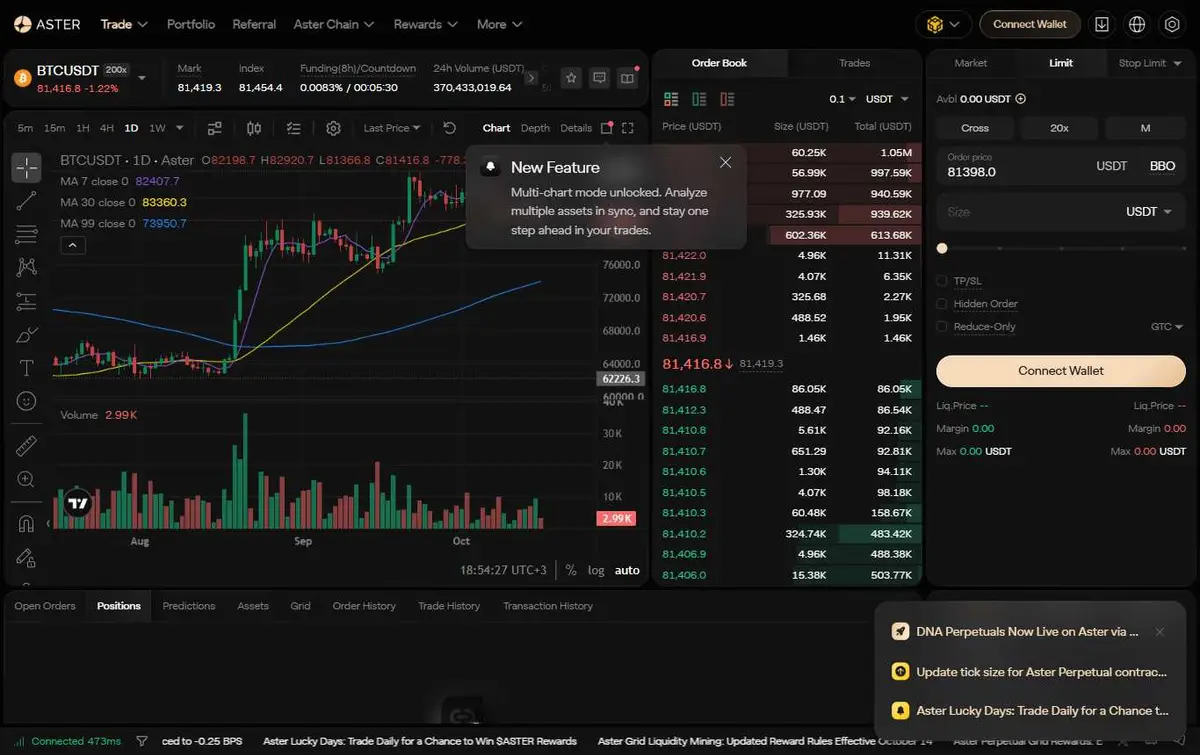
No barrier Greece · Trading app
Greece: the trading app loads with no notice
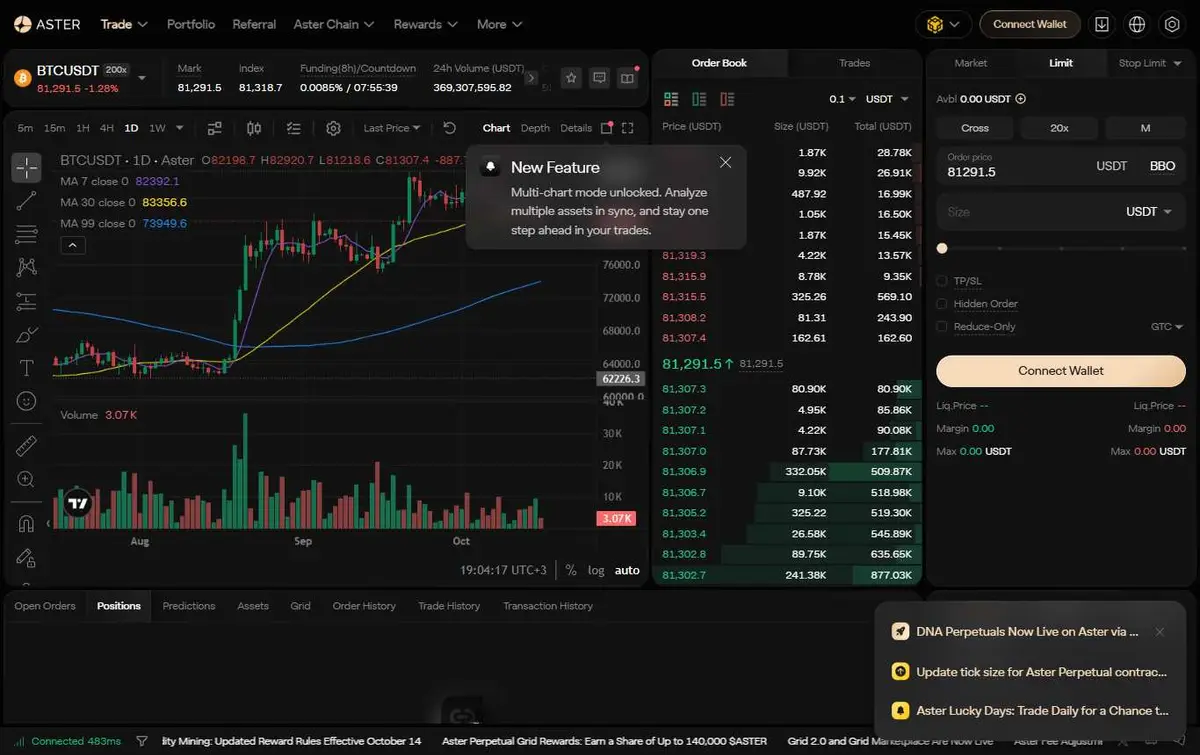
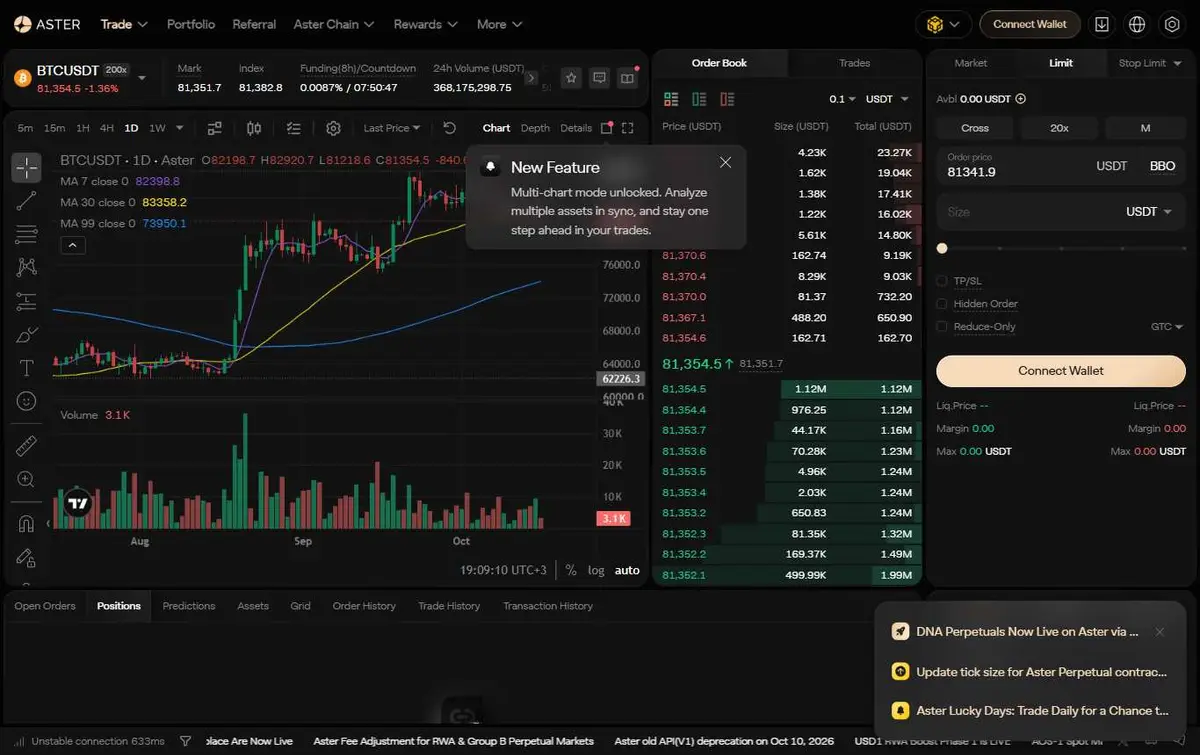
No barrier Bulgaria · Trading app
Bulgaria: the trading app loads with no notice
No barrier Croatia · Trading app
Croatia: the trading app loads with no notice
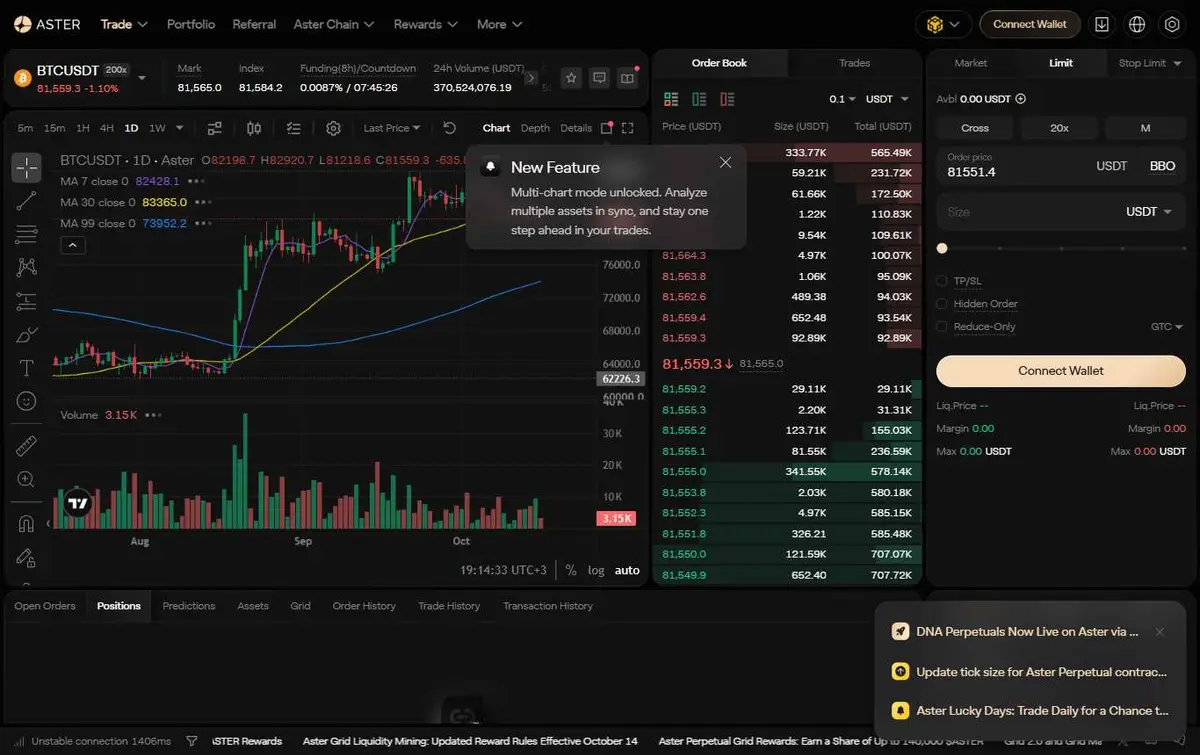
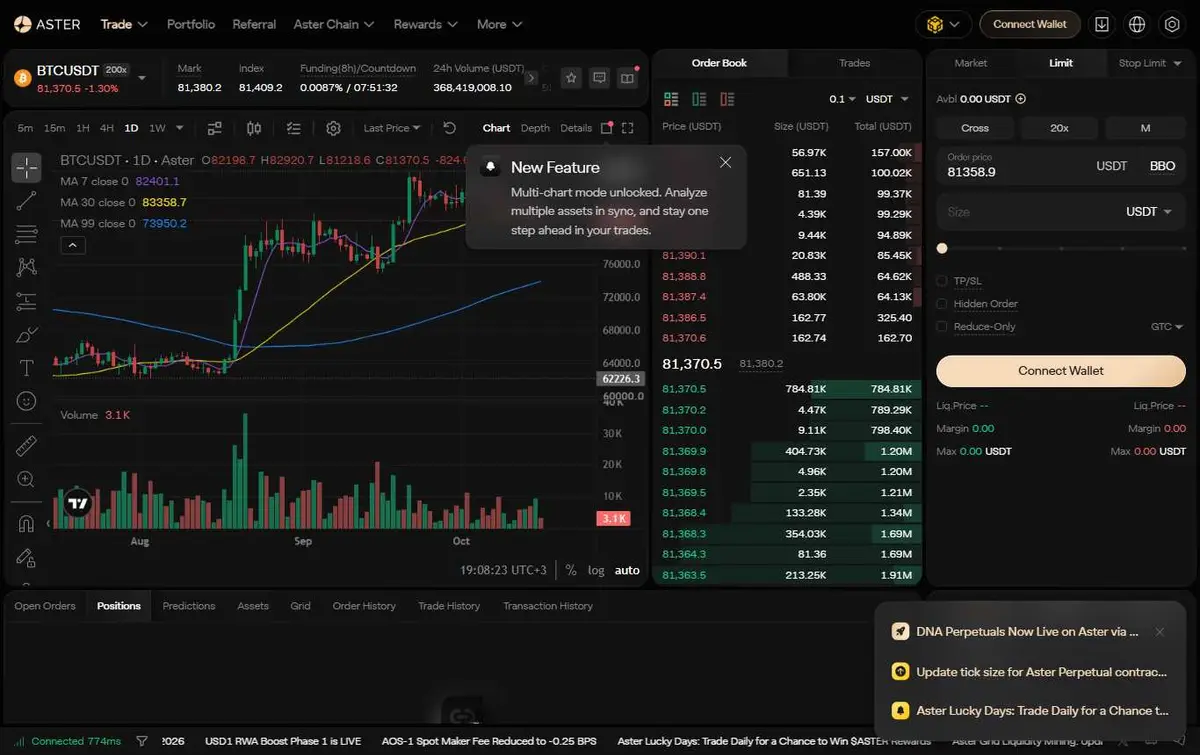
No barrier Latvia · Trading app
Latvia: the trading app loads with no notice
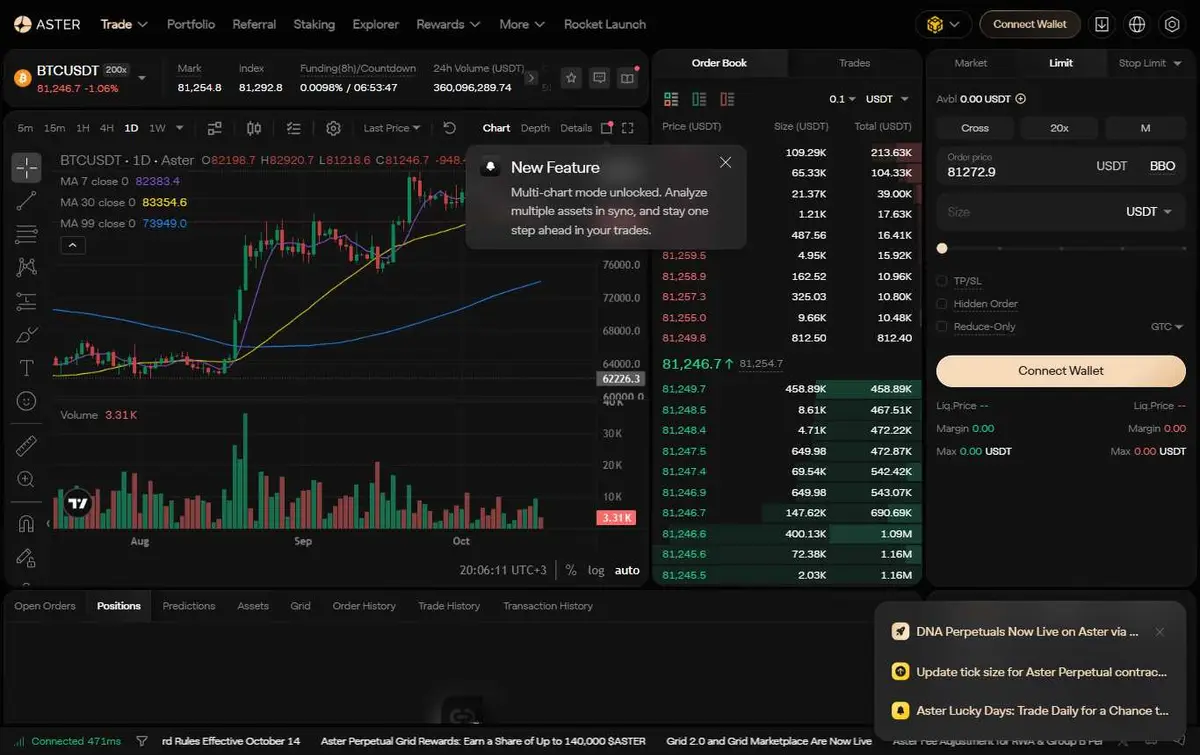
No barrier Estonia · Trading app
Estonia: the trading app loads with no notice
No barrier Egypt · Trading app
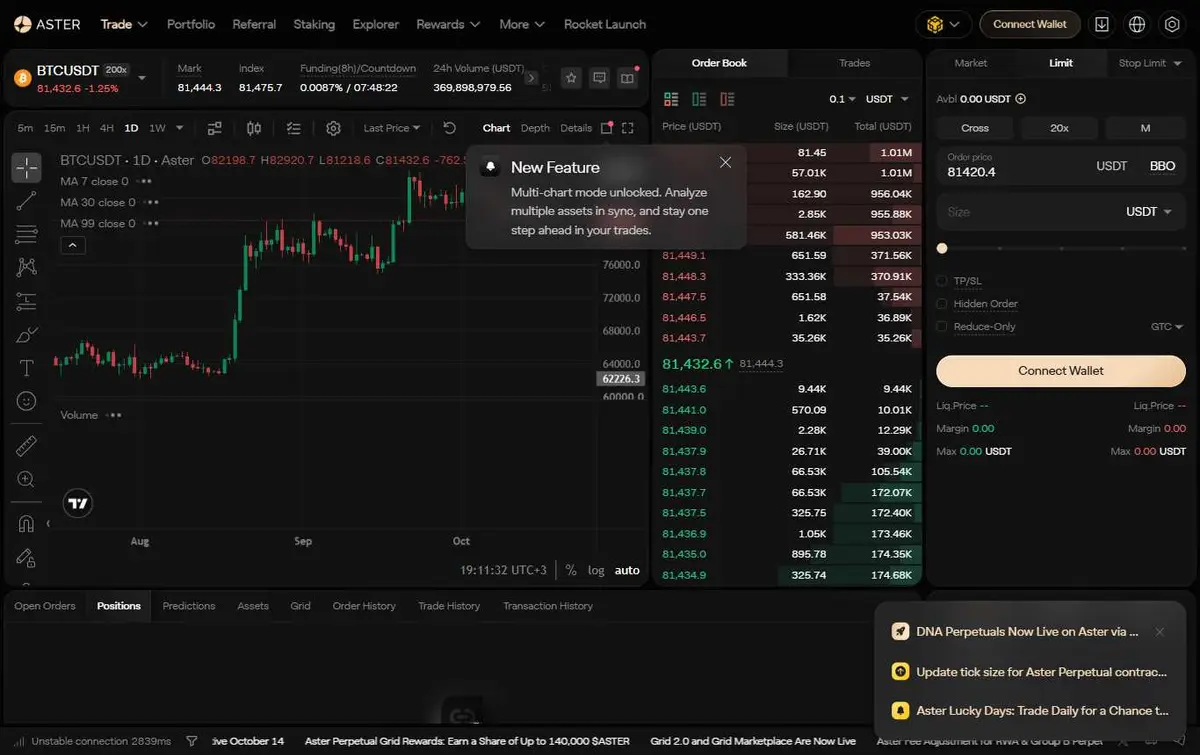
Egypt: the trading app loads with no notice
No barrier Lithuania · Trading app
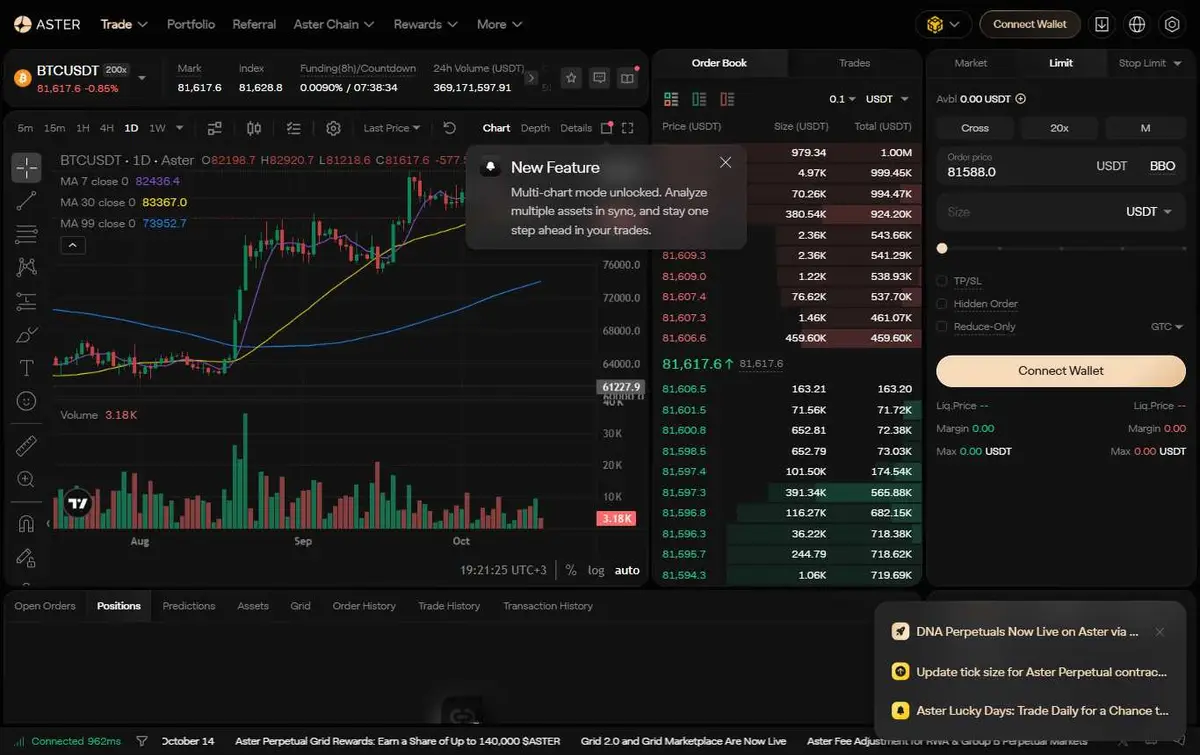
Lithuania: the trading app loads with no notice
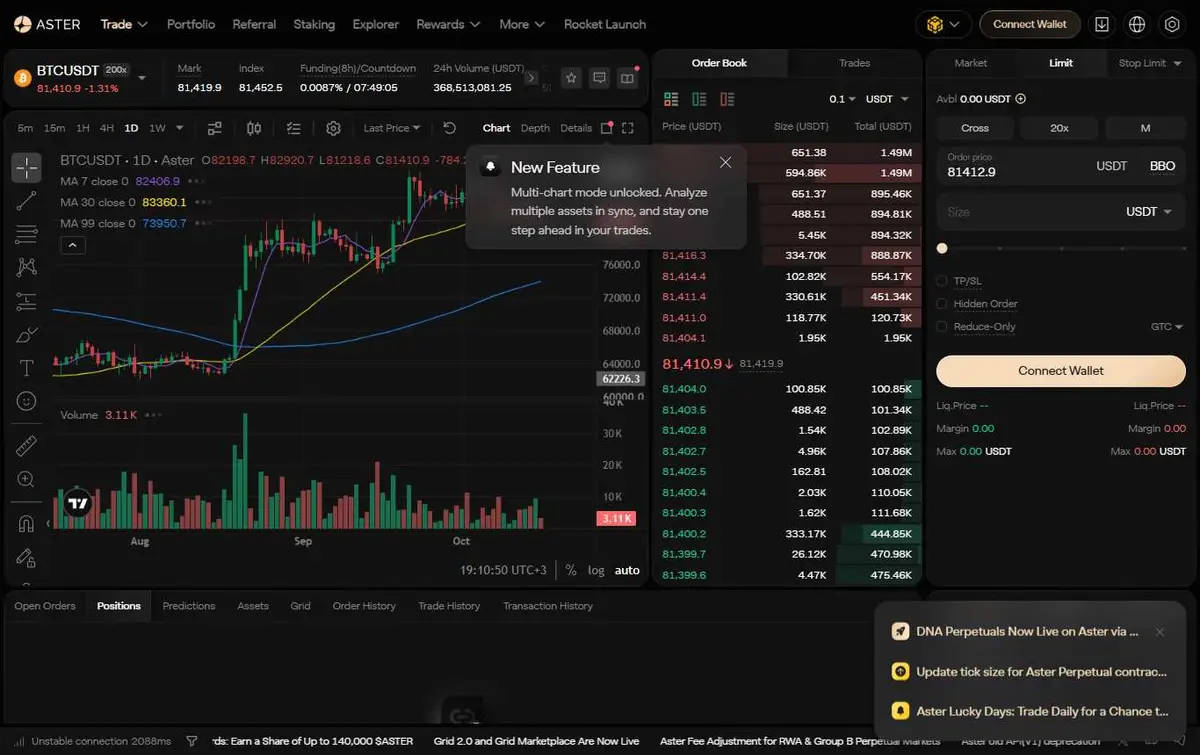
No barrier Slovenia · Trading app
Slovenia: the trading app loads with no notice
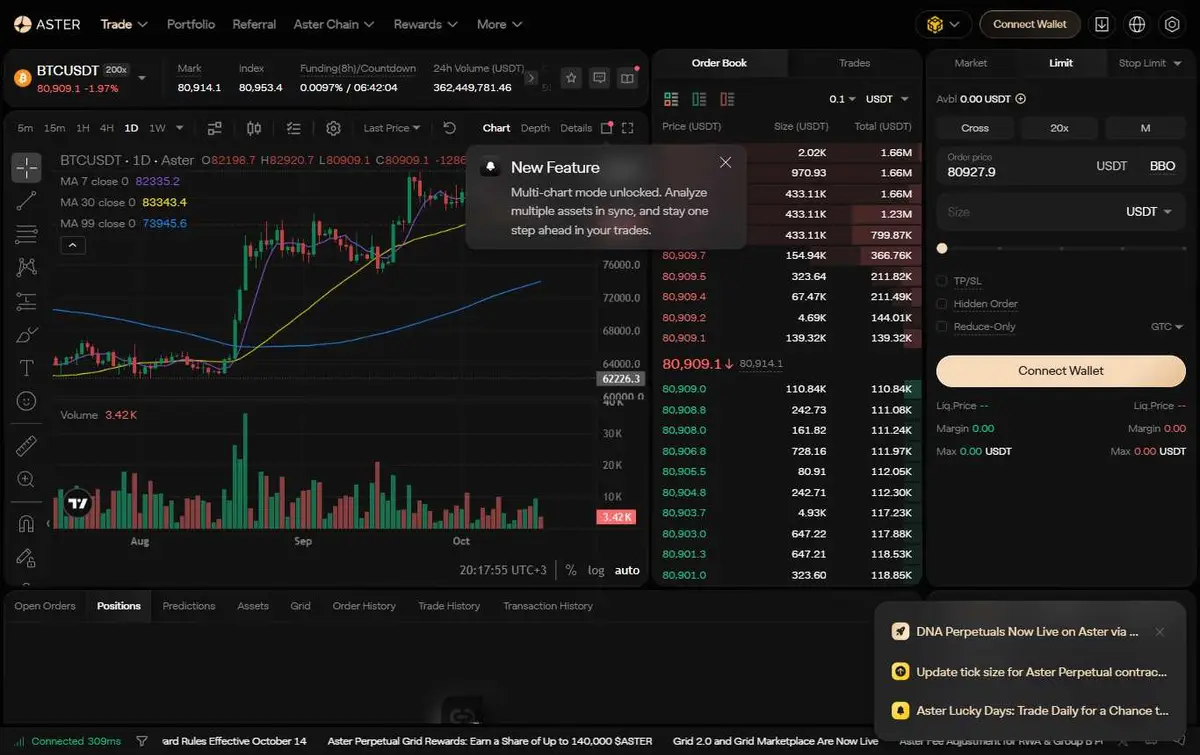
No barrier Iceland · Trading app
Iceland: the trading app loads with no notice
No barrier Georgia · Trading app
Georgia: the trading app loads with no notice
No barrier Venezuela · Trading app
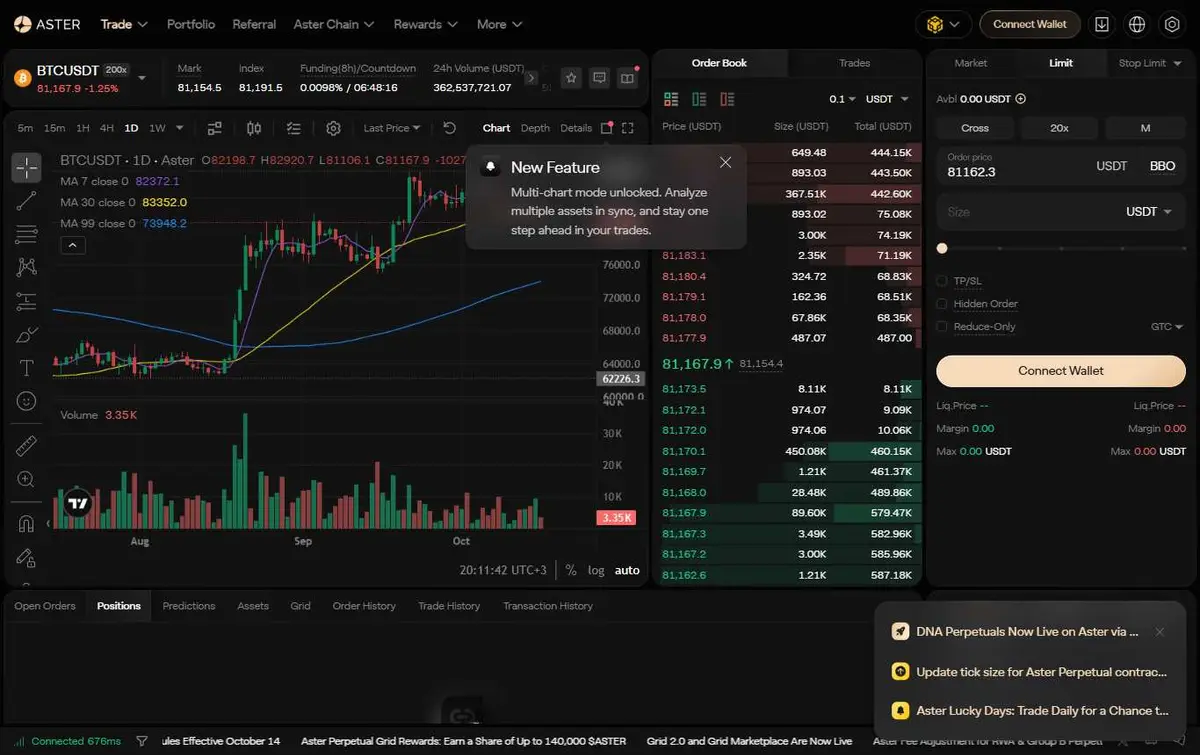
Venezuela is named in Aster’s terms, yet the trading app loads with no notice
No barrier Serbia · Trading app
Serbia: the trading app loads with no barrier
 CRYPTORESTRICTIONS
A US visitor sees a red banner, “You’re accessing ASTER from a restricted jurisdiction. Only withdrawals are available”, and a box over the chart saying the service is not available in the region, though positions can still be closed. Syria got the box without the banner. Puerto Rico, a US territory, loaded with no barrier.
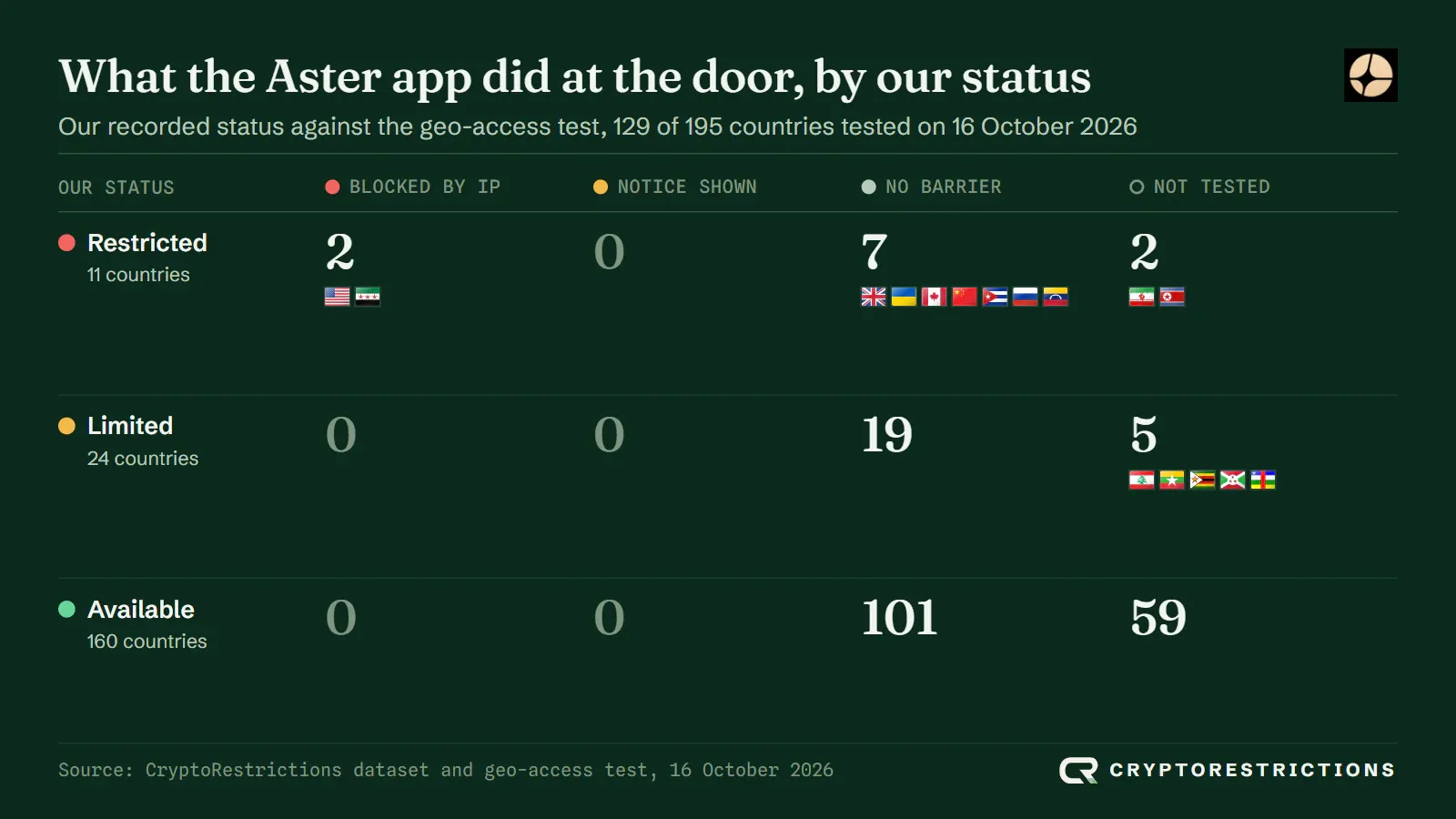
The written list and the block barely overlap. Seven prohibited countries, the UK, Canada, China, Russia, Ukraine, Cuba and Venezuela, loaded the full app, so for them the terms are the only control; Iran and North Korea we could not reach. The full result for every place is below.
All 133 test results, country by country
How Aster compares with other perps DEXs
Aster’s list is not its own: Lighter names the same 11 countries in its terms, in the same order, with the same sanctions wording. The difference is at the door. Lighter’s app refused 13 places in our test, Aster’s two.

We compared Aster with three other decentralised perpetuals exchanges we track, Hyperliquid, Lighter and Jupiter, using our dataset for statuses and our geo-access tests of 14 to 16 October 2026 for blocks. None of the four asks for identity documents to trade.
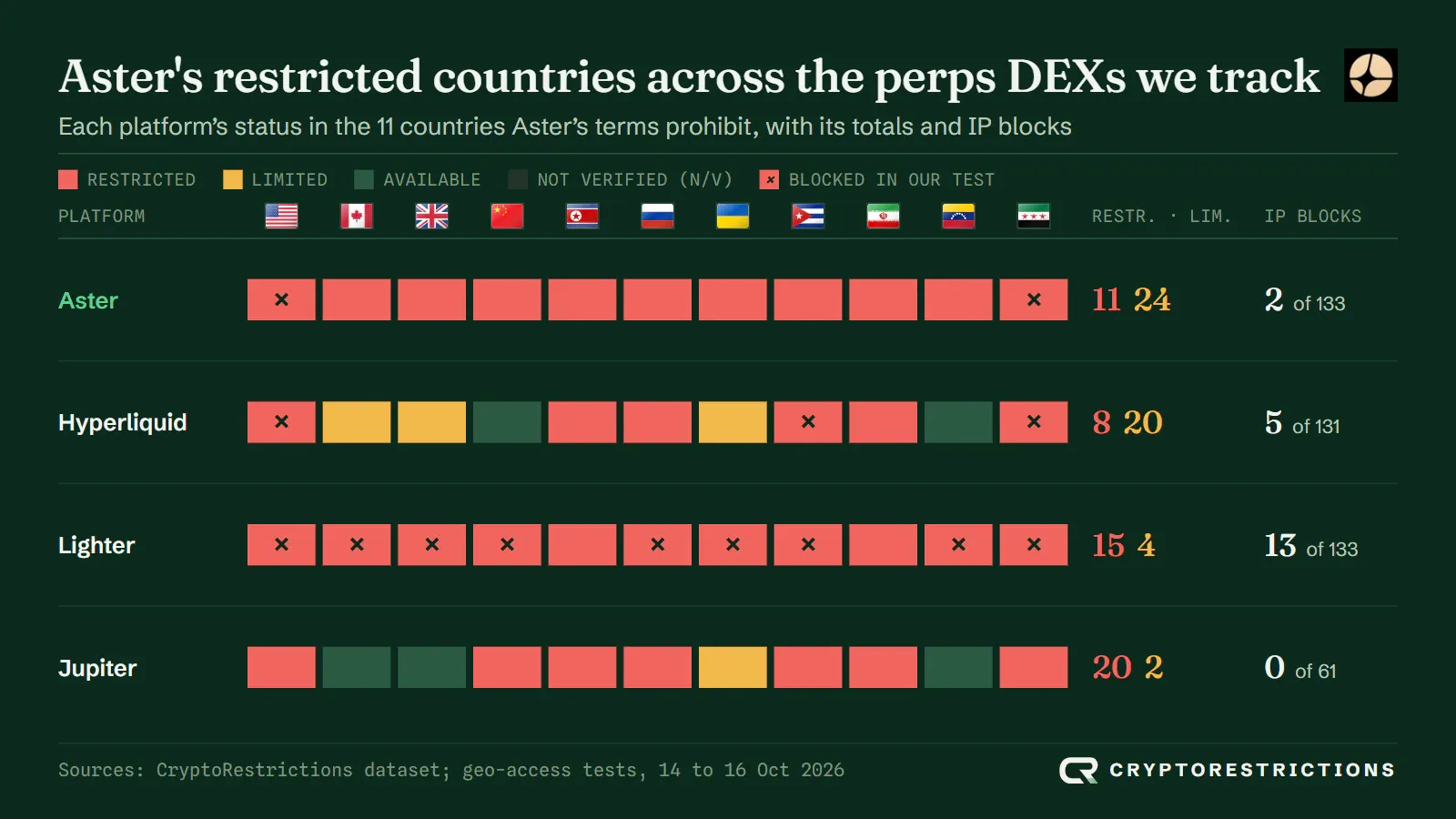
Three patterns stand out. Aster and Lighter are the only two that bar Canada, the UK and all of Ukraine outright: Hyperliquid excludes only Ontario and the occupied regions and cuts outcome markets in the UK, and Jupiter leaves the UK and Canada open. Hyperliquid enforces at the door more than its terms suggest, blocking five places, Saudi Arabia among them, though its terms name only the US and Ontario. And Jupiter, restricted in 18 of our countries, blocked none of the 61 places we tested, the US included. The not-verified counts for Lighter and Jupiter shrink as we rebuild their pages.

Aster licences and registrations
Aster holds no licence or registration anywhere that we could find, and its terms do not name the company behind it.
The terms are governed by Hong Kong law and say Aster does not operate or control the underlying blockchains or smart contracts. Two regulators have spoken about it, neither with a ban. France’s AMF added asterdex.com to its blacklist of crypto derivatives sites on 27 February 2026 for offering financial services or products without authorisation. On 20 November 2025 the Seychelles FSA answered third-party sites claiming a Seychelles link: Aster has never been authorised under its virtual asset law, is not a Seychelles company and “has no Nexus to the Seychelles”.
The app is also not the only way in. Aster’s service region page says countries marked “frontend UI restricted” are blocked only on the Aster front end, “the API itself is not restricted”, though no country on its current list carries that mark, and its public API docs describe no location check. Our statuses describe what Aster’s own documents and app allow.
Aster and MiCA in the EU
Aster has no MiCA authorisation: no Aster entity appears in ESMA’s register of crypto-asset service providers, which we checked on 17 October 2026.
Whether a decentralised exchange needs one is still open. MiCA says in recital 22 that services “provided in a fully decentralised manner without any intermediary” fall outside it. No EU regulator has blocked Aster that we found, the French blacklist aside, which is why its perps count as open across the EEA, unlike the centralised exchanges that closed new EEA accounts at the MiCA deadline.
Prediction trading is another matter. Aster bars it in five EEA states,  Belgium, France, Germany,
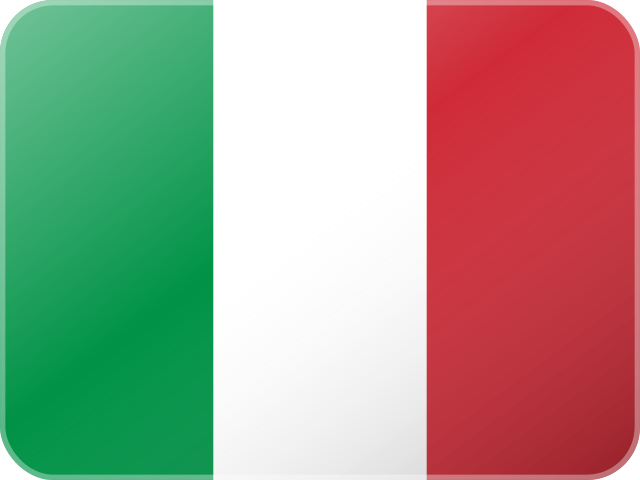 Italy and
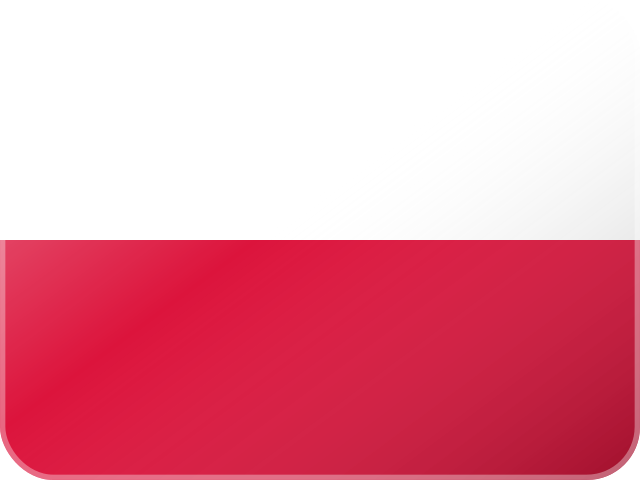 Poland, and serves it in the other 25 we cover. Hyperliquid draws a similar line with its own outcome markets, which its app hides in seven EEA states, and both keep perpetuals open there.

Is Aster available in the US?
No. The United States is the first Prohibited Jurisdiction in the terms, it is on the prediction list too, and the trading app blocked our US IP address. Aster has no US company or registration, and the ban covers every state.
Aster availability by US state
We found no CFTC, SEC or Justice Department action against Aster. The US block is a front-end one: a US visitor sees prices and the order book, but only withdrawals and closing positions are allowed. Aster still lists perpetuals on US stocks such as Apple and Tesla, which US residents may not trade under its terms.
Aster regulators and incidents
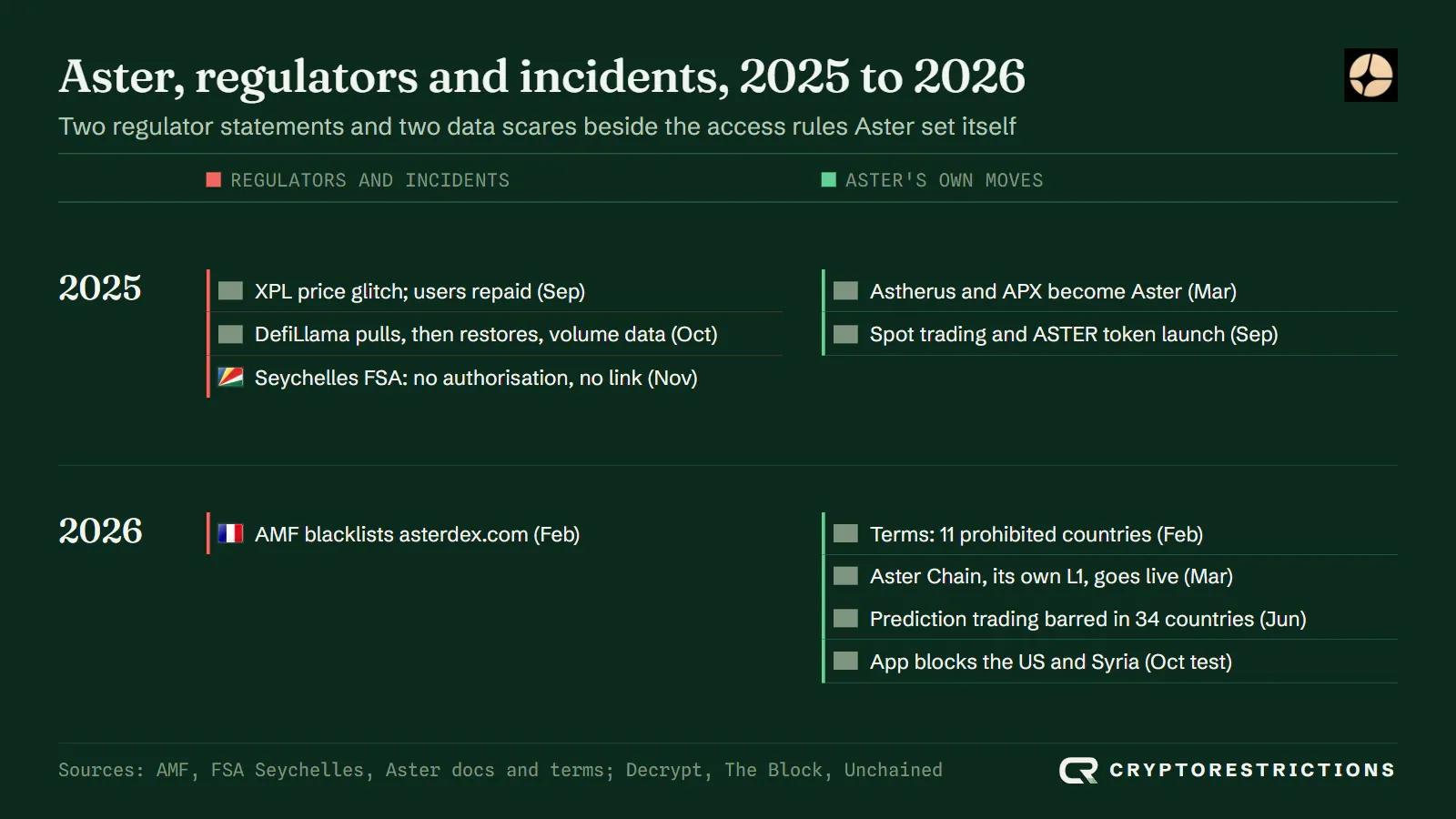
Aster dates from March 2025, when Astherus and APX Finance became one exchange, according to its product release log. Its scrutiny has come more from data than from regulators. On 25 September 2025 its XPL perpetual spiked far above the spot price, and Aster said afterwards that “all affected users have received reimbursement” in USDT, Decrypt reported. On 5 October 2025 DefiLlama delisted Aster’s perp volume because it could not check it for wash trading, then restored it on 20 October at Aster’s request while calling the figures “still a black box”.
Aster KYC and identity verification
Aster asks for no identity documents to start trading: you connect a wallet, or log in with an email address that creates one, and sign a message.
The wallet login guide names Rabby, MetaMask, Binance Wallet and any WalletConnect wallet, and the email login sends a six-digit code and generates a new wallet address, with USDT deposits on Arbitrum only. The terms still reserve the right to run “limited identity verification procedures” and to refuse service to anyone who does not comply, and they make you promise that your stated location is accurate and that you will not get around location limits.
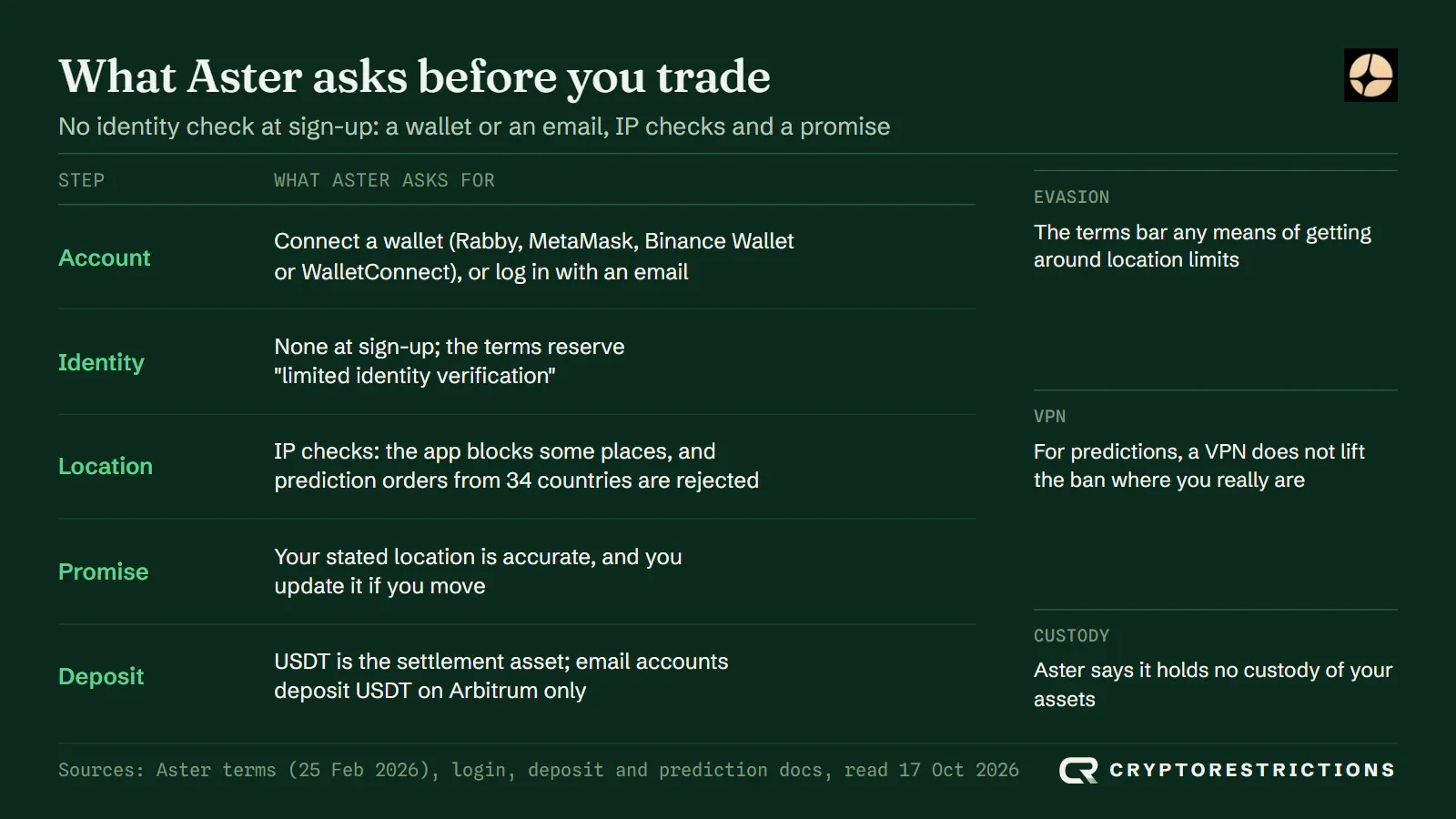
So the only checks Aster applies are by IP address: the front-end block in a few places and the order check for prediction trading. The prediction agreement adds that a VPN does not lift the ban if you are really in a listed place, and uses your wallet address as the only account identifier.
Aster verification history
We found no record that Aster has ever asked users for identity documents, and no announced plan to start. What has changed is the location layer: the February 2026 terms set the 11 prohibited countries, and the June 2026 prediction rules added the second list, enforced when an order is placed.
What if Aster is restricted where you live?
It depends on the country: of the 21 other platforms we track, 11 are available in Venezuela and 9 in China, but only one in Cuba, Iran and North Korea.
Using Aster from a prohibited country is not an option under the terms, which bar any means of getting around location limits, and the app’s light enforcement does not change that. What is left is a platform allowed to serve you where you live.
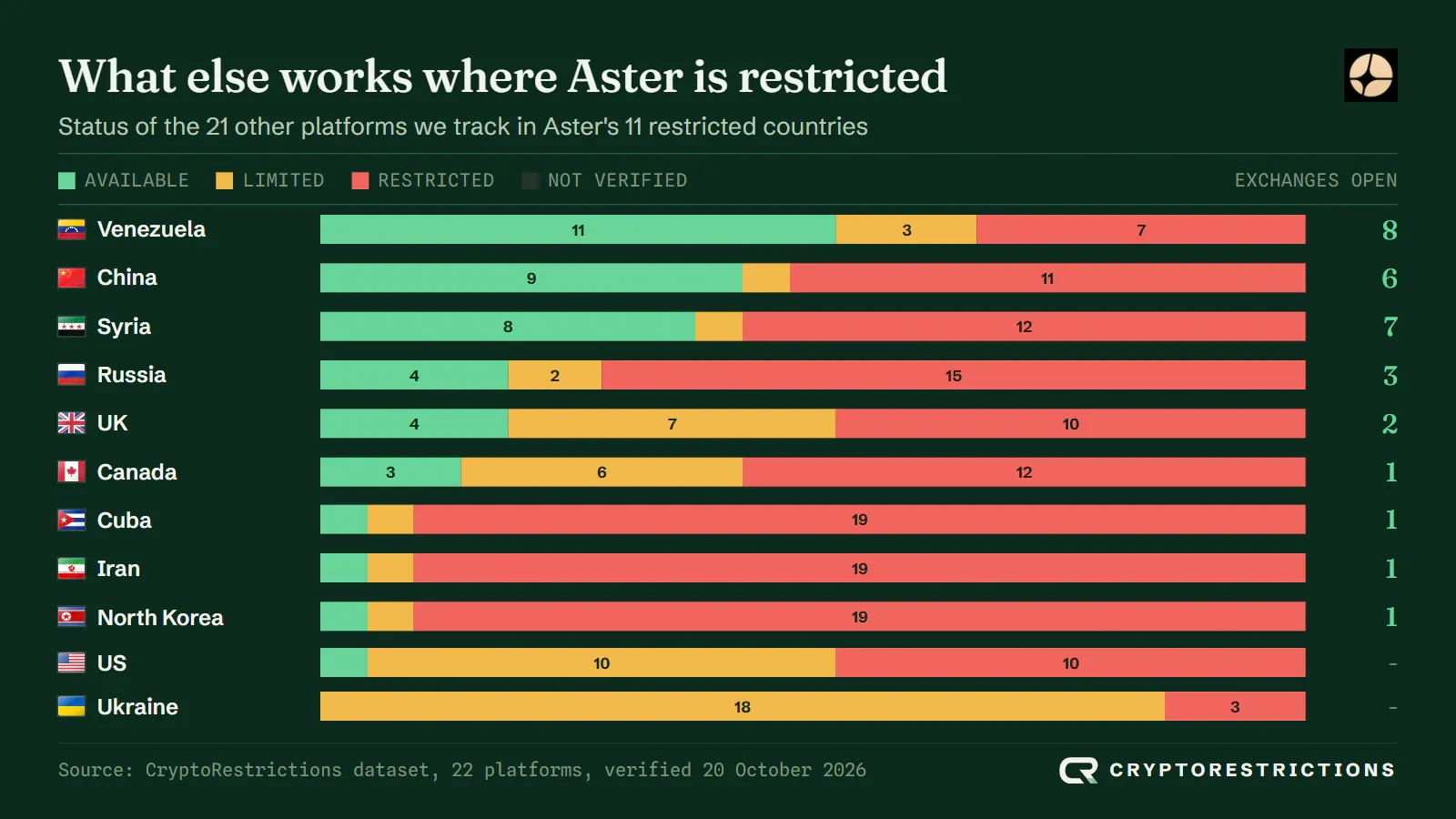
In the US the field narrows to one available platform, Uniswap, a DeFi protocol, with ten more limited. In Ukraine, which Aster bars outright, 18 platforms are limited, mostly because they exclude only the occupied regions.
For a country-by-country comparison of exchanges, with residency rules and licences side by side, see our guide to exchange alternatives by country.