Is crypto legal in Brazil?
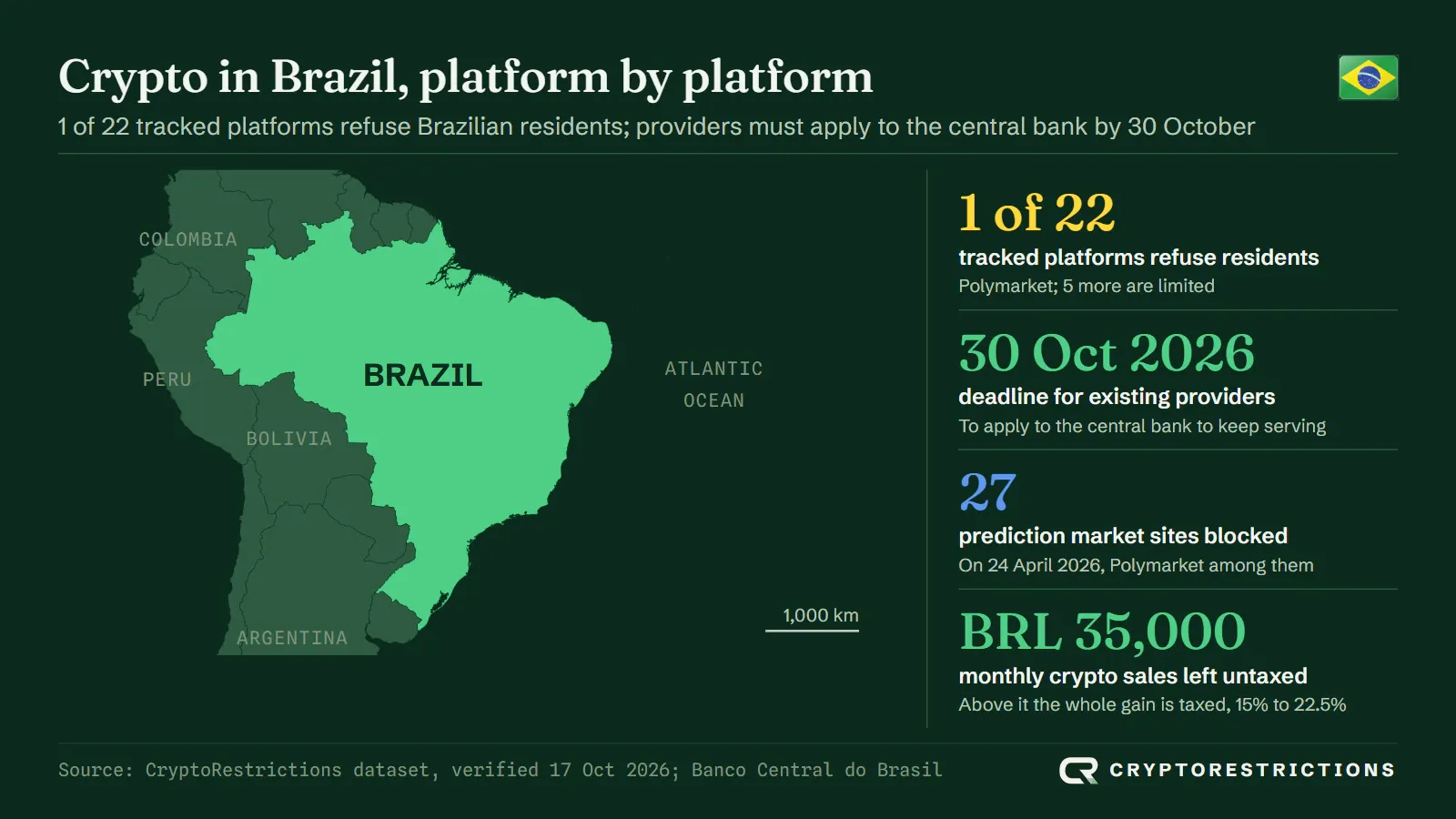
Yes. Buying, holding and trading crypto is legal, and since 2 February 2026 any company serving Brazilians must be authorised by the Banco Central do Brasil, with existing providers given until 30 October 2026 to apply.
Law 14.478 of 21 December 2022 set the framework for virtual asset service providers, and Decree 11.563 made the central bank their supervisor from 20 June 2023. The detailed rules came on 10 November 2025 as Resolutions BCB 519, 520 and 521, in force from 2 February 2026. They create the authorised virtual asset service provider, the SPSAV in Portuguese, and give firms already operating 270 days to apply, which runs to 30 October 2026. Foreign companies that serve Brazilians must move their clients to an authorised local firm within the same period.
A second date follows. Resolution 589 of 23 September 2026 bars banks and payment institutions, from 6 November 2026, from carrying out or enabling operations with virtual asset providers the central bank has not authorised. The central bank publishes no register we could read. Press reports counted five applications as of 18 September 2026, one of them refused and none granted, and Capital Aberto says no public count exists yet. We found no authorisation we could confirm for any platform we track.
Holding your own keys is not banned. Providers must identify the owner of a self-custody wallet they send to or receive from, and under Resolution 591 they report transfers of US$10,000 or more to the anti-money-laundering council COAF from 1 October 2026. A bill for a national strategic bitcoin reserve, PL 4.501/2024, was pulled from a committee agenda on 8 April 2026 and has not moved.
Which crypto exchanges work in Brazil?
Fourteen of the exchanges we track serve Brazilian residents, but none has a central bank authorisation we could confirm. Only KuCoin, Bybit, OKX and Binance run a Brazilian entity of their own.
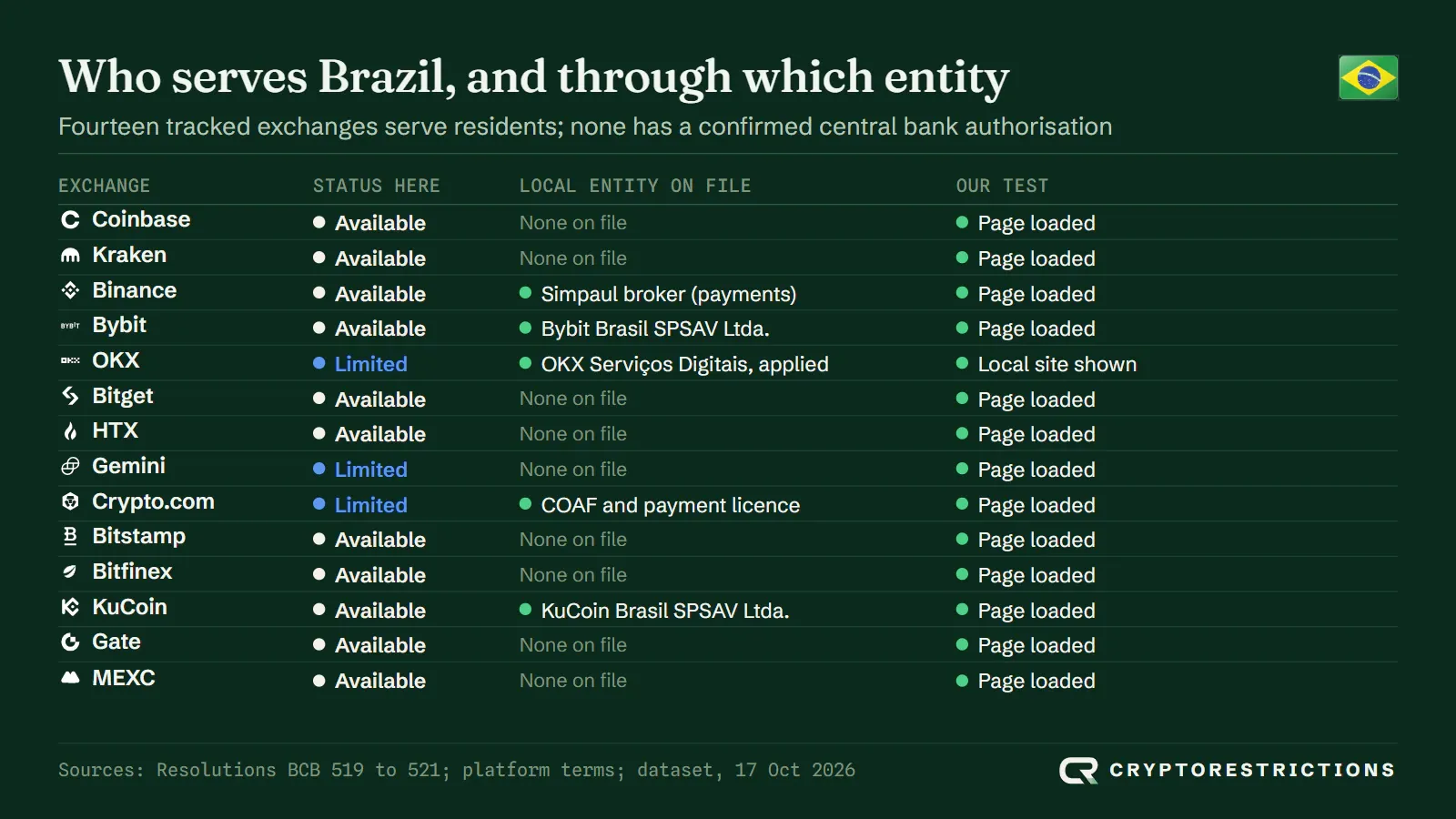
KuCoin sends Brazilian residents to separate Brazil terms issued by KuCoin Brasil SPSAV Ltda., and Brazil is not among their restricted locations. Bybit moved Brazilian users to Bybit Brasil SPSAV Ltda. under terms effective 24 September 2026, which apply the central bank’s transitional rules. OKX serves Brazil through OKX Serviços Digitais Ltda. and, according to Exame, filed for authorisation on 16 October 2026. Binance owns the Simpaul broker, a securities brokerage with an e-money licence that is a payments authorisation, not an SPSAV; crypto.news reported that eight services and 22 tokens stop for Brazil from 27 October 2026 and accounts move to Brazilian group companies by 29 October. We did not find Binance’s own notice.
Coinbase has Brazil-specific terms with BRL payments handled by EBANX, and Crypto.com lists a COAF registration and a payment institution licence, but is closing its BRL cash account on 25 October 2026 while crypto trading continues. Kraken, Bitget, Gate, MEXC, HTX, Bitstamp, Bitfinex and Gemini have no Brazilian entity on file with us. That is the risk to weigh: the 30 October and 6 November dates fall within days of this page, and a platform that has not filed may lose its banking links or have to move clients.
Best crypto platforms for Brazilian residents
By our access score, Binance and Bybit (9.0 out of 10) are the most open exchanges for Brazilian residents and nine others score 8.0. Kalshi (6.3) is the only prediction market scored, and five DeFi platforms tie at 8.0.
The score rates how fully a Brazilian resident can use each platform, not its fees or safety. It is computed from our data and moves when a row changes: access status (4 points), the share of the platform’s products open here (3), the Brazil licences we hold on file (2) and what our geo-access test saw from a Brazilian address (1). Platforms that refuse Brazilian residents are not scored. The full method is on our methodology page.
Exchanges

Binance
Best for The widest product list, through a local broker
9.0/10- Access
- 4/4
- Products
- 3/3
- Licences
- 1/2
- Our test
- 1/1
Read our Binance reportPros
- Brazil is not on its prohibited-countries list
- Its Brazilian broker holds a brokerage and e-money licence
Cons
- Eight services and 22 tokens are reported to stop from 27 October 2026

Bybit
Best for Spot access through a Brazilian entity
9.0/10- Access
- 4/4
- Products
- 3/3
- Licences
- 1/2
- Our test
- 1/1
Read our Bybit reportPros
- Brazilian users moved to Bybit Brasil on 24 September 2026
Cons
- No central bank authorisation confirmed

Bitfinex
Best for Spot access without a Brazilian company
8.0/10- Access
- 4/4
- Products
- 3/3
- Licences
- 0/2
- Our test
- 1/1
Read our Bitfinex reportPros
- Brazil is not a prohibited jurisdiction in its terms
Cons
- No Brazilian entity on file

Bitget
Best for Spot and derivatives on a global exchange
8.0/10- Access
- 4/4
- Products
- 3/3
- Licences
- 0/2
- Our test
- 1/1
Read our Bitget reportPros
- Brazil is not on its prohibited-countries list (16 October 2026)
Cons
- No Brazilian entity or authorisation on file

Bitstamp
Best for Plain spot trading
8.0/10- Access
- 4/4
- Products
- 3/3
- Licences
- 0/2
- Our test
- 1/1
Read our Bitstamp reportPros
- No Bitstamp document excludes Brazil
Cons
- No Brazilian entity on file

Coinbase
Best for A global exchange with Brazil-specific terms
8.0/10- Access
- 4/4
- Products
- 3/3
- Licences
- 0/2
- Our test
- 1/1
Read our Coinbase reportPros
- BRL payments are handled by EBANX
Cons
- No Brazilian authorisation on file

Gate
Best for A wide coin list on a global exchange
8.0/10- Access
- 4/4
- Products
- 3/3
- Licences
- 0/2
- Our test
- 1/1
Read our Gate reportPros
- Brazil is not on its restricted-locations list (22 July 2026)
Cons
- No Brazilian entity on file

HTX
Best for A wide coin list on a global exchange
8.0/10- Access
- 4/4
- Products
- 3/3
- Licences
- 0/2
- Our test
- 1/1
Read our HTX reportPros
- Brazil is not on its restricted list
Cons
- No Brazilian entity on file

Kraken
Best for Spot trading on a global exchange
8.0/10- Access
- 4/4
- Products
- 3/3
- Licences
- 0/2
- Our test
- 1/1
Read our Kraken reportPros
- Brazil is not on its do-not-serve list
Cons
- No Brazilian entity on file

KuCoin
Best for A Brazilian entity for spot, custody and staking
8.0/10- Access
- 4/4
- Products
- 3/3
- Licences
- 0/2
- Our test
- 1/1
Read our KuCoin reportPros
- KuCoin Brasil SPSAV Ltda. issues its own Brazil terms
- Brazil is not among its restricted locations
Cons
- No central bank authorisation confirmed

MEXC
Best for A wide coin list on a global exchange
8.0/10- Access
- 4/4
- Products
- 3/3
- Licences
- 0/2
- Our test
- 1/1
Read our MEXC reportPros
- Brazil is not on its prohibited list (13 October 2026)
Cons
- No Brazilian entity on file

Crypto.com
Best for Spot trading in the app
7.3/10- Access
- 3.5/4
- Products
- 1.8/3
- Licences
- 1/2
- Our test
- 1/1
Read our Crypto.com reportPros
- Spot trading and the app are offered
- Its licence page lists a COAF registration
Cons
- The BRL cash account closes on 25 October 2026
- Brazil is on its derivatives geo-restrictions list

Gemini
Best for Spot trading only
6.9/10- Access
- 3.5/4
- Products
- 2.4/3
- Licences
- 0/2
- Our test
- 1/1
Read our Gemini reportPros
- Brazil is on Gemini's list of supported countries
Cons
- Perpetuals are for institutional clients only

OKX
Best for Spot trading on a Portuguese-language local site
5.8/10- Access
- 3.5/4
- Products
- 1.8/3
- Licences
- 0/2
- Our test
- 0.5/1
Read our OKX reportPros
- OKX Serviços Digitais Ltda. serves Brazil
- Spot is not among the services its disclosure restricts
Cons
- Derivatives and P2P services may be restricted here, it says
- Authorisation reported filed on 16 October 2026, not granted
Prediction markets

Kalshi
Best for Event contracts under a government block
6.3/10- Access
- 3/4
- Products
- 2.3/3
- Licences
- 0/2
- Our test
- 1/1
Read our Kalshi reportPros
- Brazil is not on its restricted-jurisdictions list
Cons
- Named in the federal block of 24 April 2026
- A central bank rule bars event derivatives offered in Brazil
DeFi

Aster
Best for Perpetuals and spot trading
8.0/10- Access
- 4/4
- Products
- 3/3
- Licences
- 0/2
- Our test
- 1/1
Read our Aster reportPros
- Brazil is not on its prohibited-jurisdictions list
Cons
- No Brazilian entity or authorisation on file

Jupiter
Best for Solana swaps
8.0/10- Access
- 4/4
- Products
- 3/3
- Licences
- 0/2
- Our test
- 1/1
Read our Jupiter reportPros
- The swap app loaded in our test
Cons
- Operated from Panama, with no Brazilian entity on file

Lighter
Best for Perpetuals on its main app
8.0/10- Access
- 4/4
- Products
- 3/3
- Licences
- 0/2
- Our test
- 1/1
Read our Lighter reportPros
- Brazil is not named in its terms
Cons
- No Brazilian entity or authorisation on file

PancakeSwap
Best for BNB Chain swaps and pools
8.0/10- Access
- 4/4
- Products
- 3/3
- Licences
- 0/2
- Our test
- 1/1
Read our PancakeSwap reportPros
- Swaps and pools are not excluded by its terms
Cons
- No Brazilian entity or authorisation on file

Uniswap
Best for Swapping tokens from your own wallet
8.0/10- Access
- 4/4
- Products
- 3/3
- Licences
- 0/2
- Our test
- 1/1
Read our Uniswap reportPros
- Its terms bar only places under comprehensive US sanctions
Cons
- No Brazilian entity or authorisation on file

Hyperliquid
Best for Perpetuals from your own wallet
5.9/10- Access
- 3/4
- Products
- 1.9/3
- Licences
- 0/2
- Our test
- 1/1
Read our Hyperliquid reportPros
- Perpetuals and spot load in the trading app
Cons
- The app hides its outcome markets tab here
Which platforms block Brazilian users?
Only Polymarket, which is close-only. Five more platforms (Kalshi, Hyperliquid, OKX, Crypto.com and Gemini) are limited by a government block or by a product they withhold.
Brazil’s restrictions fall on products and on prediction markets, not on whole exchanges. Polymarket lists Brazil among the places where existing positions can be closed but no new ones opened, and the government blocked it on 24 April 2026 along with Kalshi. The exchange limits are product cuts, covered under products below.

What our geo-access test saw from Brazil
From a Brazilian address on 14 and 16 October 2026 we loaded all 22 platforms we track: 1 refused us, 1 sent us to a local site and 20 loaded with no barrier.
An open page is not permission, and a block ordered on Brazilian internet providers does not reach a VPN server. Kalshi loaded for us, although it is on the 24 April block list. The one refusal was Polymarket, whose own geoblock endpoint answered blocked. OKX sent us to its Portuguese-language Brazil site. Swipe through the screenshots below; each card says what the page showed.
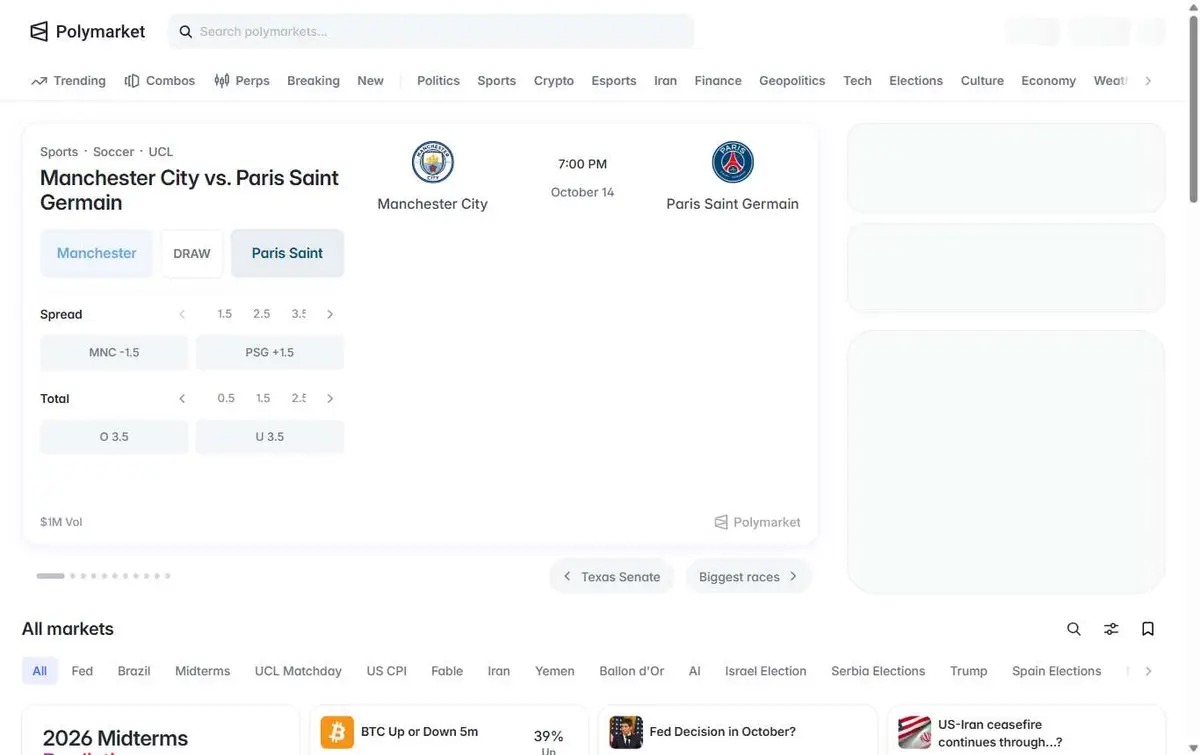
Blocked Polymarket · Home page
The home page loads from a Brazilian address, yet Polymarket's own geoblock endpoint answered blocked
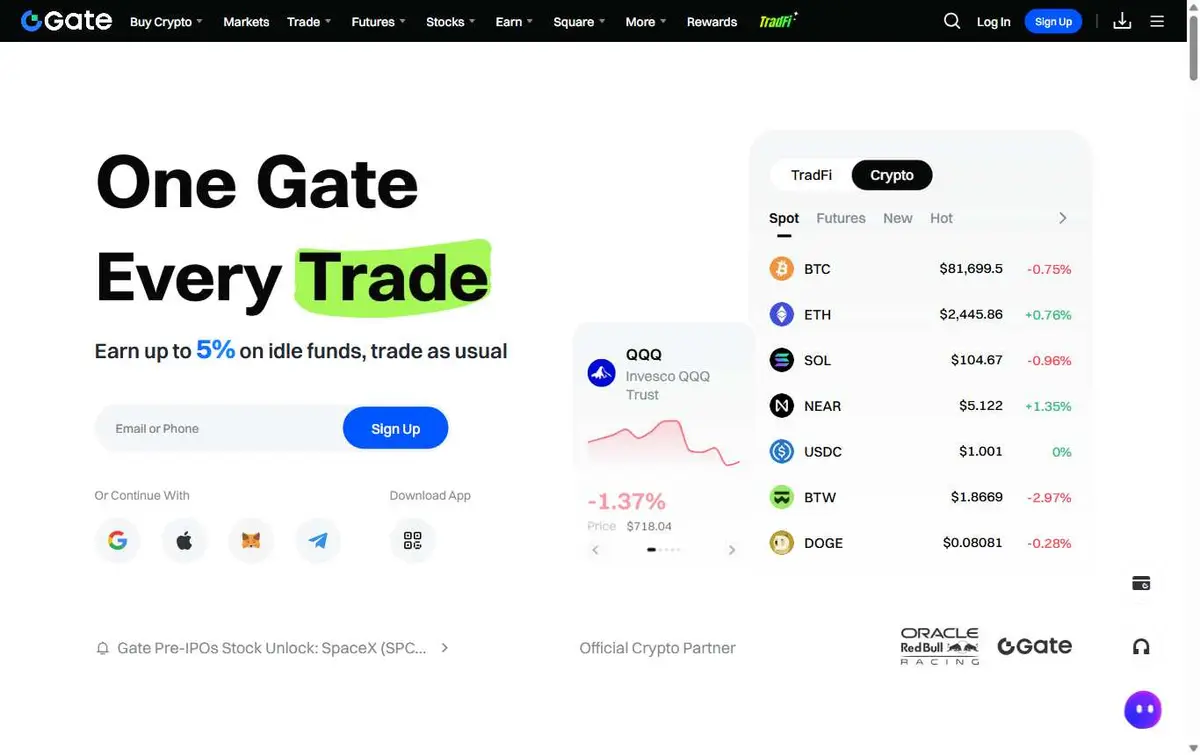
No barrier Gate · Home page
Loads with no warning; Brazil is not on Gate's restricted list
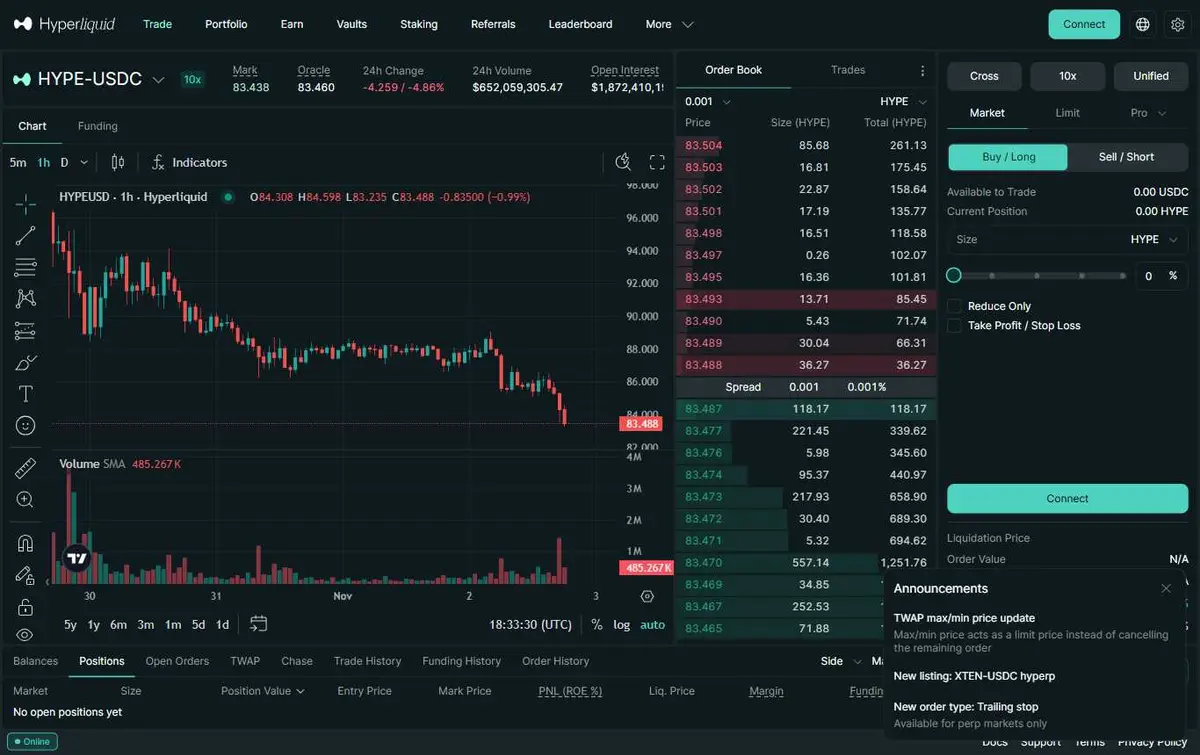
No barrierHyperliquid · Trading app
The trading app loads from Brazil, with its Outcomes tab hidden
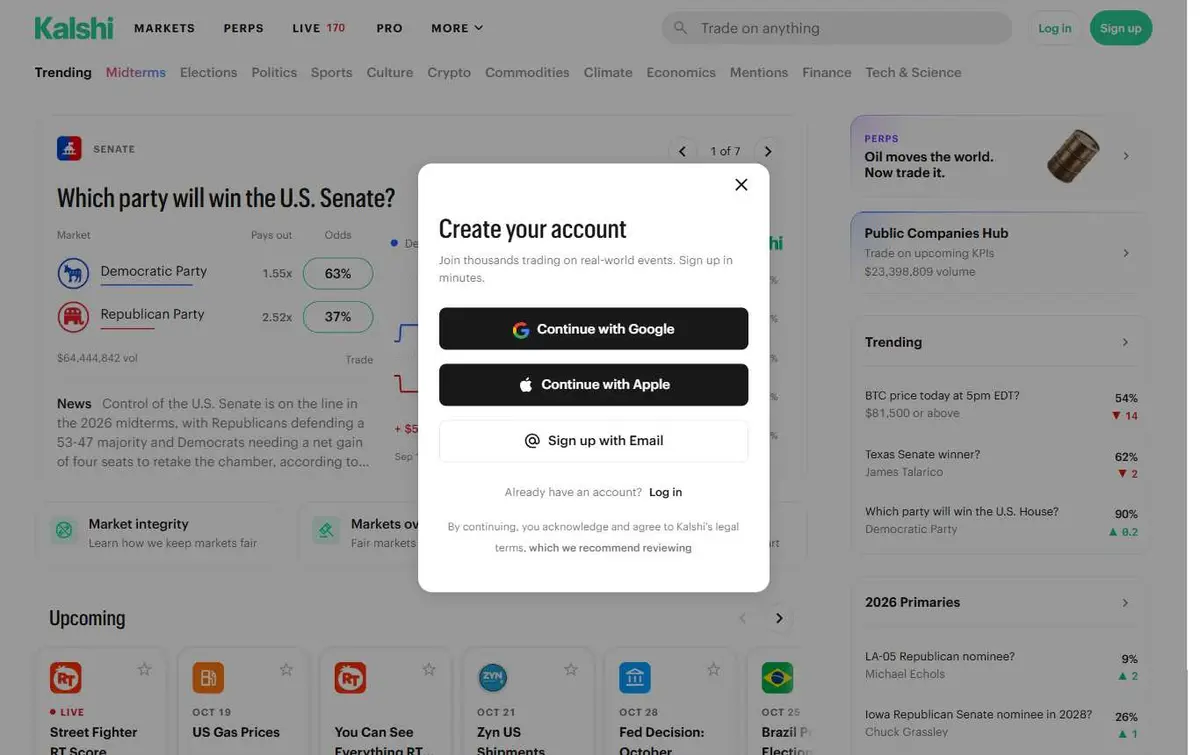
No barrier Kalshi · Home page
The home page loads with no notice, despite the federal block ordered in April 2026
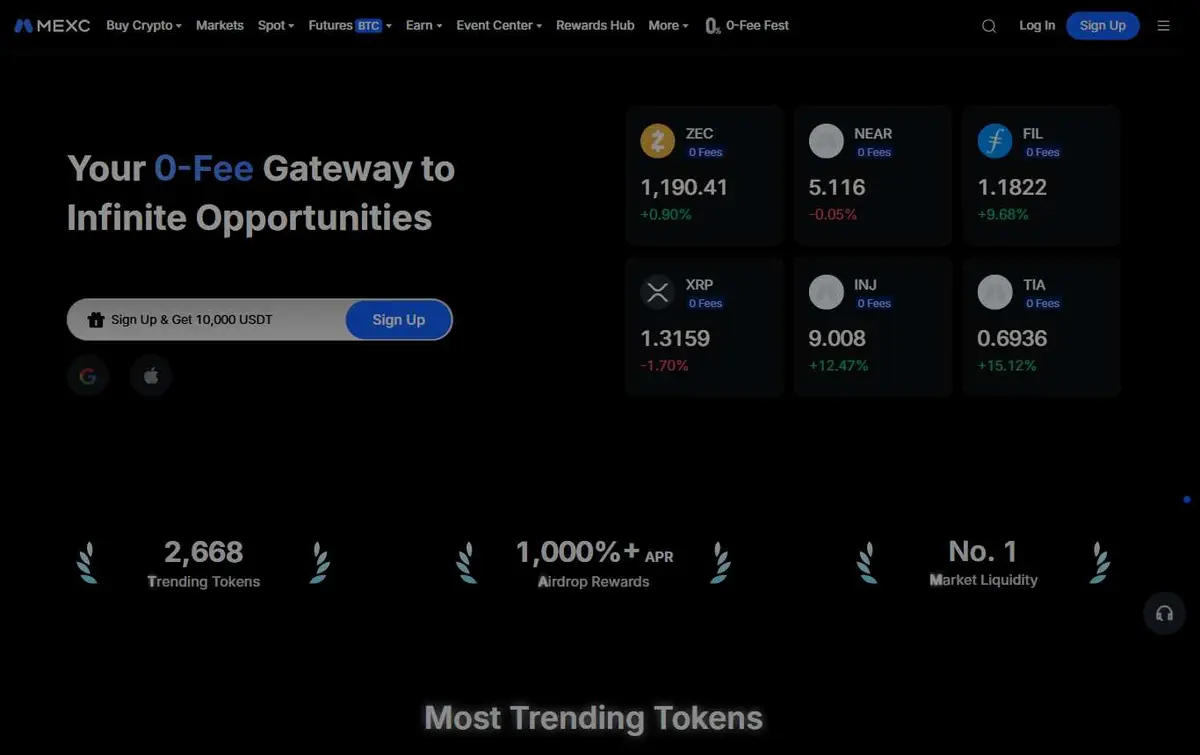
No barrier MEXC · Home page
Loads with no warning; Brazil is not on MEXC's prohibited list
 CRYPTORESTRICTIONS
Who regulates crypto in Brazil?
The Banco Central do Brasil supervises crypto providers, the CVM covers tokens that are securities, the Ministry of Finance’s betting secretariat treats prediction markets as betting, and the Receita Federal sets tax and reporting.
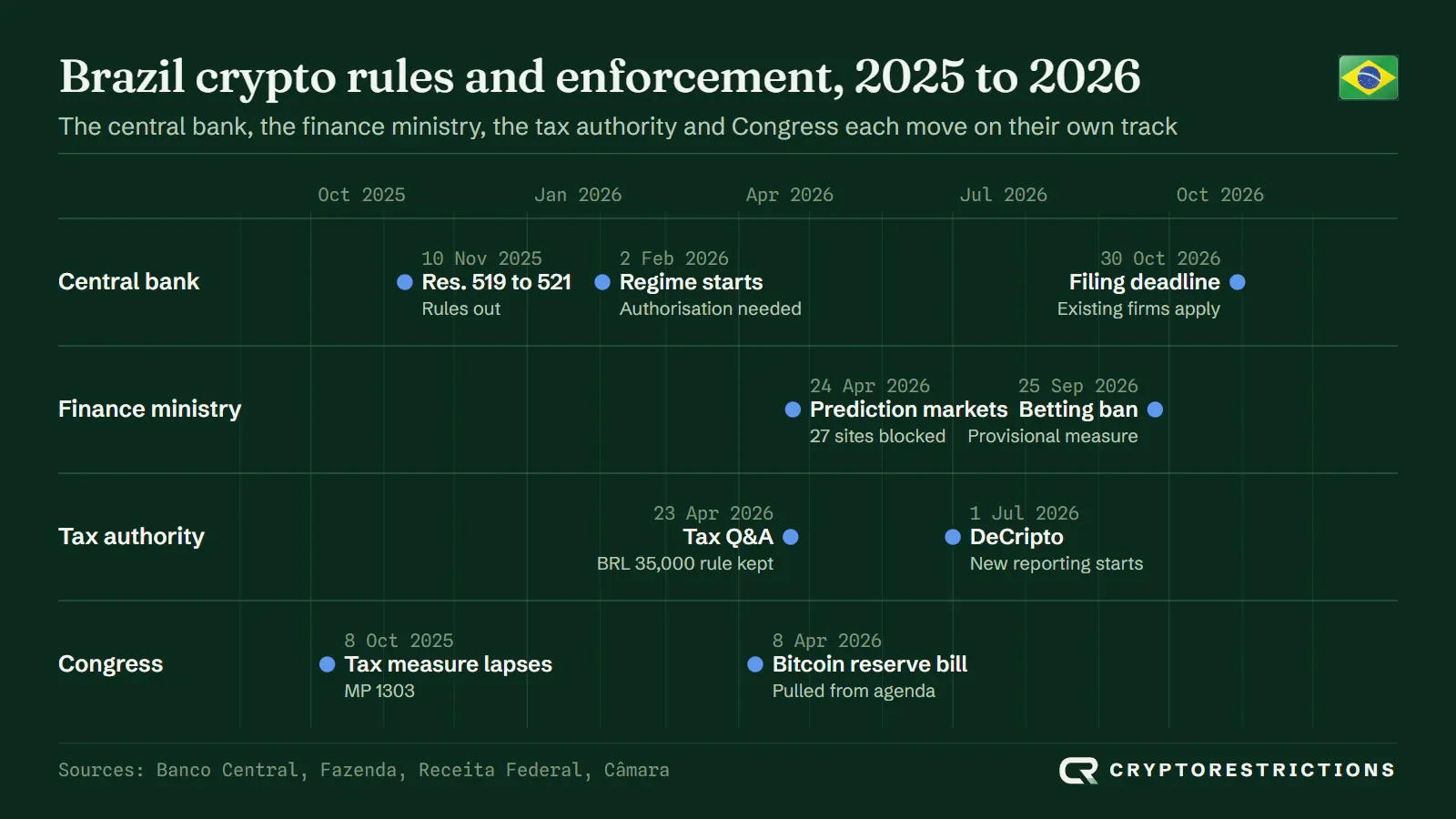
- Banco Central do Brasil. It authorises SPSAVs under Resolutions 519 and 520 and, under Resolution 521, treats stablecoin trades and cross-border crypto payments as foreign exchange operations. A provider’s international transfer with a counterparty not authorised for FX is capped at US$100,000, and the travel rule becomes mandatory for all authorised providers on 2 February 2028.
- CVM. The securities regulator covers tokens that are securities. On 14 October 2026 it published Resolution 249, an experimental pilot programme for distributed ledger technology.
- Ministry of Finance. Its secretariat for prizes and bets licenses fixed-odds betting under Law 14.790 of 2023 and concluded in April 2026 that prediction markets fall within it. The ministry then ordered sites blocked.
- CMN. The National Monetary Council issued the April 2026 ban on event derivatives.
- Receita Federal. The tax authority, covered in the tax section, runs the DeCripto reporting regime that started on 1 July 2026.
- Congress. The 2025 investment tax measure, MP 1303, lapsed on 8 October 2025 after the Chamber removed it from the agenda by 251 votes to 193.
Which crypto products are limited in Brazil?
Derivatives are the most closed product: OKX and Crypto.com restrict them for Brazilians, Gemini offers perpetuals to institutions only, and Hyperliquid hides its outcome markets here.
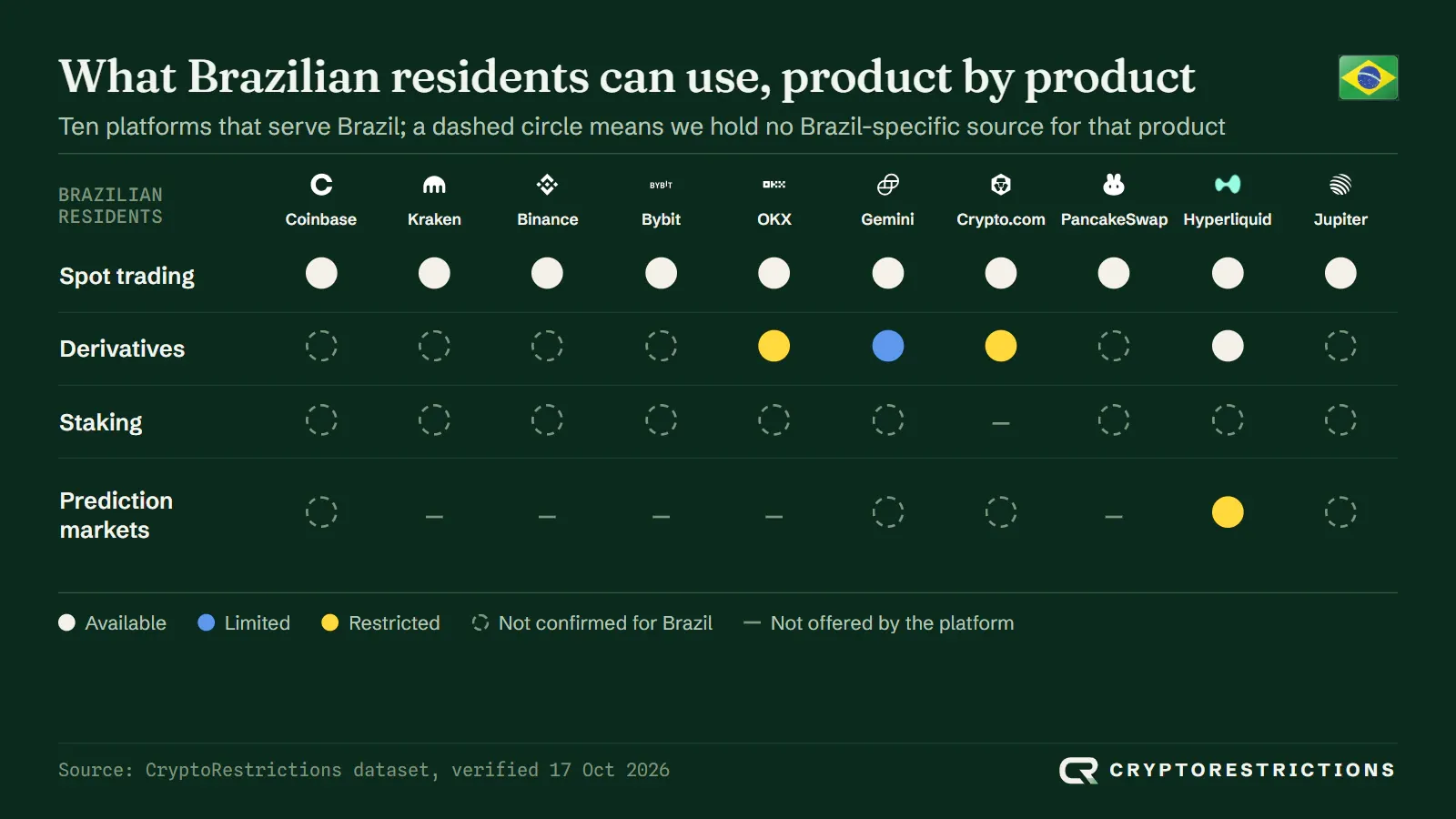
- Derivatives. OKX says in its disclosure that derivatives and P2P services may be restricted in Brazil, Crypto.com lists Brazil on its derivatives geo-restrictions, and Gemini opens perpetuals to institutional clients only. Perpetuals loaded in Hyperliquid’s app in our test.
- Spot. Open on every serving platform in the chart.
- Stablecoins. Resolution 521 turns buying, selling and exchanging fiat-referenced assets into foreign exchange operations. The Receita says stablecoins make up about 80% of declared crypto volume.
- Staking. We hold no Brazil-specific source for any platform, so the matrix shows it as not confirmed. KuCoin Brasil lists staking among its services.
- Moving crypto abroad. The US$100,000 cap and the COAF reports above apply to the provider, not to you, but they decide which transfers a provider will carry out.
Are prediction markets legal in Brazil?
No. The government treats them as unlicensed fixed-odds betting and as banned event derivatives, and on 24 April 2026 it had 27 prediction market sites blocked.
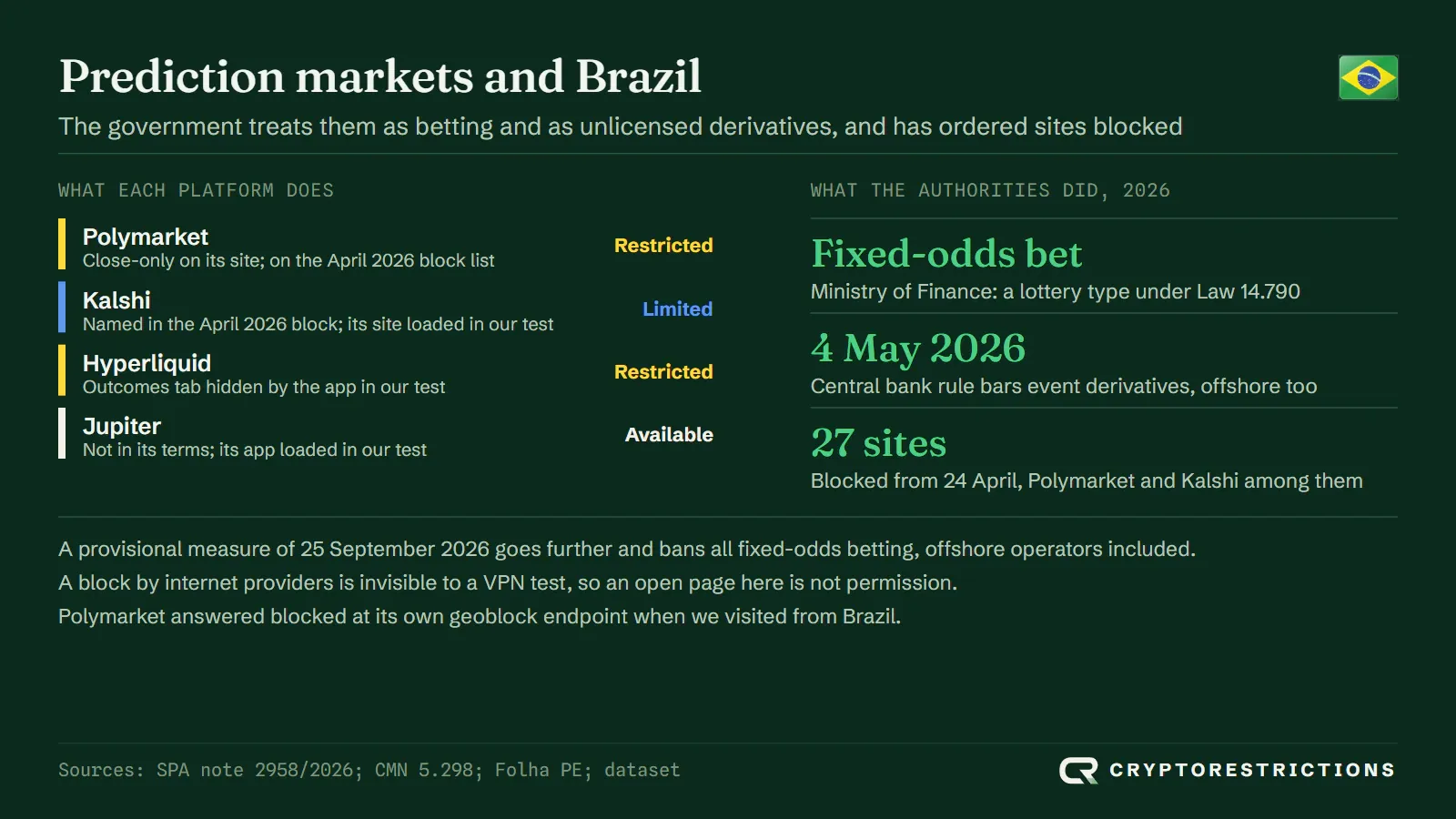
The Ministry of Finance’s betting secretariat laid out the case in technical note 2958/2026, which finds the contracts share the identity of a fixed-odds bet under Law 14.790 of 2023. The next day the National Monetary Council issued Resolution 5.298, in force from 4 May 2026, which bars offering or trading in Brazil derivative contracts tied to sports, online games and political, cultural or entertainment events, including contracts traded abroad. Folha de Pernambuco reported the block of 27 platforms, Polymarket and Kalshi among them.
The line has hardened since. Provisional Measure 1.394 of 25 September 2026 bans all fixed-odds betting nationwide, offshore operators included, ends the licences issued under Law 14.790 and bars payment processing for such bets; Congress still has to convert it. We did not find a court ruling reversing the April block.
How is crypto taxed in Brazil?
Crypto sales up to BRL 35,000 in a month are exempt. Above that, the whole gain is taxed at 15% to 22.5% by size, paid by the last working day of the following month.
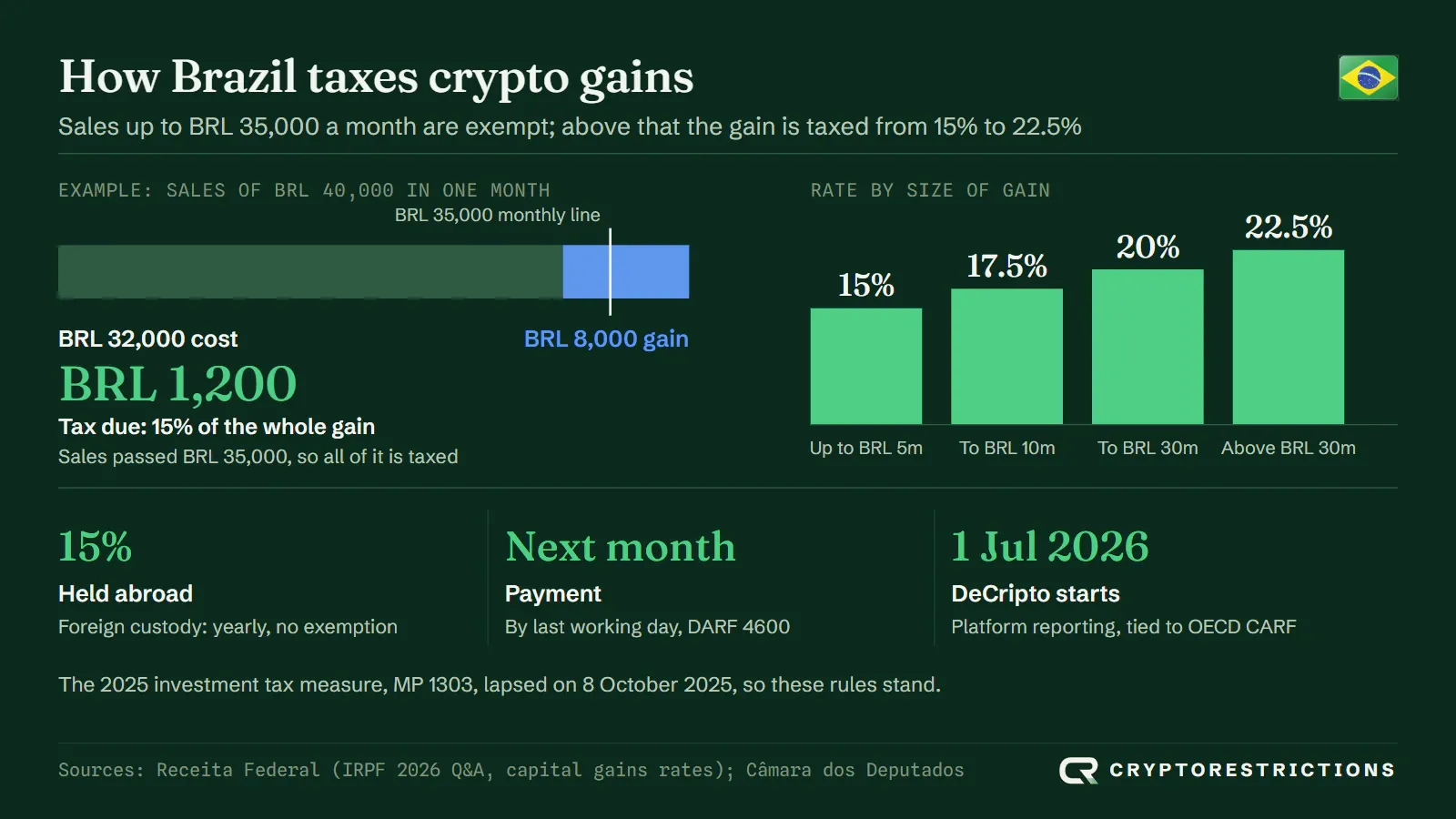
The Receita Federal’s IRPF 2026 answers class a crypto sale as a capital gain and say the rules were not changed. The BRL 35,000 test counts everything you sell in the month, in Brazil or abroad, stablecoins and NFTs included, and once it is passed the gain on every sale that month is taxable. Swapping one token for another is a taxable sale, valued in reais on the day. The rate table is 15% up to BRL 5 million of gain, 17.5% to BRL 10 million, 20% to BRL 30 million and 22.5% above. Tax is paid with a DARF under code 4600.
Holdings go in the yearly return under group 08, at acquisition cost, for each type of crypto worth BRL 5,000 or more. Crypto kept at a foreign institution follows a different regime, from Law 14.754 of 2023: 15% in the annual return, with no monthly exemption. Reporting is a separate duty from tax. Instruction IN RFB 1888 required exchanges to report monthly, and residents trading on foreign platforms to report above BRL 30,000 a month. From 1 July 2026 DeCripto (IN RFB 2.291 of 2025) takes over, aligned with the OECD’s crypto reporting framework, and applies whether or not tax is due. A 2025 provisional measure that would have changed investment tax lapsed, so these rules stand. Working out your own position takes four steps:
 Chile
 Peru
 Uruguay
 Colombia
 Argentina
 Venezuela
 Ecuador
 Paraguay
 Bolivia
 Guyana
 Suriname