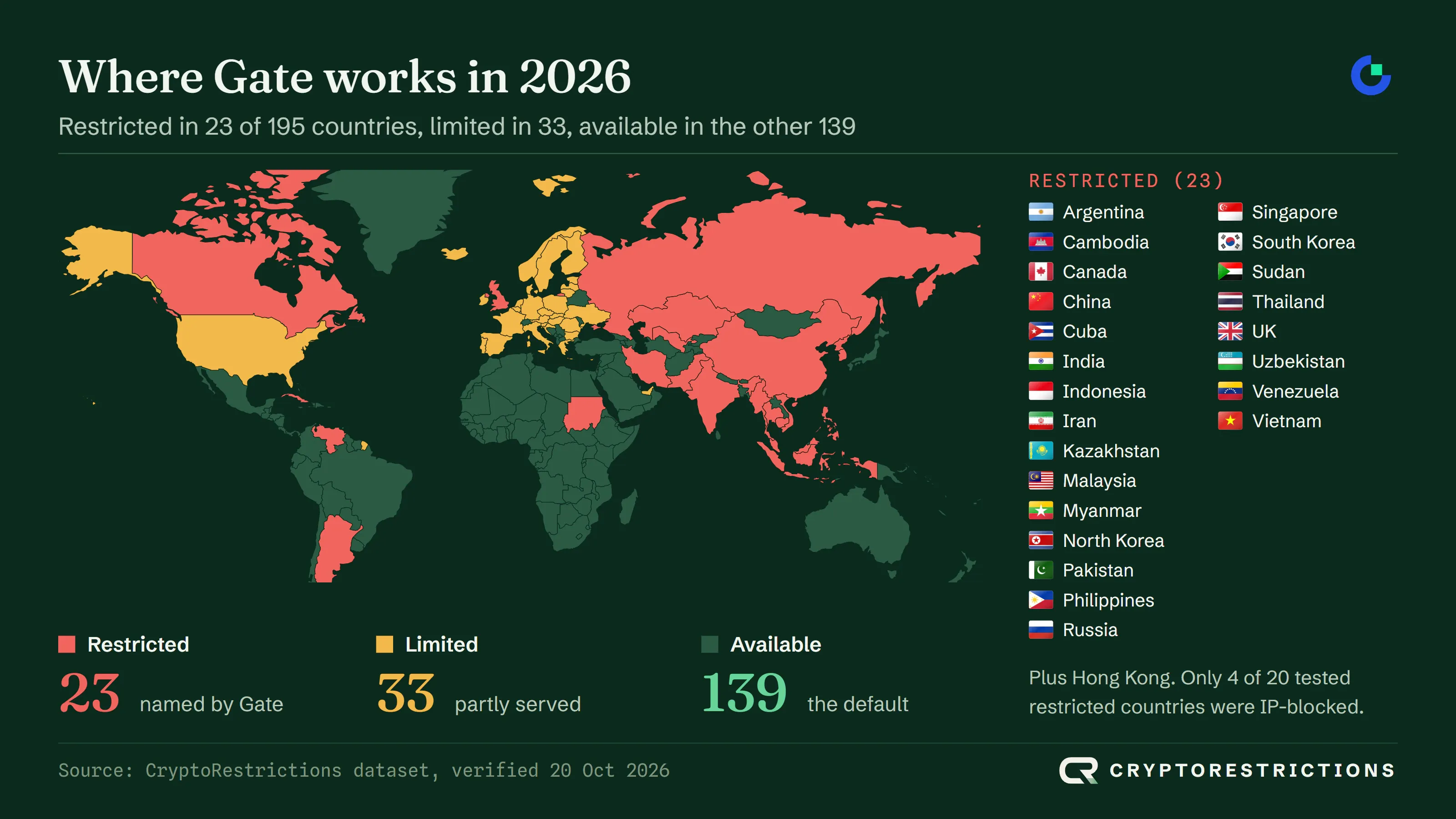
Where is Gate restricted?
Gate is restricted in 23 of the 195 countries we cover:  Argentina,
 Cambodia,
 Canada,
 China,
 Cuba,
 India,
 Indonesia,
 Iran,
 Kazakhstan,
 Malaysia,
 Myanmar,
 North Korea,
 Pakistan, the
 Philippines,
 Russia,
 Singapore,
 South Korea,
 Sudan,
 Thailand, the
 United Kingdom,
 Uzbekistan,
 Venezuela and
 Vietnam.
Twenty-two come from clause 2.5 of Gate’s user agreement (last updated 22 July 2026), which lists 35 restricted locations “and so on”: the 22, plus  Hong Kong, the Crimea, Donetsk and Luhansk regions of Ukraine, and nine countries where a local Gate company still serves residents (covered below). Gate gives no reason for any of them. Seven face sanctions: Cuba, Iran and North Korea under comprehensive US sanctions (OFAC programmes for Cuba, Iran and North Korea), while Myanmar, Russia, Sudan and Venezuela face narrower measures, from the EU ban on crypto services for Russian residents to the FATF call for action on Myanmar. Clauses 2.3 and 2.11 add a ban on anyone on a sanctions list, wherever they live.
India also has a regulator on record. Its Financial Intelligence Unit sent show-cause notices to nine offshore exchanges on 28 December 2023, among them “Gate Technology Incorporated” of the Cayman Islands, and asked the IT ministry to block their URLs, according to the government’s release; The Statesman reported the sites blocked in January 2024. Kazakhstan is the one restricted country not in the user agreement. Gate’s own block pop-up, which we captured in our test, lists “the United States of America, Canada, Cambodia, Thailand, Cuba, Iran, North Korea, Kazakhstan and so on” as restricted locations.
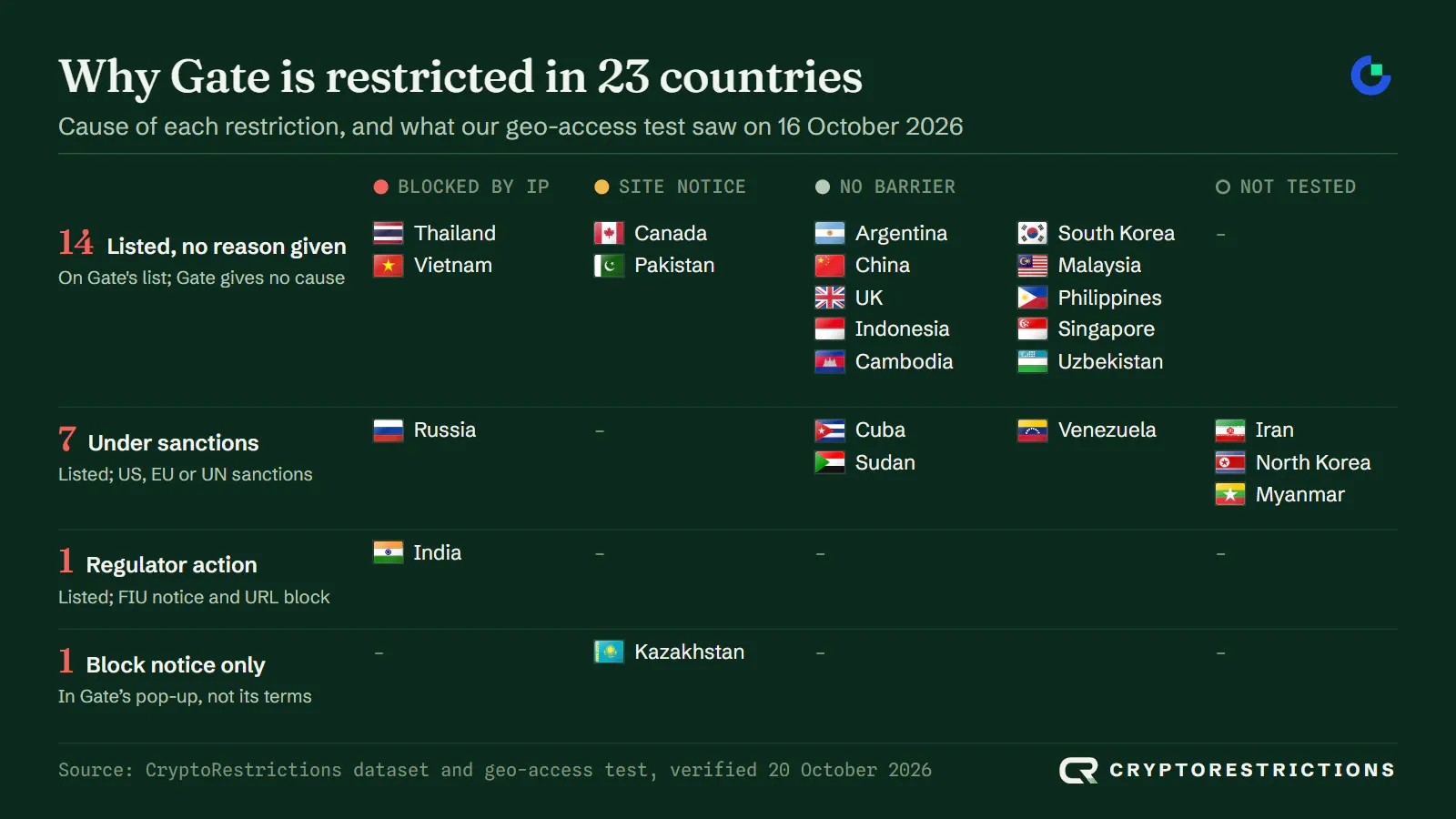
Gate does not enforce its list at the door. Only India, Russia, Thailand and Vietnam got the block pop-up in our test; Canada, Kazakhstan and Pakistan saw a banner suggesting another Gate site, and 13 listed countries, the UK and Singapore among them, loaded with no barrier at all. The full list, with the reason for each country, is below.
| Category | Countries | Context | Last verified |
|---|---|---|---|
| Geographic block | On Gate's restricted-locations list (user agreement, updated 22 July 2026). | 17 Oct 2026 | |
| Geographic block | Named as a restricted location in Gate's own block notice, seen in our geo-access test; not in the user agreement's list. | 17 Oct 2026 | |
| Geographic block | On Gate's restricted-locations list (user agreement clause 2.5, updated 22 July 2026); Gate is not on the CNV register. | 17 Oct 2026 | |
| Geographic block | On Gate's restricted-locations list; India's FIU sent Gate's operator a show-cause notice in December 2023 and asked for its URLs to be blocked. | 17 Oct 2026 |
Where is Gate limited?
Gate is limited in 33 countries: all 30 in the EEA, the  United States, the
 United Arab Emirates and
 Ukraine.
Six of the EEA countries,  Austria,
 France,
 Germany,
 Malta, the
 Netherlands and
 Spain, are on global Gate’s restricted list; the other 24 are not, but global Gate stopped taking EEA users in March 2025. All 30 are served by Gate EU, the MiCA-licensed Maltese company covered below, which offers spot trading, convert, staking and OTC but no futures or margin, so each loses a product and is limited. The United States is served by Gate US, Inc., spot only. In the UAE, Gate Technology FZE holds a VARA licence for exchange services, which covers Dubai and not the rest of the country. Ukraine is limited because the user agreement excludes Crimea, Donetsk and Luhansk.
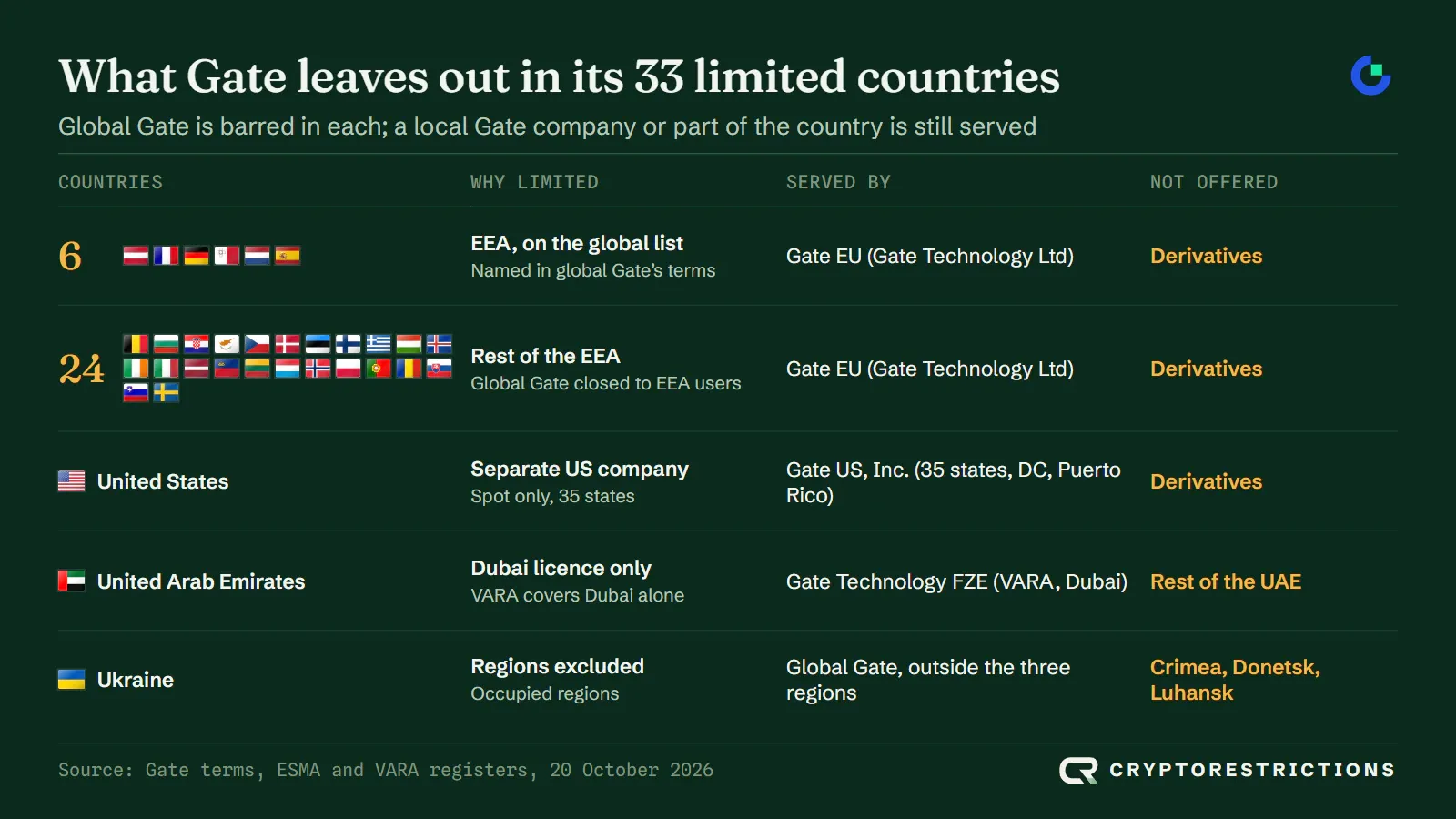
Limited means part of Gate still serves you, but not the global exchange with its derivatives. In every EEA country we record a separate restricted row for derivatives and an available row for spot trading, so the checker answers each product on its own. The countries and what applies in each are below.
| Category | Countries | Context | Last verified |
|---|---|---|---|
| Partial service | Gate EU serves spot, convert and staking under its Maltese MiCA licence, passported here; it offers no derivatives, and global Gate stopped taking EEA users in March 2025. | 19 Oct 2026 | |
| Partial service | On global Gate's restricted list; Gate EU serves it under its Maltese MiCA licence, spot only. | 17 Oct 2026 | |
| Partial service | Crimea, Luhansk and Donetsk are restricted; the rest of Ukraine is not listed. | 17 Oct 2026 | |
| Partial service | Gate US holds a Puerto Rico money transmitter licence (TM-160) and offers spot trading; global Gate restricts the US. | 07 Nov 2026 | |
| Partial service | Global Gate restricts the UAE; Gate Technology FZE holds a VARA exchange licence covering Dubai. | 17 Oct 2026 | |
| Partial service | Global Gate restricts the US; Gate US, Inc. (NMLS 2272810) has offered spot trading under state money transmitter licences since August 2025. | 17 Oct 2026 |
 Cyprus
 Liechtenstein
 Puerto Rico
Where is Gate available?
Gate is available in the other 139 of the 195 countries we cover, including  Japan,
 Australia,
 Turkey,
 Brazil and most of Africa and Latin America.
Three of them host a Gate licence or registration (covered in the licences section below): Japan, Australia and the  Bahamas. Japan and Australia are on global Gate’s list, but residents are served by Gate Japan K.K. and Gate Australia instead.
 Belarus has a row of its own: Belarus’s information ministry blocked gate.com with five other exchange sites on 10 December 2025, and Onliner later reported that the exchanges had left the block list, without naming Gate. The remaining 135 are available under our coverage rule: no official document from Gate or a regulator restricts them.
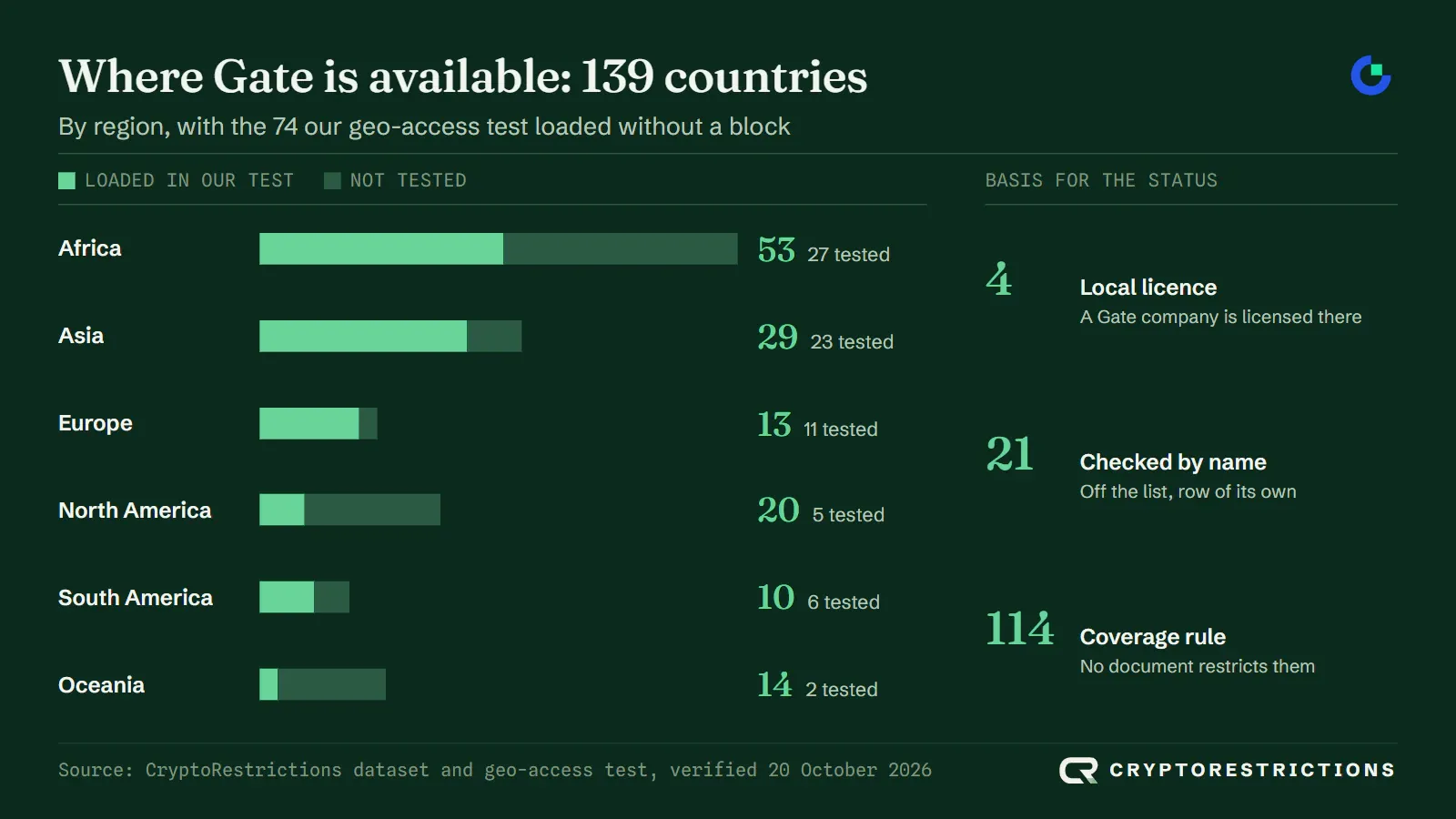
Our geo-access test loaded Gate without a block in 74 of the 139, 24 of them with a banner pointing to another Gate site. Available means Gate serves the country, not that local law allows crypto trading. The countries we hold a written basis for are below.
| Category | Countries | Context | Last verified |
|---|---|---|---|
| No restriction | Not named in Gate's restricted-locations clause (updated 22 July 2026; the list is non-exhaustive), and not blocked in our geo-access test. | 07 Nov 2026 | |
| No restriction | Not named in the restricted locations of Gate's user agreement, and its pages loaded in our geo-access test. | 19 Oct 2026 | |
| No restriction | Not named in Gate's restricted-locations clause (the list is non-exhaustive), and not blocked in our geo-access test. | 07 Nov 2026 | |
| No restriction | Not named in the restricted-locations clause of Gate's user agreement (updated 22 July 2026), and the site loaded in our geo-access test. | 18 Oct 2026 | |
| No restriction | Not on the restricted-locations list in Gate's user agreement (updated 22 July 2026), which is non-exhaustive; our geo-access test saw a regional notice but no block. | 19 Oct 2026 | |
| No restriction | Bangladesh is not named in Gate's restricted-locations list (user agreement, which says it is not exhaustive), and its pages loaded in our geo-access test. | 07 Nov 2026 | |
| No restriction | Nigeria is not named in the restricted locations of Gate's user agreement (22 July 2026), and its pages loaded in our geo-access test. | 17 Oct 2026 | |
| No restriction | Not named in Gate's restricted locations (clause 2.5, a non-exhaustive list); the site loaded in our test. | 07 Nov 2026 | |
| No restriction | Not named in Gate's restricted locations; our test showed a notice that the visit looked like it came from the EU region, which is not a Georgia restriction. | 19 Oct 2026 | |
| No restriction | Not named in Gate's restricted-locations clause (updated 22 July 2026; the list is non-exhaustive). Our test block read the virtual address as a US one, so it does not count. | 19 Oct 2026 | |
| No restriction | Not named in Gate's restricted-locations clause, and the site loaded in our geo-access test; Gate Kripto Varlık Alım Satım Platformu AŞ is on the SPK transitional list. | 17 Oct 2026 | |
| No restriction | Not named in the restricted locations of Gate's user agreement (updated 22 July 2026), and its home and sign-up pages loaded in our geo-access test. | 17 Oct 2026 | |
| No restriction | Not on Gate's list and not blocked in our test; a ministry block of gate.com in December 2025 was later reported lifted for the exchanges it covered. | 20 Oct 2026 | |
| No restriction | Not on Gate's restricted-locations list (user agreement, updated 22 July 2026), and not blocked in our geo-access test. | 17 Oct 2026 | |
| No restriction | Not on the restricted locations in Gate's user agreement, and not blocked in our geo-access test. | 17 Oct 2026 | |
| No restriction | Not on the restricted-locations list in Gate's user agreement (updated 22 July 2026), and not blocked in our geo-access test. | 18 Oct 2026 | |
| No restriction | Not on the restricted-locations list in Gate's user agreement, which is non-exhaustive; our geo-access test loaded the site with no notice. | 19 Oct 2026 | |
| No restriction | Not on the restricted-locations list in Gate's user agreement, which is non-exhaustive; our geo-access test showed an EU-region notice on the home page rather than a block. | 19 Oct 2026 | |
| No restriction | Served by Gate Australia, registered with AUSTRAC as a digital currency exchange. | 17 Oct 2026 | |
| No restriction | Served by Gate Japan K.K., registered crypto-asset exchange No. 00018; global Gate lists Japan as restricted. | 17 Oct 2026 |
 Chile
 Colombia
 El Salvador
 Peru
 Uruguay
 Costa Rica
 Dominican Republic
 Israel
 Nigeria
 Switzerland
 South Africa
 Taiwan
 Qatar
Where do Gate’s visitors come from?
The United States and South Korea appear in both traffic estimates we could check for gate.com, but the two disagree on almost everything else.
Similarweb’s own page was behind its search limit when we checked, so its figures come from its May 2026 data published by BitRSS: 12.65 million visits, led by the United States at 9.68%, Türkiye at 6.15% and South Korea at 5.54%. Semrush counts 11.85 million visits in September 2026, with Bangladesh at 28.92%, Thailand at 9.78% and the United States at 4.54%.
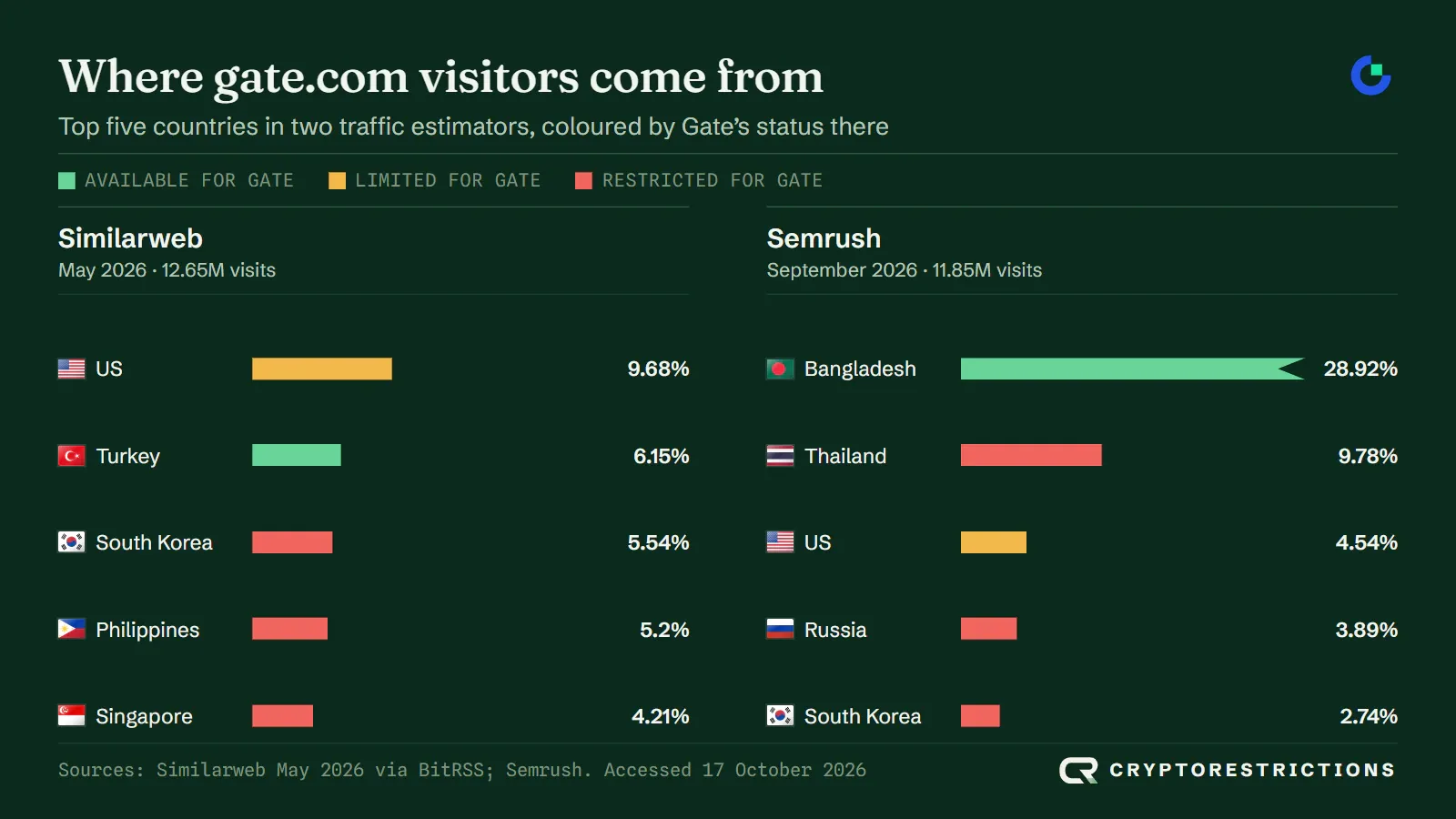
Five restricted countries sit in these lists: South Korea, the Philippines, Singapore, Thailand and Russia. Our test shows why that is possible: from South Korea and Singapore gate.com loaded with no barrier, so price checks and research count as visits. Thailand and Russia were blocked from our virtual locations, but a page that refuses to serve still records a visit. The US figures largely reach Gate US, which runs on the same domain. Estimators model traffic from panels and samples, so treat any single share as an estimate.
Gate geo-access test: what we saw from 129 countries
In our test Gate’s pages showed its restricted-location pop-up in 11 of the 129 countries we reached, but only 4 of them are restricted in our data, and 51 others loaded with a banner pointing to a regional Gate site.
We ran the test ourselves on 16 October 2026, with the same method as for every platform. A browser with a VPN connected to one country at a time and loaded Gate’s home page and its sign-up page, each time in a fresh private window with no cookies. Cookie banners were hidden but never accepted, and bot checks were waited out, never solved. Every run saved the page text and a screenshot.
Of the 133 places tested (129 of our 195 countries plus Hong Kong, Macau, Puerto Rico and Taiwan), 59 of the countries went through VPN servers located there and 70 through virtual locations hosted elsewhere. A virtual location tests Gate’s own blocking only; it cannot see a block run by a country’s internet providers.
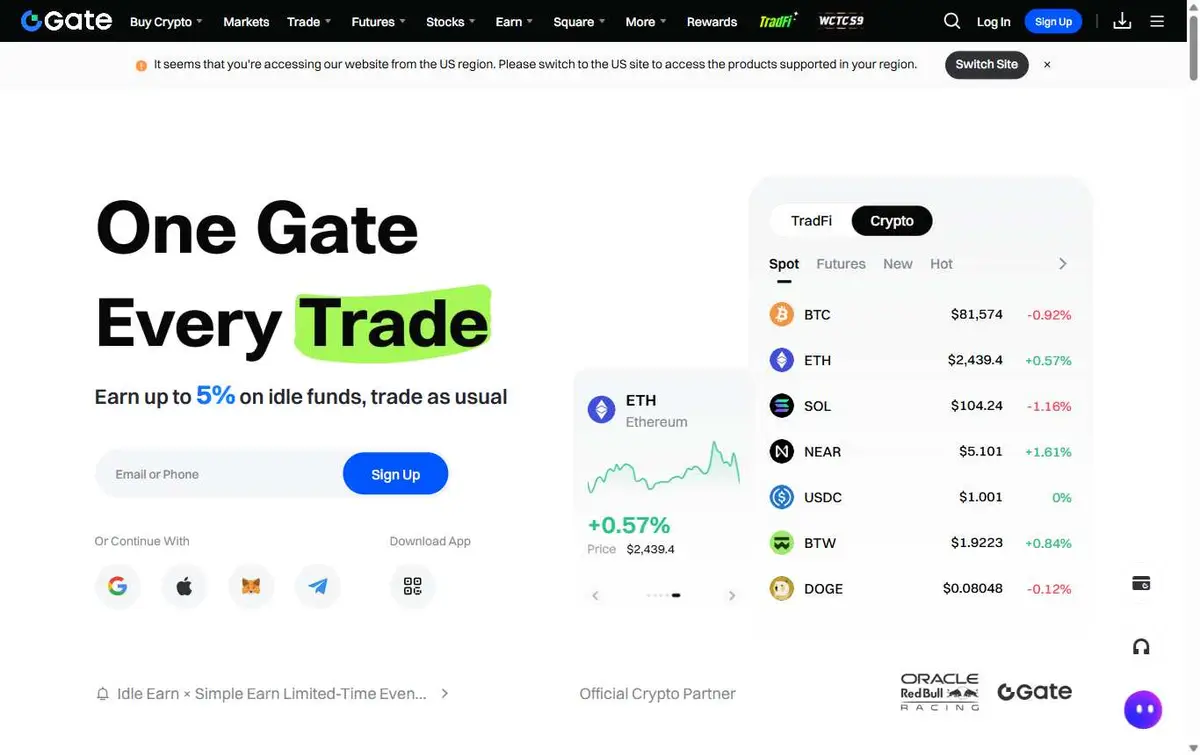
BlockedUnited States · Home page
Blocked by IP: the home page opens behind Gate's restricted-location pop-up and a banner pointing to Gate US
“It seems that you are attempting to access our services from a Restricted Location where Gate is unable to provide services.”
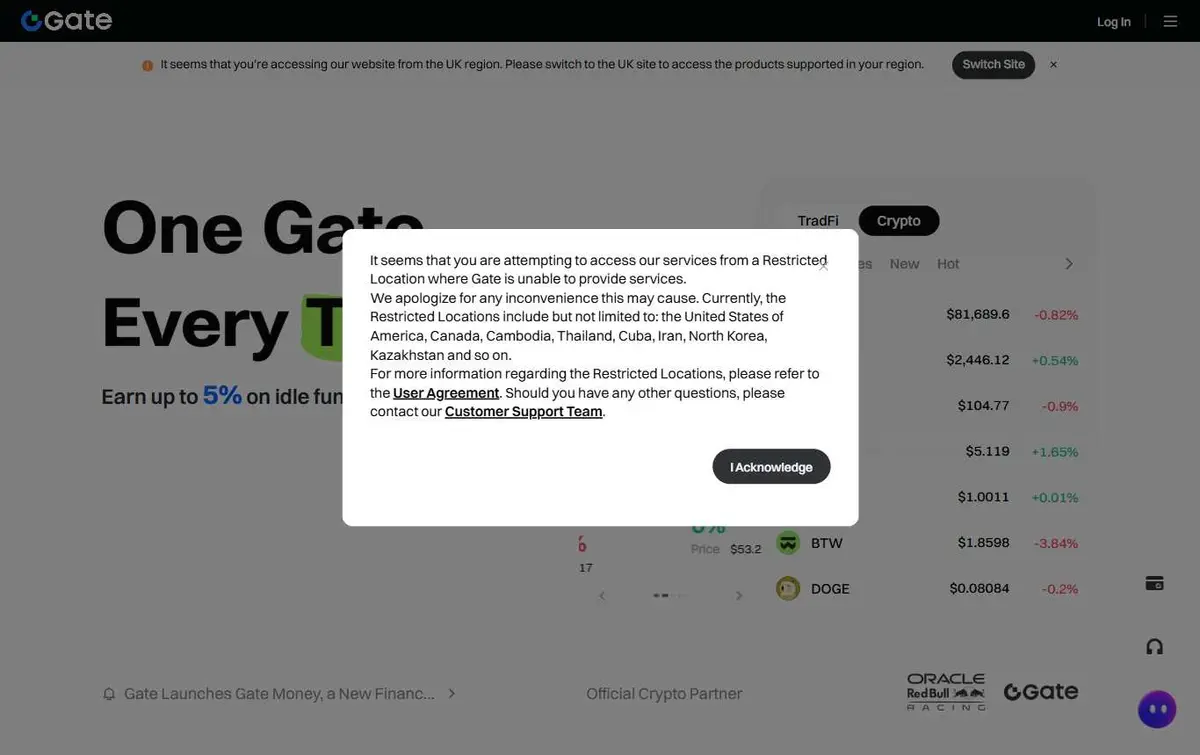
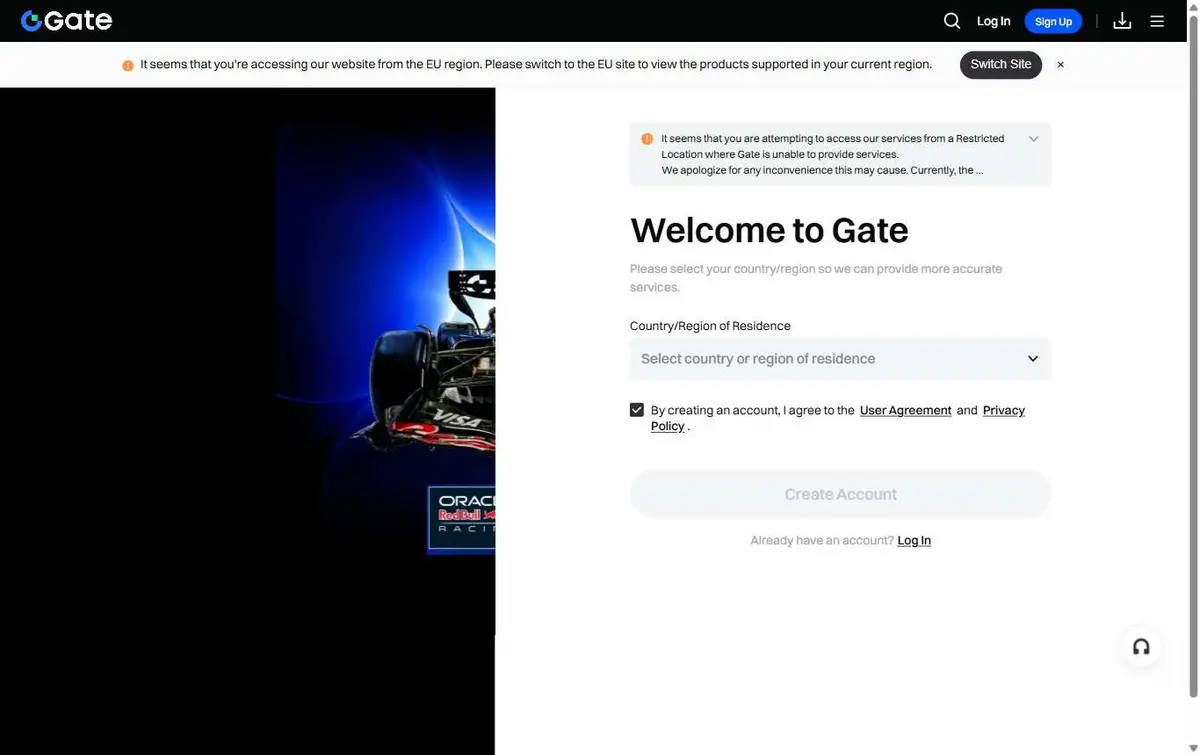
Blocked Italy · Home page
From Italy the same pop-up, under a banner that places our address in the UK; its list names Kazakhstan
“Currently, the Restricted Locations include but not limited to: the United States of America, Canada, Cambodia, Thailand, Cuba, Iran, North Korea, Kazakhstan and so on.”
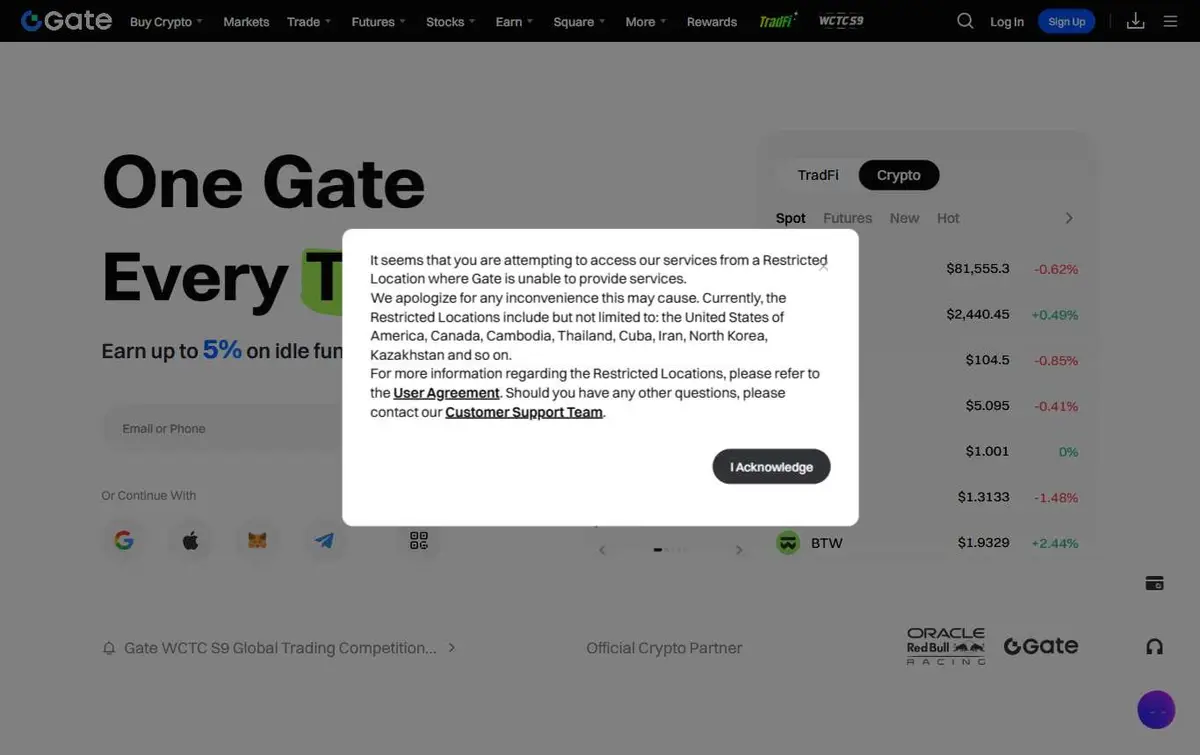
BlockedNetherlands · Sign-up page
The Netherlands, on Gate's list, got the pop-up and a pointer to Gate EU
“It seems that you're accessing our website from the EU region.”
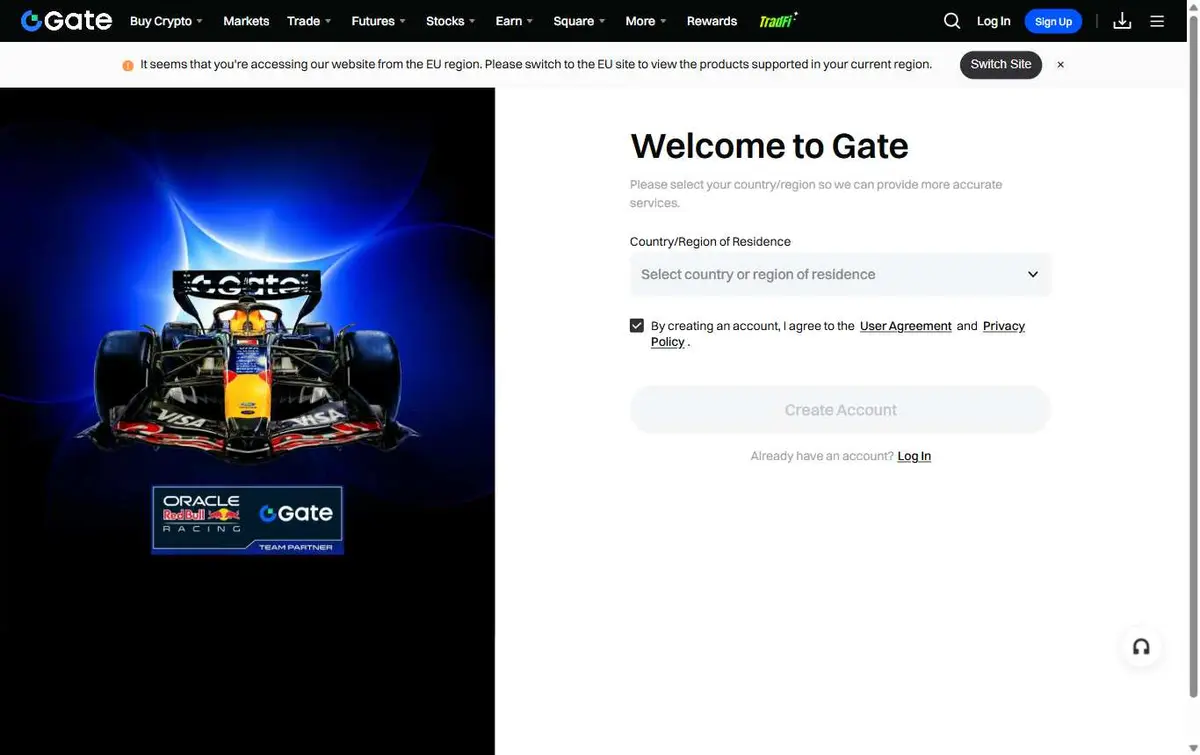
BlockedThailand · Home page
Thailand, on Gate's list, blocked by IP
“It seems that you are attempting to access our services from a Restricted Location where Gate is unable to provide services.”
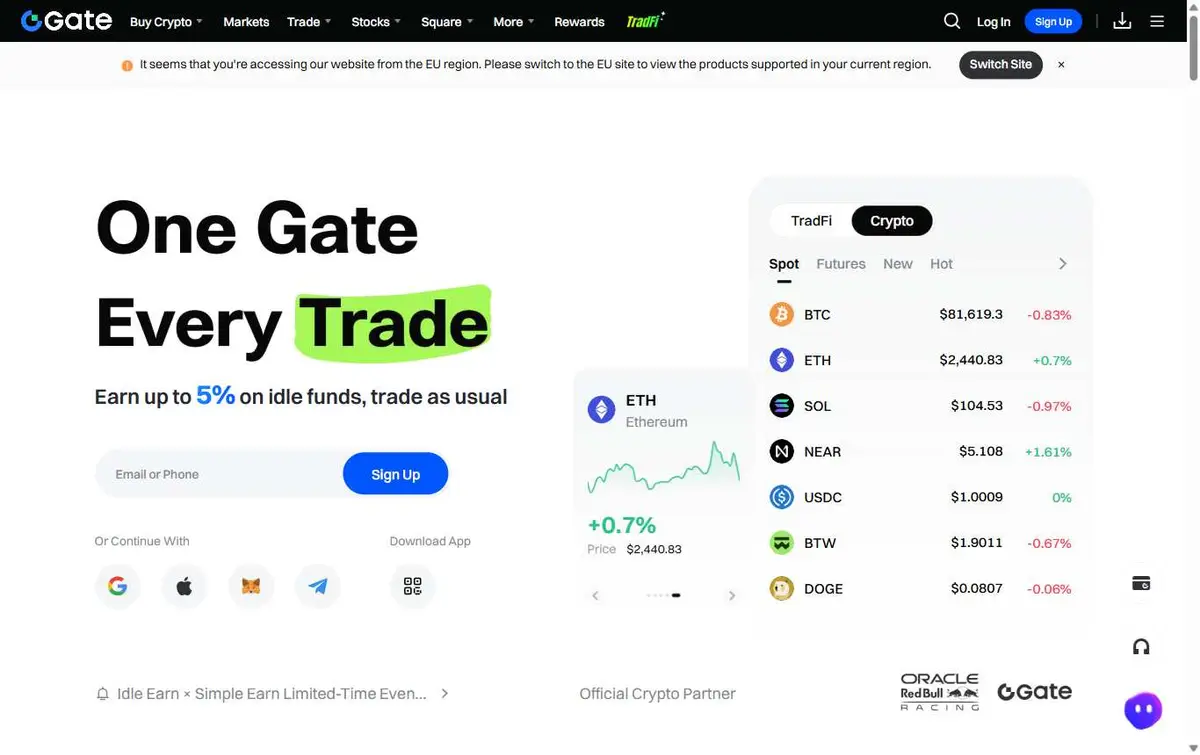
Notice shownGermany · Sign-up page
Germany, also on Gate's list, got no pop-up: only the banner sending EEA visitors to Gate EU
“It seems that you're accessing our website from the EU region.”
Notice shownCanada · Home page
Canada is on Gate's list, yet the page loaded with only a site-switch banner
“It seems that you're accessing our website from the EU region.”
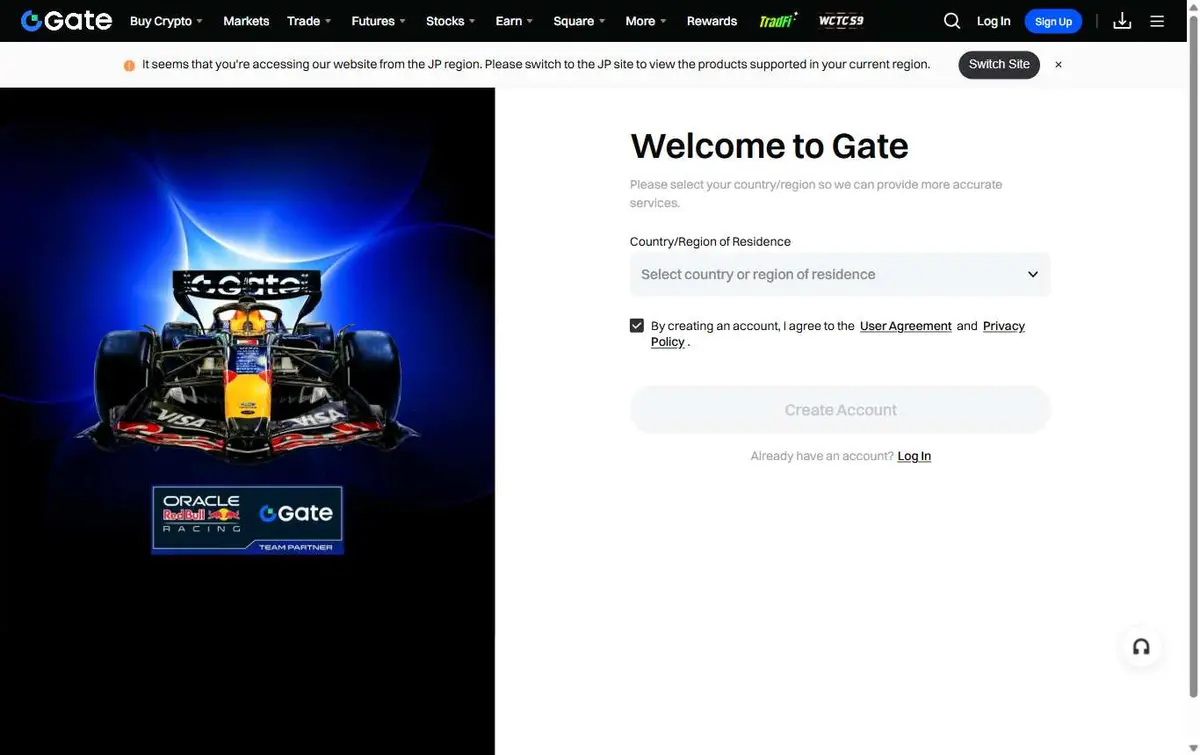
Notice shownJapan · Sign-up page
Japan: a banner pointing to Gate Japan, the registered local exchange
“It seems that you're accessing our website from the JP region.”
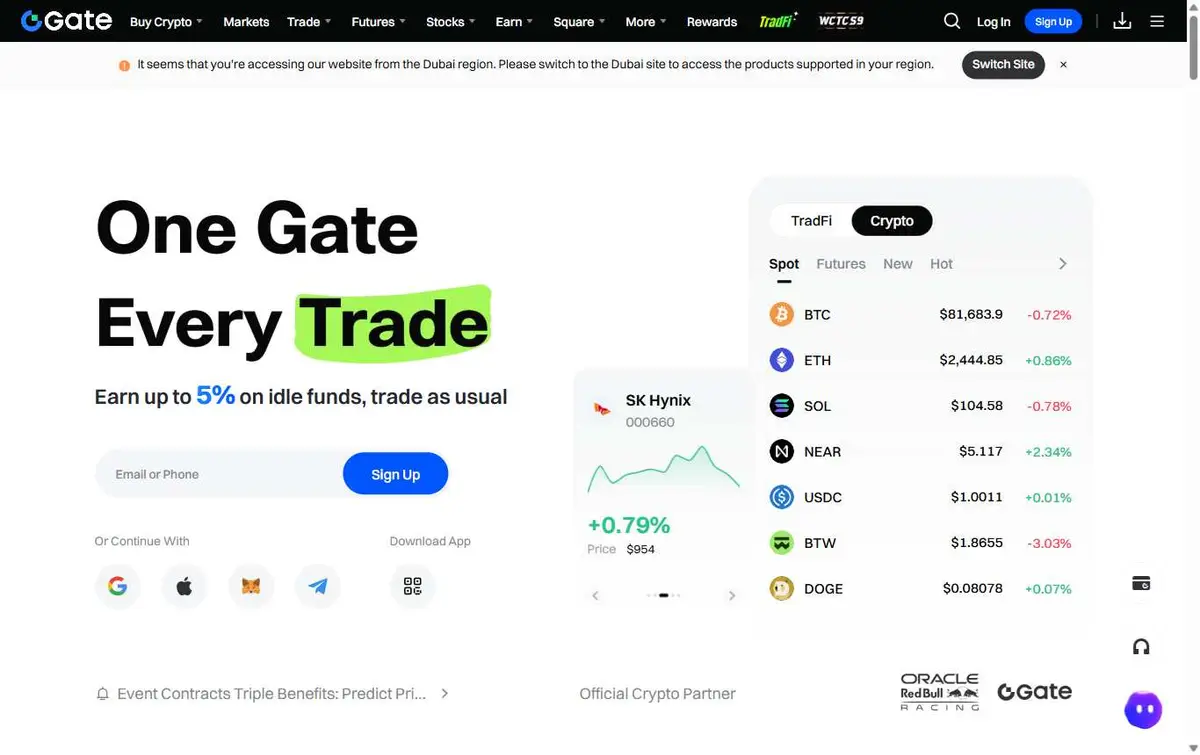
Notice shownUnited Arab Emirates · Home page
The UAE: a banner pointing to Gate's Dubai site, licensed by VARA
“It seems that you're accessing our website from the Dubai region.”
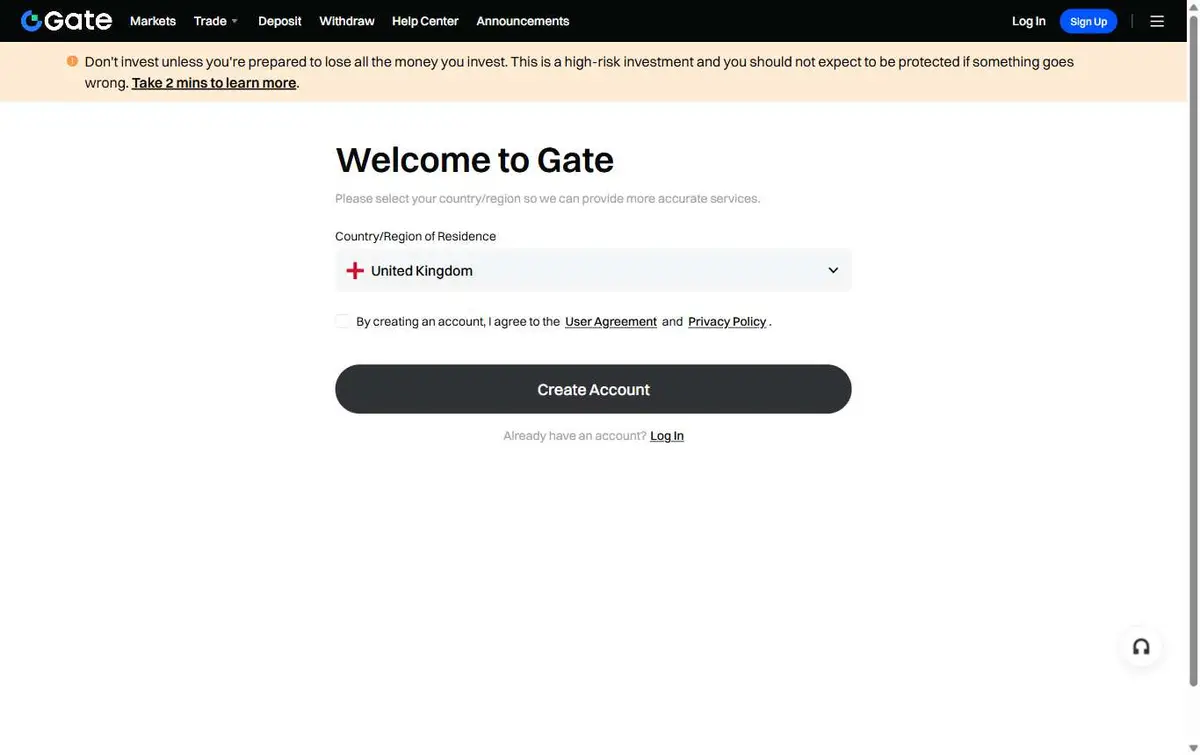
No barrierUnited Kingdom · Sign-up page
The UK is on Gate's list, but the sign-up page loaded with no block, the UK preselected and a UK-style risk warning
“Don't invest unless you're prepared to lose all the money you invest.”
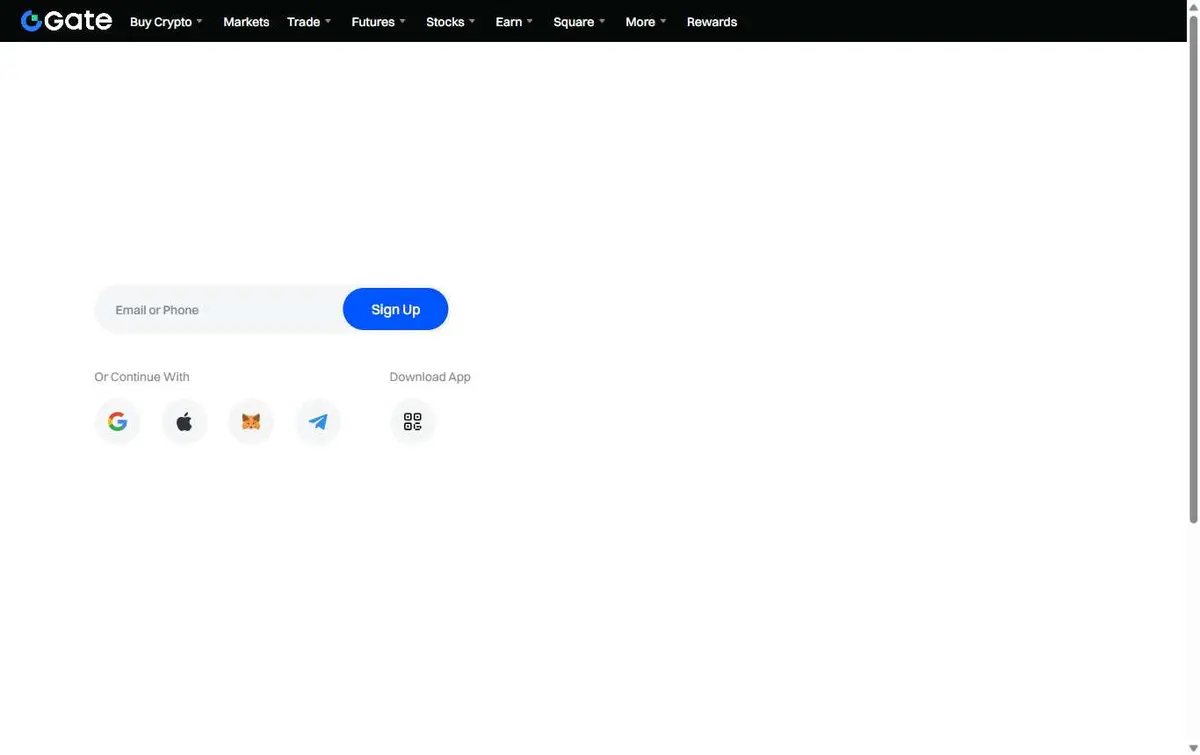
No barrierSouth Korea · Home page
South Korea, also listed, loaded with no barrier
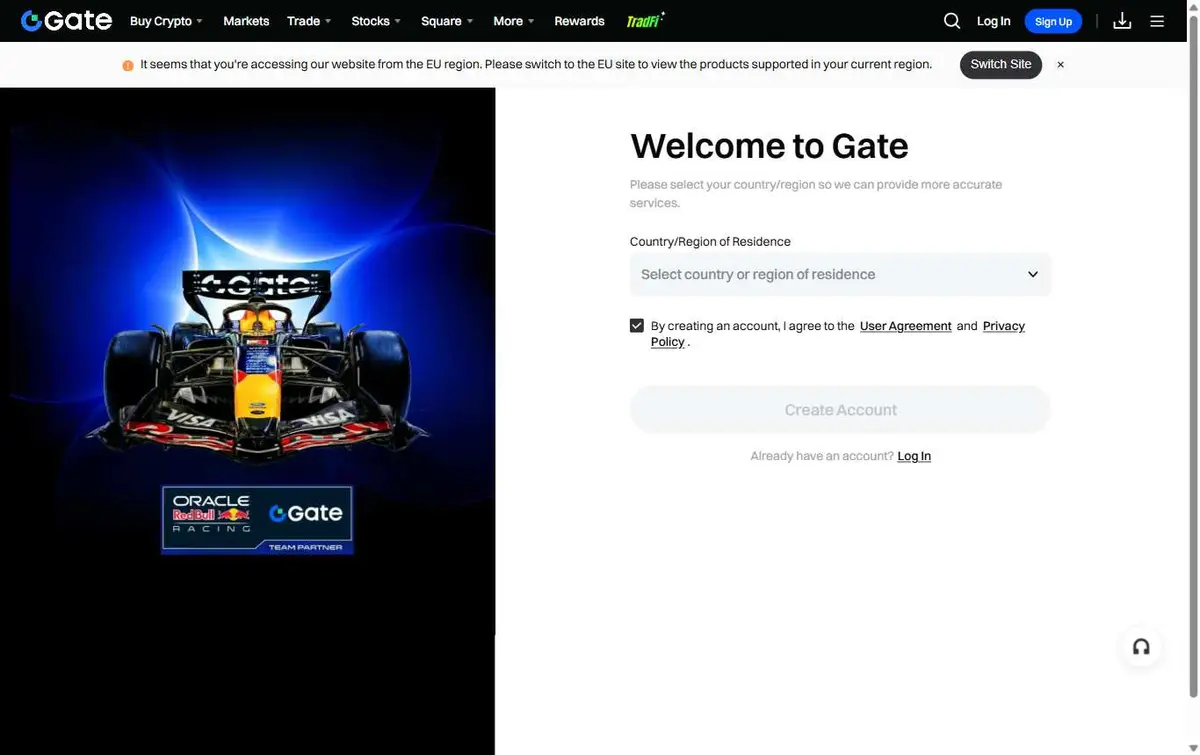
Notice shownSpain · Sign-up page
Spain: sign-up shows a prompt to switch to the EU site
“It seems that you're accessing our website from the EU region.”
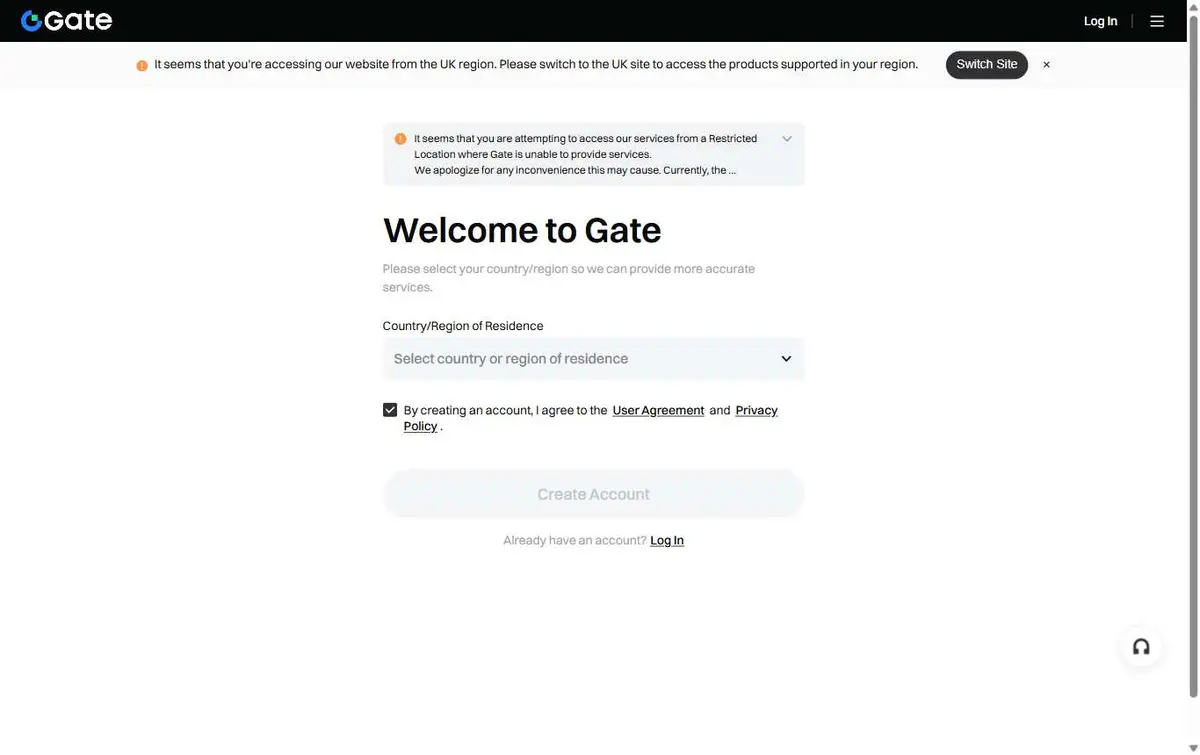
BlockedItaly · Sign-up page
Italy gets Gate's restricted-location message on sign-up, alongside a prompt to switch to a regional site
“attempting to access our services from a Restricted Location where Gate is unable to provide services”
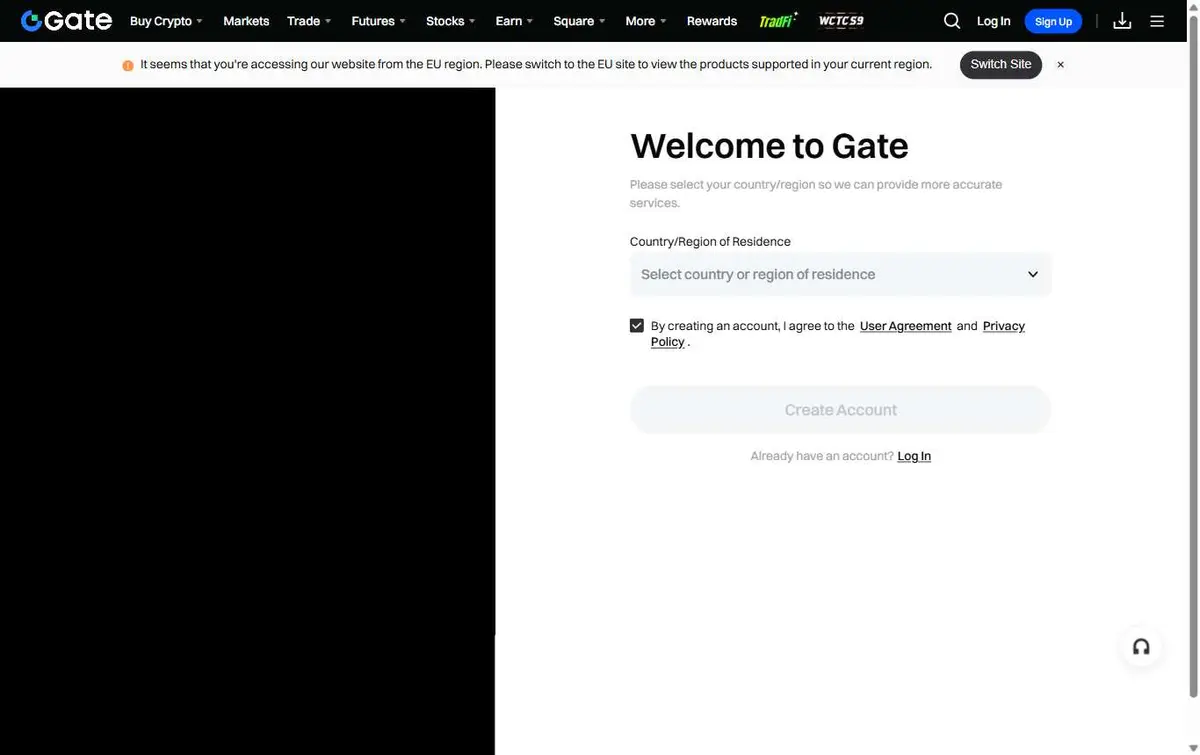
Notice shown Poland · Sign-up page
Poland gets an EU-region notice at sign-up
“It seems that you're accessing our website from the EU region.”
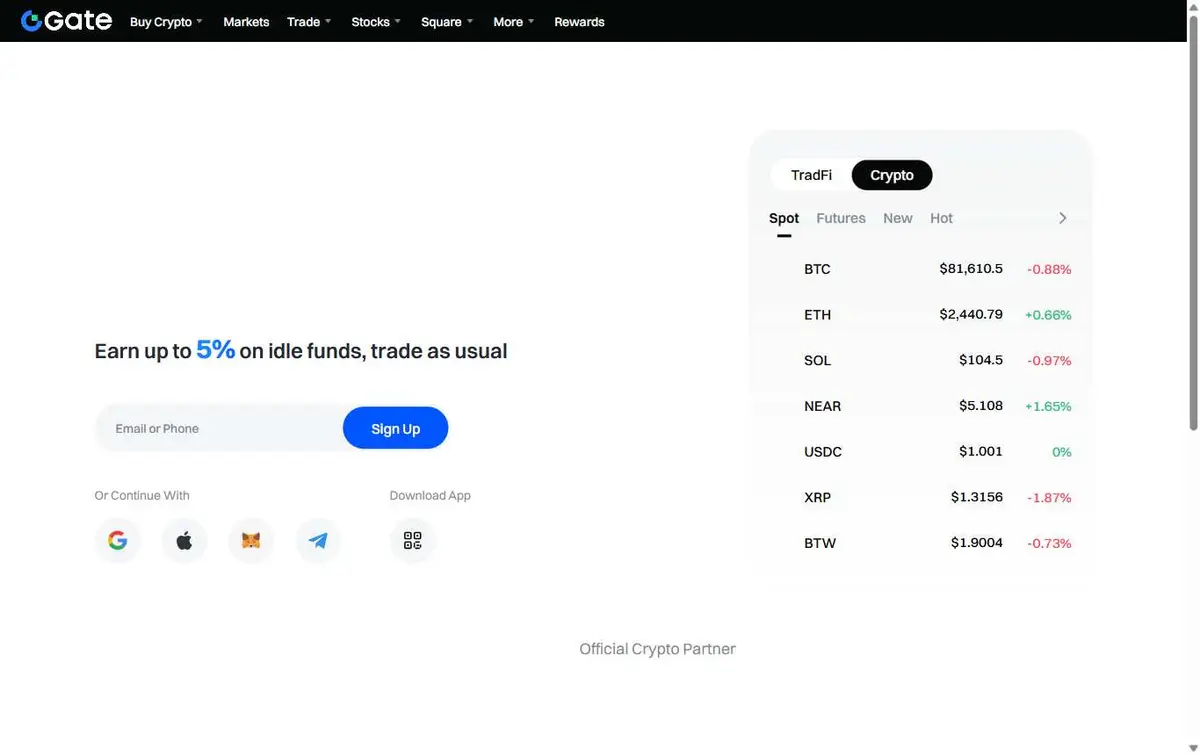
No barrierAustralia · Home page
Australia: the home page loaded with no barrier, and the scan logged a notice that we were visiting from the AU region
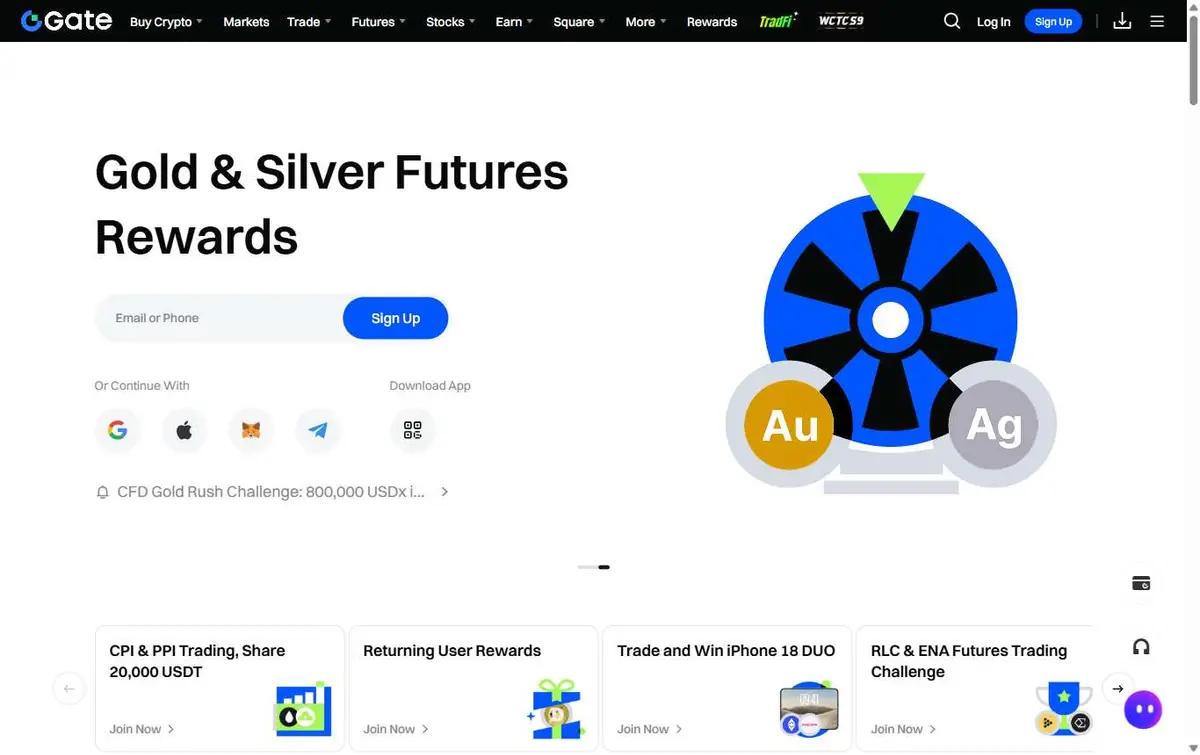
No barrierTurkey · Home page
Turkey: the home page loads with no notice
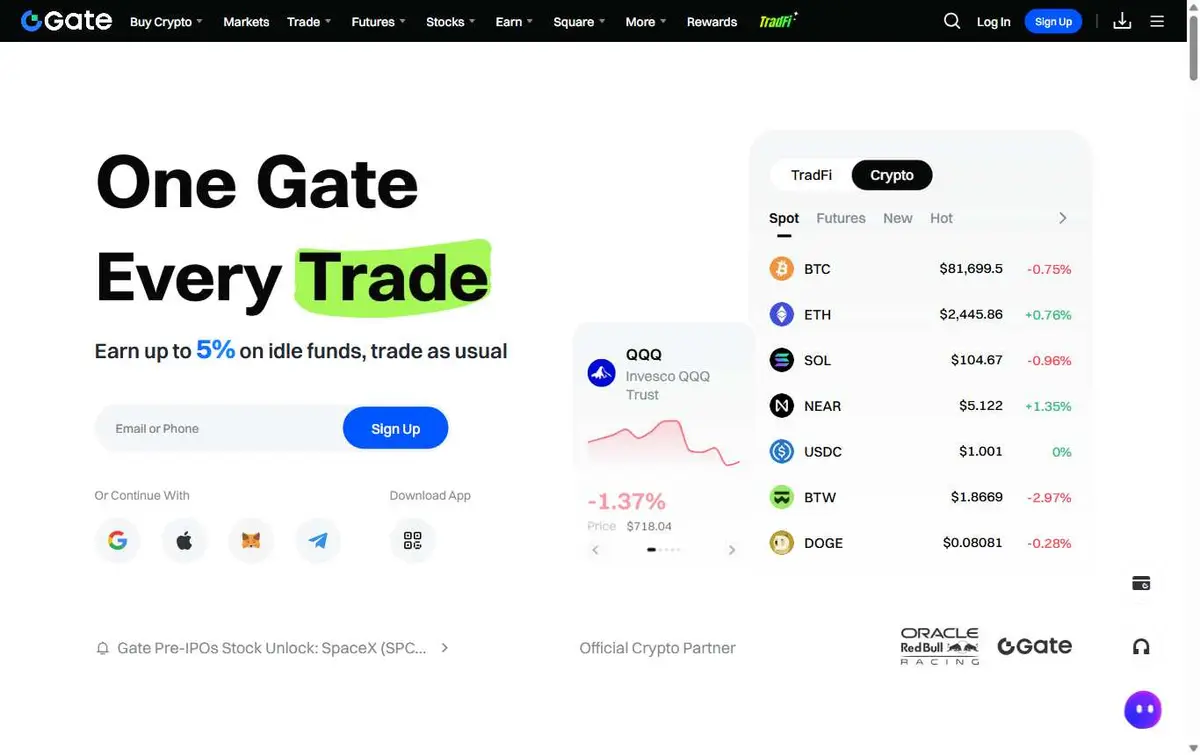
No barrierBrazil · Home page
Loads with no warning; Brazil is not on Gate's restricted list
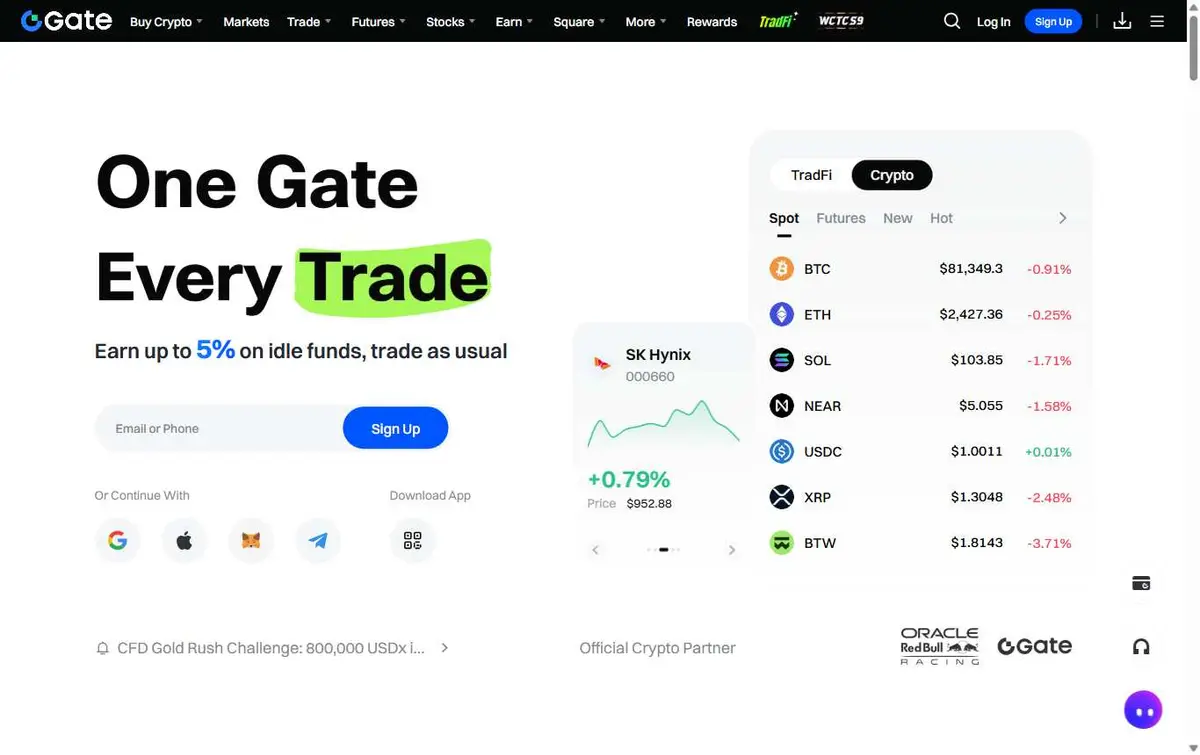
No barrierPhilippines · Home page
Loaded with no barrier, although Gate lists the Philippines in its terms
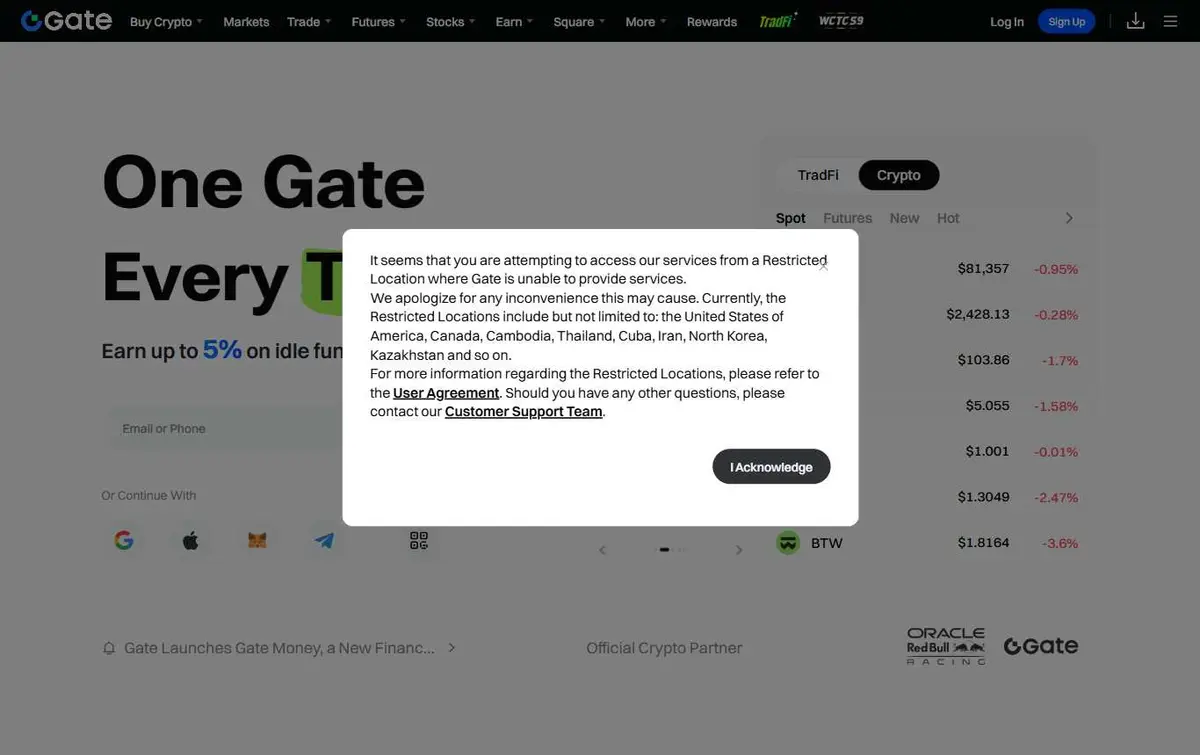
BlockedVietnam · Home page
Blocked by IP: Gate shows its restricted-location pop-up, and Vietnam is on the list in its user agreement
“It seems that you are attempting to access our services from a Restricted Location where Gate is unable to provide services.”
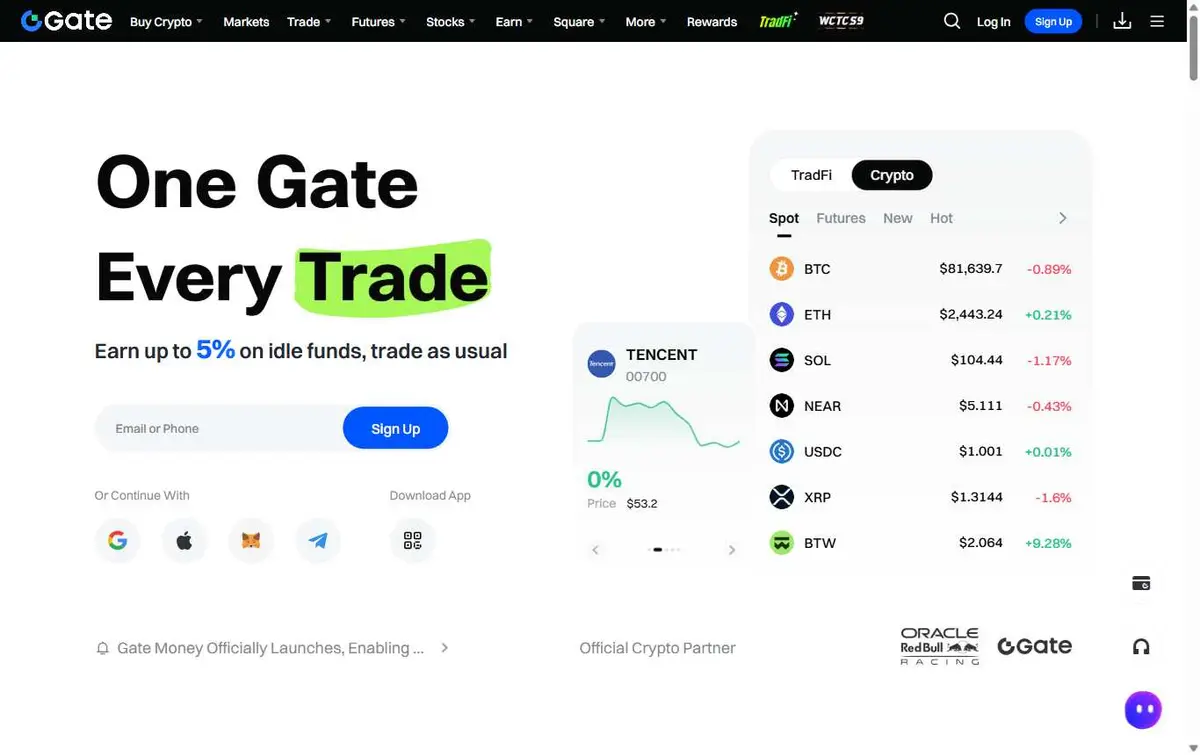
No barrierIndonesia · Home page
Gate lists Indonesia as a restricted location, yet its home page loaded with no pop-up
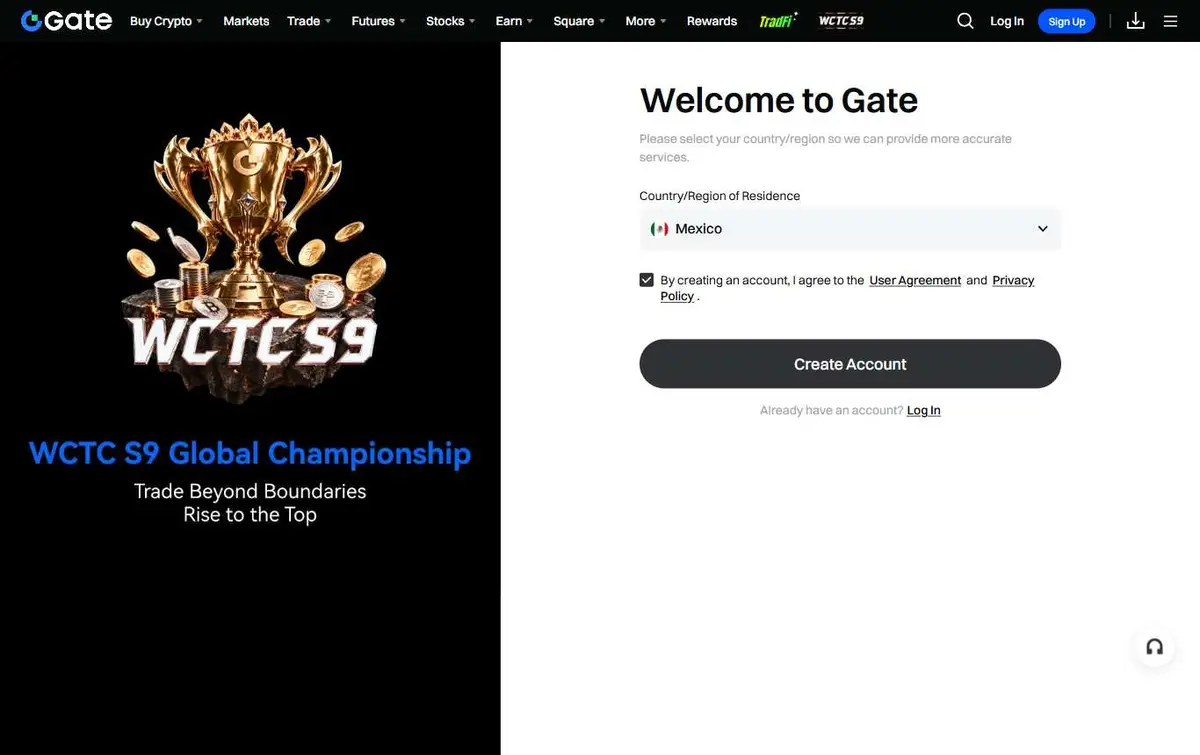
No barrier Mexico · Sign-up page
Mexico: the sign-up form loads with no barrier
“Country/Region of Residence”
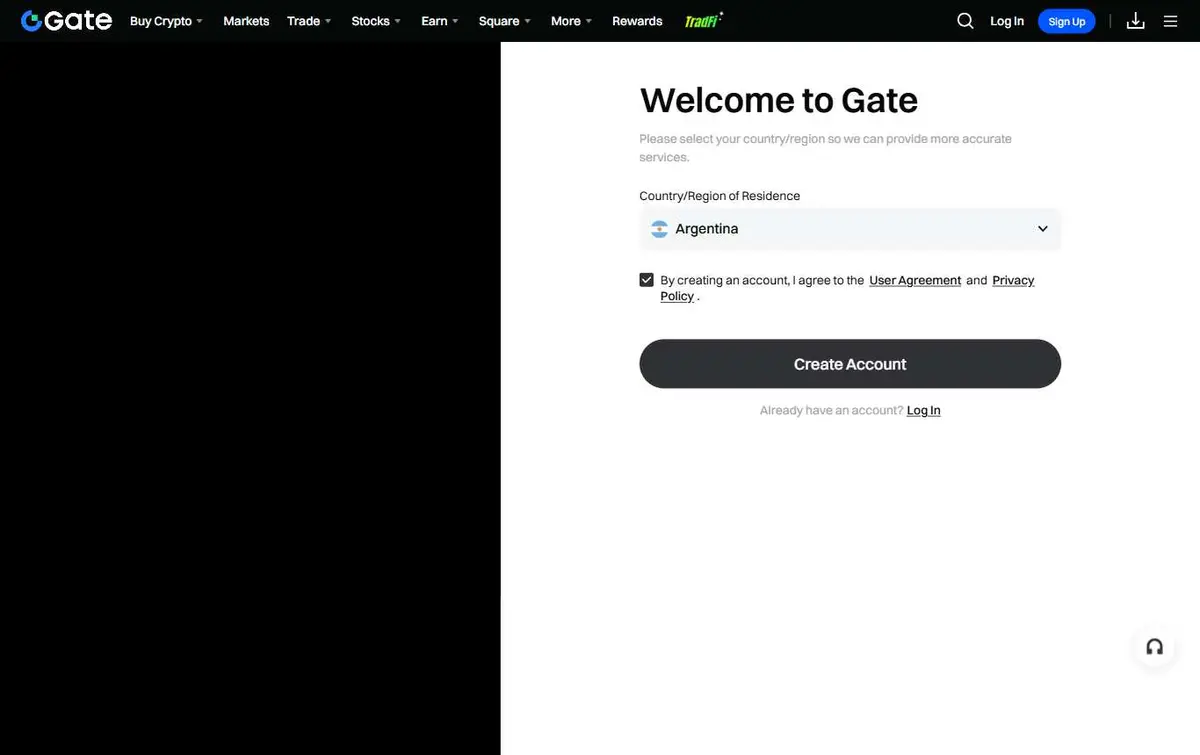
No barrierArgentina · Sign-up page
Argentina: the sign-up form loads with Argentina selected, although Gate's user agreement lists it as restricted
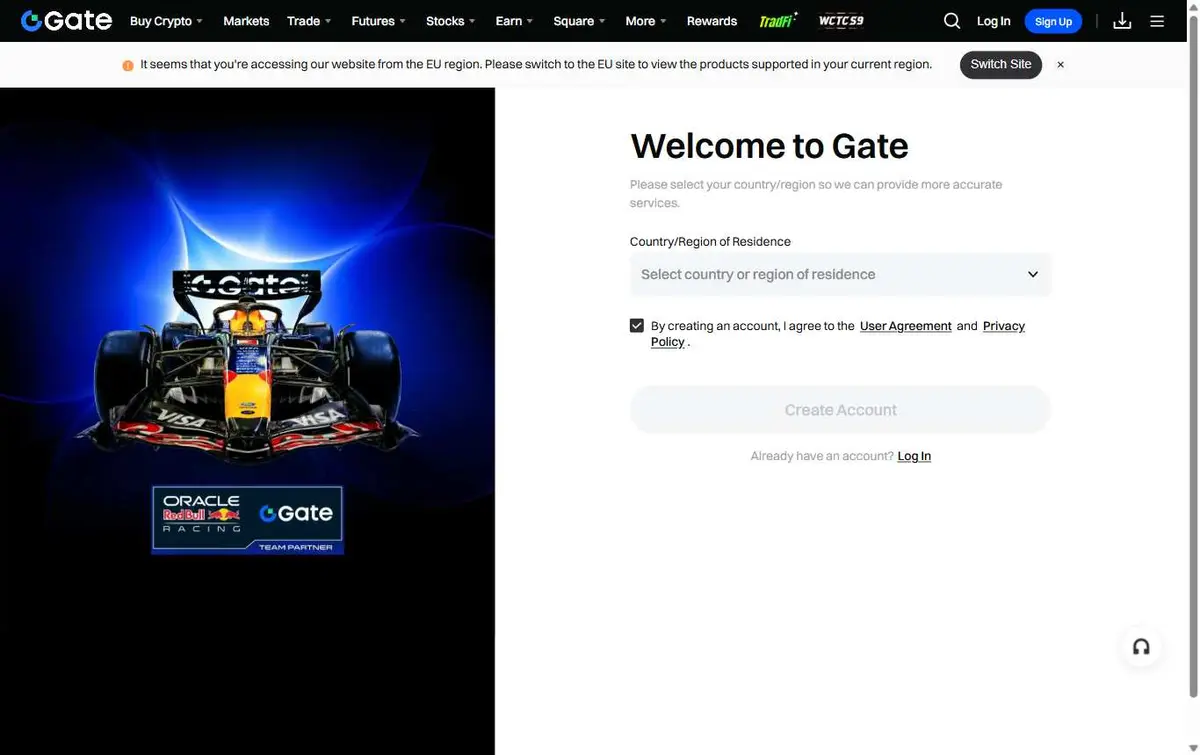
Notice shown Belgium · Sign-up page
Belgium got the EU-region pop-up and a pointer to Gate EU
“It seems that you're accessing our website from the EU region.”
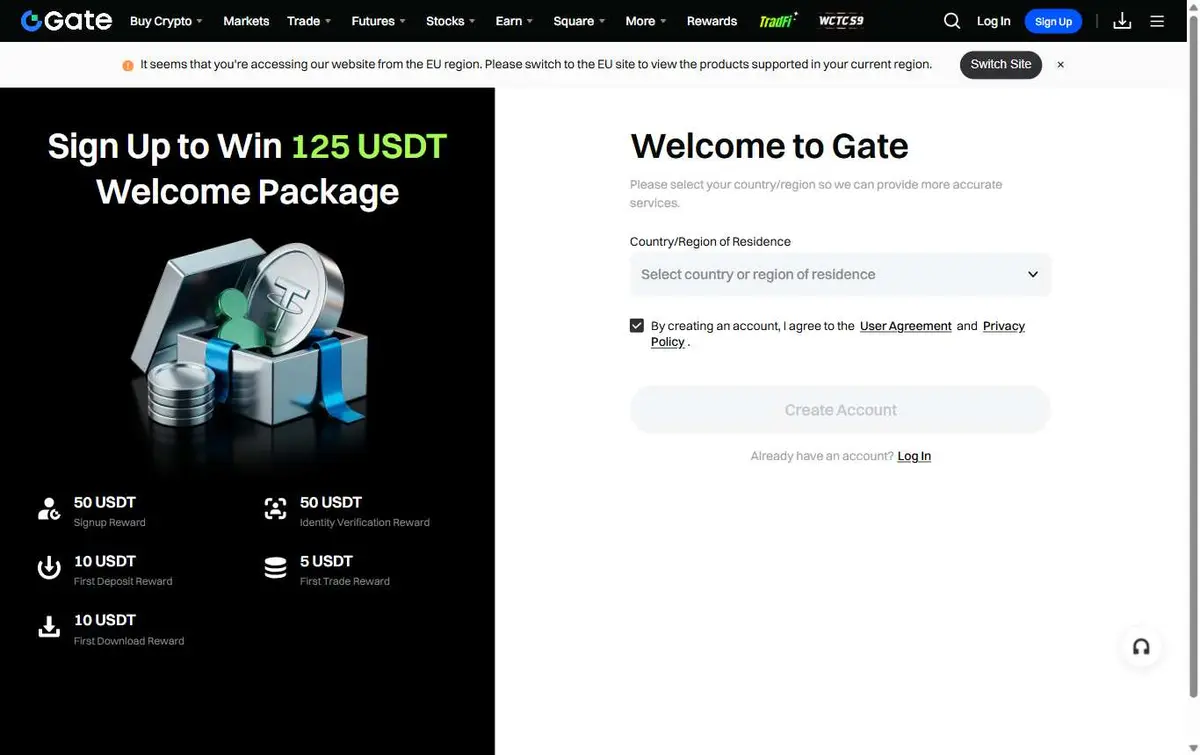
Notice shown Portugal · Sign-up page
Portugal: sign-up shows a prompt to switch to the EU site
“accessing our website from the EU region”
Notice shown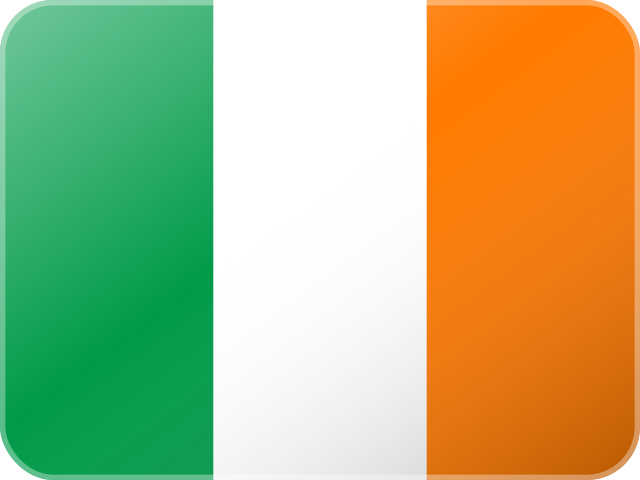 Ireland · Home page
Ireland: Gate asks EU visitors to switch to its EU site
“It seems that you're accessing our website from the EU region.”
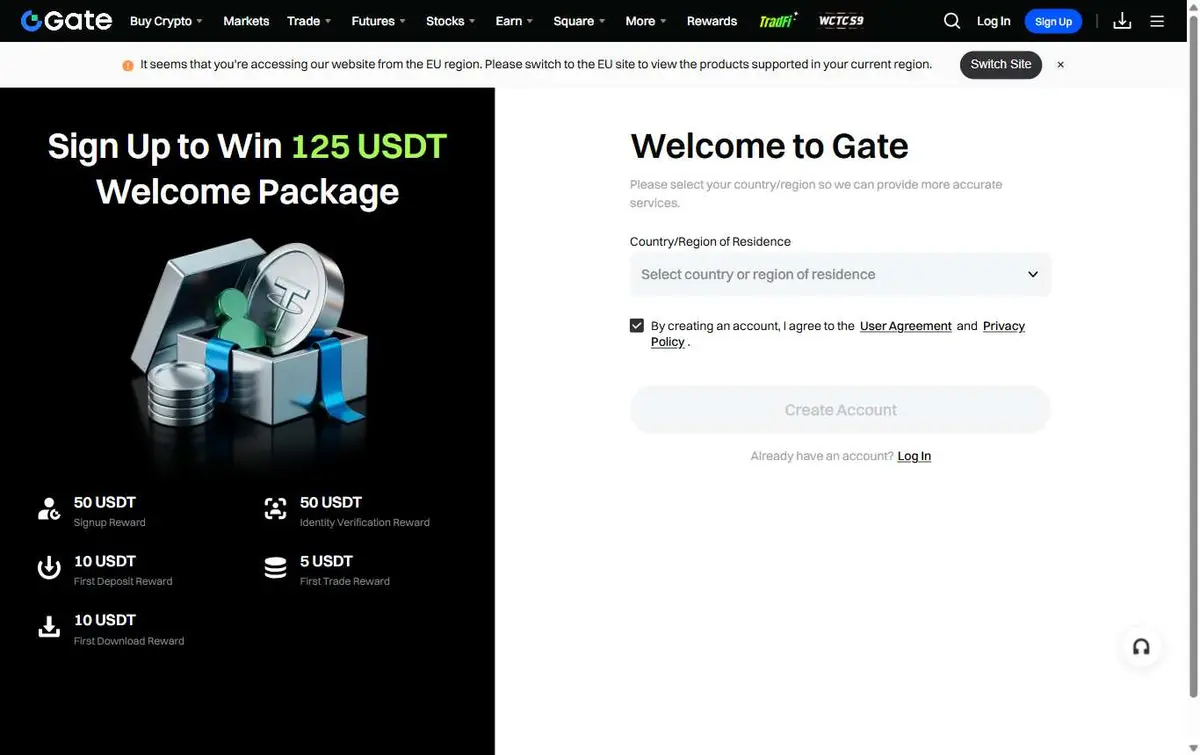
Notice shownAustria · Sign-up page
Austria: Gate asks EU visitors to switch to its EU site
“It seems that you're accessing our website from the EU region.”
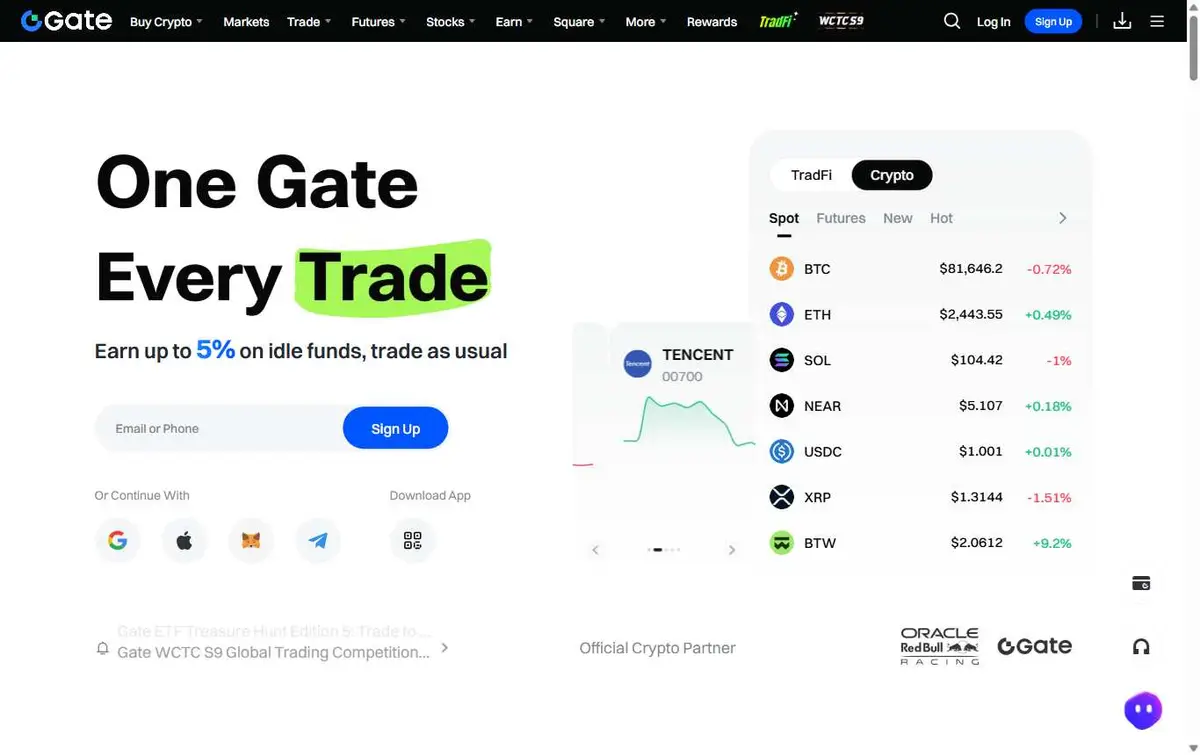
No barrier New Zealand · Home page
New Zealand: the page loads with no notice
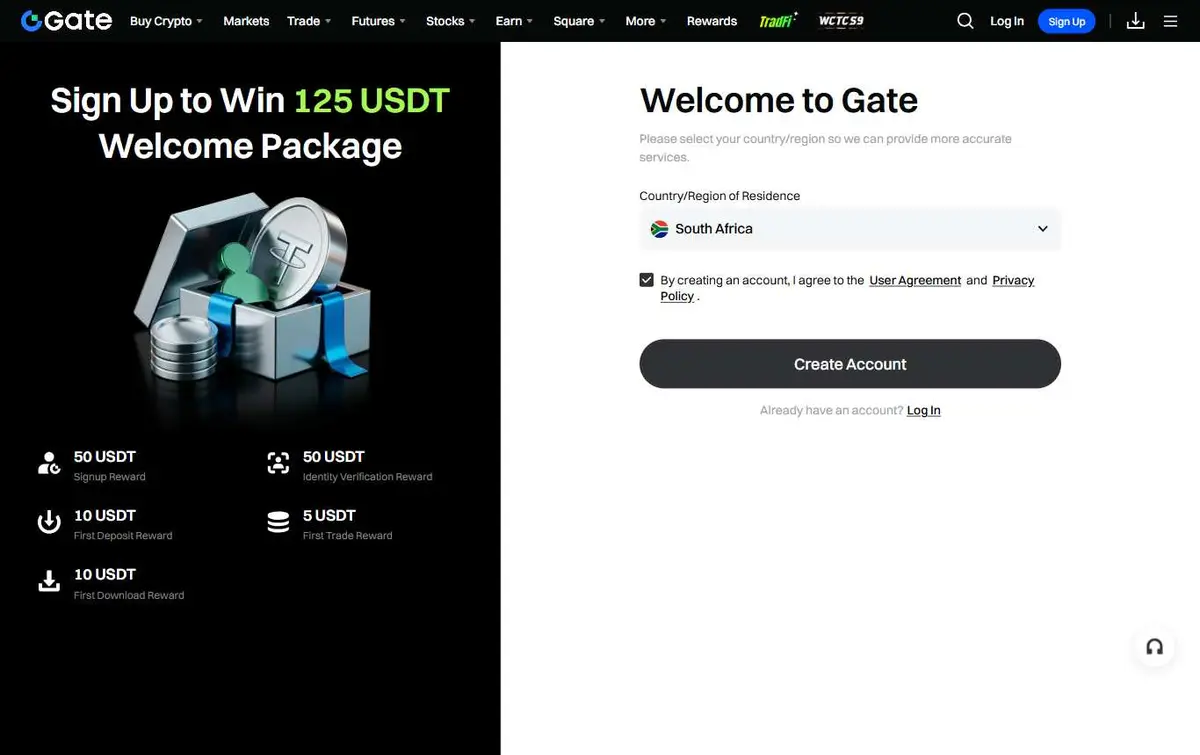
No barrier Kenya · Sign-up page
Kenya: the Gate sign-up form loads and asks for a country of residence
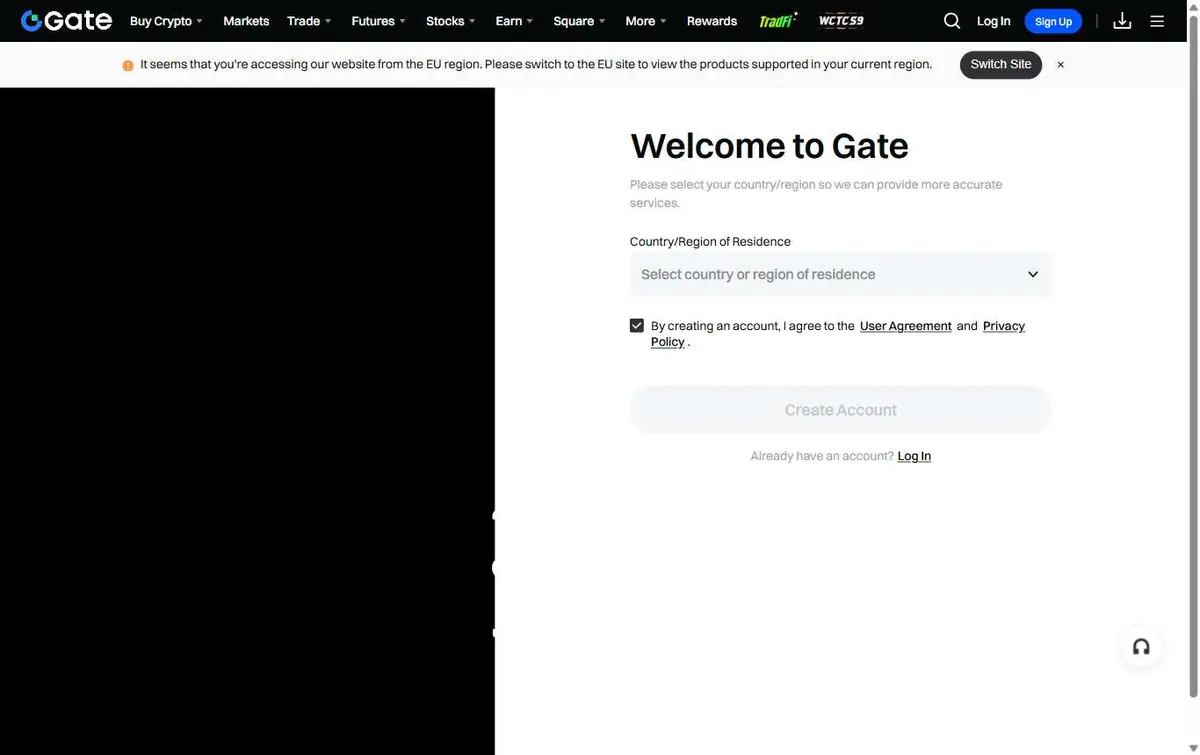
Notice shown Sweden · Sign-up page
Sweden: Gate asks visitors from the EU to switch to its EU site
“It seems that you're accessing our website from the EU region.”
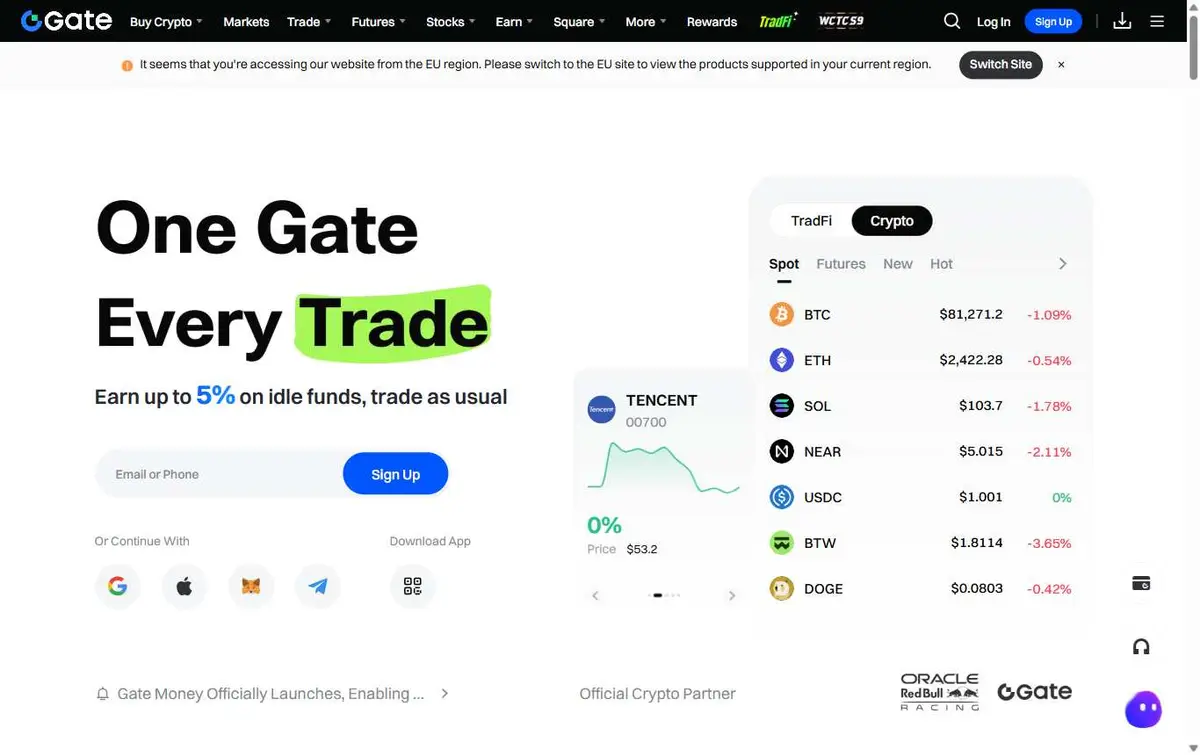
Notice shown Saudi Arabia · Home page
Saudi Arabia: the home page shows a banner pointing to the EU site (our virtual address reads as EU); no restriction is named
“It seems that you're accessing our website from the EU region.”
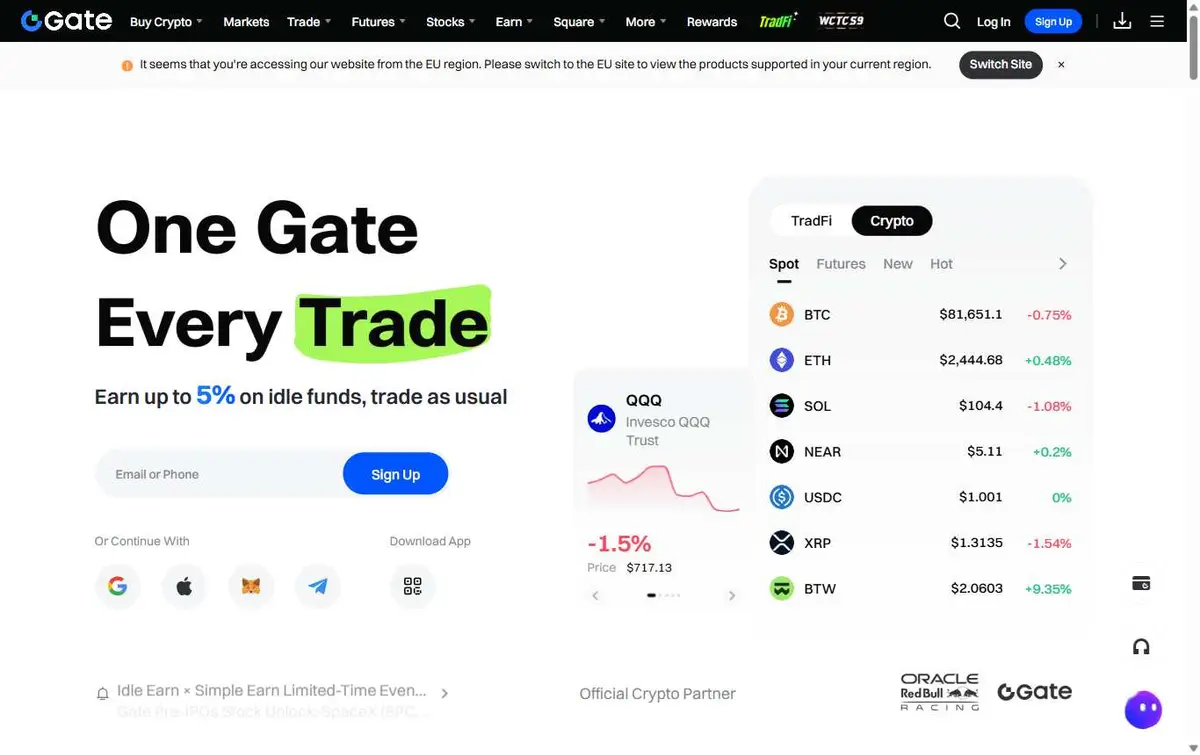
No barrier Norway · Home page
Norway: the home page loads with no notice
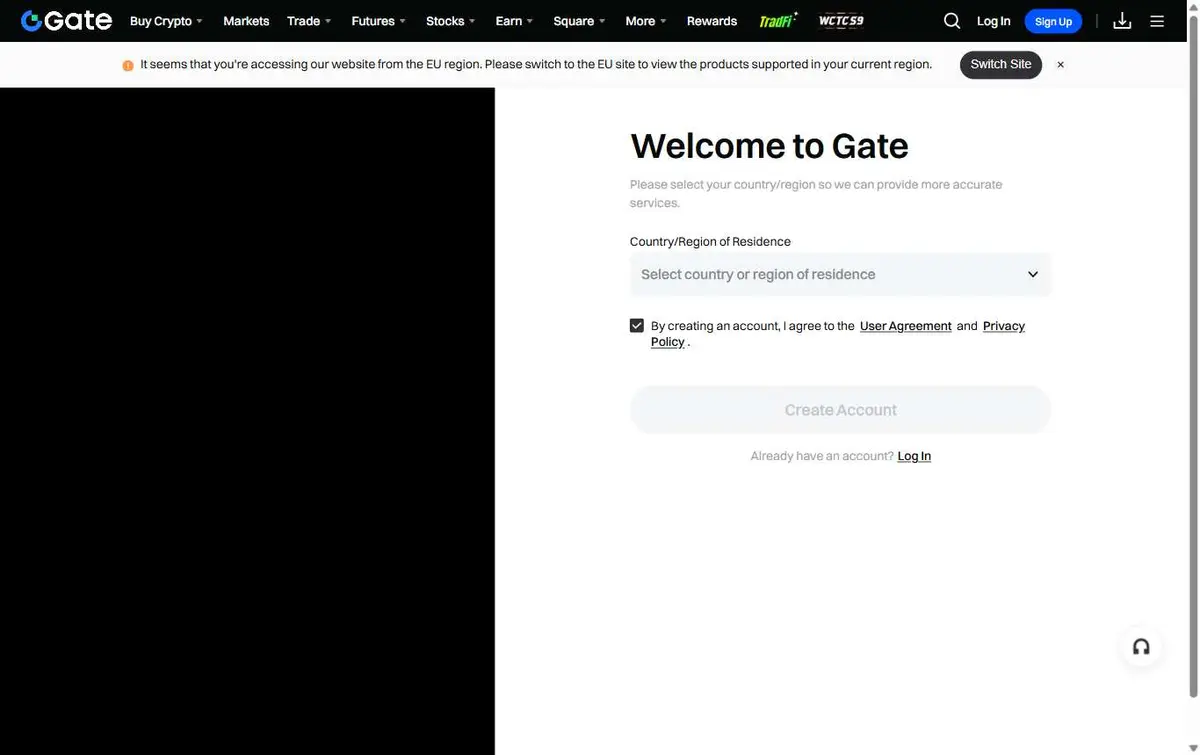
Notice shown Luxembourg · Sign-up page
Luxembourg: Gate asks EU visitors to switch to its EU site
“It seems that you're accessing our website from the EU region.”
Notice shown Czechia · Sign-up page
Czechia gets an EU-region notice at sign-up
“It seems that you're accessing our website from the EU region.”
Notice shown Romania · Sign-up page
Romania gets an EU-region notice at sign-up
“It seems that you're accessing our website from the EU region.”
Notice shown Hungary · Home page
Hungary: a banner asks visitors to switch to the EU site
“It seems that you're accessing our website from the EU region.”
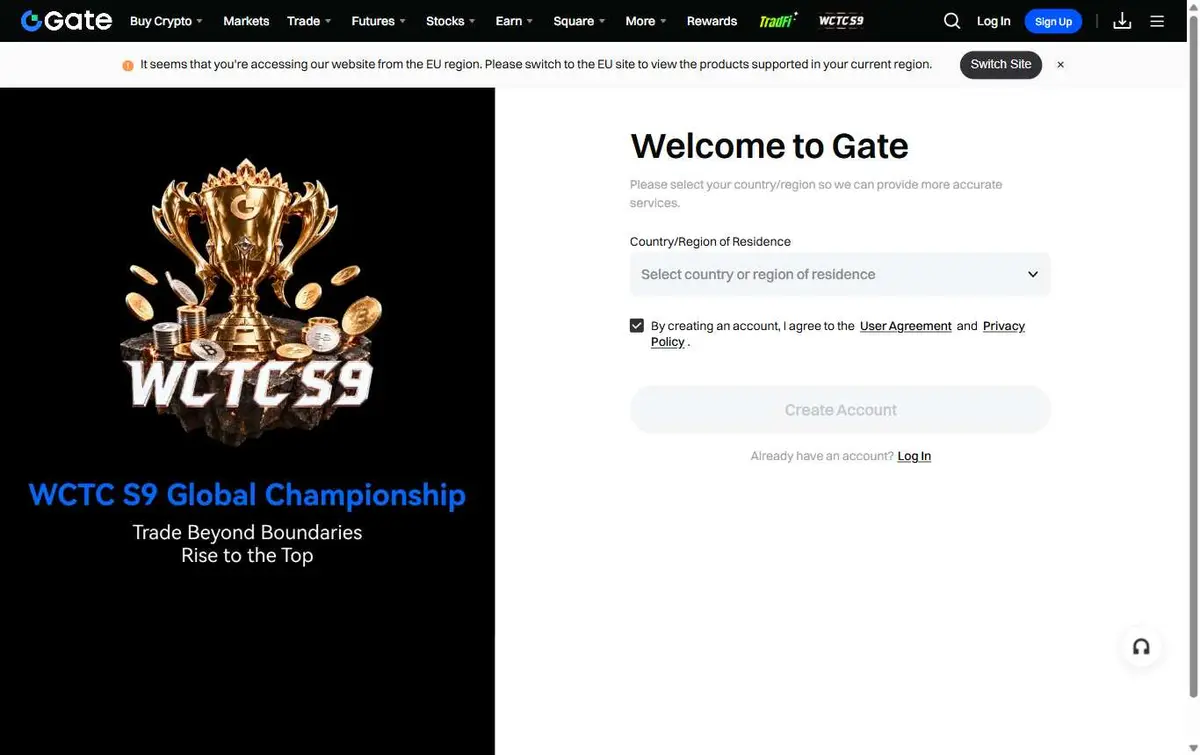
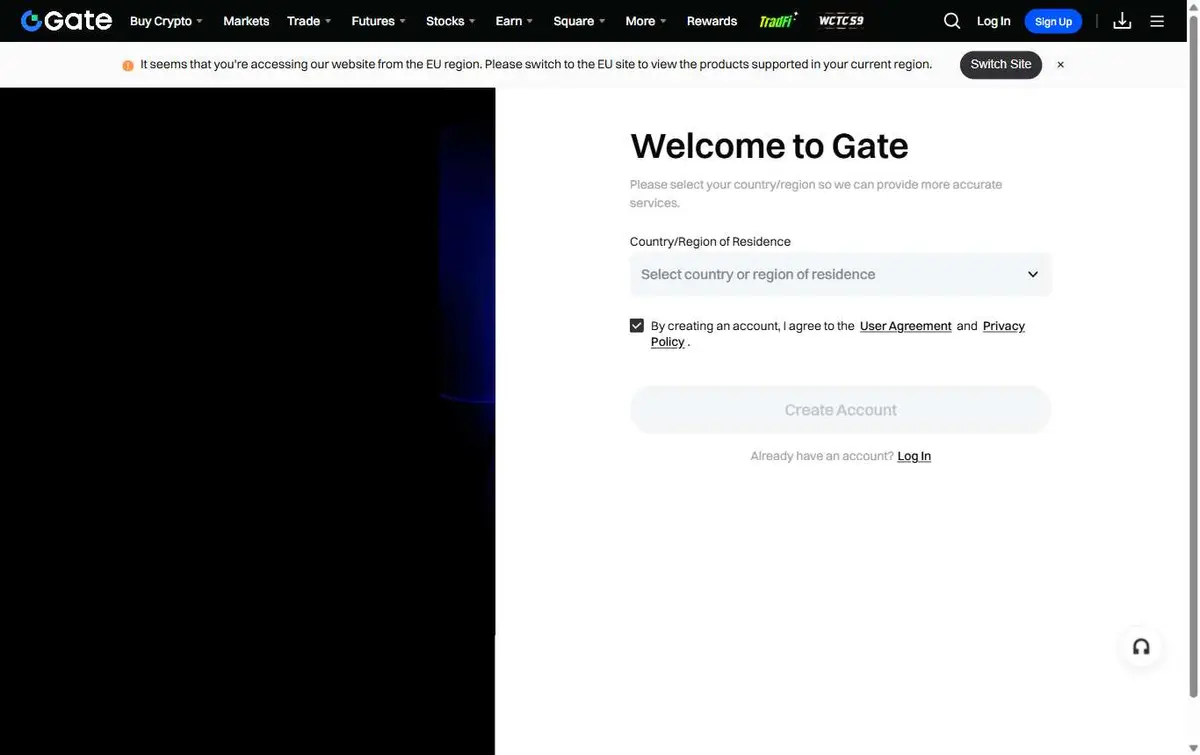
Notice shown Finland · Sign-up page
Finland: the sign-up page offers the EU site
“It seems that you're accessing our website from the EU region.”
Notice shown Denmark · Sign-up page
Denmark: Gate asks visitors from the EU to switch to its EU site
“It seems that you're accessing our website from the EU region.”
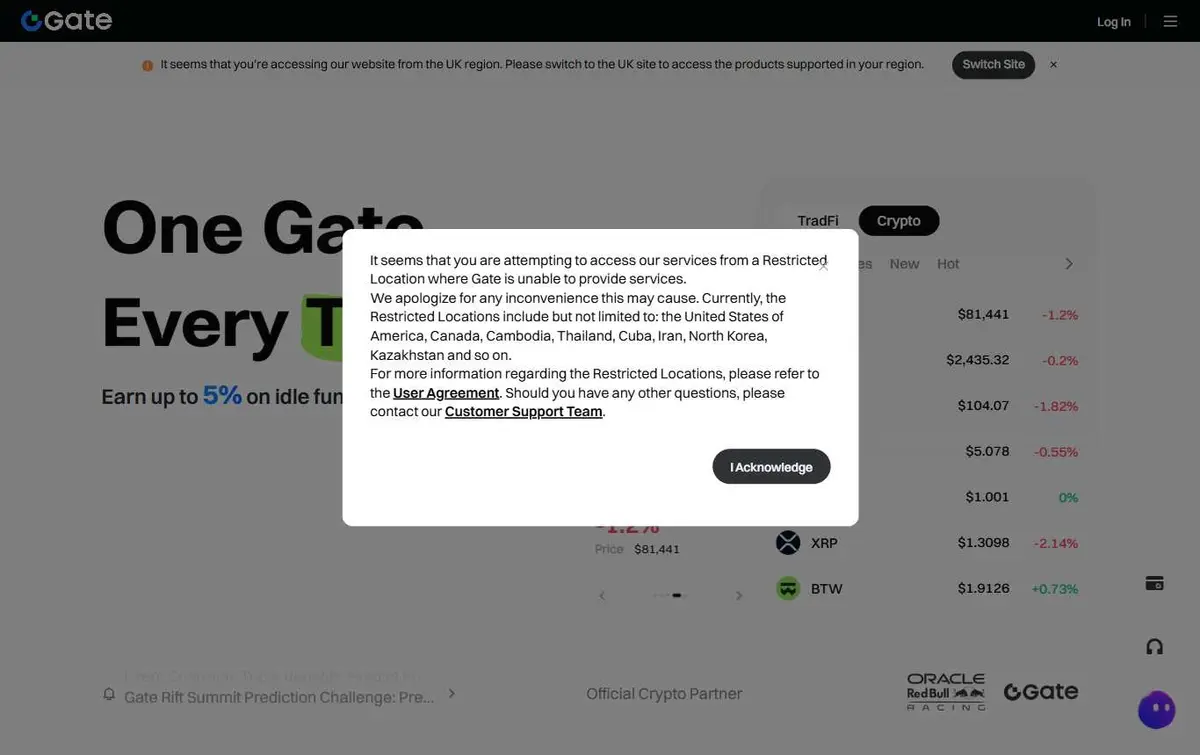
Blocked Greece · Home page
Greece: Gate refuses the visit with a restricted-location message
“It seems that you are attempting to access our services from a Restricted Location where Gate is unable to provide services.”
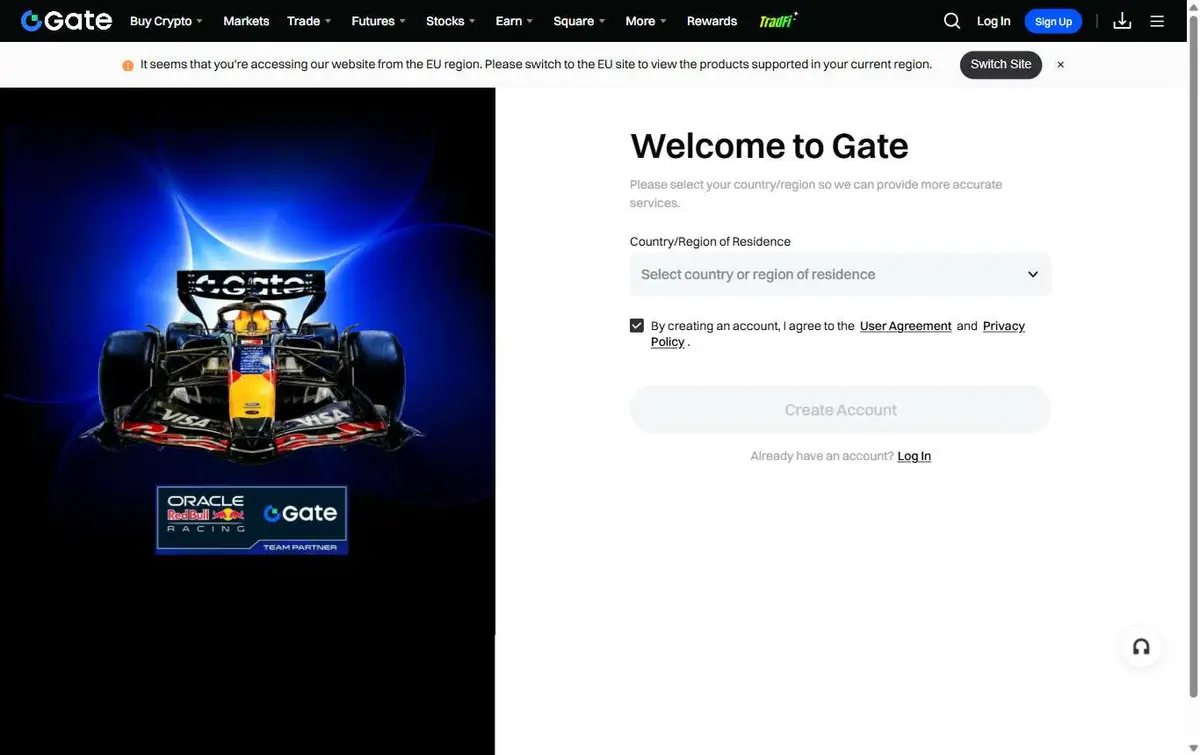
Notice shown Bulgaria · Sign-up page
Bulgaria: Gate shows a notice that the visit comes from the EU region
“It seems that you're accessing our website from the EU region.”
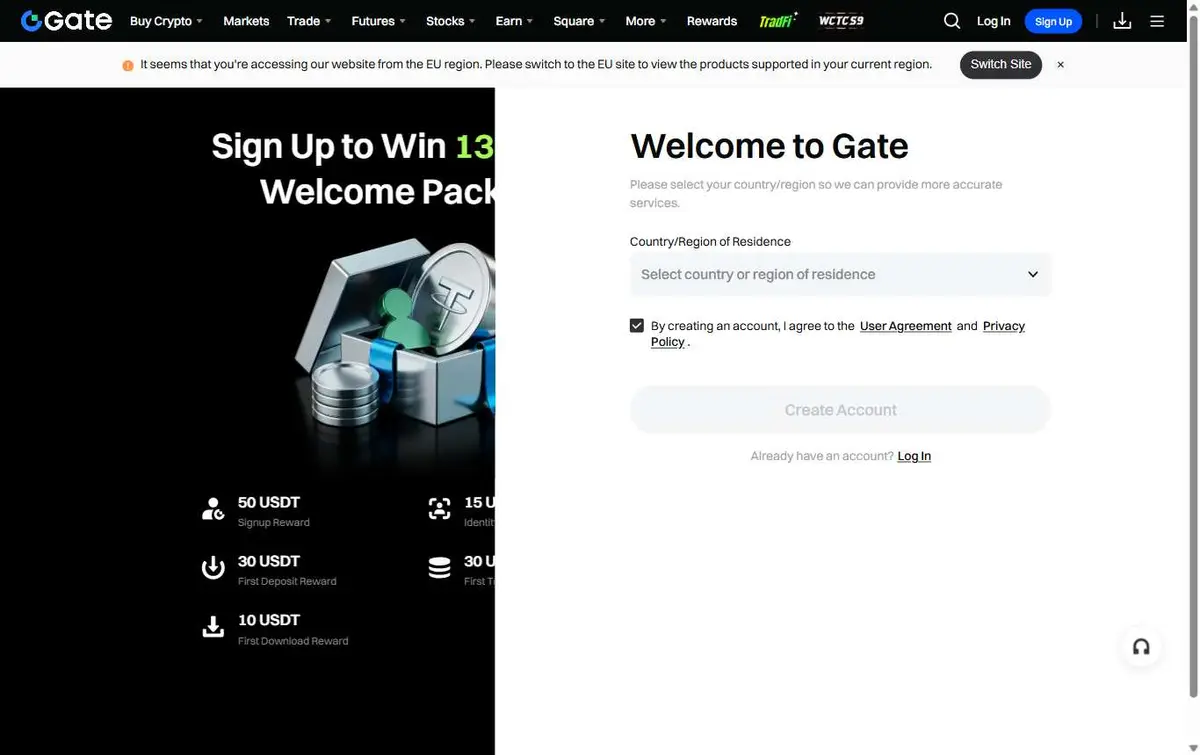
Notice shown Croatia · Sign-up page
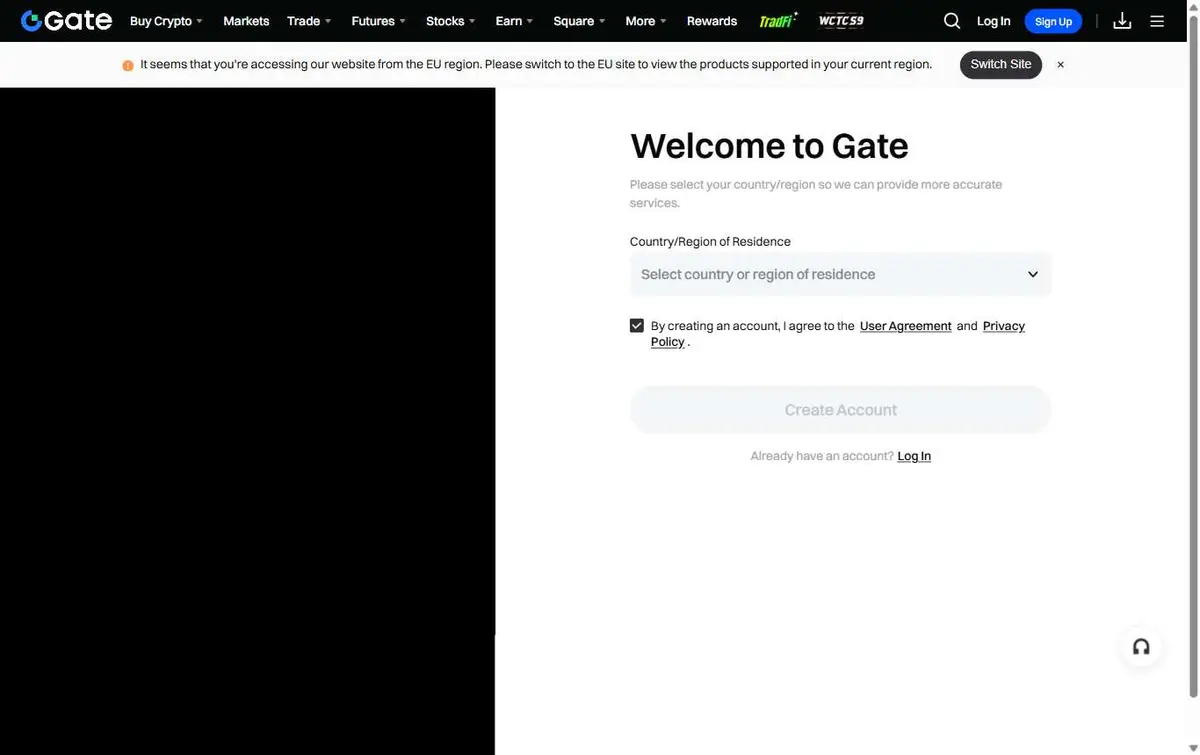
Croatia: the home page loads, then sign-up points to the EU site
“It seems that you're accessing our website from the EU region.”
Notice shown Latvia · Sign-up page
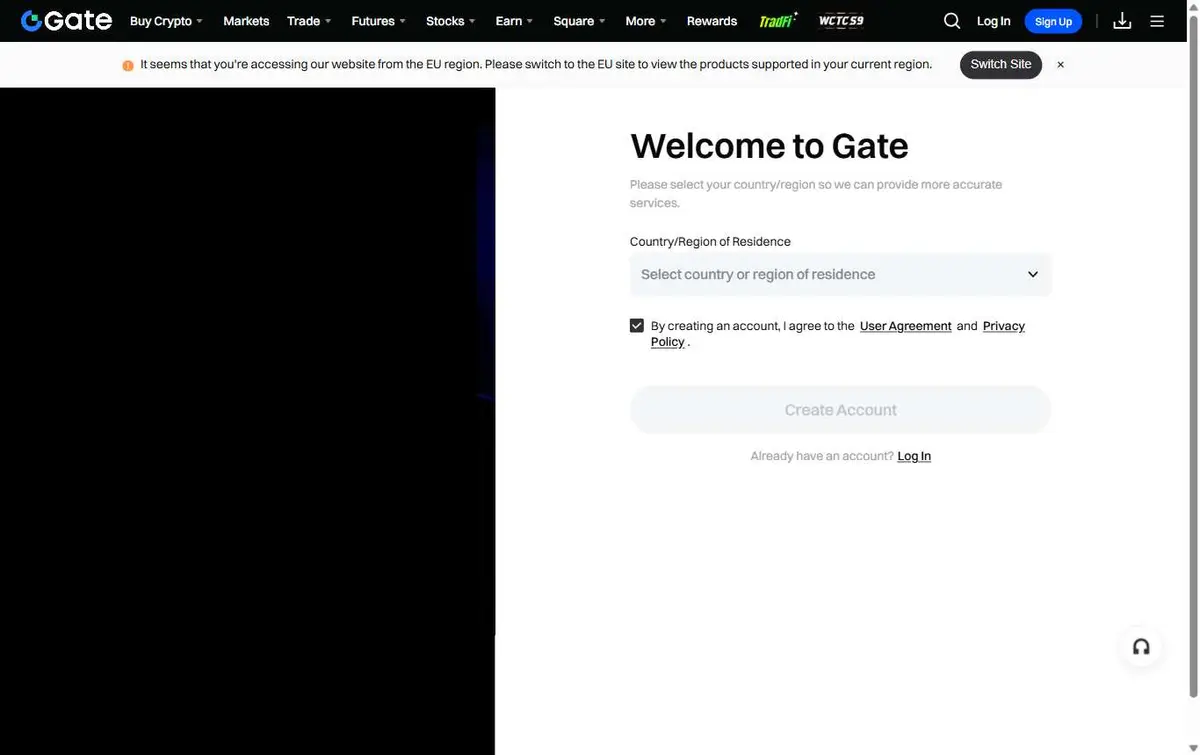
Latvia: the sign-up page offers the EU site
“It seems that you're accessing our website from the EU region.”
Notice shown Estonia · Sign-up page
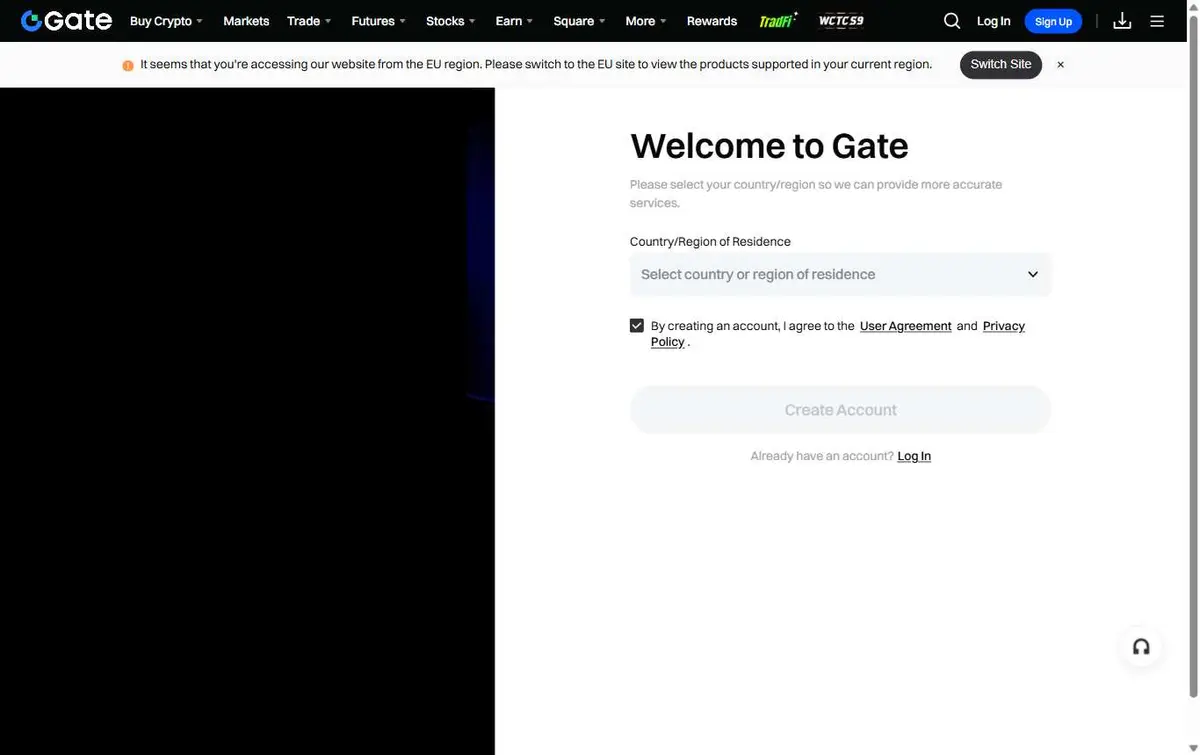
Estonia: the sign-up page offers the EU site
“It seems that you're accessing our website from the EU region.”
Notice shown Egypt · Sign-up page
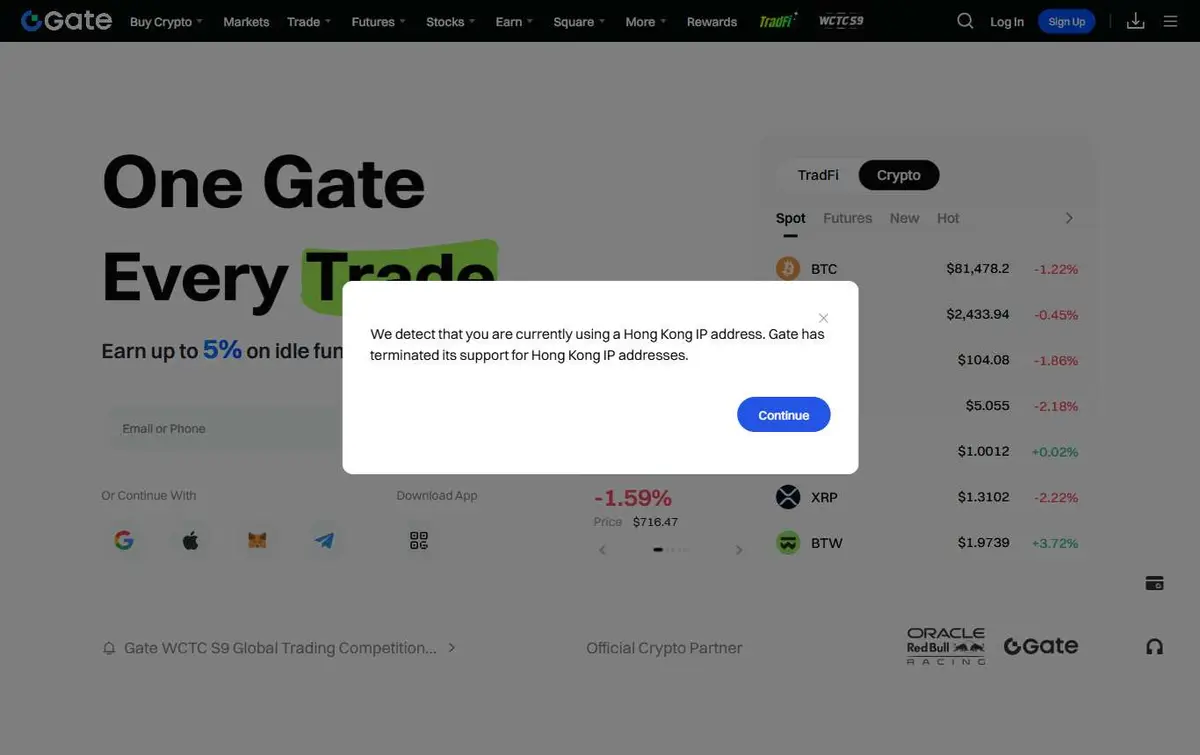
Egypt: sign-up shows a banner pointing to the EU site (our virtual address reads as EU); no restriction is named
“It seems that you're accessing our website from the EU region.”
No barrier Lithuania · Home page
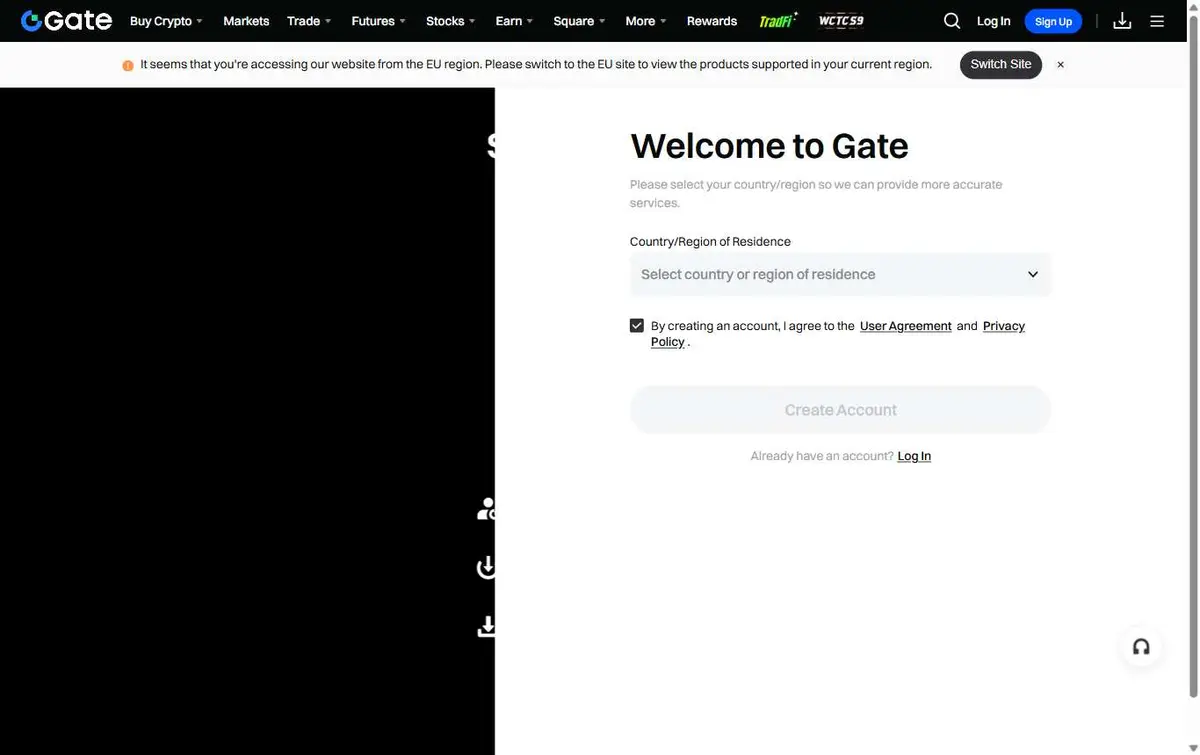
Lithuania: the home page loads with no notice
Notice shown Slovakia · Sign-up page
Slovakia gets an EU-region notice at sign-up
“It seems that you're accessing our website from the EU region.”
No barrier Morocco · Sign-up page
Morocco: the Gate sign-up page loads with no barrier
Notice shown Slovenia · Home page
Slovenia: Gate shows a notice that the visit comes from the EU region
“It seems that you're accessing our website from the EU region.”
Notice shown Iceland · Sign-up page
Iceland: sign-up shows a notice about accessing the site from the EU region
“It seems that you're accessing our website from the EU region.”
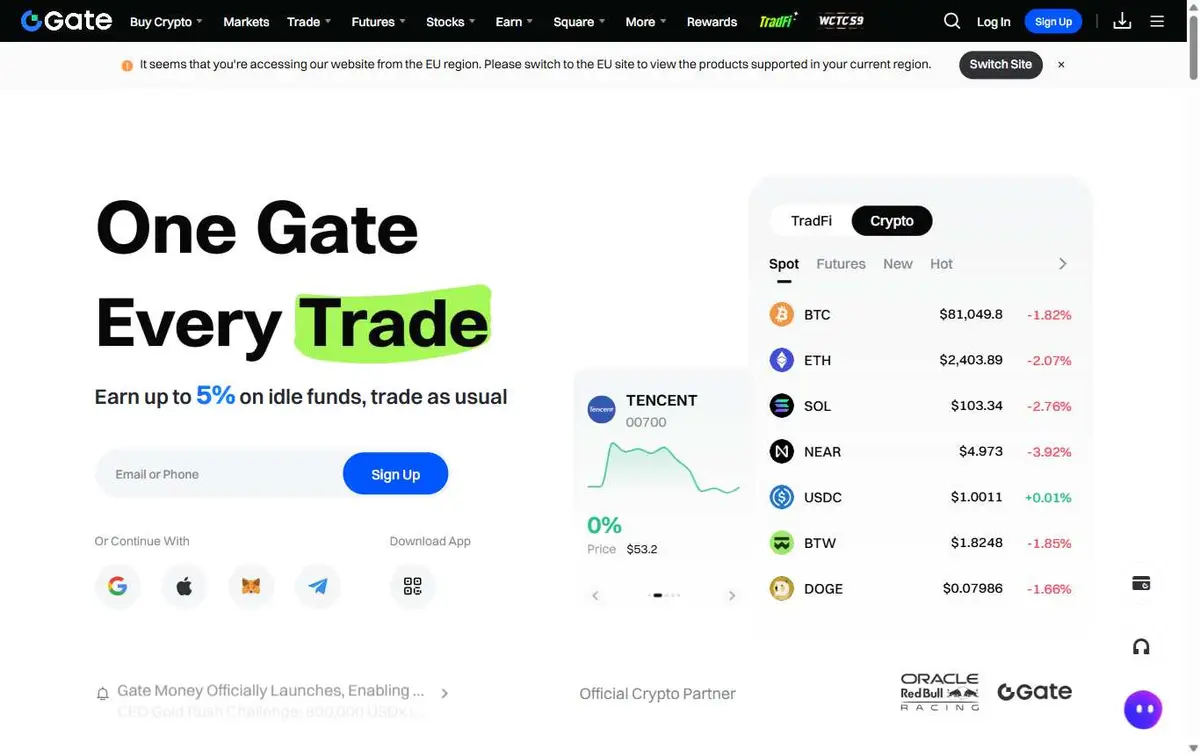
Notice shown Bahrain · Home page
Bahrain: a notice points us to Gate's EU site, but no restricted-location block
“It seems that you're accessing our website from the EU region.”
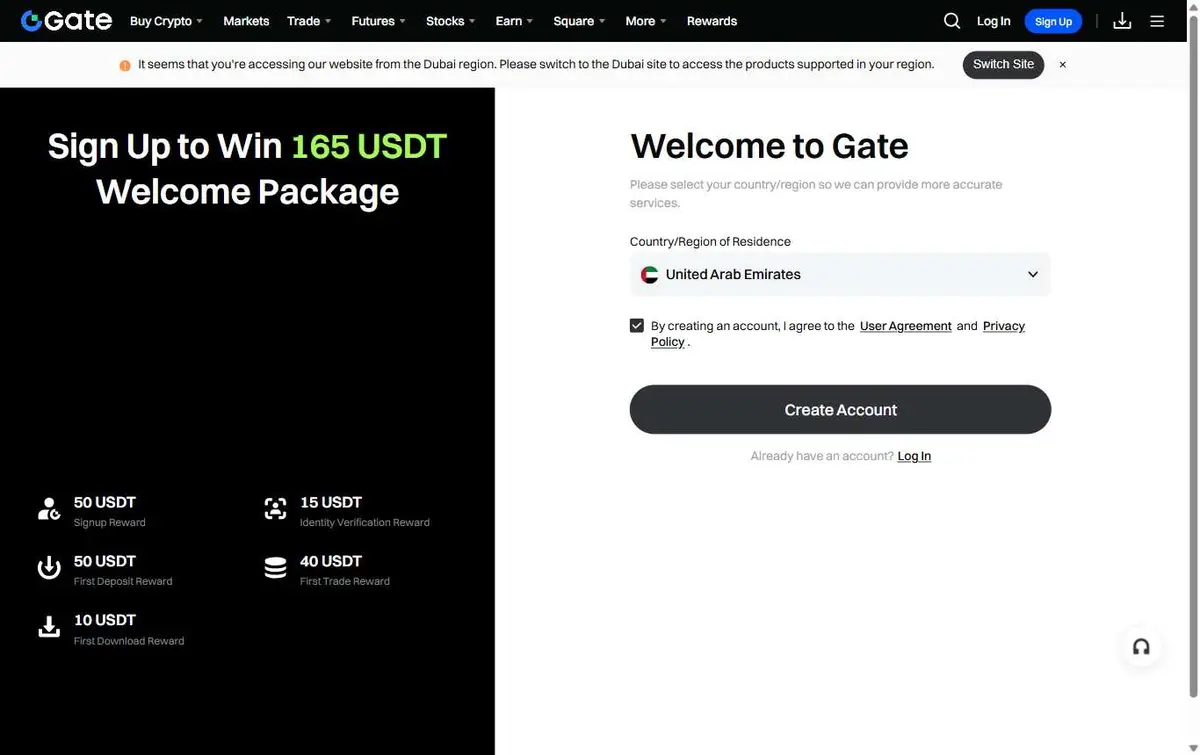
Notice shownPakistan · Sign-up page
Pakistan, on Gate's list: sign-up loads with a notice that our address looks like Dubai (a virtual-location artefact)
“It seems that you're accessing our website from the Dubai region.”
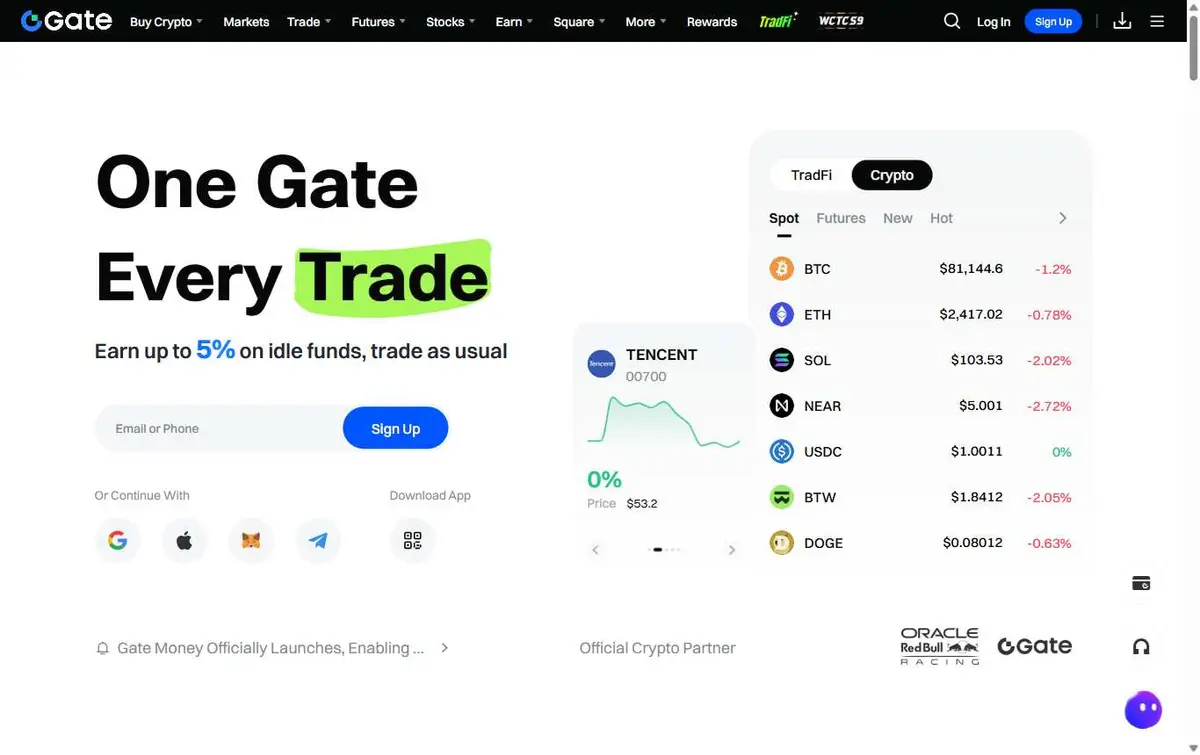
No barrier Ghana · Home page
Ghana: the Gate home page loads with no notice
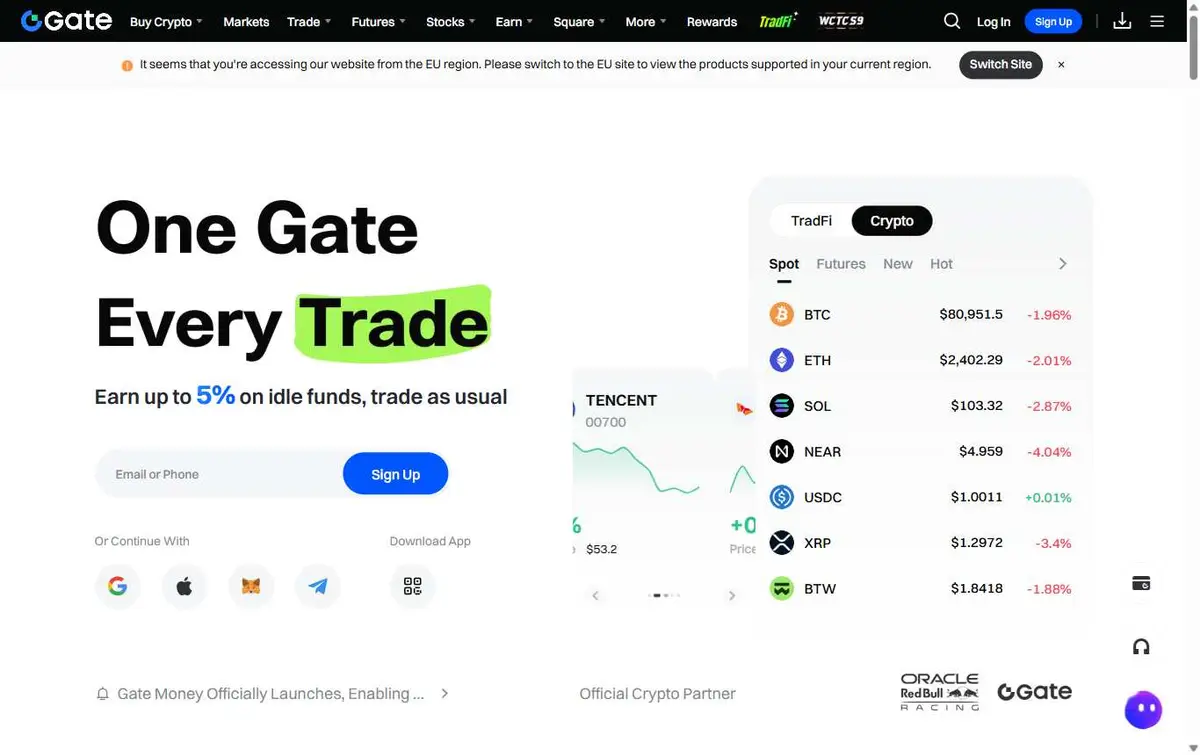
Notice shown Georgia · Home page
Georgia: Gate shows a notice that the visit comes from the EU region
“It seems that you're accessing our website from the EU region.”
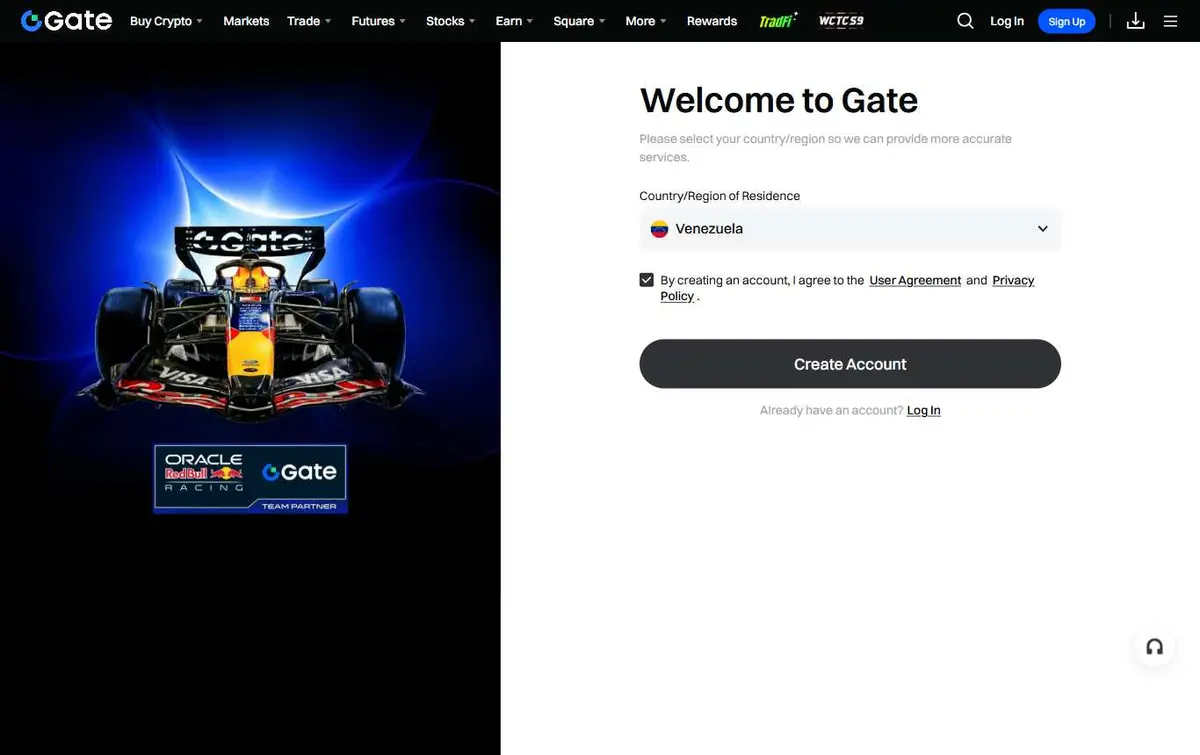
No barrierVenezuela · Sign-up page
Venezuela is on Gate’s restricted list in its user agreement, yet the sign-up form offers it and loads without a notice
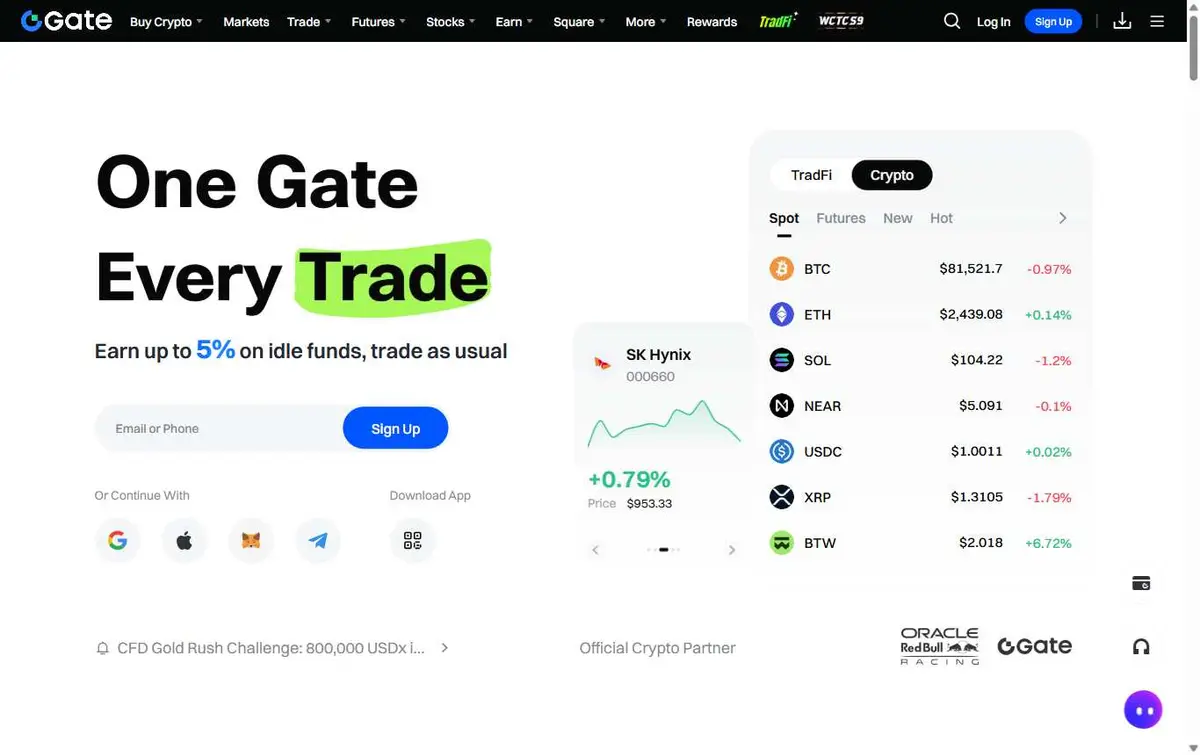
No barrier Serbia · Home page
Serbia: the home page loads with no barrier
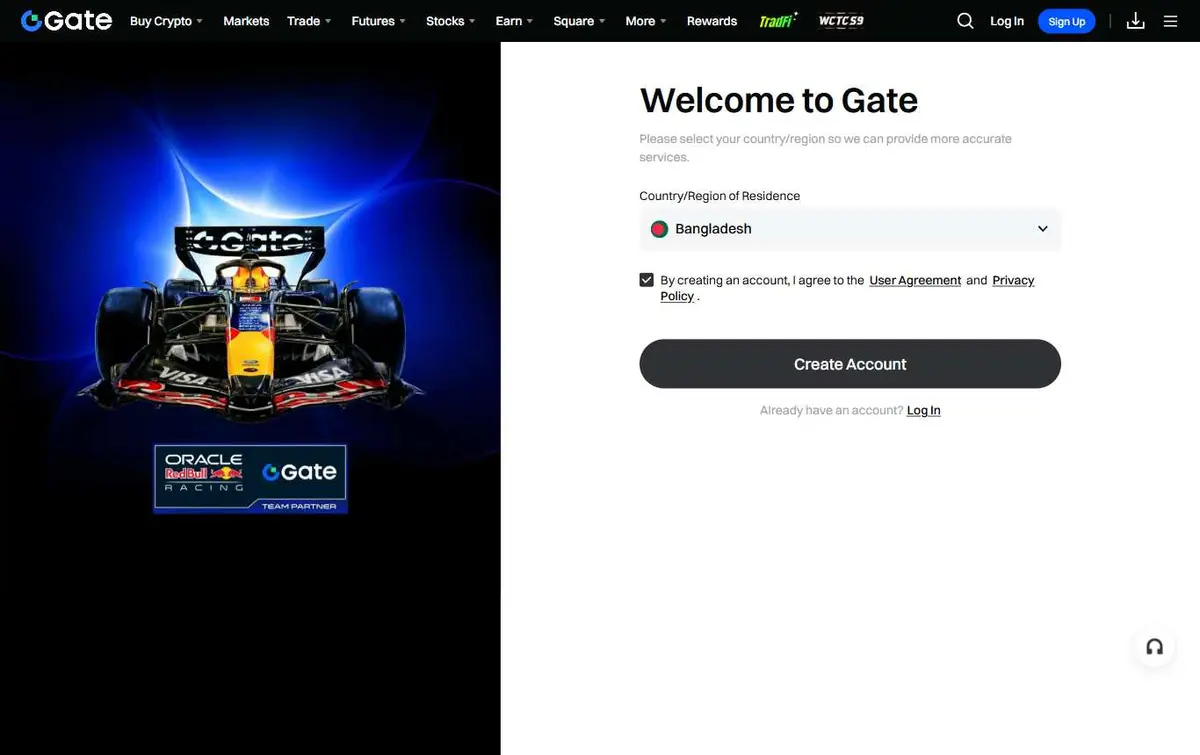
No barrier Bangladesh · Sign-up page
Bangladesh: the sign-up form loads with no notice and asks for a country of residence
“Country/Region of Residence”
 CRYPTORESTRICTIONS
The test does not decide a country’s status on its own: official documents come first, and a page that loads is not permission to use Gate.
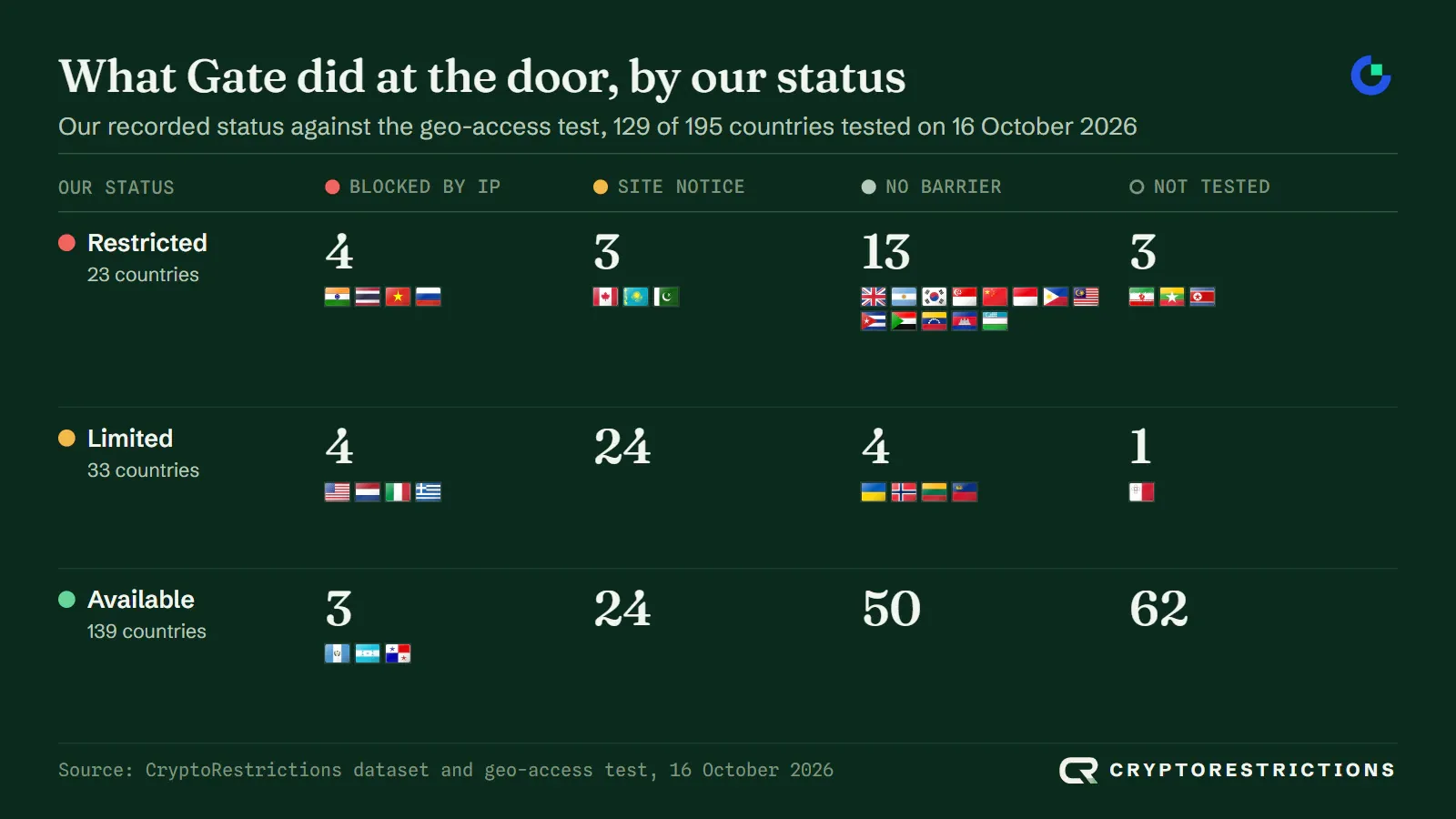
Three patterns stand out. First, Gate mostly lets visitors in: 13 of the 20 restricted countries we reached loaded with no barrier, unlike OKX, whose pop-up met us in every listed country we reached. Gate leaves the check to sign-up, where the form asks for a country of residence, and to identity verification. Second, Gate’s location lookups do not always agree with ours. Our addresses in Greece and Italy got the pop-up under a banner placing them in the UK, and virtual locations for  Guatemala,
 Honduras and
 Panama, hosted in the US, got it under a banner placing them in the US. We do not count those as blocks of the five countries; Greece and Italy are on Gate EU’s passport. Third, the banners route by region: 47 places got the Gate EU banner, many of them virtual locations hosted in France, and Australia, Japan and the UAE got their local Gate sites.

Iran, Myanmar and North Korea were not tested: our VPN offers no location in any of them. The full result for every country is below.
All 133 test results, country by country
Gate licences and registrations
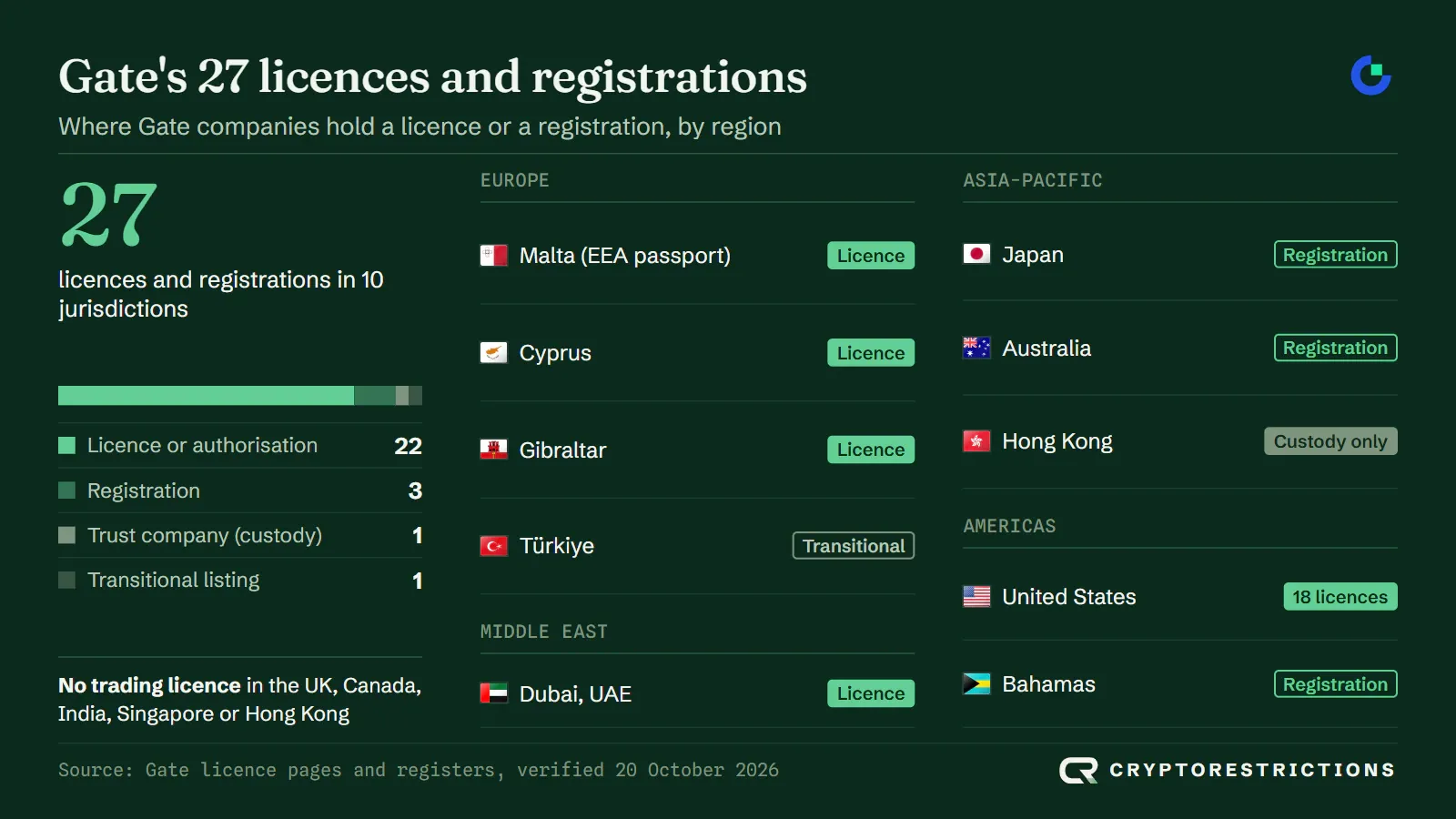
Gate companies hold 27 licences and registrations in 10 jurisdictions, and none for trading in the UK, Canada, India, Singapore or Hong Kong.
They are listed on Gate’s group licences page, and we checked the main ones against regulators’ registers. 22 are licences or authorisations (17 of them US state money transmitter licences), three are registrations, one, in Hong Kong, is a trust company licence for custody, and one is a transitional listing in Türkiye that lets Gate’s local company operate while it applies. The global exchange itself names no operating company in its user agreement, which is governed by Panama law, and Cayman’s regulator said in April 2025 that Gate.io and Gate Global Corp have never been registered or licensed there.
Europe
- Malta (EEA passport): Gate Technology Limited has been authorised as a crypto-asset service provider under MiCA by the Malta Financial Services Authority since 29 September 2025, for custody, a trading platform, exchange, order execution and transfers. ESMA’s register shows the authorisation passported to the 29 other EEA states.
- Cyprus: Gate Securities (Cyprus) Ltd is a Cyprus investment firm licensed by CySEC (licence 395/20).
- Gibraltar: Hippo Capital Co. Limited holds a distributed ledger technology provider licence from the Gibraltar Financial Services Commission.
Middle East
- Dubai, United Arab Emirates: Gate Technology FZE holds VARA licence VL/25/04/007 for exchange services, issued in April 2025.
Asia-Pacific
- Japan: Gate Japan K.K. is registered as a crypto-asset exchange (No. 00018). Global Gate stopped taking Japanese users in July 2024, CoinDesk reported, citing requests from the Financial Services Agency.
- Australia: Gate Information Pty Ltd is registered with AUSTRAC as a digital currency exchange.
- Hong Kong: Hippo Financial Services Limited holds a trust or company service provider licence (TC008572), for custody only. Gate’s Hong Kong exchange withdrew its application to the SFC on 22 May 2024, according to the SFC’s list of platforms, and wound down its local service.
Americas
- United States: Gate US, Inc. (NMLS 2272810) holds money transmitter licences in 35 states, Washington DC and Puerto Rico.
- Bahamas: Gate Global Limited is registered with the Securities Commission of The Bahamas as a digital asset business.
Gate and MiCA in the EU
Gate has held a MiCA licence since 29 September 2025, so Gate EU serves all 30 EEA countries, but it offers no derivatives, which makes each of them limited, and the global terms still exclude six of them.
MiCA is the EU’s crypto rulebook, and since 30 December 2024 it has required exchanges serving EU clients to hold an authorisation from one member state (our MiCA article covers the rules). Gate chose Malta. Global Gate stopped taking new EEA users in March 2025, announced the licence in October 2025, and said on 30 June 2026 that Gate EU is operational and that EEA users would be moved to it. Gate EU offers spot trading, convert, staking, OTC and the Gate Card, and no futures or margin, since MiCA does not cover derivatives.
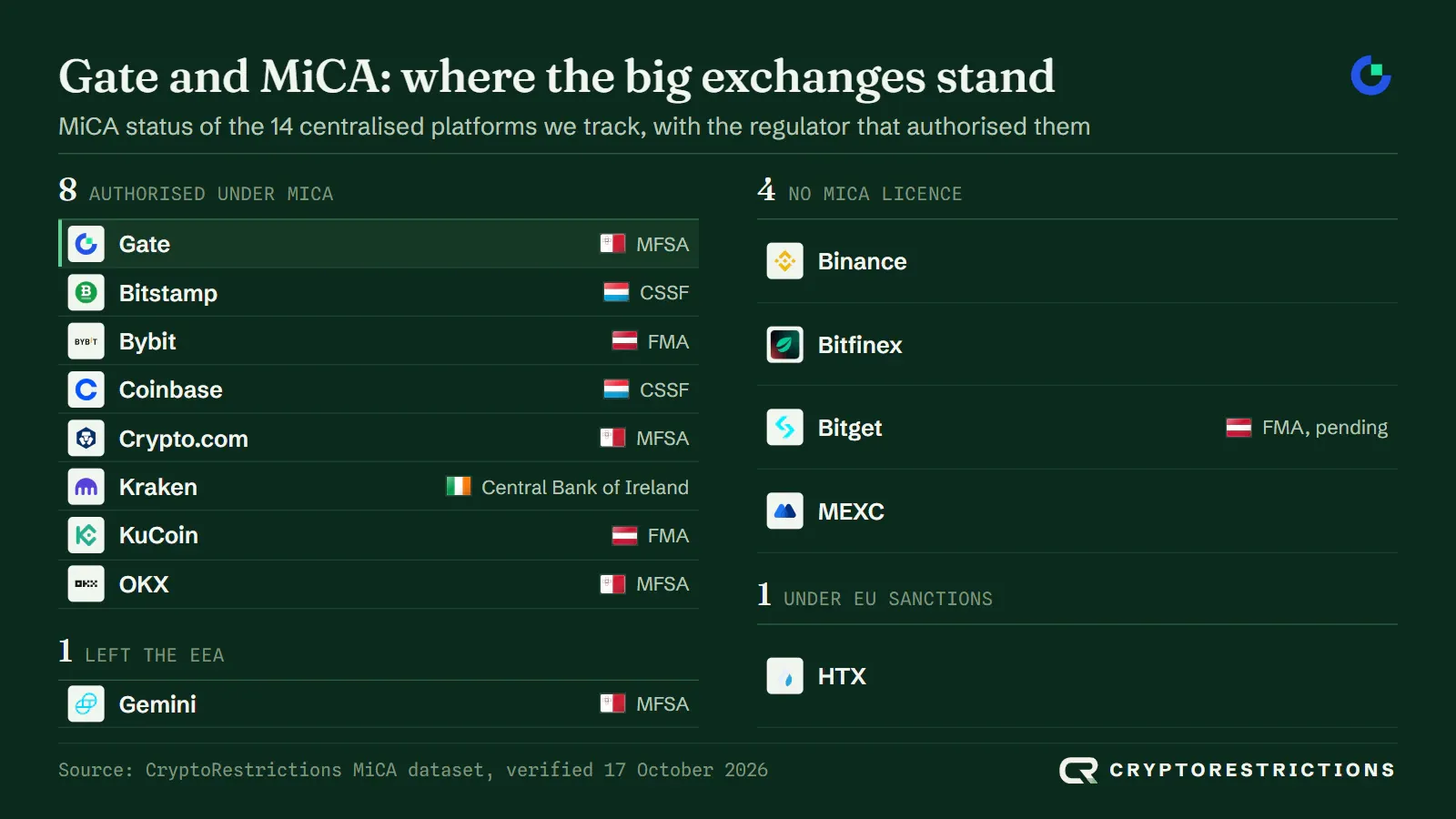
Gate is one of eight authorised platforms among the 14 centralised exchanges in our MiCA dataset, and one of three licensed in Malta, with OKX and Crypto.com. What sets it apart is the gap between its two documents: the licence covers every EEA state, while the user agreement of 22 July 2026 still lists France, Germany, Malta, Spain, the Netherlands and Austria. Bybit has the same split in France, where its global terms exclude a country its EU company serves. Under our product-cut rule all 30 are limited, with spot available and derivatives restricted across the EEA.

Gate MiCA timeline
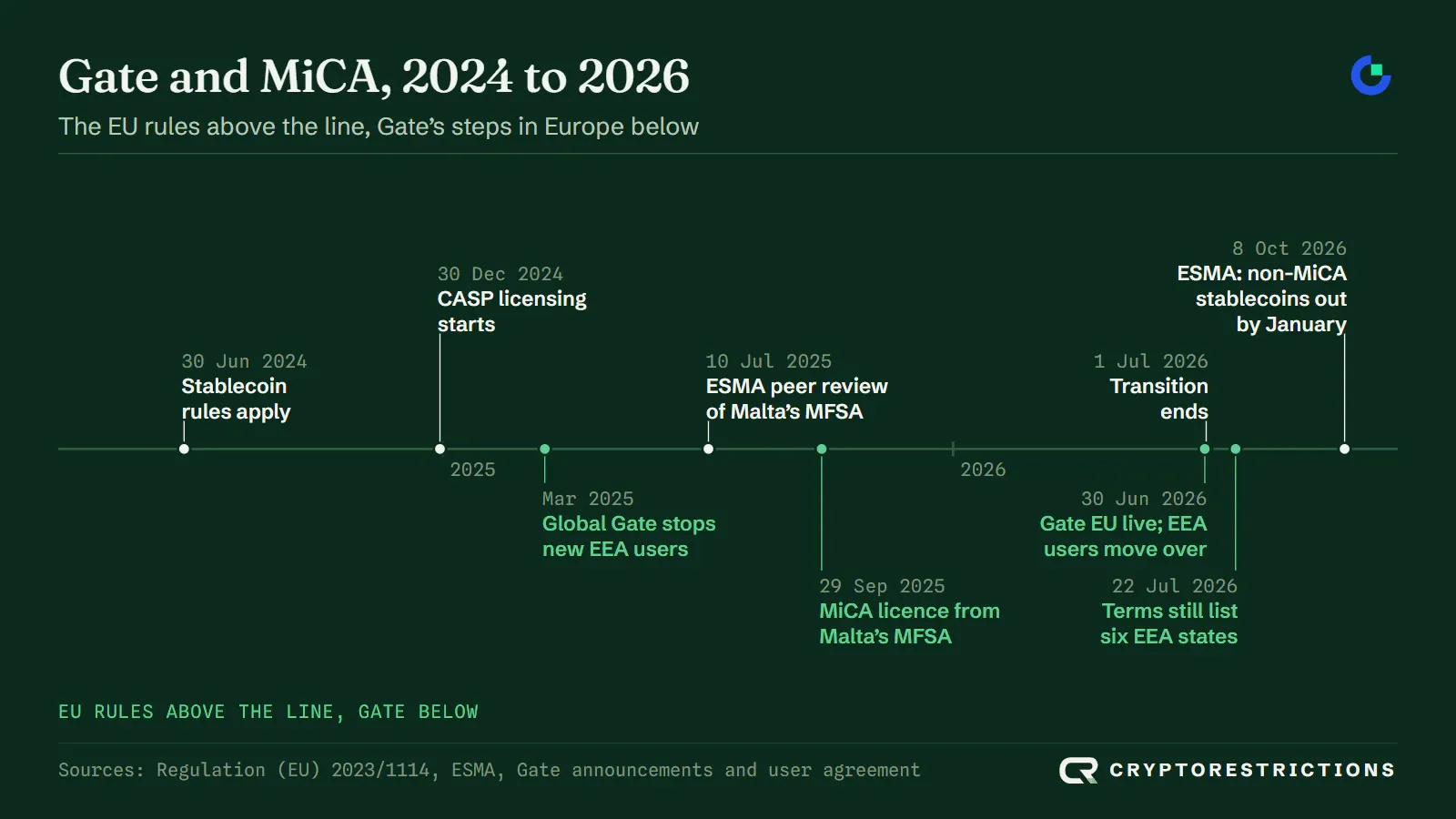
Gate’s record in Europe predates MiCA. In December 2021 Italy’s CONSOB ordered Gate Technology Corp to stop offering investment services through gate.io and two mirror sites, which offered crypto futures in Italian, and had them blacked out. ESMA’s list of non-compliant crypto firms names no Gate company.
Is Gate available in the US?
Not on the global platform: Gate’s user agreement lists the United States as restricted, and Americans are served by Gate US, Inc., which offers spot trading under state money transmitter licences.
When we loaded gate.com from a US address on 16 October 2026, the page showed the restricted-location pop-up and a banner pointing to the US site. Gate US launched on 1 August 2025 with spot trading for US residents; it offers no futures or other derivatives.
Where does Gate work in the US?
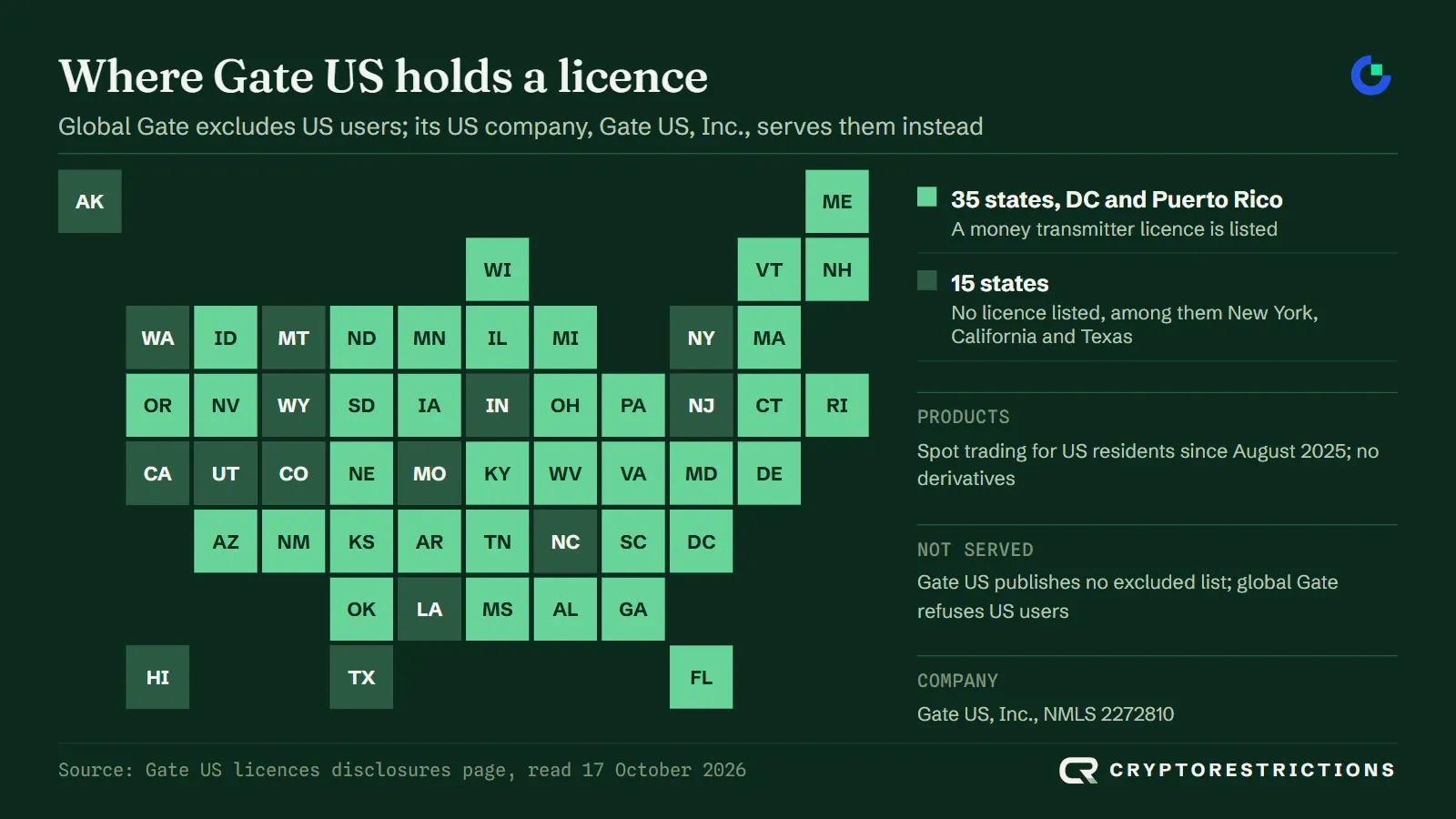
Gate US’s licences page lists money transmitter licences in 35 states, Washington DC and Puerto Rico. It lists none in 15 states, among them New York, California and Texas, but Gate US publishes no list of states it does not serve, and some states do not require a licence for this business. So the page shows where Gate US is licensed, not where it refuses customers, and we record no state-level status yet.
Gate regulator actions and market moves: timeline
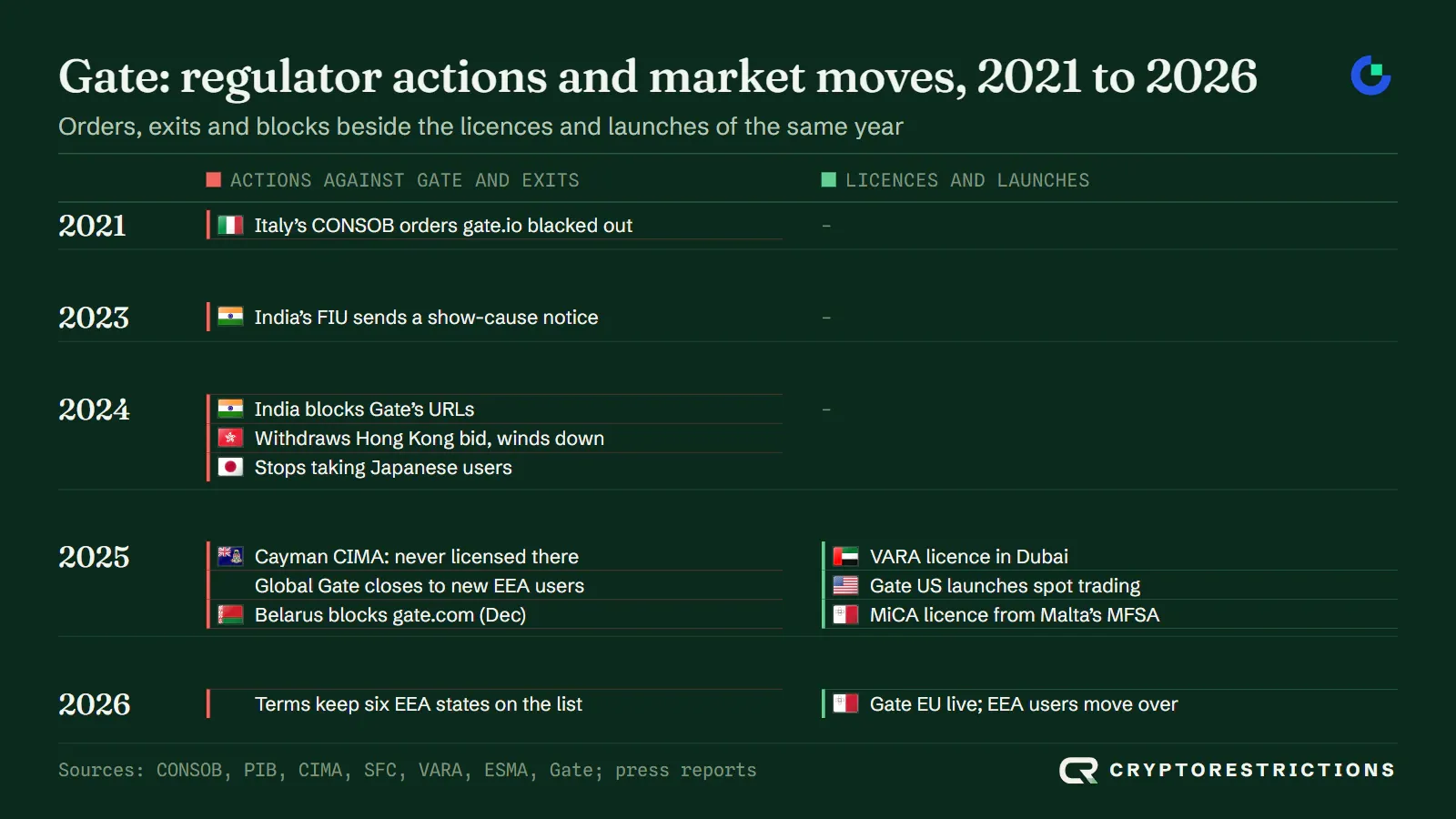
We found no US settlement or fine against Gate. Its regulator history is a series of exits and blocks: Italy in 2021, India from 2023, Hong Kong and Japan in 2024, then the closing of global Gate to new EEA users in 2025 as its local companies took over.
Gate KYC and identity verification
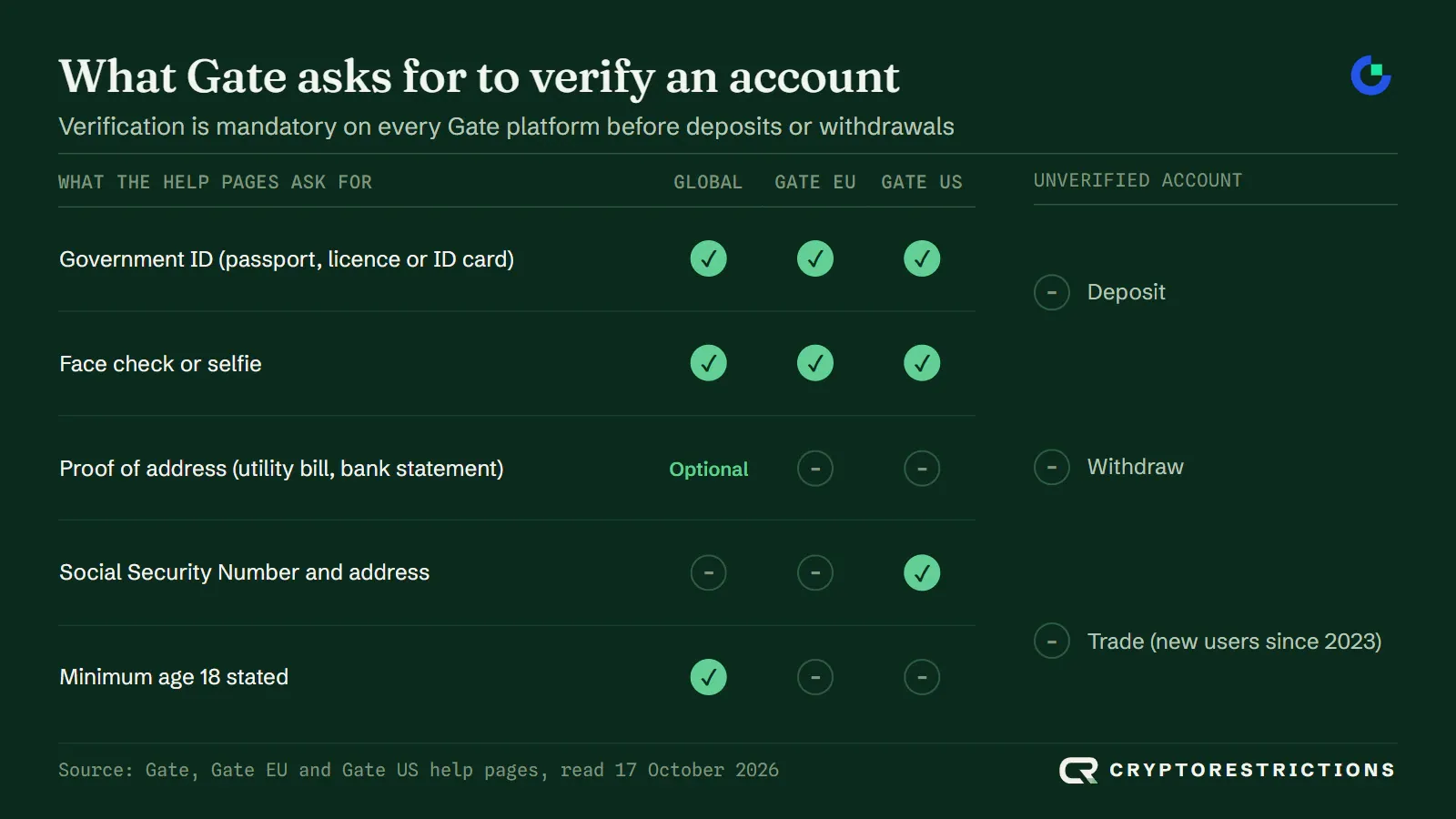
Gate requires every user to verify their identity, and an unverified account cannot deposit or withdraw; Gate publishes no verification tiers or limits by level.
Gate’s KYC help page asks for a government ID, such as a passport, driving licence or ID card, and says users under 18 cannot be verified. Its web guide adds a face check and an optional proof of address, such as a utility bill or bank statement, and says reviews usually take minutes and up to one business day. Gate EU asks for a photo ID and a selfie before deposits or withdrawals, and may ask flagged withdrawals for a second check. Gate US adds a Social Security Number and bars unverified users from trading, deposits, withdrawals and transfers.
The limits Gate does publish are by VIP tier, not by verification level: its fee page caps withdrawals at $3 million a day from VIP 0 to VIP 4. Clause 19.7 of the user agreement lets Gate set daily trading and withdrawal limits for security reasons.
Gate verification history
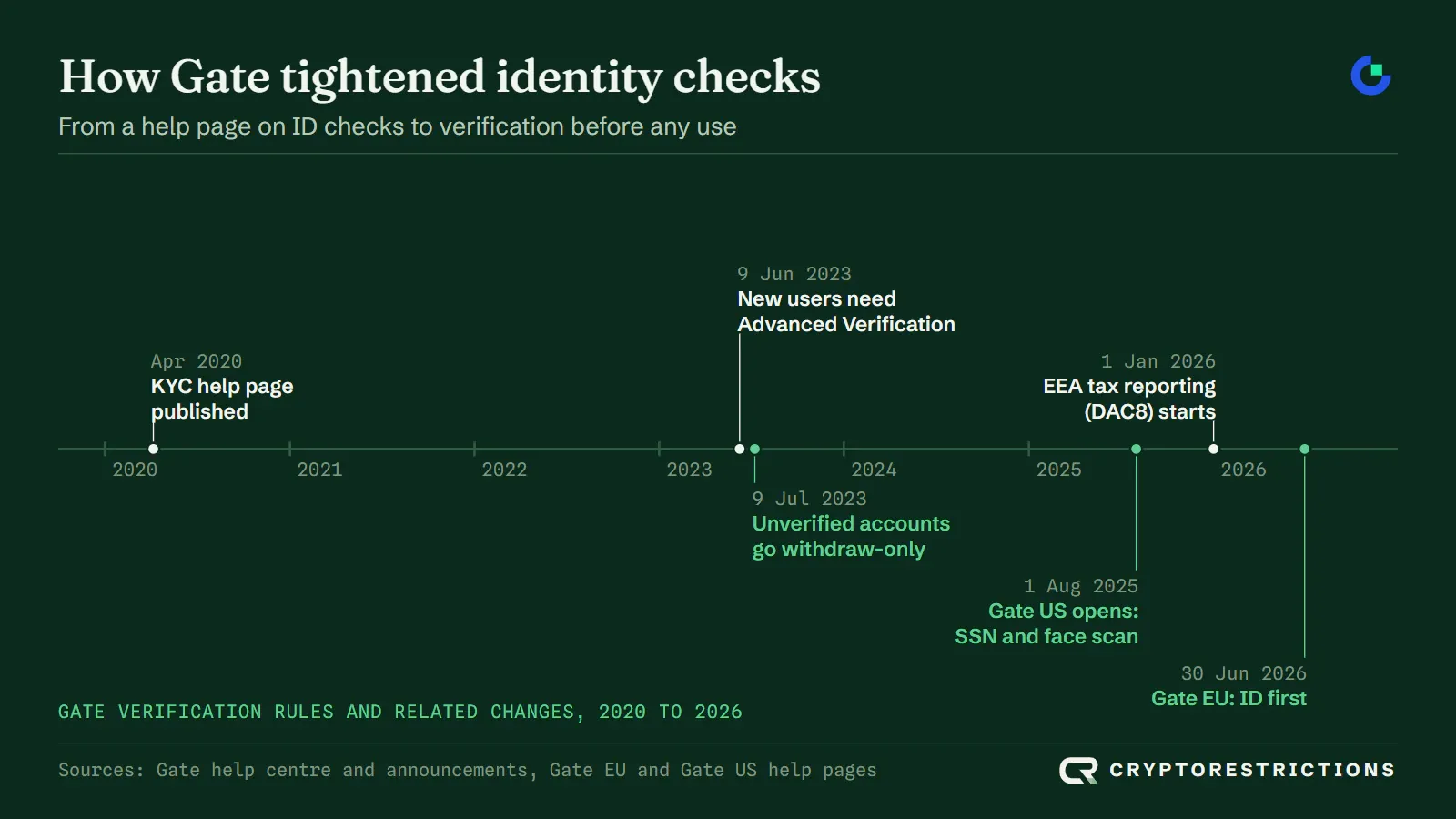
Gate made full verification mandatory in June 2023. Its announcement of 9 June required all new users to complete Advanced Verification before using any Gate product, and gave existing users until 9 July 2023, after which unverified accounts could only withdraw, cancel orders and close positions. For how Gate’s checks compare with other exchanges, see our guide to crypto exchange KYC.
What if Gate is restricted where you live?
It depends on the country: of the 21 other platforms we track, 20 are available in Vietnam, 18 in Argentina and 17 in Indonesia, but only one is recorded as available in Cuba, Iran and North Korea.
A VPN is no route around it. Gate’s terms tell anyone in a restricted location to stop using its services, let it suspend accounts that circumvent its controls, and every account must pass identity verification. What is left is a platform that is allowed to serve you where you live.
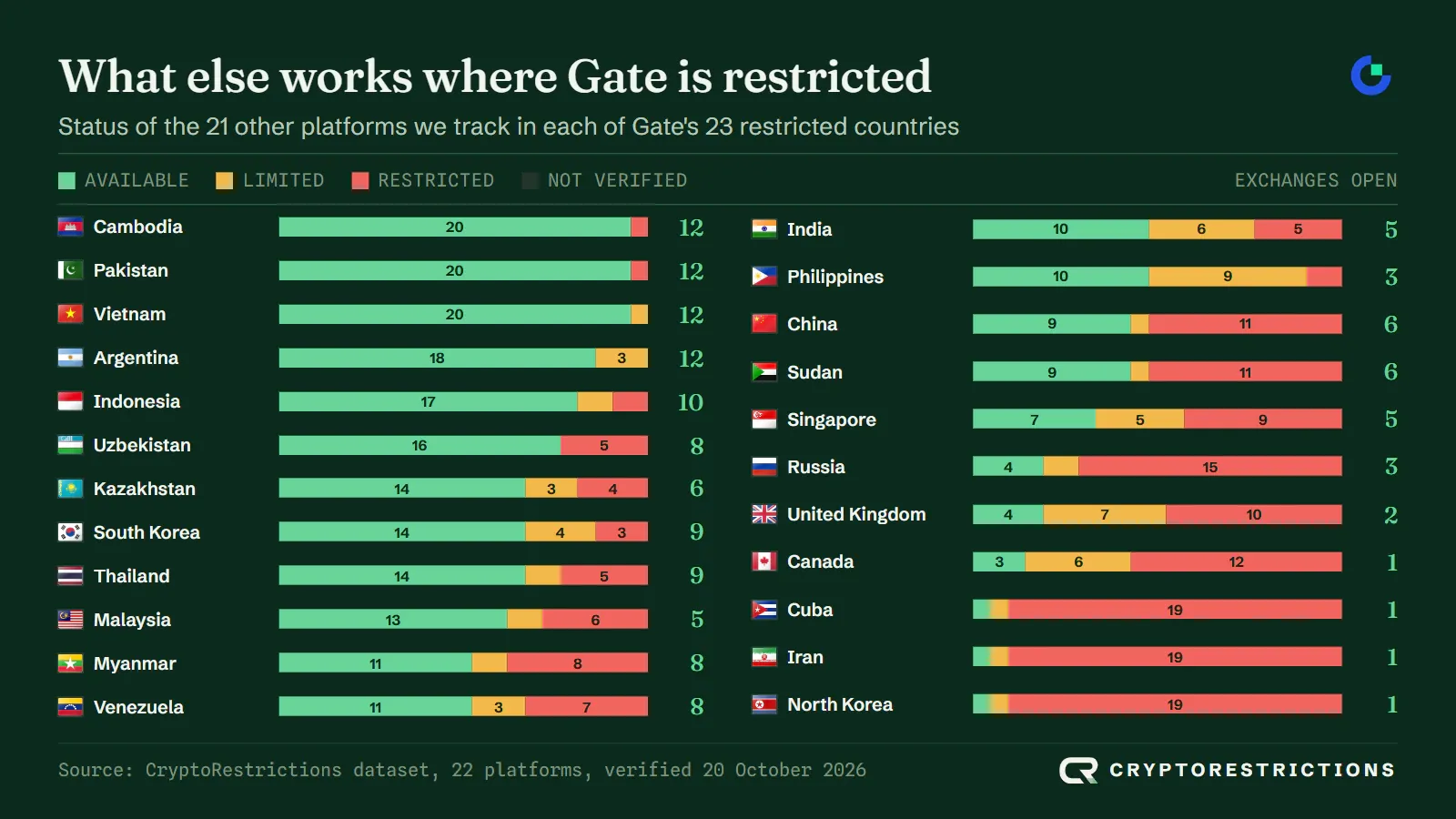
The chart shows how much choice each restricted country has. Argentina, Vietnam, Indonesia and India keep several open centralised exchanges, and even the UK and Canada keep Coinbase, the one centralised exchange open in both. Cambodia, Pakistan, Kazakhstan and Uzbekistan keep 16 to 20 open platforms, most of them centralised exchanges, and in Cuba, Iran and North Korea one platform is recorded as available, after our sanctions review.

Each country page lists every platform we track there with its status and sources; start from our country index.