
Is crypto legal in Latvia?
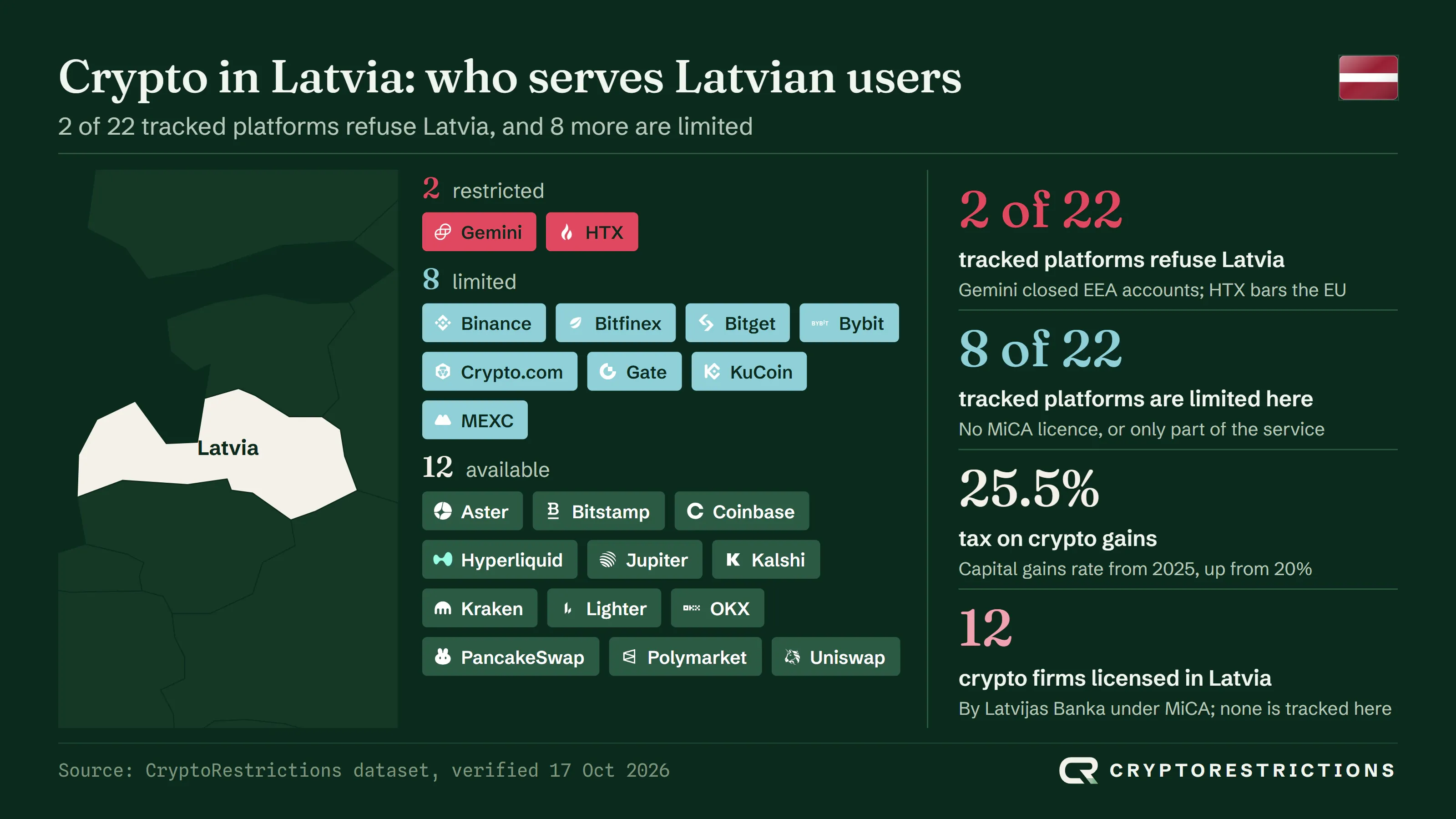
Yes. We found no Latvian rule that bars individuals from buying, holding or trading crypto, and every firm that serves them needs a MiCA authorisation from Latvijas Banka or another EU regulator. Latvia has applied MiCA since 30 December 2024.
The tax service treats crypto as a normal, reportable asset: the State Revenue Service (VID) taxes gains from selling it, as covered in the tax section. We found no regulator statement that says crypto is “legal” in so many words, so this rests on the tax treatment and the licensing regime.
Latvia’s own law came first. The Saeima adopted the Crypto-Asset Services Law on 13 June 2024, and it entered into force on 30 June 2024. It names Latvijas Banka the competent authority under MiCA, with powers to license, supervise and sanction. A licence application costs EUR 2,500. Fines on a company run up to EUR 15 million or 15% of its prior-year turnover, and the law adds management bans of up to ten years and licence revocation. It contains no criminal provisions. We read the law through a summary on likumi.lv, not its raw text.
Latvia gave firms already operating a short transition. ESMA’s list of transitional periods gives Latvia six months, so it ended on 30 June 2025, and the law lets a firm that had applied to Latvijas Banka by that date keep operating until the bank decides. We could not find how many firms used it. These were firms that had been registered with VID, which has supervised virtual-currency providers under the anti-money-laundering law since 1 July 2019. According to LV portāls, VID counted eight supervised providers in 2024 and does not disclose their names.
For individuals who live elsewhere, the Saeima exempted non-residents from Latvian income tax on selling publicly traded crypto-assets from 1 January 2025 to the end of 2027.
What the data does with this: because MiCA applies, our statuses for Latvia follow the EU rule. A platform without a MiCA authorisation that has closed new accounts but lets existing users withdraw is limited, not restricted, and only a platform that bars Latvia outright is restricted.
Which crypto exchanges work in Latvia?
Seven of the exchanges we track serve Latvian users under a MiCA licence granted elsewhere in the EU: Kraken, Coinbase, Bitstamp, OKX, Bybit, Crypto.com and Gate. Four are fully available; Bybit, Crypto.com and Gate are limited because none offers derivatives here.
The evidence is ESMA’s interim MiCA register, which lists the countries each firm notified, Latvia among them for all seven. The register shows where a firm may serve, not the day it started in Latvia. We read it on 19 October 2026. It is an interim register, so a firm authorised since then may not appear.
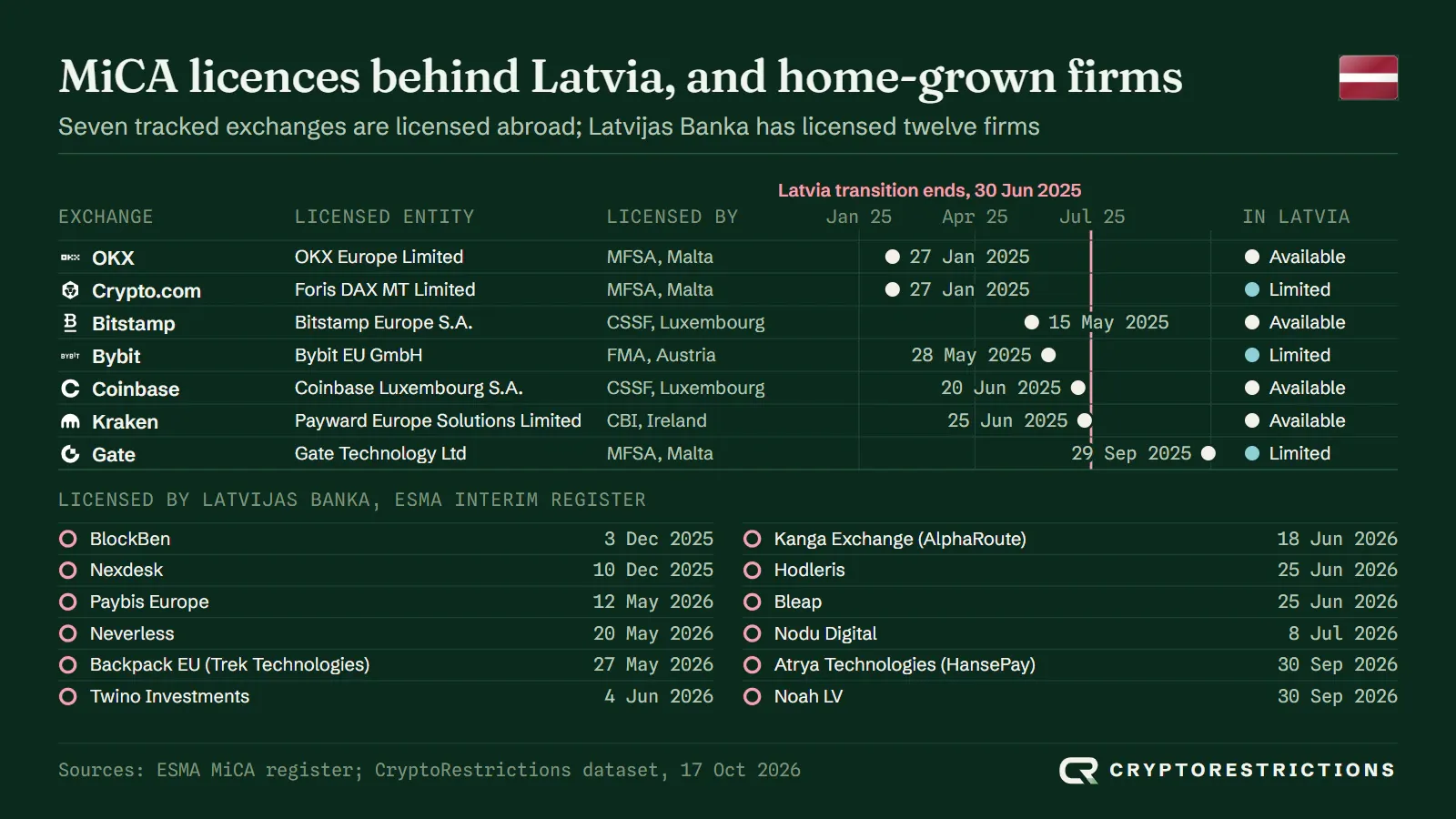
Kraken serves Latvia from Ireland: the register lists Latvia for Payward Europe Solutions but not for its second licensed entity. Coinbase serves Latvia from Luxembourg.
Latvijas Banka has licensed twelve firms of its own, none of them one of our 22 tracked platforms. Its release of 4 December 2025 called BlockBen the first. The register lists the rest: Nexdesk, Paybis Europe, Neverless, Backpack EU (Trek Technologies), Twino Investments, Kanga Exchange (AlphaRoute), Hodleris, Bleap, Nodu Digital, Atrya Technologies and Noah LV. LV portāls reports the bank’s count of twelve on 1 October 2026. Most hold passports to every EEA state; Twino’s does not include Latvia, and only Kanga Exchange is licensed to operate a trading platform.
Best crypto platforms for Latvians
By our access score, Bitstamp and Kraken (8.0 out of 10 each) are the most open exchanges for Latvian users, ahead of Coinbase and OKX (7.5). Polymarket and Kalshi score 8.0 and so does every DeFi platform we track, but we found no Latvian gambling licence for either prediction market.
The score rates how fully a Latvian resident can use each platform, not its fees or safety. It is computed from our data and moves when a row changes: access status (4 points), the share of the platform’s products open here (3), the licences we hold on file for Latvia (2) and what our geo-access test saw from a Latvian address (1). No platform earns the licence points here, because we file a passported MiCA licence under its home state. Platforms that refuse Latvian users are not scored. The full method is on our methodology page.
Exchanges

Bitstamp
Best for Spot trading from a long-running EU licence
8.0/10- Access
- 4/4
- Products
- 3/3
- Licences
- 0/2
- Our test
- 1/1
Read our Bitstamp reportPros
- Bitstamp Europe S.A. holds a CSSF MiCA licence that lists Latvia
- Our test loaded its home page with no barrier
Cons
- Served from Luxembourg, not Latvia

Kraken
Best for An exchange with a licence that names Latvia
8.0/10- Access
- 4/4
- Products
- 3/3
- Licences
- 0/2
- Our test
- 1/1
Read our Kraken reportPros
- Payward Europe Solutions holds a Central Bank of Ireland MiCA licence that lists Latvia
- Its home page loaded in our test with no notice
Cons
- Payward Global Solutions, its second licensed entity, does not list Latvia

Coinbase
Best for A MiCA-licensed exchange with the widest reach
7.5/10- Access
- 4/4
- Products
- 3/3
- Licences
- 0/2
- Our test
- 0.5/1
Read our Coinbase reportPros
- Coinbase Luxembourg S.A. holds a CSSF MiCA licence that lists Latvia
Cons
- Our test showed a notice that stocks and prediction markets are not available
- Served from Luxembourg, not Latvia

OKX
Best for A global brand with a local EU site
7.5/10- Access
- 4/4
- Products
- 3/3
- Licences
- 0/2
- Our test
- 0.5/1
Read our OKX reportPros
- OKX Europe Limited holds an MFSA MiCA licence that lists Latvia
- okx.com points Latvian visitors to OKX Europe
Cons
- Served from Malta, not Latvia

Bybit
Best for Spot trading only
6.9/10- Access
- 3.5/4
- Products
- 2.4/3
- Licences
- 0/2
- Our test
- 1/1
Read our Bybit reportPros
- Spot is served by Bybit EU GmbH under an Austrian MiCA licence that lists Latvia
Cons
- Bybit EU offers no derivatives
- EEA access to Bybit Global, which does, is being wound down

Crypto.com
Best for Spot trading in an app
6.3/10- Access
- 3.5/4
- Products
- 1.8/3
- Licences
- 0/2
- Our test
- 1/1
Read our Crypto.com reportPros
- Foris DAX MT Limited holds a Maltese MiCA licence that lists Latvia
- Spot trading and the app are offered
Cons
- It offers no derivatives here

Gate
Best for Spot trading on a licensed EU arm
5.5/10- Access
- 3.5/4
- Products
- 1.5/3
- Licences
- 0/2
- Our test
- 0.5/1
Read our Gate reportPros
- Gate Technology Ltd holds a Maltese MiCA licence that lists Latvia
- Spot trading is open to Latvian users
Cons
- No derivatives: global Gate stopped taking EEA users in March 2025
Prediction markets

Kalshi
Best for Regulated US event contracts
8.0/10- Access
- 4/4
- Products
- 3/3
- Licences
- 0/2
- Our test
- 1/1
Read our Kalshi reportPros
- Latvia is not on its restricted-jurisdictions list
- Its sign-up page loaded in our test
Cons
- We found no Latvian gambling licence for it

Polymarket
Best for The largest prediction market we can score here
8.0/10- Access
- 4/4
- Products
- 3/3
- Licences
- 0/2
- Our test
- 1/1
Read our Polymarket reportPros
- Latvia is not on its blocked-countries list
- Its page loaded in our test
Cons
- We found no Latvian gambling licence for it
- We could not check whether Latvia has blocked it
DeFi

Aster
Best for Perpetual futures on several chains
8.0/10- Access
- 4/4
- Products
- 3/3
- Licences
- 0/2
- Our test
- 1/1
Read our Aster reportPros
- Latvia is not on its prohibited-jurisdictions list
- The trading app loaded in our test
Cons
- No licence on file for Latvia

Hyperliquid
Best for Perpetual futures from your own wallet
8.0/10- Access
- 4/4
- Products
- 3/3
- Licences
- 0/2
- Our test
- 1/1
Read our Hyperliquid reportPros
- Excludes only the US, Ontario and broadly sanctioned places
- Its trading app loaded in our test
Cons
- No licence on file for Latvia

Jupiter
Best for Solana swaps
8.0/10- Access
- 4/4
- Products
- 3/3
- Licences
- 0/2
- Our test
- 1/1
Read our Jupiter reportPros
- Latvia is not in its terms
- Its app loaded in our test
Cons
- No licence on file for Latvia

Lighter
Best for On-chain perpetuals
8.0/10- Access
- 4/4
- Products
- 3/3
- Licences
- 0/2
- Our test
- 1/1
Read our Lighter reportPros
- Latvia is not named in its terms
- Its trading app loaded in our test
Cons
- No licence on file for Latvia

PancakeSwap
Best for BNB Chain swaps and pools
8.0/10- Access
- 4/4
- Products
- 3/3
- Licences
- 0/2
- Our test
- 1/1
Read our PancakeSwap reportPros
- Not excluded by its terms
- The swap page loaded in our test
Cons
- No licence on file for Latvia

Uniswap
Best for Swapping tokens from your own wallet
8.0/10- Access
- 4/4
- Products
- 3/3
- Licences
- 0/2
- Our test
- 1/1
Read our Uniswap reportPros
- Its terms bar only places under comprehensive US sanctions
- Our test loaded the swap app from a Latvian address
Cons
- No licence on file for Latvia
Which platforms block Latvian users?
Two of the 22 platforms we track refuse Latvian users: Gemini and HTX. Eight more are limited: Binance, KuCoin, MEXC, Bitget, Bitfinex, Bybit, Crypto.com and Gate.
Gemini closed every UK and EEA account on 6 April 2026, and its sign-up page refused us from Latvia. HTX lists every EU member state as restricted in its user agreement, and the EU’s Russia-sanctions Regulation 2026/1848 bans transactions with it from 23 August 2026.


The limited exchanges split in two. Bybit, Crypto.com and Gate serve spot trading under a MiCA licence but no derivatives. The other five have no working MiCA authorisation: none of Binance, MEXC, Bitget and Bitfinex is on ESMA’s register, and KuCoin EU is on it, with a Latvian passport, but has had trading suspended since 4 February 2026.
Binance needs a caution. Its 16 June 2026 update said it was still seeking a licence, and CoinDesk reported on 26 June that it told EU users it would restrict services after failing to secure one. Cointelegraph reported on 24 June that Binance had also held talks with regulators in Latvia, but applied only in Greece, and withdrew that application. We found no Latvia-specific Binance notice and no Latvian licence application, so the limited status rests on Latvia being in the EU.
What our geo-access test saw from Latvia
From a Latvian address on 14 and 16 October 2026 we loaded all 22 platforms we track: 1 refused us, 5 showed a notice or a redirect, and 16 loaded with no barrier.
An open page is not permission. HTX, MEXC, Bitget and Bitfinex all loaded although none is on ESMA’s register, and HTX bars the EU in its terms. The test sees a platform’s own geo-blocking, not a national internet-provider block. The refusal was Gemini (“Gemini does not currently operate in Latvia”). The five notices were Binance’s link to regulatory information, a prompt to switch to the EU site at KuCoin and at Gate, OKX’s redirect to its European site and Coinbase’s note that stocks and prediction markets are unavailable. We have no screenshot for Jupiter, whose app loaded. Swipe through the screenshots below; each card quotes the message the page showed.
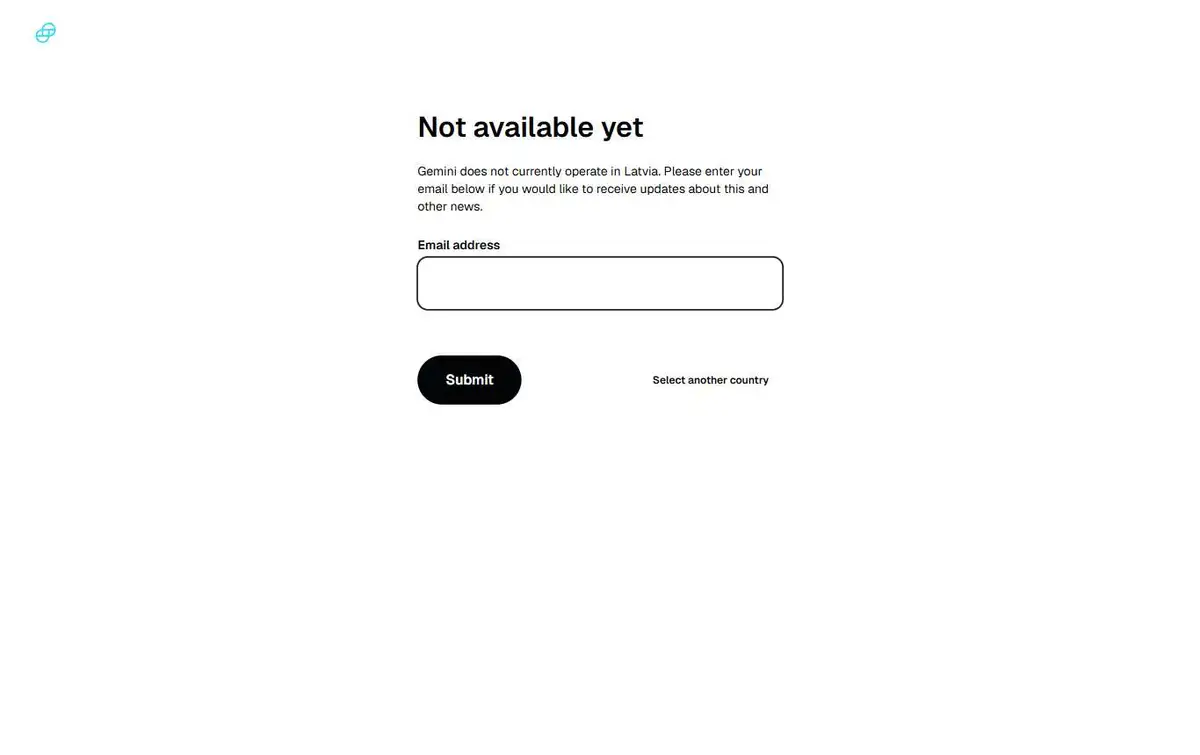
Blocked Gemini · Sign-up page
Latvia, closed with the rest of the EEA in April 2026: the sign-up form is replaced by a location check
“Gemini does not currently operate in Latvia.”
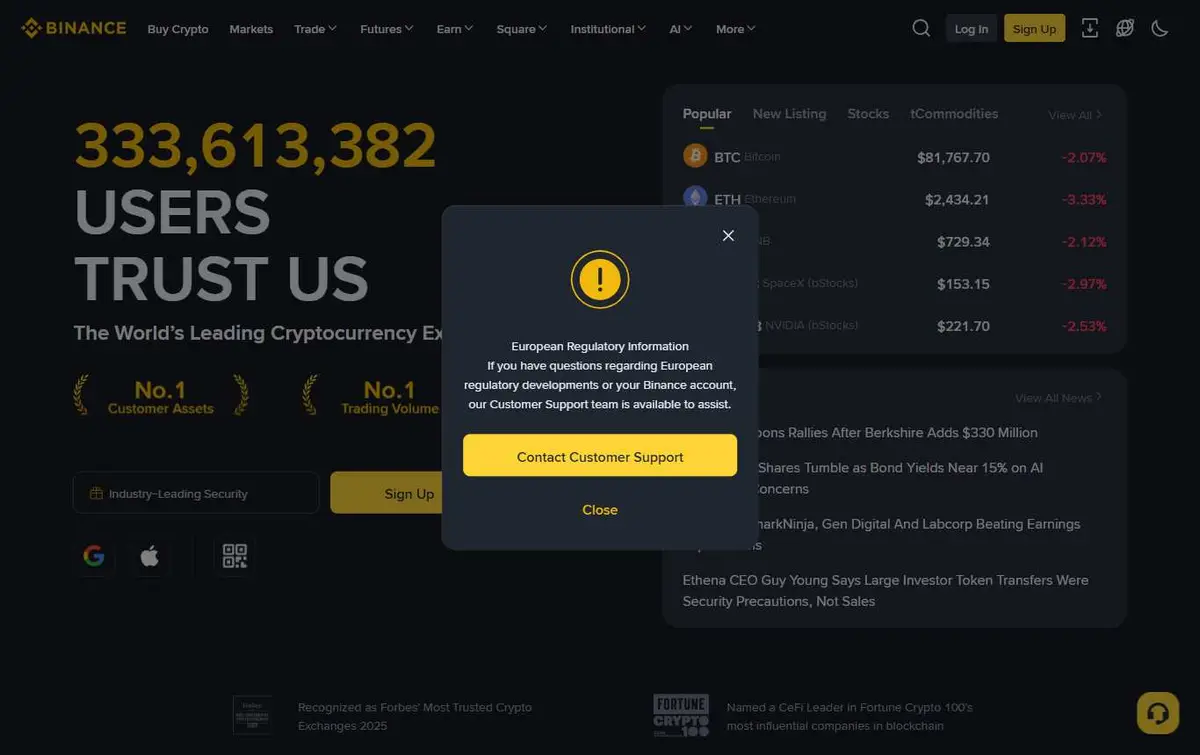
Notice shown Binance · Home page
Latvia: the global site loads, with a European regulatory information link
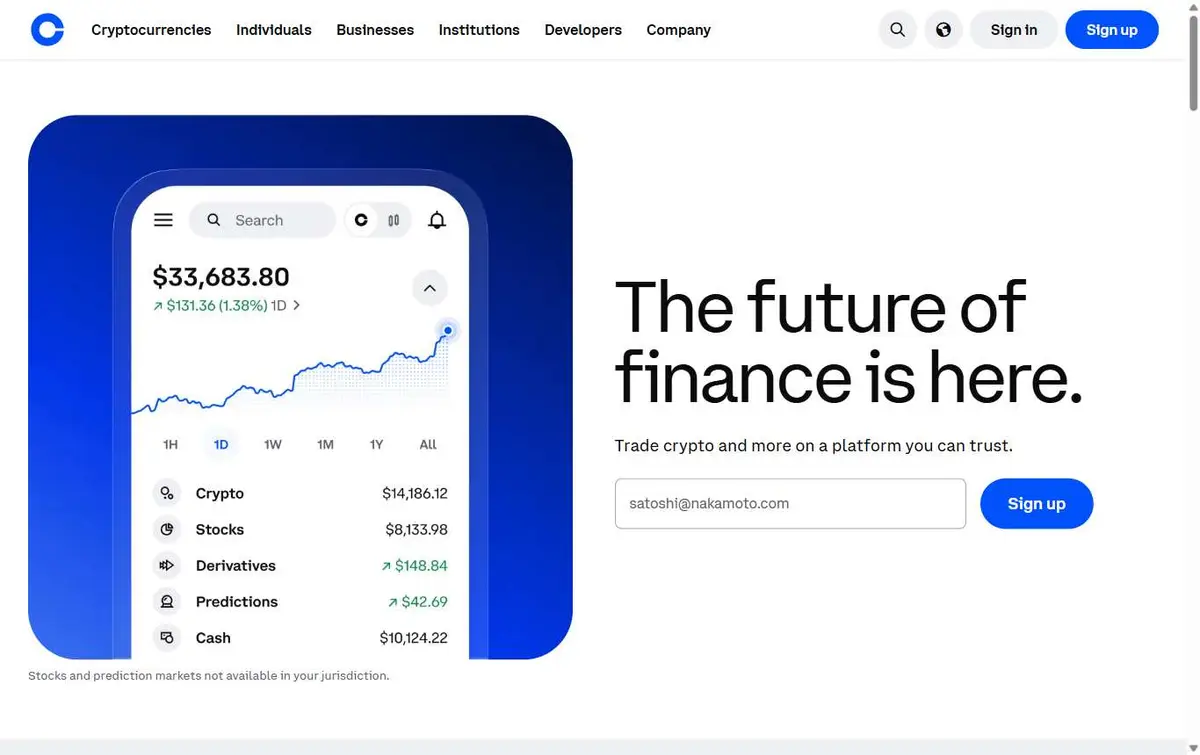
Notice shown Coinbase · Home page
Latvia: the site loads, with a notice that stocks and prediction markets are not available
“Stocks and prediction markets not available in your jurisdiction.”
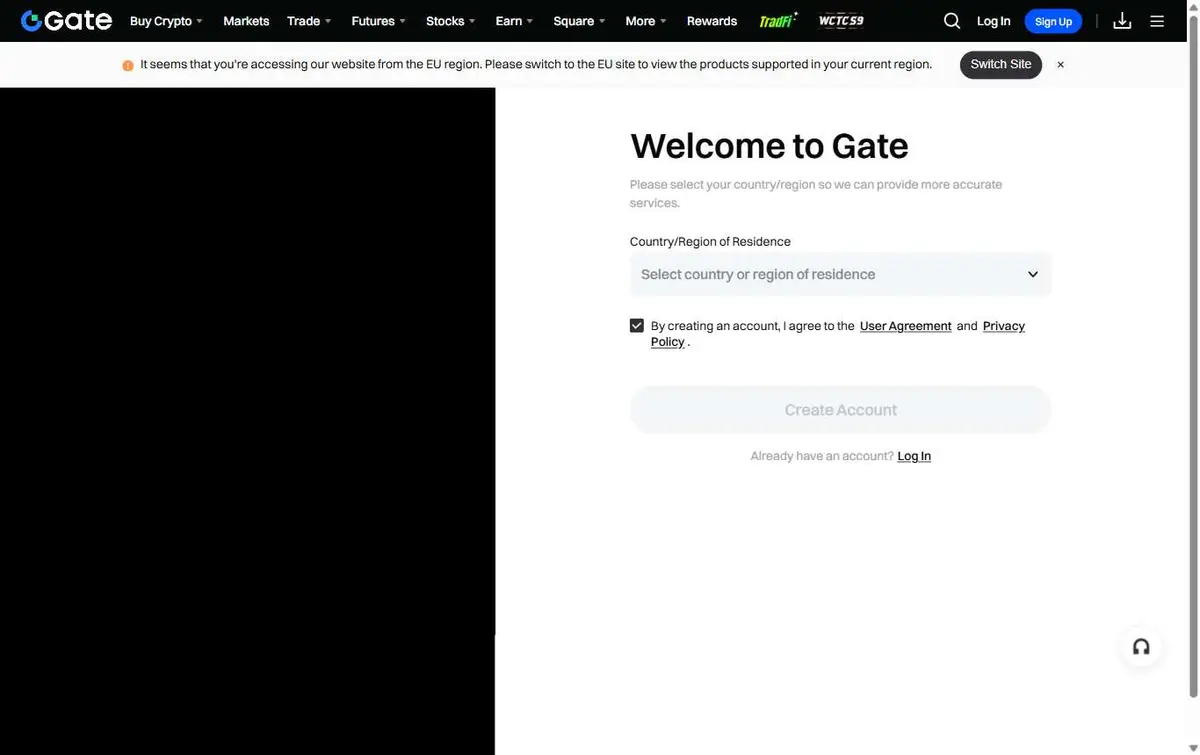
Notice shown Gate · Sign-up page
Latvia: the sign-up page offers the EU site
“It seems that you're accessing our website from the EU region.”
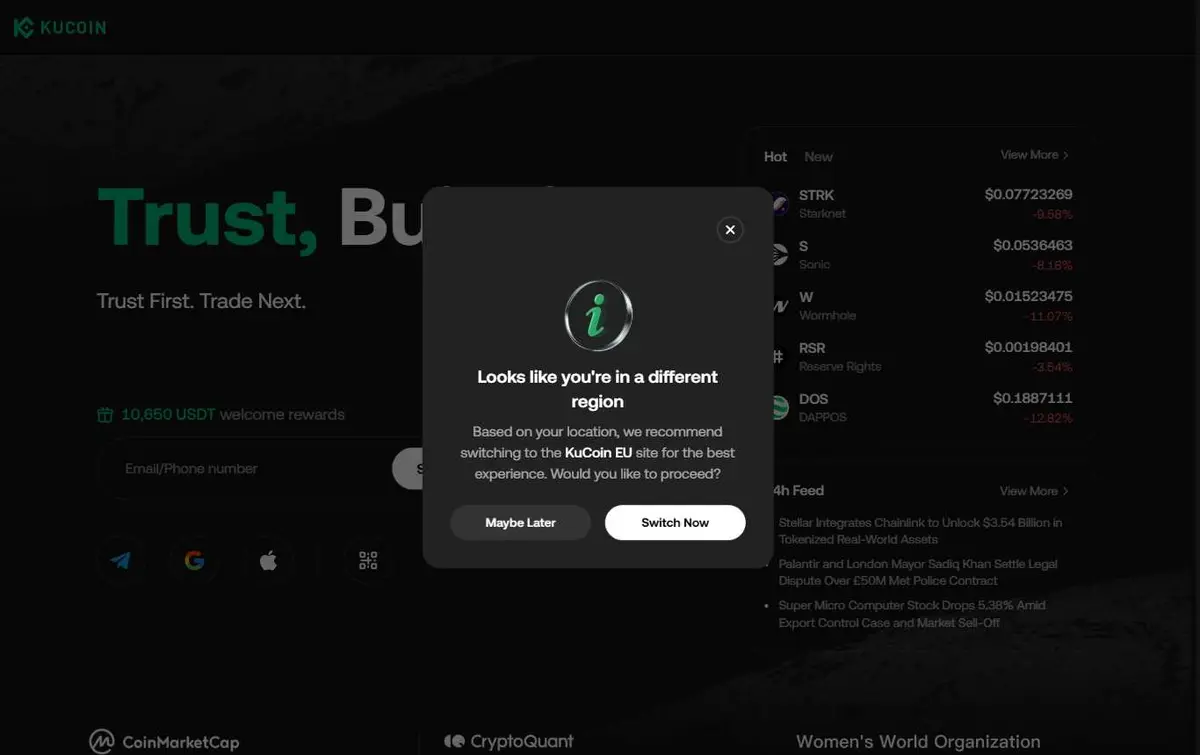
Notice shown KuCoin · Home page
Latvia: KuCoin recommends its EU site
“Based on your location, we recommend switching to the KuCoin EU site for the best experience.”
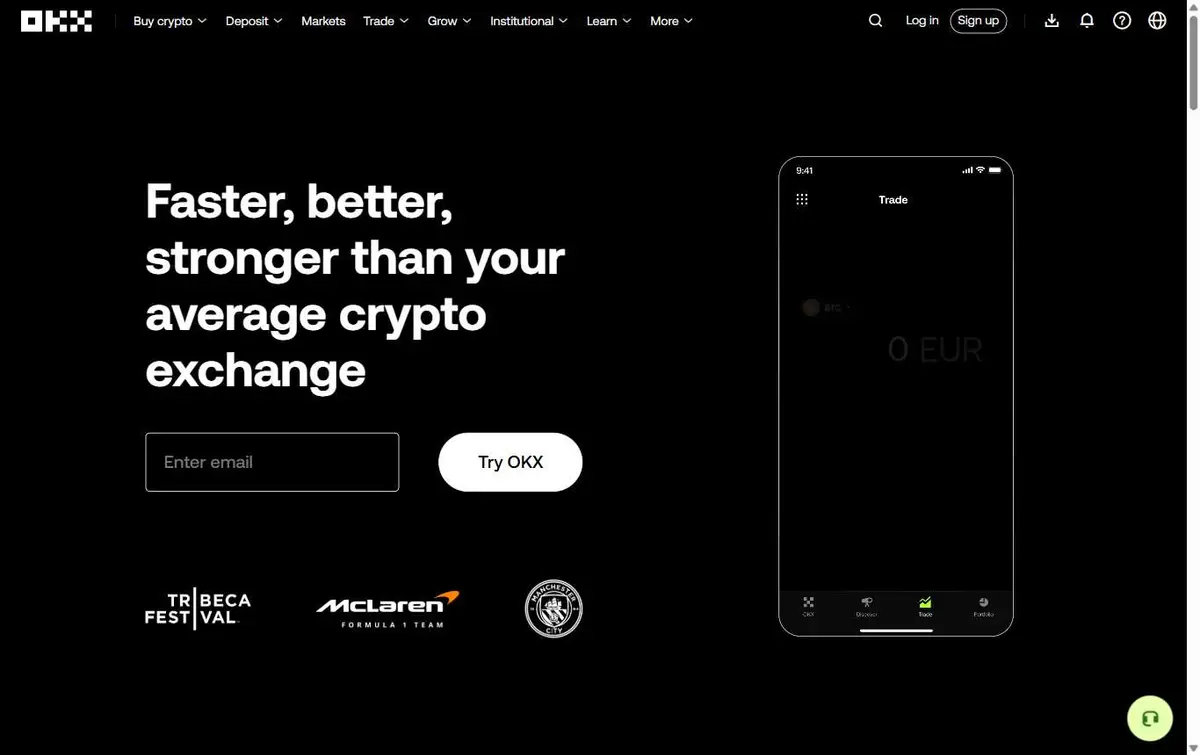
Notice shown OKX · Home page
Latvia: okx.com points visitors to the OKX Europe site
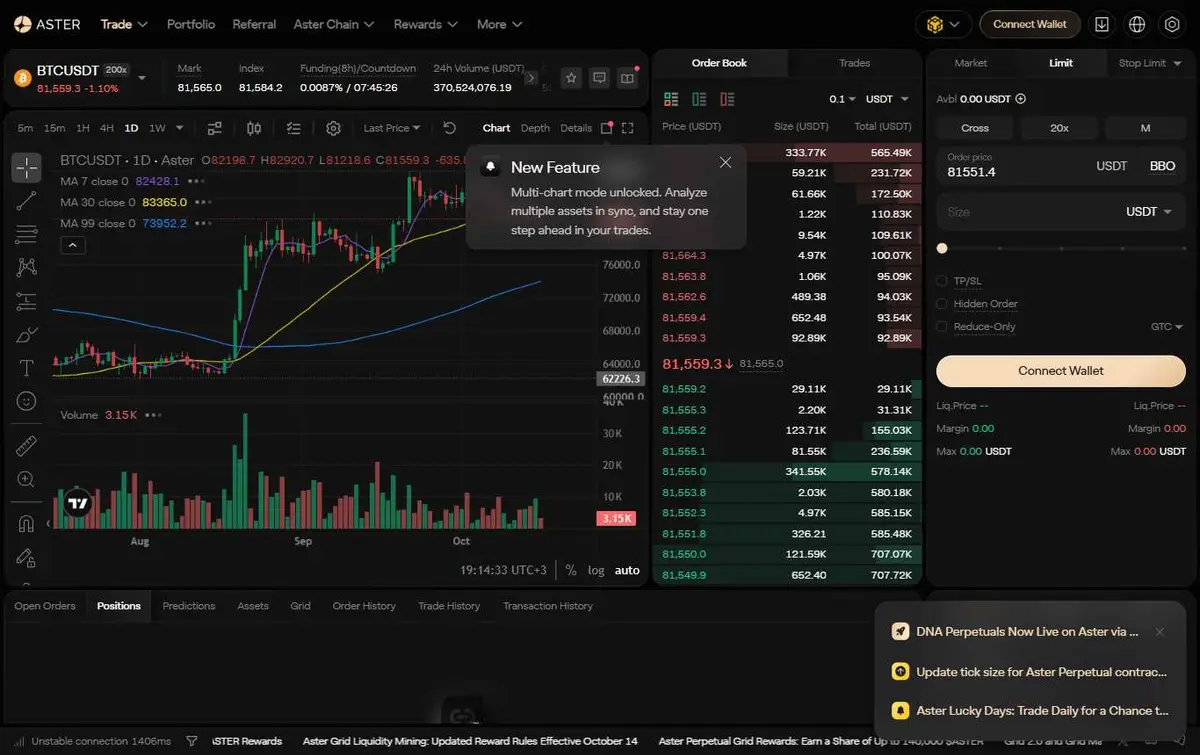
No barrier Aster · Trading app
Latvia: the trading app loads with no notice
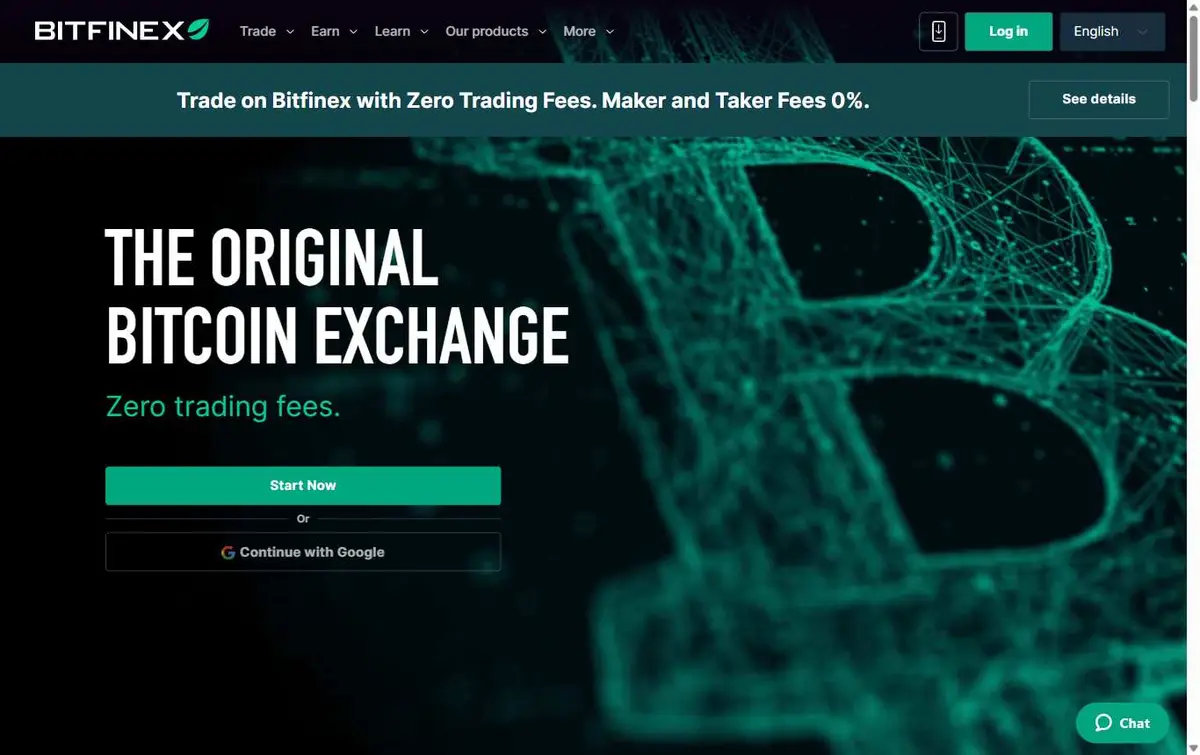
No barrier Bitfinex · Home page
Latvia: the home page loads with no notice
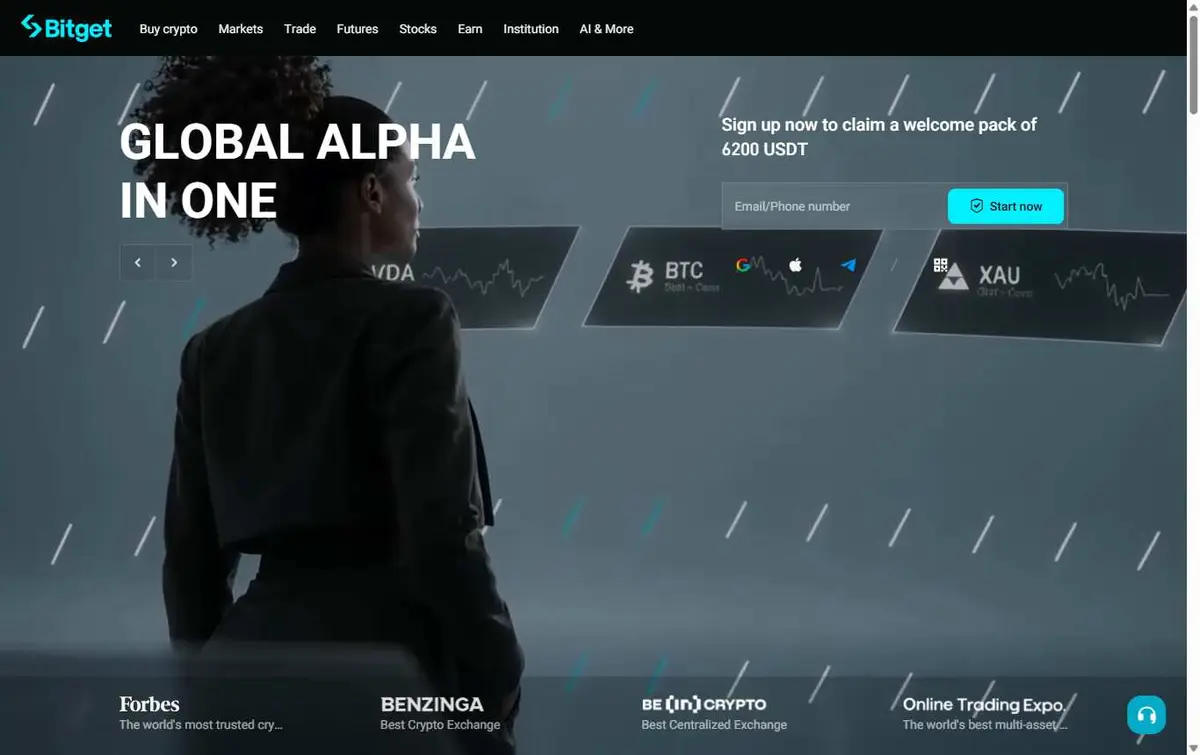
No barrier Bitget · Home page
Latvia: the home page loads with no notice
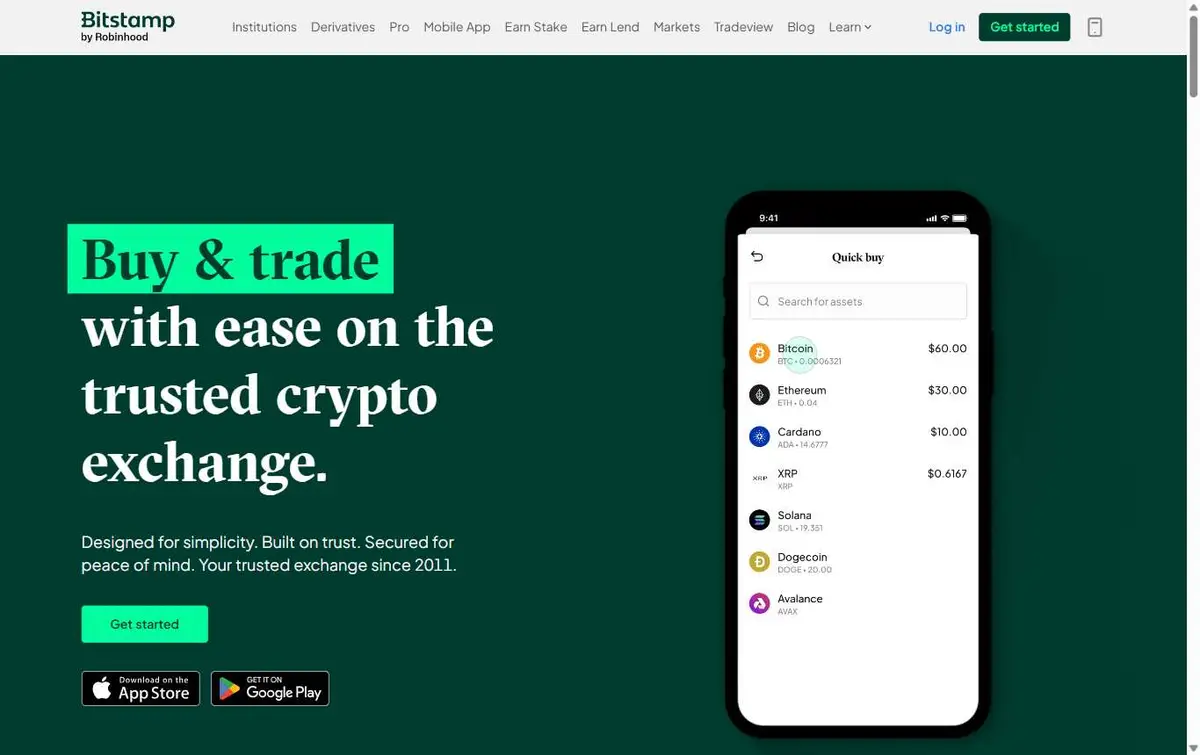
No barrier Bitstamp · Home page
Latvia: the home page loads with no notice
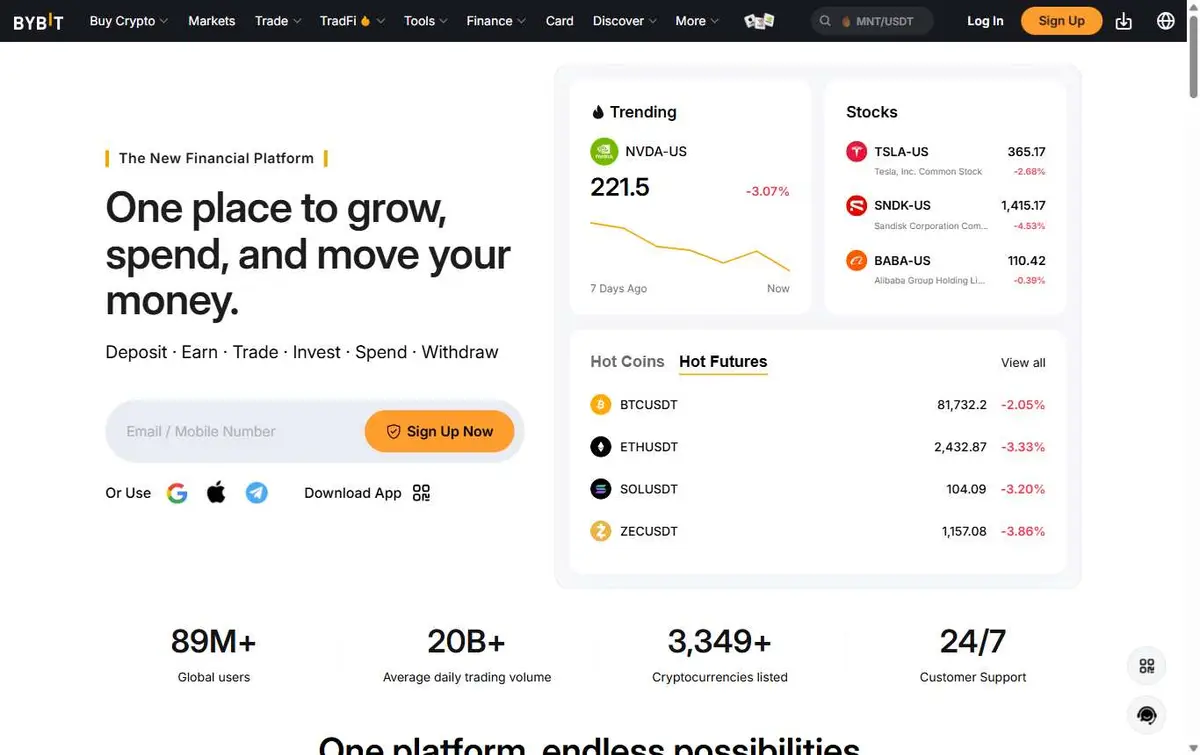
No barrier Bybit · Home page
Latvia: the global site loads with no notice
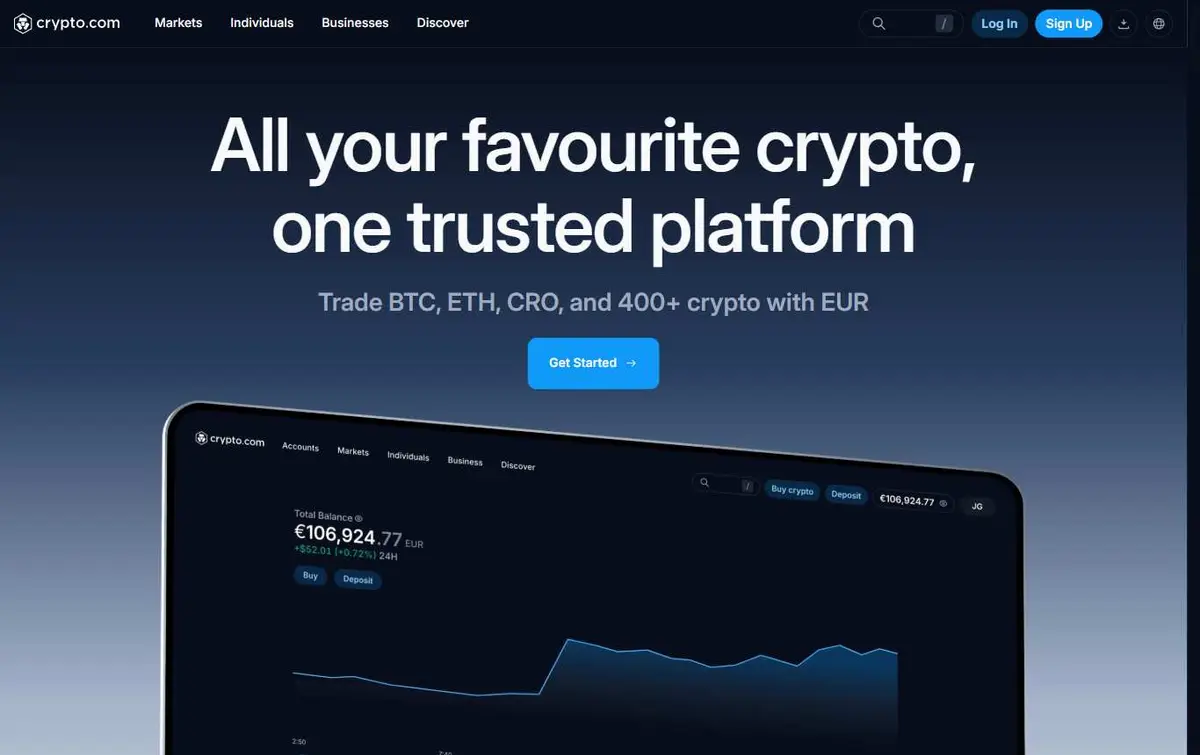
No barrier Crypto.com · Home page
Latvia: the home page loads with no notice
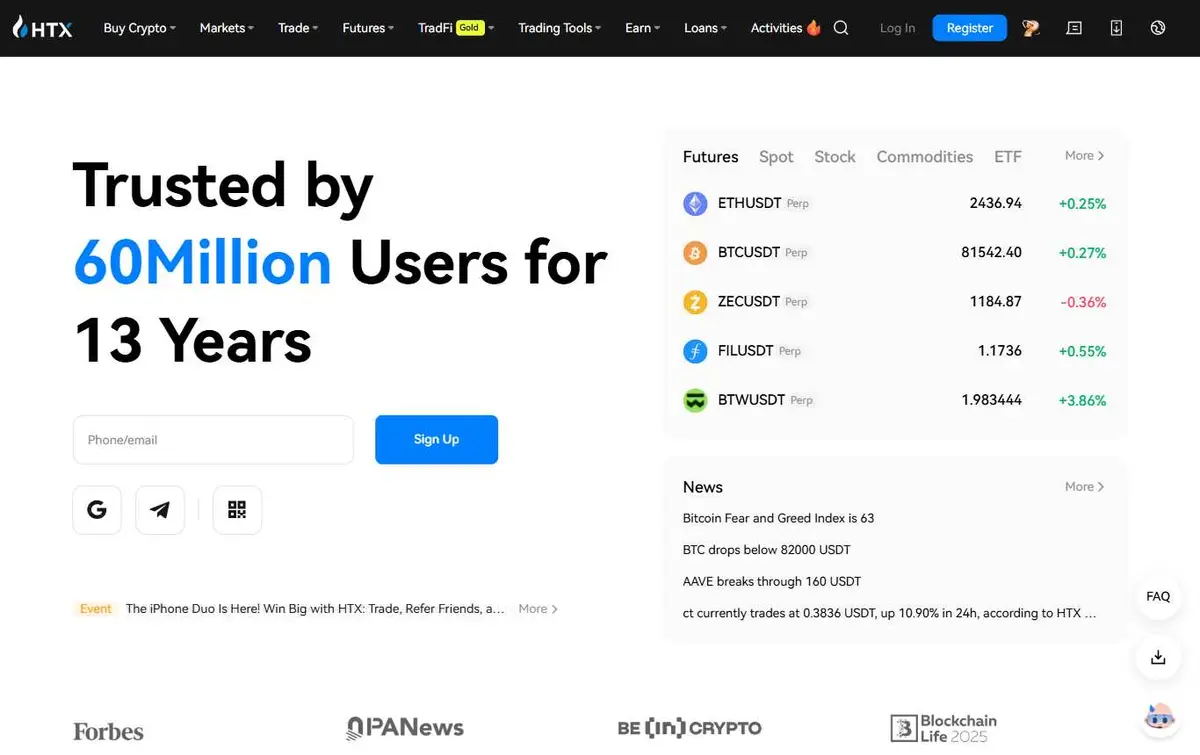
No barrier HTX · Home page
Latvia: the home page loads with no notice
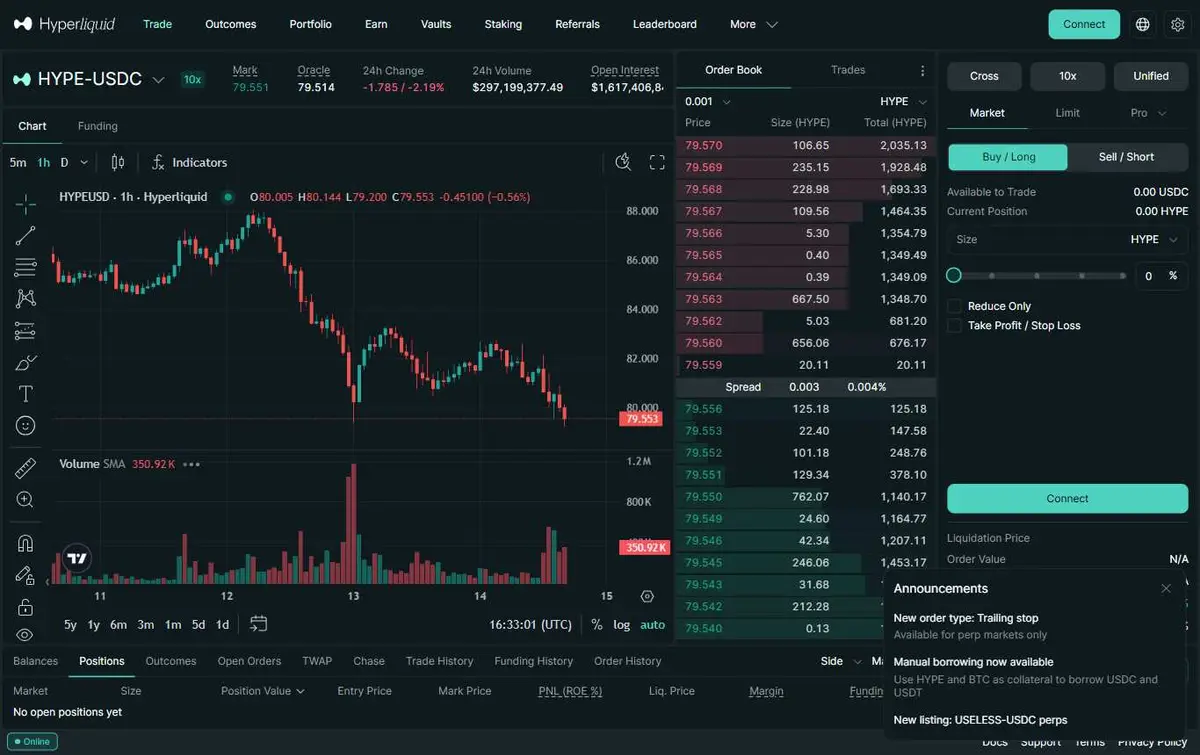
No barrierHyperliquid · Trading app
Latvia: the trading app loads with no notice
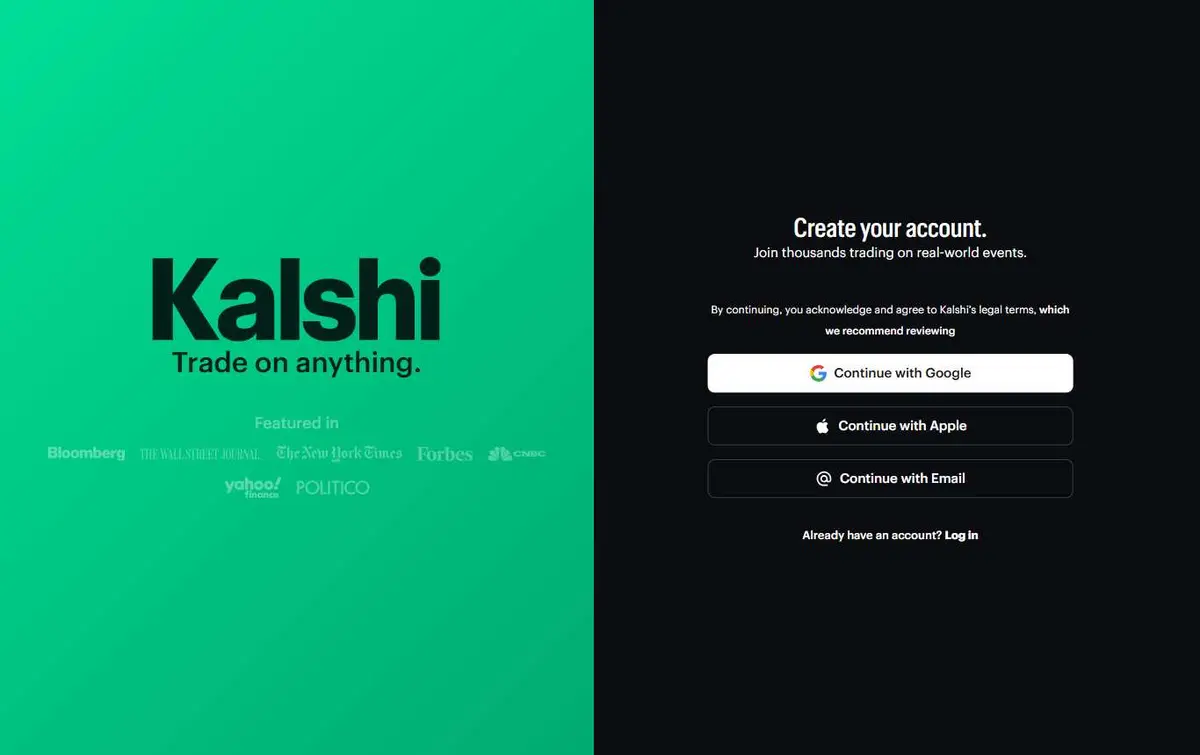
No barrier Kalshi · Sign-up page
Latvia: sign-up loads with no notice
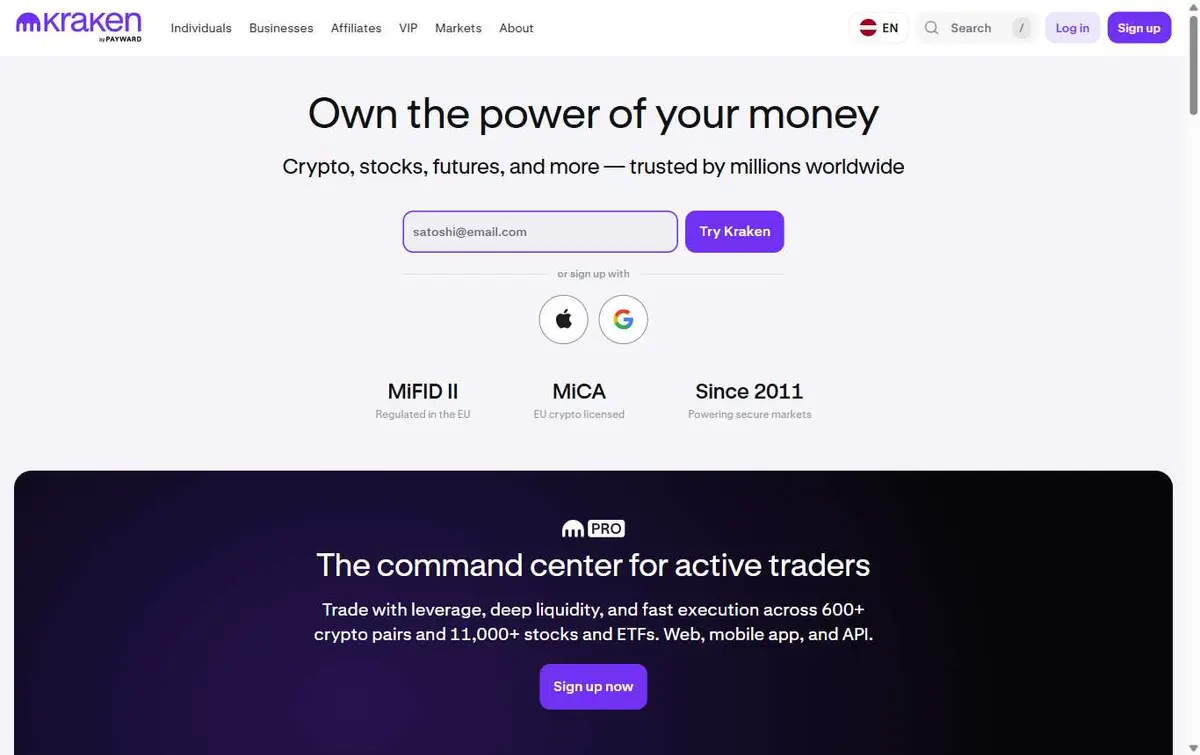
No barrier Kraken · Home page
Latvia: the home page loads with no notice
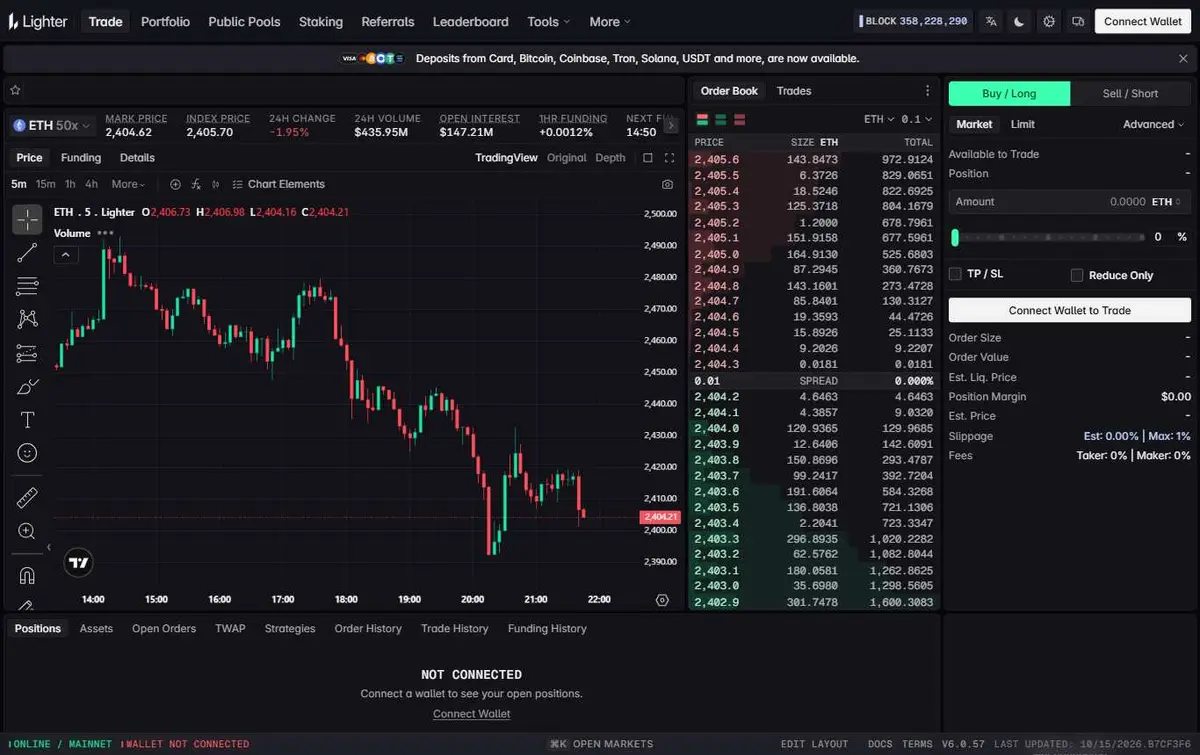
No barrier Lighter · Trading app
Latvia: the trading app loads with no notice
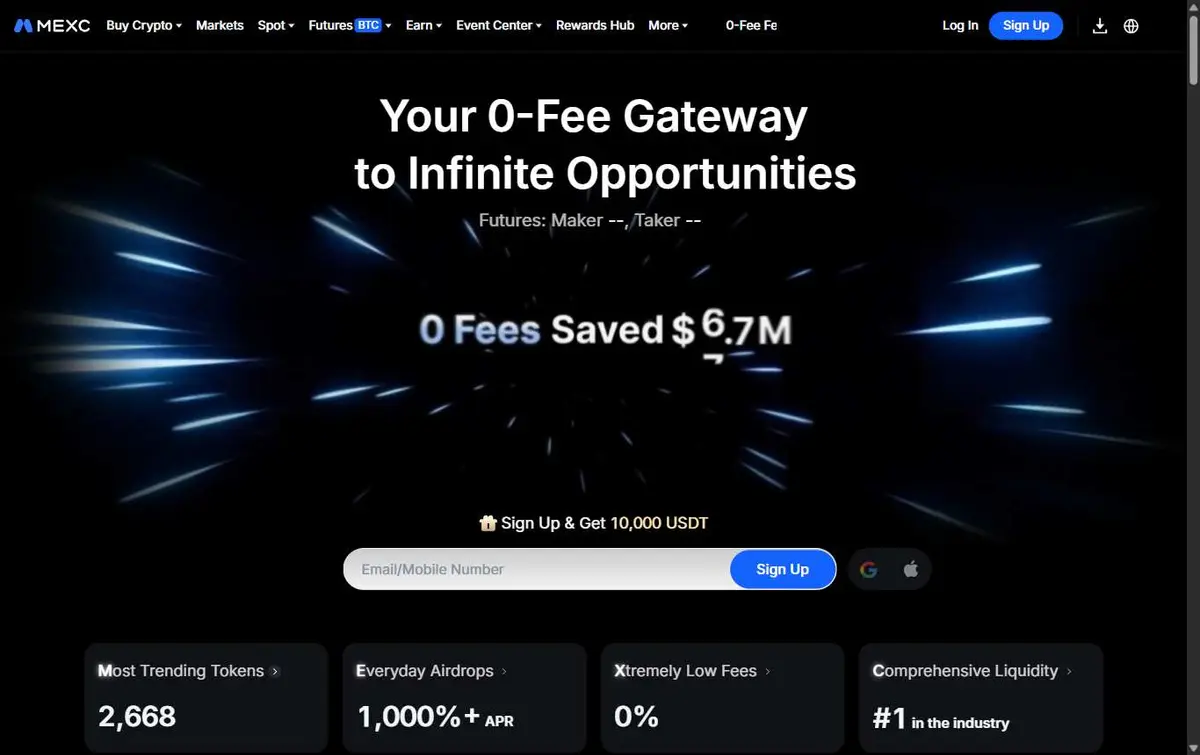
No barrier MEXC · Home page
Latvia: the home page loads with no notice
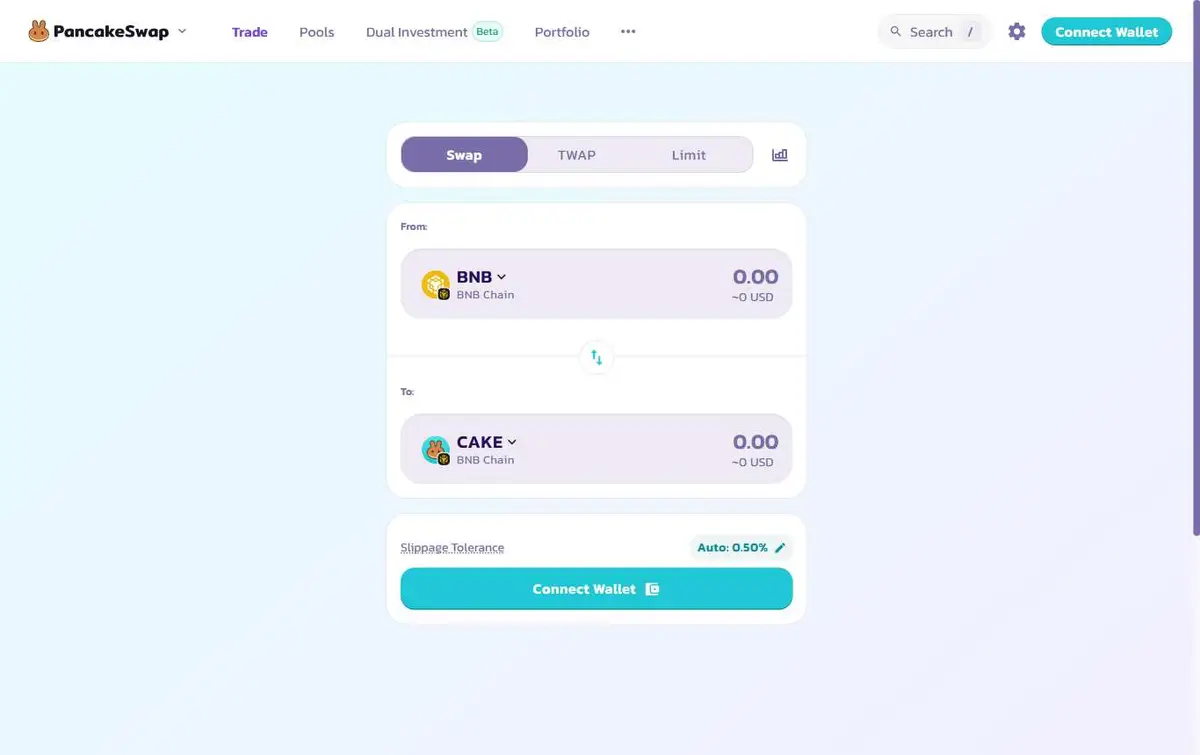
No barrier PancakeSwap · Trading app
Latvia: the swap app loads with no notice
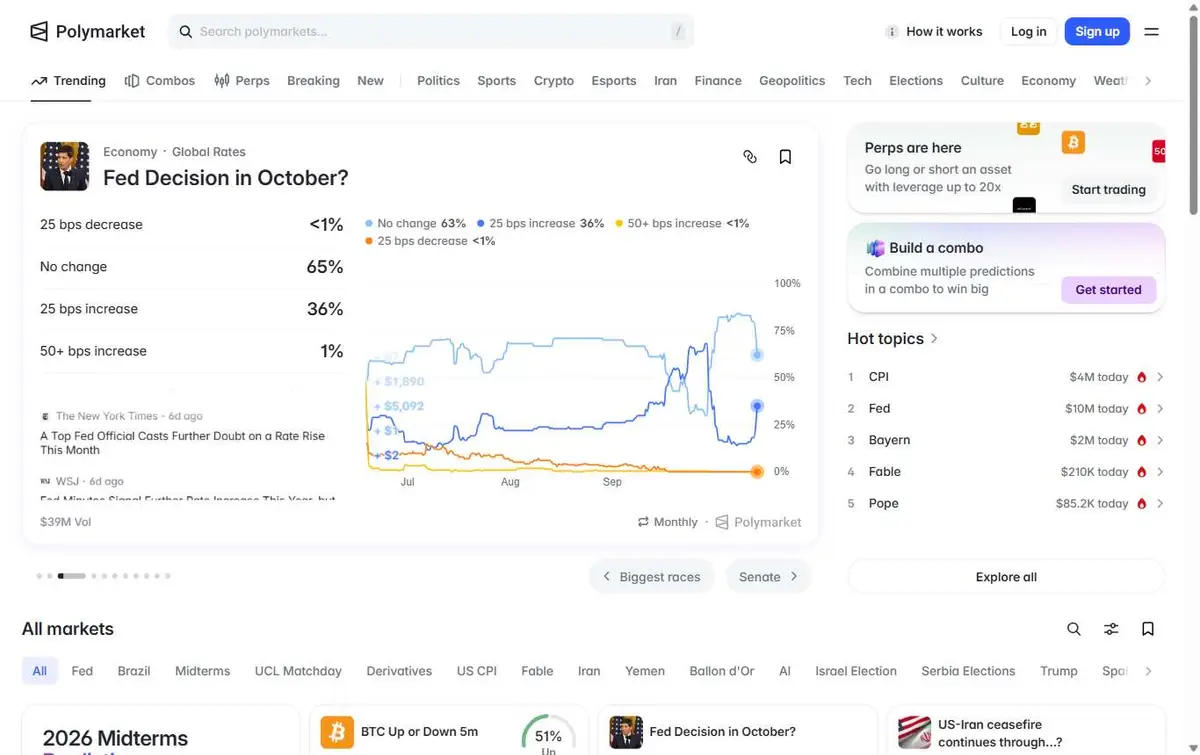
No barrier Polymarket · Home page
Latvia: the page loads with no notice
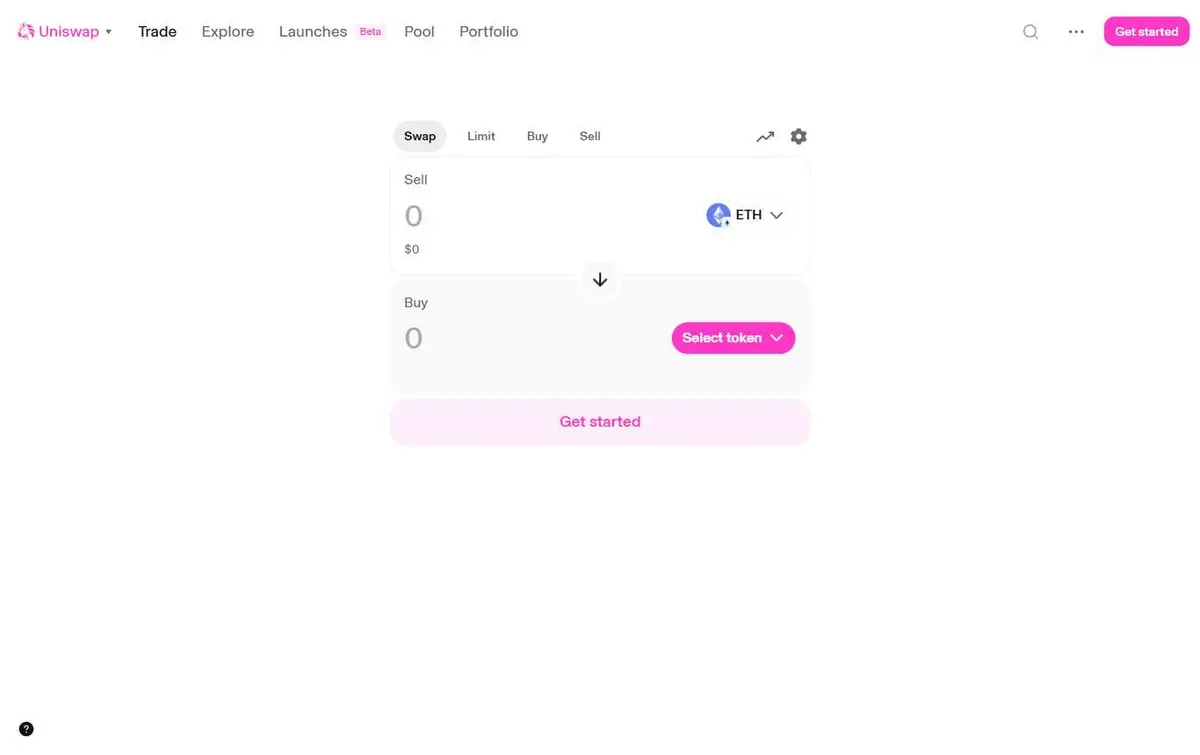
No barrier Uniswap · Trading app
Latvia: the swap app loads with no notice
 CRYPTORESTRICTIONS
Who regulates crypto in Latvia?
Latvijas Banka authorises and supervises crypto firms under MiCA. VID, the State Revenue Service, sets the tax rules, receives crypto reports and, since 1 April 2026, also licenses gambling and orders blocks of unlicensed sites.
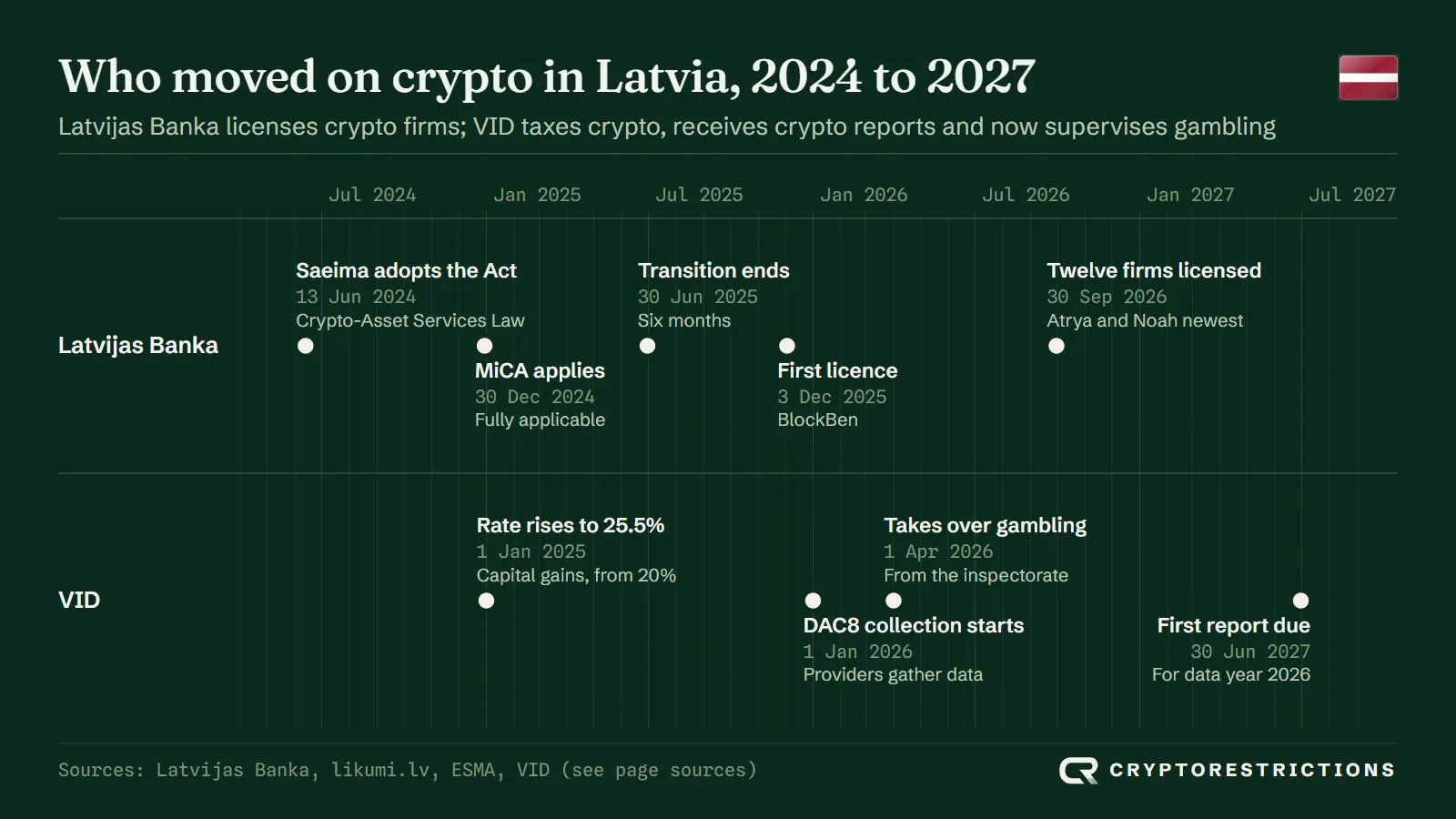
- Latvijas Banka. The competent authority for MiCA under the Crypto-Asset Services Law and, according to VID’s tax guidance, the body that has registered, supervised and controlled crypto-asset service providers since 30 December 2024. It has licensed twelve firms, listed in the exchanges section. We found no Latvijas Banka warning naming any platform we track, though we could not read its list of unauthorised firms, if it keeps one.
- VID (Valsts ieņēmumu dienests). Treats crypto as taxable capital gains and runs the new reporting scheme, as covered in the tax section. It also supervised virtual-currency providers under the anti-money-laundering law until Latvijas Banka took over.
- Gambling supervision. The Lotteries and Gambling Supervisory Inspection (IAUI) was attached to VID on 1 April 2026, when amendments of 3 December 2025 to the Gambling and Lotteries Law took effect. The prediction-markets section covers what that means for blocking. We read the law through a likumi.lv summary, and the attachment date comes from secondary reporting, so we treat it as reliable but not confirmed on the law itself.
Which crypto products are limited in Latvia?
Spot trading is the open product. Derivatives are the narrow one: Bybit, Crypto.com and Gate offer none to Latvian users. Gambling with crypto is a separate matter: interactive gambling in Latvia needs a VID licence.
- Derivatives. Bybit EU offers no derivatives, and EEA access to Bybit Global, which does, is being wound down. Crypto.com offers no derivatives here, and Gate’s EU arm has none.
- Stocks and prediction markets. Coinbase’s home page showed us a notice that both are not available in our Latvian test.
- Mining. We found no Latvian ban on crypto mining. VID’s guidance says selling crypto you produced yourself is business income, not a capital gain, as covered in the tax section.
- Assets outside MiCA. VID’s guidance applies only to crypto-assets within MiCA’s scope since 6 March 2026. NFTs and unique assets are taxed by their economic substance instead.
Are prediction markets legal in Latvia?
No Latvian authority has said so either way. Gambling needs a VID licence, VID can order internet providers to block unlicensed sites within five working days, and we found no statement or action by any authority about Polymarket or Kalshi.
The Gambling and Lotteries Law defines betting as a game in which a participant stakes money and predicts whether an event will or will not occur, and it bars taking part in interactive gambling organised in Latvia without a VID licence. We found no authority statement on whether event contracts count as betting, so we do not say they do.
Blocking has run on Cabinet Regulation No. 114 since 1 April 2026: VID decides to block a domain or IP address, internet providers block it within five working days, and the .lv registry ends a domain within the same time. The regulation does not require a public blocklist. The inspection’s old site now redirects to VID and we found no static list of blocked domains, so we cannot say whether Polymarket or Kalshi is on one. We also found no report that either was blocked.
Next door, SBC News reported that Lithuania’s gambling regulator announced a court-ordered Polymarket block on 8 September 2026. That says nothing about Latvia.
In our data both Polymarket and Kalshi are available, because neither lists Latvia among its restricted countries and both loaded in our test. A Latvian block would not by itself change a row; a platform’s own decision to restrict Latvia would.
How is crypto taxed in Latvia?
Gains on crypto are capital gains taxed at 25.5% from 2025, up from 20%, with an extra 3% on total annual income above EUR 200,000. There is no holding-period exemption, and from 2026 providers report to VID under the EU’s DAC8 rules.
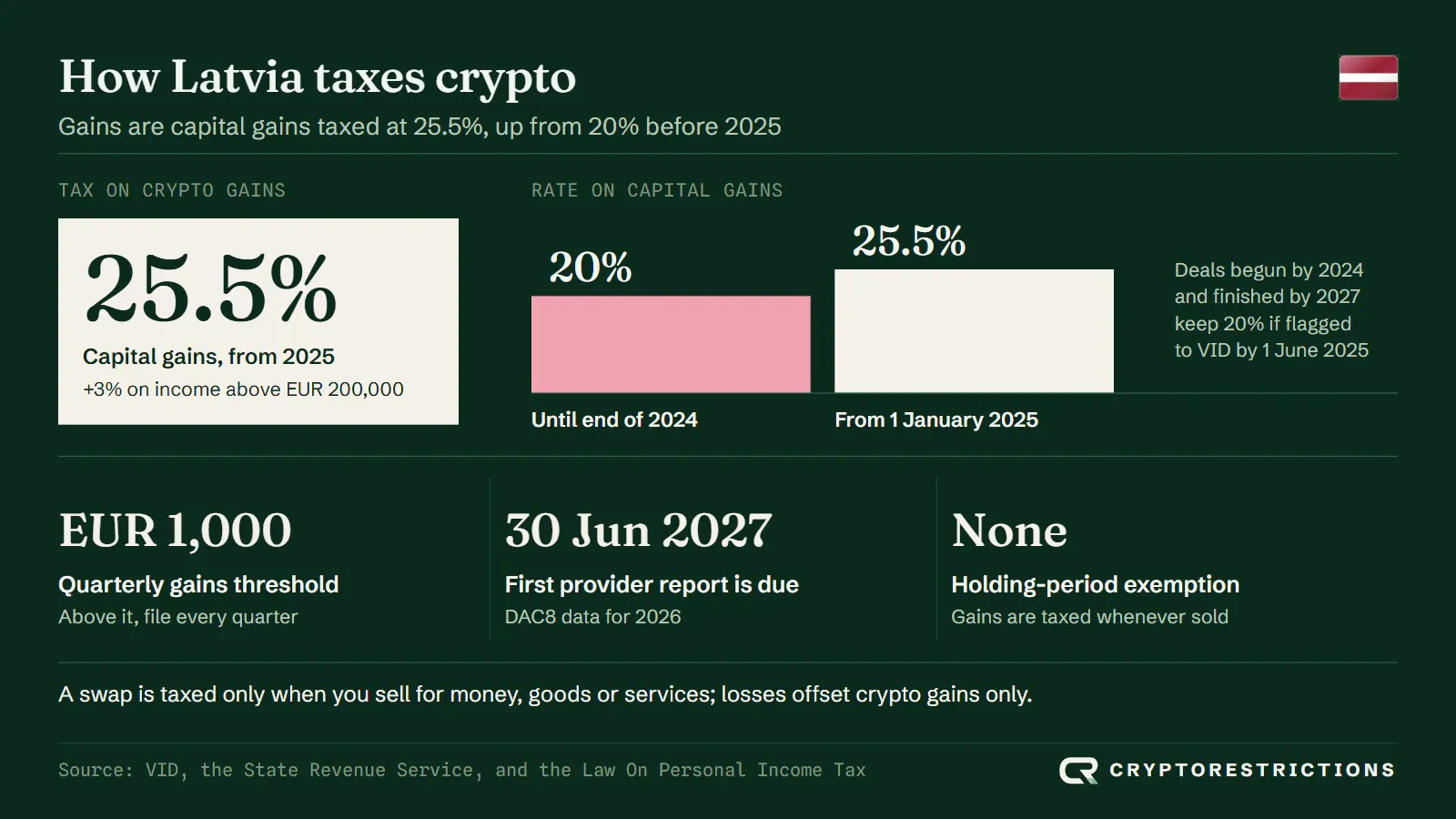
VID’s methodology on selling crypto-assets, last updated in May 2026, treats a sale as income from capital gains and gives the rate as 25.5% from 2025. Its guidance page for individuals says the same and marks the old rate as 20%, and the Law On Personal Income Tax sets 25.5% for income from capital, capital gains included, and an extra 3% on total annual income above EUR 200,000. The 33% band applies to wage income above the social-contribution ceiling, not to capital gains. A deal begun by 31 December 2024 and finished in 2025 to 2027 keeps 20% if it was flagged to VID by 1 June 2025. We found no tax-free allowance and no holding-period rule.
A swap of one crypto-asset for another is not taxed by itself: the income arises when you sell the asset you received for money, goods or services, and paying with crypto counts as a sale that day. The gain is the sale price minus the original cost, fees included. If the cost cannot be shown it counts as zero, and with several lots you may use first-in, first-out or a weighted average, kept for at least ten years. Crypto losses offset only crypto gains, and a negative year is not carried forward. Buying and selling crypto carries no VAT. VID says crypto you mined or produced yourself, or receive as payment for goods or services, is business income instead. We found no VID rule on staking, lending interest or airdrops.
You file form DK, the capital gains return, through VID’s e-declaration system. If your gains from capital assets in a quarter exceed EUR 1,000, the return is due by the 15th of the following month and the tax by the 23rd; at or below it, one return covers the year by 15 January. A second form, GD, nets the quarters against losses and is due on 1 February. Keep your records for at least five years.
Reporting is changing. Cabinet Regulation No. 751 of 9 December 2025 makes crypto-asset service providers report user transactions to VID from the 2026 reporting period, with the first reports due on 30 June 2027. KPMG Latvia reports that the underlying tax-law amendment took effect on 1 January 2026.
One change is still a bill. LV portāls reported on 14 October 2026 that the budget committee backed it for its final reading. It would let crypto holders declare what they hold on 31 December 2026 at 10% of its market value and set up an investment-account regime that taxes withdrawals above the amount invested. We found no final vote, so none of this is law yet.


 Serbia
 Turkey
 Switzerland
 Iceland
 Liechtenstein
 Norway
 Croatia
 Estonia
 Finland
 Greece
 Luxembourg