Is crypto legal in Norway?
Yes. Individuals may buy, hold and trade crypto, and since 1 July 2025 every provider that serves them needs a MiCA authorisation from Finanstilsynet or another EEA regulator. Norway is in the EEA but not the EU, so MiCA reached it through an EEA decision and a Norwegian act.
We found no Norwegian rule that bars individuals from holding or trading crypto. The tax authority’s own page says all income from virtual assets is taxable, which treats ownership as a normal, reportable activity.
The licensing rules came in two steps. The EEA Joint Committee took MiCA into the EEA Agreement by decision 41/2025 of 20 February 2025, as Finanstilsynet records. Stortinget then adopted the crypto-assets act (lov om kryptoeiendeler) on 15 May 2025, and Finanstilsynet’s regulation page says it applies from 1 July 2025. Finanstilsynet is the competent authority. The same page says a provider authorised in one EEA state may serve another after notifying its home supervisor, which is how foreign exchanges reach Norwegian users.
MiCA replaced an older and lighter regime. Exchange and custody providers had to register with Finanstilsynet for anti-money-laundering checks, which Finanstilsynet calls far less extensive than MiCA. The act let registered firms keep operating while they applied, until 30 December 2025, and on 18 December 2025 Finanstilsynet extended that to 30 June 2026. In a statement on the end of the period it told unauthorised providers to wind down and stop onboarding. We could not read the old register’s list of firms, so we give no count.
What the data does with this: because MiCA applies, our statuses for Norway follow the same rule as for EU countries. A platform with no MiCA authorisation that has closed new accounts but lets existing users withdraw is limited, not restricted, and only a platform that bars Norway outright is restricted.
Which crypto exchanges work in Norway?
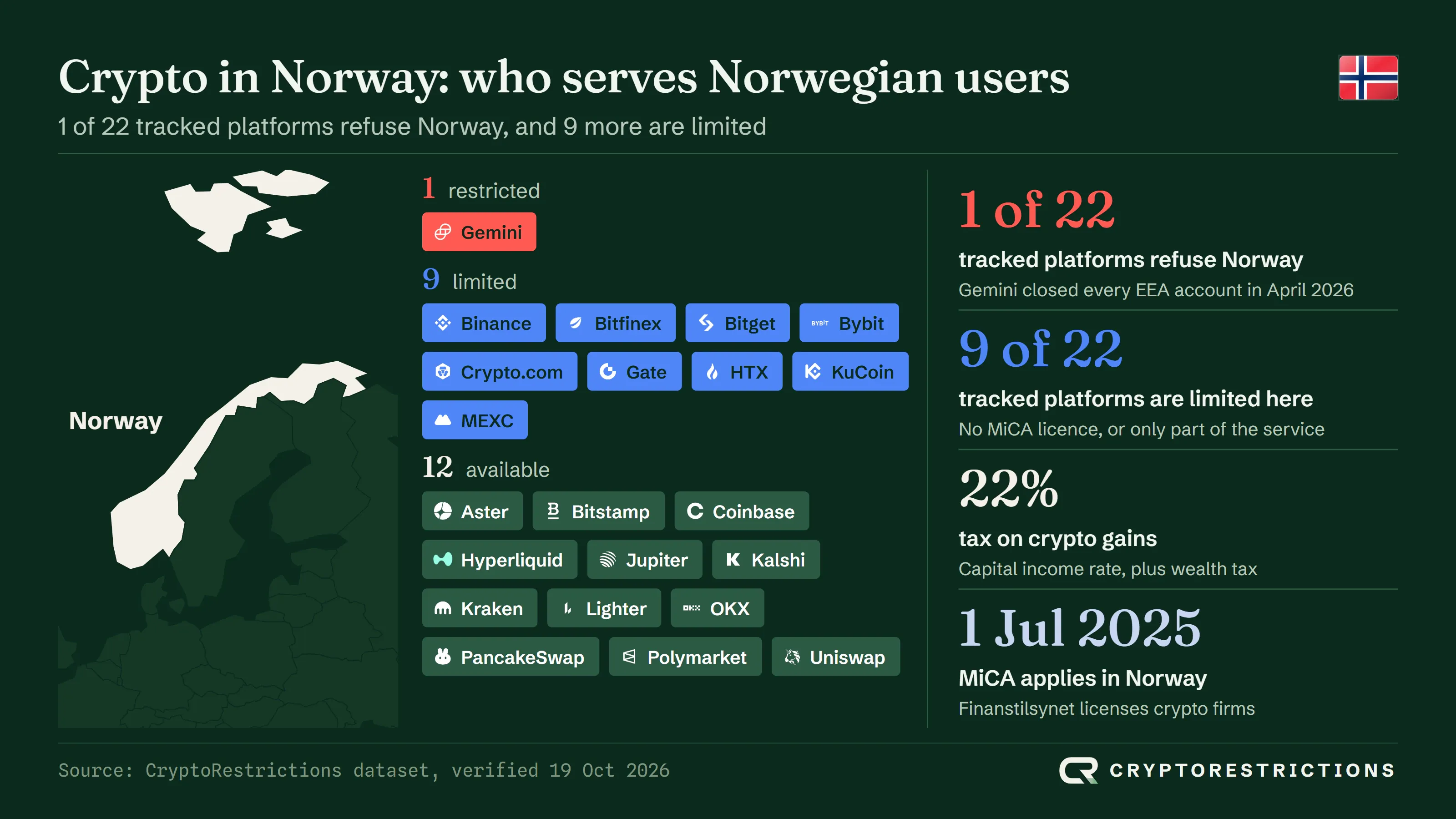
Seven of the exchanges we track serve Norwegian users under a MiCA licence granted elsewhere in the EEA: Kraken, Coinbase, Bitstamp, OKX, Bybit, Crypto.com and Gate. Four are fully available; Bybit, Crypto.com and Gate are limited because none offers derivatives here.
The evidence is ESMA’s interim MiCA register, which lists the countries each firm notified, Norway among them. The register shows where a firm may serve, not the day it started in Norway, and Norwegian law applied only from 1 July 2025. Six of the seven licences in the chart were granted before that day, so none of them can have served Norway on its licence alone before it.
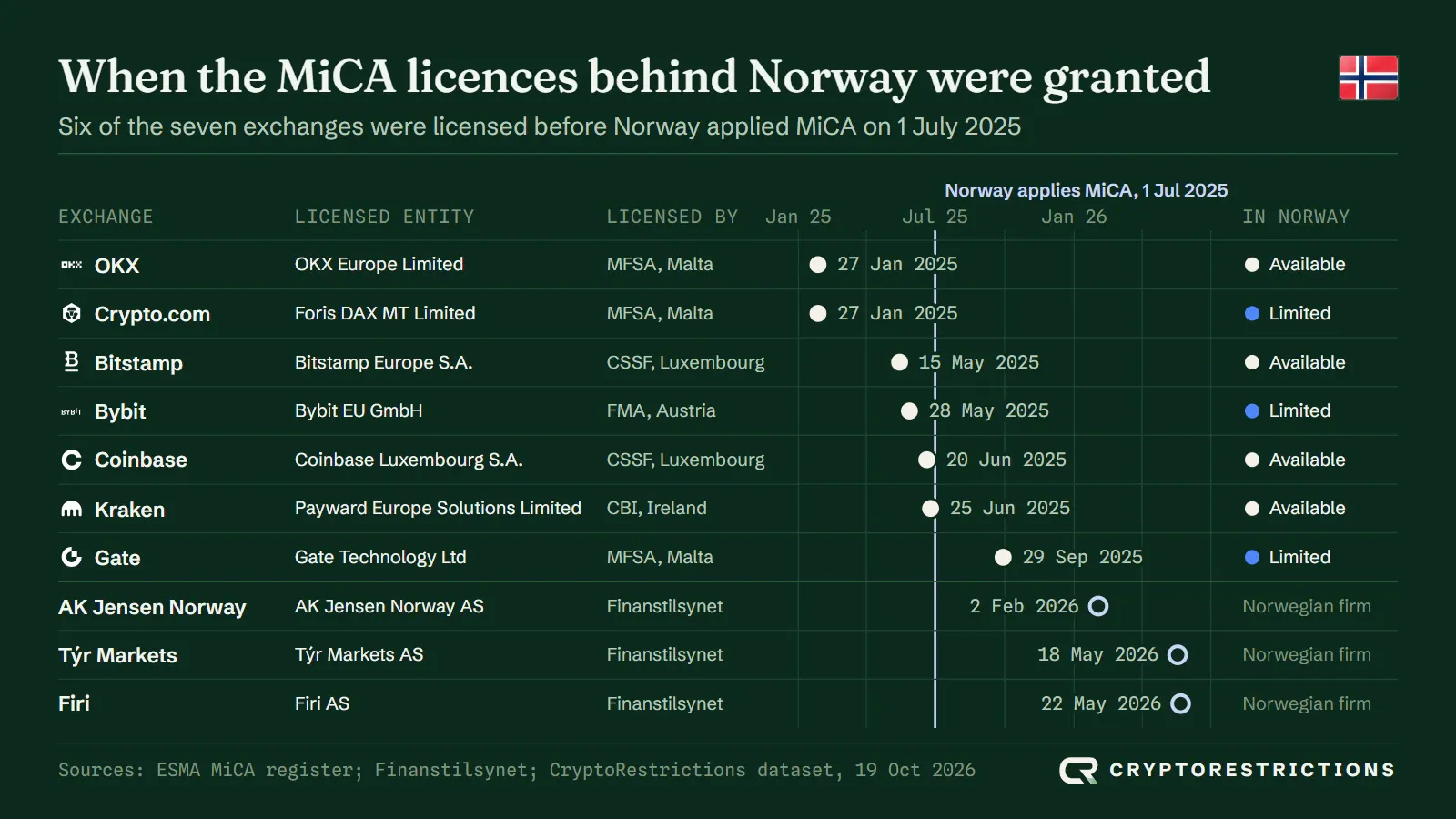
Kraken serves Norway from Ireland: its terms name Norway among its EEA countries, and the register lists Norway for Payward Europe Solutions but not for its second licensed entity. Coinbase serves Norway from Luxembourg. Three Norwegian firms are authorised by Finanstilsynet itself: AK Jensen Norway, which gave notice under article 60 and has been listed since 2 February 2026, and Týr Markets and Firi, authorised under article 63 on 18 and 22 May 2026. Firi is the first with a trading platform. The register also lists K33 Markets, Bare Bitcoin and Norwegian Block Exchange, authorised between 16 and 29 June 2026, the last days of the transition.
Best crypto platforms for Norwegians
By our access score, Bitstamp and Kraken (8.0 out of 10 each) are the most open exchanges for Norwegian users, ahead of Coinbase and OKX (7.5). Polymarket and Kalshi score 8.0 and so does every DeFi platform we track, but the prediction markets face a pending block.
The score rates how fully a Norwegian resident can use each platform, not its fees or safety. It is computed from our data and moves when a row changes: access status (4 points), the share of the platform’s products open here (3), the licences we hold on file for Norway (2) and what our geo-access test saw from a Norwegian address (1). No platform earns the licence points here, because we file a passported MiCA licence under its home state. Platforms that refuse Norwegian users are not scored. The full method is on our methodology page.
Exchanges

Bitstamp
Best for Spot trading from a long-running EU licence
8.0/10- Access
- 4/4
- Products
- 3/3
- Licences
- 0/2
- Our test
- 1/1
Read our Bitstamp reportPros
- Bitstamp Europe S.A. holds a CSSF MiCA licence that lists Norway
- Our test loaded its home page with no barrier
Cons
- Served from Luxembourg, not Norway

Kraken
Best for An exchange with a licence that names Norway
8.0/10- Access
- 4/4
- Products
- 3/3
- Licences
- 0/2
- Our test
- 1/1
Read our Kraken reportPros
- Payward Europe Solutions holds a Central Bank of Ireland MiCA licence that lists Norway
- Its legal terms name Norway among its EEA countries
Cons
- Payward Global Solutions, its second licensed entity, does not list Norway

Coinbase
Best for A MiCA-licensed exchange with the widest reach
7.5/10- Access
- 4/4
- Products
- 3/3
- Licences
- 0/2
- Our test
- 0.5/1
Read our Coinbase reportPros
- Coinbase Luxembourg S.A. holds a CSSF MiCA licence that lists Norway
Cons
- Our test showed a notice that stocks and prediction markets are not available
- Served from Luxembourg, not Norway

OKX
Best for A global brand with a local EU site
7.5/10- Access
- 4/4
- Products
- 3/3
- Licences
- 0/2
- Our test
- 0.5/1
Read our OKX reportPros
- OKX Europe Limited holds an MFSA MiCA licence that lists Norway
- okx.com points Norwegian visitors to OKX Europe
Cons
- Served from Malta, not Norway

Bybit
Best for Spot trading only
6.9/10- Access
- 3.5/4
- Products
- 2.4/3
- Licences
- 0/2
- Our test
- 1/1
Read our Bybit reportPros
- Spot is served by Bybit EU GmbH under an Austrian MiCA licence that lists Norway
Cons
- Bybit EU offers no derivatives
- EEA access to Bybit Global, which does, is being wound down

Crypto.com
Best for Spot trading in an app
6.3/10- Access
- 3.5/4
- Products
- 1.8/3
- Licences
- 0/2
- Our test
- 1/1
Read our Crypto.com reportPros
- Foris DAX MT Limited holds a Maltese MiCA licence that lists Norway
- Spot trading and the app are offered
Cons
- Norway is on its derivatives geo-restrictions list

Gate
Best for Spot trading on a licensed EU arm
6.0/10- Access
- 3.5/4
- Products
- 1.5/3
- Licences
- 0/2
- Our test
- 1/1
Read our Gate reportPros
- Gate Technology Ltd holds a Maltese MiCA licence that lists Norway
- Spot trading is open to Norwegian users
Cons
- No derivatives: global Gate stopped taking EEA users in March 2025
Prediction markets

Kalshi
Best for Regulated US event contracts
8.0/10- Access
- 4/4
- Products
- 3/3
- Licences
- 0/2
- Our test
- 1/1
Read our Kalshi reportPros
- Norway is not on its restricted-jurisdictions list
- Its sign-up page loaded in our test
Cons
- It is named in the same blocking notice
- No Norwegian gambling licence

Polymarket
Best for The largest prediction market we can score here
8.0/10- Access
- 4/4
- Products
- 3/3
- Licences
- 0/2
- Our test
- 1/1
Read our Polymarket reportPros
- Norway is not on its blocked-countries list
- Its page loaded in our test
Cons
- It is one of 62 sites the gambling authority has given notice it plans to block
- No Norwegian gambling licence
DeFi

Aster
Best for Perpetual futures on several chains
8.0/10- Access
- 4/4
- Products
- 3/3
- Licences
- 0/2
- Our test
- 1/1
Read our Aster reportPros
- Norway is not on its prohibited-jurisdictions list
- The trading app loaded in our test
Cons
- No licence on file for Norway

Hyperliquid
Best for Perpetual futures from your own wallet
8.0/10- Access
- 4/4
- Products
- 3/3
- Licences
- 0/2
- Our test
- 1/1
Read our Hyperliquid reportPros
- Excludes only the US, Ontario and broadly sanctioned places
- Its trading app loaded in our test
Cons
- No licence on file for Norway

Jupiter
Best for Solana swaps
8.0/10- Access
- 4/4
- Products
- 3/3
- Licences
- 0/2
- Our test
- 1/1
Read our Jupiter reportPros
- Norway is not in its terms
- Its app loaded in our test
Cons
- No licence on file for Norway

Lighter
Best for On-chain perpetuals
8.0/10- Access
- 4/4
- Products
- 3/3
- Licences
- 0/2
- Our test
- 1/1
Read our Lighter reportPros
- Norway is not named in its terms
- Its trading app loaded in our test
Cons
- No licence on file for Norway

PancakeSwap
Best for BNB Chain swaps and pools
8.0/10- Access
- 4/4
- Products
- 3/3
- Licences
- 0/2
- Our test
- 1/1
Read our PancakeSwap reportPros
- Not excluded by its terms
- The swap page loaded in our test
Cons
- No licence on file for Norway

Uniswap
Best for Swapping tokens from your own wallet
8.0/10- Access
- 4/4
- Products
- 3/3
- Licences
- 0/2
- Our test
- 1/1
Read our Uniswap reportPros
- Its terms bar only places under comprehensive US sanctions
- Our test loaded the swap app from a Norwegian address
Cons
- No licence on file for Norway
Which platforms block Norwegian users?
One of the 22 platforms we track refuses Norwegian users: Gemini. Nine more are limited: Binance, KuCoin, MEXC, Bitget, HTX, Bitfinex, Bybit, Crypto.com and Gate.
Gemini closed every UK and EEA account on 6 April 2026, and its sign-up page refused us from Norway. The limited exchanges split in two. Bybit, Crypto.com and Gate serve spot trading under a MiCA licence but no derivatives. The other six have no working MiCA authorisation: none of Binance, MEXC, Bitget, HTX and Bitfinex is on ESMA’s register, and KuCoin EU is on it but has had trading suspended since 4 February 2026.

Binance needs a caution. Its 16 June 2026 update said it was still seeking a licence, and CoinDesk reported on 26 June that it told EU users it would restrict services after failing to secure one. Neither names Norway, and we found no Norway-specific notice, so the limited status rests on Norway applying MiCA from 1 July 2025.
What our geo-access test saw from Norway
From a Norwegian address on 14 and 16 October 2026 we loaded all 22 platforms we track: 1 refused us, 4 showed a notice or a redirect, and 17 loaded with no barrier.
An open page is not permission. HTX, MEXC, Bitget and Bitfinex all loaded although none is on ESMA’s register, and Polymarket and Kalshi loaded normally while the gambling authority prepares to block them. The test sees a platform’s own geo-blocking, not a national internet-provider block. The refusal was Gemini (“Gemini does not currently operate in Norway”). The four notices were Binance’s link to European regulatory information, a prompt to switch to the EU site at KuCoin, OKX’s redirect to its European site and Coinbase’s note that stocks and prediction markets are unavailable. Swipe through the screenshots below; each card quotes the message the page showed.
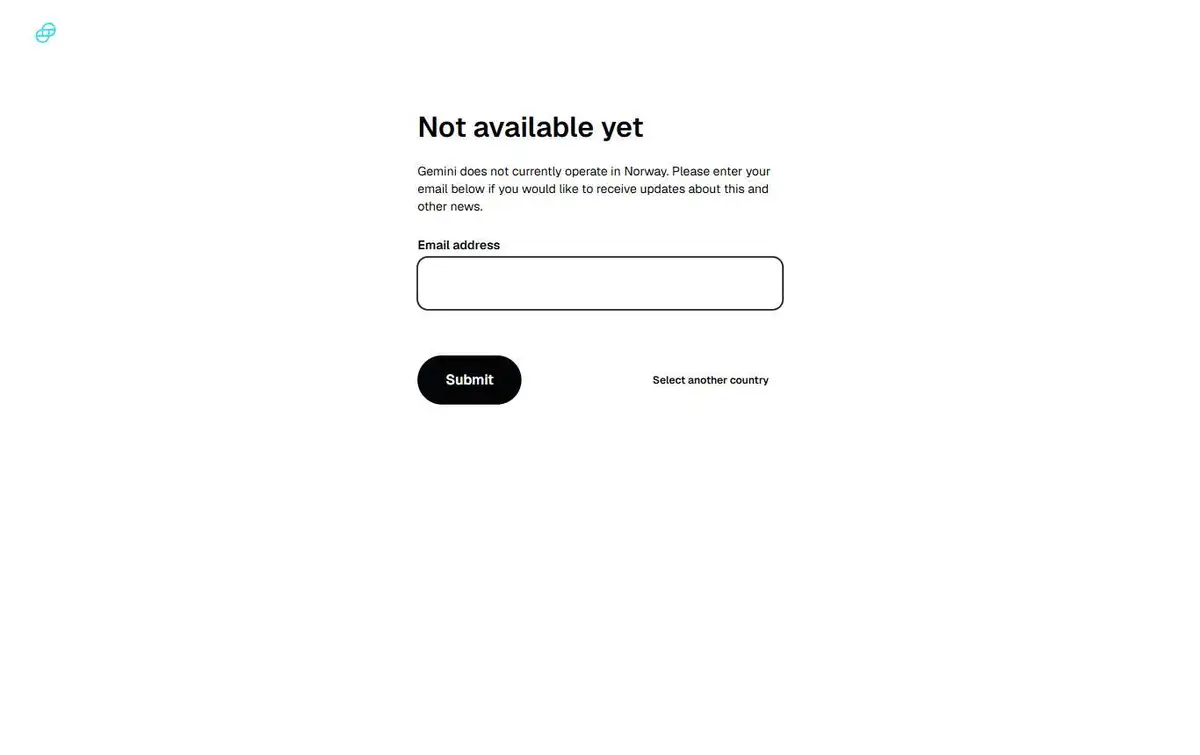
Blocked Gemini · Sign-up page
Norway, closed with the rest of the EEA in April 2026: the sign-up form is replaced by a location check
“Gemini does not currently operate in Norway.”
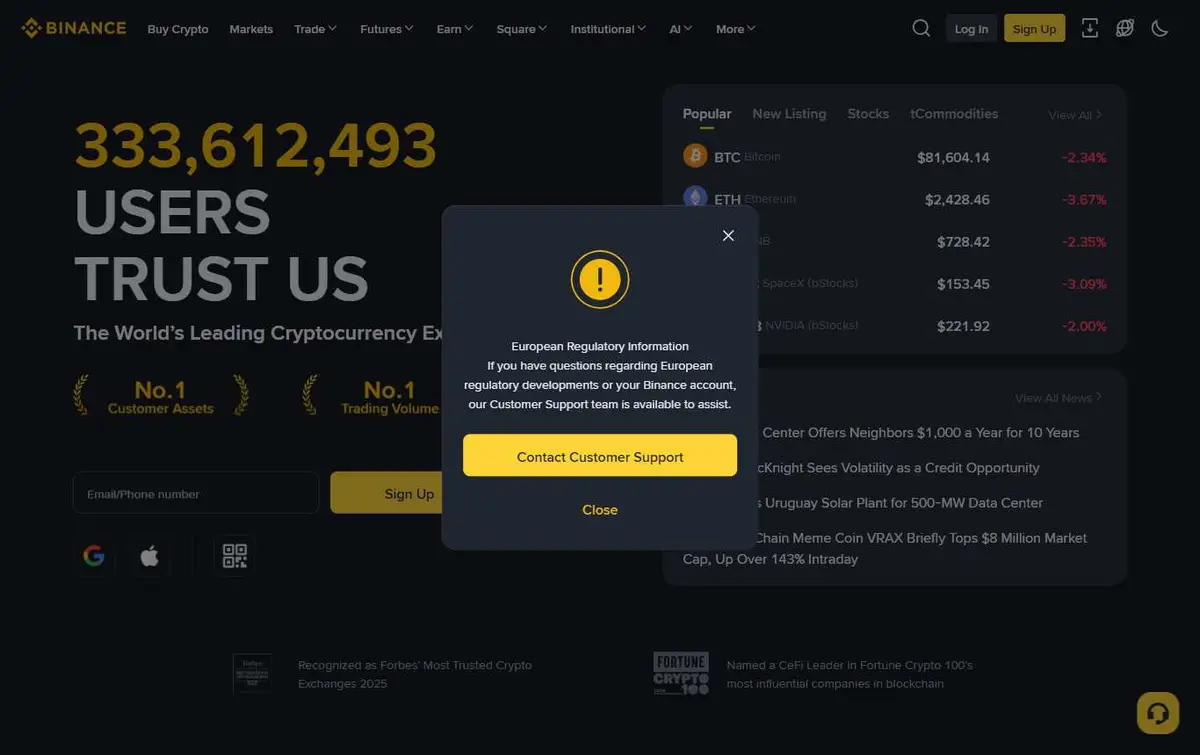
Notice shown Binance · Home page
Norway: the global site loads, with a European regulatory information link
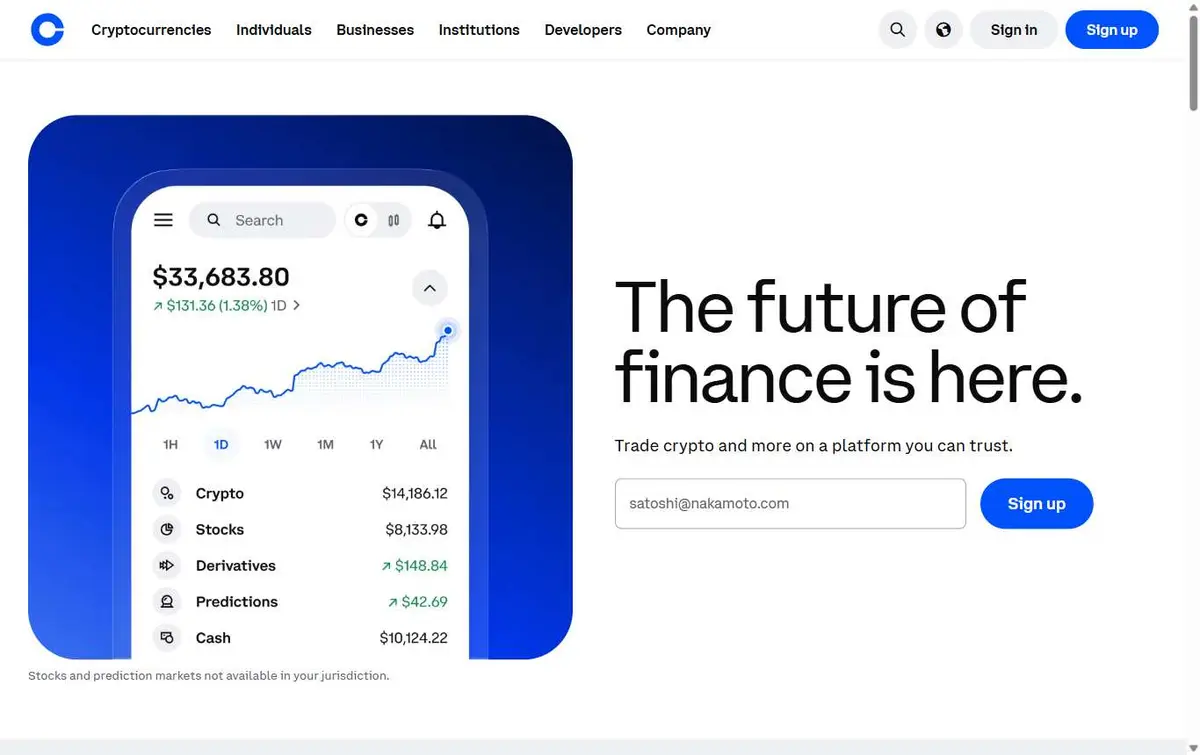
Notice shown Coinbase · Home page
Norway: the site loads, with a notice that stocks and prediction markets are not available
“Stocks and prediction markets not available in your jurisdiction.”
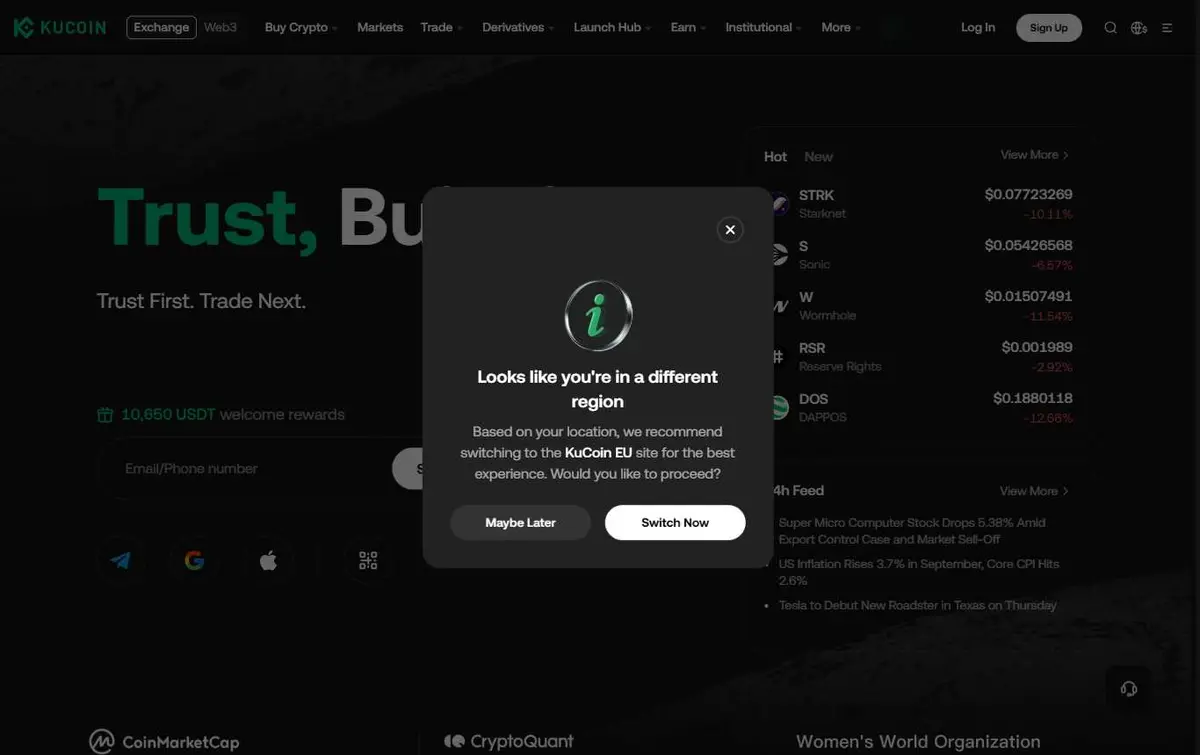
Notice shown KuCoin · Home page
Norway: KuCoin recommends its EU site
“Based on your location, we recommend switching to the KuCoin EU site for the best experience.”
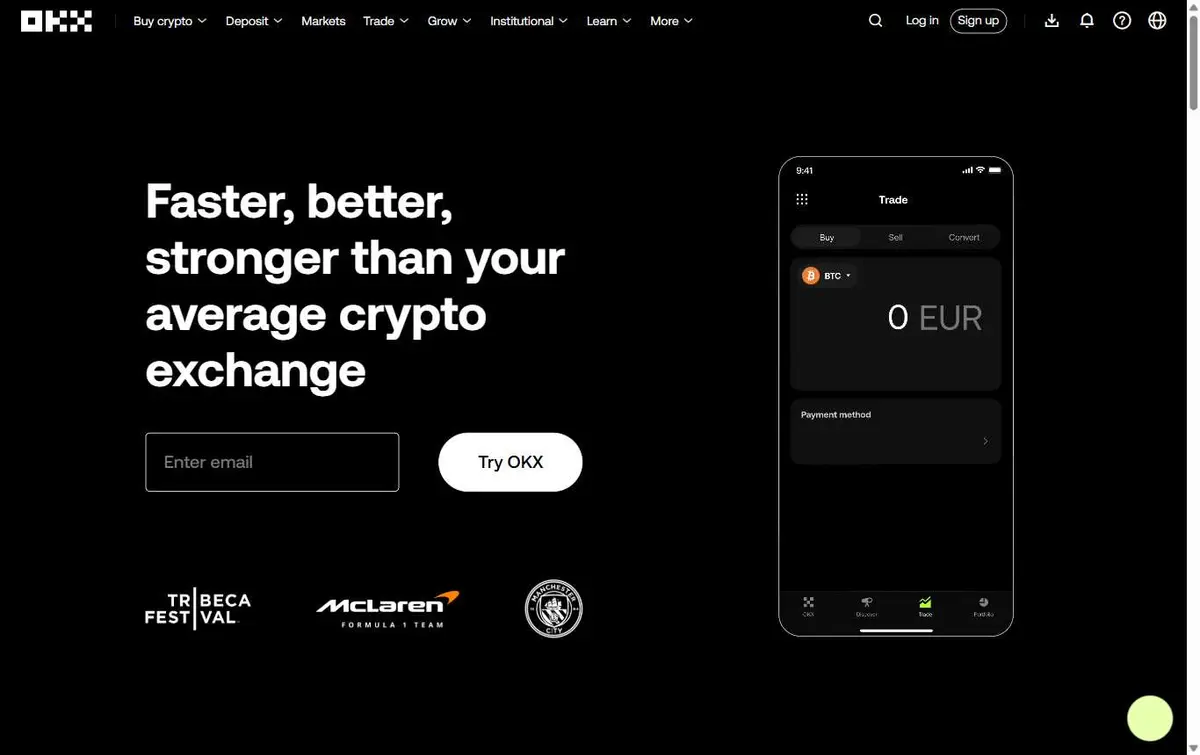
Notice shown OKX · Home page
Norway: okx.com points visitors to the OKX Europe site
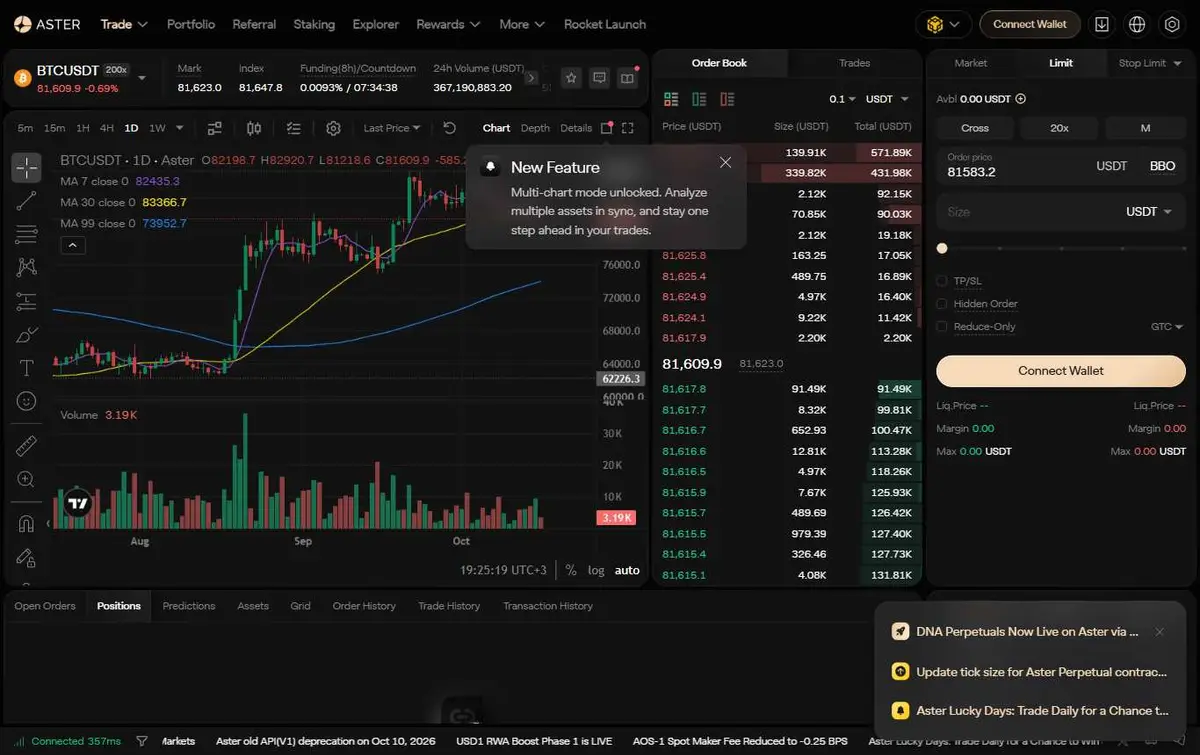
No barrier Aster · Trading app
Norway: the trading app loads with no notice
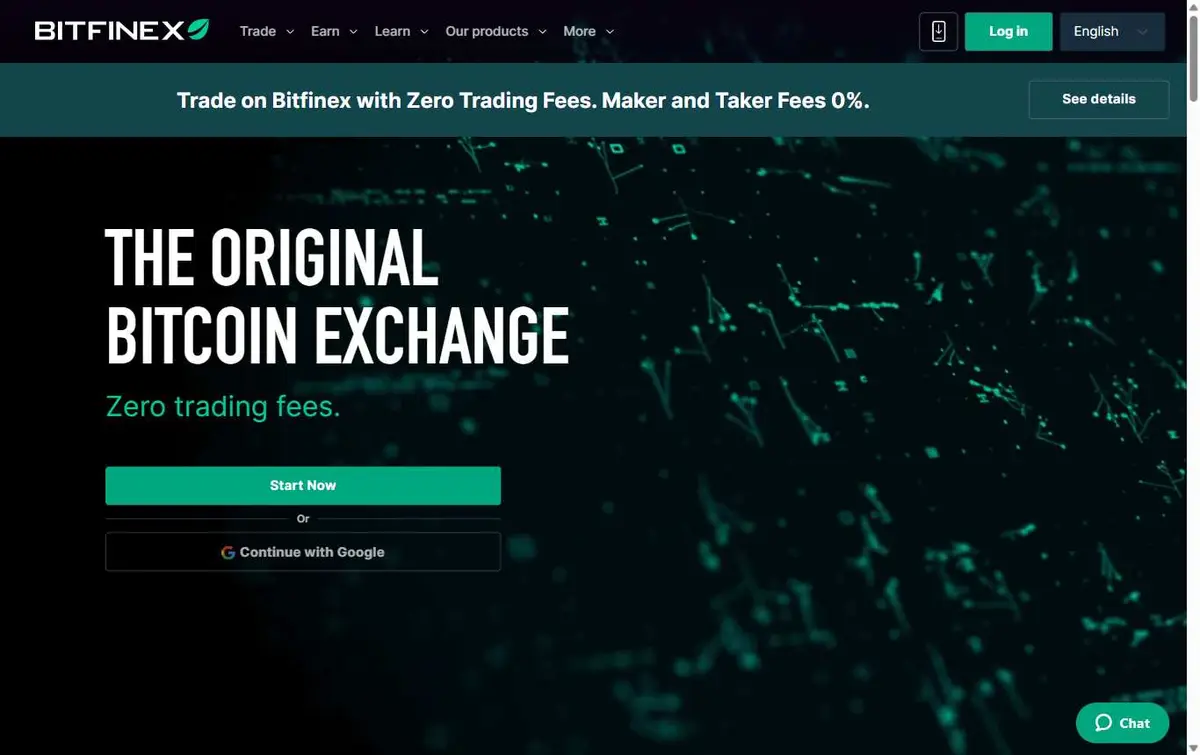
No barrier Bitfinex · Home page
Norway: the home page loads with no notice
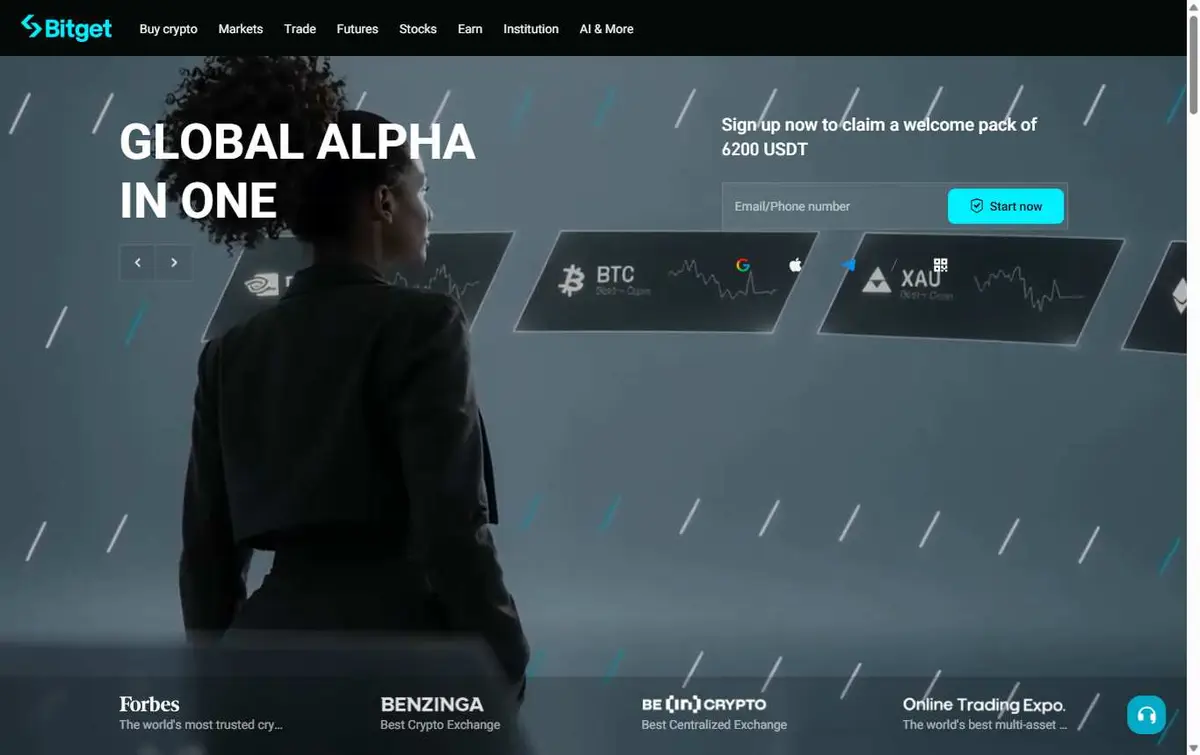
No barrier Bitget · Home page
Norway: the home page loads with no notice
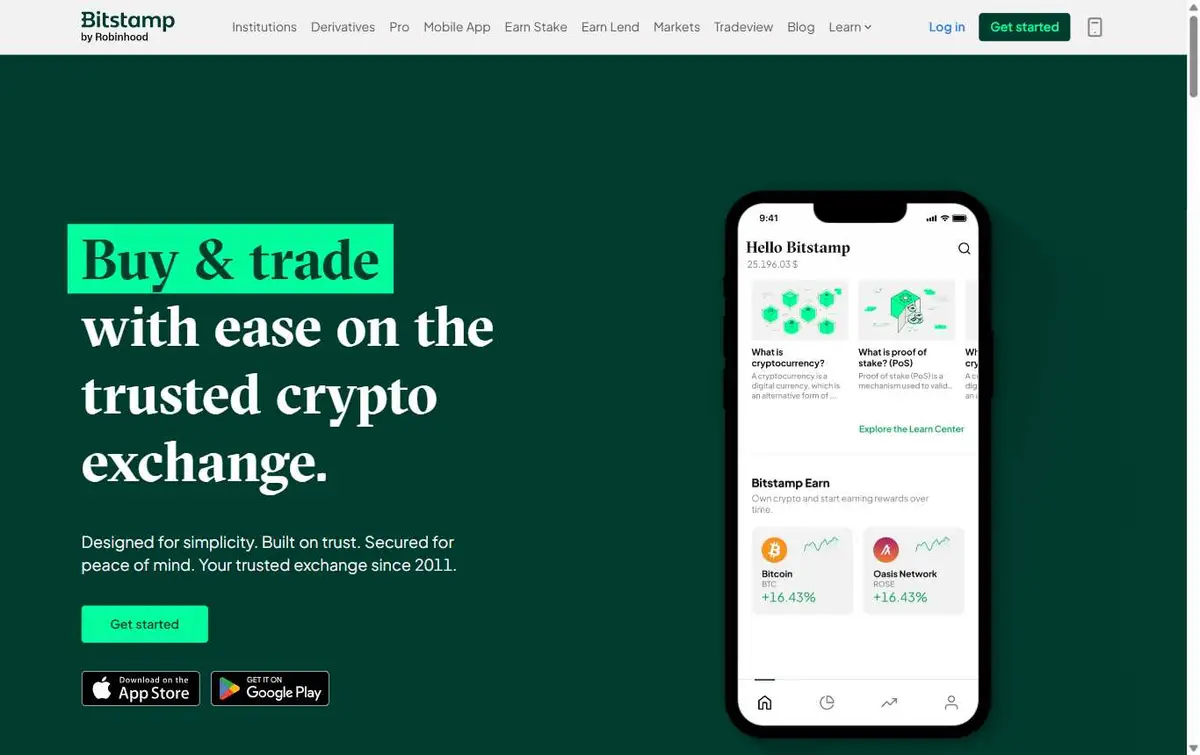
No barrier Bitstamp · Home page
Norway: the home page loads with no notice
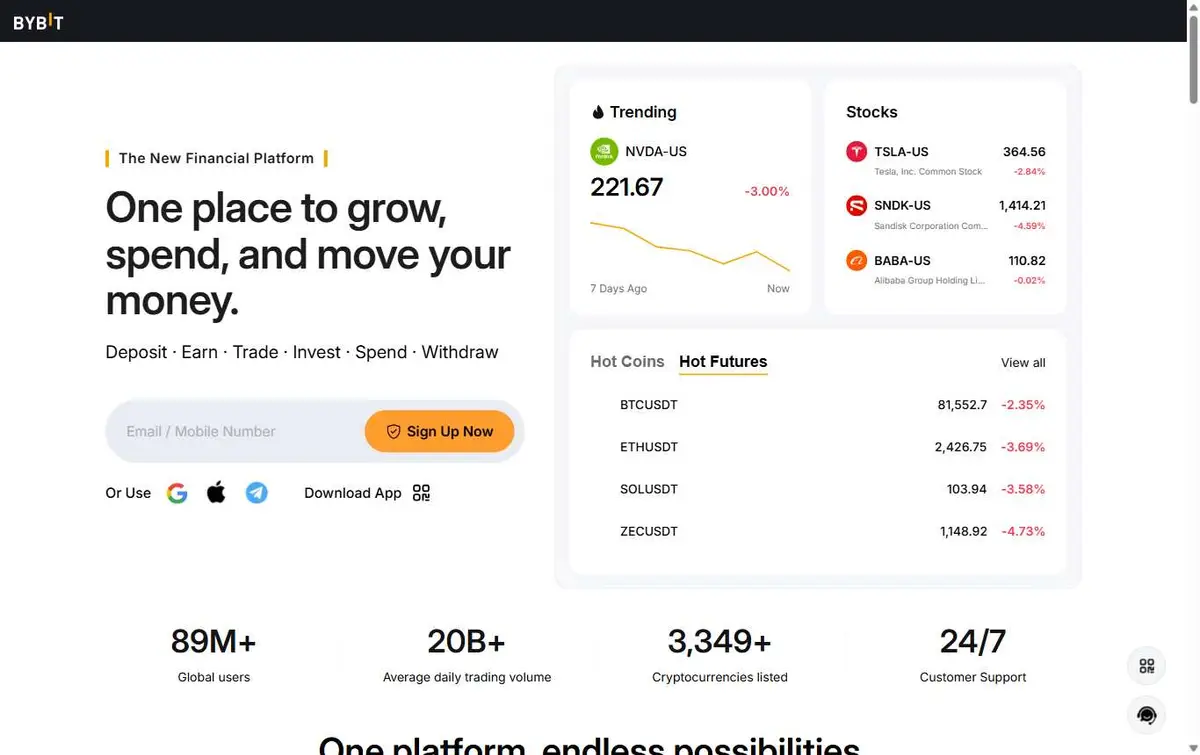
No barrier Bybit · Home page
Norway: the global site loads with no notice
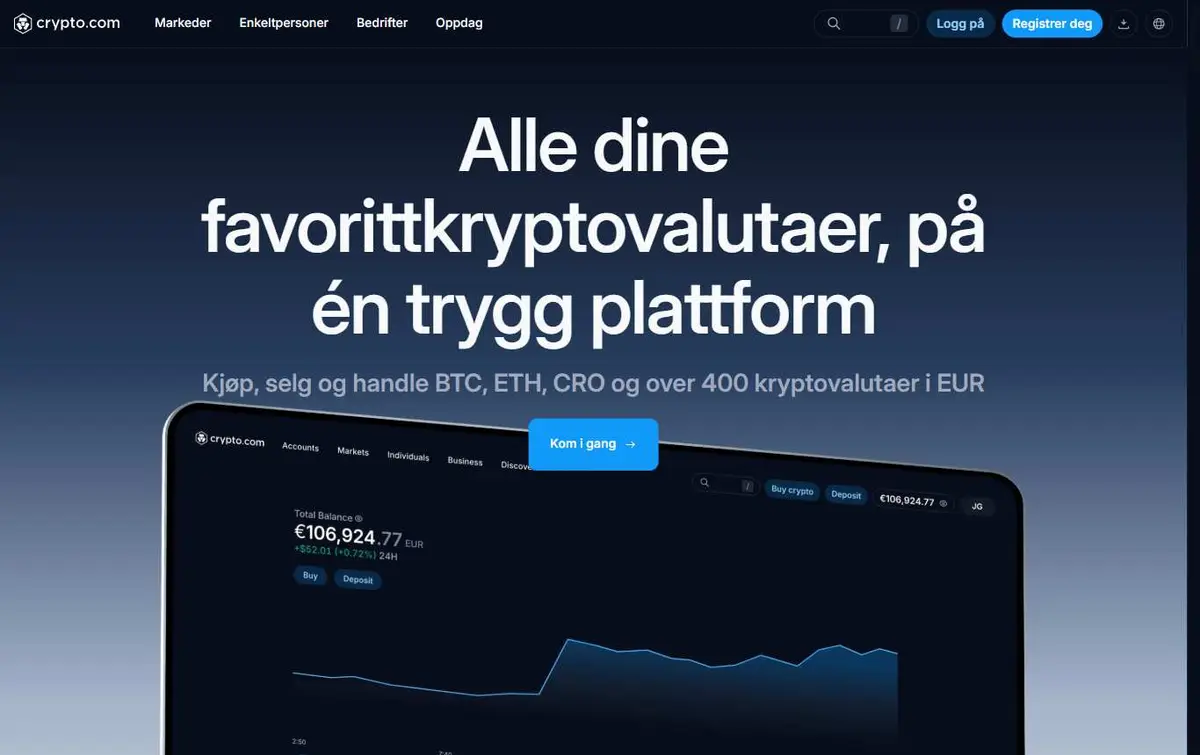
No barrier Crypto.com · Home page
Norway: the home page loads with no notice
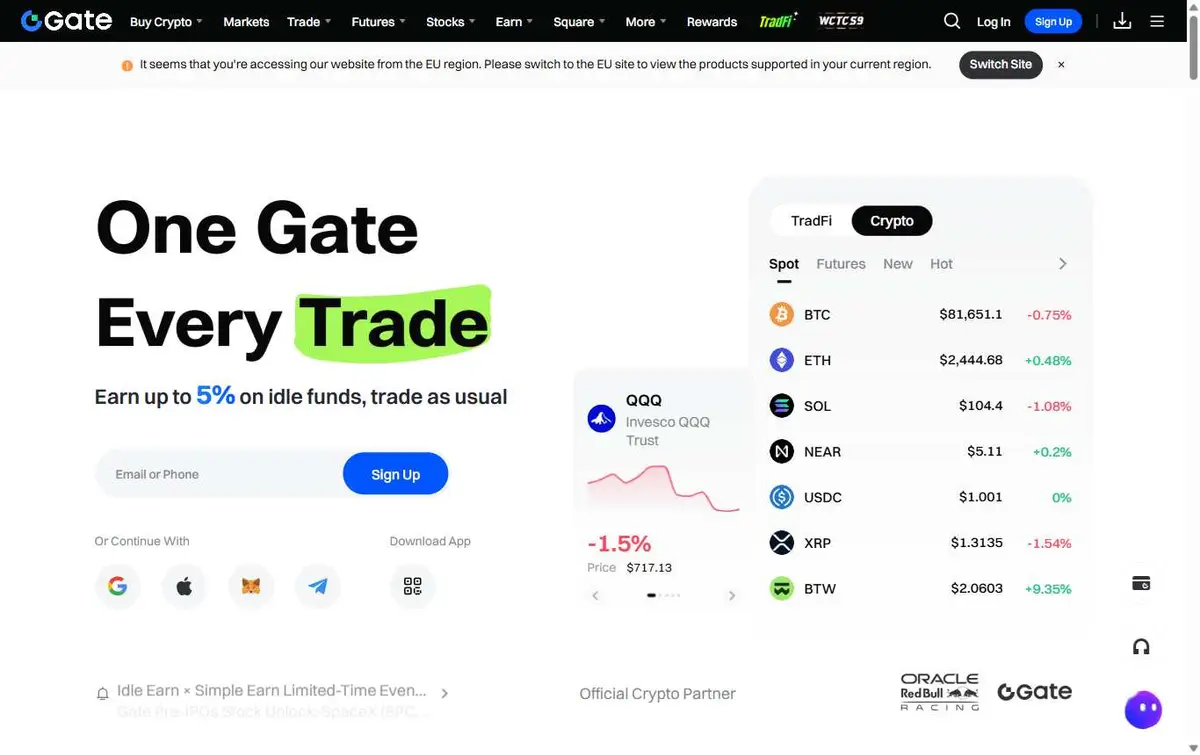
No barrier Gate · Home page
Norway: the home page loads with no notice
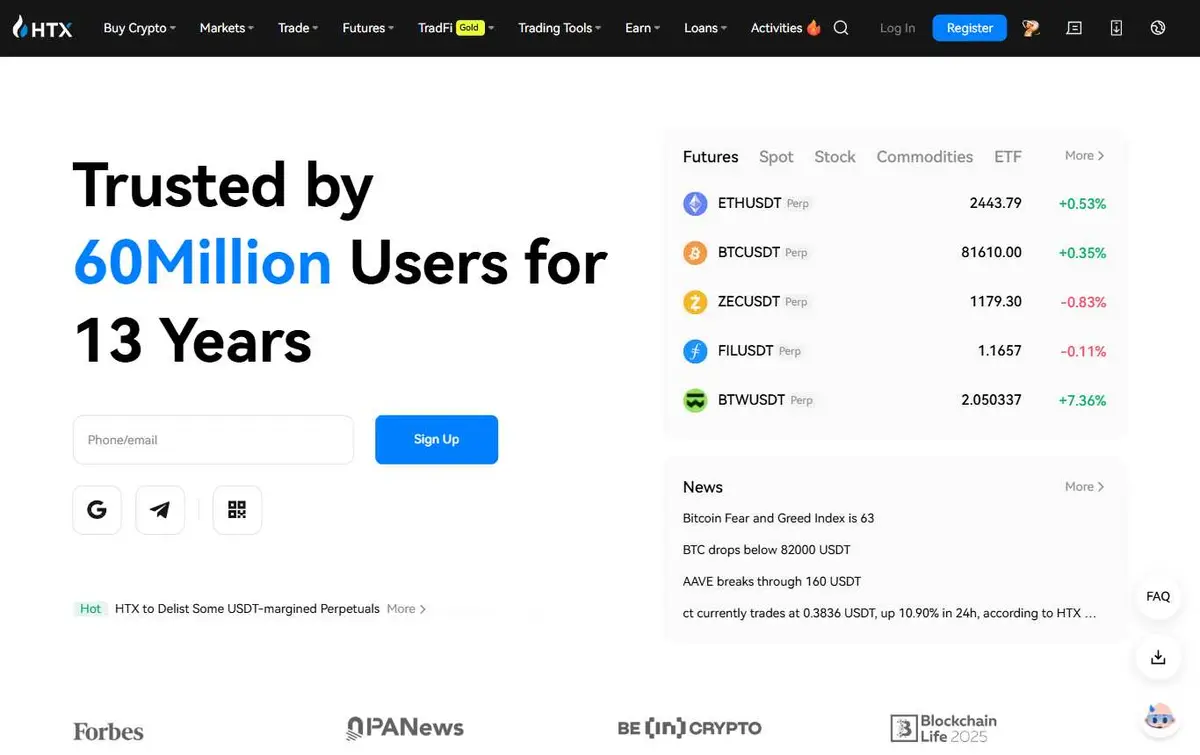
No barrier HTX · Home page
Norway: the home page loads with no notice
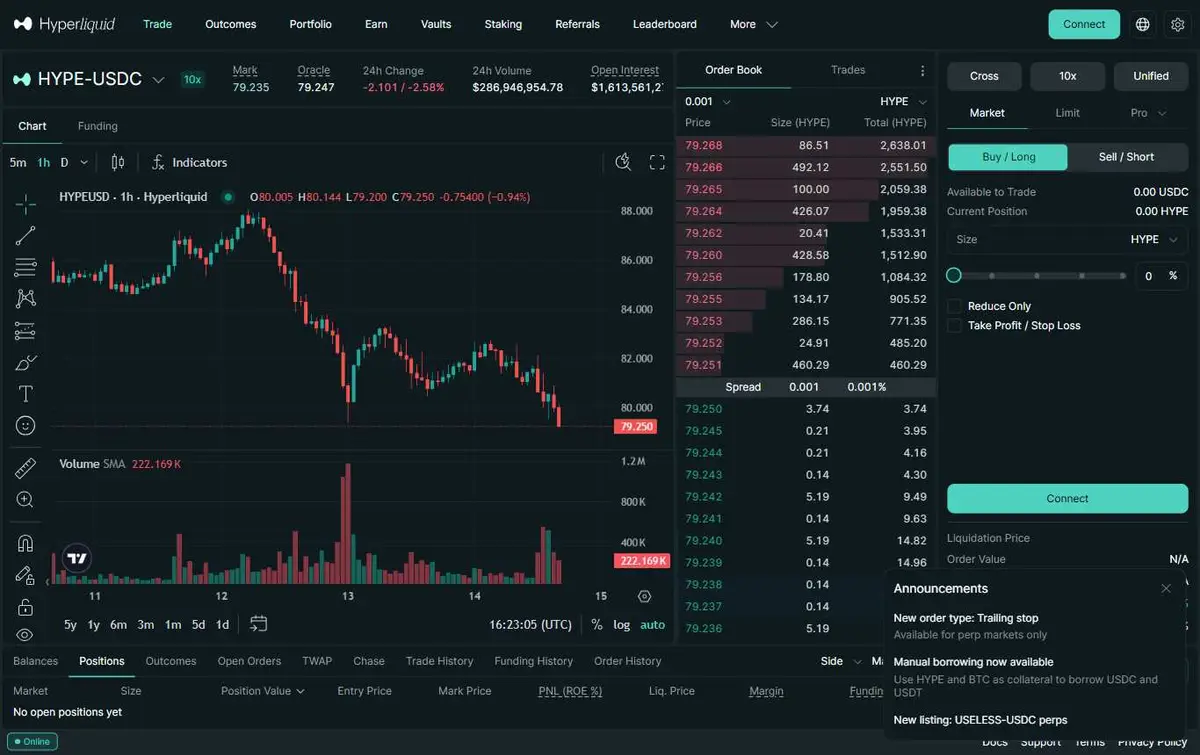
No barrierHyperliquid · Trading app
Norway: the trading app loads with no notice
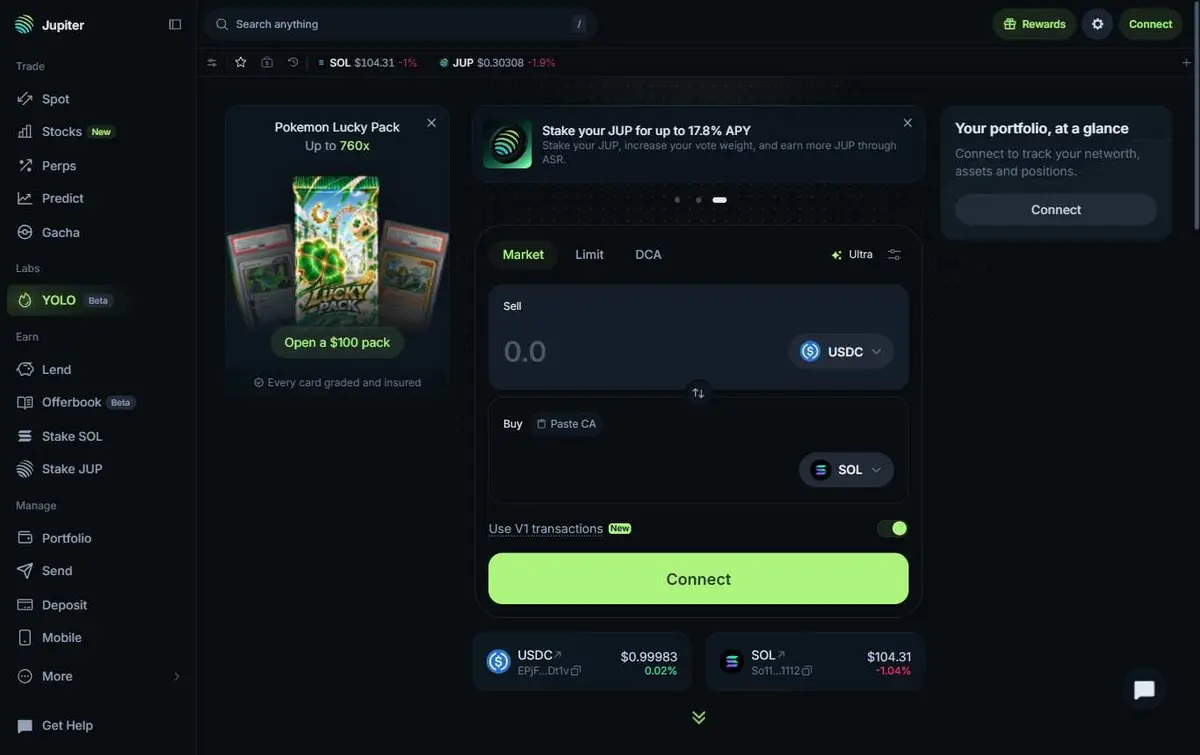
No barrier Jupiter · Trading app
Norway: the swap app loads with no notice
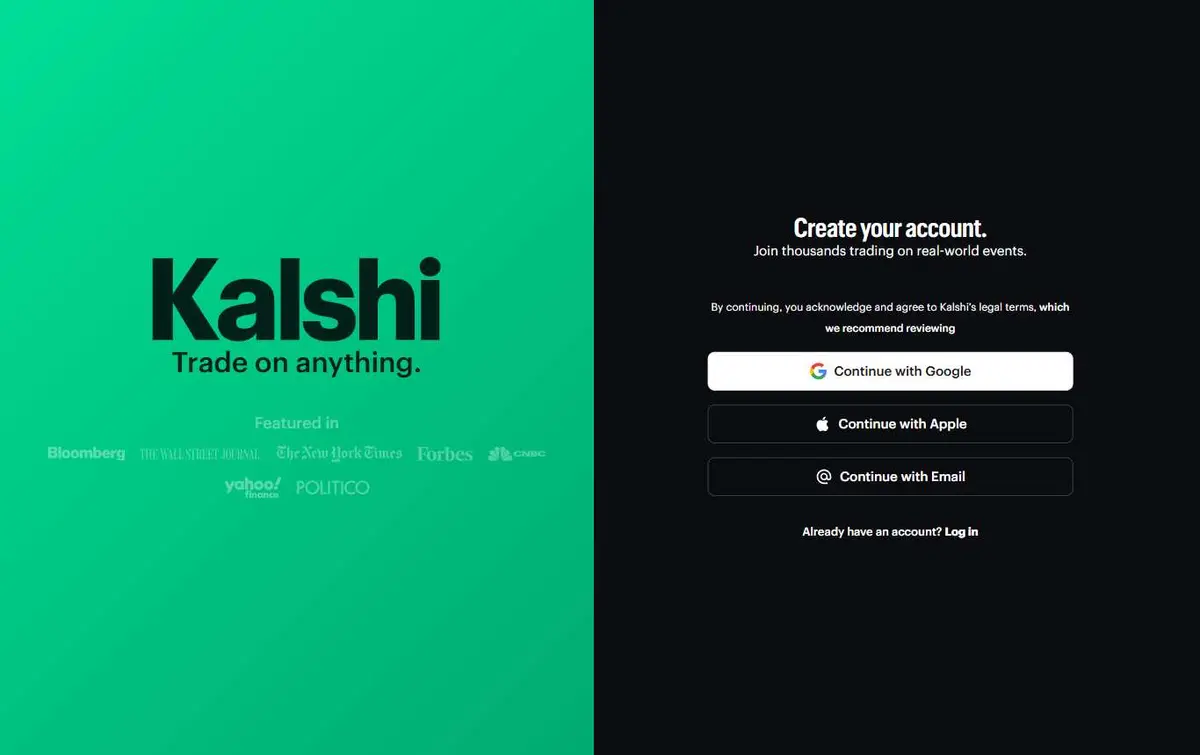
No barrier Kalshi · Sign-up page
Norway: sign-up loads with no notice, ahead of the gambling authority's blocking notice
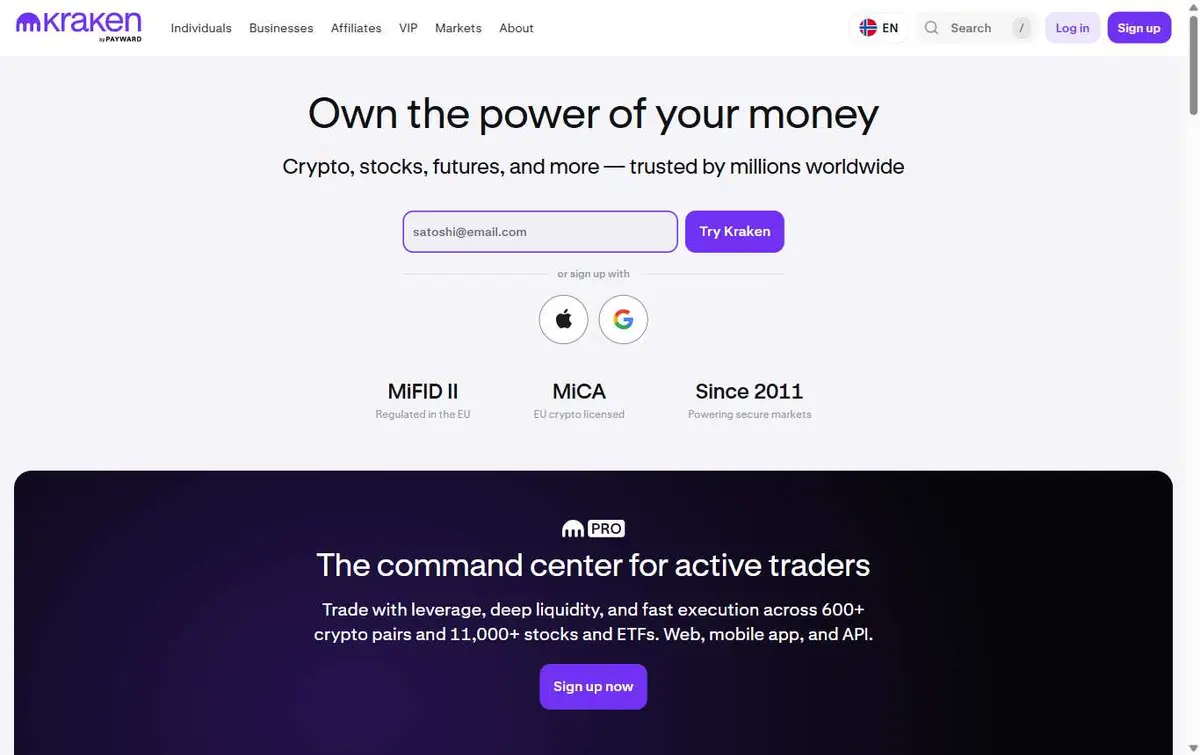
No barrier Kraken · Home page
Norway: the home page loads with no notice
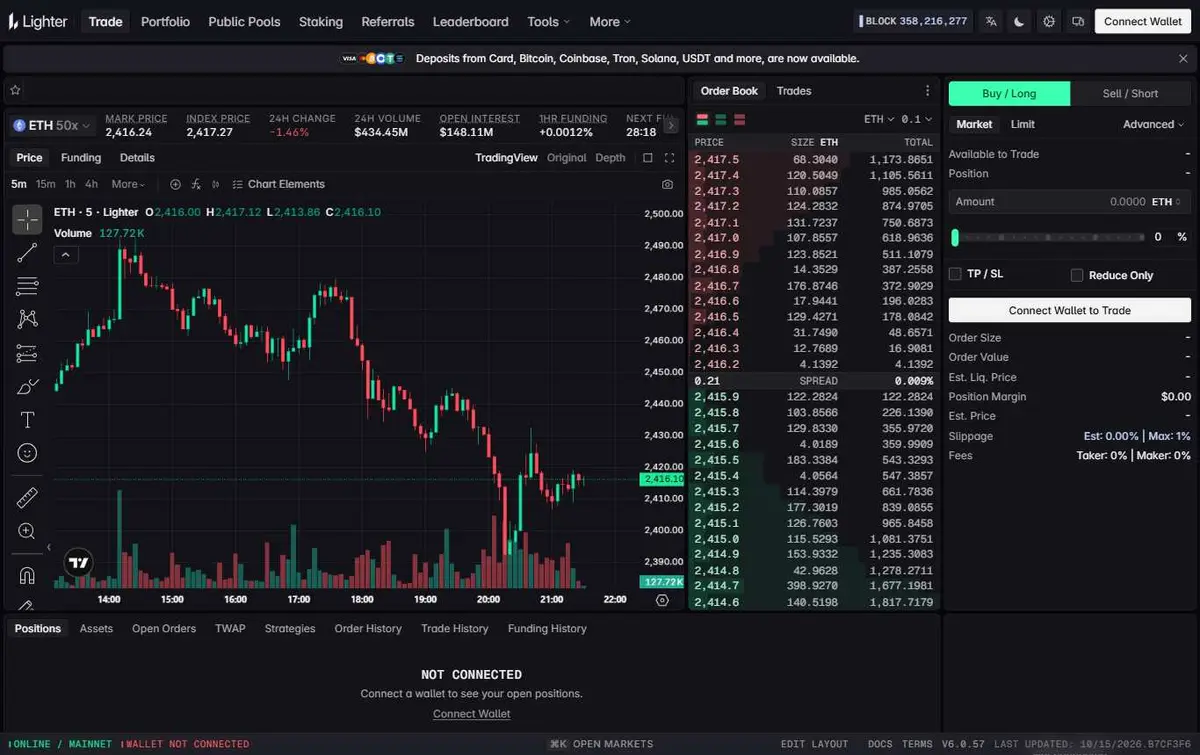
No barrier Lighter · Trading app
Norway: the trading app loads with no notice
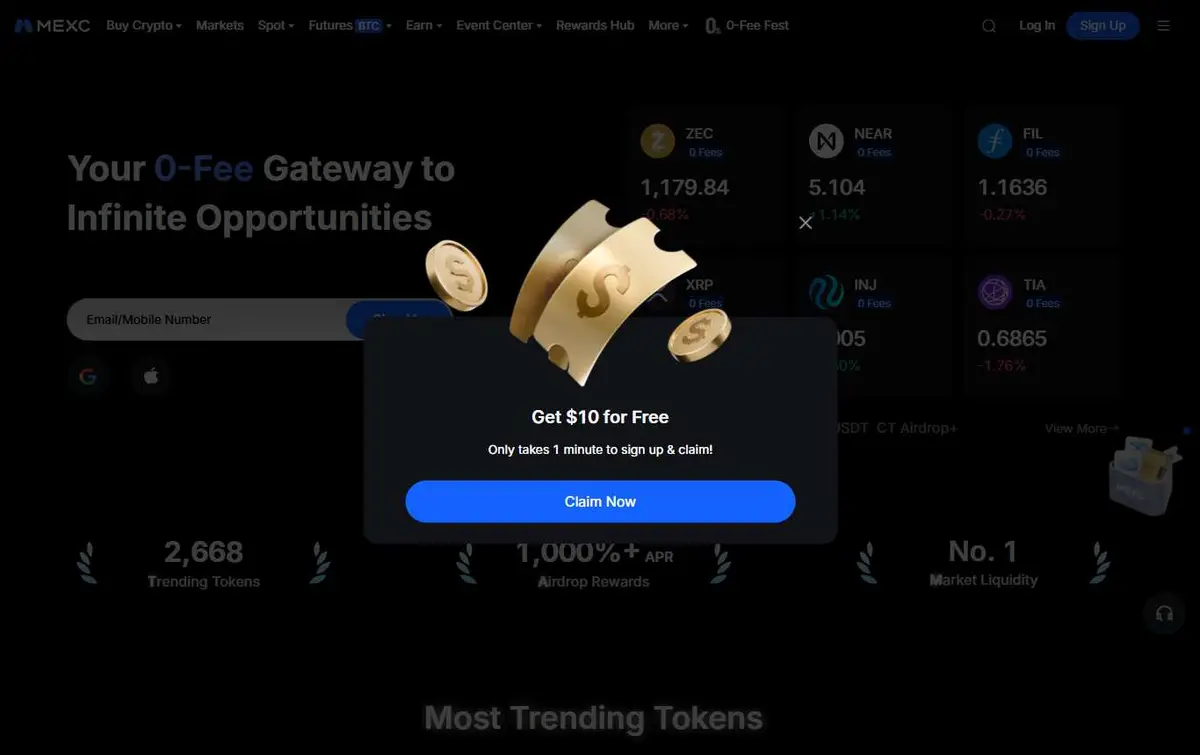
No barrier MEXC · Home page
Norway: the home page loads with no notice
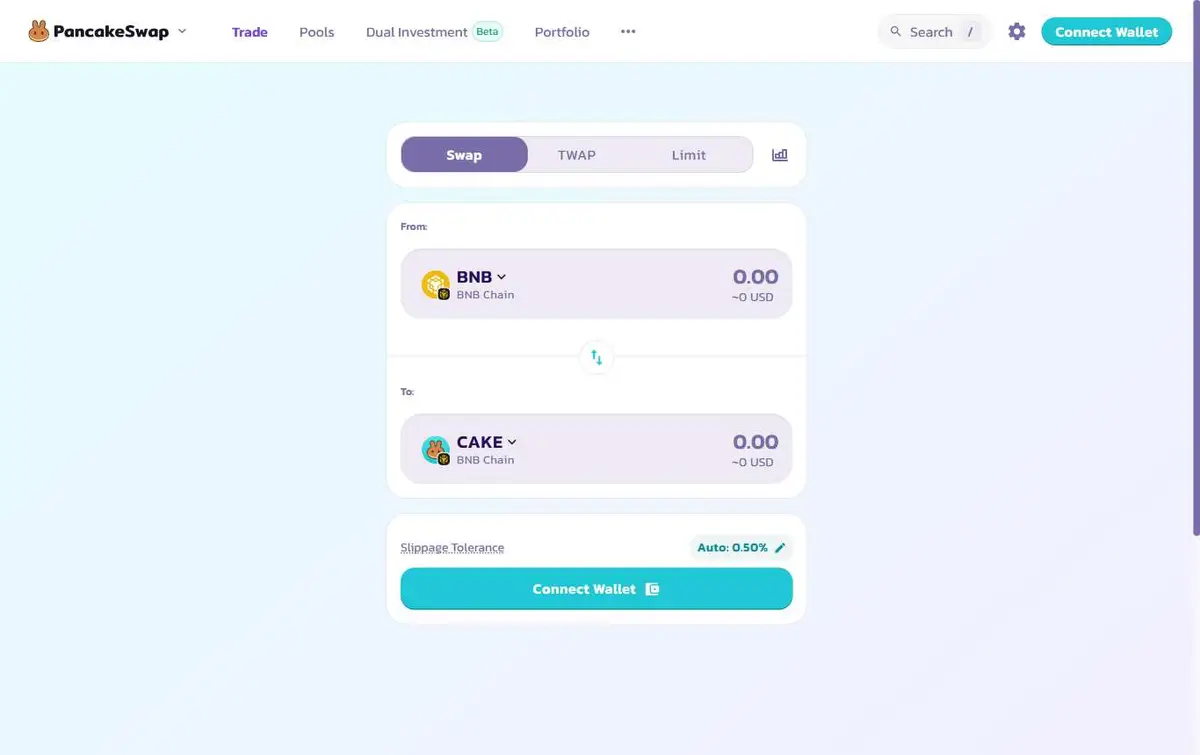
No barrier PancakeSwap · Trading app
Norway: the swap app loads with no notice
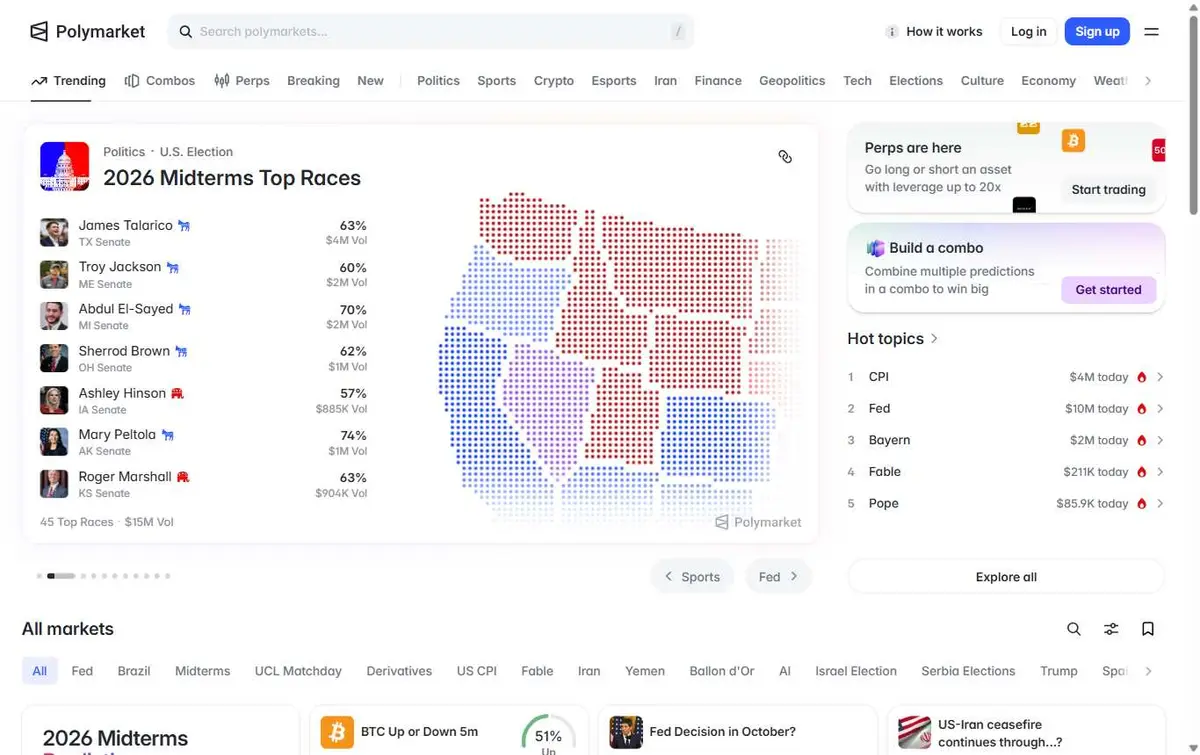
No barrier Polymarket · Home page
Norway: the page loads, ahead of the gambling authority's blocking notice
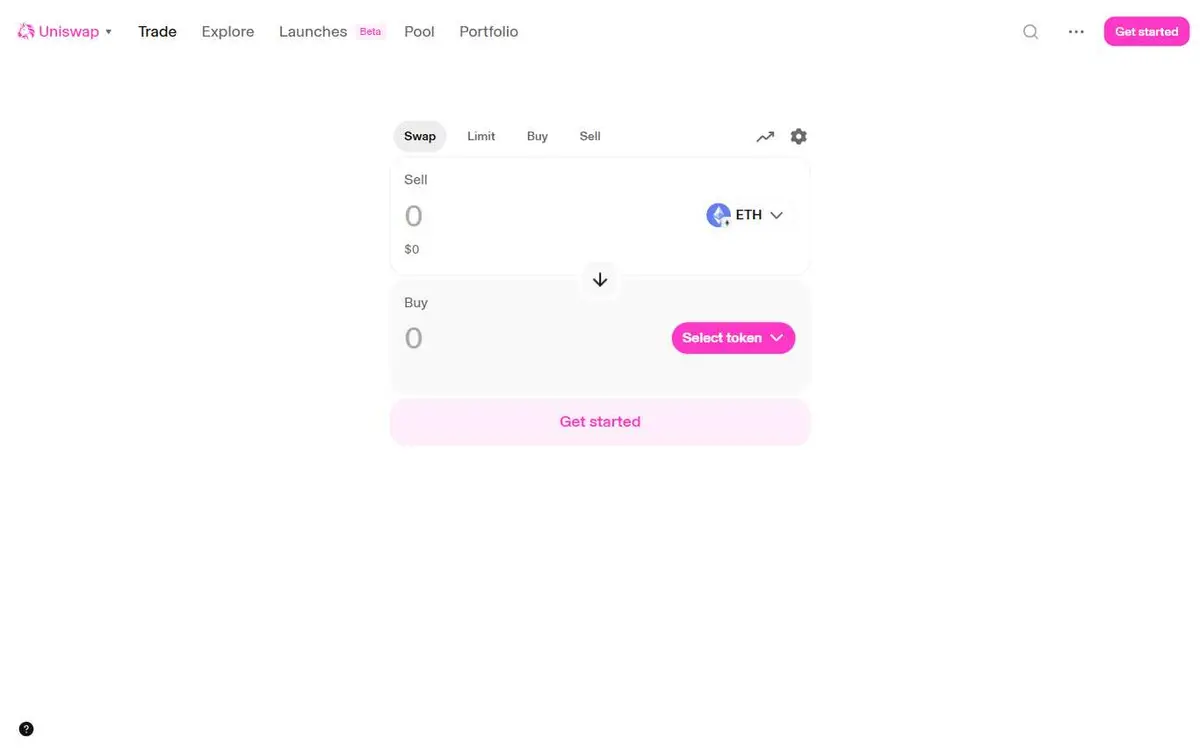
No barrier Uniswap · Trading app
Norway: the swap app loads with no notice
 CRYPTORESTRICTIONS
Who regulates crypto in Norway?
Finanstilsynet authorises and supervises crypto firms under MiCA. Lotteritilsynet, the gambling authority, orders internet providers to block unlicensed betting sites, and Skatteetaten, the tax administration, sets the tax rules and now receives crypto reports.
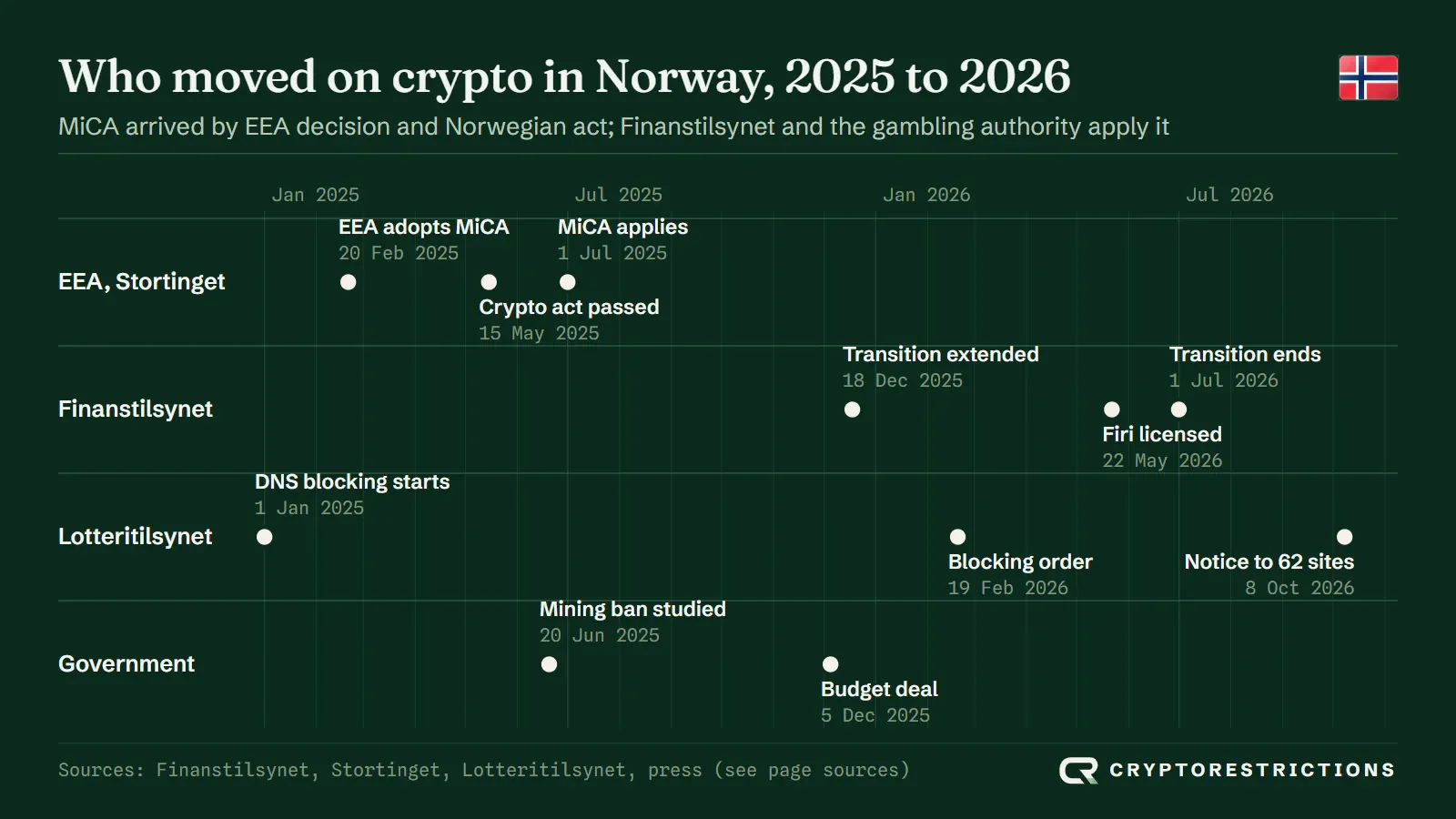
- Finanstilsynet. The competent authority under the crypto-assets act. It has authorised or accepted the notification of at least three firms itself (AK Jensen Norway, Týr Markets and Firi) and keeps the older anti-money-laundering register. We found no Finanstilsynet warning or enforcement action against any platform we track.
- Lotteritilsynet. The Norwegian Gaming and Foundation Authority. Its power to order DNS blocking under section 32a of the gambling act has applied since 1 January 2025, according to press coverage. Its order of 19 February 2026 told internet providers to block the listed sites by 26 February 2026. The prediction-market notice is covered below.
- Skatteetaten. Treats crypto as taxable property and runs the new reporting scheme, as covered in the tax section.
- The government and Stortinget. They are working on a ban on new crypto-mining data centres, covered next.
Which crypto products are limited in Norway?
Spot trading is the open product. Derivatives are the narrow one: Bybit, Crypto.com and Gate offer none to Norwegian users. Mining is the other restricted activity in prospect, because the government is preparing a temporary ban on new crypto-mining data centres that is not yet in force.
- Derivatives. Bybit EU offers no derivatives, and EEA access to Bybit Global, which does, is being wound down. Norway is on Crypto.com’s derivatives geo-restrictions list, and Gate’s EU arm has none.
- Stocks and prediction markets. Coinbase’s home page showed us a notice that both are not available in our Norwegian test.
- Mining data centres. On 20 June 2025 the government said it would investigate a temporary ban on new power-intensive crypto data centres, using a national planning provision, according to E24. That was an investigation, not a draft with a consultation. A budget deal of 5 December 2025 asked the government to send a proposal out for consultation as soon as possible, as quoted in Innst. 140 S. In a written answer of 12 January 2026 the minister said a general ban is hard to justify under EEA law and that a temporary, limited provision was being prepared. On 19 June 2026 MPs from Høyre and the Progress Party proposed a general, permanent ban. As of 19 October 2026 we found no consultation document and no adopted rule, so no ban is in force.
Are prediction markets legal in Norway?
Not without a Norwegian licence. Norway keeps gambling under exclusive rights, and the gambling authority has given notice that it plans to DNS-block 62 unlicensed sites including Polymarket and Kalshi; no final order had been reported by 19 October 2026.
Norway’s gambling system rests on exclusive rights: the state-owned Norsk Tipping holds them for betting, casino and lottery games and Norsk Rikstoto for horse betting, according to an industry summary of the gambling act. We could not read the act’s own text for this, so treat that description as secondary. Lotteritilsynet’s decision of 19 February 2026 orders internet providers to block sites that offer gambling without a licence. It does not name Polymarket or Kalshi.
The next step was reported on 8 October 2026. E24 said Lotteritilsynet had sent a prior notice of blocking to 62 companies, Polymarket and Kalshi among them, with replies due by 15 October. The authority must warn before it decides, so the notice is a legal step, not a ruling. We found no final order and no notice on Lotteritilsynet’s own site, so this rests on press coverage.
In our data both platforms are available, because neither lists Norway among its restricted countries and both loaded in our test. A DNS block hides a site from Norwegian internet providers without changing the platform’s own rules, so a final order would not by itself change a row; a platform’s decision to restrict Norway would.
How is crypto taxed in Norway?
Gains on crypto are capital income taxed at 22%, and what you hold also counts towards wealth tax at its market value on 1 January. You report both yourself, and from 2026 exchanges and custodians report to Skatteetaten under the CARF scheme.
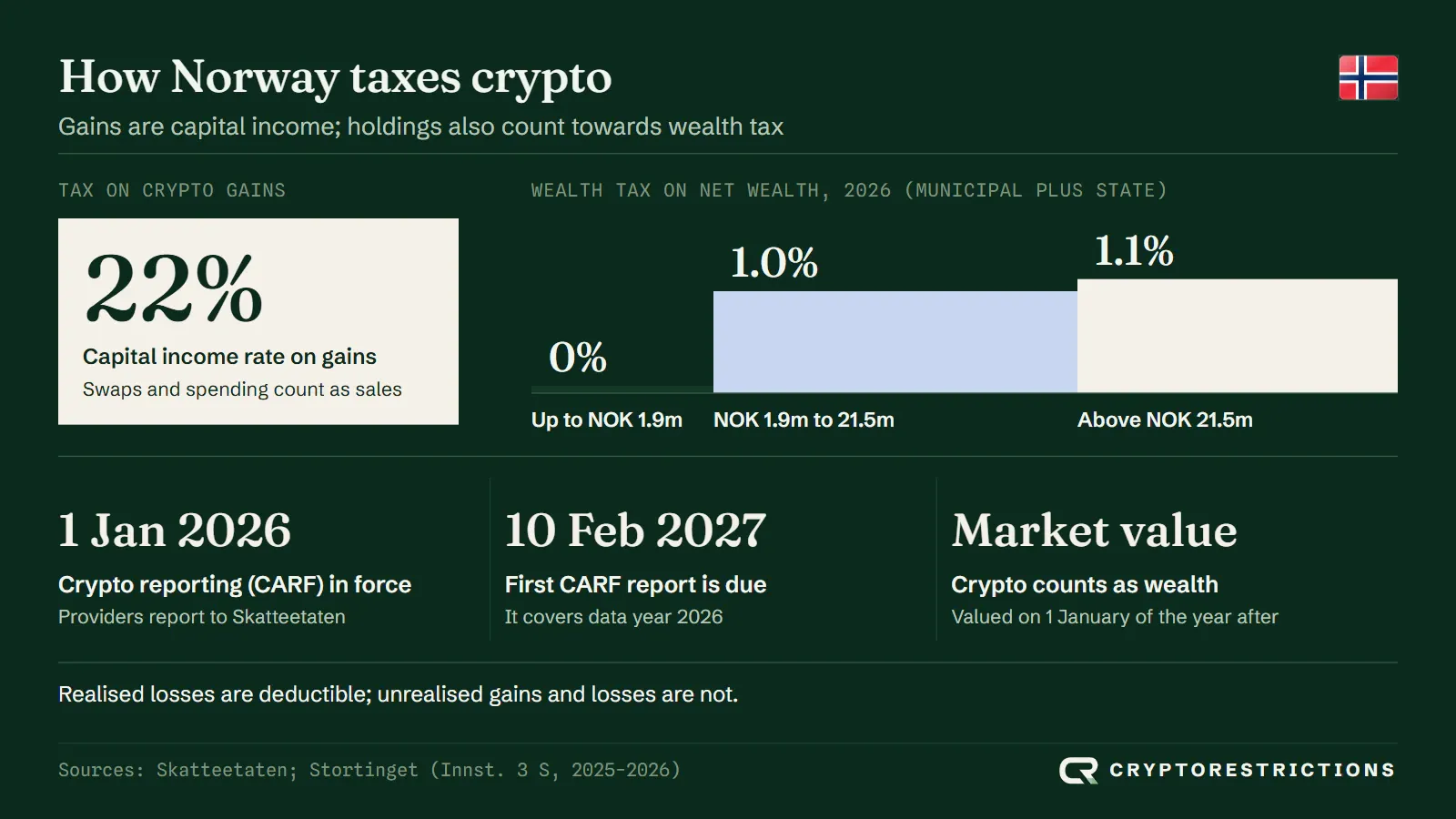
Skatteetaten’s rules page says income from a taxable asset is capital income taxed at 22%, and that the exemption method and the uplift factor used for shares do not apply to virtual assets. Realised losses are deductible and so are documented costs, but unrealised ones are not. A sale, a swap into another crypto asset and spending all count as realisations, and a gift does not. Gain or loss is the difference between the exit value and the entry value, in kroner. Buying creates no tax. Income from mining and from verification generally, proof-of-work or proof-of-stake, is taxable too.
Holdings also count towards wealth tax. The same page values them at market value on 1 January of the year after the income year. For 2026 the state’s rates are 0% up to NOK 1.9 million of net wealth, 0.65% up to NOK 21.5 million and 0.75% above, and the municipal rate is 0.35%. Stortinget’s Innst. 3 S sets the state rates and caps the municipal rate at 0.35%, so the combined rate is up to 1.0%, or 1.1% above NOK 21.5 million. Thresholds are doubled for spouses assessed jointly.
Reporting is changing. Skatteetaten says the OECD’s crypto reporting framework took effect on 1 January 2026: providers of exchange and custody services report to the tax authority each year, with the first report due in 2027. Its scheme page gives the date as 10 February 2027, for data year 2026.


 Serbia
 Turkey
 Switzerland
 Iceland
 Liechtenstein
 Croatia
 Estonia
 Finland
 Greece
 Latvia
 Luxembourg