Is crypto legal in Luxembourg?
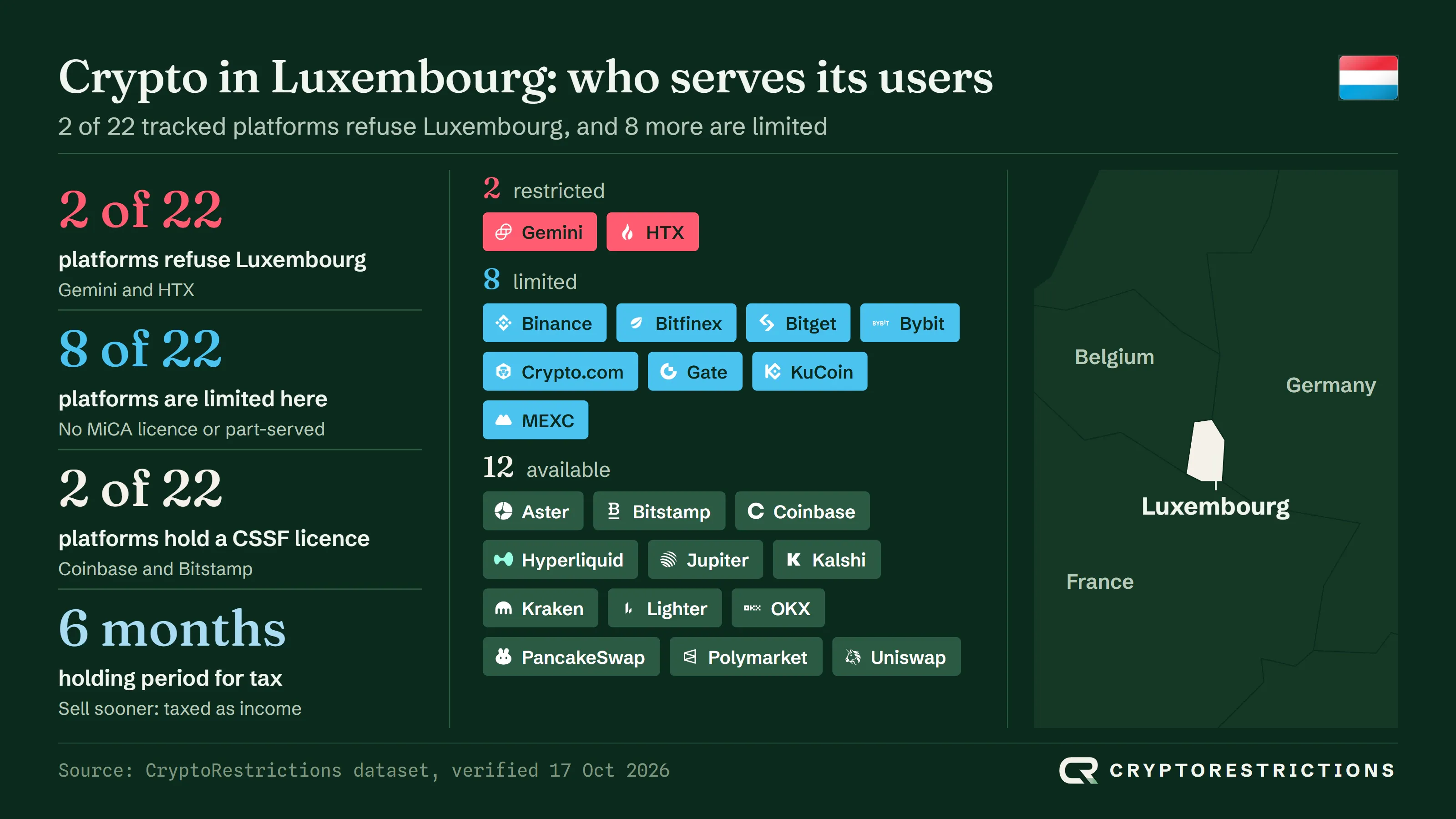
Yes. We found no ban on buying, holding or trading crypto. What Luxembourg and EU law regulate is who may serve you: every provider needs a MiCA licence from the CSSF or another EU regulator.
The EU’s Markets in Crypto-Assets Regulation (MiCA) set the licensing rules. A law of 6 February 2025, published in the Official Journal on 10 February, named the Commission de Surveillance du Secteur Financier (CSSF) as the authority for MiCA, and the CSSF now keeps a page for authorised crypto-asset service providers.
MiCA replaced an older CSSF registration of virtual asset service providers, which checked anti-money-laundering controls only. Firms registered on 30 December 2024 could keep operating while they applied for a MiCA licence, and Luxembourg gave them the maximum 18 months, to 1 July 2026, or until the licence was granted or refused. The CSSF’s notice of 2 July 2026 says the period has ended: only authorised providers may serve customers, reverse solicitation is not a reliable workaround, and unauthorised firms must wind down and may no longer onboard clients.
Which crypto exchanges work in Luxembourg?
Seven of the exchanges we track serve Luxembourg users under a MiCA licence. Coinbase and Bitstamp are licensed by the CSSF itself; Kraken, OKX, Bybit, Crypto.com and Gate serve Luxembourg on a passport from Ireland, Malta or Austria. Four are fully available; Bybit, Crypto.com and Gate are limited because they offer no derivatives here.
The register is ESMA’s interim MiCA list, last modified on 19 October 2026. Coinbase was authorised through Coinbase Luxembourg S.A. on 20 June 2025 and Bitstamp through Bitstamp Europe S.A. on 15 May 2025, each passported to 30 EEA states. Kraken is served from Ireland.
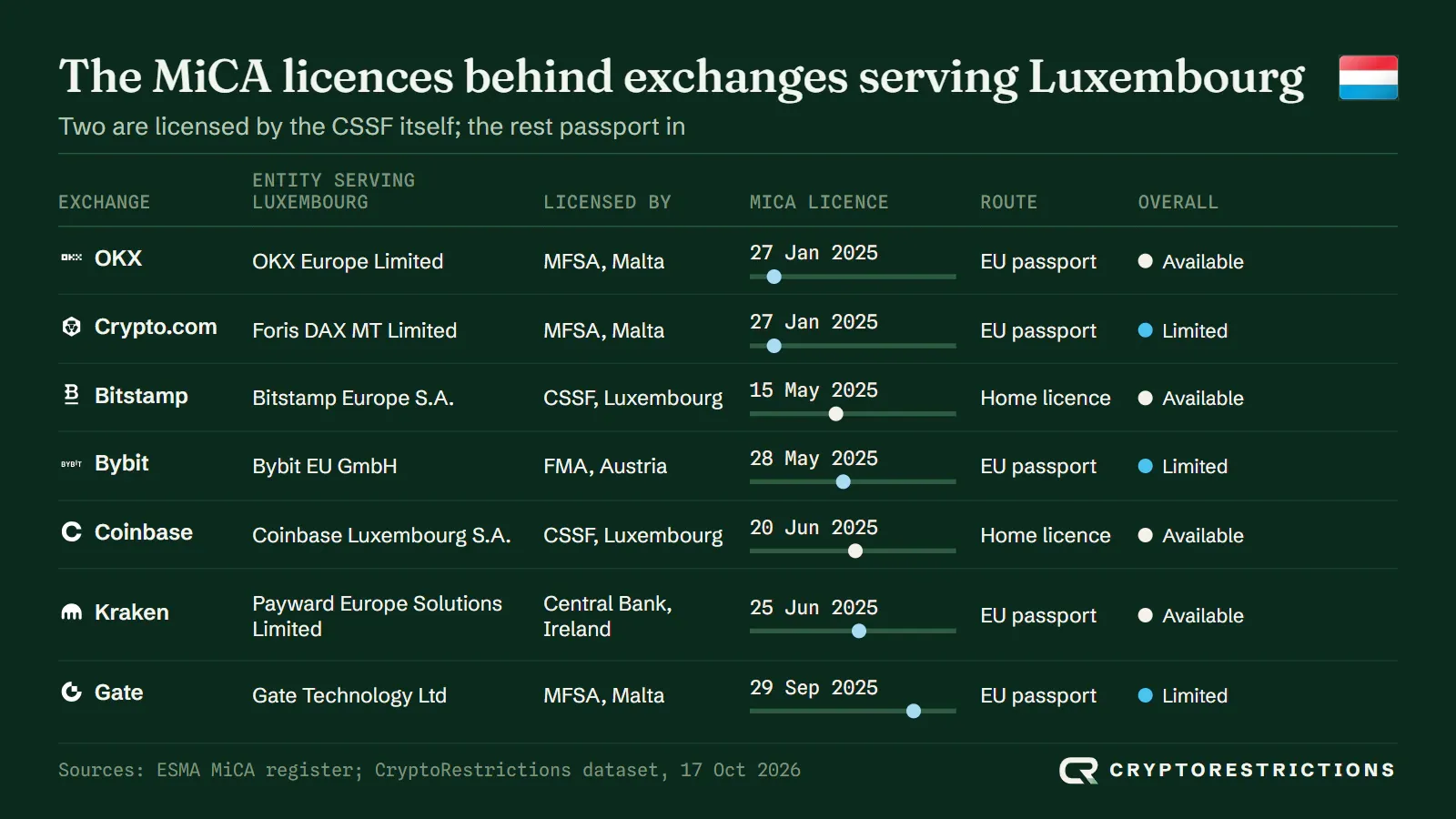
The same list names 13 firms with Luxembourg as home state, the earliest authorised on 7 February 2025 and the latest on 3 July 2026: Clearstream Banking, Bitstamp Europe, Coinbase Luxembourg, Zodia Custody (Europe), Banking Circle, Swissquote Bank Europe, B2C2 Europe, STOKR, Standard Chartered Luxembourg, bitFlyer Europe, Bridge Building, Ripple Payments Europe and CPS Europe. The CSSF’s own search database is a dynamic page we could not read, so the count rests on ESMA’s list. Gemini holds a Maltese licence that ESMA still lists, but it has closed every EEA account.
Best crypto platforms for Luxembourg residents
By our access score, Bitstamp (9.0 out of 10) is the most open exchange for Luxembourg users, ahead of Coinbase (8.5) and Kraken (8.0), and the six DeFi platforms we track tie at 8.0. Polymarket and Kalshi (8.0) are the open prediction markets.
The score rates how fully a Luxembourg resident can use each platform, not its fees or safety. It is computed from our data and moves when a row changes: access status (4 points), the share of the platform’s products open here (3), the licences we hold on file for Luxembourg (2) and what our geo-access test saw from a Luxembourg address (1). Platforms that refuse Luxembourg users are not scored. The full method is on our methodology page.
Exchanges

Bitstamp
Best for Spot trading from a CSSF-licensed exchange
9.0/10- Access
- 4/4
- Products
- 3/3
- Licences
- 1/2
- Our test
- 1/1
Read our Bitstamp reportPros
- Bitstamp Europe S.A. holds a CSSF MiCA licence from 15 May 2025 and a CSSF payment institution licence
- Our test loaded the home page from a Luxembourg address with no barrier
Cons
- Spot-focused: no prediction markets

Coinbase
Best for A MiCA-licensed exchange with the widest reach
8.5/10- Access
- 4/4
- Products
- 3/3
- Licences
- 1/2
- Our test
- 0.5/1
Read our Coinbase reportPros
- Coinbase Luxembourg S.A. holds a CSSF MiCA licence passported across the EEA
- Sign-up opened in our test
Cons
- Our test showed a notice that stocks and prediction markets are not available

Kraken
Best for A MiCA-licensed exchange with a dedicated EU entity
8.0/10- Access
- 4/4
- Products
- 3/3
- Licences
- 0/2
- Our test
- 1/1
Read our Kraken reportPros
- Payward Europe Solutions holds a Central Bank of Ireland MiCA licence, passported to all 30 EEA countries
- Our test loaded sign-up with no barrier
Cons
- No Luxembourg entity: served from Ireland

OKX
Best for A global brand with a local EU site
7.5/10- Access
- 4/4
- Products
- 3/3
- Licences
- 0/2
- Our test
- 0.5/1
Read our OKX reportPros
- OKX Europe Limited holds an MFSA MiCA licence from 27 January 2025
- okx.com points Luxembourg visitors to OKX Europe
Cons
- Served from Malta, not Luxembourg

Bybit
Best for Spot trading only
6.9/10- Access
- 3.5/4
- Products
- 2.4/3
- Licences
- 0/2
- Our test
- 1/1
Read our Bybit reportPros
- Spot is served by Bybit EU GmbH under an Austrian MiCA licence
- Our test loaded sign-up with no barrier
Cons
- Bybit EU offers no derivatives
- EEA access to Bybit Global, which does, is being wound down

Crypto.com
Best for Spot trading in an app
6.3/10- Access
- 3.5/4
- Products
- 1.8/3
- Licences
- 0/2
- Our test
- 1/1
Read our Crypto.com reportPros
- Foris DAX MT Limited holds a Malta MiCA licence from 27 January 2025
- Spot trading and the app are offered
Cons
- Luxembourg is on its derivatives geo-restrictions list

Gate
Best for Spot trading on a licensed EU arm
5.5/10- Access
- 3.5/4
- Products
- 1.5/3
- Licences
- 0/2
- Our test
- 0.5/1
Read our Gate reportPros
- Gate Technology Ltd holds a Maltese MiCA licence
- Spot trading is open to Luxembourg users
Cons
- No derivatives on the EU arm
- Our test showed a prompt to switch to the EU site
Prediction markets
Kalshi
Best for A regulated-exchange model open to Luxembourg
8.0/10- Access
- 4/4
- Products
- 3/3
- Licences
- 0/2
- Our test
- 1/1
Read our Kalshi reportPros
- Luxembourg is not on its restricted-jurisdictions list
- Our test loaded sign-up from a Luxembourg address
Cons
- We found no Luxembourg ruling on prediction markets

Polymarket
Best for A crypto-based prediction market open to Luxembourg
8.0/10- Access
- 4/4
- Products
- 3/3
- Licences
- 0/2
- Our test
- 1/1
Read our Polymarket reportPros
- Luxembourg is not on its list of restricted countries
- Our test loaded the home page from a Luxembourg address
Cons
- We found no Luxembourg ruling on prediction markets
DeFi

Aster
Best for Perpetual futures on several chains
8.0/10- Access
- 4/4
- Products
- 3/3
- Licences
- 0/2
- Our test
- 1/1
Read our Aster reportPros
- Luxembourg is not on its prohibited-jurisdictions list
- The trading app loaded in our test
Cons
- No licence on file for Luxembourg

Hyperliquid
Best for Perpetual futures from your own wallet
8.0/10- Access
- 4/4
- Products
- 3/3
- Licences
- 0/2
- Our test
- 1/1
Read our Hyperliquid reportPros
- Excludes only the US, Ontario and broadly sanctioned places
- Its trading app loaded in our test
Cons
- No licence on file for Luxembourg

Jupiter
Best for Solana swaps
8.0/10- Access
- 4/4
- Products
- 3/3
- Licences
- 0/2
- Our test
- 1/1
Read our Jupiter reportPros
- Luxembourg is not in its terms
- Its app loaded in our test
Cons
- No licence on file for Luxembourg

Lighter
Best for Perpetual futures on an order-book DEX
8.0/10- Access
- 4/4
- Products
- 3/3
- Licences
- 0/2
- Our test
- 1/1
Read our Lighter reportPros
- Luxembourg is not named in its terms
- Its trading app loaded in our test
Cons
- No licence on file for Luxembourg

PancakeSwap
Best for BNB Chain swaps and pools
8.0/10- Access
- 4/4
- Products
- 3/3
- Licences
- 0/2
- Our test
- 1/1
Read our PancakeSwap reportPros
- Not excluded by its terms
- The swap page loaded in our test
Cons
- No licence on file for Luxembourg

Uniswap
Best for Swapping tokens from your own wallet
8.0/10- Access
- 4/4
- Products
- 3/3
- Licences
- 0/2
- Our test
- 1/1
Read our Uniswap reportPros
- Its terms bar only places under comprehensive US sanctions
- Our test loaded the swap app from a Luxembourg address
Cons
- No licence on file for Luxembourg
Which platforms block Luxembourg users?
Two of the 22 platforms we track refuse Luxembourg users: Gemini and HTX. Eight more are limited because they have no working MiCA licence or offer only part of their service: Binance, KuCoin, MEXC, Bitget, Bitfinex, Bybit, Crypto.com and Gate.
Most exits trace to MiCA. Gemini closed every UK and EEA account on 6 April 2026. Binance has had no MiCA authorisation since 1 July 2026, closing sign-ups, deposits and trading while existing users can withdraw. HTX’s terms bar every EU state, and since 23 August 2026 EU sanctions on Russia-linked providers ban dealings with it, under Regulation (EU) 2026/1848.
What our geo-access test saw from Luxembourg
From a Luxembourg address on 14 and 16 October 2026 we loaded 22 of the platforms we track: 1 refused us, 5 showed a notice or a redirect, and 16 loaded with no barrier.
An open page is not permission. HTX, MEXC, Bitget and Bitfinex all loaded although their terms or ESMA’s register say Luxembourg should not be served. The one refusal was Gemini (“Gemini does not currently operate in Luxembourg”). The five notices were Binance’s European regulatory page, a prompt to switch to the EU site at Gate and KuCoin, OKX’s redirect to its European site, and Coinbase’s note that stocks and prediction markets are unavailable. Swipe through the screenshots below; each card quotes the message the page showed.
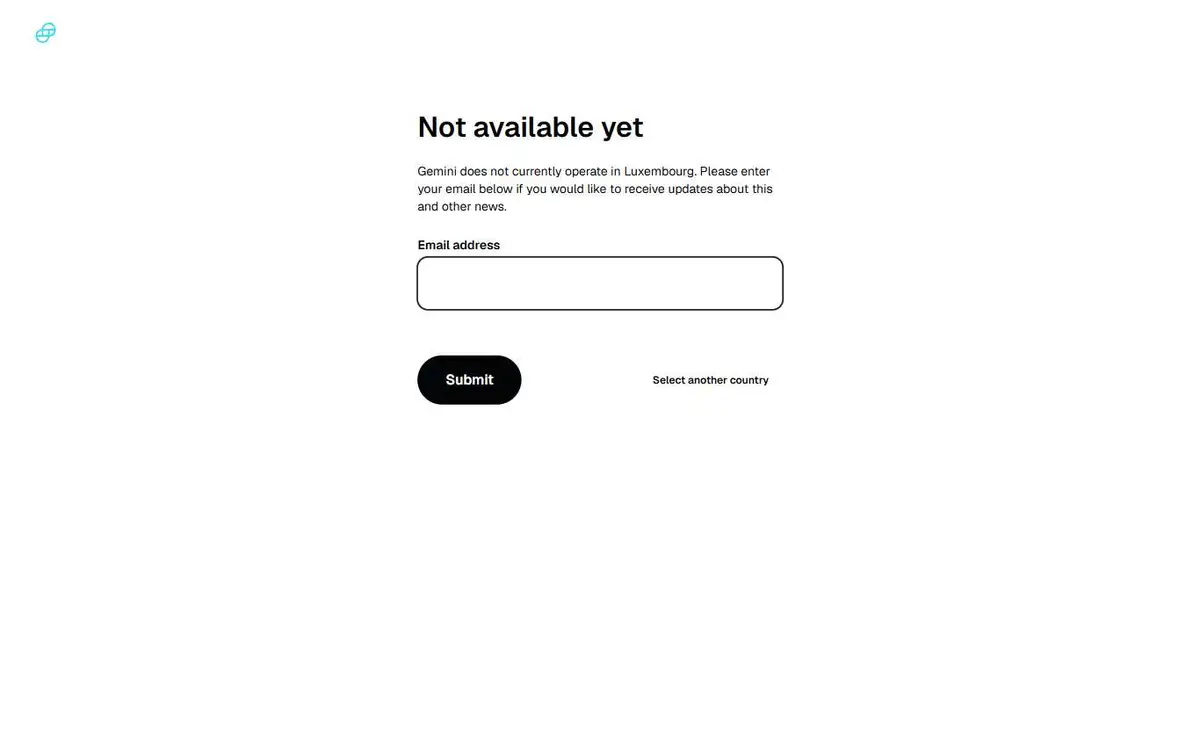
Blocked Gemini · Sign-up page
Luxembourg, closed with the rest of the EEA in April 2026: the sign-up form is replaced by a location check
“Gemini does not currently operate in Luxembourg.”
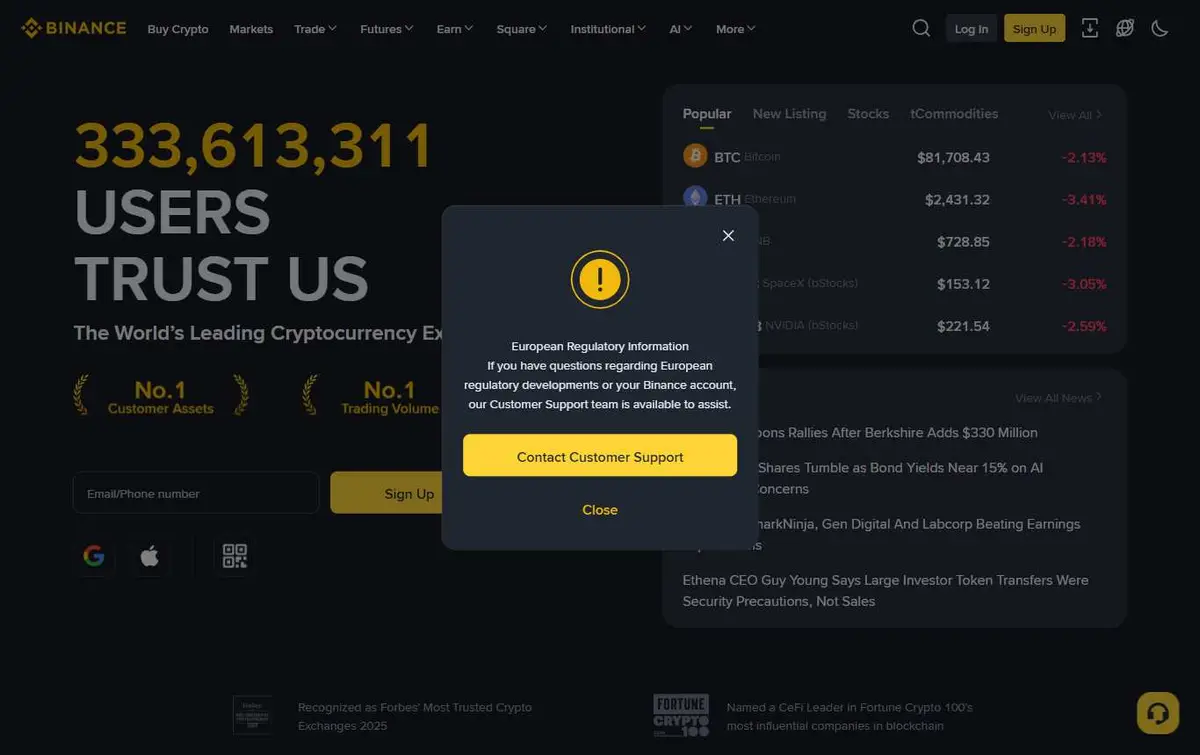
Notice shown Binance · Home page
Luxembourg: the global site loads, with a European regulatory information link
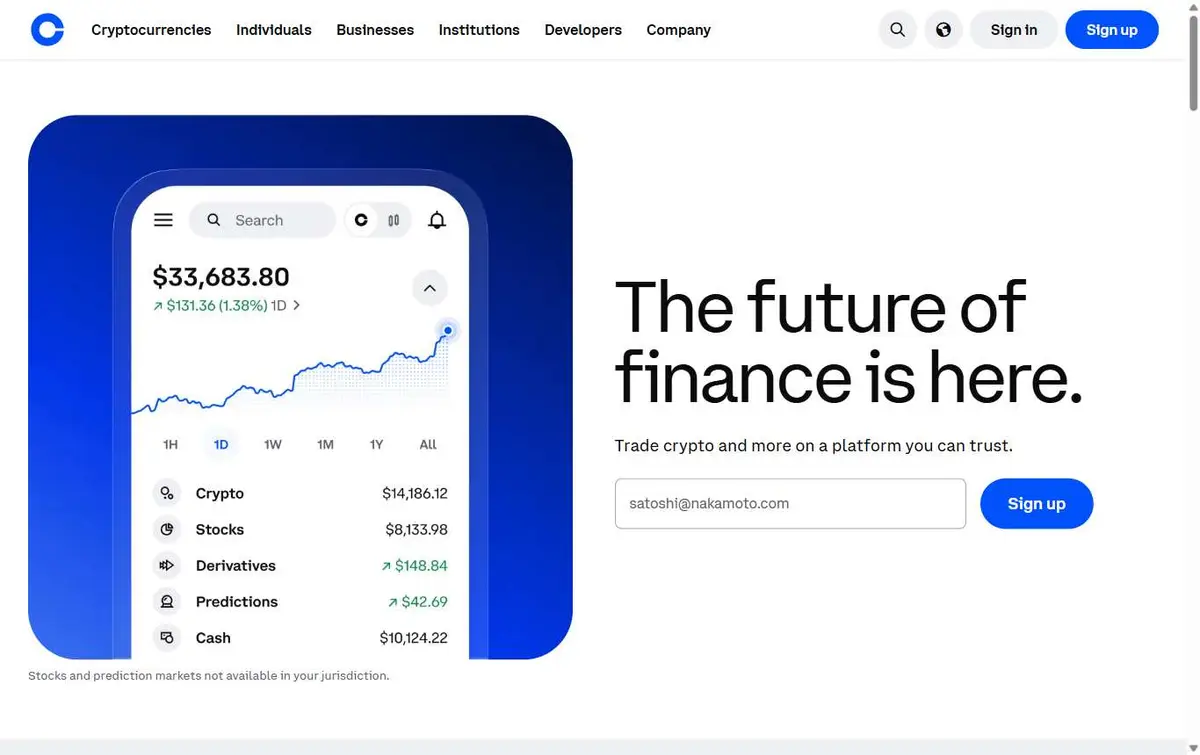
Notice shown Coinbase · Home page
Luxembourg: the site loads, with a notice that stocks and prediction markets are not available
“Stocks and prediction markets not available in your jurisdiction.”
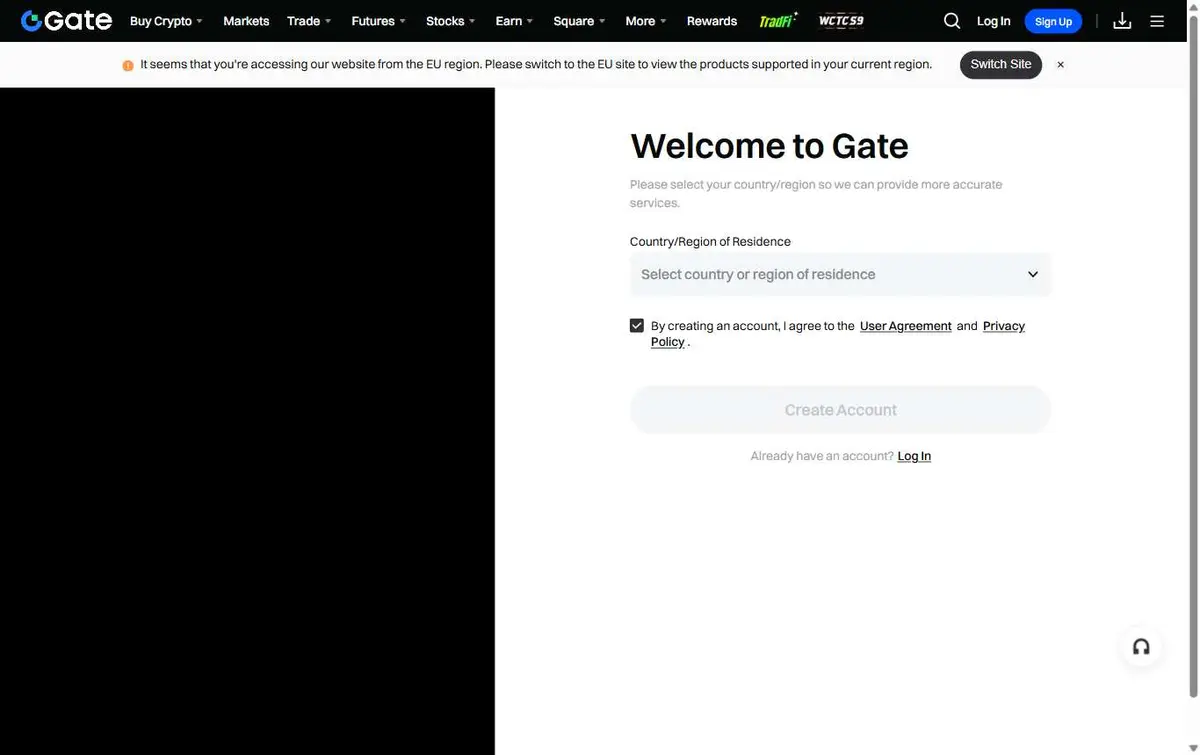
Notice shown Gate · Sign-up page
Luxembourg: Gate asks EU visitors to switch to its EU site
“It seems that you're accessing our website from the EU region.”
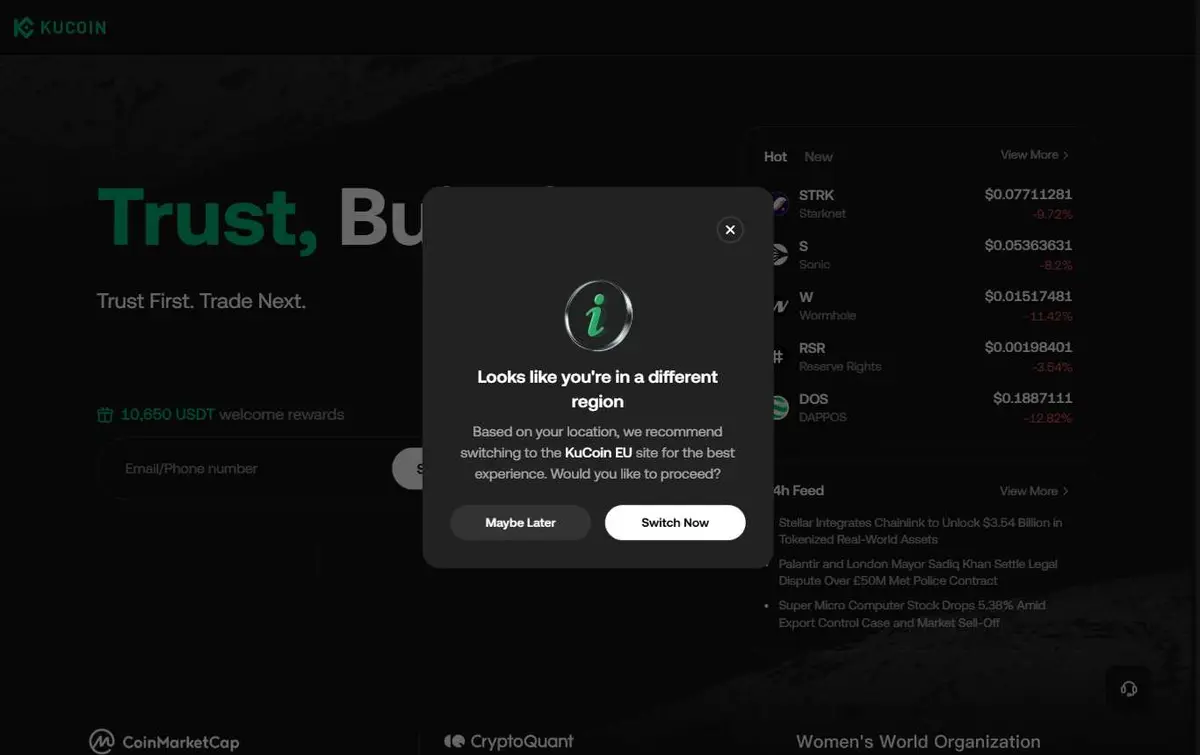
Notice shown KuCoin · Home page
Luxembourg: KuCoin recommends its EU site
“Based on your location, we recommend switching to the KuCoin EU site for the best experience.”
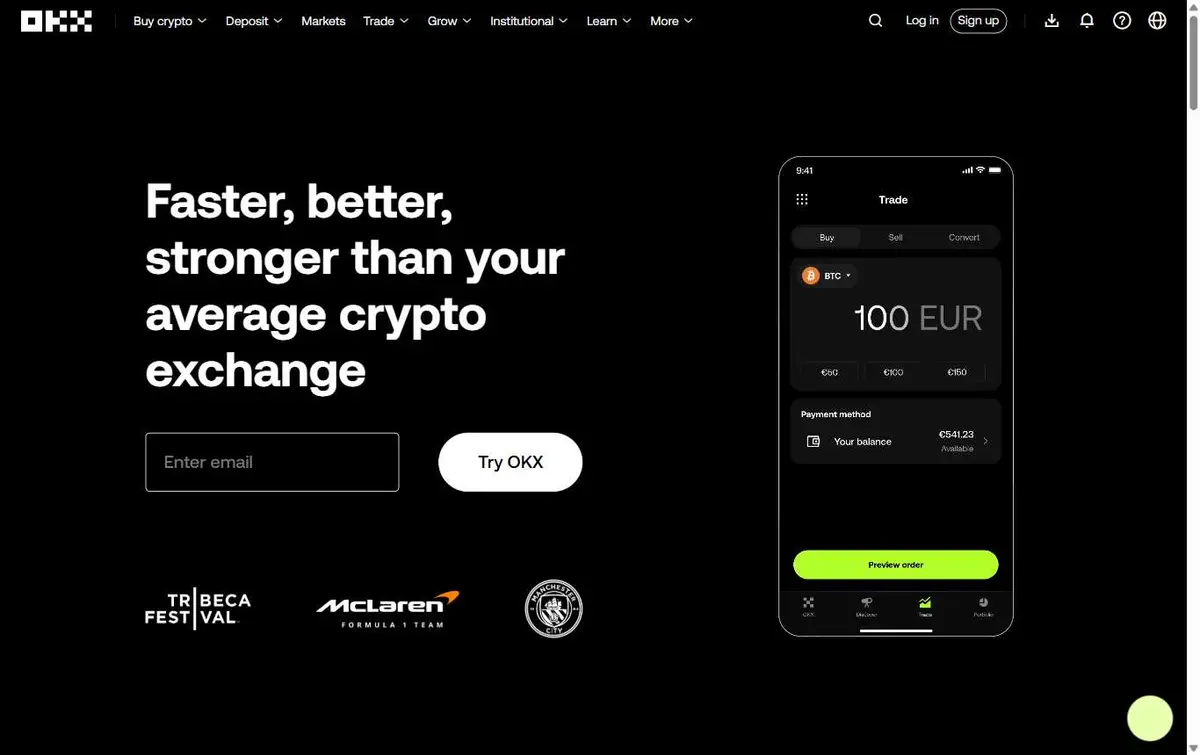
Notice shown OKX · Home page
Luxembourg: okx.com points visitors to the OKX Europe site
 CRYPTORESTRICTIONS
Who regulates crypto in Luxembourg?
The CSSF authorises and supervises crypto firms. The 1977 gambling law, now under revision, is the rulebook for betting, and the tax office (ACD) sets the tax treatment of crypto and receives crypto reports under the EU’s DAC8 rules.
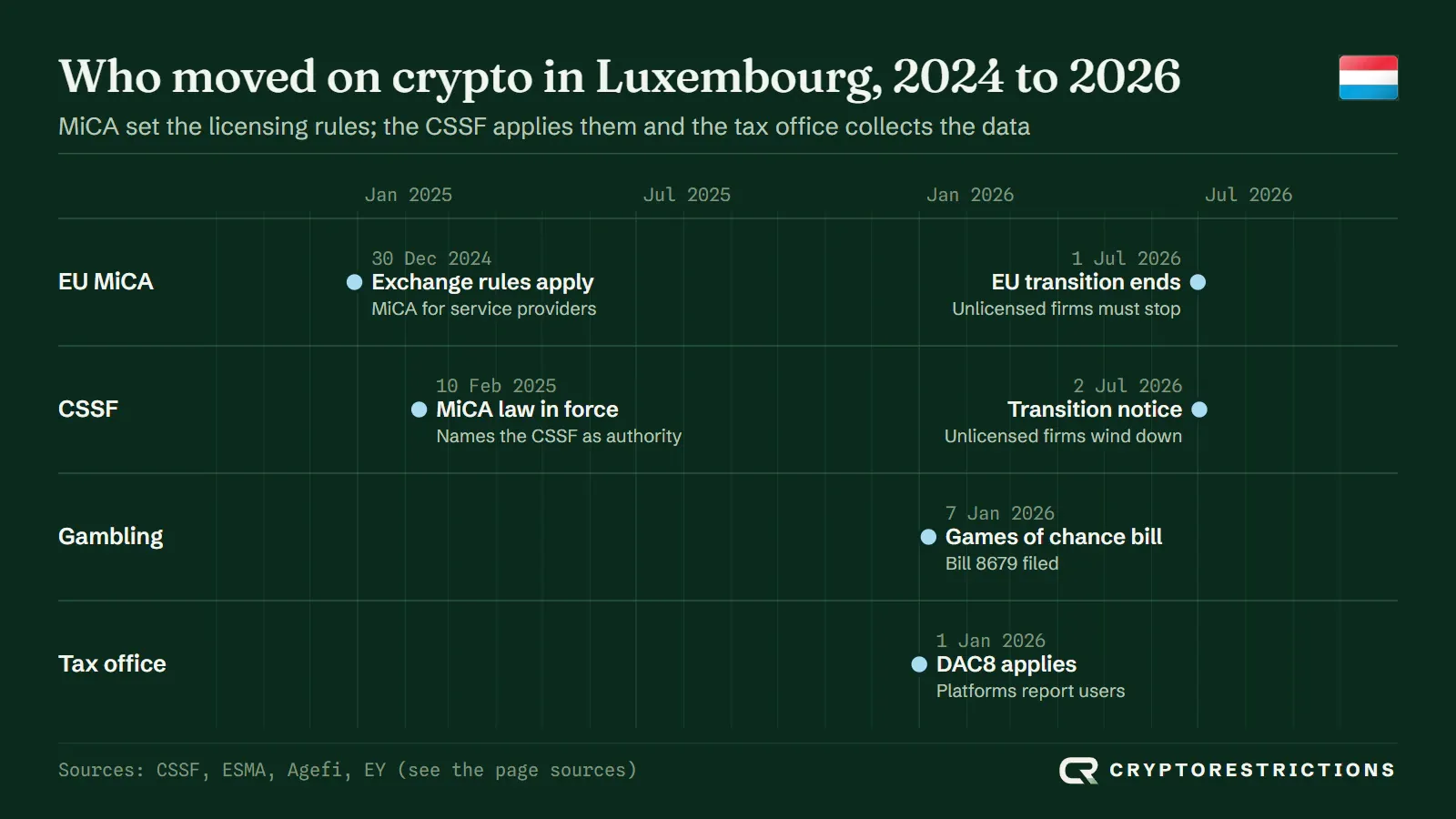
- CSSF. The MiCA authority since the law of 6 February 2025. It also kept the older register of virtual asset service providers, which covers anti-money-laundering controls only.
- Gambling law. The law of 20 April 1977 governs games of chance and sports betting. Justice Minister Elisabeth Margue filed bill 8679 to amend it on 7 January 2026, aimed at illegal gambling in bars and cafés, and we found no sign it has passed.
- ACD. The Administration des contributions directes issues the tax rules in its 2018 circular on virtual currencies and runs the DAC8 reporting, as covered below.
Which crypto products are limited in Luxembourg?
Spot trading is the open product. Derivatives are the narrowest: Bybit, Crypto.com and Gate offer none to Luxembourg users, and stocks and prediction markets are unavailable at Coinbase in our test.
- Leveraged derivatives. Bybit EU offers no derivatives, and EEA access to Bybit Global, which does, is being wound down. Luxembourg is on Crypto.com’s derivatives geo-restrictions list, and Gate’s EU arm has none.
- Stocks and prediction markets. Coinbase’s home page showed us a notice that both are not available in our Luxembourg test.
- Services without a licence. Since 1 July 2026 an unauthorised firm may only let customers exchange to fiat, move assets to an authorised platform or take them to a self-managed wallet, as the CSSF notice sets out.
Are prediction markets legal in Luxembourg?
Unsettled. Betting is regulated by the 1977 gambling law, but we found no Luxembourg regulator or court that has applied it to prediction markets, and neither Polymarket nor Kalshi restricts Luxembourg.
Luxembourg’s gambling law is in motion. Luxtoday reported on 31 October 2025 that the justice minister had floated a legal monopoly on gambling in favour of the National Lottery, with online gambling treated cautiously and geo-blocking under consideration. Bill 8679 of January 2026 covers illegal gambling in bars and cafés, and the online rules look to be a later step, though we could not confirm that from the bill itself. None of this mentions prediction markets, and our searches found no CSSF, prosecutor or lottery action against Polymarket or Kalshi. Whether a market on an election or a match is gambling here is a legal question we cannot answer for you.
Both large prediction markets accept Luxembourg users in our data. Luxembourg is not on Polymarket’s list of restricted countries, nor among the restricted jurisdictions in Kalshi’s member agreement, and both pages loaded in our test.
How is crypto taxed in Luxembourg?
The tax office treats crypto as an intangible asset, so a private investor’s gain is taxed as income only when sold within six months of buying, and gains under EUR 500 a year are not taxed. Income tax is progressive, up to 42%.
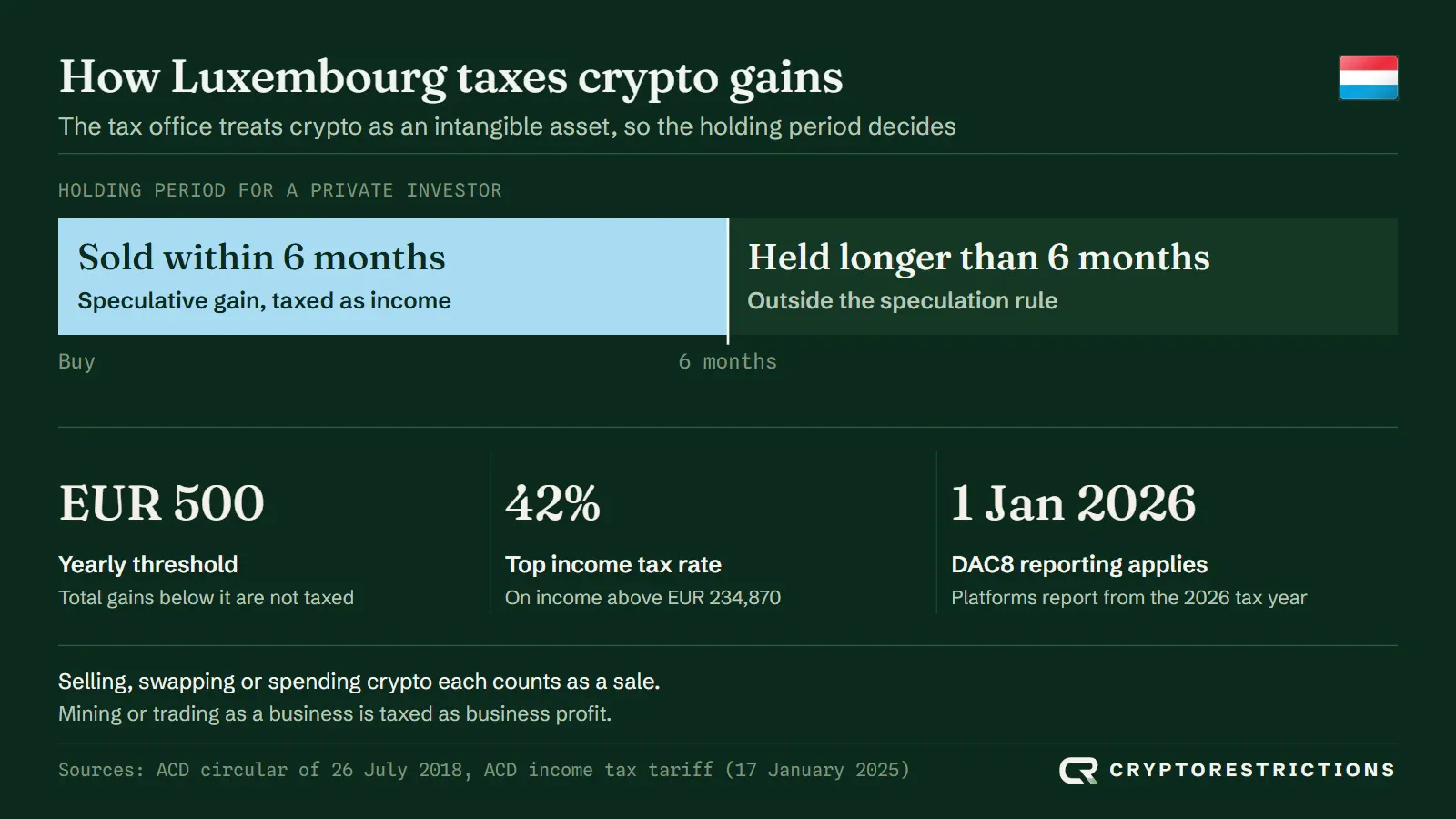
The ACD’s circular of 26 July 2018 says virtual currencies are not a currency but intangible assets. They are taxable only as business profit or as miscellaneous income. Selling, swapping one crypto for another and paying for goods in crypto each count as a sale, and a gain is speculative when the interval between buying and selling does not exceed six months. The circular taxes only that case, so a gain on a longer holding falls outside it. When coins cannot be told apart the cost is a weighted average, FIFO and LIFO are excluded, and the taxpayer must prove the figures.
The circular’s EUR 500 rule is a threshold: gains are not taxable when the total for the calendar year is below EUR 500. Running an exchange or an ATM, or mining, regularly and on a business footing is taxed as business profit, which also bears municipal business tax. The circular does not cover staking or airdrops, and we found no ACD position on either.
The ACD’s tariff page, updated 17 January 2025 for the 2025 tax year, starts at 0% on income up to EUR 13,230 and tops out at 42% above EUR 234,870. We did not find an official 2026 scale.
Reporting is changing too. EY reports that Parliament voted the law carrying the EU’s DAC8 rules on 19 March 2026, applying from 1 January 2026 with 2026 as the first reporting year, so crypto platforms report users’ transactions to the ACD.


 Serbia
 Turkey
 Switzerland
 Iceland
 Liechtenstein
 Norway
 Croatia
 Estonia
 Finland
 Greece
 Latvia