
Is crypto legal in India?
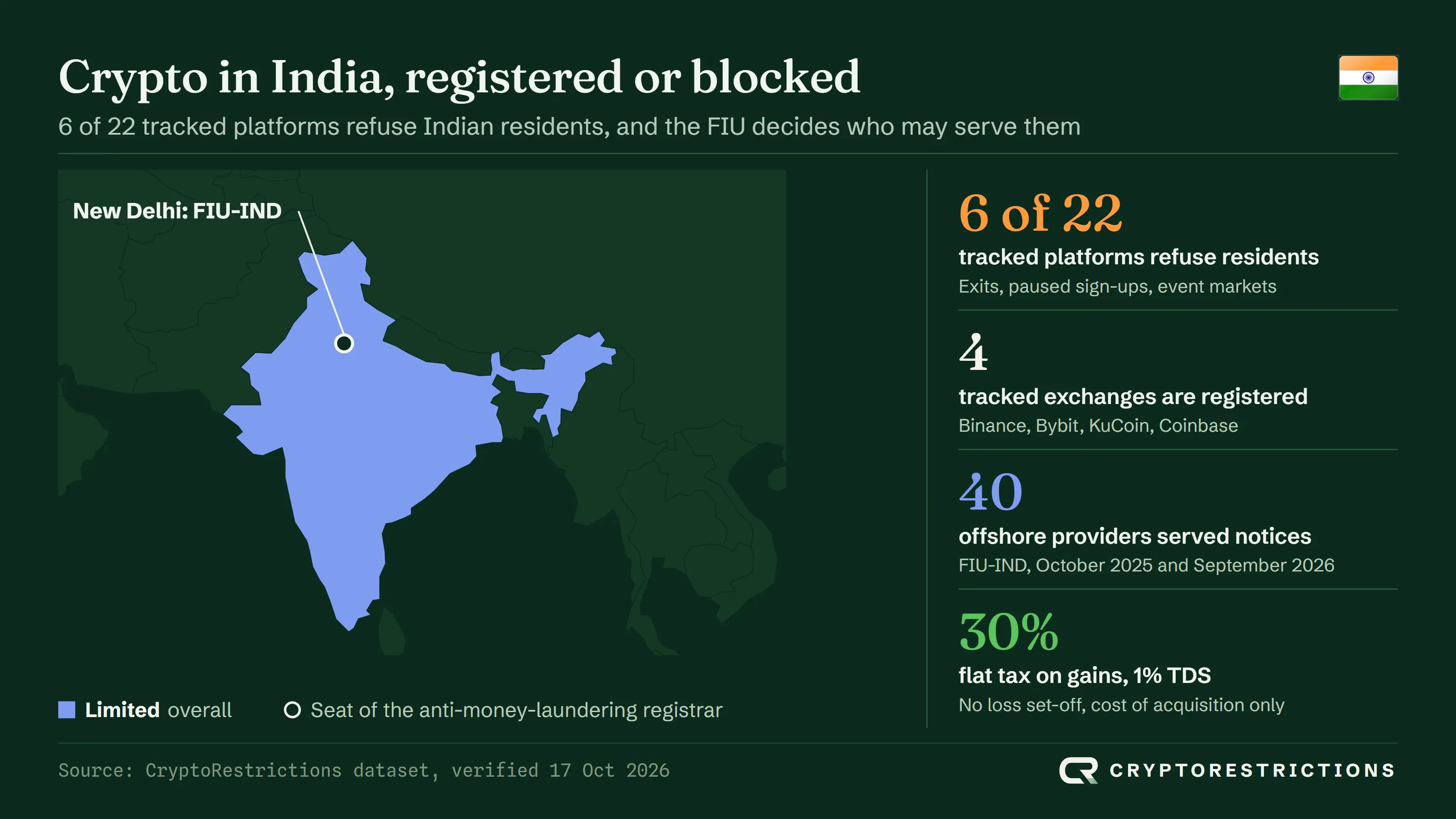
Yes, you can hold and trade crypto in India, and no law bans it. The government calls the sector unregulated: the only laws that reach it are the anti-money-laundering act and the income tax act.
There is no statute that licenses exchanges or defines the rights of crypto holders. In Parliament in 2023 the finance ministry said crypto assets are unregulated while transactions fall under the Prevention of Money Laundering Act (PMLA) and the Income-tax Act. In September 2026 it repeated that crypto products and NFTs are unregulated and can be highly risky, with possibly no regulatory recourse for losses.
What the state does enforce is registration. A notification of 7 March 2023 put exchange between virtual digital assets and fiat, exchange between forms of virtual digital assets, transfer, safekeeping or administration, and financial services tied to an issuer’s offer and sale under the PMLA. A provider carrying out those activities must register with the Financial Intelligence Unit (FIU-IND) as a reporting entity, and the duty is activity-based and not tied to a physical presence in India, so it covers offshore exchanges that serve Indian users.
Which crypto exchanges work in India?
Four of the exchanges we track hold an FIU-IND registration: Binance, Bybit, KuCoin and Coinbase. Crypto.com and the DeFi apps serve Indians without one, and Kraken, Bitstamp, HTX and Bitfinex are still under FIU notices.
India has no exchange licence, so registration with FIU-IND is the only credential. It is anti-money-laundering registration, with record-keeping, reporting and customer checks under the FIU’s guidelines of 10 March 2023. FIU-IND counted 50 registered providers on 1 October 2025.
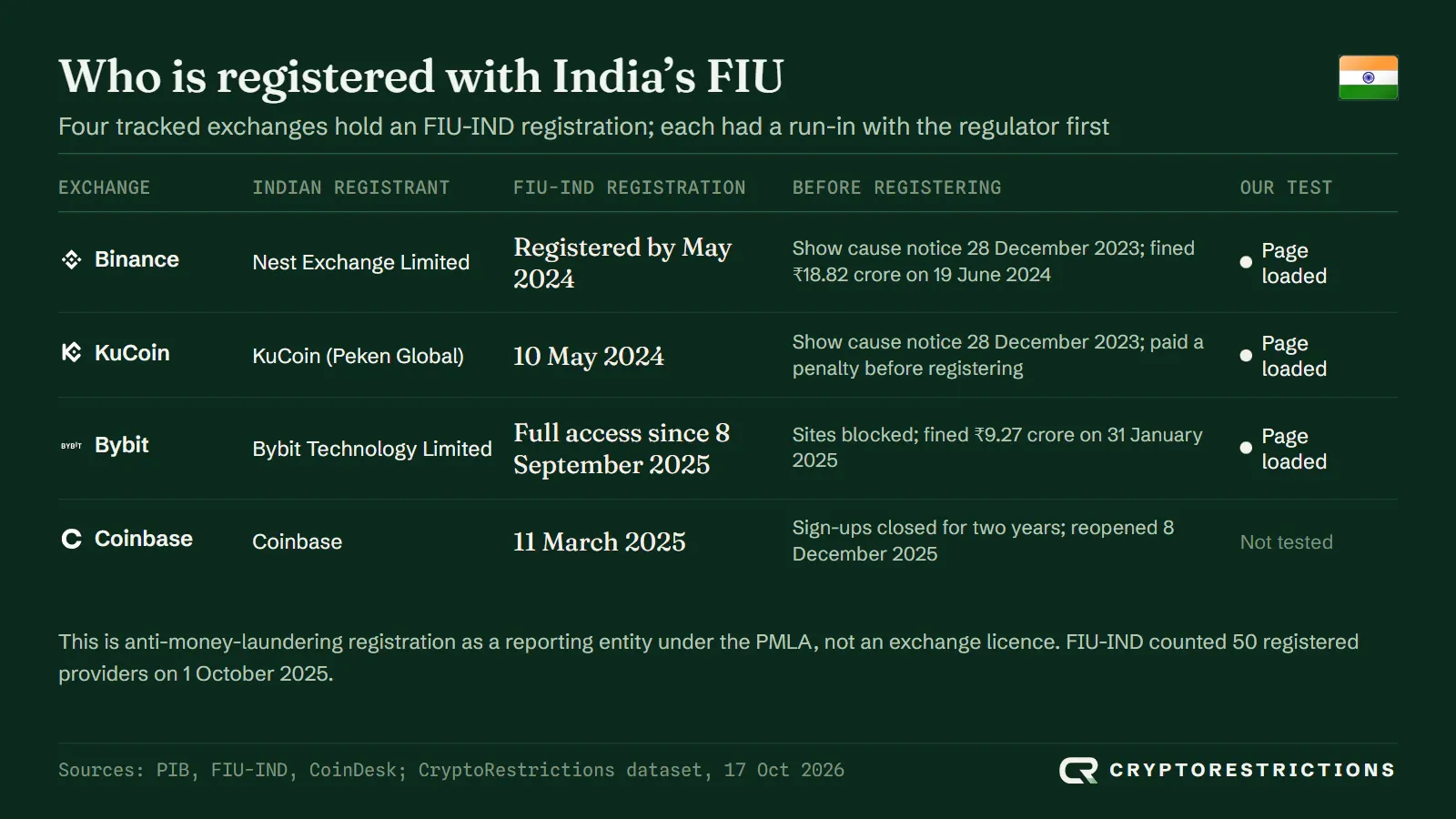
Most of them registered after being pushed. Binance and KuCoin were among nine offshore exchanges that got show cause notices on 28 December 2023, with FIU-IND asking the IT ministry to block their URLs. KuCoin and Binance were reported registered in May 2024, and FIU-IND’s order of 19 June 2024 fined Binance ₹18.82 crore (about 188 million rupees). Bybit kept expanding without registering until its websites were blocked, and FIU-IND fined it ₹9.27 crore on 31 January 2025.
Coinbase is the one that came in through the front door: it registered on 11 March 2025, and its India sign-ups reopened on 8 December 2025 after a two-year freeze.
Best crypto platforms for Indian residents
By our access score, Binance, Bybit and KuCoin (9.0 out of 10 each) are the exchanges most open to Indian residents, followed by Coinbase (8.5). Polymarket (5.8) is the only prediction market we can score, and Aster and Lighter (8.0 each) are the most open DeFi platforms.
The score rates how fully an Indian resident can use each platform, not its fees or safety. It is computed from our data and moves when a row changes: access status (4 points), the share of the platform’s products open here (3), the Indian licences we hold on file (2) and what our geo-access test saw from an Indian address (1). Platforms that refuse Indians are not scored. The full method is on our methodology page.
Exchanges

Binance
Best for Spot and derivatives from a registered offshore entity
9.0/10- Access
- 4/4
- Products
- 3/3
- Licences
- 1/2
- Our test
- 1/1
Read our Binance reportPros
- Registered with FIU-IND as Nest Exchange Limited
Cons
- Fined ₹18.82 crore by FIU-IND on 19 June 2024

Bybit
Best for Derivatives with a registered Indian entity
9.0/10- Access
- 4/4
- Products
- 3/3
- Licences
- 1/2
- Our test
- 1/1
Read our Bybit reportPros
- Bybit Technology Limited is registered with FIU-IND
- Full access returned on 8 September 2025
Cons
- Fined ₹9.27 crore in 2025 for operating without registration
- Its websites were blocked before it registered

KuCoin
Best for Altcoin spot trading with FIU registration
9.0/10- Access
- 4/4
- Products
- 3/3
- Licences
- 1/2
- Our test
- 1/1
Read our KuCoin reportPros
- Registered with FIU-IND on 10 May 2024
- India is not a restricted location in its terms
Cons
- Paid a penalty to FIU-IND before registering

Coinbase
Best for A registered exchange with a local Indian entity
8.5/10- Access
- 4/4
- Products
- 3/3
- Licences
- 1/2
- Our test
- 0.5/1
Read our Coinbase reportPros
- Registered with FIU-IND on 11 March 2025
- Served through Coinbase India
Cons
- India sign-ups were closed for two years until 8 December 2025

Crypto.com
Best for An app not named in any FIU notice
7.5/10- Access
- 4/4
- Products
- 3/3
- Licences
- 0/2
- Our test
- 0.5/1
Read our Crypto.com reportPros
- India is not on its restricted lists
- Not among the nine exchanges sent FIU notices in December 2023
Cons
- No FIU-IND registration on file

Bitfinex
Best for Spot trading, with an open FIU notice
6.3/10- Access
- 3/4
- Products
- 2.3/3
- Licences
- 0/2
- Our test
- 1/1
Read our Bitfinex reportPros
- India is not excluded by its terms
Cons
- FIU-IND asked for its URLs to be blocked in December 2023
- Not registered with FIU-IND

HTX
Best for Spot trading, with an open FIU notice
6.3/10- Access
- 3/4
- Products
- 2.3/3
- Licences
- 0/2
- Our test
- 1/1
Read our HTX reportPros
- India is not on its restricted list
Cons
- FIU-IND sent Huobi a show cause notice in December 2023
- Not registered with FIU-IND

Bitstamp
Best for Spot trading, with an open FIU notice
5.8/10- Access
- 3/4
- Products
- 2.3/3
- Licences
- 0/2
- Our test
- 0.5/1
Read our Bitstamp reportPros
- India is not excluded by its terms
Cons
- FIU-IND sent four Bitstamp entities a show cause notice in December 2023
- No FIU-IND registration found

Kraken
Best for Spot trading, with an open FIU notice
5.8/10- Access
- 3/4
- Products
- 2.3/3
- Licences
- 0/2
- Our test
- 0.5/1
Read our Kraken reportPros
- India is not on its do-not-serve list
Cons
- FIU-IND asked for its URLs to be blocked in December 2023
- Not registered with FIU-IND
Prediction markets

Polymarket
Best for Event markets, if you can reach the site
5.8/10- Access
- 3/4
- Products
- 2.3/3
- Licences
- 0/2
- Our test
- 0.5/1
Read our Polymarket reportPros
- India is not on the restricted list in its own terms
Cons
- MeitY ordered internet providers to block it in May 2026
- The Online Gaming Act bans online money games
DeFi

Aster
Best for Perpetual futures on BNB Chain
8.0/10- Access
- 4/4
- Products
- 3/3
- Licences
- 0/2
- Our test
- 1/1
Read our Aster reportPros
- India is not on its prohibited-jurisdictions list
Cons
- No Indian licence on file

Lighter
Best for Perpetual futures from a wallet
8.0/10- Access
- 4/4
- Products
- 3/3
- Licences
- 0/2
- Our test
- 1/1
Read our Lighter reportPros
- India is not named in its terms
Cons
- No Indian licence on file

Jupiter
Best for Solana swaps and staking
7.5/10- Access
- 4/4
- Products
- 3/3
- Licences
- 0/2
- Our test
- 0.5/1
Read our Jupiter reportPros
- India is not in its terms
Cons
- No Indian licence on file

PancakeSwap
Best for BNB Chain swaps and pools
7.5/10- Access
- 4/4
- Products
- 3/3
- Licences
- 0/2
- Our test
- 0.5/1
Read our PancakeSwap reportPros
- Its terms bar only persons and places under US sanctions
Cons
- No Indian licence on file

Uniswap
Best for Swapping tokens from your own wallet
7.5/10- Access
- 4/4
- Products
- 3/3
- Licences
- 0/2
- Our test
- 0.5/1
Read our Uniswap reportPros
- Its terms bar only places under comprehensive US sanctions
Cons
- No Indian licence on file

Hyperliquid
Best for Perpetuals and spot from a wallet
5.9/10- Access
- 3/4
- Products
- 1.9/3
- Licences
- 0/2
- Our test
- 1/1
Read our Hyperliquid reportPros
- Perpetuals load in the trading app
- Not excluded by its terms
Cons
- Outcome markets tab is hidden from India
- No Indian licence on file
Which platforms block India users?
6 of the 22 platforms we track refuse Indian residents: five exchanges (OKX, Gemini, Bitget, Gate and MEXC) and one prediction market (Kalshi). Four more are limited by an FIU notice or a blocking order rather than by their own terms.
Several left or paused on their own. OKX ended service in India on 30 April 2024 without registering. MEXC paused Indian sign-ups on 15 January 2026 and suspended trading and deposits from 28 February 2026 while it registers with FIU-IND. Bitget paused new registrations on 6 February 2026, and existing users keep access. Gate was another of the nine exchanges that received FIU notices in December 2023, and India is on its restricted-locations list.


The limited four are Kraken, Bitstamp, HTX and Bitfinex. None bars India in its terms, but each one’s operator received an FIU show cause notice in December 2023 with a request to block its URLs, and none has an FIU-IND registration that we can find.
What our geo-access test saw from India
From an Indian address on 14 and 16 October 2026 we loaded 12 of the platforms we track: 4 refused us and 8 loaded with no barrier.
An open page is not permission. Bitfinex and HTX loaded although FIU-IND asked for their URLs to be blocked, and Bitget’s page carried a prohibited-countries notice even though India is not named in its terms. OKX refused the home page but its sign-up page opened. Swipe through the screenshots below; each card quotes the message the page showed.

Blocked Bitget · Home page
India, through a virtual location: flagged by the same check, though India is not in the terms
“Please note that we are unable to provide services in prohibited countries.”
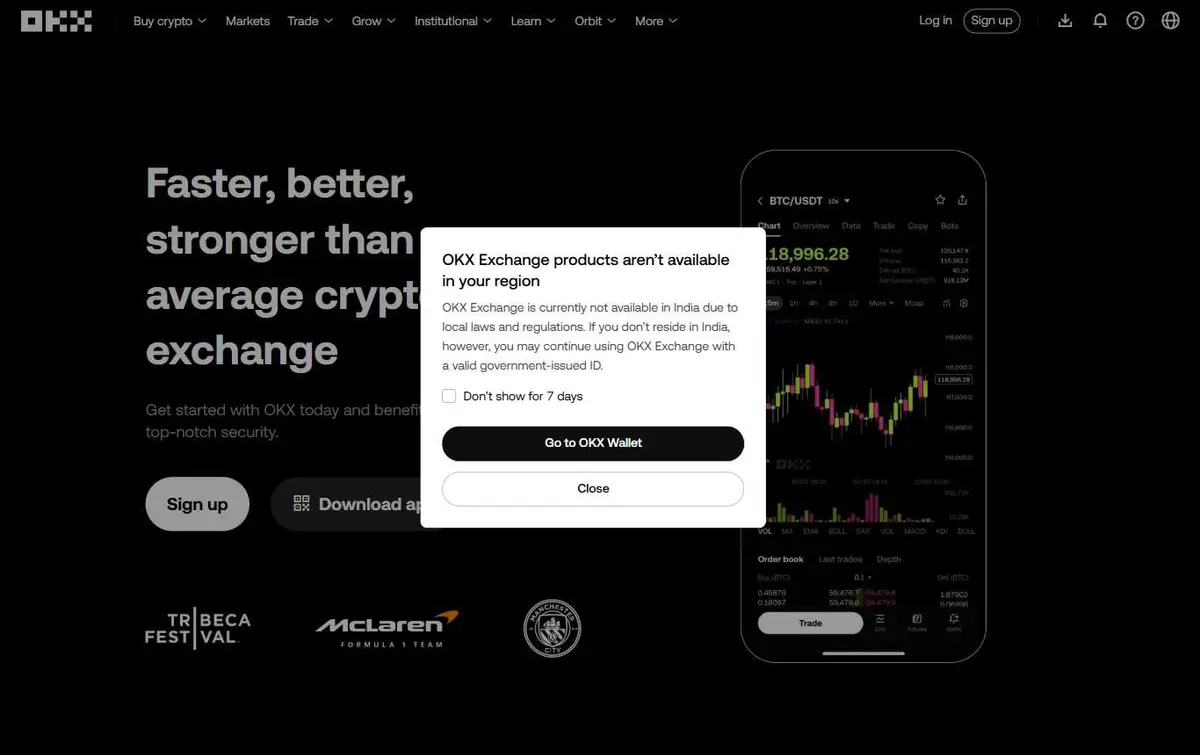
Blocked OKX · Home page
Blocked from India through a virtual location
“OKX Exchange is currently not available in India due to local laws and regulations.”
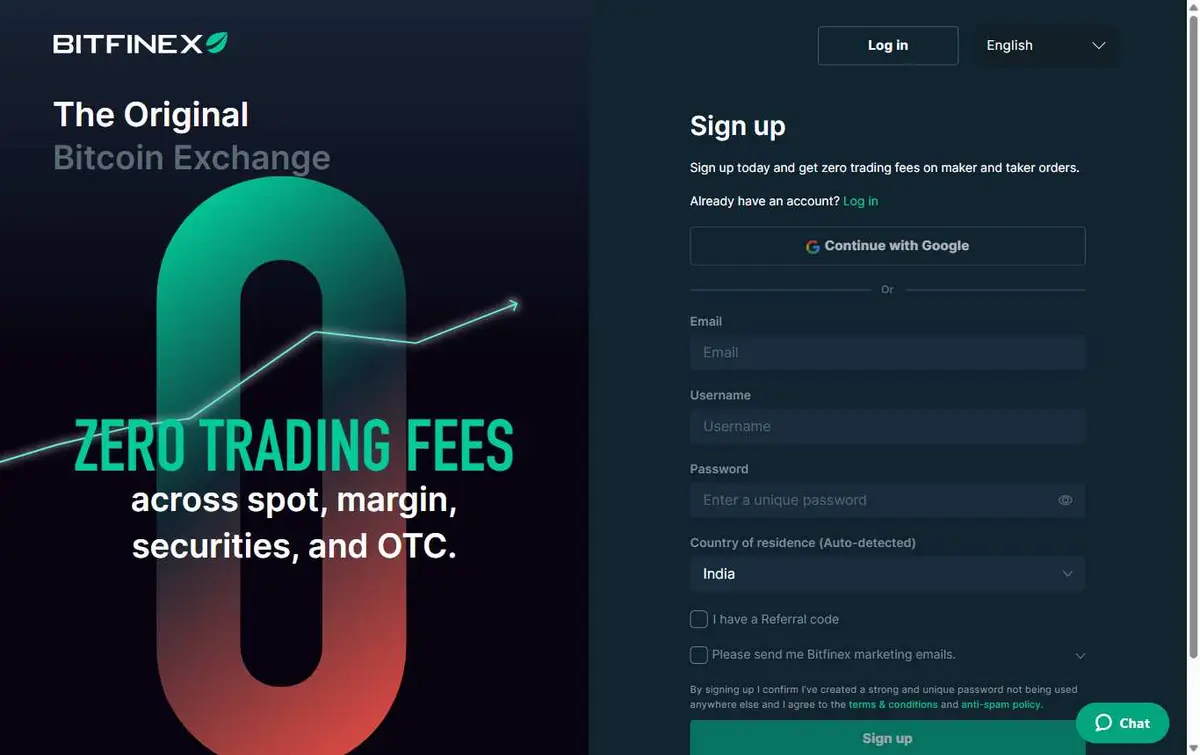
No barrier Bitfinex · Sign-up page
India, where the FIU asked for Bitfinex's URLs to be blocked, from a virtual location
“Sign up today and get zero trading fees on maker and taker orders.”
 CRYPTORESTRICTIONS
Who regulates crypto in India?
No single regulator. FIU-IND registers and fines providers for anti-money-laundering failures, the IT ministry blocks sites, the RBI argues for caution, the income tax department collects, and Parliament has only asked for a framework.
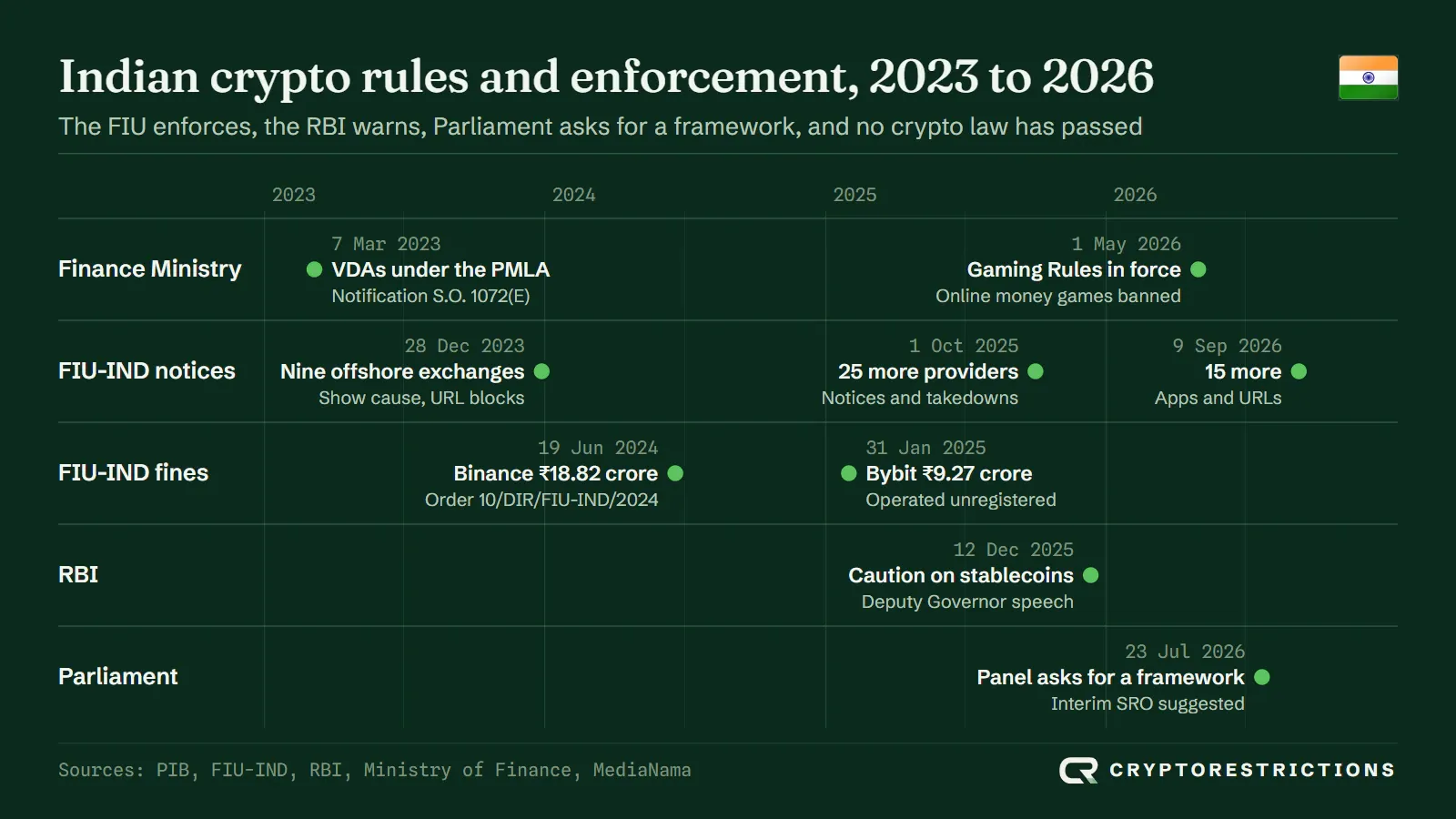
- FIU-IND. Part of the finance ministry’s Department of Revenue. Its director is also the nodal officer under section 79(3)(b) of the IT Act, which lets it order apps and URLs of non-compliant providers taken down. It sent notices to 25 offshore providers on 1 October 2025 and to 15 more on 9 September 2026, among them Weex, BloFin, Bitunix, XT.com and WhiteBIT. None is a platform we track.
- RBI. Deputy Governor T Rabi Sankar told a conference on 12 December 2025 that unbacked cryptocurrencies are not assets and merely speculative bets, and that India’s approach to stablecoins must be guided by caution.
- SEBI. Parliament’s finance committee named it, or the RBI, as the possible overseer of an interim framework. We found no SEBI crypto rules.
- Parliament. The Standing Committee on Finance, in its report on the Securities Markets Code, asked the government in July 2026 to examine a framework for virtual digital assets and to consider an interim self-regulatory organisation. The chair said after the panel’s last hearing on 16 September that the government is not accepting or regulating the sector, and that the panel awaited a written reply. The recommendations are advisory.
The finance ministry’s long-promised discussion paper has not appeared. The press reports its fifth delay in April 2026, with RBI resistance as the main reason, and the ministry told Parliament in December 2024 that no timeline was anticipated for comprehensive rules. No crypto bill has been introduced.
Which crypto products are limited in India?
No product is banned outright, but the FIU’s rules put privacy coins and transfers with unhosted wallets in the high-risk bracket, the RBI is cautious on stablecoins, and event contracts are the one product that is shut.
- Privacy coins. The FIU’s guidelines tell providers to assess the risk of anonymity-enhanced cryptocurrencies and of transactions that conceal the parties. They set out duties, not a ban.
- Unhosted wallets. Transfers to or from wallets not held at a regulated provider are categorised as high risk, including peer-to-peer transfers, and providers may add limits on them. Wallets under anonymous or fictitious names are not allowed.
- Stablecoins. The RBI’s Deputy Governor said stablecoins fail the tests of modern money. No rule bars holding them.
- Event contracts. Hyperliquid’s trading app hid its outcome markets tab in our test while perpetuals and spot loaded, and Kalshi refuses India. The next section covers the law.
Are prediction markets legal in India?
In practice no. The Online Gaming Act bans online money games, and the IT ministry has had internet providers block Polymarket. None of the three prediction markets we track is open to Indians without a limit.
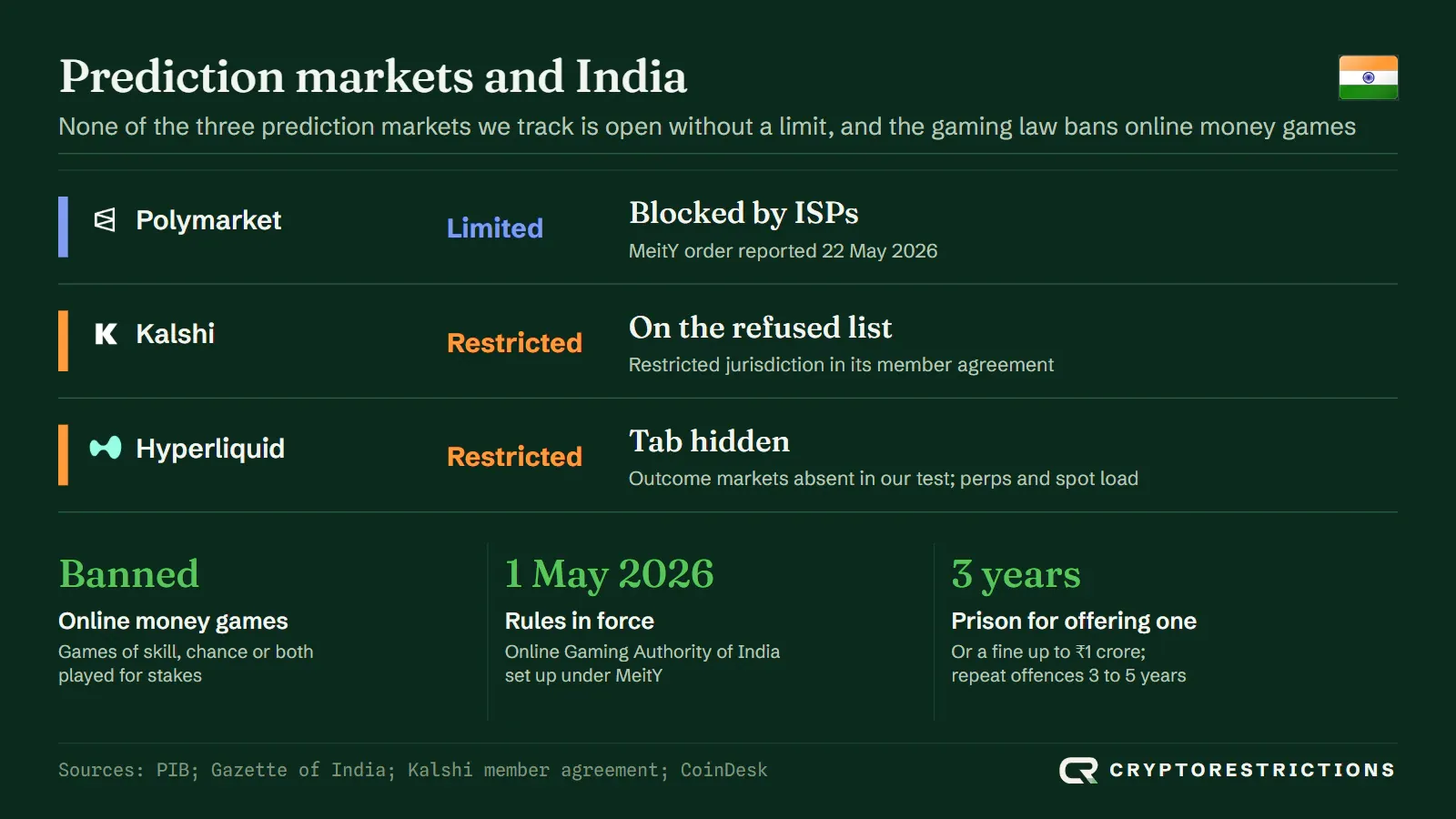
No official text names prediction markets, but the Promotion and Regulation of Online Gaming Act, 2025 defines an online money game as any online game, whether of skill, chance or both, played by paying fees, depositing money or other stakes. The government’s 30 April 2026 explainer says the Act bans all online money games, bars banks and payment systems from processing their transactions and allows blocking under the IT Act. The Rules came into force on 1 May 2026 and set up the Online Gaming Authority of India.
CoinDesk reported on 22 May 2026 that Polymarket had gone dark in India after a ministry of electronics and information technology order to internet providers, citing the Online Gaming Act. Polymarket does not name India in its own restrictions, so we record it as limited, and Kalshi names India among its prohibited places.

How is crypto taxed in India?
Gains on virtual digital assets are taxed at a flat 30% plus surcharge and cess, with no deduction except the cost of acquisition, and the buyer or exchange withholds 1% at source on each sale.
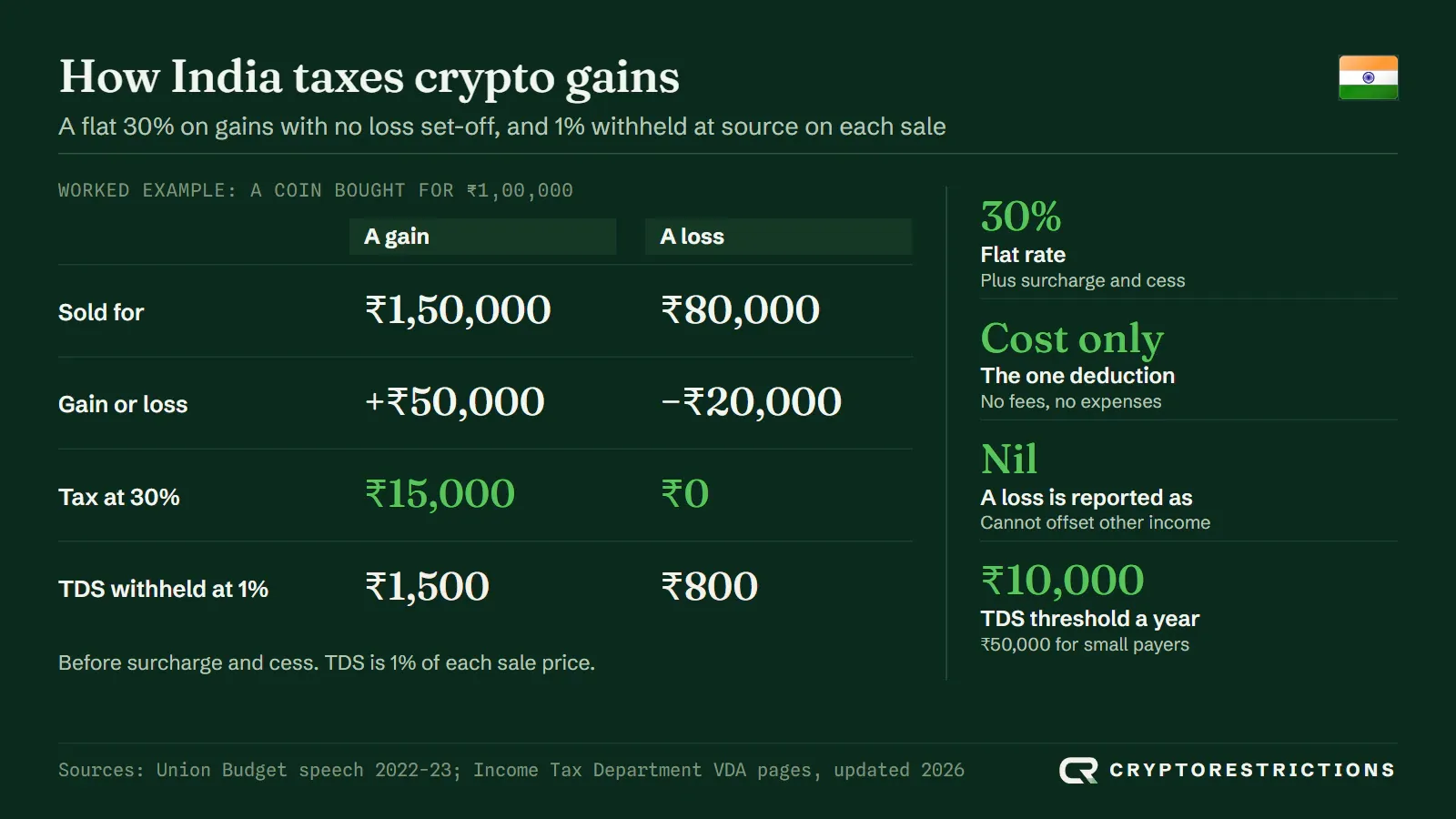
The regime came from the Budget of 1 February 2022: income from transferring a virtual digital asset (VDA) is taxed at 30% under section 115BBH of the Income-tax Act, 1961, no expense or allowance is deductible except the cost of acquisition, and a loss cannot be set off against any other income. The department’s VDA page states the same rule, plus surcharge and cess, and counts crypto assets, NFTs and any other notified digital assets. A gift of a VDA is taxed in the hands of the recipient.
Section 194S sets the withholding: the person paying a resident for a VDA deducts 1% of the consideration, with no cess or surcharge on it. There is no deduction if the year’s total payable stays at ₹10,000 or less (₹50,000 for specified payers). On an exchange the exchange deducts when it pays the seller directly; in an over-the-counter deal the buyer does. Without a PAN the rate is 20%. The Income Tax Act, 2025 keeps the VDA category and widens it to any asset that holds value in digital form on a cryptographic ledger, while the department’s pages still cite the 1961 sections as amended by the Finance Act, 2026, so check the current text before filing. Reporting runs in four steps:

 Bahrain
 Georgia
 Qatar
 Israel
 Saudi Arabia
 Vietnam
 Pakistan
 Bangladesh
 Indonesia
 United Arab Emirates
 South Korea