
Is crypto legal in South Korea?
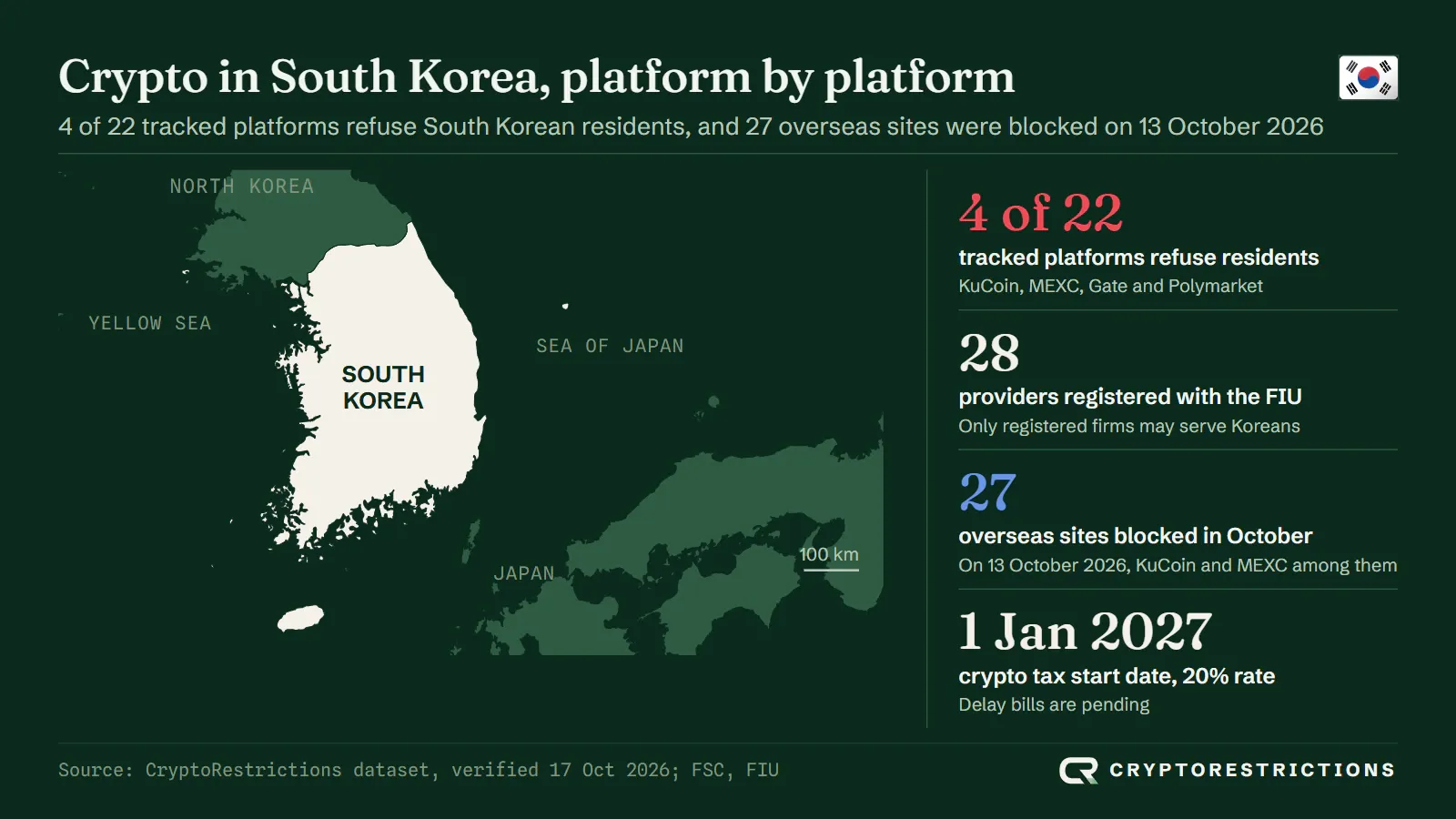
Yes. Buying, holding and trading crypto is legal, but only through providers registered with the Financial Intelligence Unit (FIU), and the FSC treats an unregistered business that serves Korean customers as illegal.
The FSC said on 24 June 2026 that 28 companies are registered with the FIU under the Specific Financial Information Act and that any other virtual asset business serving Korean customers is illegal. Running one unregistered carries up to 5 years in prison or a fine of up to KRW 50 million. The FSC judges whether an overseas exchange is operating in Korea by a Korean-language website, Korean won payments and marketing aimed at Koreans, as its April 2025 notice sets out.
Won trading runs through real-name verified bank accounts. Exchanges work with partner banks, and K Bank, for example, extended its partnership with Upbit for another year in October 2026. The FSC tells users to check that their exchange is registered and, if it is not, to withdraw their assets.
Two laws shape the rest. The Act on the Protection of Virtual Asset Users has been in force since 19 July 2024: providers must keep user deposits at banks, hold users’ assets apart from their own and carry insurance or a reserve fund, and unfair trading such as price manipulation is punishable. A second-phase law, the Digital Asset Basic Act covering stablecoins and exchange entry, has not passed; reports in late July 2026 said the FSC planned a consolidated bill with about ten separate bills pending.
Which crypto exchanges work in South Korea?
Eleven of the exchanges we track serve South Korean residents, but only Crypto.com appears on the FSC’s list of 28 registered providers. The won market belongs to registered Korean firms such as Upbit, Bithumb, Coinone, Korbit and Gopax.
The FSC’s June 2026 table lists the 28 under the service names Upbit, Bithumb, Coinone, Korbit and Gopax, plus custodians and wallet providers such as KDAC and DSRV. It also shows Foris DAX Korea running OK-BIT, which is how Crypto.com appears; Crypto.com’s Korean site says its report was accepted, but the planned app launch was postponed in April 2024 and we found no later launch.
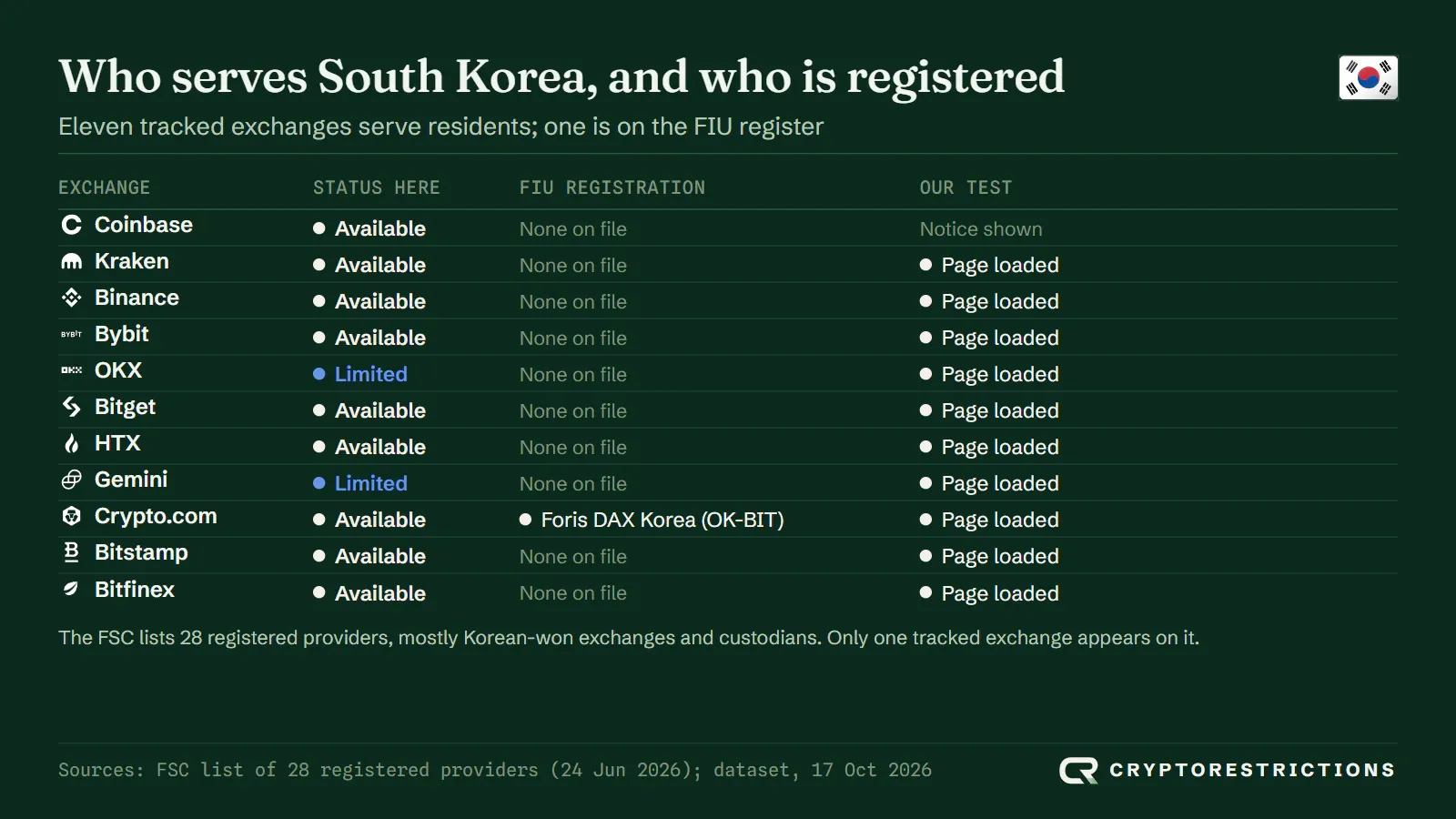
Every other exchange in the chart serves Korean residents without a registration on file. That is the risk to weigh: those firms sit outside the anti-money laundering supervision and the user-protection duties above, and none of them is named in the FSC and FIU notices we read. Gemini and OKX are limited rather than open: Gemini lists South Korea for perpetuals only, and OKX says in its own disclosure that derivatives and P2P services may be restricted here.
Best crypto platforms for South Korean residents
By our access score, Crypto.com (9.0 out of 10) is the most open exchange for South Korean residents and seven others score 8.0. Kalshi (8.0) is the only prediction market scored, and four DeFi platforms tie at 8.0.
The score rates how fully a South Korean resident can use each platform, not its fees or safety. It is computed from our data and moves when a row changes: access status (4 points), the share of the platform’s products open here (3), the South Korean licences we hold on file (2) and what our geo-access test saw from a South Korean address (1). Platforms that refuse South Korean residents are not scored. The full method is on our methodology page.
Exchanges

Crypto.com
Best for The one tracked exchange on the FIU list
9.0/10- Access
- 4/4
- Products
- 3/3
- Licences
- 1/2
- Our test
- 1/1
Read our Crypto.com reportPros
- Listed by the FSC as Foris DAX Korea (OK-BIT)
Cons
- The planned Korean app launch was postponed in April 2024
- We hold no Korea-specific source for staking

Binance
Best for The widest product list on a global exchange
8.0/10- Access
- 4/4
- Products
- 3/3
- Licences
- 0/2
- Our test
- 1/1
Read our Binance reportPros
- South Korea is not on its prohibited-countries list
- Not named in the October 2026 website blocks
Cons
- No FIU registration on file

Bitfinex
Best for Spot access without a Korean company
8.0/10- Access
- 4/4
- Products
- 3/3
- Licences
- 0/2
- Our test
- 1/1
Read our Bitfinex reportPros
- South Korea is not a prohibited jurisdiction in its terms
Cons
- No FIU registration on file

Bitget
Best for Spot and derivatives on a global exchange
8.0/10- Access
- 4/4
- Products
- 3/3
- Licences
- 0/2
- Our test
- 1/1
Read our Bitget reportPros
- South Korea is not on its prohibited-countries list (16 October 2026)
Cons
- No FIU registration on file
- Perpetuals fall under the FSC warning of 16 October 2026

Bitstamp
Best for Plain spot trading
8.0/10- Access
- 4/4
- Products
- 3/3
- Licences
- 0/2
- Our test
- 1/1
Read our Bitstamp reportPros
- No Bitstamp document excludes South Korea
Cons
- No FIU registration on file

Bybit
Best for Spot and derivatives on a global exchange
8.0/10- Access
- 4/4
- Products
- 3/3
- Licences
- 0/2
- Our test
- 1/1
Read our Bybit reportPros
- South Korea is not on its excluded-jurisdictions list
- Not named in the October 2026 website blocks
Cons
- No FIU registration on file
- Perpetuals fall under the FSC warning of 16 October 2026

HTX
Best for A wide coin list on a global exchange
8.0/10- Access
- 4/4
- Products
- 3/3
- Licences
- 0/2
- Our test
- 1/1
Read our HTX reportPros
- Its restricted list names only North Korea
Cons
- No FIU registration on file
- Perpetuals fall under the FSC warning of 16 October 2026

Kraken
Best for Spot trading on a global exchange
8.0/10- Access
- 4/4
- Products
- 3/3
- Licences
- 0/2
- Our test
- 1/1
Read our Kraken reportPros
- South Korea is not on its do-not-serve list
Cons
- No FIU registration on file

Coinbase
Best for A listed sign-up country with a wide product range
7.5/10- Access
- 4/4
- Products
- 3/3
- Licences
- 0/2
- Our test
- 0.5/1
Read our Coinbase reportPros
- South Korea is a sign-up country in its identity verification guide
Cons
- Our test showed a notice that stocks and prediction markets are not available
- No FIU registration on file

OKX
Best for Spot trading from a global brand
6.3/10- Access
- 3.5/4
- Products
- 1.8/3
- Licences
- 0/2
- Our test
- 1/1
Read our OKX reportPros
- Spot is not among the services its disclosure restricts
Cons
- Derivatives and P2P services may be restricted here, it says
- No FIU registration on file

Gemini
Best for Perpetuals only
5.9/10- Access
- 3/4
- Products
- 1.9/3
- Licences
- 0/2
- Our test
- 1/1
Read our Gemini reportPros
- South Korea is on Gemini's perpetuals list
Cons
- Spot is closed: not on its main list of supported countries
Prediction markets

Kalshi
Best for Event contracts, with a gambling-law caveat
8.0/10- Access
- 4/4
- Products
- 3/3
- Licences
- 0/2
- Our test
- 1/1
Read our Kalshi reportPros
- South Korea is not on its restricted-jurisdictions list
Cons
- No Korean regulator has addressed it, but the KCSC treated Polymarket as gambling
DeFi

Aster
Best for Perpetuals and spot trading
8.0/10- Access
- 4/4
- Products
- 3/3
- Licences
- 0/2
- Our test
- 1/1
Read our Aster reportPros
- South Korea is not on its prohibited-jurisdictions list
Cons
- Perpetuals fall under the FSC warning of 16 October 2026

Hyperliquid
Best for Perpetuals from your own wallet
8.0/10- Access
- 4/4
- Products
- 3/3
- Licences
- 0/2
- Our test
- 1/1
Read our Hyperliquid reportPros
- The full app loaded in our test, Outcomes tab included
Cons
- Perpetuals fall under the FSC warning of 16 October 2026

Lighter
Best for Perpetuals on its main app
8.0/10- Access
- 4/4
- Products
- 3/3
- Licences
- 0/2
- Our test
- 1/1
Read our Lighter reportPros
- South Korea is not named in its terms
Cons
- Perpetuals fall under the FSC warning of 16 October 2026

Uniswap
Best for Swapping tokens from your own wallet
8.0/10- Access
- 4/4
- Products
- 3/3
- Licences
- 0/2
- Our test
- 1/1
Read our Uniswap reportPros
- Its terms bar only places under comprehensive US sanctions
Cons
- No FIU registration on file

PancakeSwap
Best for BNB Chain swaps and pools
6.3/10- Access
- 3.5/4
- Products
- 1.8/3
- Licences
- 0/2
- Our test
- 1/1
Read our PancakeSwap reportPros
- Swaps, pools and staking are not excluded by its terms
Cons
- PCS Perps bars users in South Korea

Jupiter
Best for Solana swaps
5.7/10- Access
- 3/4
- Products
- 1.7/3
- Licences
- 0/2
- Our test
- 1/1
Read our Jupiter reportPros
- The swap app loaded in our test
Cons
- South Korean IPs are blocked from its Prediction Market API
Which platforms block South Korean users?
Four of the 22 platforms we track refuse South Korean residents: KuCoin and MEXC, whose apps and websites Korean authorities blocked, Gate, which names South Korea in its user agreement, and Polymarket.
The state’s tool is the block list, not a ban on users. Google Play stopped new installs and updates of 17 unregistered exchange apps, KuCoin and MEXC among them, from 25 March 2025, and Apple followed with 14 more from 11 April 2025. On 13 October 2026 the FIU moved to the websites: after the Korea Communications Standards Commission (KCSC) reviewed them on 6 and 7 October, 27 sites were blocked, including KuCoin, MEXC, Phemex, XT.com, Bitrue, CoinW, Poloniex, BTCC, DigiFinex, BitMart and BingX. Binance, Bybit, OKX, Bitget, Gate, HTX, Kraken and Coinbase are not on that list, and the report counts 44 companies referred to investigators so far.
What our geo-access test saw from South Korea
From a South Korean address on 14 and 16 October 2026 we loaded all 22 platforms we track: 1 refused us, 1 showed a notice and 20 loaded with no barrier.
An open page is not permission, and a block by Korean internet providers may not reach a VPN server. KuCoin and MEXC loaded for us, in MEXC’s case three days after the FIU ordered its website blocked, and Gate loaded although its agreement names South Korea. Polymarket was the one refusal, and the block came from Cloudflare under a Korean government order. Coinbase showed a notice that stocks and prediction markets are not available. Swipe through the screenshots below; each card quotes what the page showed.
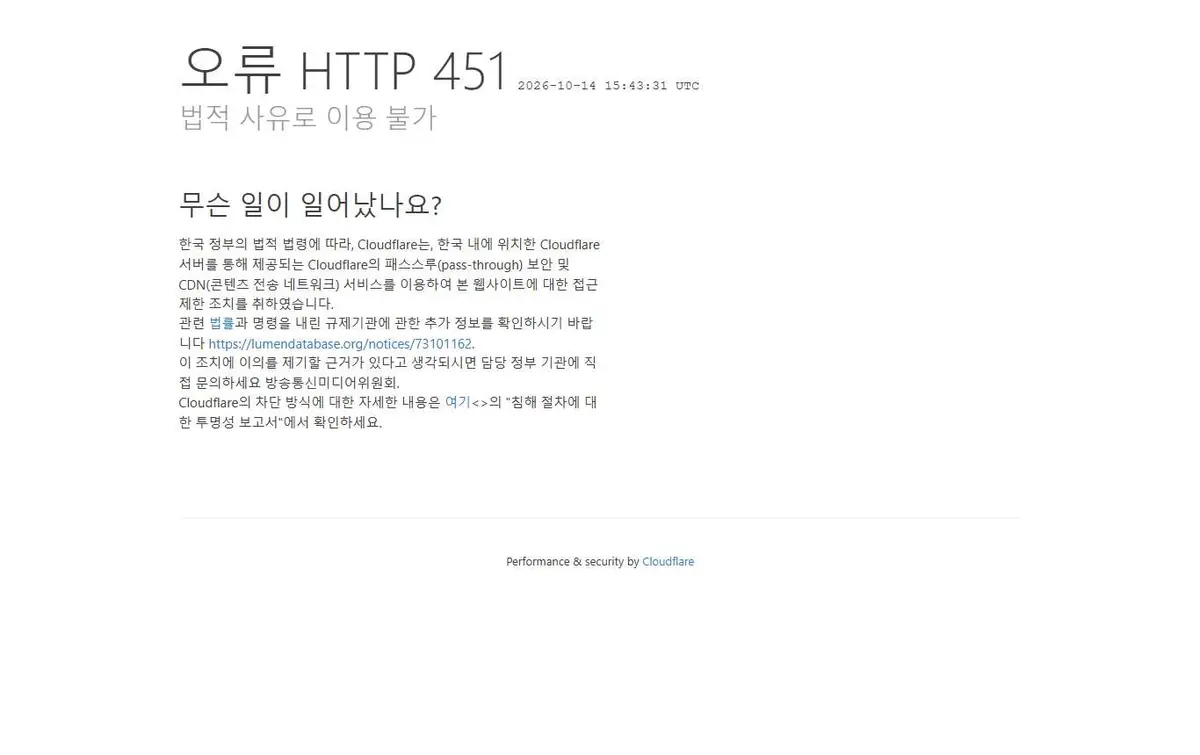
Blocked Polymarket · Home page
South Korea: not Polymarket's block but Cloudflare's, applied under a Korean government order
“HTTP 451”
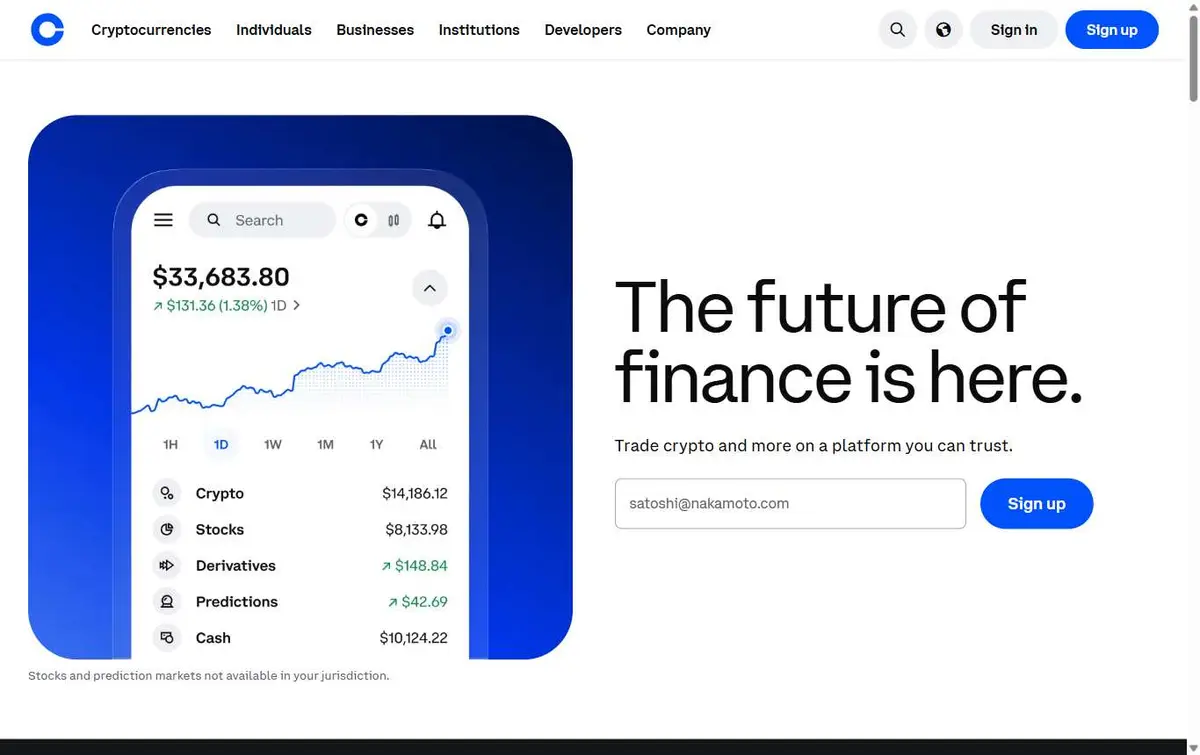
Notice shown Coinbase · Home page
South Korea, a signup country on Coinbase's list, sees the same notice
“Stocks and prediction markets not available in your jurisdiction.”
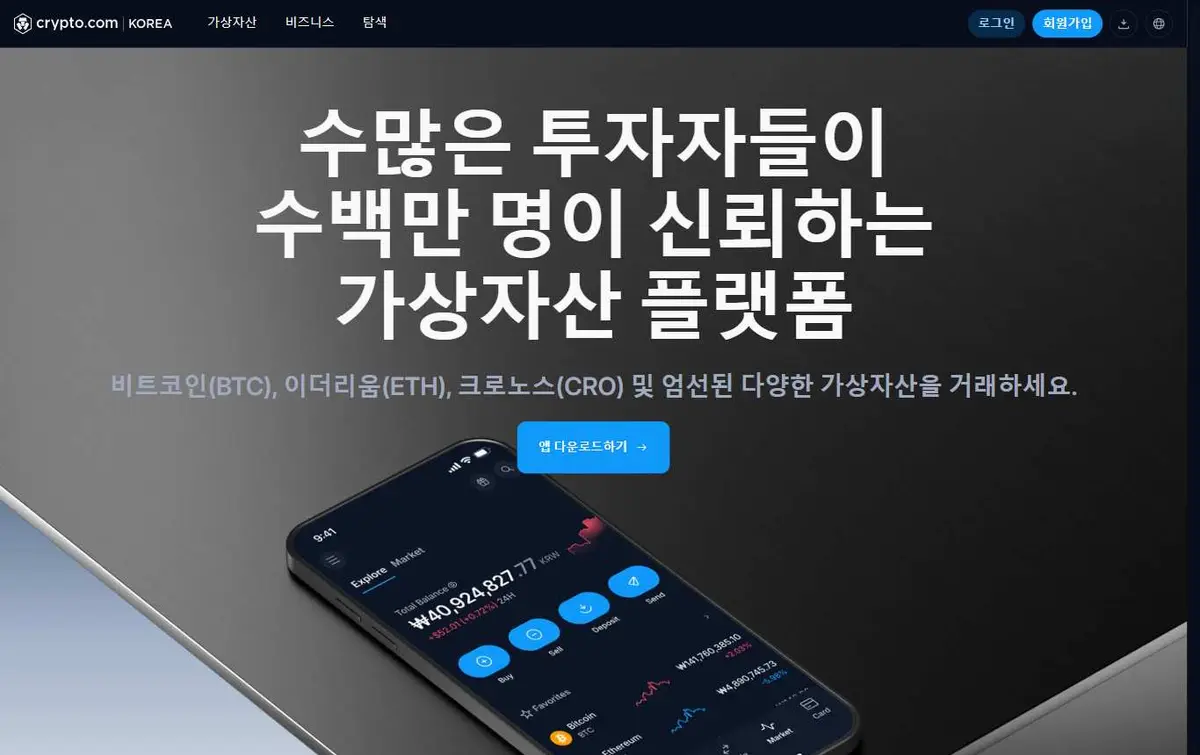
No barrier Crypto.com · Home page
South Korea is sent to a Korean site that says its VASP report was accepted
“Crypto.com Korea”
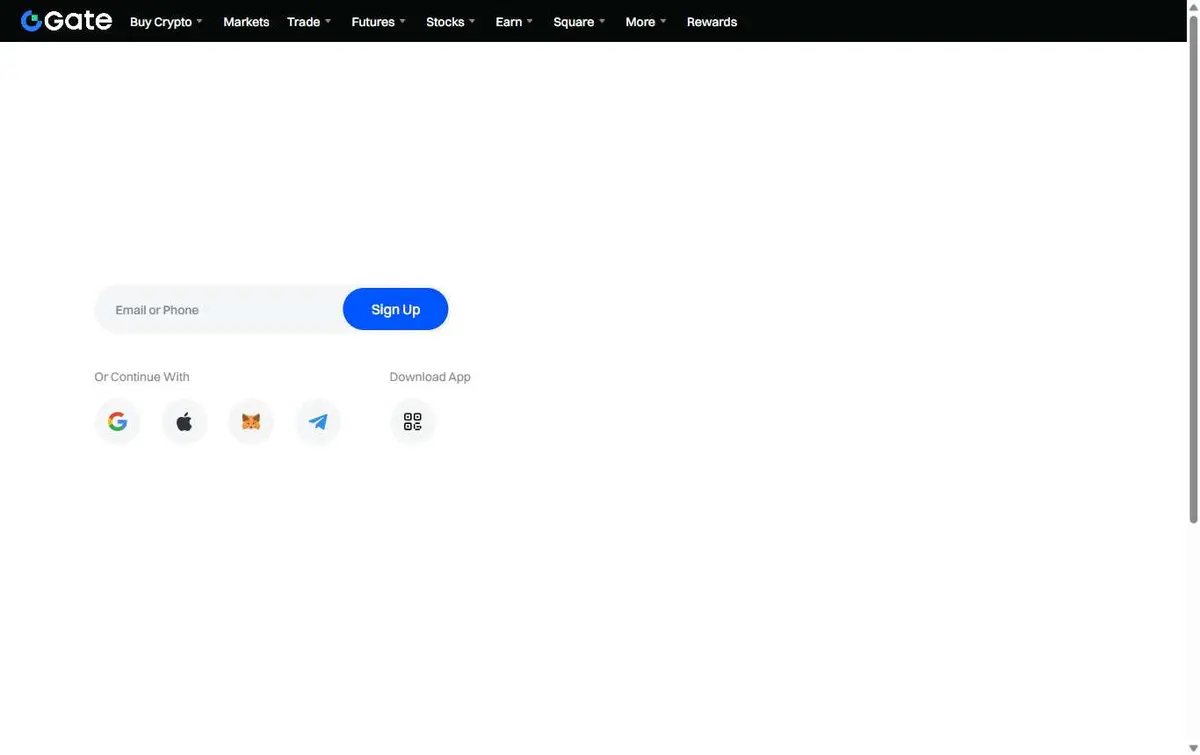
No barrier Gate · Home page
South Korea, also listed, loaded with no barrier
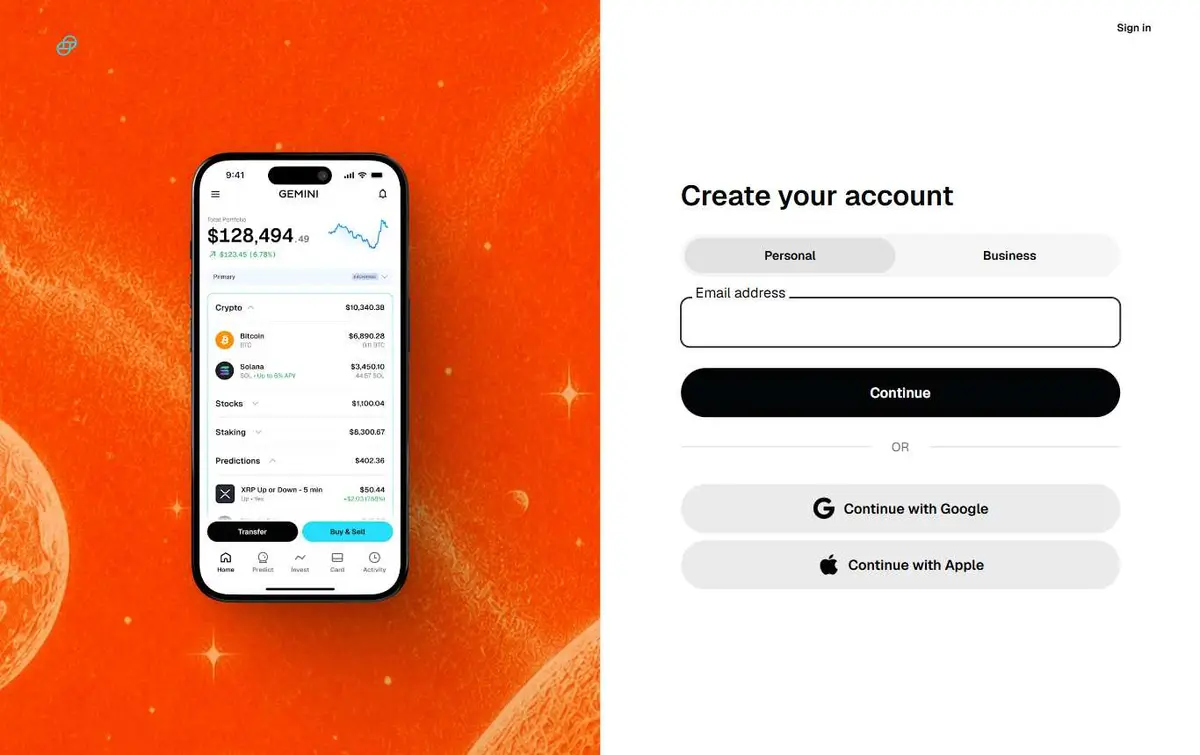
No barrier Gemini · Sign-up page
South Korea, a perpetuals-only market for Gemini: the sign-up form loads
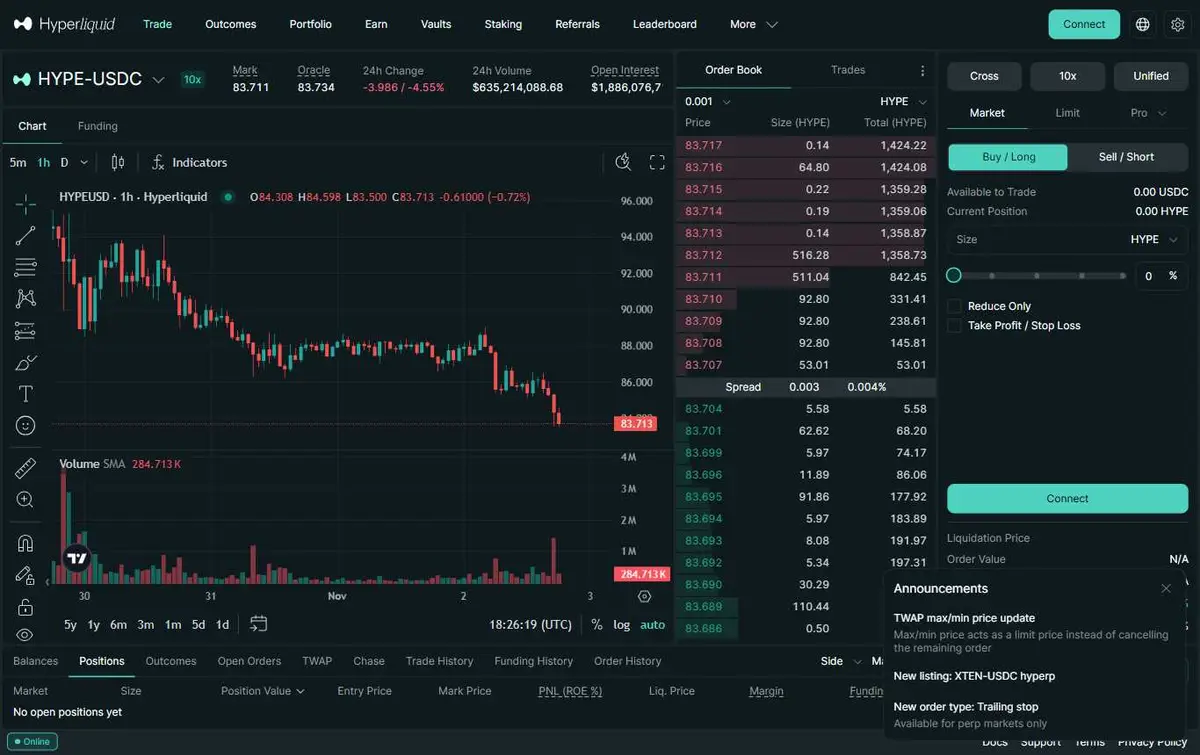
No barrierHyperliquid · Trading app
South Korea gets the full app, Outcomes tab included
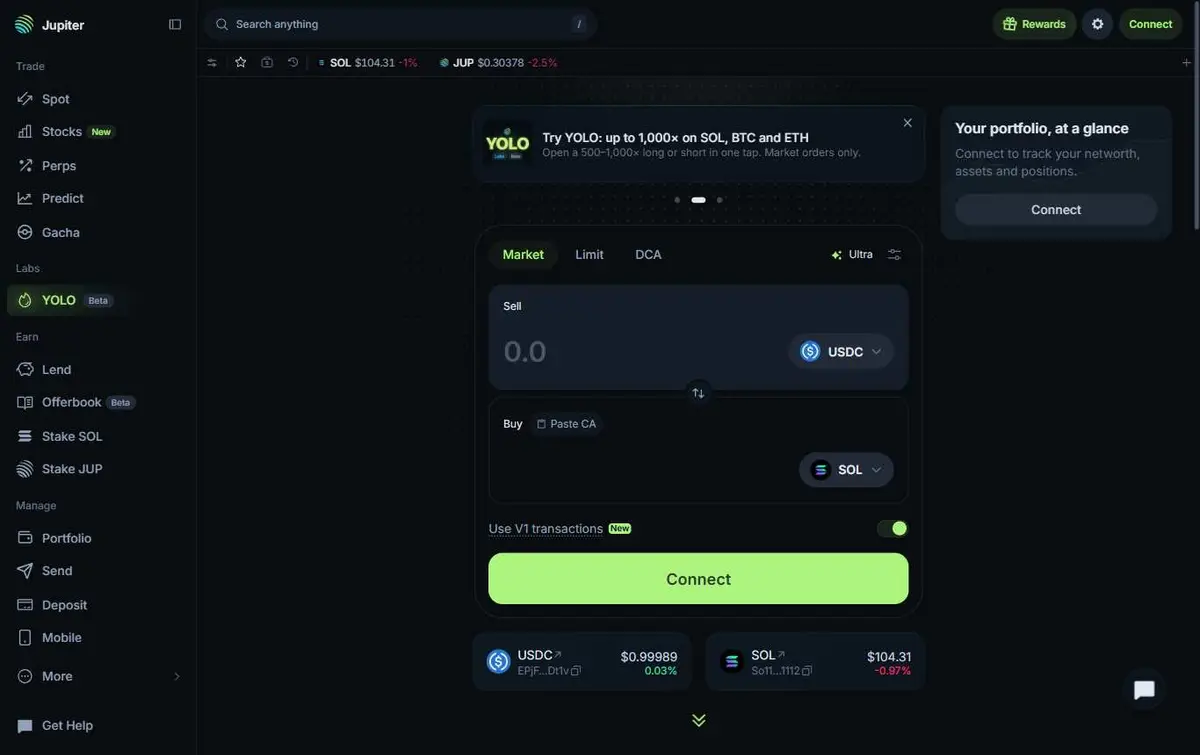
No barrier Jupiter · Trading app
South Korea, where the docs block IPs from the Prediction Market API: the app itself loads and lists Predict
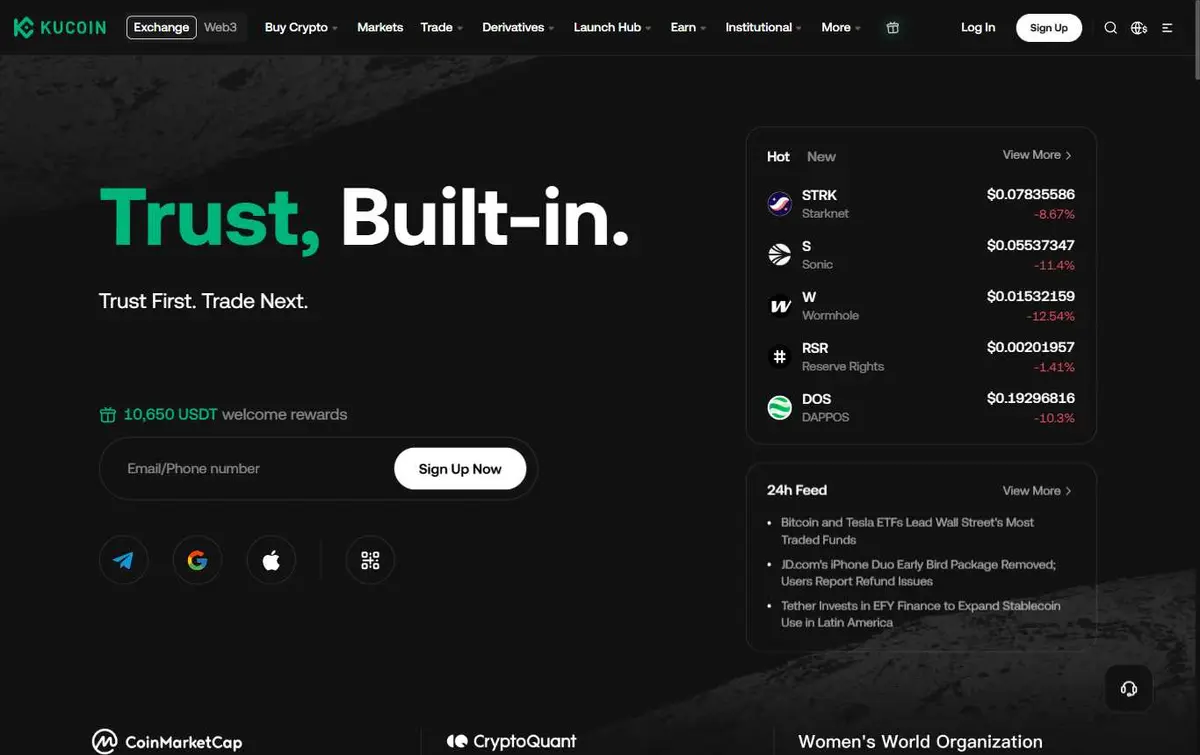
No barrier KuCoin · Home page
South Korea, the day after the FIU site block was reported: the page loaded
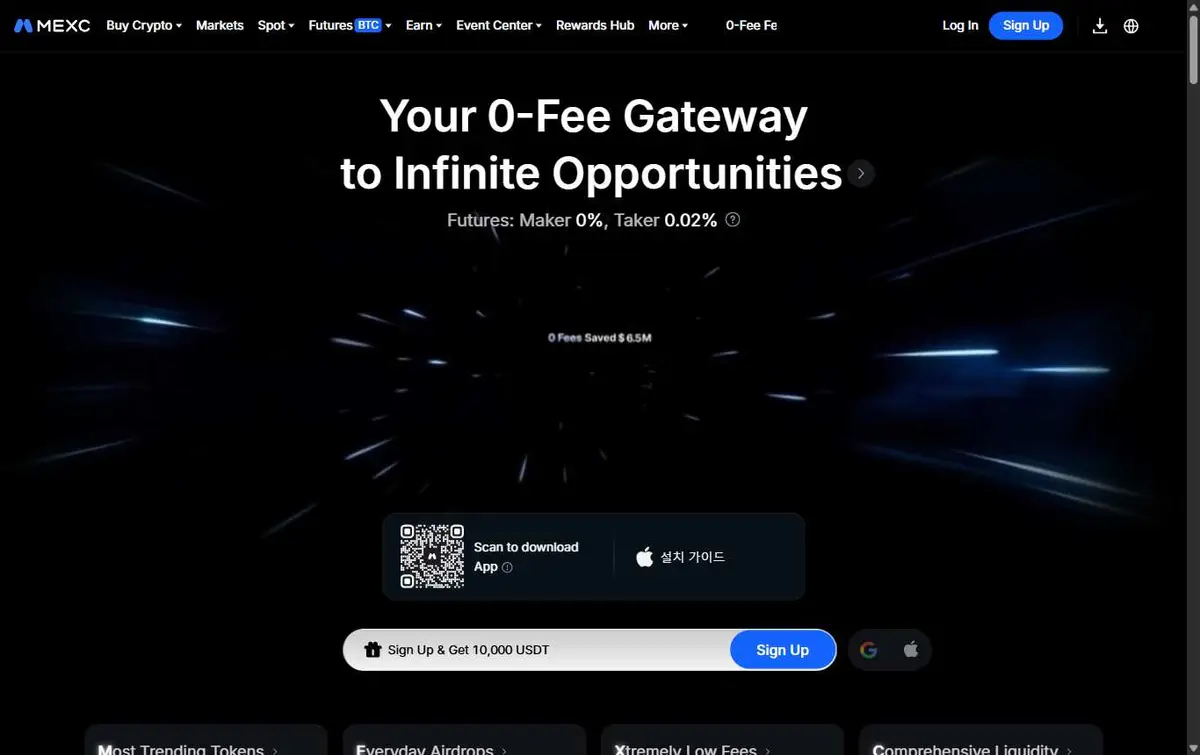
No barrier MEXC · Home page
South Korea loaded from our VPN server three days after the FIU ordered MEXC's website blocked
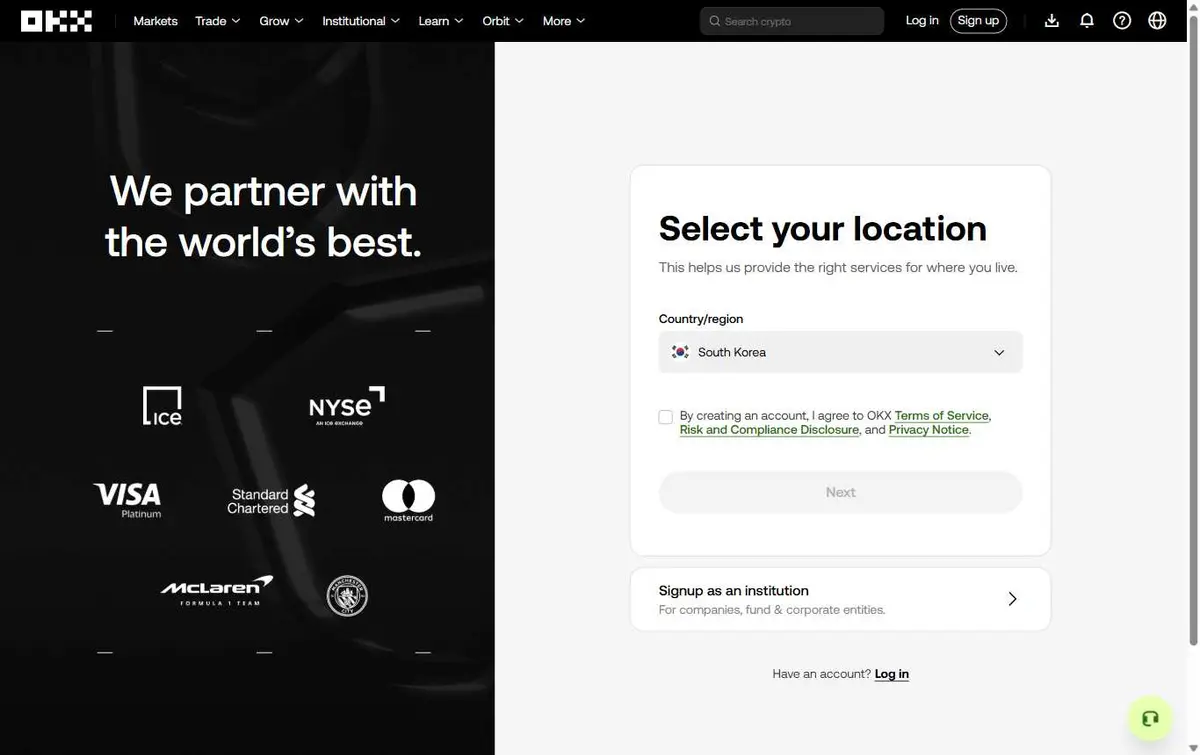
No barrier OKX · Sign-up page
Limited (no derivatives or P2P), yet sign-up loads with no notice
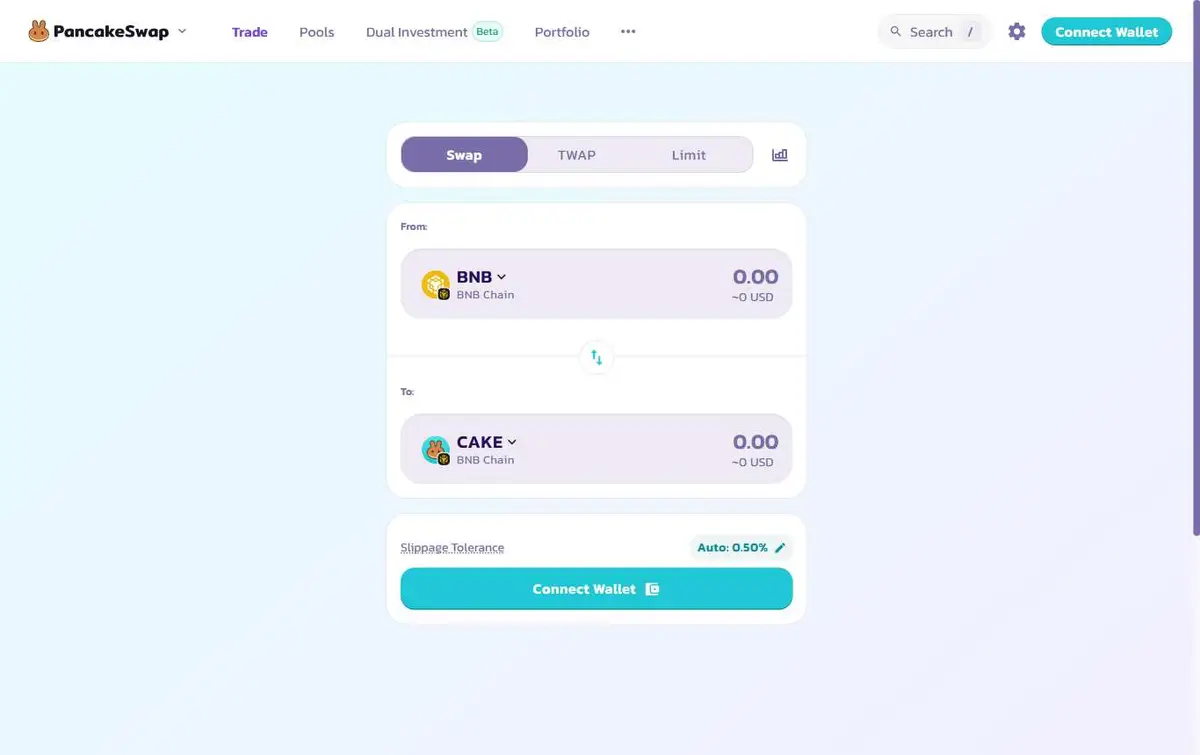
No barrier PancakeSwap · Trading app
South Korea, which the perps FAQ bars and Aster's own list does not: the swap page loads
 CRYPTORESTRICTIONS
Who regulates crypto in South Korea?
The FIU registers crypto businesses and enforces against unregistered ones, the FSC sets the rules and user-protection law, the KCSC blocks sites, and the National Tax Service sets how gains are taxed.
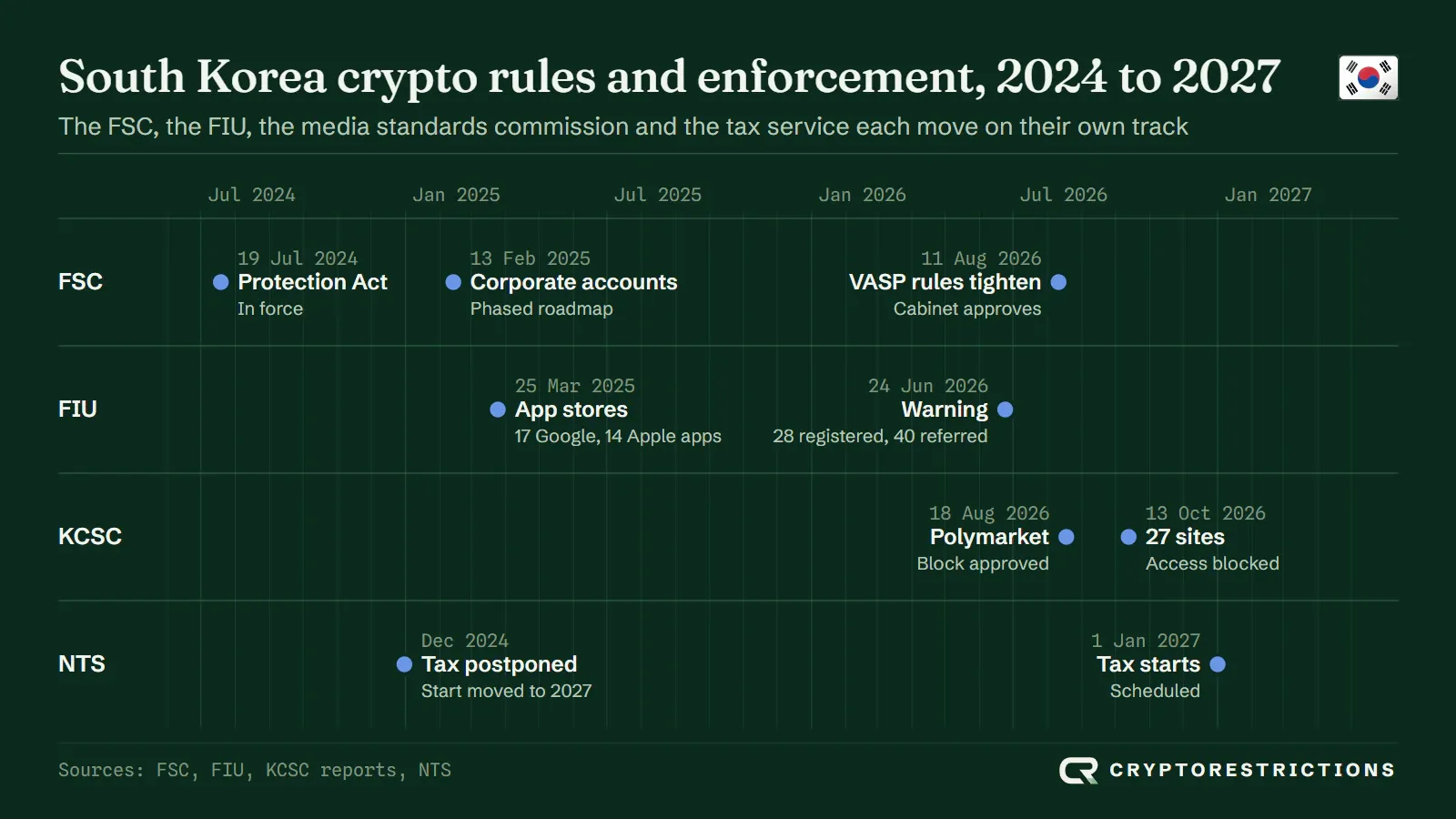
- FIU. Under the Specific Financial Information Act it accepts provider reports; 28 companies are registered. On 11 August 2026 the cabinet approved stricter rules: debt of at most 200% for providers, scrutiny of the largest shareholder, the travel rule on transfers of any amount between registered providers (it was KRW 1 million), and a report to the FIU for every transfer of KRW 10 million or more to an overseas provider. Registration changes took effect on 20 August 2026; the rest follow six months after promulgation.
- FSC and FSS. The FSC runs the user-protection law, and the Financial Supervisory Service inspects providers. The FSC can issue corrective orders, suspend business and impose fines. In February 2025 the FIU took measures against Dunamu, Upbit’s operator, after a comprehensive inspection.
- KCSC. It orders domestic access to unregistered overseas sites blocked on the FIU’s request, as in October 2026, and acted on Polymarket on its own review in August.
- Corporate accounts. The FSC’s February 2025 roadmap opened real-name accounts to companies in steps: selling holdings first, then charities and universities, then a pilot for about 3,500 listed companies and professional investors, with financial firms excluded and other companies deferred. We did not find a source on how the pilot has gone.
- Registered providers. The FSC and FIU surveyed 26 registered providers, 17 exchanges and 9 custody and wallet firms, for the first half of 2026: exchange market capitalization fell 33%.
- NTS. The tax authority, covered in the tax section.
Which crypto products are limited in South Korea?
Leveraged derivatives are the most closed product: the FSC says overseas perpetual futures get no Korean investor protection and are not institutionally permitted, OKX restricts derivatives, and PancakeSwap bars its perpetuals here.
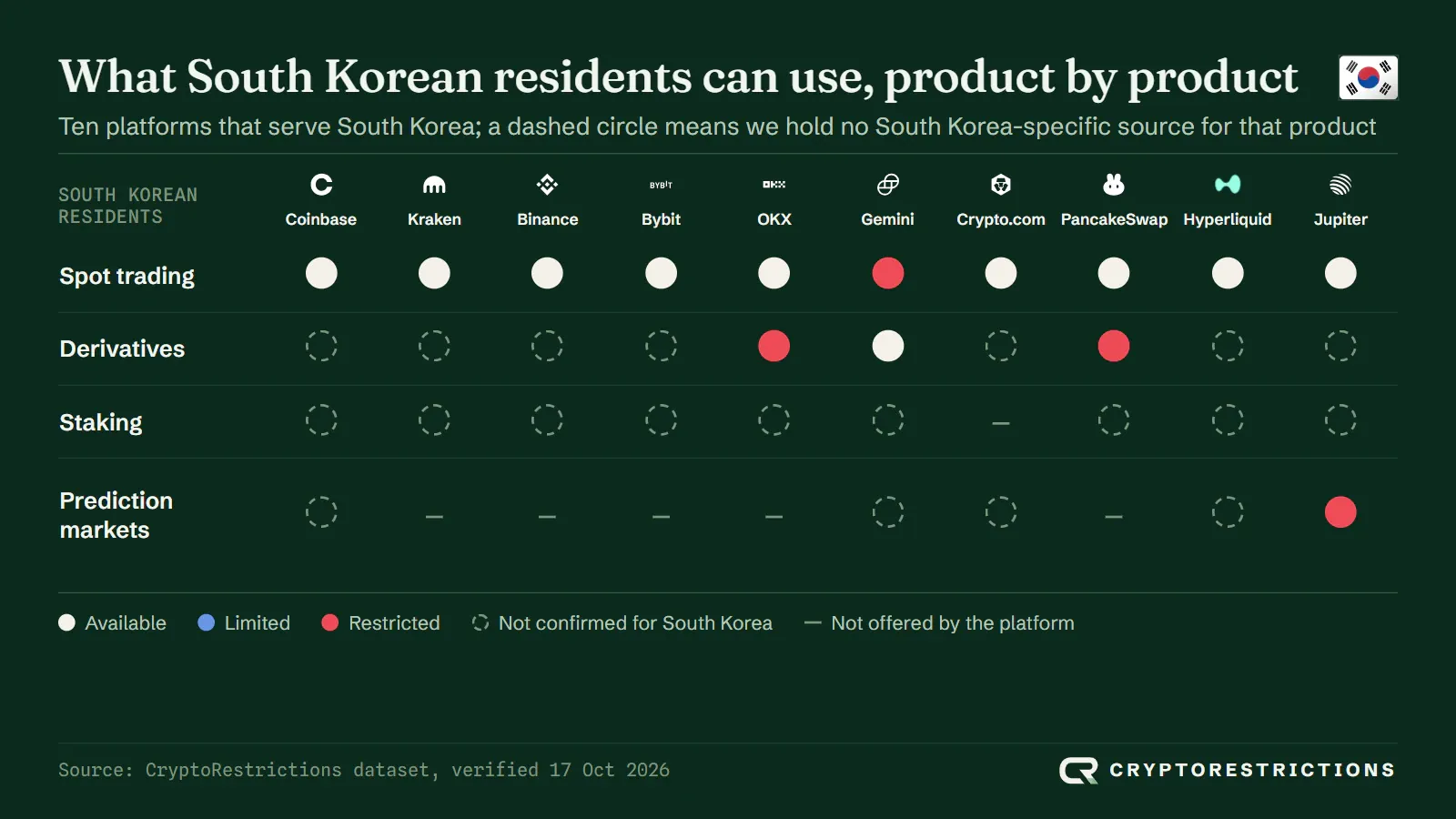
- Perpetual futures. On 16 October 2026 the FSC warned users that perpetuals on overseas platforms usually carry 10x to 200x leverage, can be liquidated before margin is added, and fall outside Korean investor protection. It said it would refer offshore operators that solicit Koreans through referral codes or charge them fees, and ask major platforms not to break Korean law. It named no platform.
- Spot. Open on every serving exchange in the chart except Gemini, which lists South Korea for perpetuals only.
- P2P. OKX lists P2P services among those that may be restricted in South Korea.
- Staking. We hold no Korea-specific source for any platform, so the matrix shows it as not confirmed.
- Moving crypto abroad. The August 2026 rules limit transfers to overseas providers to low-risk ones, same-entity transfers and similar cases, ban high-risk transactions, and require a report to the FIU from KRW 10 million.
Are prediction markets legal in South Korea?
Regulators treat them as gambling in at least one case. The KCSC approved blocking Polymarket on 18 August 2026 under the Criminal Act and the National Sports Promotion Act, and Jupiter bars South Korean IPs from its prediction API.
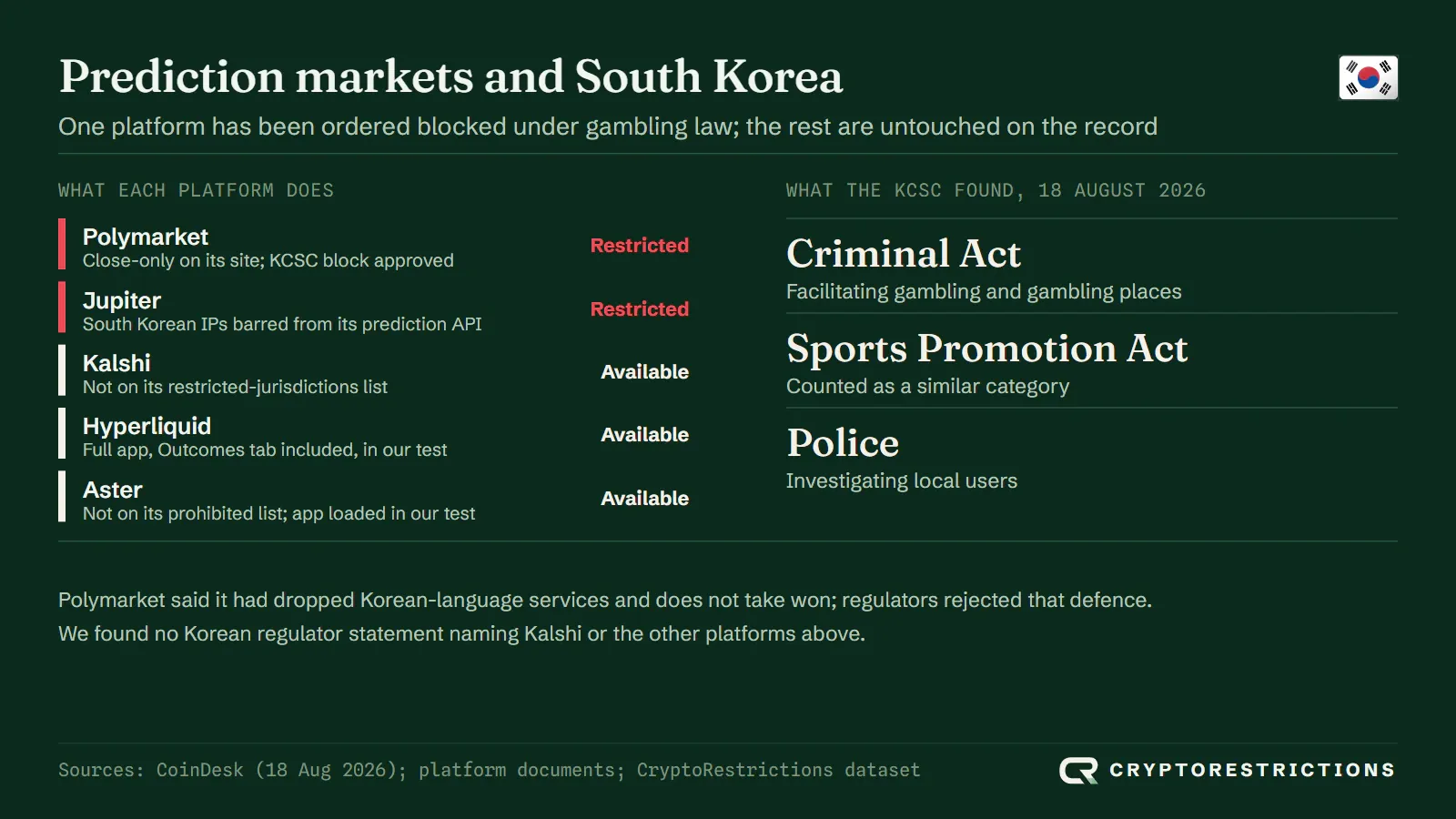
CoinDesk reported that the commission began its review in July after requests from the National Police Agency and the National Gambling Control Commission, and found that Polymarket facilitates gambling and the operation of gambling places under the Criminal Act, plus similar categories under the National Sports Promotion Act. Polymarket argued it had removed Korean-language services, does not support won and works through peer-to-peer smart contracts; the regulators rejected that, saying it still manages market creation and trading rules and provides deposit, withdrawal and settlement systems. Police opened an investigation into local users. The same report names Kalshi only as another large market, and we found no Korean statement about it.

How is crypto taxed in South Korea?
Gains from selling or lending crypto are taxed as other income at 20% above a KRW 2.5 million annual deduction, starting with transfers from 1 January 2027, though bills in the National Assembly would delay or repeal it.
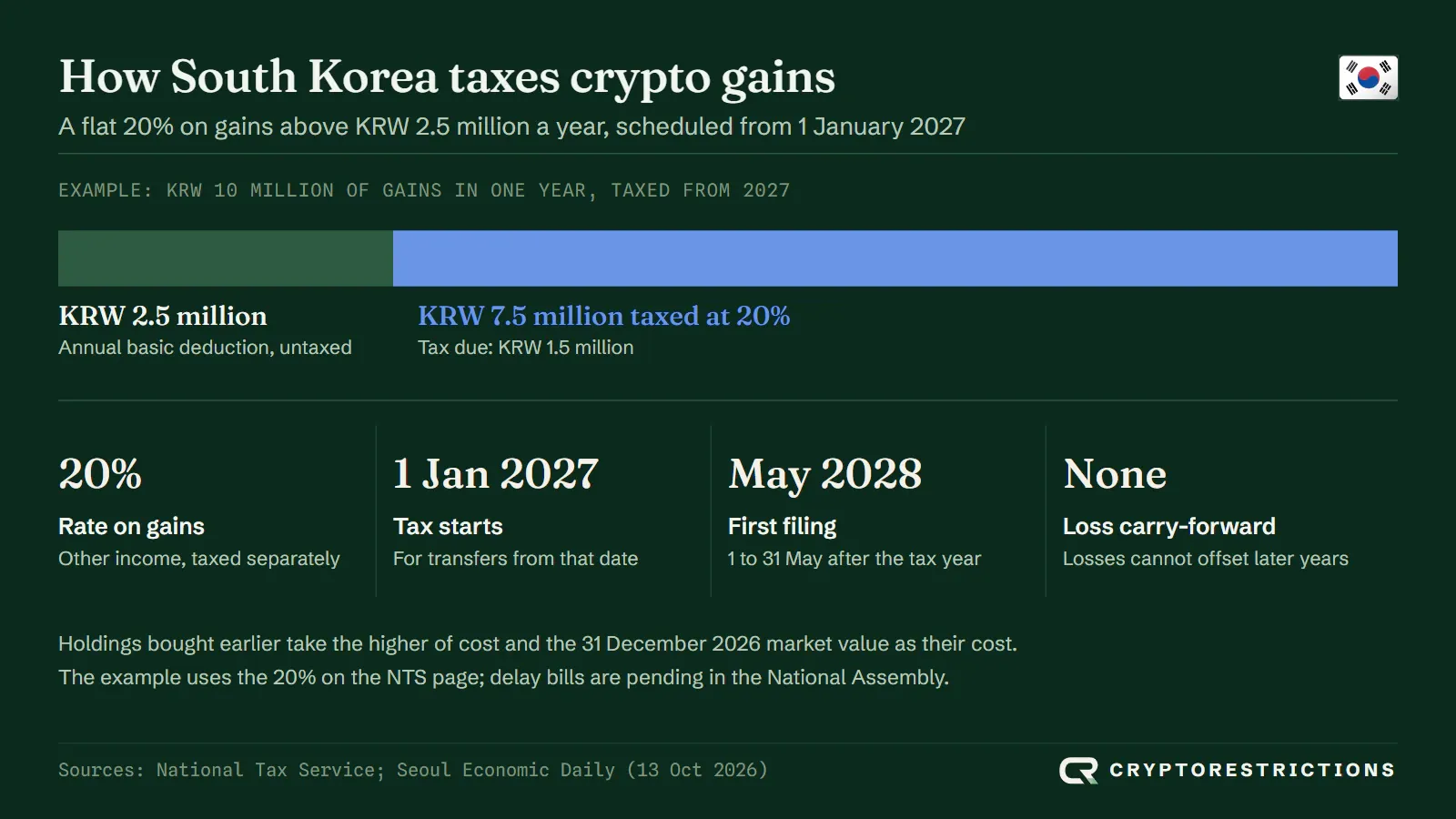
The National Tax Service page classes the income under article 21 of the Income Tax Act as other income, taxed separately. The base is proceeds less the actual acquisition cost; for holdings bought before 2027 the cost is the higher of the real cost and the 31 December 2026 market value. A swap between two tokens is valued through the base asset at the time of the trade. Gains and losses are netted within the year, and losses cannot be carried forward. The return is filed from 1 to 31 May of the following year, so the first one is due in May 2028. The Herald Business puts the rate at 22% with local income tax.
The start date has moved before and may again. A December 2024 amendment postponed the tax by two years. In October 2026 the Herald Business reported three proposals: a Democratic Party lawmaker preparing a bill to start two years after the first international data exchange under the OECD framework (1 January 2029 if that happens in 2027), not yet filed; a People Power Party bill to delete the tax, introduced in March; and another from the same party to push the date back, introduced in August. The government had kept its plan for 1 January but recently signalled it would gather views, and investors have held protests demanding a delay. None had passed on 17 October 2026. Working out your own position takes four steps:


 Bahrain
 Georgia
 Qatar
 Israel
 Saudi Arabia
 Vietnam
 Pakistan
 Bangladesh
 Indonesia
 United Arab Emirates
 Kazakhstan