Is crypto legal in South Africa?
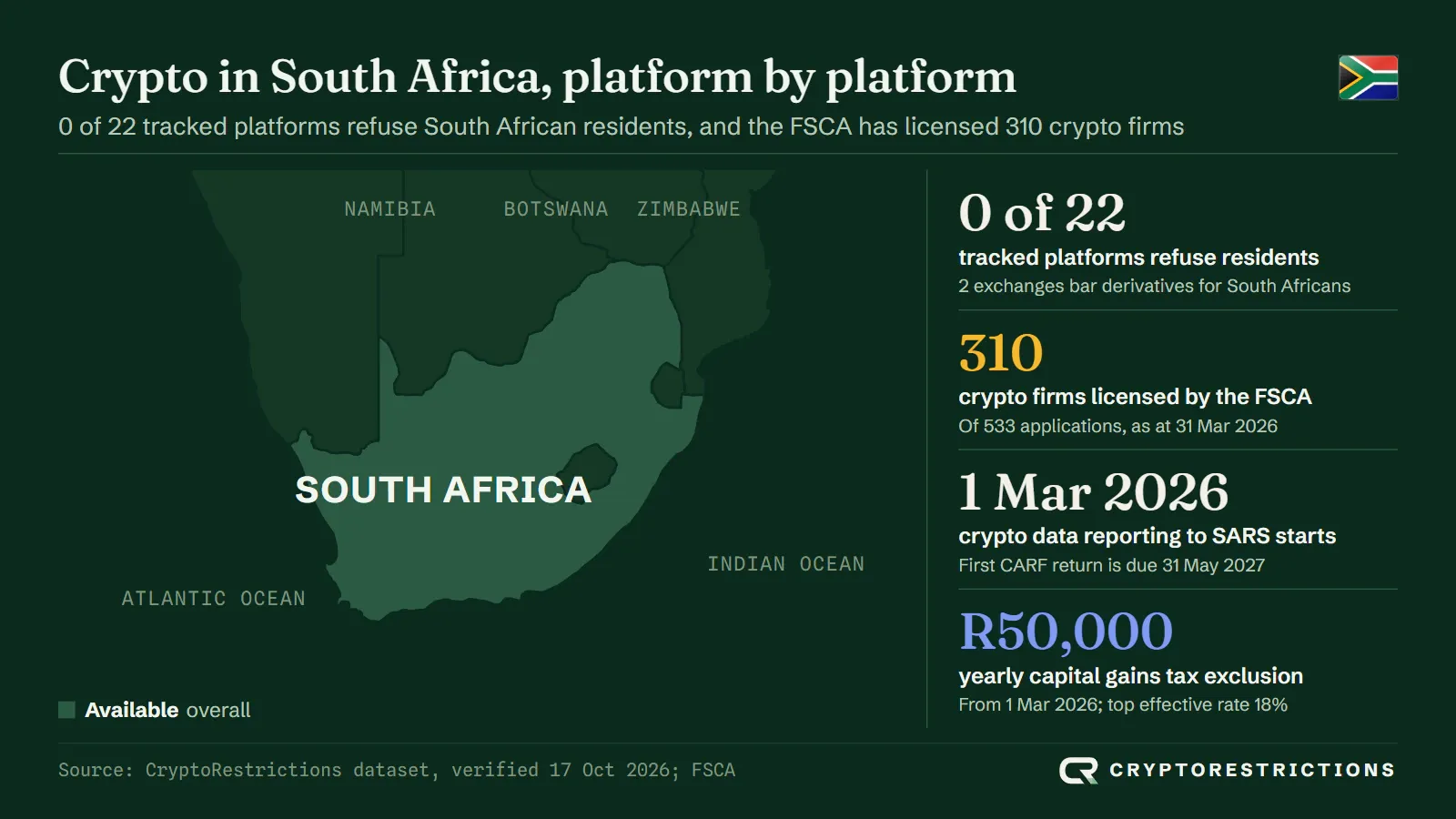
Yes. Crypto is legal to buy, hold and trade, but it is not legal tender, and the state’s approach is to license the businesses that sell it and to tax and monitor the people who use it.
The Reserve Bank’s draft Crypto Assets Manual says plainly that crypto assets are not legal tender in South Africa, and its statement of 3 August 2026 adds that the new approach does not declare them an official currency. What the law does is classify them. National Treasury’s 2026 Budget Review records that the FSCA declared crypto assets financial products under the Financial Advisory and Intermediary Services Act from October 2022, which is why firms that advise on or sell them need a licence. The same document says the Treasury will amend the exchange control rules to bring crypto into the capital flows framework. Money-laundering supervision and tax run on separate tracks, covered below.
Which crypto exchanges work in South Africa?
Three of the exchanges we track name a South African licence route in their own documents: Binance, Bitget and OKX. The rest serve residents from abroad, and the FSCA’s own list is the place to check a firm before you deposit.
The FSCA licenses crypto asset service providers, known as CASPs. Its update of 15 April 2026 says that as at 31 March 2026 it had received 533 applications, approved 310, declined 17 and seen 124 withdrawn, which leaves about 82 still being considered by our subtraction. It also reports 81 investigations into unlicensed providers, 30 of them closed. The update names no exchange. The FSCA publishes the names of approved firms in its list of approved CASPs, and the FSCA website was under maintenance on 17 October 2026, so we could not read the current register ourselves.
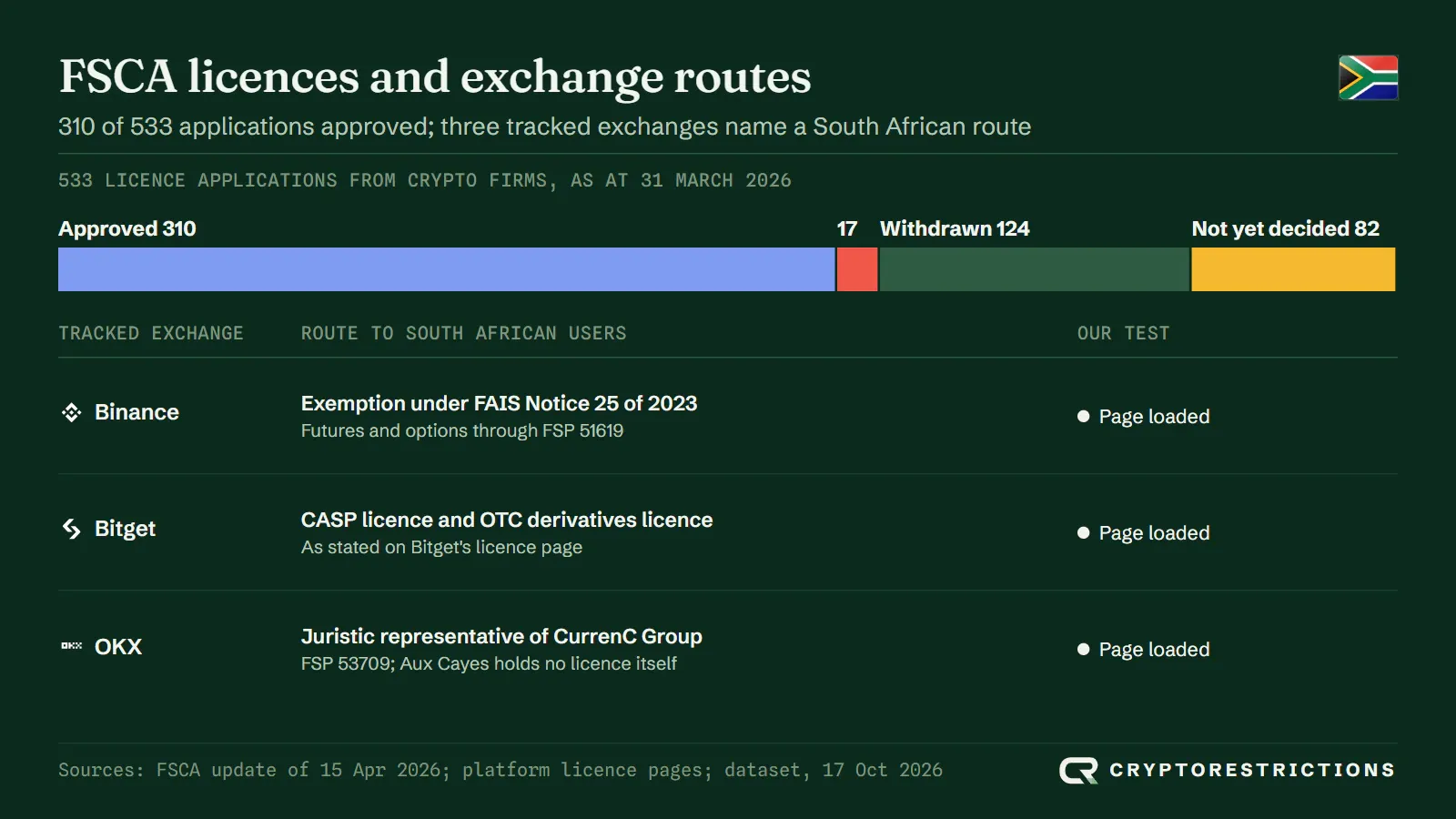
Binance lists an exemption under FAIS Notice 25 of 2023 for its spot products and says its futures and options run through Binance Bahrain as a juristic representative of an authorised provider, FSP 51619. Its South Africa page says it is engaged in the CASP licensing process and shows no licence number. Bitget states on its licence page that it holds a CASP licence and an over-the-counter derivatives licence, which we have not matched to the FSCA register. OKX publishes a South Africa addendum (18 September 2026) naming Aux Cayes FinTech as the juristic representative of CurrenC Group, FSP 53709, and saying Aux Cayes holds no FSCA licence itself. Local exchanges such as VALR, Luno and AltCoinTrader appeared on the FSCA list published in April 2024, according to press coverage of it.
Best crypto platforms for South African residents
By our access score, Binance, Bitget and OKX (9.0 out of 10 each) are the exchanges most open to South African residents, eight more exchanges score 8.0, and both prediction markets and every DeFi platform we track score 8.0.
The score rates how fully a South African resident can use each platform, not its fees or safety. It is computed from our data and moves when a row changes: access status (4 points), the share of the platform’s products open here (3), the South African licences we hold on file (2) and what our geo-access test saw from a South African address (1). Platforms that refuse residents are not scored. The full method is on our methodology page.
Exchanges

Binance
Best for Rand deposits and a documented local route
9.0/10- Access
- 4/4
- Products
- 3/3
- Licences
- 1/2
- Our test
- 1/1
Read our Binance reportPros
- Lists a FAIS exemption for spot on its licence page
- Its South Africa page lists instant EFT and rand P2P
Cons
- Its own page says the CASP licence application is still in process
- The FSCA warned about it in September 2021

Bitget
Best for A stated CASP licence and derivatives licence
9.0/10- Access
- 4/4
- Products
- 3/3
- Licences
- 1/2
- Our test
- 1/1
Read our Bitget reportPros
- States a CASP licence and an OTC derivatives licence
- South Africa is not on its prohibited list
Cons
- We have not matched the licence to the FSCA register

OKX
Best for A local route through a licensed firm
9.0/10- Access
- 4/4
- Products
- 3/3
- Licences
- 1/2
- Our test
- 1/1
Read our OKX reportPros
- Operates as a juristic representative of CurrenC Group, FSP 53709
- Publishes a South Africa terms addendum
Cons
- Aux Cayes holds no FSCA licence itself
- The addendum names no covered services yet

Bitstamp
Best for Plain spot trading
8.0/10- Access
- 4/4
- Products
- 3/3
- Licences
- 0/2
- Our test
- 1/1
Read our Bitstamp reportPros
- No Bitstamp document excludes South Africa
Cons
- No South African licence on file

Bybit
Best for Spot trading and a wide product range
8.0/10- Access
- 4/4
- Products
- 3/3
- Licences
- 0/2
- Our test
- 1/1
Read our Bybit reportPros
- South Africa is not on its excluded-jurisdictions list
Cons
- The FSCA warned about it in February 2022
- No South African licence of its own on file

Gate
Best for Spot access without a local company
8.0/10- Access
- 4/4
- Products
- 3/3
- Licences
- 0/2
- Our test
- 1/1
Read our Gate reportPros
- South Africa is not named in its restricted locations
Cons
- No South African licence on file

Gemini
Best for Spot and perpetuals from a regulated brand
8.0/10- Access
- 4/4
- Products
- 3/3
- Licences
- 0/2
- Our test
- 1/1
Read our Gemini reportPros
- On Gemini's availability list and its perpetuals list
Cons
- No South African licence on file

HTX
Best for Spot access without a local company
8.0/10- Access
- 4/4
- Products
- 3/3
- Licences
- 0/2
- Our test
- 1/1
Read our HTX reportPros
- South Africa is not on its restricted lists
Cons
- No South African licence on file

Kraken
Best for Spot trading from an established exchange
8.0/10- Access
- 4/4
- Products
- 3/3
- Licences
- 0/2
- Our test
- 1/1
Read our Kraken reportPros
- South Africa is not on its do-not-serve list
Cons
- No South African licence on file

KuCoin
Best for Spot access without a local company
8.0/10- Access
- 4/4
- Products
- 3/3
- Licences
- 0/2
- Our test
- 1/1
Read our KuCoin reportPros
- South Africa is not on its restricted locations
Cons
- No South African licence on file

MEXC
Best for Spot access without a local company
8.0/10- Access
- 4/4
- Products
- 3/3
- Licences
- 0/2
- Our test
- 1/1
Read our MEXC reportPros
- South Africa is not on its prohibited jurisdictions (13 October 2026)
Cons
- No South African licence on file

Coinbase
Best for Plain spot trading with a named sign-up country list
7.5/10- Access
- 4/4
- Products
- 3/3
- Licences
- 0/2
- Our test
- 0.5/1
Read our Coinbase reportPros
- Lists South Africa as a sign-up country in its identity guide
Cons
- Its home page said stocks and prediction markets are unavailable here
- No South African licence on file

Bitfinex
Best for Spot trading only
6.4/10- Access
- 3.5/4
- Products
- 1.9/3
- Licences
- 0/2
- Our test
- 1/1
Read our Bitfinex reportPros
- Its exchange terms do not restrict South Africa
Cons
- South African persons are barred from its derivatives

Crypto.com
Best for Spot trading in the app
6.3/10- Access
- 3.5/4
- Products
- 1.8/3
- Licences
- 0/2
- Our test
- 1/1
Read our Crypto.com reportPros
- Spot trading and the app are offered here
Cons
- South Africa is on its derivatives geo-restrictions list
- No South African licence on file
Prediction markets

Kalshi
Best for Event contracts from a regulated US exchange
8.0/10- Access
- 4/4
- Products
- 3/3
- Licences
- 0/2
- Our test
- 1/1
Read our Kalshi reportPros
- South Africa is not on its restricted-jurisdictions list
Cons
- No South African licence on file

Polymarket
Best for The widest range of event markets
8.0/10- Access
- 4/4
- Products
- 3/3
- Licences
- 0/2
- Our test
- 1/1
Read our Polymarket reportPros
- South Africa is not on its blocked-countries list
Cons
- No South African licence on file
DeFi

Aster
Best for Perpetuals and spot trading
8.0/10- Access
- 4/4
- Products
- 3/3
- Licences
- 0/2
- Our test
- 1/1
Read our Aster reportPros
- South Africa is not on its prohibited-jurisdictions list
Cons
- No South African licence on file

Hyperliquid
Best for Perpetuals from your own wallet
8.0/10- Access
- 4/4
- Products
- 3/3
- Licences
- 0/2
- Our test
- 1/1
Read our Hyperliquid reportPros
- South Africa is not among the places its terms bar
Cons
- No South African licence on file

Jupiter
Best for Solana swaps from your own wallet
8.0/10- Access
- 4/4
- Products
- 3/3
- Licences
- 0/2
- Our test
- 1/1
Read our Jupiter reportPros
- South Africa is not in its terms
Cons
- No South African licence on file

Lighter
Best for Perpetuals on its main app
8.0/10- Access
- 4/4
- Products
- 3/3
- Licences
- 0/2
- Our test
- 1/1
Read our Lighter reportPros
- South Africa is not named in its terms
Cons
- No South African licence on file

PancakeSwap
Best for BNB Chain swaps and pools
8.0/10- Access
- 4/4
- Products
- 3/3
- Licences
- 0/2
- Our test
- 1/1
Read our PancakeSwap reportPros
- South Africa is not excluded by its terms
Cons
- No South African licence on file

Uniswap
Best for Swapping tokens from your own wallet
8.0/10- Access
- 4/4
- Products
- 3/3
- Licences
- 0/2
- Our test
- 1/1
Read our Uniswap reportPros
- Its terms bar only places under comprehensive US sanctions
Cons
- No South African licence on file
Which platforms block South African users?
None of the platforms we track refuses South African residents in its own terms or notices; two bar South Africans from derivatives only.
That is unusual: most countries we cover have at least one platform that closes the door. The two derivatives limits are set out under products below, and what each site actually showed us is in the next section.
What our geo-access test saw from South Africa
From a South African address on 14 and 16 October 2026 we loaded all 22 platforms we track: 21 loaded with no barrier and one showed a notice.
An open page is not permission. Bitfinex’s sign-up page opened for us even though its derivative terms bar South Africans from derivatives, and Crypto.com’s pages loaded although South Africa is on its derivatives list. The one notice came from Coinbase, whose home page said stocks and prediction markets are not available in our jurisdiction. Swipe through the screenshots below; each card says what the page showed.
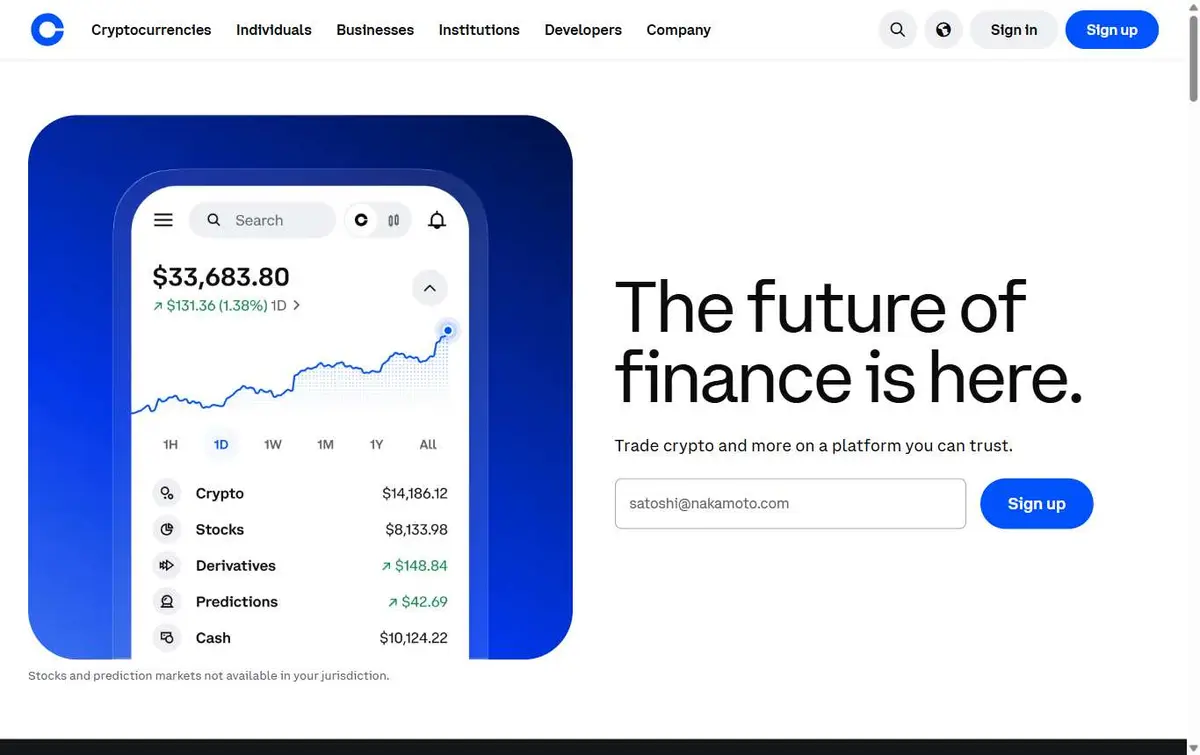
Notice shown Coinbase · Home page
South Africa: the home page loads with a product notice
“Stocks and prediction markets not available in your jurisdiction.”
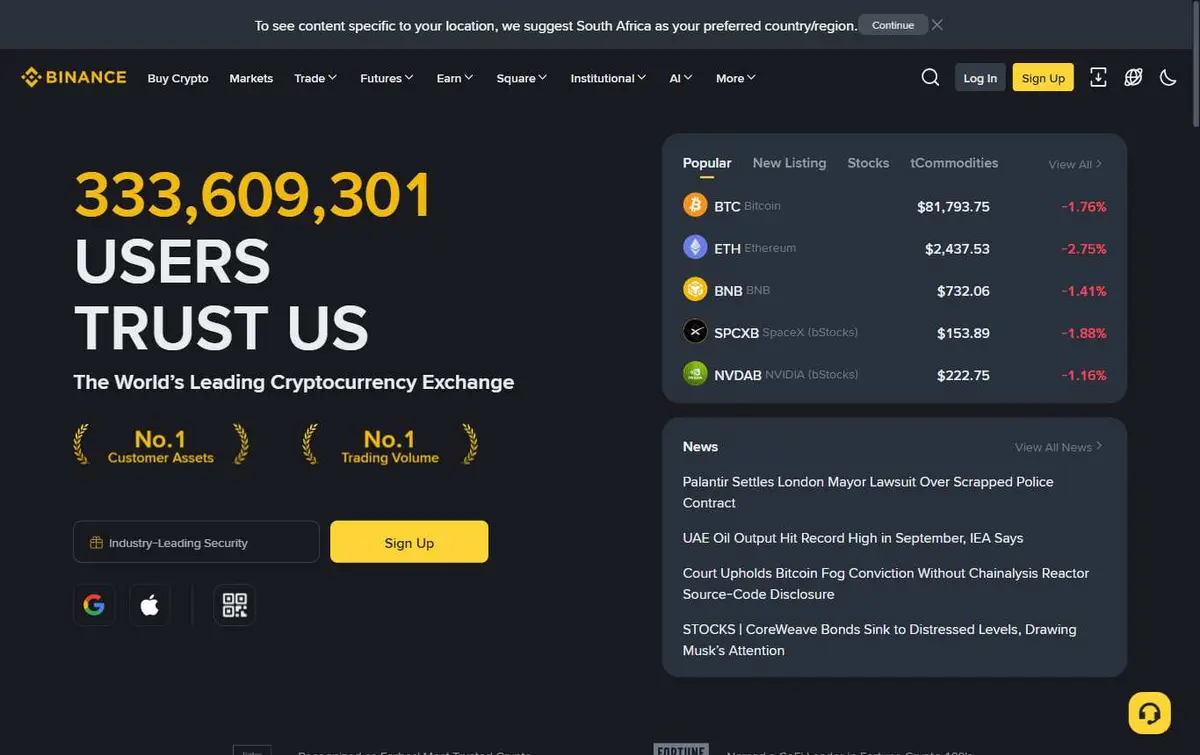
No barrier Binance · Home page
South Africa: the home page loaded with no barrier
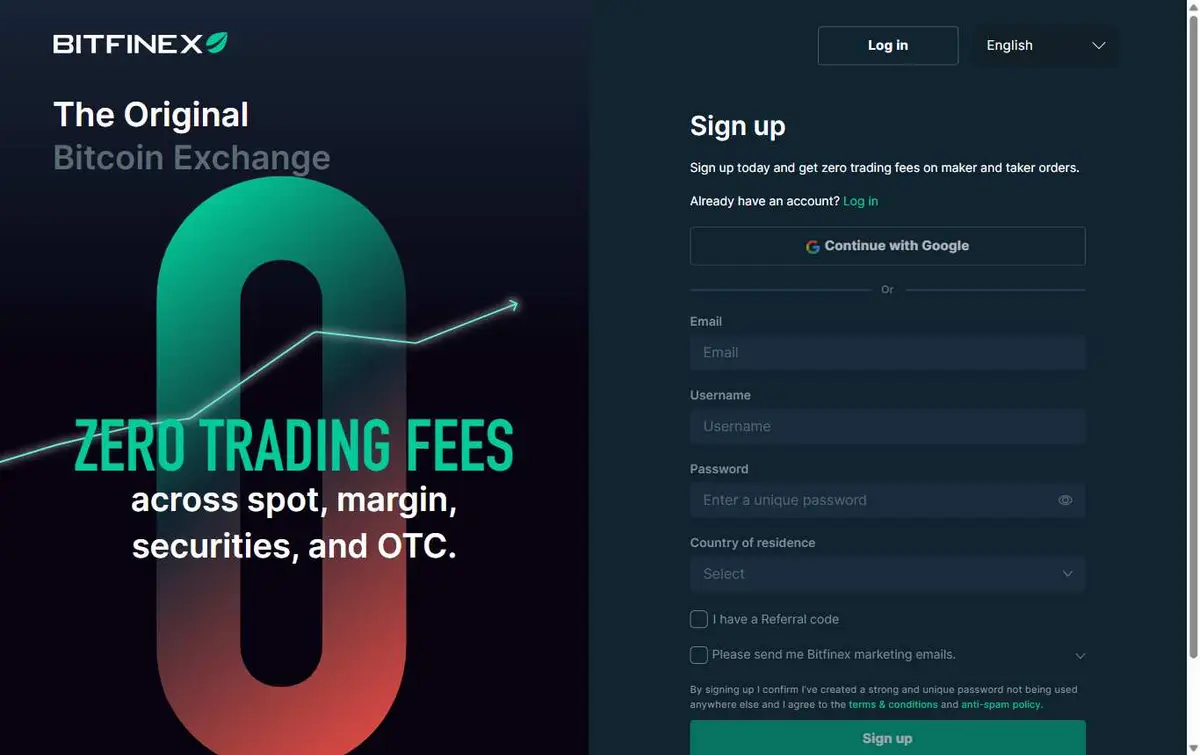
No barrier Bitfinex · Sign-up page
South Africa: sign-up open, but derivatives are barred by their own terms
“Sign up today and get zero trading fees on maker and taker orders.”
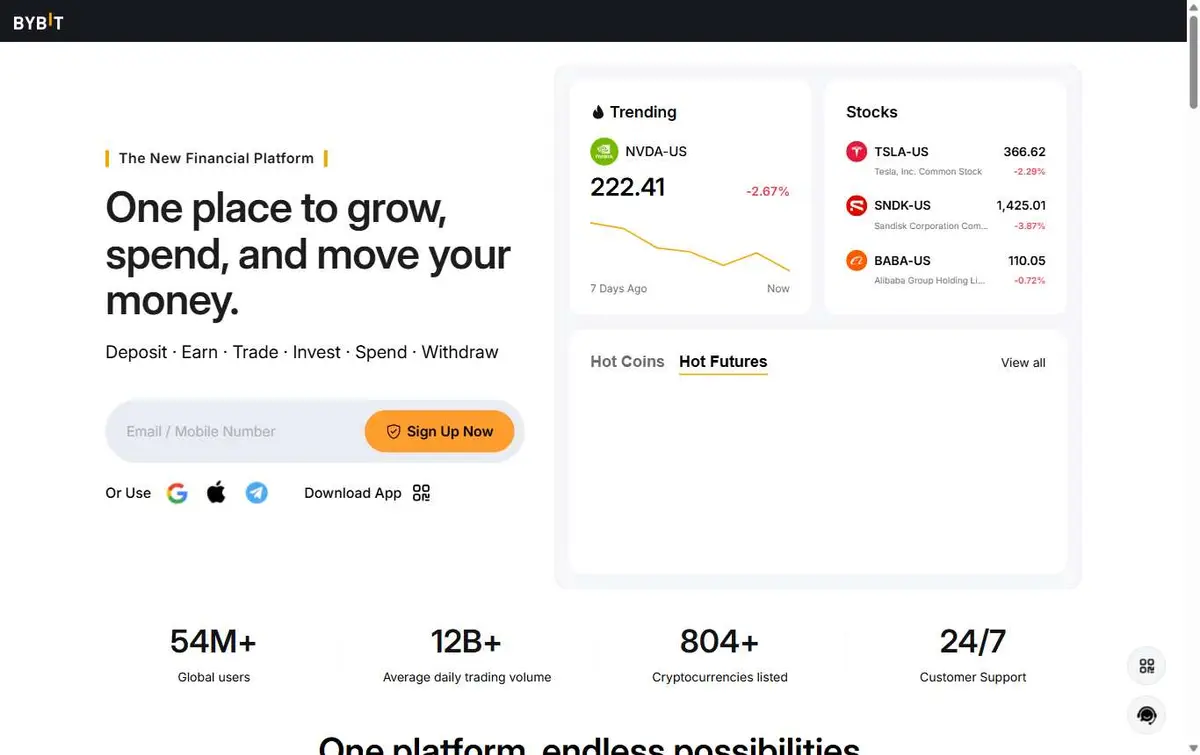
No barrier Bybit · Home page
South Africa: the home page loaded with no barrier
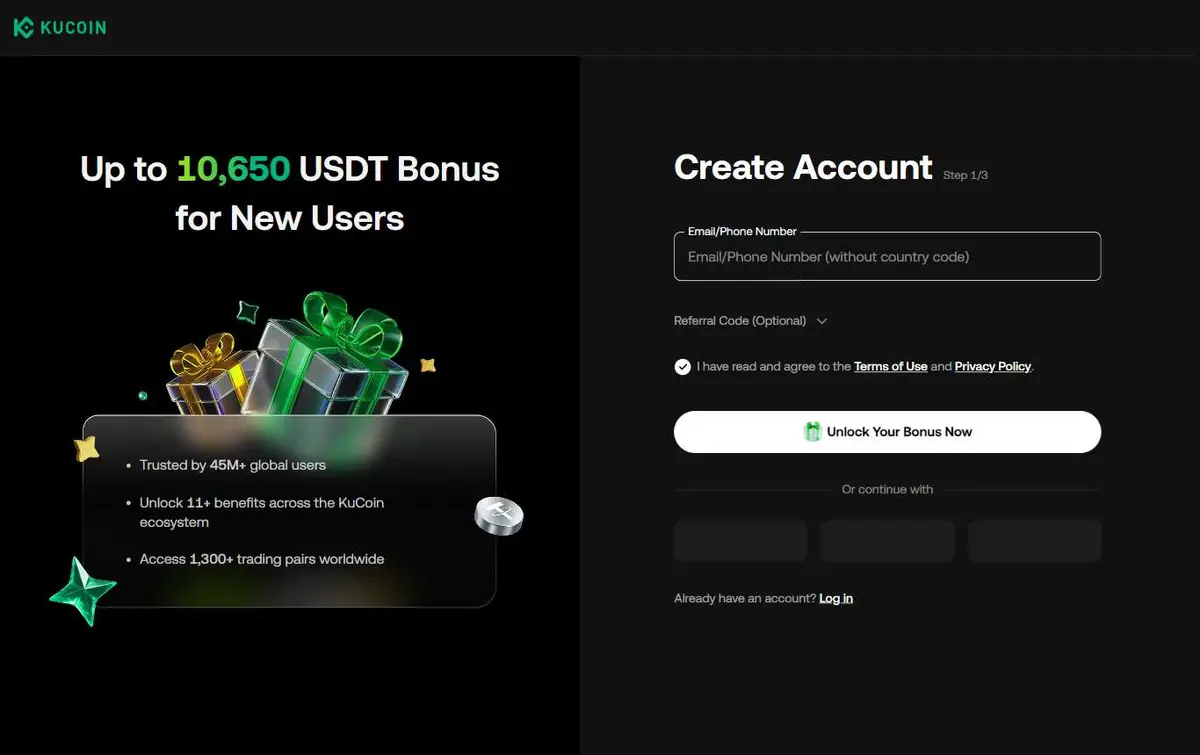
No barrier KuCoin · Sign-up page
South Africa: the sign-up page loaded with no barrier
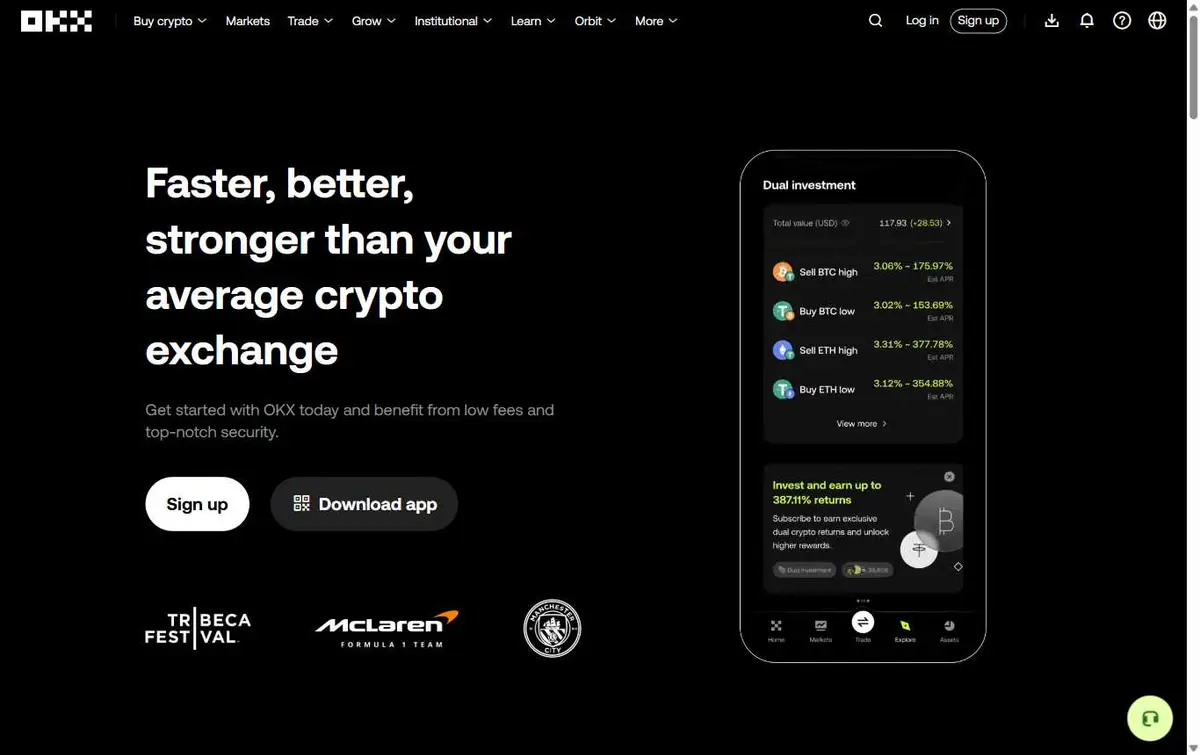
No barrier OKX · Home page
South Africa: the home page loaded with no barrier
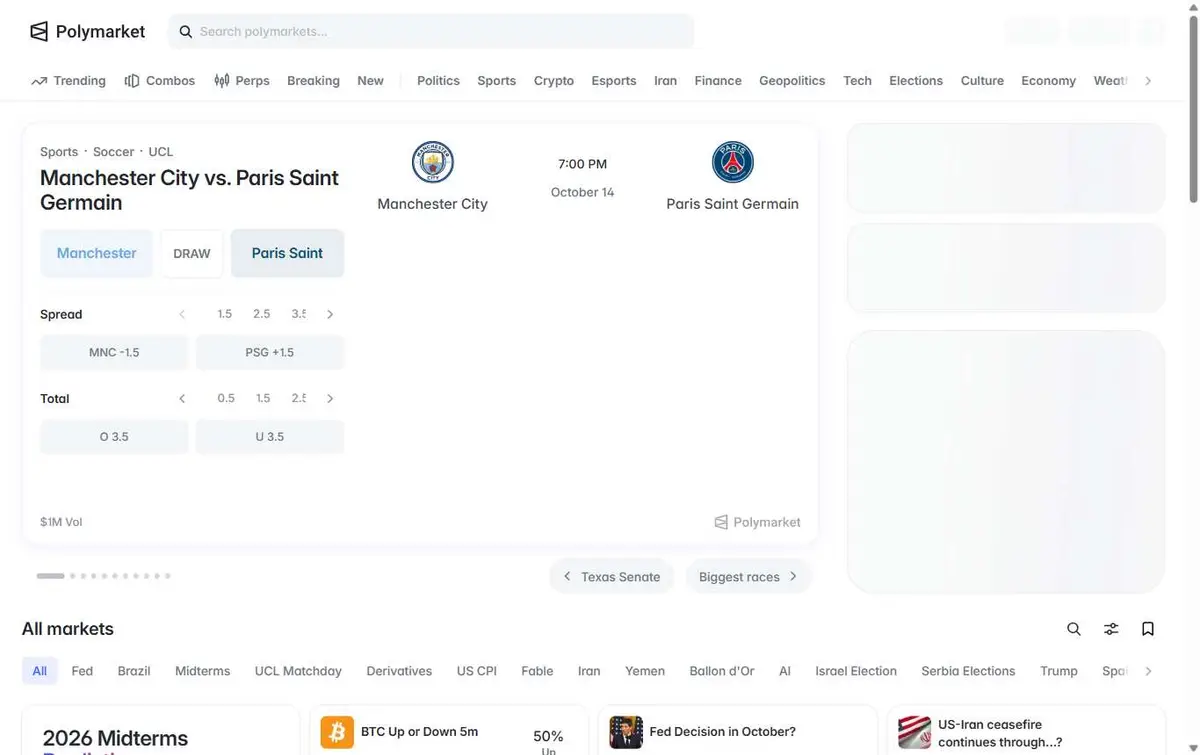
No barrier Polymarket · Home page
South Africa: the home page loaded with no barrier
 CRYPTORESTRICTIONS
Who regulates crypto in South Africa?
The FSCA licenses crypto firms, the FIC supervises them for money laundering, the Reserve Bank and National Treasury set exchange controls, and SARS taxes crypto and collects data on it. Courts are still deciding how the old exchange control rules apply.
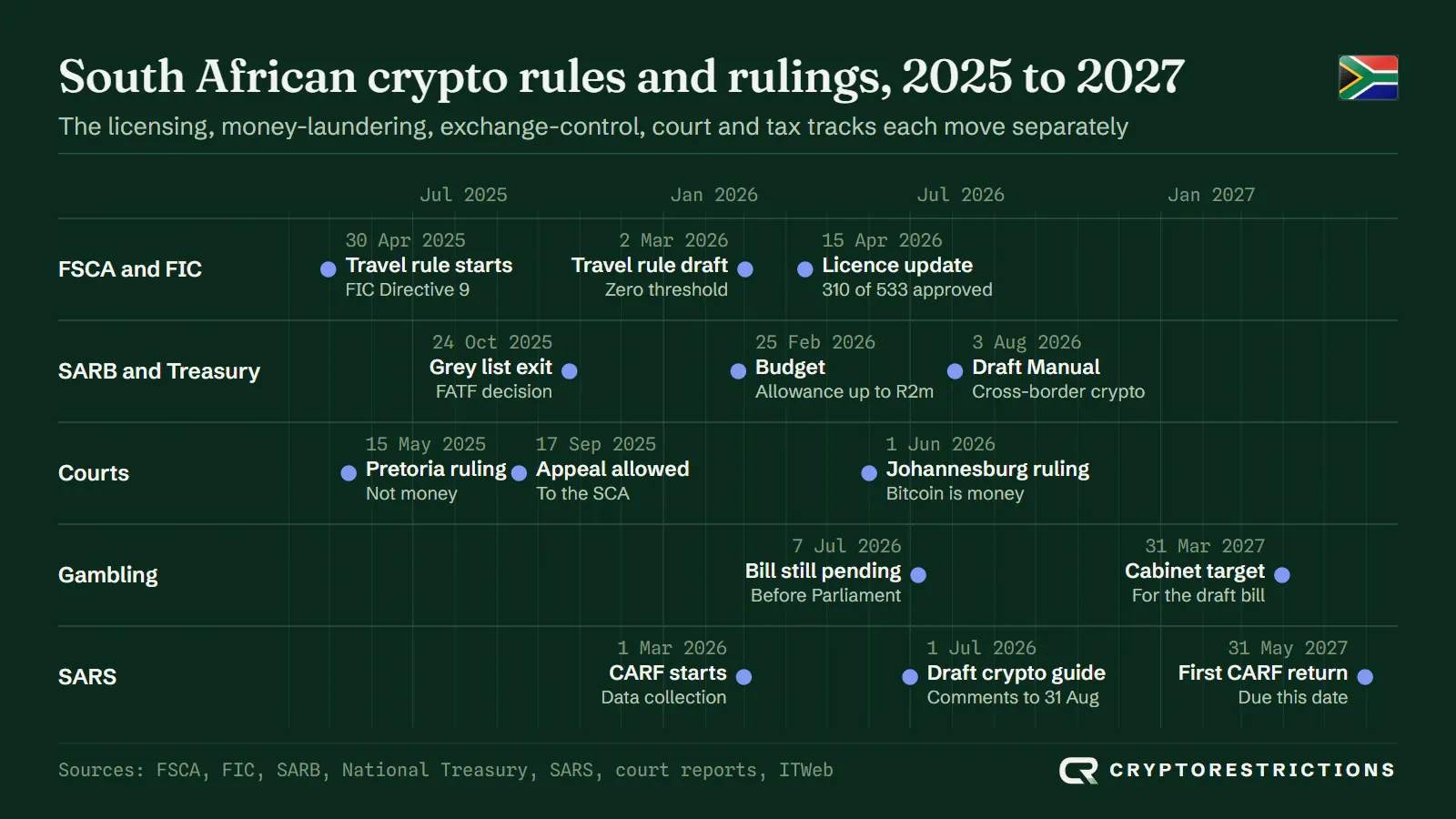
- FSCA. It declared crypto a financial product in October 2022 and licenses CASPs. In 2021 and 2022 it warned the public about individual exchanges: Binance in September 2021, and FTX and Bybit in February 2022, according to press reports of the warnings. The FSCA’s April 2026 update names no exchange and says unlicensed providers face enforcement.
- FIC. CASPs are accountable institutions under the Financial Intelligence Centre Act, so they must register and report. Its Directive 9 applies the travel rule to crypto transfers, and a law firm’s summary of the FIC’s draft guidance of 2 March 2026 says the directive took effect on 30 April 2025 and that the rule applies at a zero threshold within a business relationship.
- SARB and National Treasury. The 2026 Budget raised the single discretionary allowance for individuals from R1 million to R2 million a year. The draft Crypto Assets Manual (3 August 2026, comments closed on 30 September) would let only individuals move crypto abroad through authorised CASPs, under that allowance or the foreign capital allowance, with flows to offshore exchanges and non-custodial wallets reported to the Reserve Bank. The Treasury’s 24 October 2025 statement records South Africa’s exit from the FATF grey list.
- Courts. In May 2025 the Pretoria High Court held in Standard Bank v SARB that crypto is not money or capital under the exchange control regulations; leave to appeal to the Supreme Court of Appeal was granted on 17 September 2025 and the order is suspended. On 1 June 2026 a Johannesburg judge held the opposite in Mangundhla v SARB, calling the earlier ruling clearly wrong. We found no appeal outcome.
- SARS and the gambling regulators. Both are covered in the sections on tax and prediction markets.
Which crypto products are limited in South Africa?
Derivatives are the limited product: Crypto.com and Bitfinex bar South Africans from them, while Binance and Bitget route theirs through licensed firms.
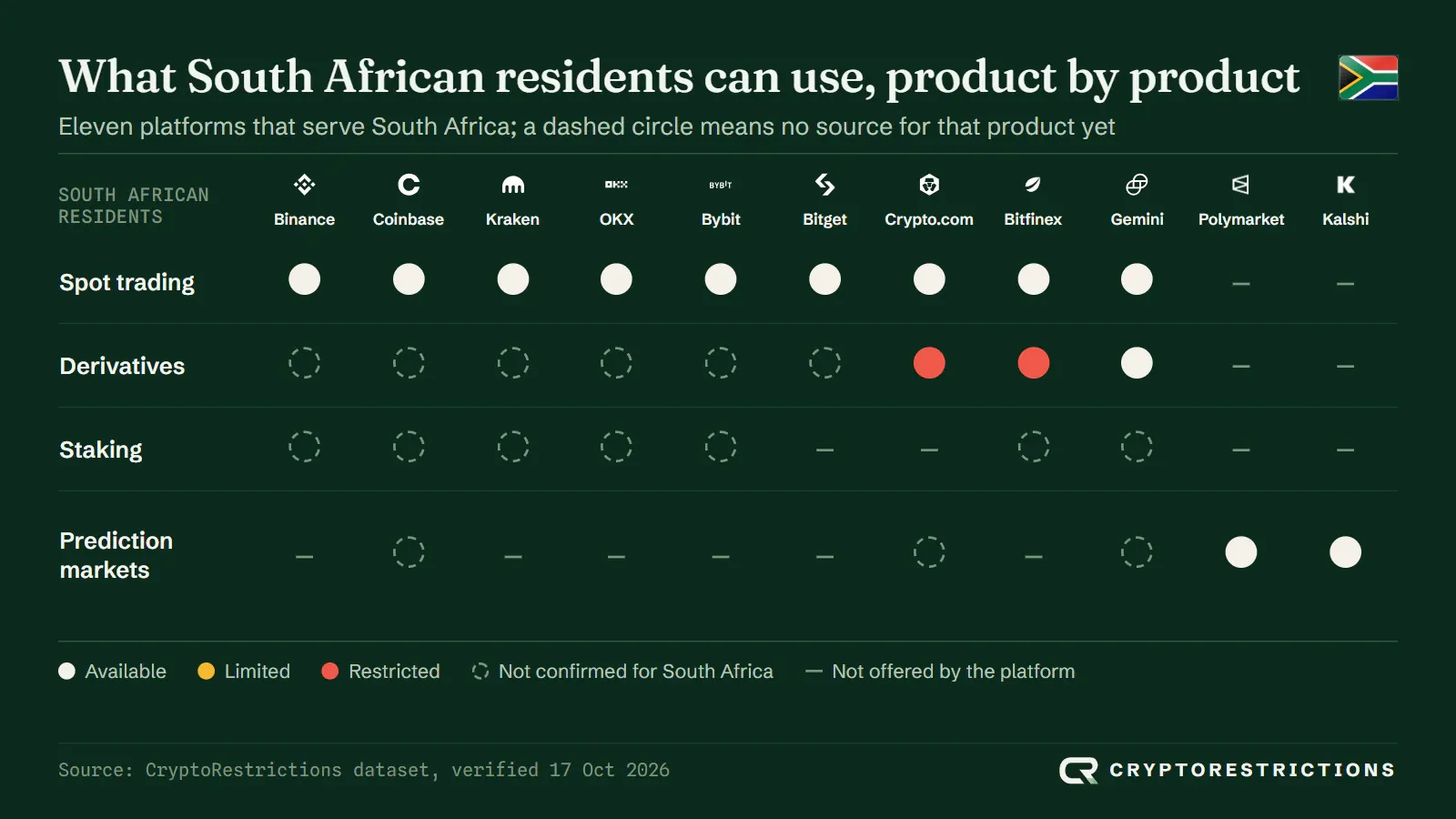
- Derivatives. Crypto.com lists South Africa among the places restricted from derivatives (page of 7 May 2025). Bitfinex added South African persons to the prohibited persons in its derivative terms of 6 April 2026, while its spot terms do not restrict South Africa. Binance says futures and options go through a juristic representative of an authorised provider, and Bitget states an over-the-counter derivatives licence.
- Stocks. Coinbase showed a notice that stocks and prediction markets are not available in our jurisdiction.
- Moving crypto abroad. Under the draft Reserve Bank manual only individuals may externalise crypto through authorised CASPs, up to R2 million a year under the single discretionary allowance or R10 million under the foreign capital allowance.
Are prediction markets legal in South Africa?
We found no South African regulator statement on prediction markets. Both platforms we track are open to residents, but gambling law is being tightened and the sources we read do not say where event contracts fall.
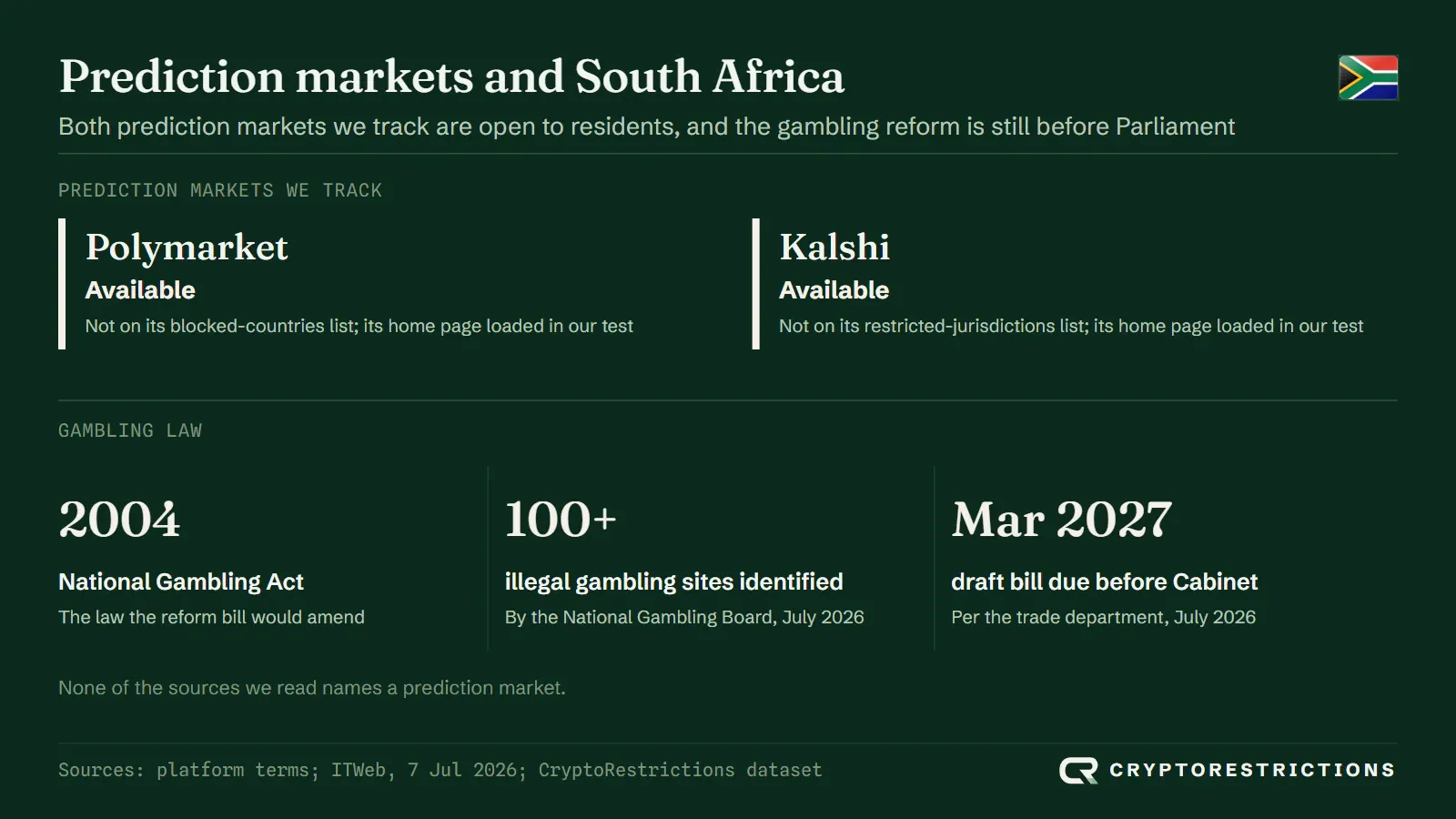
Polymarket and Kalshi do not list South Africa among their restricted places, and both home pages loaded in our test. On the law side, the National Gambling Act dates from 2004. ITWeb reported on 7 July 2026 that the National Gambling Amendment Bill is still being finalised, with a draft for public comment to come and the bill due before Cabinet by the end of March 2027. The same article says the National Gambling Board has identified more than 100 illegal online gambling sites, has asked for providers to monitor and possibly block them, and wants powers to investigate without provincial inspectors. Internet providers’ association ISPA opposes state blocking of foreign sites without a clear legal framework. The article does not mention prediction markets.
How is crypto taxed in South Africa?
SARS treats crypto as an asset, not money. Gains are taxed as capital gains or as ordinary income depending on why and how often you trade, and a draft SARS guide says there is no three-year rule to fall back on.
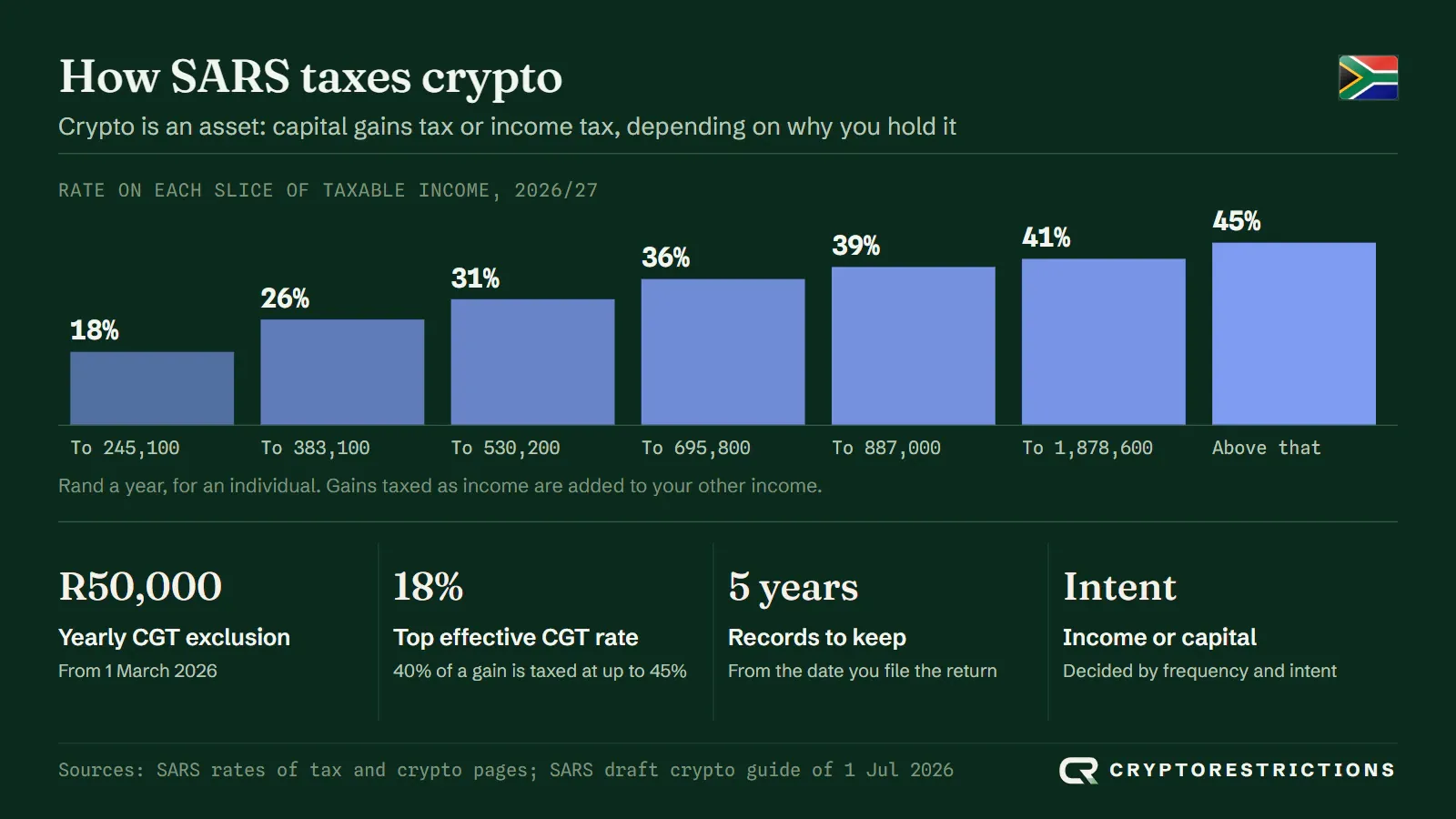
SARS’s crypto page says the normal income tax rules apply to crypto assets and that revenue or capital turns on the facts of each case. Its Budget 2026 questions (updated 12 August 2026) name frequency, intent and business-like conduct, and say trading income is declared on the annual return under source code 4522. The draft guide of 1 July 2026, still open for comment until 31 August and not final, adds that crypto is a financial instrument for tax purposes, that the three-year rule for shares does not apply, and that the cost of identical coins on capital account is worked out by specific identification or first in, first out, not by weighted average.
The rates on the chart are the individual rates for 2026/27 (1 March 2026 to 28 February 2027), where the 45% band starts above R1,878,600. For capital gains, the annual exclusion rose from R40,000 to R50,000 on 1 March 2026, and the top effective rate for individuals is 18%, because 40% of a gain is included in income. Records must be kept for at least five years from the date the return is submitted, under the draft guide. Reporting is tightening: the CARF regulations, gazetted on 28 November 2025, took effect on 1 March 2026, and SARS’s CARF page says the first reporting period runs to 28 February 2027, the CASP return is due on 31 May 2027 and the first exchange with other countries follows in September 2027. SARS’s CARF questions say South Africa signed the multilateral agreement on 16 November 2024. The Budget questions also say the Voluntary Disclosure Programme must be applied for before an audit starts. Working out your own position takes four steps:
 Egypt
 Ghana
 Morocco
 Nigeria
 Kenya
 South Sudan
 Mauritius
 Senegal
 Tunisia
 Angola
 Benin