Is crypto legal in Italy?
Yes, through authorised providers. Italy regulates who may serve you, not whether you may hold crypto: since 1 July 2026 only firms authorised as crypto-asset service providers under MiCA, or banks that notified the Banca d’Italia, may serve clients.
The EU’s Markets in Crypto-Assets Regulation (MiCA) set the licensing rules. Italy let firms registered with the OAM (the register of virtual-currency operators) carry on under national rules for longer. The Banca d’Italia’s FAQ explains that decree-law 95/2025 extended that regime to 30 December 2025, and that firms which applied for a MiCA authorisation by then, in Italy or another member state, could keep operating until a decision and no later than 30 June 2026.
That date has passed. In a joint release of 30 June 2026, Consob and the Banca d’Italia said the transition ended on 1 July. Operators without an authorisation in at least one EU country must stop and only help clients close or move their positions, and ESMA has asked them for orderly wind-down plans. The two regulators also told investors to check the exact legal entity, because MiCA protection does not reach a non-EU company that shares a brand with an authorised one.
Which crypto exchanges work in Italy?
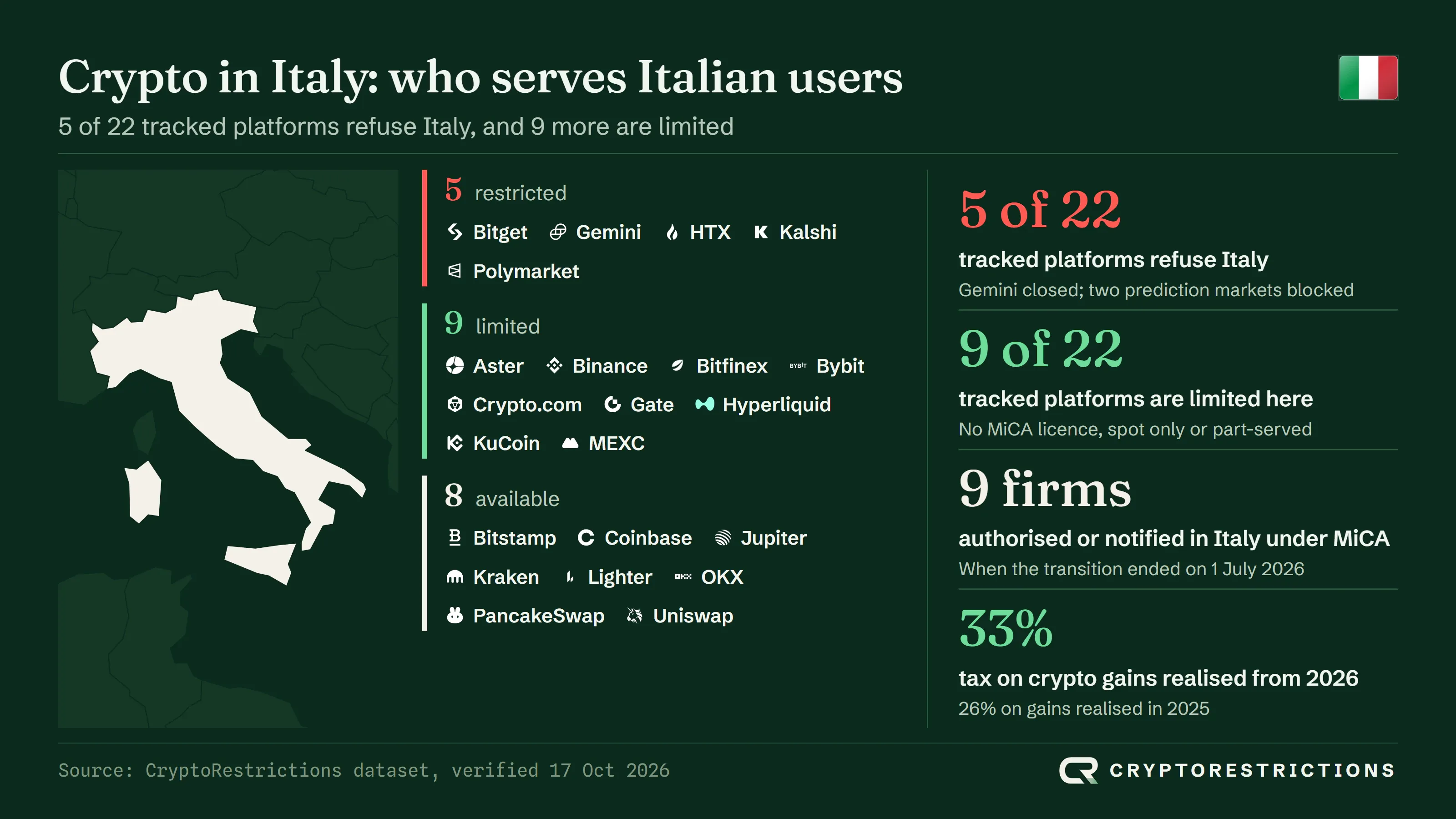
Seven of the exchanges we track serve Italian users under a MiCA licence: Coinbase, Kraken, OKX, Bitstamp, Bybit, Crypto.com and Gate. Four are fully available; Bybit, Crypto.com and Gate are limited because they offer no derivatives here.
None of them holds an Italian authorisation. Each is licensed by another EU regulator and serves Italy on a passport, which is why the chart names the regulator that granted the licence. ESMA’s interim register carries the licence dates.
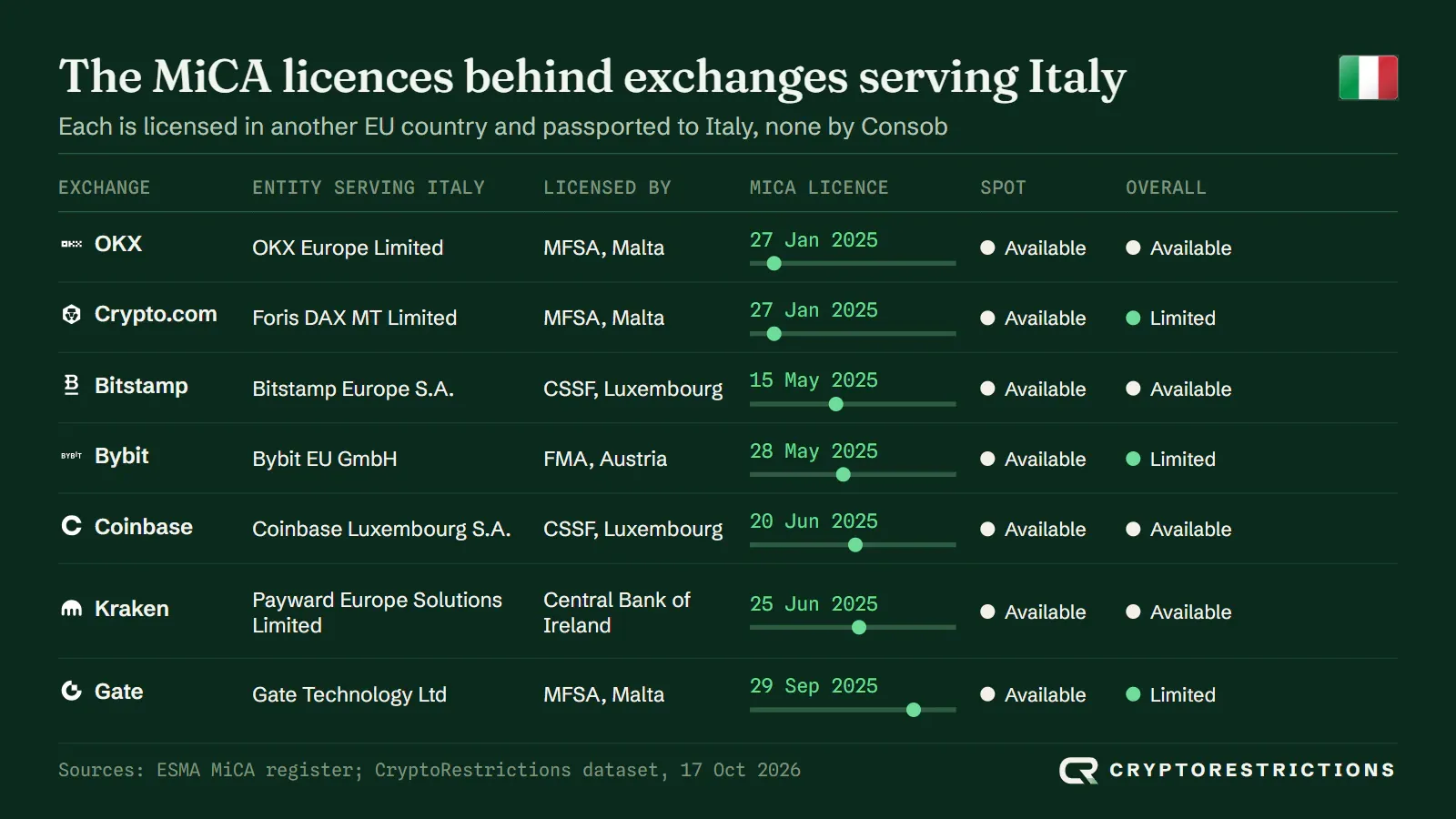
Consob’s own authorisations went to Italian firms outside our platform set. Its joint release lists eight: CheckSig, Conio, CryptoSmart, Hercle, Hodlie, Olliv Italia, Riv Digital and Young Platform, with Banca Sella notifying the Banca d’Italia as a bank. ESMA’s register has since added YouHodler Italy as a ninth authorised firm. Binance is not on the register under any name, and its position is covered below.
Best crypto platforms for Italian residents
By our access score, Bitstamp, Coinbase and Kraken (each 8.0 out of 10) are the most open exchanges for Italian residents, OKX (7.5) comes next, and Jupiter, Lighter, PancakeSwap and Uniswap (8.0) are the most open DeFi platforms. No prediction market is open to them.
The score rates how fully an Italian resident can use each platform, not its fees or safety. It is computed from our data and moves when a row changes: access status (4 points), the share of the platform’s products open here (3), the licences we hold on file for Italy (2) and what our geo-access test saw from an Italian address (1). Nobody scores above 8.0, because every platform here serves Italy on an EU passport or has no licence at all, and none holds a licence booked to Italy. Platforms that refuse Italian users are not scored. The full method is on our methodology page.
Exchanges

Bitstamp
Best for Spot trading from a long-running EU licence
8.0/10- Access
- 4/4
- Products
- 3/3
- Licences
- 0/2
- Our test
- 1/1
Read our Bitstamp reportPros
- Bitstamp Europe S.A. holds a CSSF MiCA licence from 15 May 2025
- Our test loaded the home page from an Italian address
Cons
- No Italian entity: served from Luxembourg

Coinbase
Best for A MiCA-licensed exchange with the widest reach
8.0/10- Access
- 4/4
- Products
- 3/3
- Licences
- 0/2
- Our test
- 1/1
Read our Coinbase reportPros
- Coinbase Luxembourg S.A. holds a CSSF MiCA licence passported across the EEA
- Our test loaded Coinbase's Italy page from an Italian address with no barrier
Cons
- No Italian entity: served from Luxembourg

Kraken
Best for Spot trading under an Irish MiCA licence
8.0/10- Access
- 4/4
- Products
- 3/3
- Licences
- 0/2
- Our test
- 1/1
Read our Kraken reportPros
- Payward Europe Solutions holds a Central Bank of Ireland MiCA licence, passported across the EEA
- Our test loaded sign-up from an Italian address with no barrier
Cons
- No Italian entity: served from Ireland

OKX
Best for A global brand with a local EU site
7.5/10- Access
- 4/4
- Products
- 3/3
- Licences
- 0/2
- Our test
- 0.5/1
Read our OKX reportPros
- OKX Europe Limited holds an MFSA MiCA licence from 27 January 2025
- okx.com points Italian visitors to OKX Europe
Cons
- Served from Malta, not by an Italian entity

Bybit
Best for Spot trading only
6.9/10- Access
- 3.5/4
- Products
- 2.4/3
- Licences
- 0/2
- Our test
- 1/1
Read our Bybit reportPros
- Spot is served by Bybit EU GmbH under an Austrian MiCA licence
Cons
- Bybit EU offers no derivatives
- Derivatives on Bybit Global are being wound down for EEA residents

Crypto.com
Best for Spot trading in an app
6.3/10- Access
- 3.5/4
- Products
- 1.8/3
- Licences
- 0/2
- Our test
- 1/1
Read our Crypto.com reportPros
- Foris DAX MT Limited holds a Malta MiCA licence from 27 January 2025
- Spot trading and the app are offered
Cons
- Derivatives are on its geo-restrictions list

Gate
Best for Spot trading on a licensed EU arm
5.0/10- Access
- 3.5/4
- Products
- 1.5/3
- Licences
- 0/2
- Our test
- 0/1
Read our Gate reportPros
- Gate Technology Ltd holds a Maltese MiCA licence
- Spot trading is open to Italian users
Cons
- Gate EU offers no derivatives
- Our test showed a restricted-location message at sign-up
DeFi

Jupiter
Best for Solana swaps
8.0/10- Access
- 4/4
- Products
- 3/3
- Licences
- 0/2
- Our test
- 1/1
Read our Jupiter reportPros
- Italy is not named in its terms
- Its app loaded in our test
Cons
- No licence on file for Italy

Lighter
Best for Perpetuals from your own wallet
8.0/10- Access
- 4/4
- Products
- 3/3
- Licences
- 0/2
- Our test
- 1/1
Read our Lighter reportPros
- Italy is not named in its terms
- Its trading app loaded in our test
Cons
- No licence on file for Italy

PancakeSwap
Best for BNB Chain swaps and pools
8.0/10- Access
- 4/4
- Products
- 3/3
- Licences
- 0/2
- Our test
- 1/1
Read our PancakeSwap reportPros
- Not excluded by its terms
- The swap page loaded in our test
Cons
- No licence on file for Italy

Uniswap
Best for Swapping tokens from your own wallet
8.0/10- Access
- 4/4
- Products
- 3/3
- Licences
- 0/2
- Our test
- 1/1
Read our Uniswap reportPros
- Its terms bar only places under comprehensive US sanctions
- Our test loaded the swap app from an Italian address
Cons
- No licence on file for Italy

Hyperliquid
Best for Perpetuals and spot on its own chain
5.9/10- Access
- 3/4
- Products
- 1.9/3
- Licences
- 0/2
- Our test
- 1/1
Read our Hyperliquid reportPros
- Perpetuals and spot loaded in our test
- Not excluded by its terms
Cons
- Its outcome markets tab is hidden from Italian addresses
Which platforms block Italian users?
Five of the 22 platforms we track refuse Italian users: Bitget, Gemini, HTX, Kalshi and Polymarket. Nine more are limited: Binance, Bybit, Crypto.com, KuCoin, Gate, MEXC, Bitfinex, Aster and Hyperliquid.
Most exits trace to MiCA. Gemini closed every UK and EEA account on 6 April 2026. KuCoin EU has had trading and deposits suspended since 4 February 2026. Binance told EU users it would stop providing services after failing to secure a MiCA licence; from 1 July 2026 sign-ups, deposits and trading are closed while existing users can still withdraw. HTX’s user agreement bars all EU member states, and the EU’s Russia sanctions ban dealings with it from 23 August 2026.
We found no Consob blackout naming any of these exchanges in 2026. Its blackouts are issued in batches against anonymous sites. The prediction markets are covered below.
What our geo-access test saw from Italy
From an Italian address on 14 and 16 October 2026 we tested all 22 platforms we track: 3 refused us, 3 showed a notice or a redirect, and 16 loaded with no barrier.
An open page is not permission. Binance, Bitget and HTX all loaded although Binance has closed new sign-ups, Bitget does not serve Italy and HTX’s terms bar the EU. The three refusals were Gemini (“Gemini does not currently operate in Italy”), Gate, which printed a restricted-location message at sign-up, and Polymarket, whose geoblock check answered blocked. The three notices were OKX’s redirect to its European site, KuCoin’s suggestion to switch to KuCoin EU and Kalshi’s note that prediction markets are not available. Swipe through the screenshots below; each card quotes the message the page showed.
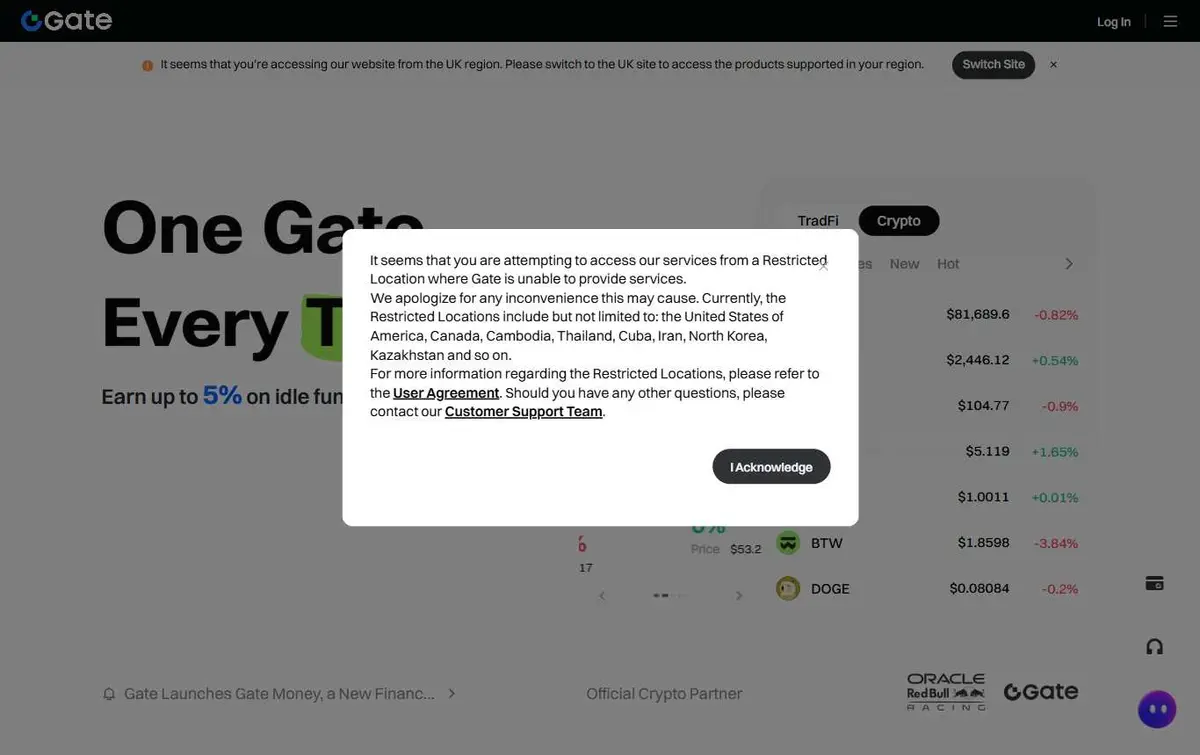
Blocked Gate · Home page
From Italy the same pop-up, under a banner that places our address in the UK; its list names Kazakhstan
“Currently, the Restricted Locations include but not limited to: the United States of America, Canada, Cambodia, Thailand, Cuba, Iran, North Korea, Kazakhstan and so on.”
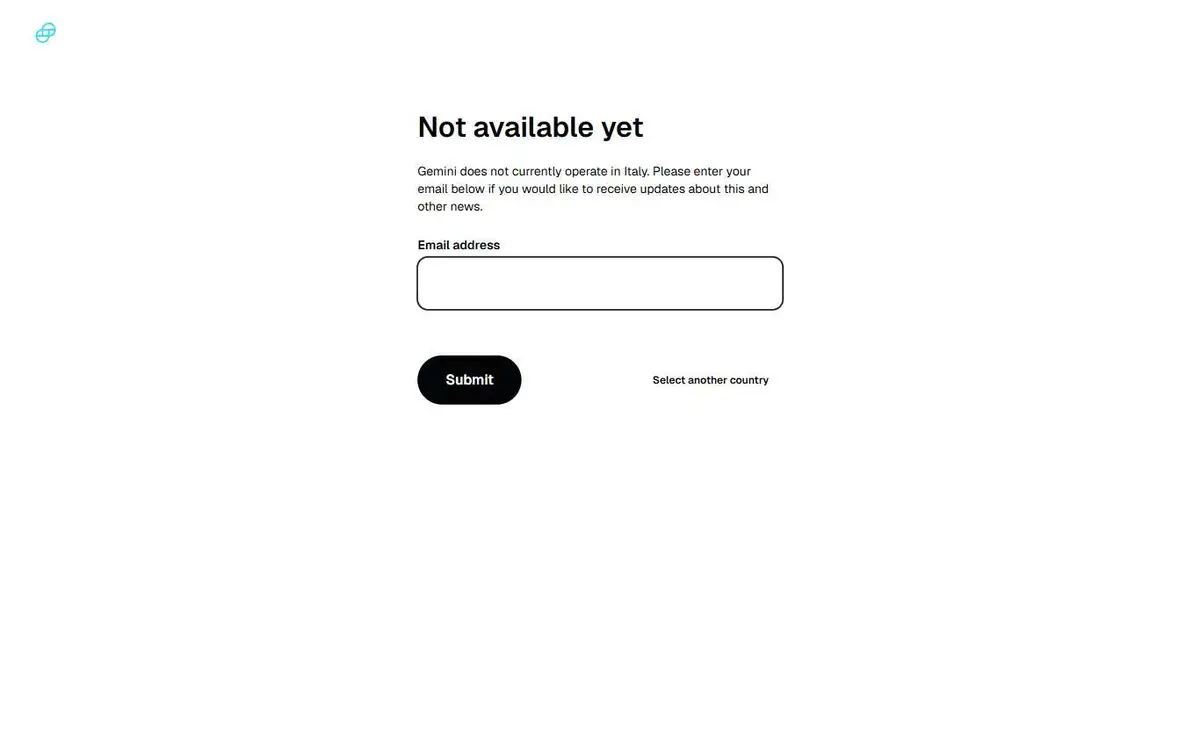
Blocked Gemini · Sign-up page
Italy, closed with the rest of the EEA in April 2026: the sign-up form is replaced by a location check
“Gemini does not currently operate in Italy.”
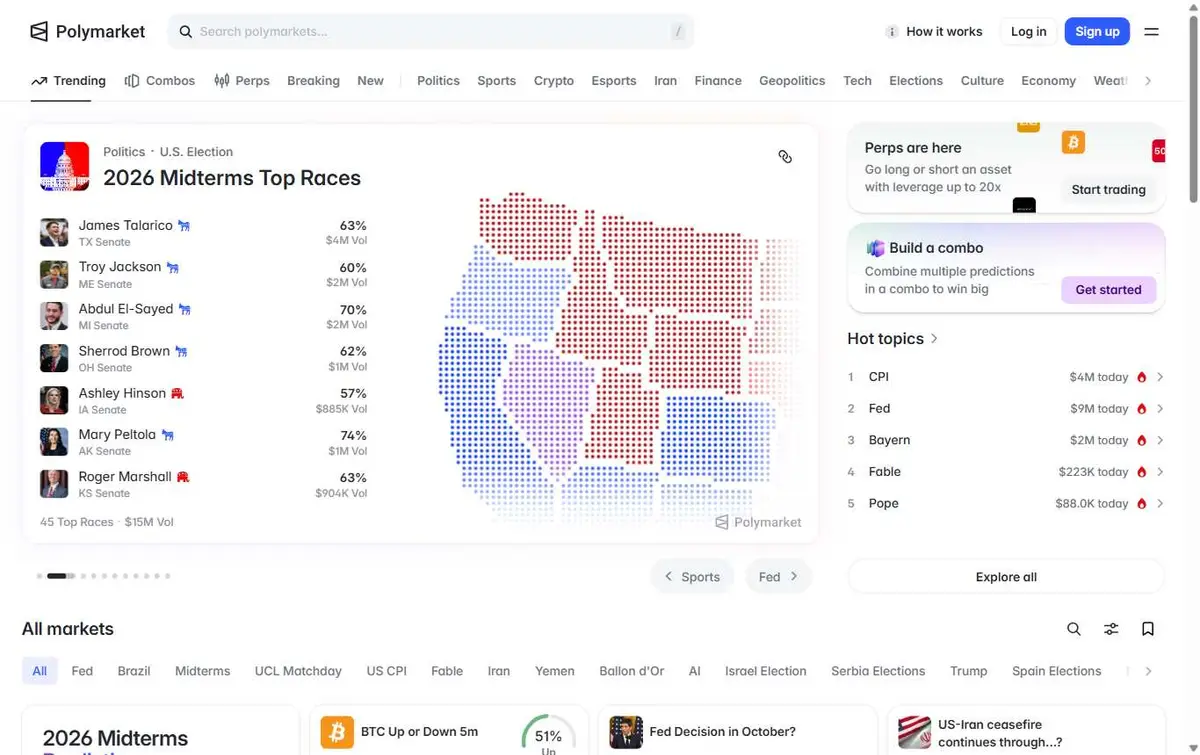
Blocked Polymarket · Home page
Italy: the markets load, but Polymarket's own location check answered blocked, with no message on screen
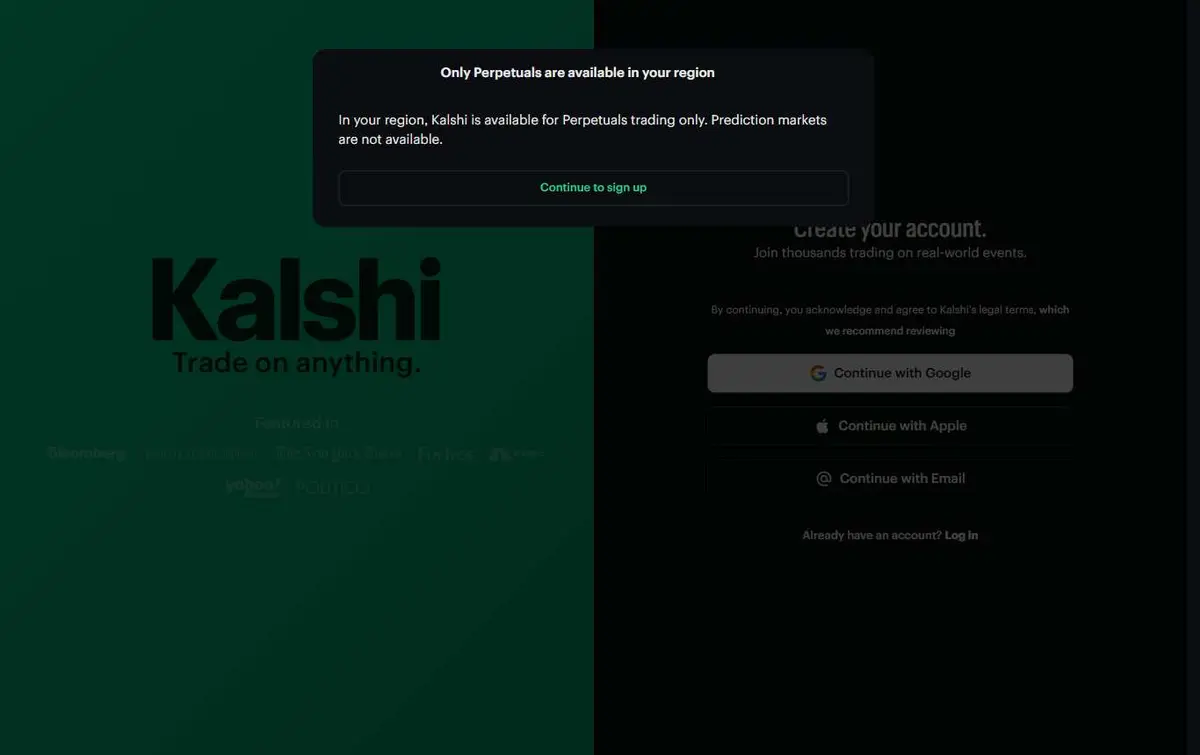
Notice shown Kalshi · Sign-up page
Italy: sign-up offers perpetual futures only, with prediction markets switched off
“Prediction markets are not available.”
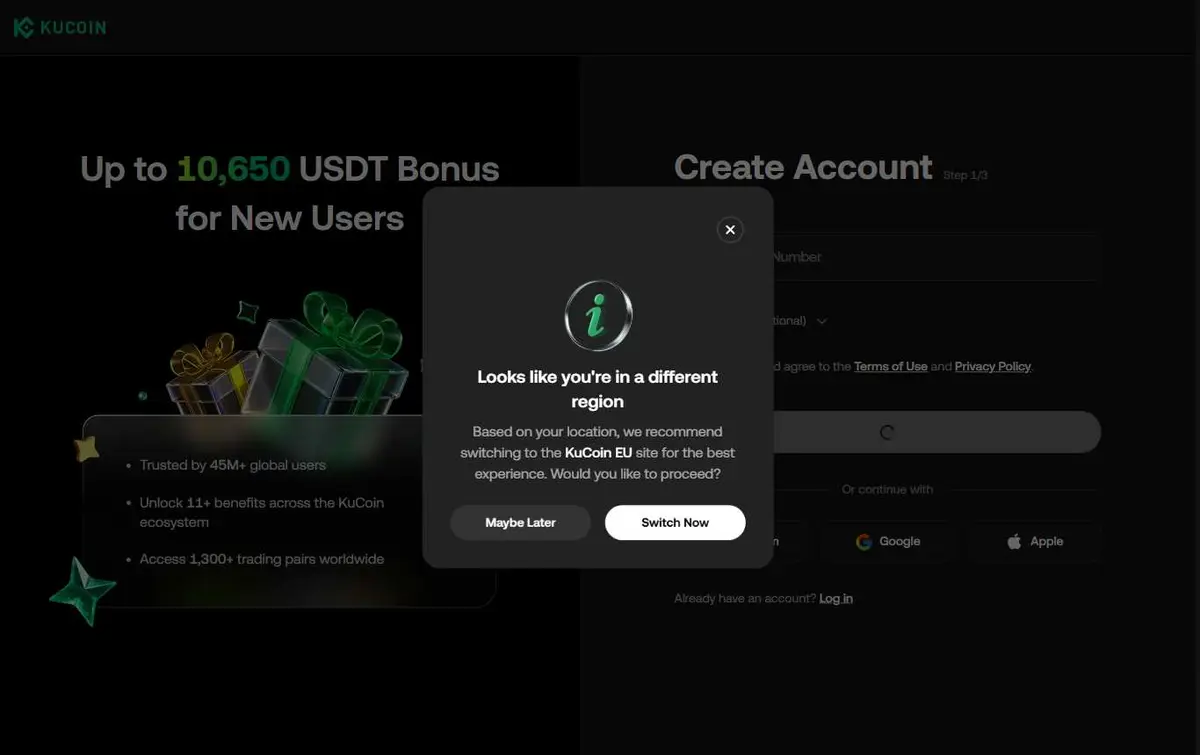
Notice shown KuCoin · Sign-up page
Italy gets the KuCoin EU prompt on the sign-up form, over a page that still loads
“Based on your location, we recommend switching to the KuCoin EU site for the best experience.”
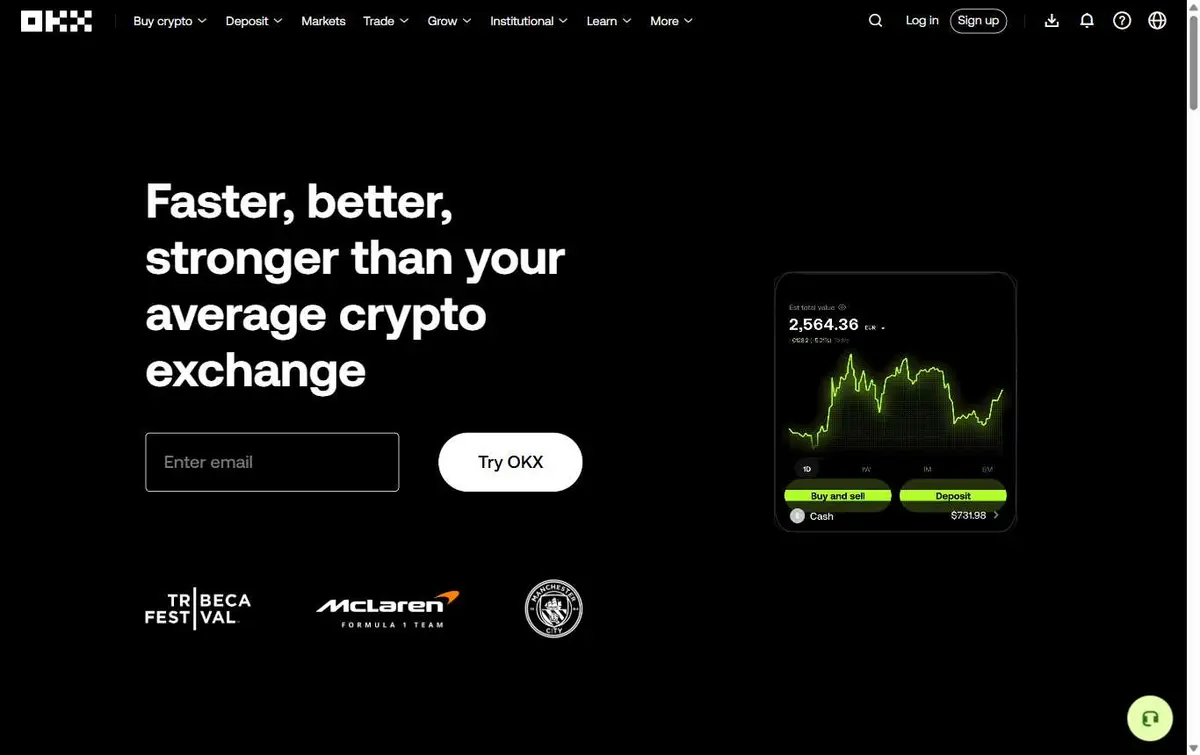
Notice shown OKX · Home page
Italian visitors land on OKX Europe, the MiCA-licensed entity
“OKX Europe”
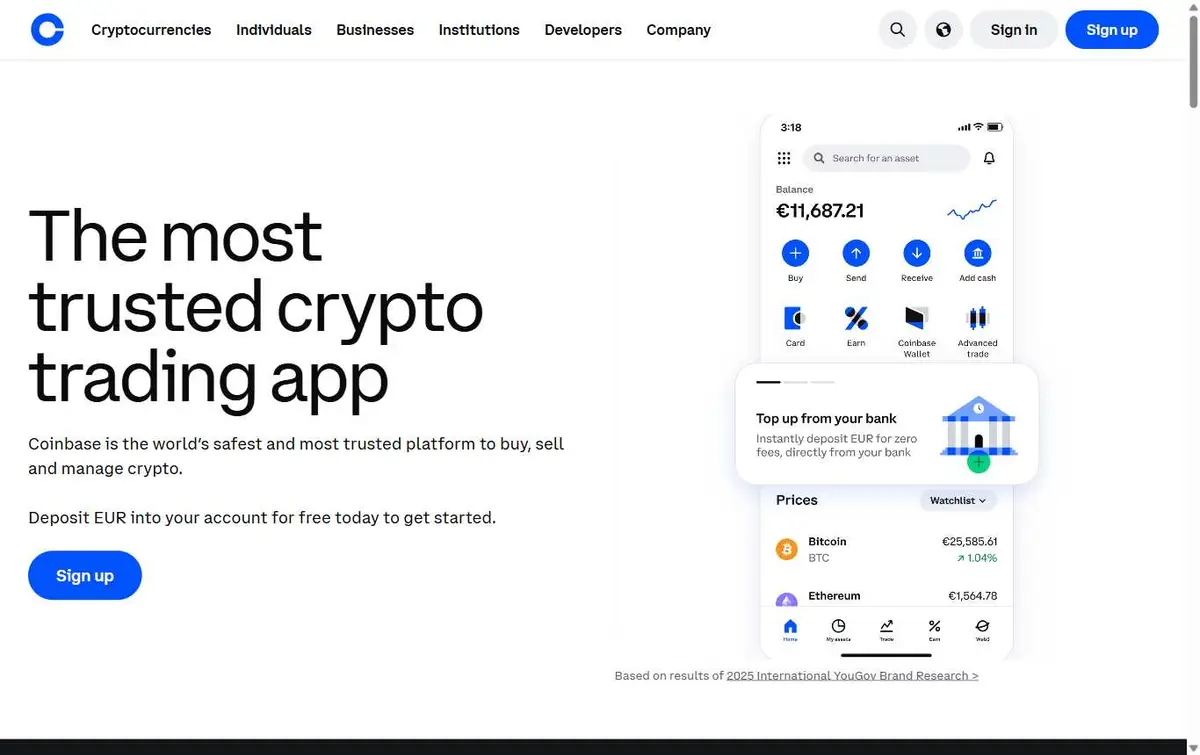
No barrier Coinbase · Home page
Coinbase has a page for Italy and takes EUR deposits, with no barrier
“Coinbase Italy”
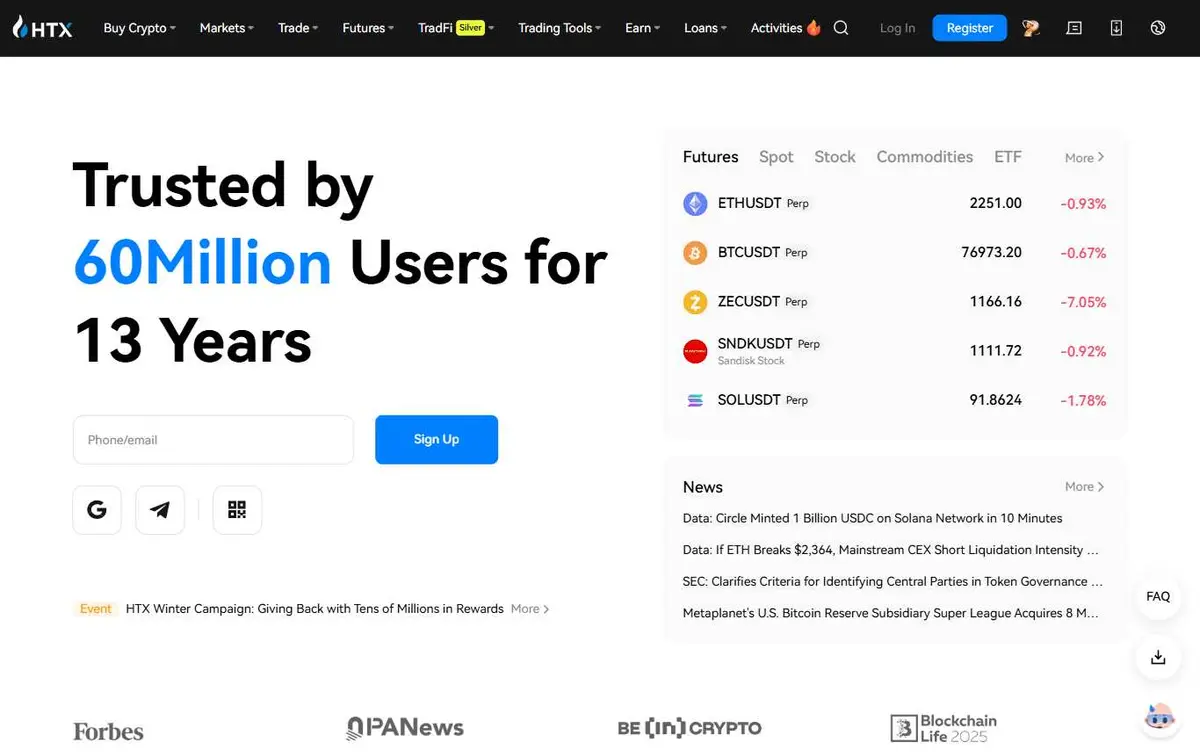
No barrier HTX · Home page
Italy, under the same EU ban, loads with no notice
 CRYPTORESTRICTIONS
Who regulates crypto in Italy?
Consob authorises and supervises crypto firms, working with the Banca d’Italia, which supervises them for anti-money-laundering. The customs and monopolies agency ADM polices betting and prediction markets, and the tax agency receives crypto reports under the EU’s DAC8 rules.
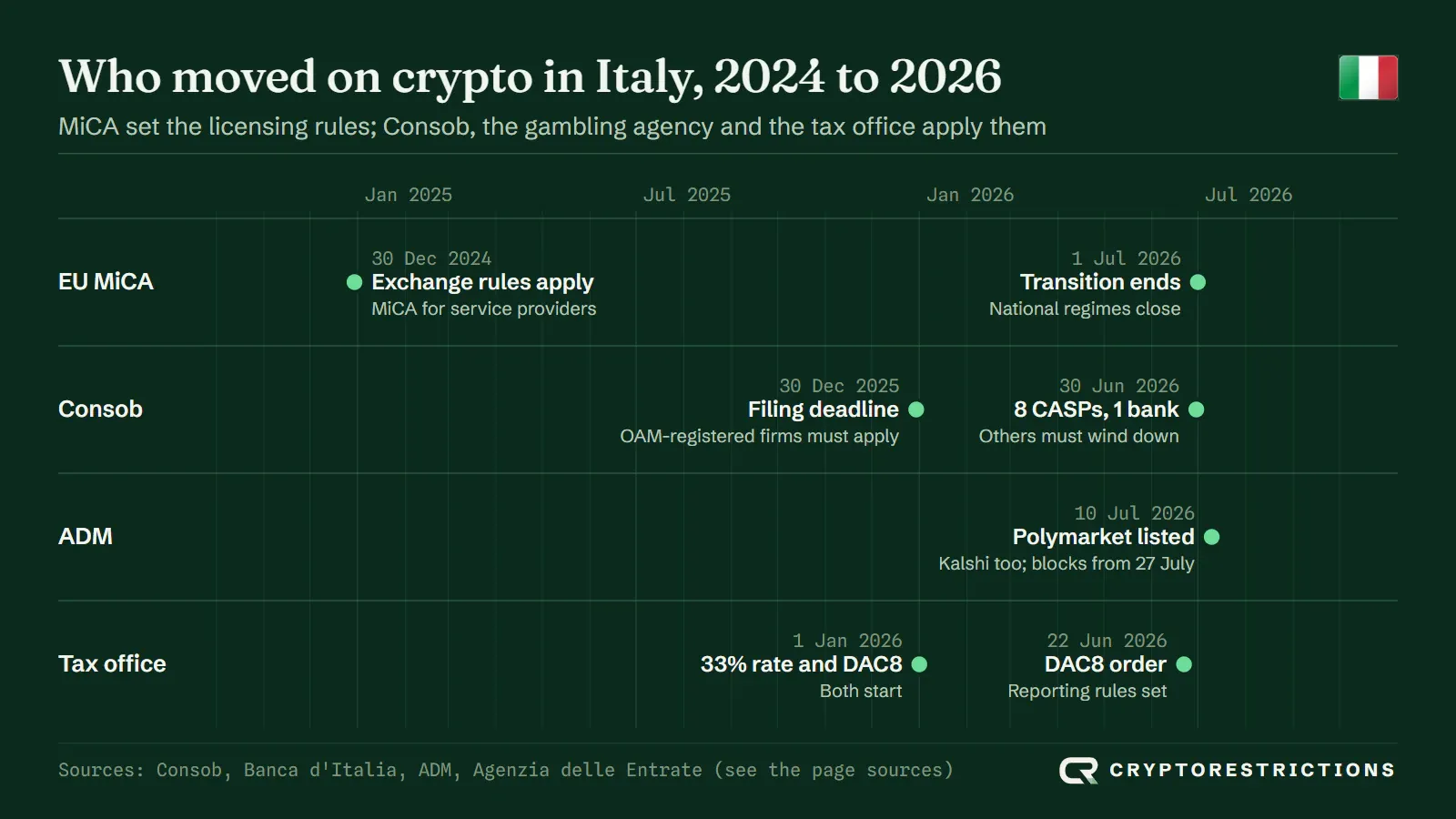
- Consob. The securities regulator authorised the eight CASPs in the joint release, in close coordination with the Banca d’Italia, and is Italy’s single point of contact with ESMA, per the Banca d’Italia FAQ. It has used its blackout power before: resolution 22118 of 16 December 2021 ordered gate.io blacked out for offering unauthorised crypto futures.
- Banca d’Italia. The central bank supervises CASPs for anti-money-laundering, and banks that want to offer crypto services notify it instead of applying to Consob. Banca Sella did so, per the joint release.
- ADM. The Agenzia delle Dogane e dei Monopoli licenses gambling and keeps the list of unauthorised sites that internet providers must block; its action on prediction markets is covered below.
- Agenzia delle Entrate. The tax agency sets how gains are declared and receives provider reports under DAC8, as covered in the tax section.
Which crypto products are limited in Italy?
Spot trading is the open product. Bybit, Crypto.com and Gate offer no derivatives to Italian users, and prediction trading is barred on Aster and Hyperliquid.
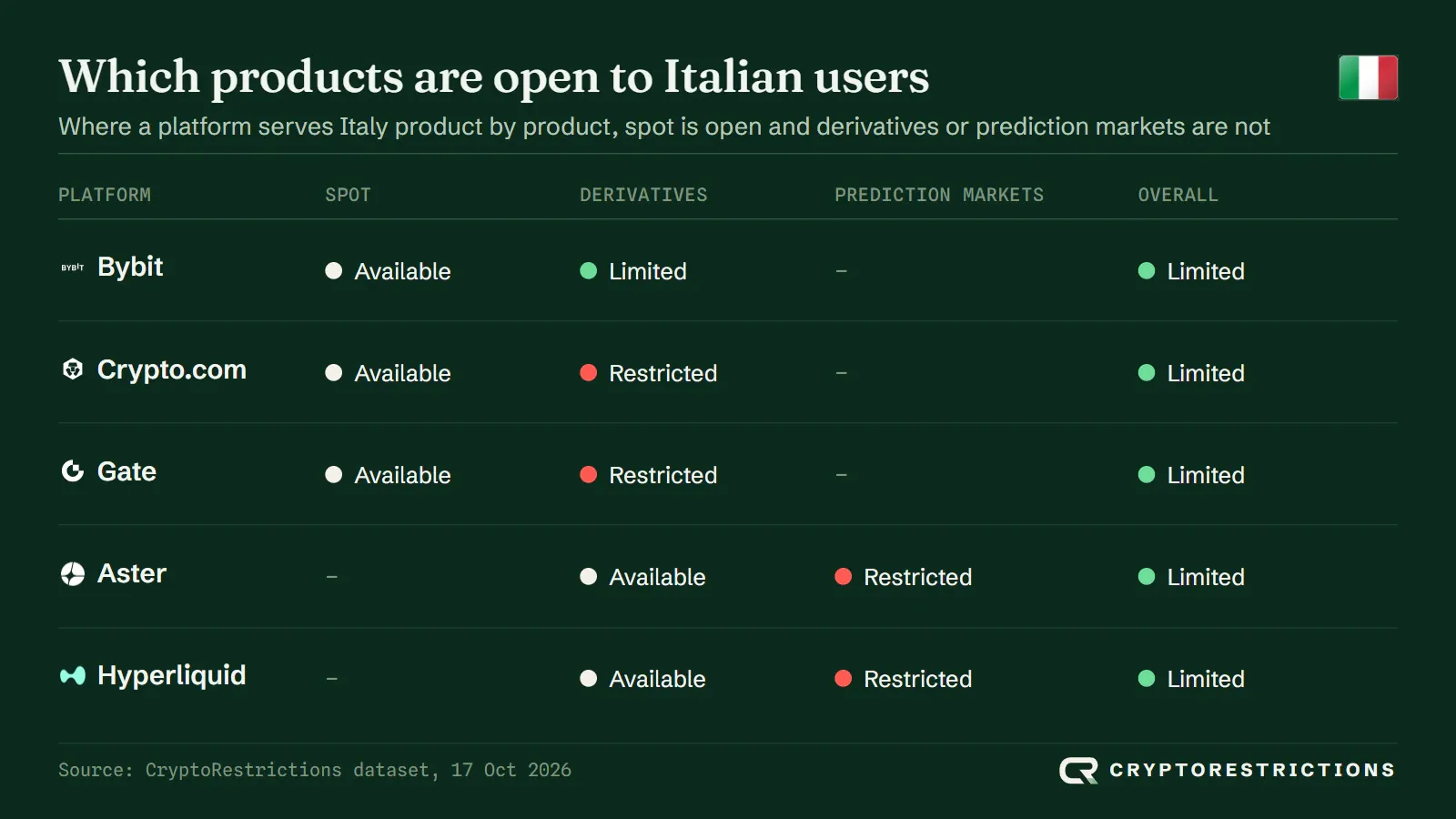
- Derivatives. Consob has acted on unauthorised crypto futures before: its 2021 gate.io order named futures offered in Italian. The three exchanges above avoid the issue by offering no derivatives in Italy.
- Staking. ESMA’s Q&A 2067 says MiCA has no staking-specific rules; where a provider holds the assets or keys, staking counts as ancillary to custody and needs the custody authorisation, with the client’s explicit consent.
Are prediction markets legal in Italy?
No. The customs and monopolies agency ADM lists Polymarket and Kalshi among unauthorised gambling sites, and Italian internet providers have been blocking both since July 2026.
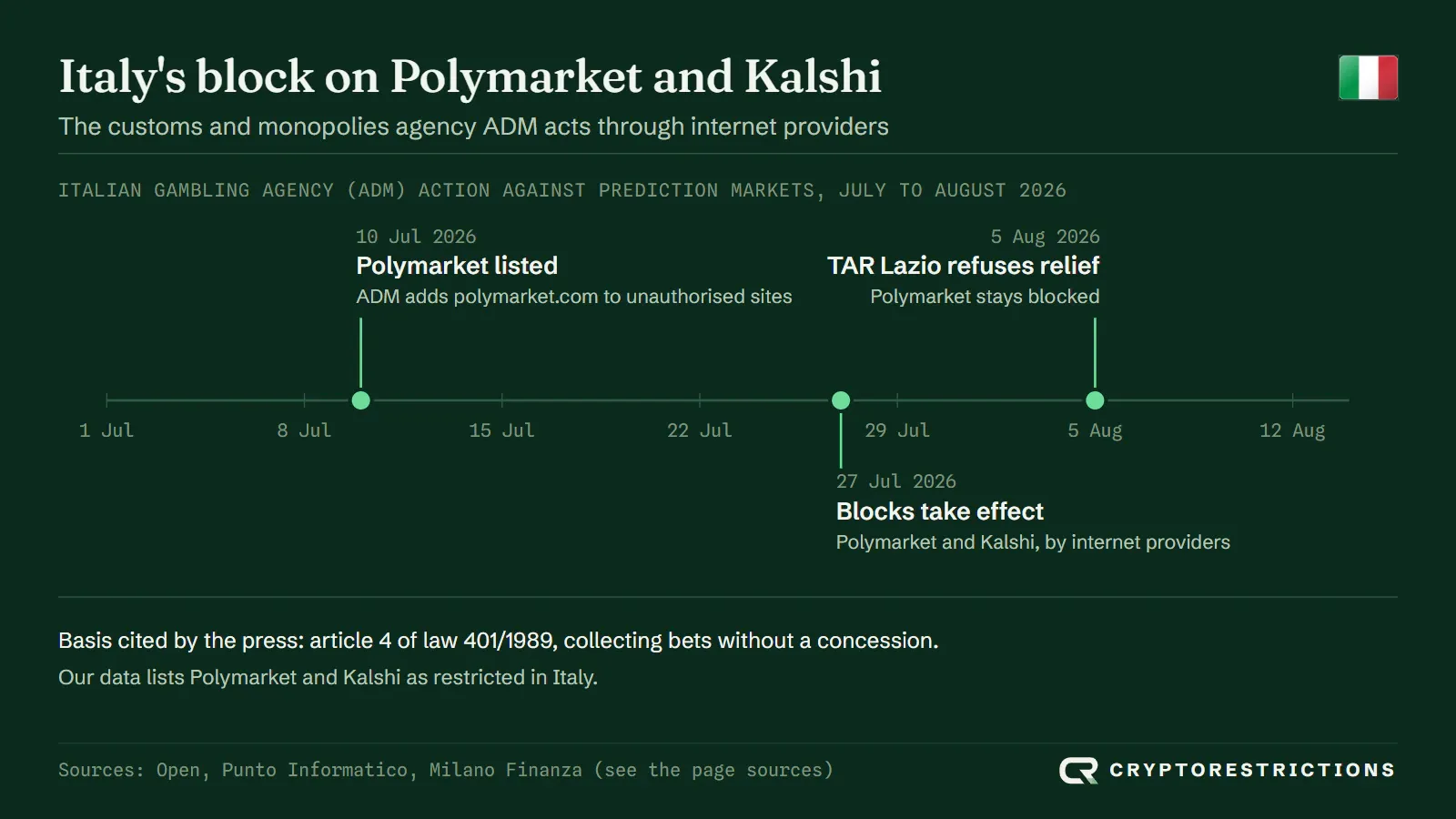
According to Open, ADM put polymarket.com back on its list on 10 July 2026 in an update of 293 sites, citing article 4 of law 401/1989, which covers taking bets without a state concession. Punto Informatico reports that Kalshi was added to the same list, with its block effective from 27 July. Press accounts differ on the exact start for Polymarket; both were blocked by 27 July. We could not read ADM’s own list, so the dates rest on these reports.
It was not the first listing. Calcio e Finanza notes that Polymarket had been listed in 2025 and challenged that at the TAR Lazio administrative court. On 5 August 2026 the court refused Polymarket’s request for urgent relief, so the block stayed. We found no ruling on the merits and no Italian bill that would licence prediction markets.
In our data Polymarket and Kalshi are restricted. Aster and Hyperliquid, which run prediction or outcome markets inside a wider product, bar or hide them for Italian addresses.
How is crypto taxed in Italy?
Gains on selling crypto are taxed at a 33% substitute tax from 2026, with no tax-free threshold. Euro-denominated stablecoins are taxed at 26%, and swapping one crypto for another of the same kind is not taxed.
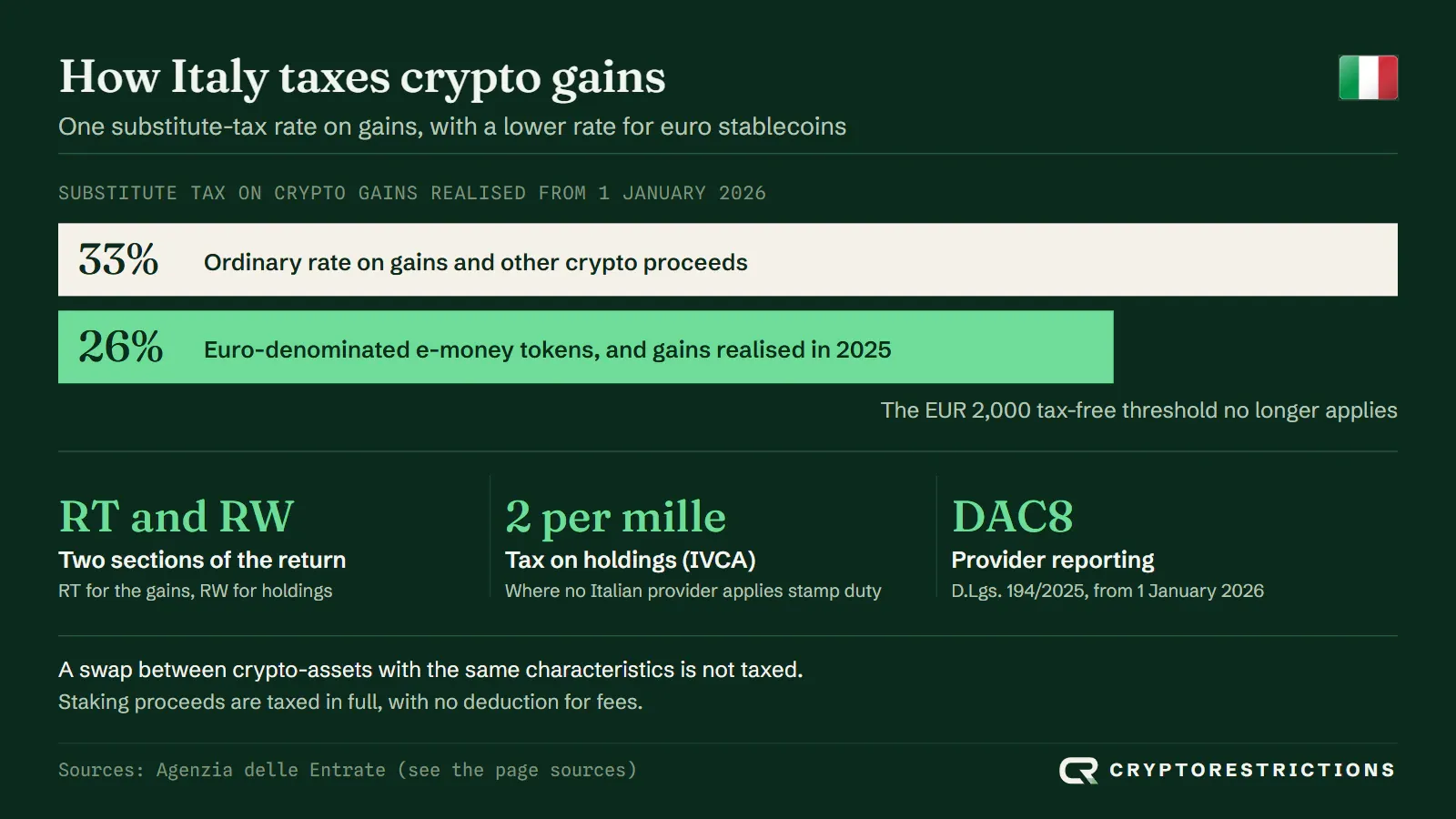
The tax agency’s circular 30/E puts crypto gains in the category of miscellaneous income and taxes them at 26% in section RT of the return, with a EUR 2,000 yearly threshold. The agency’s 2026 return instructions say the threshold has been abolished. The 2026 budget law keeps the ordinary 33% rate for gains realised from 1 January 2026 and sets 26% for e-money tokens denominated in euro, according to the agency’s magazine Fisco Oggi.
Holdings are reported in section RW. Where no Italian provider applies stamp duty, for example on a foreign exchange or a hardware wallet, a tax of 2 per mille on the value applies instead, per answer 181/2024. Staking proceeds are taxed in full, with no deduction for fees, under the same circular.
Reporting is changing. Italy’s DAC8 decree (legislative decree 194/2025) makes crypto providers report their users’ transactions to the tax agency, whose nine FAQs of 29 July 2026 follow a director’s order of 22 June 2026 setting the reporting rules.







 Serbia
 Turkey
 Switzerland
 Iceland
 Liechtenstein
 Norway
 Croatia
 Estonia
 Finland
 Greece
 Latvia