
Is crypto legal in the Philippines?
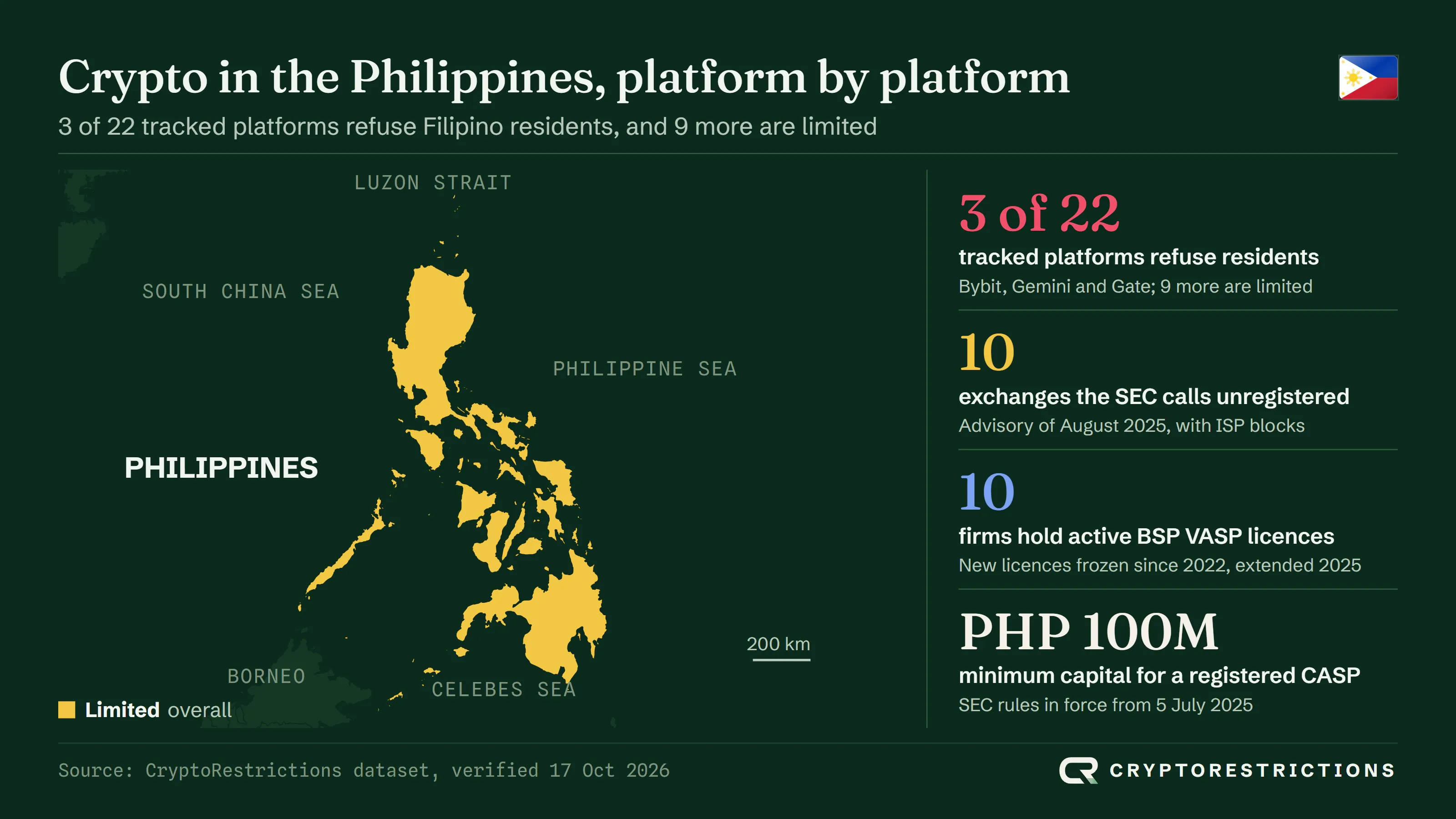
Yes. Residents may buy, hold and trade crypto through firms the BSP licenses or the SEC registers, and the state has acted against unlicensed platforms and their network access, not against the people who use crypto. What is open to a newcomer is narrow: the BSP has frozen new licences.
Two regulators share the work. The BSP licenses virtual asset service providers (VASPs) under Circular No. 1108, and the SEC registers crypto-asset service providers (CASPs) under its 2025 rules and treats unlicensed solicitation of the public as a securities offence. The SEC said in August 2025 that it was not banning crypto trading, only action against platforms outside its rules. The sections below cover who holds a licence, who was blocked, what operators may not do and how gains are taxed.
Which crypto exchanges work in the Philippines?
No exchange we track holds a BSP licence. Ten firms do, all local, and the global names reach Filipinos either through a workaround or in spite of the regulators, which is why nine of the 22 platforms we track are limited here.
The BSP list dated 15 October 2025 shows ten active licensees, eight non-bank and two bank. We read that list through Fintech News Philippines because the BSP page itself was not available to us. New pure-play licences are not being issued: the BSP extended its moratorium from 1 September 2025 under Memorandum M-2025-031, with no end date and subject to reassessment, and Philstar reports it began in 2022.
The SEC route is the other door. Its CASP rules and guidelines (Memorandum Circulars 4 and 5, issued 30 May 2025) took effect on 5 July 2025. A CASP must be a Philippine corporation with at least PHP 100 million of paid-up capital, excluding crypto-assets, and a staffed office in the country. We found no published transition deadline in the sources we could read, and the SEC’s own pages sit behind a bot check, so we state no registration count.
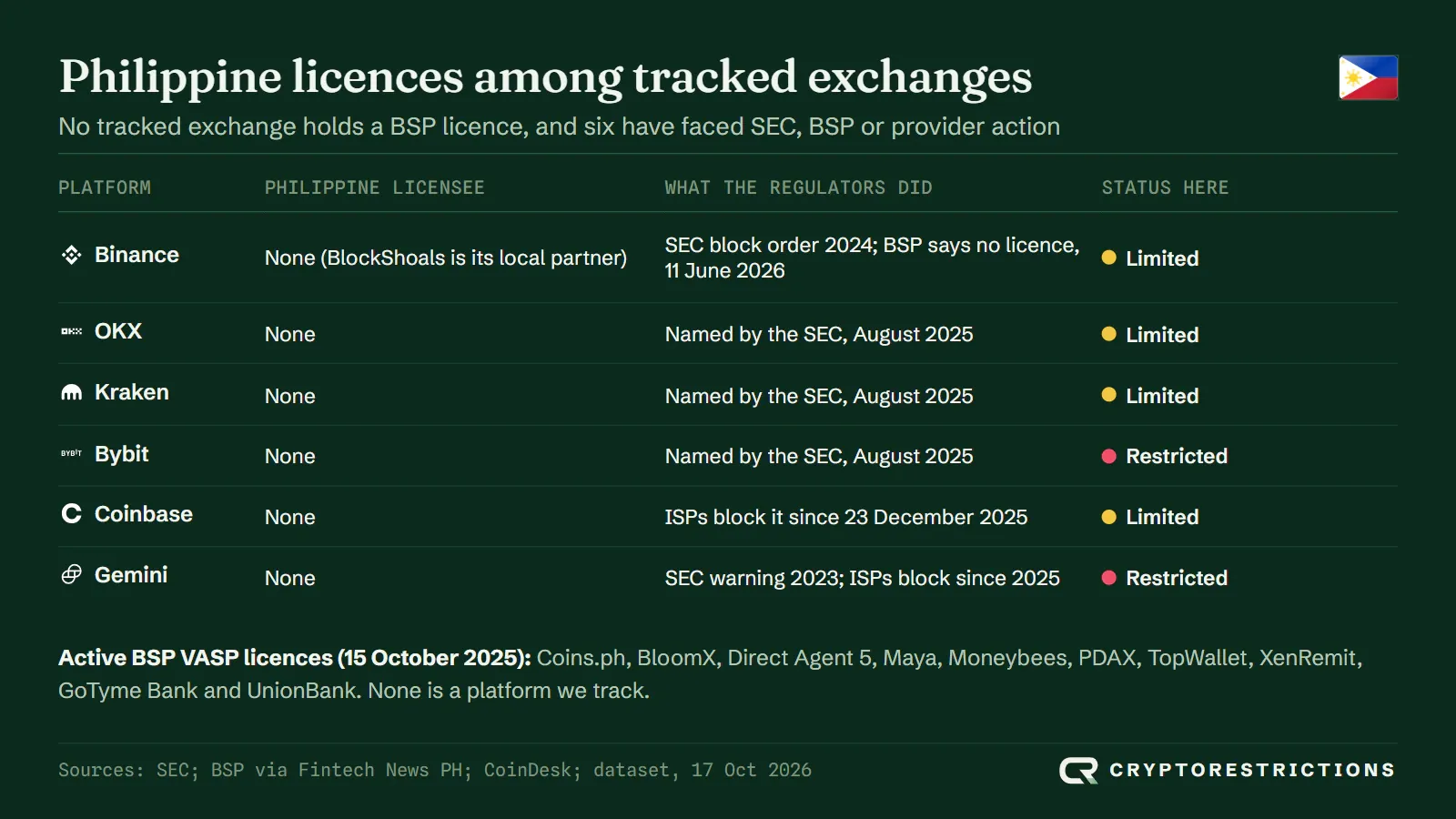
Binance is the one that tried to build a local entity. CoinDesk reported on 11 June 2026 that the BSP said neither Binance nor its partner BlockShoals Technologies holds a VASP licence, and that taking part in the SEC’s sandbox does not replace one. BlockShoals must also link to a licensed domestic VASP before it can onboard users, per the same report.
Best crypto platforms for Filipino residents
By our access score, Bitfinex (8.0 out of 10) and Crypto.com (7.5) are the exchanges most open to Filipino residents, with six more at 6.3. Aster, Hyperliquid and Lighter (8.0 each) lead DeFi, and Kalshi (7.5) leads prediction markets despite the legal risk.
The score rates how fully a Filipino resident can use each platform, not its fees or safety. It is computed from our data and moves when a row changes: access status (4 points), the share of the platform’s products open here (3), the Philippine licences we hold on file (2) and what our geo-access test saw from a Philippine address (1). Platforms that refuse Filipino residents are not scored. The full method is on our methodology page.
Exchanges

Bitfinex
Best for Spot access without a local company
8.0/10- Access
- 4/4
- Products
- 3/3
- Licences
- 0/2
- Our test
- 1/1
Read our Bitfinex reportPros
- Terms do not exclude the Philippines
- Loaded without a block in our test
Cons
- No Philippine licence on file

Crypto.com
Best for Spot trading in the app
7.5/10- Access
- 4/4
- Products
- 3/3
- Licences
- 0/2
- Our test
- 0.5/1
Read our Crypto.com reportPros
- Not named in the SEC advisory of August 2025
- Not on its own geo-restriction lists
Cons
- No Philippine licence on file

Binance
Best for Global brand, local access still being rebuilt
6.3/10- Access
- 3/4
- Products
- 2.3/3
- Licences
- 0/2
- Our test
- 1/1
Read our Binance reportPros
- Loaded without a block in our test
- SEC sandbox clearance for BlockShoals
Cons
- The BSP says it has no VASP licence
- The SEC had it blocked in 2024

Bitget
Best for Spot and derivatives from a global account
6.3/10- Access
- 3/4
- Products
- 2.3/3
- Licences
- 0/2
- Our test
- 1/1
Read our Bitget reportPros
- Not on its own prohibited list
- Loaded without a block in our test
Cons
- Named by the SEC in August 2025
- No Philippine licence on file

HTX
Best for Spot and derivatives from a global account
6.3/10- Access
- 3/4
- Products
- 2.3/3
- Licences
- 0/2
- Our test
- 1/1
Read our HTX reportPros
- Not on its own restricted list
- Loaded without a block in our test
Cons
- The SEC warned against it in April 2026

KuCoin
Best for Spot and derivatives from a global account
6.3/10- Access
- 3/4
- Products
- 2.3/3
- Licences
- 0/2
- Our test
- 1/1
Read our KuCoin reportPros
- Not on its own prohibited list
- Loaded without a block in our test
Cons
- Named by the SEC in August 2025
- No Philippine licence on file

MEXC
Best for Spot and derivatives from a global account
6.3/10- Access
- 3/4
- Products
- 2.3/3
- Licences
- 0/2
- Our test
- 1/1
Read our MEXC reportPros
- Not on its own prohibited list
- Loaded without a block in our test
Cons
- Named by the SEC in August 2025
- No Philippine licence on file

OKX
Best for Spot and derivatives from a global account
6.3/10- Access
- 3/4
- Products
- 2.3/3
- Licences
- 0/2
- Our test
- 1/1
Read our OKX reportPros
- Not on its own prohibited list
- Loaded without a block in our test
Cons
- Named by the SEC in August 2025
- No Philippine licence on file

Coinbase
Best for Spot trading with a US-listed brand
5.8/10- Access
- 3/4
- Products
- 2.3/3
- Licences
- 0/2
- Our test
- 0.5/1
Read our Coinbase reportPros
- The Philippines is a listed sign-up country
Cons
- ISPs have blocked it since 23 December 2025

Kraken
Best for Spot trading from your own account
5.8/10- Access
- 3/4
- Products
- 2.3/3
- Licences
- 0/2
- Our test
- 0.5/1
Read our Kraken reportPros
- The Philippines is not on its do-not-serve list
Cons
- Named by the SEC in August 2025
- No Philippine licence on file
DeFi

Aster
Best for Perpetuals and spot trading
8.0/10- Access
- 4/4
- Products
- 3/3
- Licences
- 0/2
- Our test
- 1/1
Read our Aster reportPros
- The trading app loaded in our test
Cons
- Prediction trading is barred under its prediction rules

Hyperliquid
Best for Perpetuals from your own wallet
8.0/10- Access
- 4/4
- Products
- 3/3
- Licences
- 0/2
- Our test
- 1/1
Read our Hyperliquid reportPros
- Not blocked in our geo-access test
Cons
- No Philippine licence on file

Lighter
Best for Perpetuals on its trading app
8.0/10- Access
- 4/4
- Products
- 3/3
- Licences
- 0/2
- Our test
- 1/1
Read our Lighter reportPros
- Not named in its terms
- The trading app loaded in our test
Cons
- No Philippine licence on file

Jupiter
Best for Solana swaps
7.5/10- Access
- 4/4
- Products
- 3/3
- Licences
- 0/2
- Our test
- 0.5/1
Read our Jupiter reportPros
- The Philippines is not named in its terms
Cons
- No Philippine licence on file

PancakeSwap
Best for BNB Chain swaps and pools
7.5/10- Access
- 4/4
- Products
- 3/3
- Licences
- 0/2
- Our test
- 0.5/1
Read our PancakeSwap reportPros
- Its terms bar only people and places under US sanctions
Cons
- No Philippine licence on file

Uniswap
Best for Swapping tokens from your own wallet
7.5/10- Access
- 4/4
- Products
- 3/3
- Licences
- 0/2
- Our test
- 0.5/1
Read our Uniswap reportPros
- Its terms bar only places under comprehensive US sanctions
Cons
- No Philippine licence on file
Prediction markets

Kalshi
Best for Event contracts, with legal risk
7.5/10- Access
- 4/4
- Products
- 3/3
- Licences
- 0/2
- Our test
- 0.5/1
Read our Kalshi reportPros
- The Philippines is not on its restricted-jurisdictions list
Cons
- No PAGCOR authorisation exists for any prediction market

Polymarket
Best for Event markets on networks that do not block it
5.8/10- Access
- 3/4
- Products
- 2.3/3
- Licences
- 0/2
- Our test
- 0.5/1
Read our Polymarket reportPros
- Not on its own restricted list
Cons
- Globe Telecom has blocked it since May 2026 at PAGCOR request
Which platforms block Filipino users?
Three exchanges, Bybit, Gemini and Gate, refuse Filipino residents, and nine more platforms are limited because regulators or internet providers have acted against them. Only Gate says so in its own terms; the rest of the pressure comes from the state.
The Philippine SEC advisory of August 2025 named ten platforms as unregistered: OKX, Bybit, MEXC, KuCoin, Bitget, Phemex, CoinEx, BitMart, Poloniex and Kraken. The list is not exhaustive, per the SEC. Major providers then restricted access, CoinDesk reported. The SEC had earlier proceeded with blocking Binance in March 2024. Allegations of operating without a licence are the regulators’, not a court’s finding.
Two later waves widened the net. On 22 December 2025 the National Telecommunications Commission ordered providers to block 50 unregistered VASPs at the BSP’s request; the list was not published, but BitPinas found Coinbase and Gemini unreachable on Globe and PLDT. The SEC then warned against HTX in April 2026 and against dYdX, Aevo, gTrade, Pacifica, Orderly, Deriv and Ostium that month, CoinGeek reported. Gate lists the Philippines among its restricted locations in its user agreement of 22 July 2026.
What our geo-access test saw from the Philippines
From a Philippine address on 14 and 16 October 2026 we tested 12 of the 22 platforms we track. Eleven loaded with no barrier and Bybit refused our sign-up.
An open page is not permission, and a virtual Philippine address cannot see a block applied by Philippine internet providers. That is why OKX, KuCoin, Bitget and MEXC loaded although the SEC named them and providers have restricted access, and why Gate loaded although its terms list the Philippines. We have no Philippine test for the other ten platforms. Swipe through the screenshots below; each card says what the page showed.
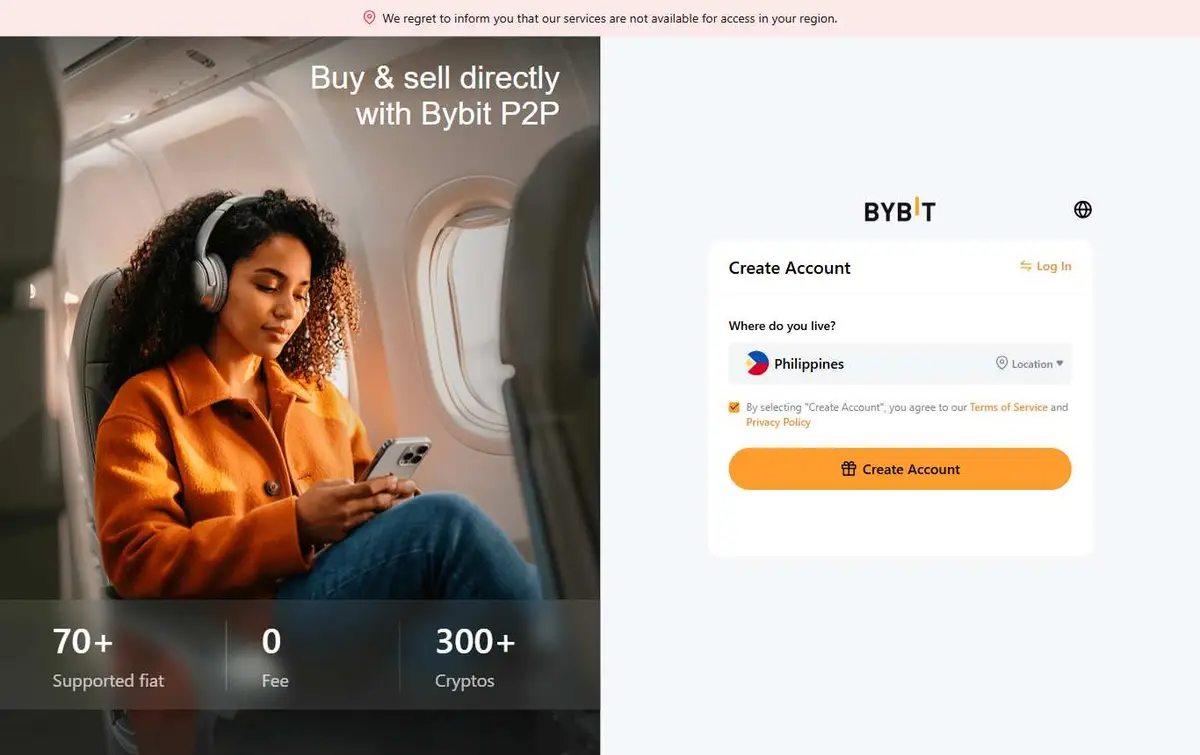
Blocked Bybit · Sign-up page
Blocked from the Philippines through a virtual location
“We regret to inform you that our services are not available for access in your region.”
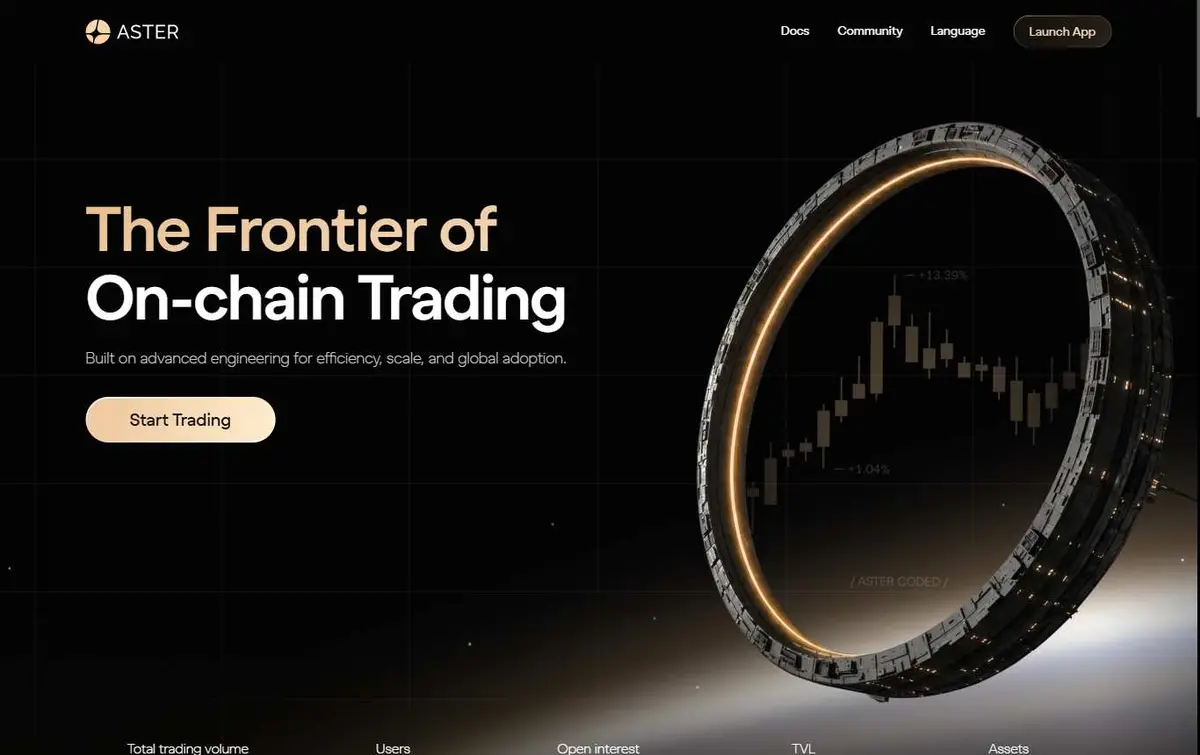
No barrier Aster · Home page
The trading app loaded with no barrier
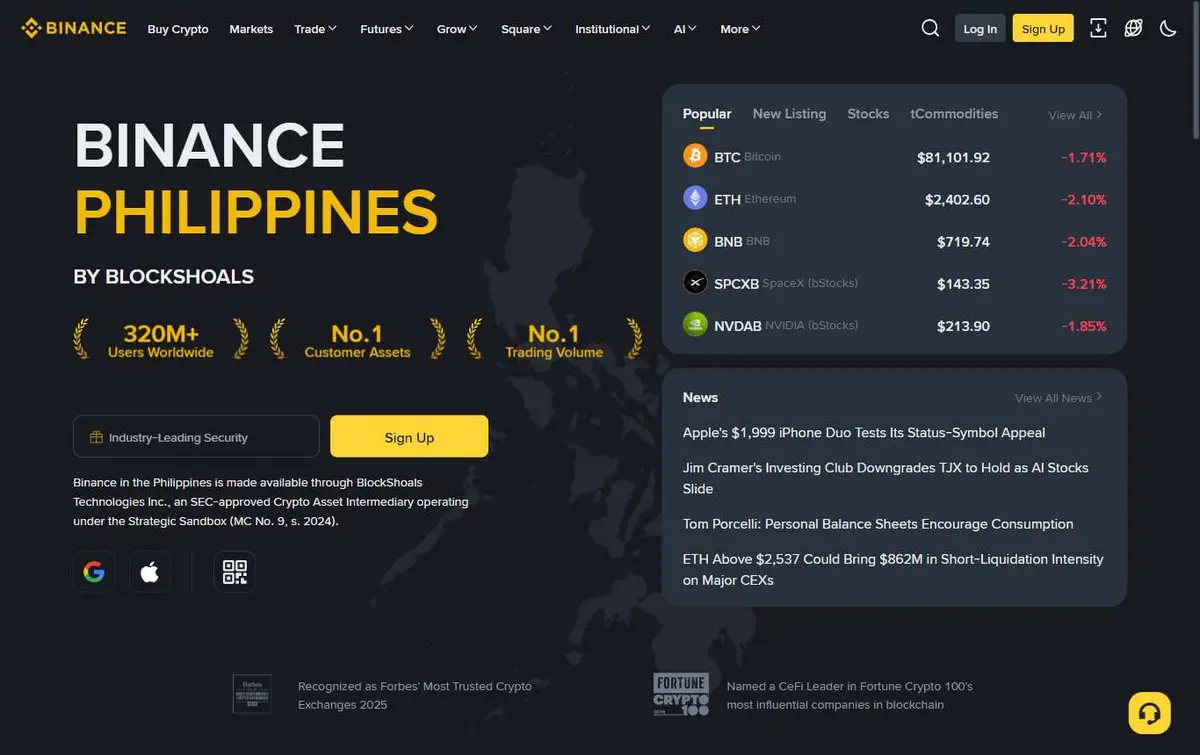
No barrier Binance · Home page
Loaded with no barrier from a Philippine address
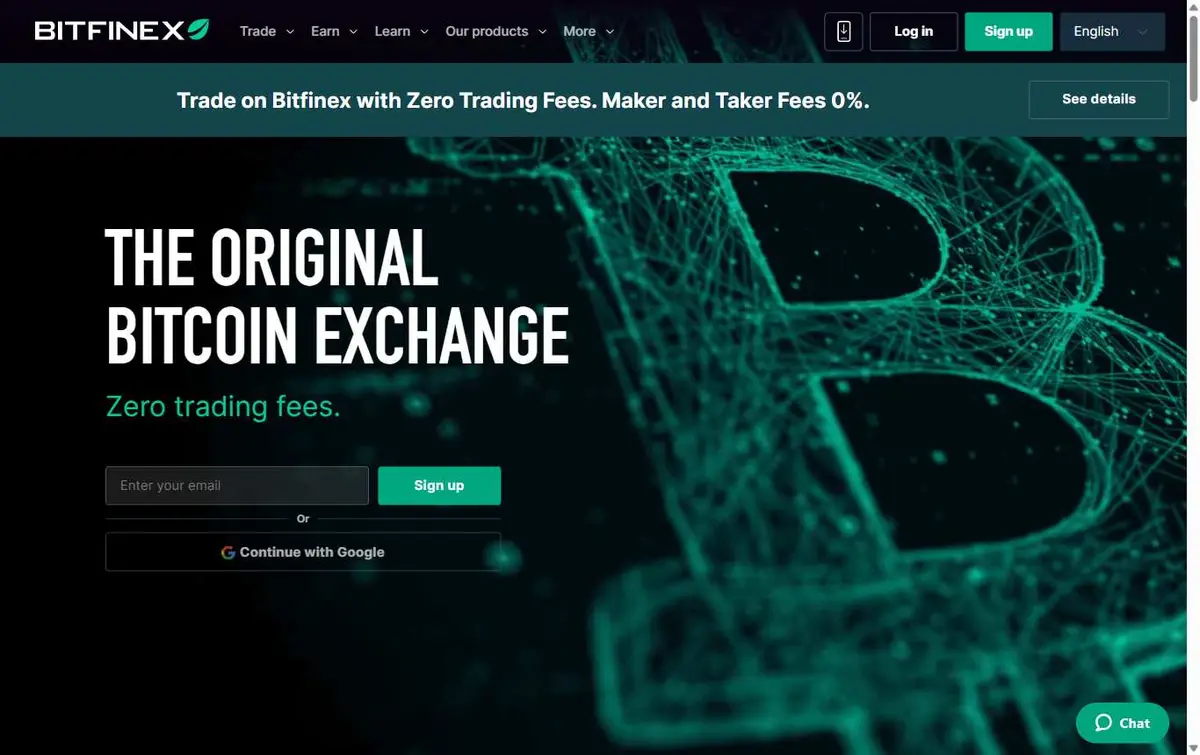
No barrier Bitfinex · Home page
Loaded with no barrier from a Philippine address

No barrier Bitget · Home page
Loaded with no barrier; a virtual location cannot see the block philippine internet providers apply
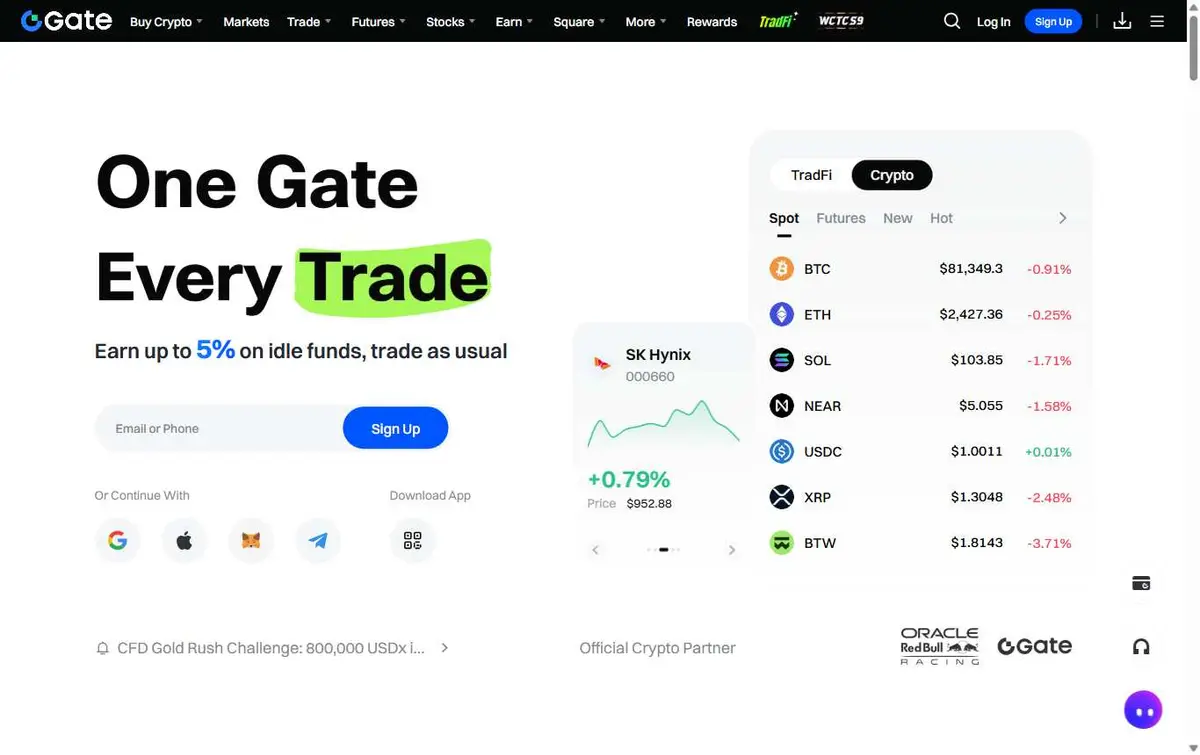
No barrier Gate · Home page
Loaded with no barrier, although Gate lists the Philippines in its terms
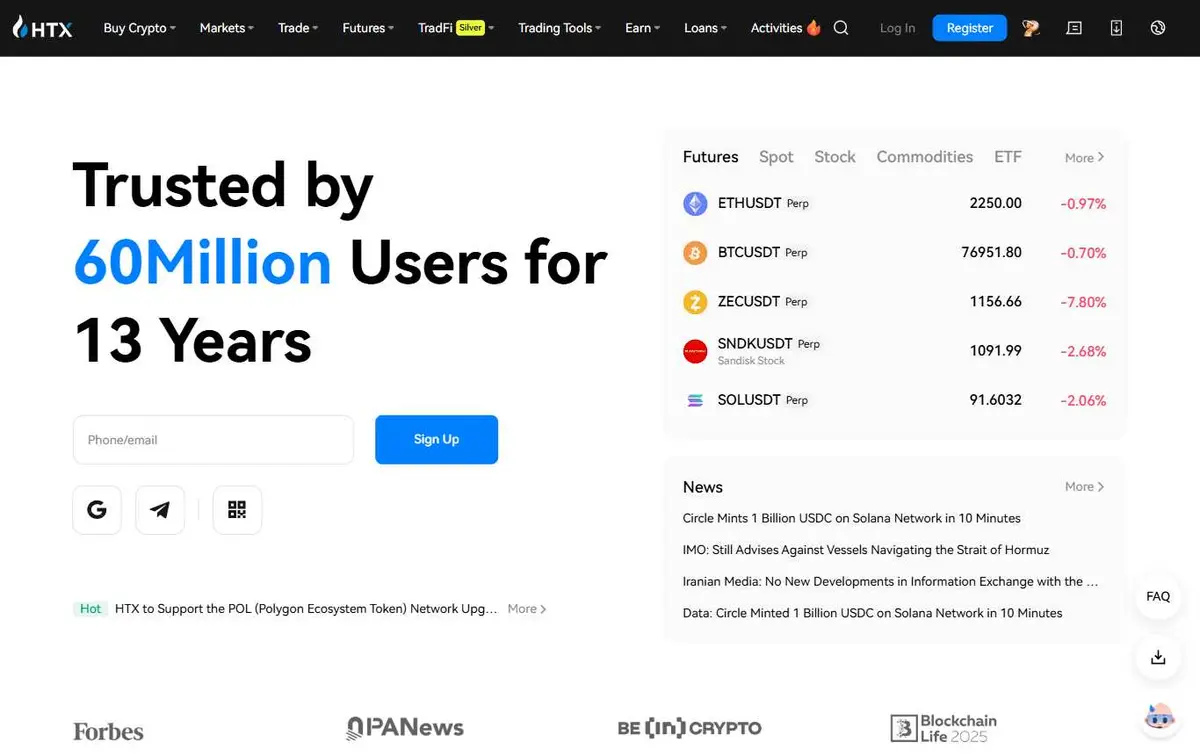
No barrier HTX · Home page
Loaded with no barrier from a Philippine address

No barrierHyperliquid · Home page
The trading app loaded with no barrier
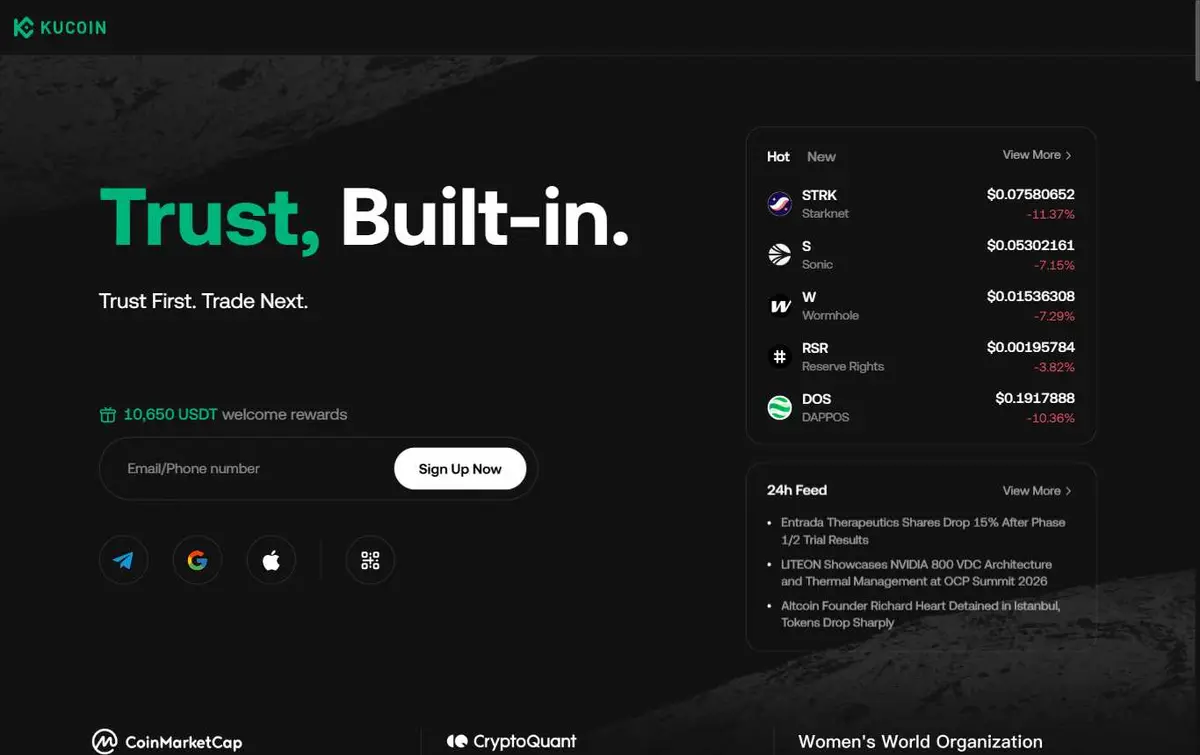
No barrier KuCoin · Home page
Loaded with no barrier; a virtual location cannot see the block philippine internet providers apply
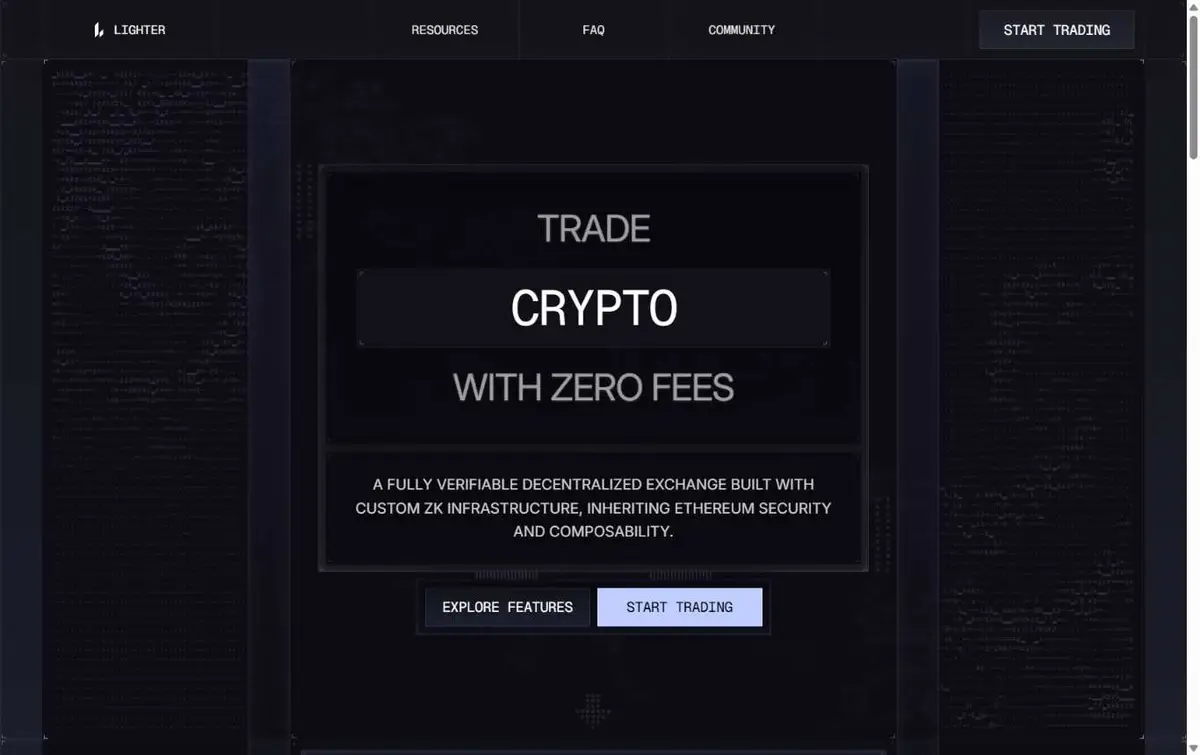
No barrier Lighter · Home page
The trading app loaded with no barrier
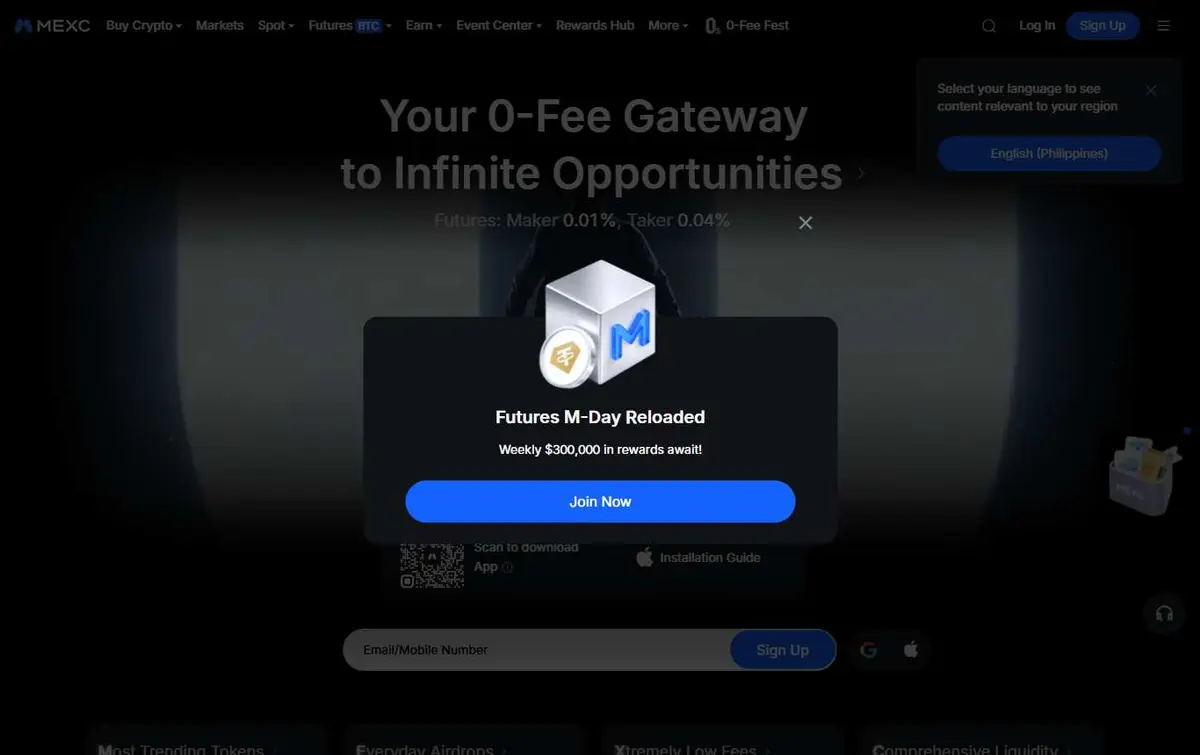
No barrier MEXC · Home page
Loaded with no barrier; a virtual location cannot see the block philippine internet providers apply
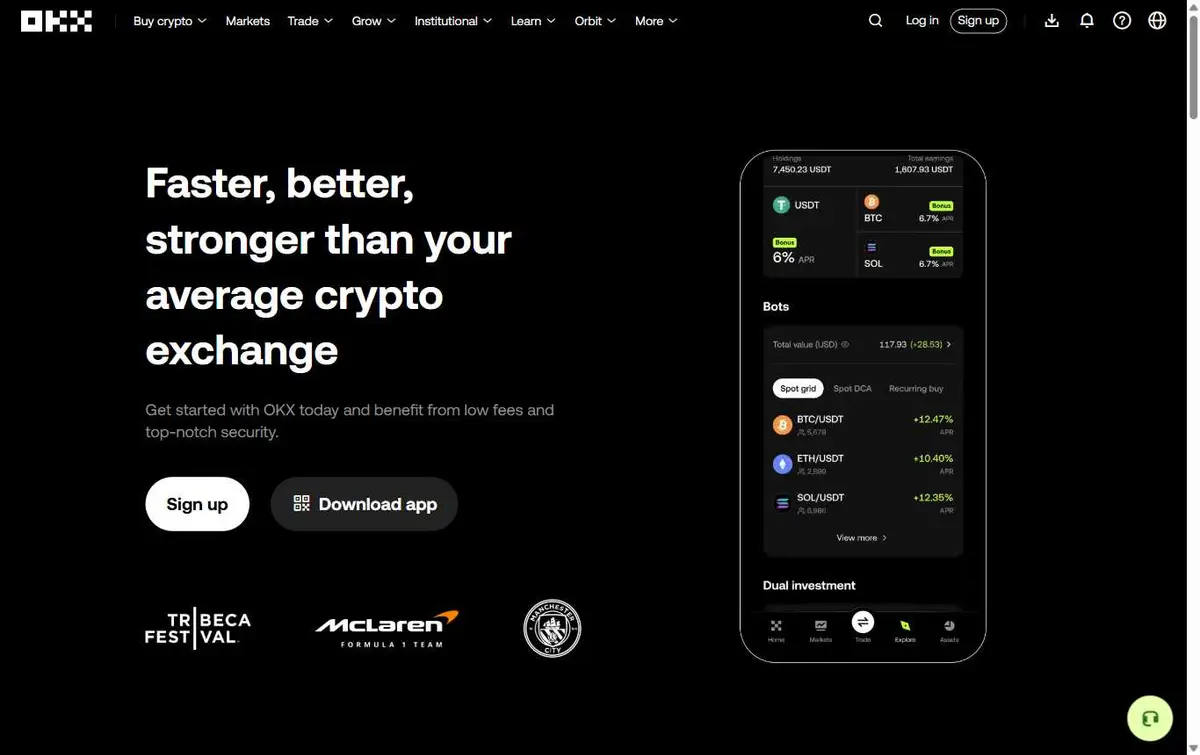
No barrier OKX · Home page
Loaded with no barrier; a virtual location cannot see the block philippine internet providers apply, so this does not show the August 2025 block
 CRYPTORESTRICTIONS
Who regulates crypto in the Philippines?
The BSP licenses VASPs, the SEC registers CASPs and warns about the rest, the NTC and internet providers cut access, PAGCOR decides what gambling is authorised, and the Bureau of Internal Revenue (BIR) taxes the gains.
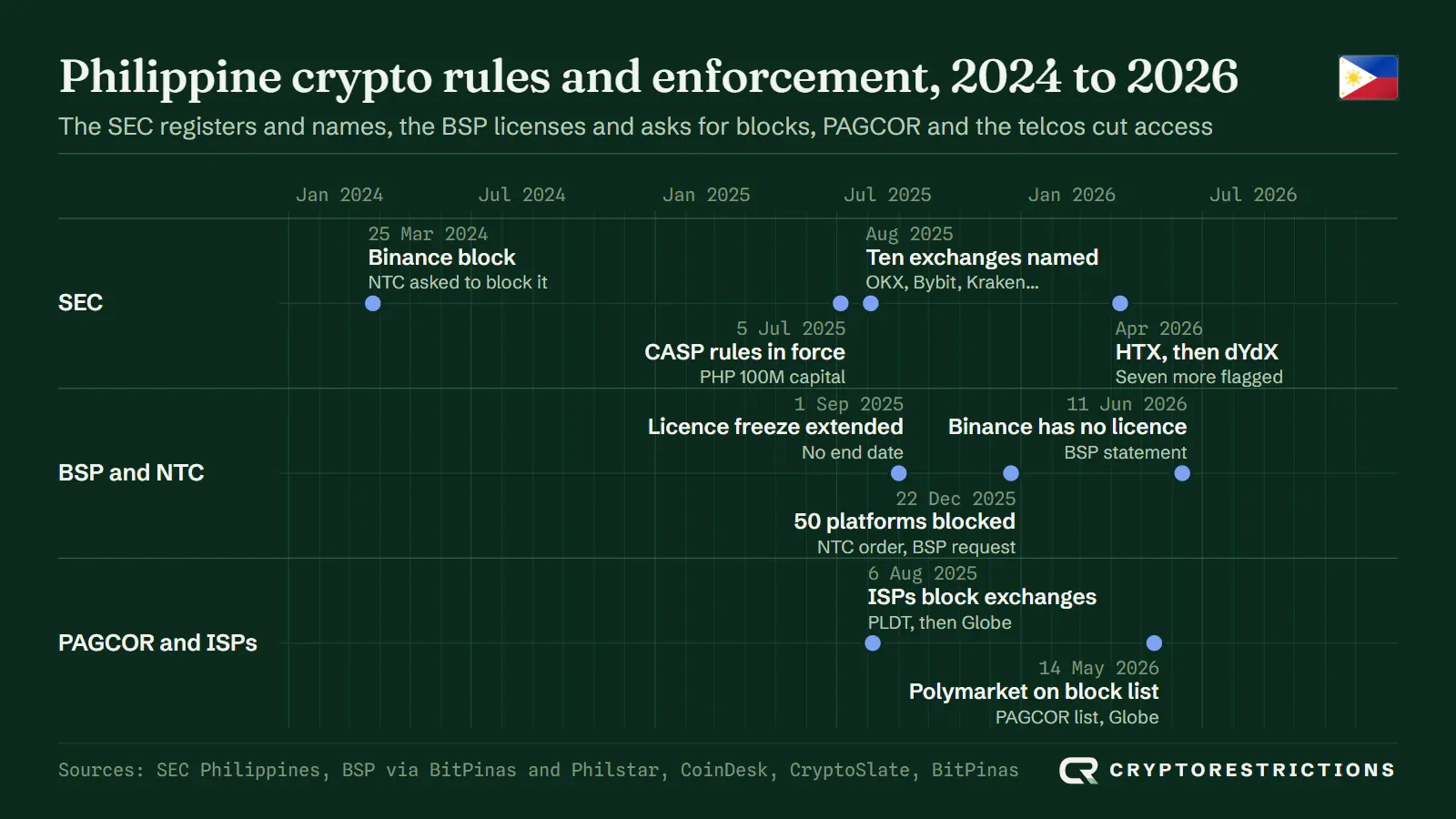
- BSP. Licenses VASPs under Circular No. 1108 and keeps the moratorium on new licences. On 11 June 2026 it said the SEC sandbox does not substitute for a VASP licence.
- SEC. Registers CASPs under Memorandum Circulars 4 and 5 of 2025, sets marketing and public-offer rules, and names unregistered platforms.
- NTC. Orders providers to block sites, on SEC or BSP request.
- PAGCOR. The gambling regulator; its block list covered Polymarket in May 2026 (see the prediction markets section).
- CICC. The Cybercrime Investigation and Coordinating Center hosts the access-restricted page Globe users see, per BitPinas.
- BIR. Taxes crypto gains under the ordinary income rules (see the tax section).
Which crypto products are limited in the Philippines?
Limits fall on who may offer crypto, not on products: new BSP licences are frozen, CASPs need PHP 100 million of capital and a Philippine office, and marketing and public offers carry disclosure duties. Offshore derivatives platforms have drawn SEC warnings.
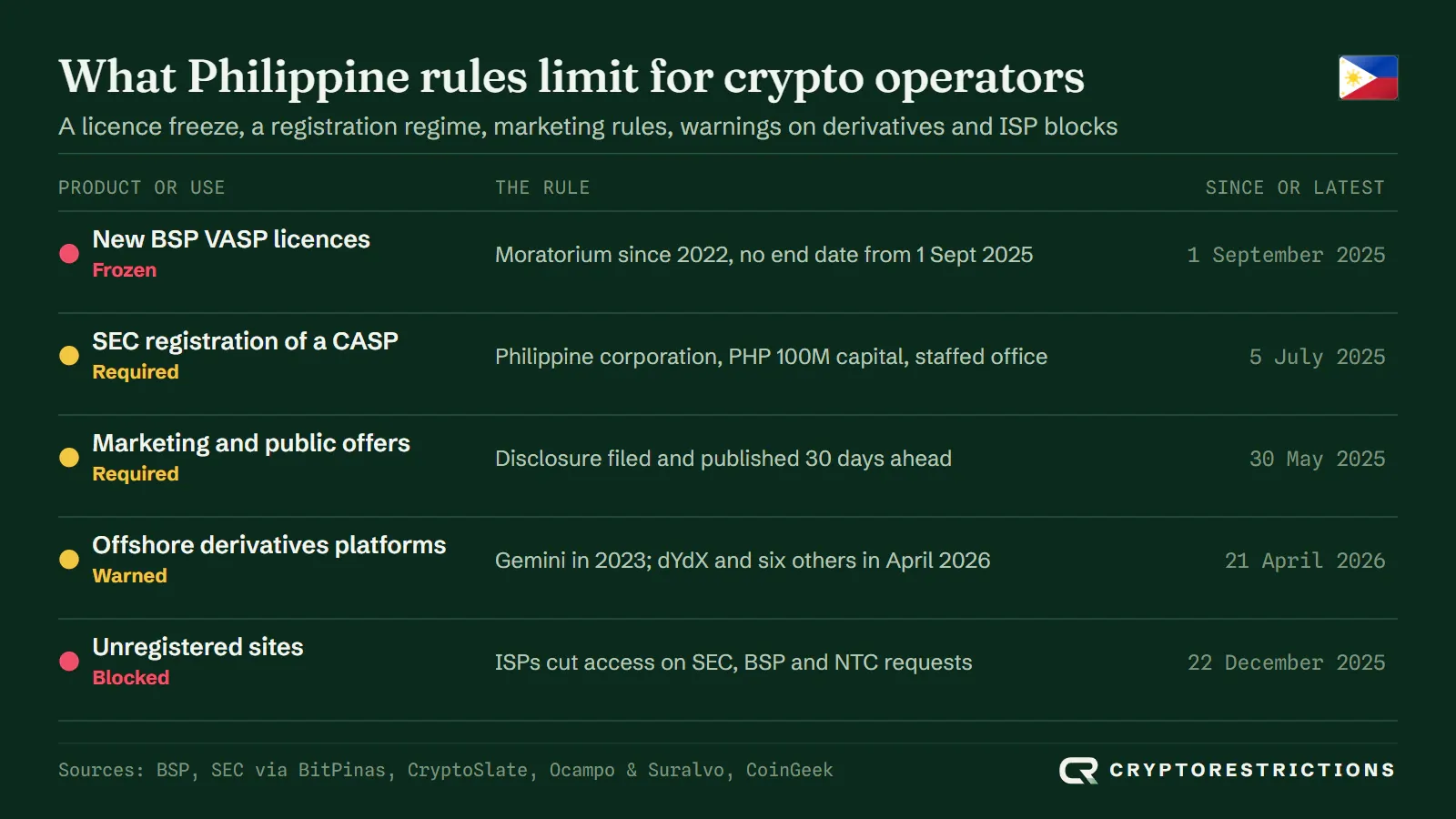
- Licences. The moratorium covers all new VASP applicants and has no end date.
- Registration. A CASP must be a Philippine corporation with a staffed office and PHP 100 million of paid-up capital, excluding crypto-assets.
- Marketing. Under MC 4, a disclosure document is filed with the SEC and published at least 30 days before marketing or an offering, and marketers must state their SEC registration number. Fines run from PHP 50,000 to PHP 10 million for each instance of investment fraud.
- Derivatives. The SEC warned about Gemini’s derivatives in 2023 and about seven offshore derivatives platforms in April 2026, saying they appear to promise returns to Filipinos without registration.
Are prediction markets legal in the Philippines?
No authorised route exists. PAGCOR has licensed no prediction market, and a real-money market run without its licence is illegal gambling, according to a Philippine gaming lawyer.
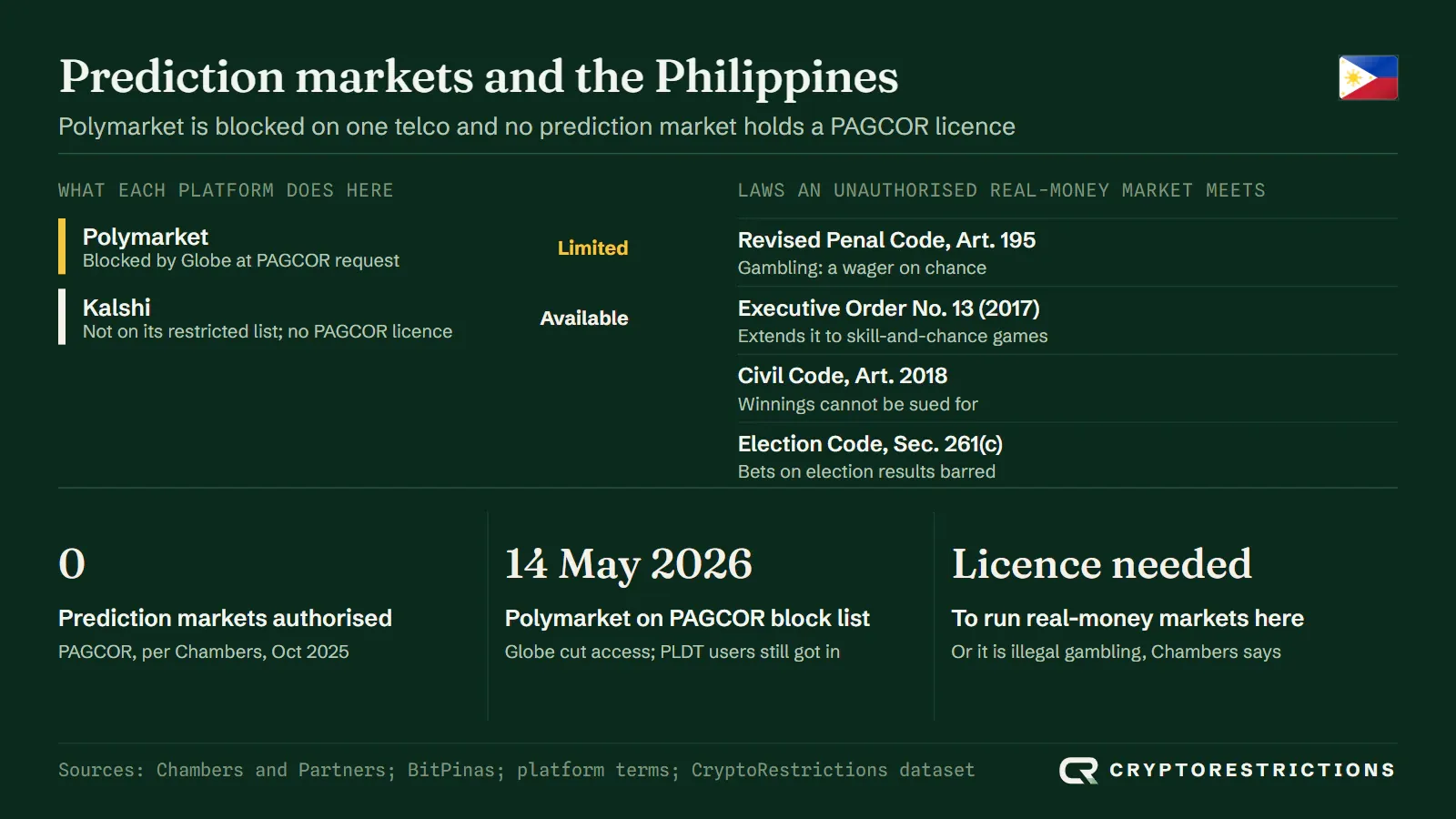
The analysis comes from Chambers and Partners (27 October 2025): PAGCOR is the body empowered to license gambling, no prediction market holds its authorisation, and election-outcome wagers are barred outright. Play-money markets are likely not gambling. We found no penalty amounts in it, so we state none.
PAGCOR’s block list reached the sector in May 2026. Globe confirmed that polymarket.com was on a list endorsed for blocking on 14 May 2026, and users are sent to an access-restricted page. BitPinas found the site still reachable on PLDT and DITO. Polymarket is limited here for that reason, and Kalshi is available only in the sense that its own terms do not exclude the country.
How is crypto taxed in the Philippines?
The BIR has issued no crypto-specific rule, so gains fall under the ordinary income tax schedule of 0% to 35%. Investors count half of a gain on crypto held over 12 months, and registered traders may pay a flat 8% of gross sales above PHP 250,000.
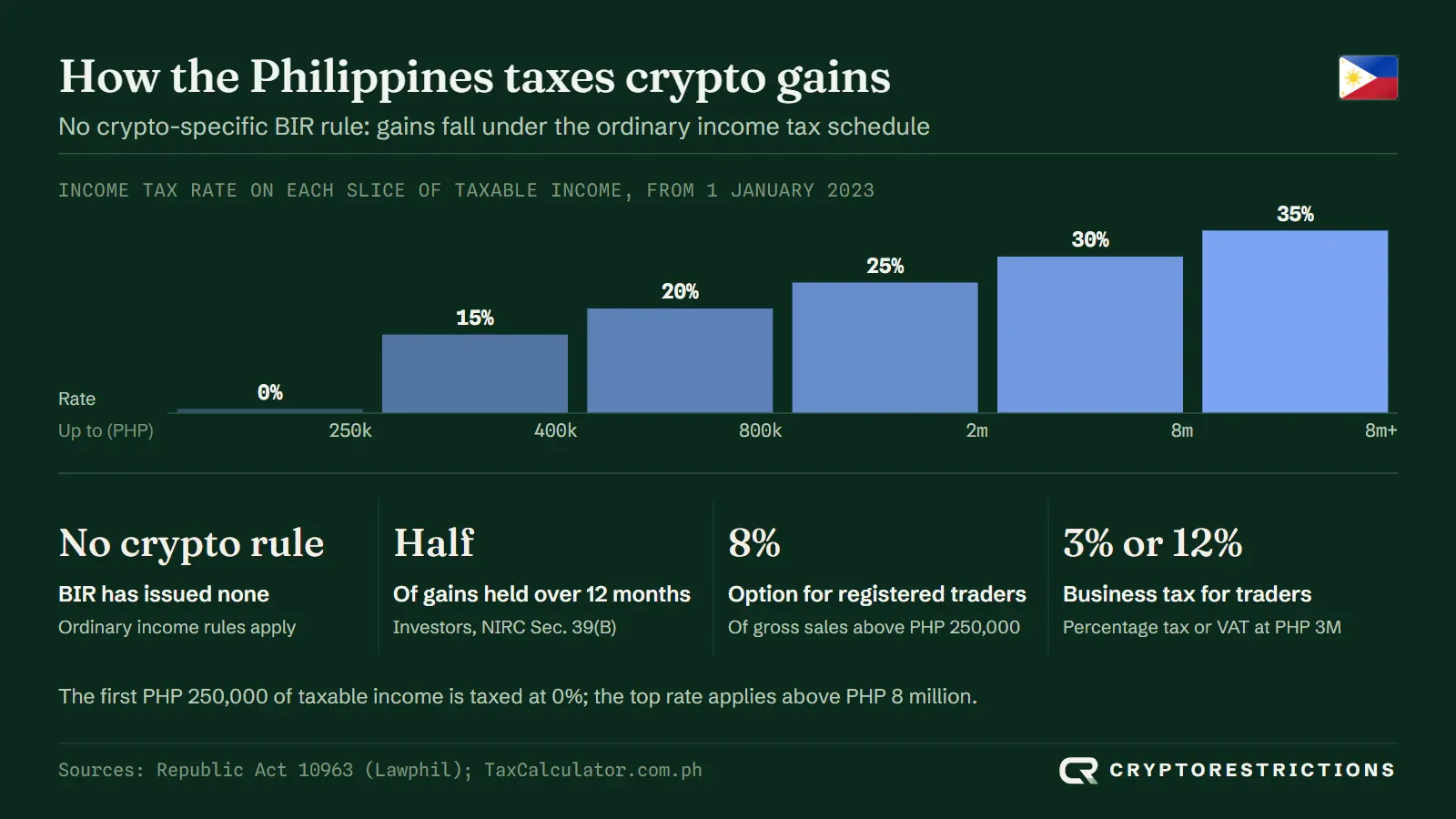
The schedule is the one in Republic Act 10963, effective from 1 January 2023: 0% up to PHP 250,000, then 15%, 20%, 25%, 30% and 35% above PHP 8 million. The guidance on how crypto fits comes from a tax calculator site, not the BIR, which says the BIR has issued no revenue regulation on crypto. It treats crypto held as a capital asset as an investment and crypto held in a business as trading income, and it cites no BIR ruling on mining, staking rewards or cost basis. We could not reach the BIR’s own pages, so confirm the filing with the BIR or a Philippine tax adviser.


 Bahrain
 Georgia
 Qatar
 Israel
 Saudi Arabia
 Vietnam
 Pakistan
 Bangladesh
 Indonesia
 United Arab Emirates
 South Korea