Is crypto legal in Argentina?
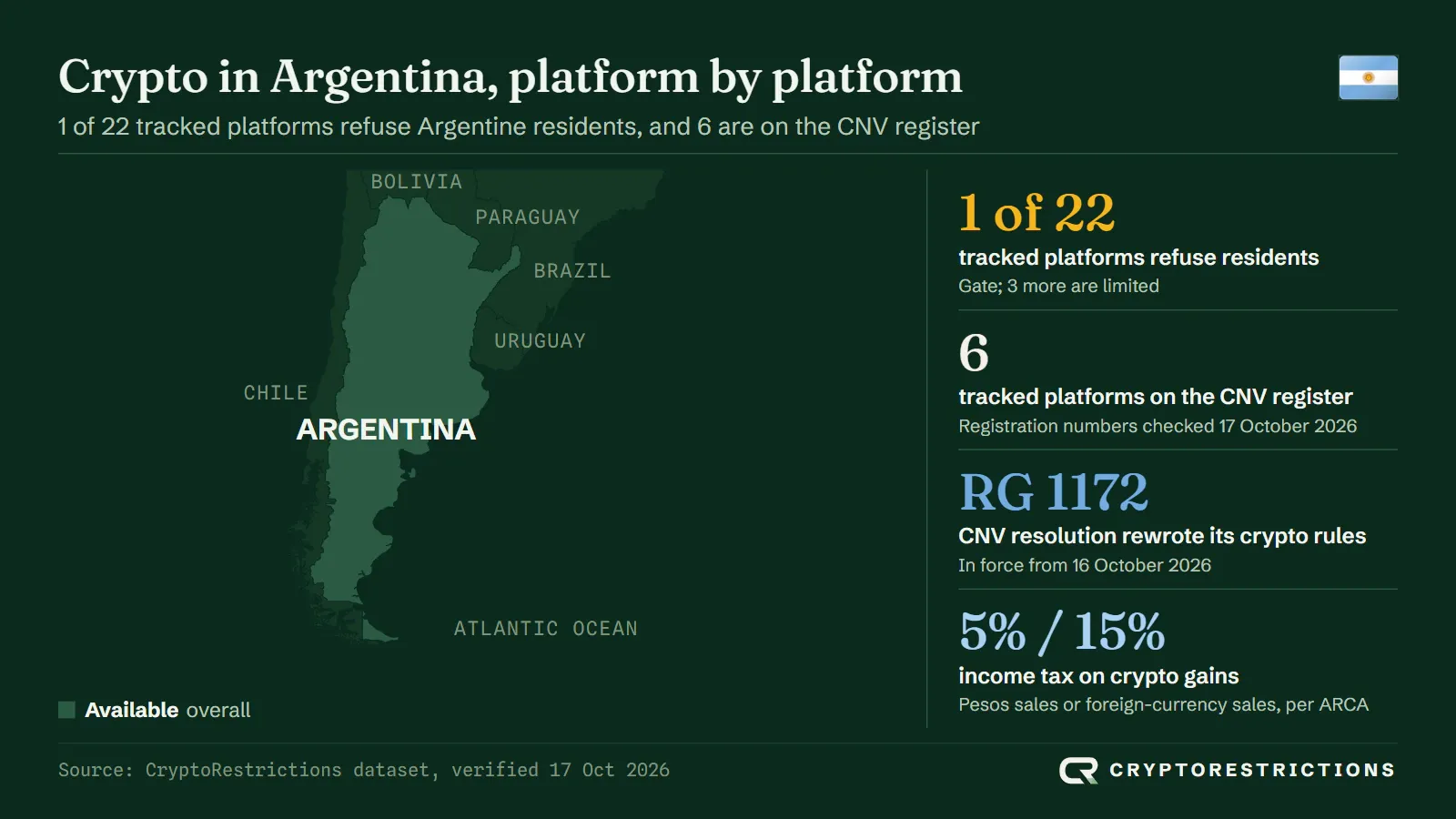
Yes. Nothing we read bans residents from holding or trading crypto, but any firm that serves them has to register as a virtual asset service provider (PSAV) with the National Securities Commission (CNV), and foreign firms are covered if they reach Argentine users.
The regime rests on a 2024 law and three CNV resolutions. A law firm summary dates Law 27.739 to 15 March 2024, when it made virtual asset providers subject to the anti-money-laundering rules, and says CNV General Resolution 994/2024 opened the register on 25 March 2024. We could not read those two texts ourselves. The ones we did read start with General Resolution 1058/2025, published on 14 March 2025, which set the full rules: five categories of provider, a minimum net worth of US$150,000 for the main ones (US$75,000 for transfer-only firms and US$35,000 for the smallest category, halved below US$2.5 million in volume), client assets held apart from the firm’s own, and published proof of reserves.
Foreign firms are caught when they have a point of contact with Argentina: a .ar domain, advertising clearly aimed at residents, or more than 20% of their business from the country. The deadlines were 1 July 2025 for individuals, 1 August 2025 for Argentine companies and 1 September 2025 for foreign companies. The CNV then issued General Resolution 1172/2026, published on 15 October 2026 and in force from the next day, which replaces the PSAV chapter of its rules. Under it an individual registers only above 35,000 UVA of activity a month, mixers are barred, the foreign points of contact stay, and a new monthly report (PSAV_014) is due from 1 November 2026. Regulators, products and tax are covered in the sections below.
Which crypto exchanges work in Argentina?
Binance, Bybit, Coinbase, Kraken, OKX and Bitget each serve Argentina through an entity on the CNV register. KuCoin and MEXC serve residents with no entry on it, and a court has ordered HTX blocked.
The register export we read on 17 October 2026 lists 80 legal entities with a number, a date and the services each may offer. It is not a complete count, so we quote no total. It carries local exchanges as well as foreign names: Ripio (Moonbird SRL, No. 36), Belo (No. 52), Buenbit (Nexo Services, No. 159), Lemon (Bay Treasure Caramel, No. 162) and Bitso (Badger Technology Company Argentina, No. 164). None of those is in our platform set, which tracks international platforms.
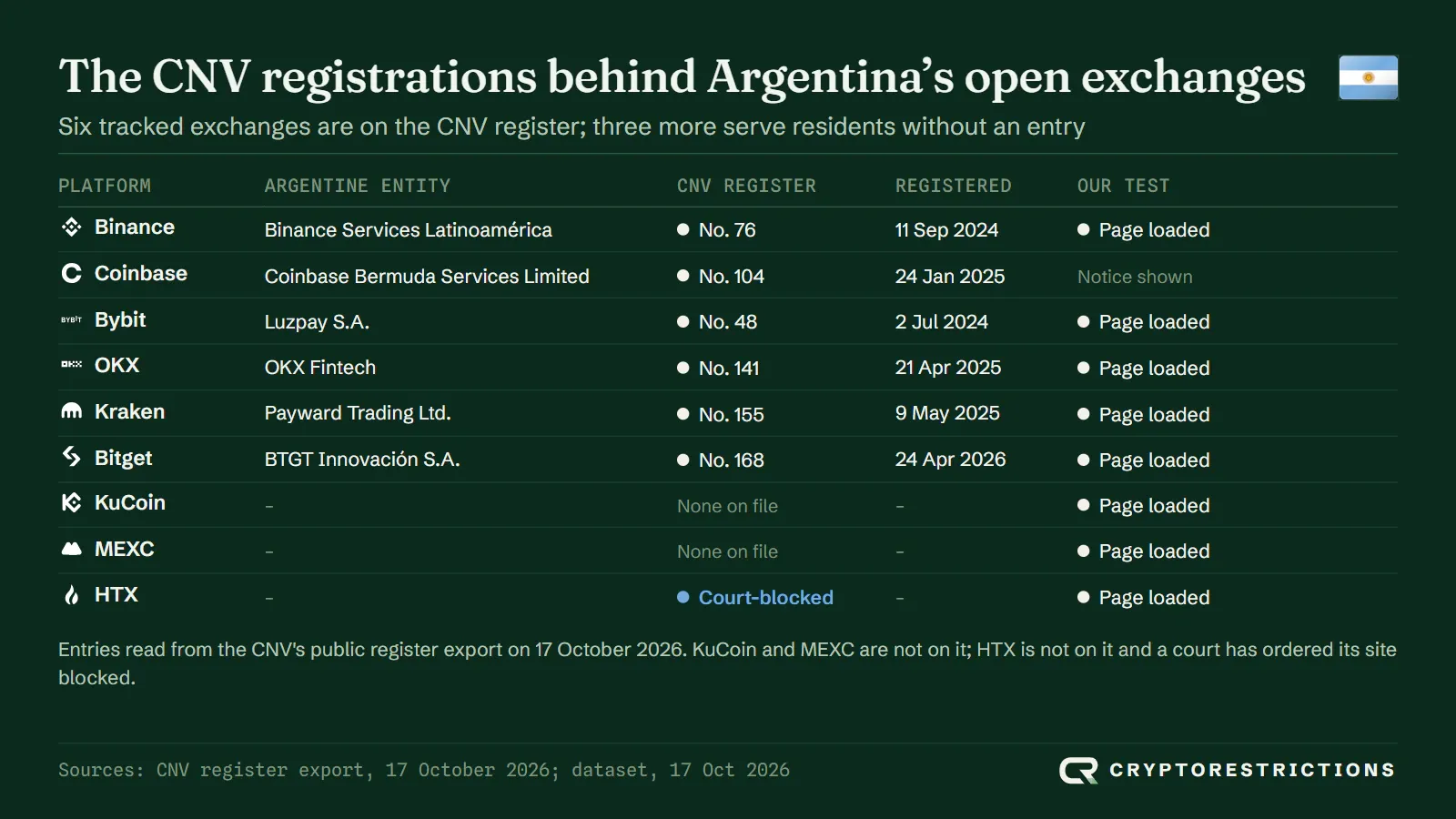
Binance is Binance Services Latinoamérica, No. 76, registered on 11 September 2024. Bybit operates through Luzpay S.A., No. 48 (2 July 2024). Coinbase is Coinbase Bermuda Services Limited, No. 104 (24 January 2025). OKX is the Argentine branch of OKX Fintech, No. 141 (21 April 2025), and serves users registered since 19 February 2026. Kraken is Payward Trading Ltd., No. 155 (9 May 2025), and Bitget is BTGT Innovación S.A., No. 168, registered on 24 April 2026.
We did not find KuCoin, MEXC, HTX, Gate, Bitstamp, Gemini, Crypto.com or Bitfinex on the export by name. A firm can sit under a different company name, so that is a lead, not proof. We also found no CNV warning naming an unregistered exchange. Treat an open sign-up page as a risk, not a permission: a firm outside the register sits outside the protections the regime exists to give.


Best crypto platforms for Argentine residents
By our access score, the exchanges on the CNV register lead for Argentine residents, DeFi platforms that do not exclude Argentina follow, and Kalshi is the prediction market that does not list it.
The score rates how fully an Argentine resident can use each platform, not its fees or safety. It is computed from our data and moves when a row changes: access status (4 points), the share of the platform’s products open here (3), the Argentine licences we hold on file (2) and what our geo-access test saw from an Argentine address (1). Platforms that refuse Argentine residents are not scored. The full method is on our methodology page.
Exchanges

Binance
Best for The earliest registered global name
9.0/10- Access
- 4/4
- Products
- 3/3
- Licences
- 1/2
- Our test
- 1/1
Read our Binance reportPros
- Registered with the CNV since September 2024
- Argentina is not on its prohibited list
Cons
- No Argentina-specific product limit in our data

Bitget
Best for A newly registered exchange
9.0/10- Access
- 4/4
- Products
- 3/3
- Licences
- 1/2
- Our test
- 1/1
Read our Bitget reportPros
- BTGT Innovación S.A. registered in April 2026
- Argentina is not on its prohibited list
Cons
- Registered only in 2026

Bybit
Best for A registered local operator
9.0/10- Access
- 4/4
- Products
- 3/3
- Licences
- 1/2
- Our test
- 1/1
Read our Bybit reportPros
- Luzpay S.A. has been on the CNV register since July 2024
- Argentina is not on its excluded list
Cons
- No Argentina-specific product limit in our data

Kraken
Best for A registered exchange with its own Argentine sign-up
9.0/10- Access
- 4/4
- Products
- 3/3
- Licences
- 1/2
- Our test
- 1/1
Read our Kraken reportPros
- Registered with the CNV since May 2025
- Argentina is listed where Kraken says it serves
Cons
- No Argentina-specific product limit in our data

OKX
Best for A registered branch for new accounts
9.0/10- Access
- 4/4
- Products
- 3/3
- Licences
- 1/2
- Our test
- 1/1
Read our OKX reportPros
- The Argentine branch has been registered since April 2025
Cons
- The branch serves users registered since 19 February 2026

Coinbase
Best for A registered exchange for spot crypto
8.5/10- Access
- 4/4
- Products
- 3/3
- Licences
- 1/2
- Our test
- 0.5/1
Read our Coinbase reportPros
- Registered with the CNV since January 2025
Cons
- Stocks and prediction markets show as unavailable to residents

Crypto.com
Best for Spot trading in the app
8.0/10- Access
- 4/4
- Products
- 3/3
- Licences
- 0/2
- Our test
- 1/1
Read our Crypto.com reportPros
- Not on its App, spot or sanctions exclusion lists
Cons
- No CNV registration found by name

Gemini
Best for Spot and perpetuals
8.0/10- Access
- 4/4
- Products
- 3/3
- Licences
- 0/2
- Our test
- 1/1
Read our Gemini reportPros
- Argentina is on its supported-countries list and its perpetuals list
Cons
- No CNV registration found by name

KuCoin
Best for Spot access outside the registered set
8.0/10- Access
- 4/4
- Products
- 3/3
- Licences
- 0/2
- Our test
- 1/1
Read our KuCoin reportPros
- Argentina is not on its restricted-locations list
Cons
- No CNV registration found by name

MEXC
Best for Spot access outside the registered set
8.0/10- Access
- 4/4
- Products
- 3/3
- Licences
- 0/2
- Our test
- 1/1
Read our MEXC reportPros
- Argentina is not on its prohibited list
Cons
- Its list is non-exclusive
- No CNV registration found by name

HTX
Best for Access that may not last
6.3/10- Access
- 3/4
- Products
- 2.3/3
- Licences
- 0/2
- Our test
- 1/1
Read our HTX reportPros
- Argentina is not on its own restricted list
Cons
- A court ordered its site and app blocked nationwide
- No CNV registration found by name
Prediction markets

Kalshi
Best for The prediction market that does not list Argentina
8.0/10- Access
- 4/4
- Products
- 3/3
- Licences
- 0/2
- Our test
- 1/1
Read our Kalshi reportPros
- Argentina is not on its restricted-jurisdictions list
Cons
- No Argentine licence, and no regulator statement on prediction markets

Polymarket
Best for Reading markets only if the block fails
6.3/10- Access
- 3/4
- Products
- 2.3/3
- Licences
- 0/2
- Our test
- 1/1
Read our Polymarket reportPros
- Argentina is not on its own restricted list
Cons
- A court ordered it blocked nationwide in March 2026
DeFi

Aster
Best for Perpetuals and spot trading
8.0/10- Access
- 4/4
- Products
- 3/3
- Licences
- 0/2
- Our test
- 1/1
Read our Aster reportPros
- Argentina is not on its prohibited list
Cons
- No Argentine licence on file

Jupiter
Best for Solana swaps from your own wallet
8.0/10- Access
- 4/4
- Products
- 3/3
- Licences
- 0/2
- Our test
- 1/1
Read our Jupiter reportPros
- Argentina is not named in its terms
Cons
- No Argentine licence on file

Lighter
Best for Perpetuals on its main app
8.0/10- Access
- 4/4
- Products
- 3/3
- Licences
- 0/2
- Our test
- 1/1
Read our Lighter reportPros
- Argentina is not named in its terms
Cons
- No Argentine licence on file

PancakeSwap
Best for BNB Chain swaps and pools
8.0/10- Access
- 4/4
- Products
- 3/3
- Licences
- 0/2
- Our test
- 1/1
Read our PancakeSwap reportPros
- Argentina is not excluded by its terms
Cons
- No Argentine licence on file

Uniswap
Best for Swapping tokens from your own wallet
8.0/10- Access
- 4/4
- Products
- 3/3
- Licences
- 0/2
- Our test
- 1/1
Read our Uniswap reportPros
- Its terms bar only places under comprehensive US sanctions
Cons
- No Argentine licence on file

Hyperliquid
Best for Perpetuals from your own wallet
5.9/10- Access
- 3/4
- Products
- 1.9/3
- Licences
- 0/2
- Our test
- 1/1
Read our Hyperliquid reportPros
- Perpetuals and spot are not excluded by its terms
Cons
- The trading app hides outcome markets here
Which platforms block Argentina users?
Only Gate refuses Argentine residents outright. Three more are limited: HTX and Polymarket by court orders, and Hyperliquid, whose outcome markets are closed to Argentina.
Gate names Argentina in clause 2.5 of its user agreement, among the locations where it does not provide services (updated 22 July 2026). The list says it is not exhaustive. The court orders against HTX and Polymarket are covered in the regulator and prediction-market sections below.
What our geo-access test saw from Argentina
From an Argentine address on 14 and 16 October 2026 we loaded all 22 platforms we track: none refused us, one showed a notice and 21 loaded with no barrier.
An open page is not permission. Gate’s sign-up form loaded with Argentina preselected although its agreement lists Argentina as restricted, because most platforms enforce at identity verification rather than at the page. HTX and Polymarket loaded too, which fits an order that Argentine internet providers apply: a test that reaches the site through a VPN exit may not see it. The one notice came from Coinbase, which said stocks and prediction markets are not available in the jurisdiction. Hyperliquid’s trading app loaded but showed no outcome markets tab. Swipe through the screenshots below; each card quotes what the page showed.
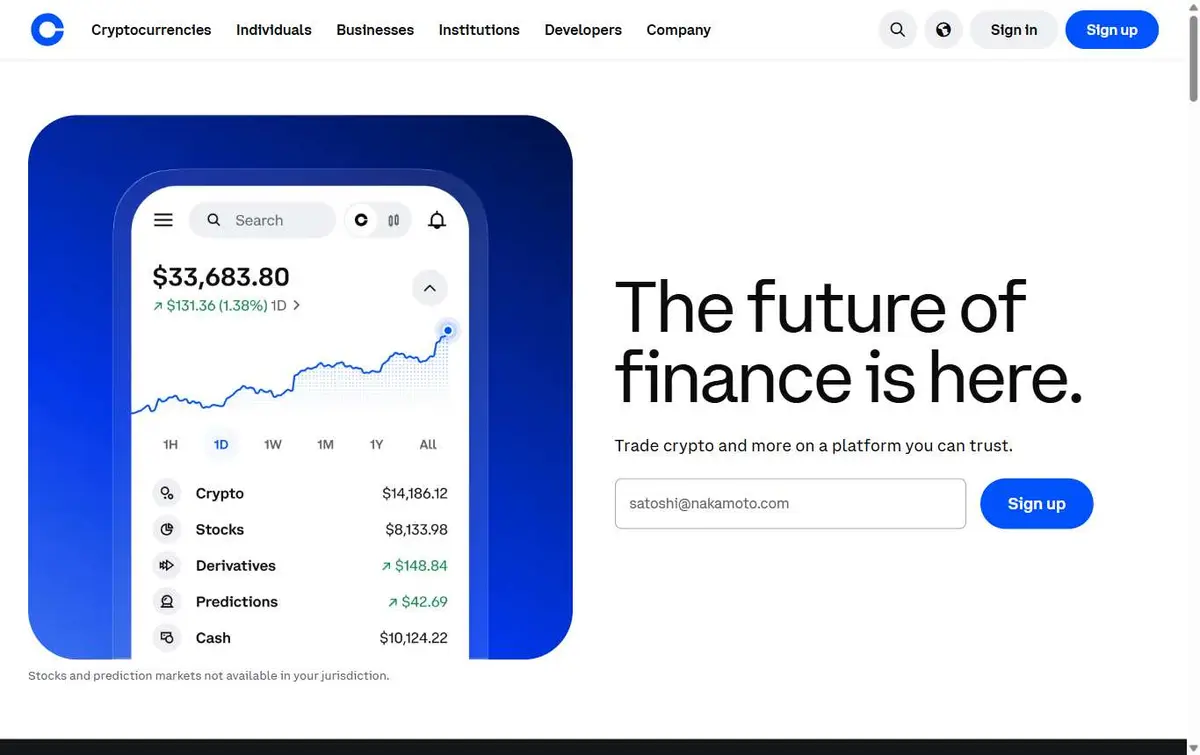
Notice shown Coinbase · Home page
Argentina: the home page says stocks and prediction markets are not available here
“Stocks and prediction markets not available in your jurisdiction.”
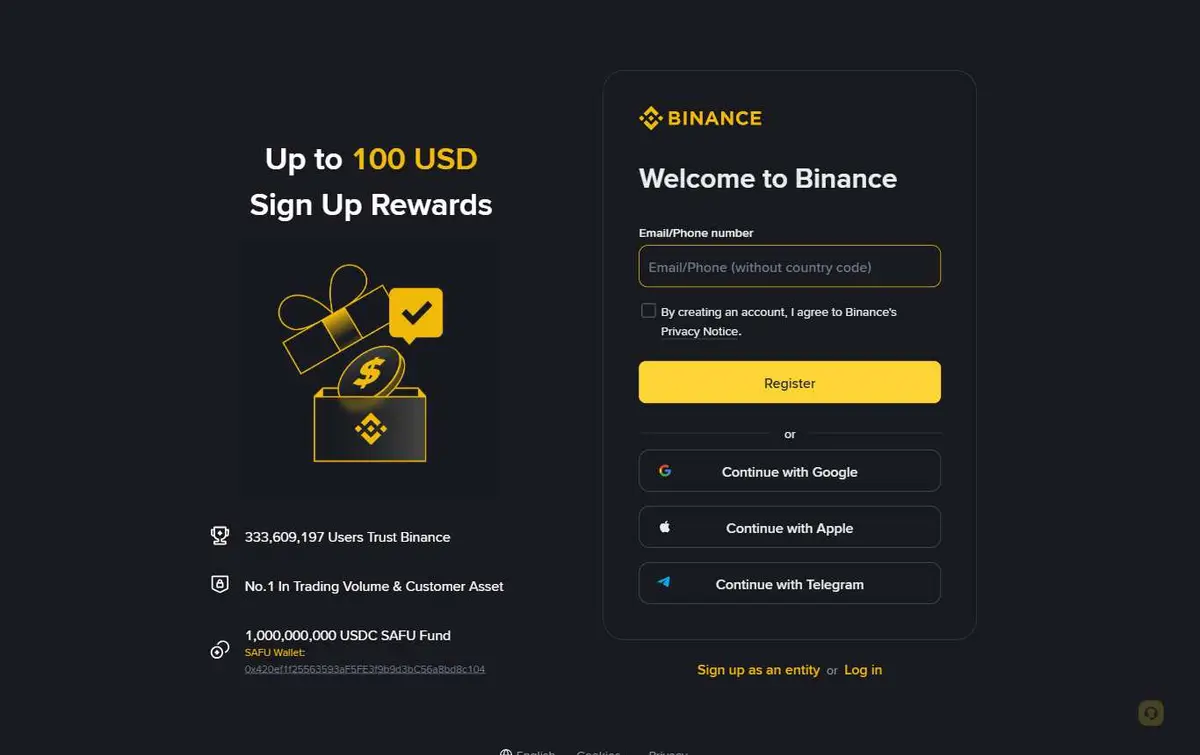
No barrier Binance · Sign-up page
Argentina: the sign-up form loads; Binance is registered with the CNV
“Create a free account”
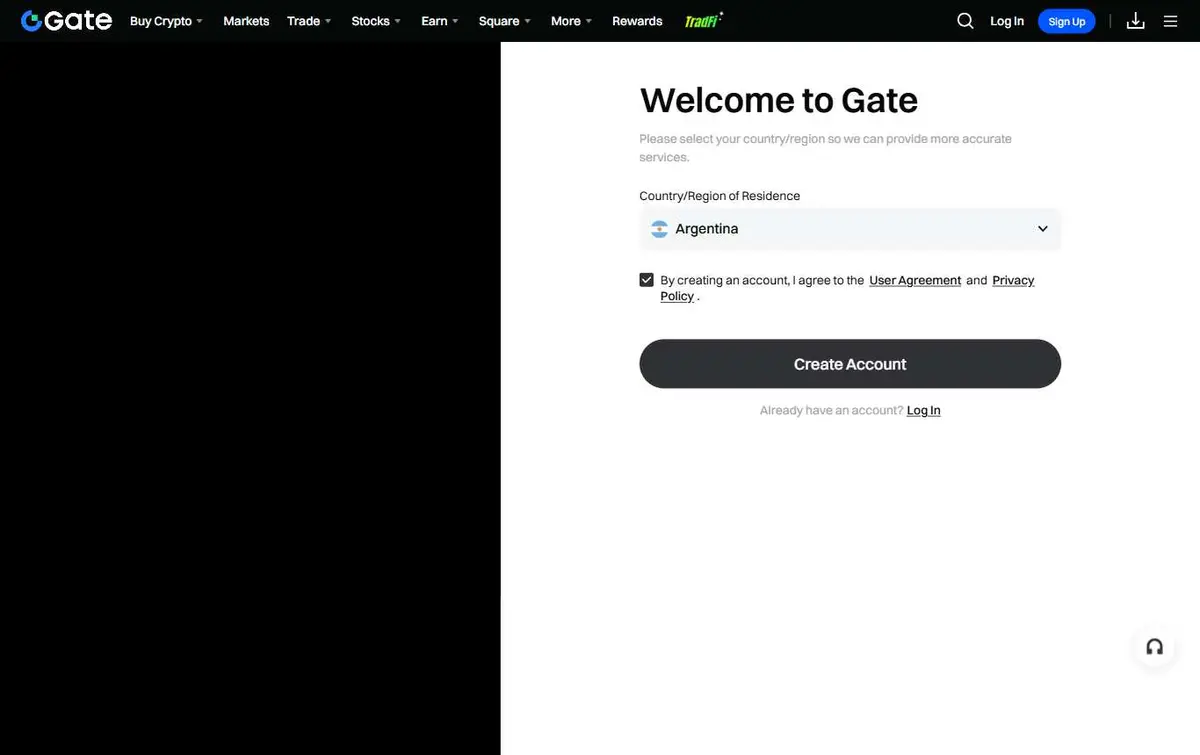
No barrier Gate · Sign-up page
Argentina: the sign-up form loads with Argentina selected, although Gate's user agreement lists it as restricted
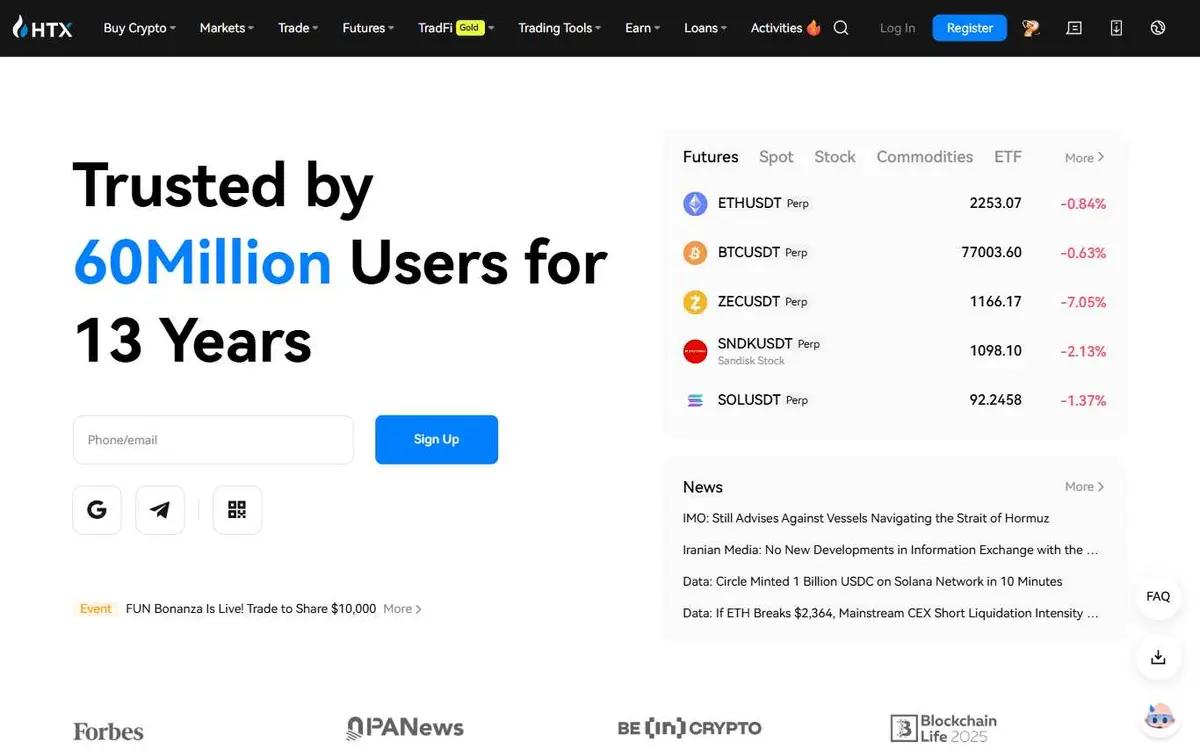
No barrier HTX · Home page
Argentina: the home page loads through our VPN, although a court has ordered it blocked at the internet provider level
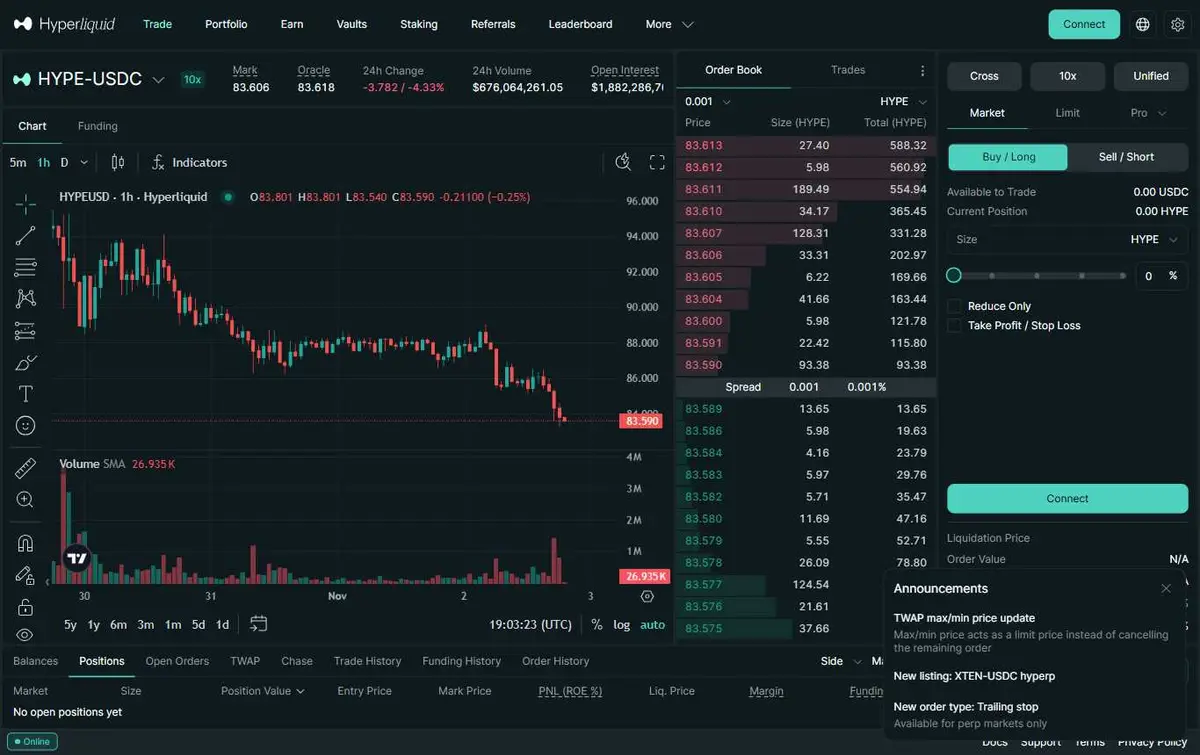
No barrierHyperliquid · Trading app
Argentina: perpetuals load, but the trading app shows no outcome markets tab
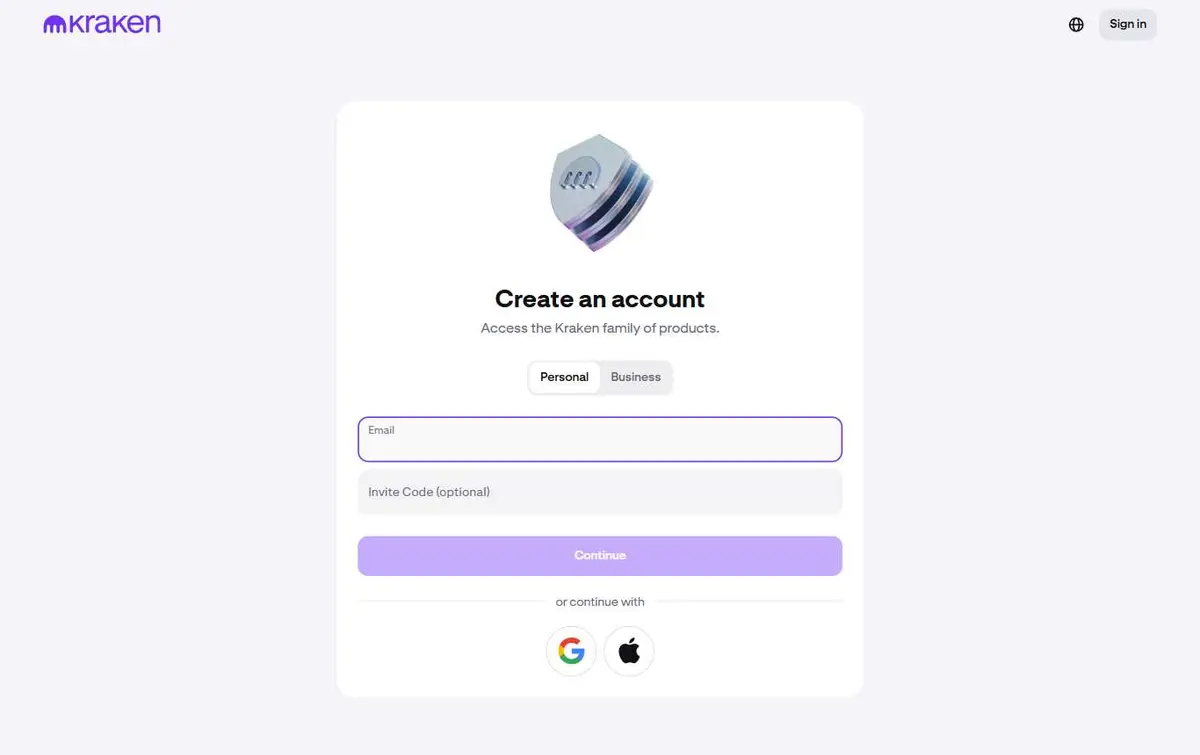
No barrier Kraken · Sign-up page
Argentina: the sign-up form loads; Kraken is registered with the CNV
“Create an account”
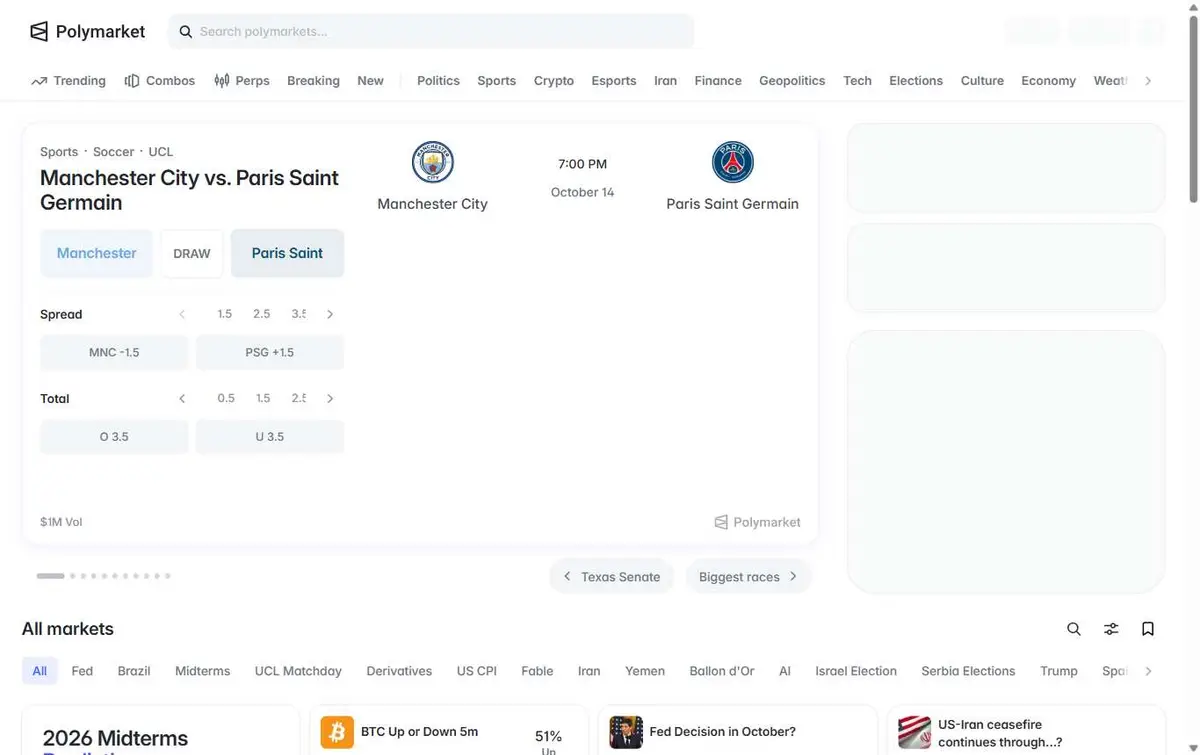
No barrier Polymarket · Home page
Argentina: the site loads through our VPN; the March 2026 court order is enforced by Argentine internet providers, which this test cannot see
 CRYPTORESTRICTIONS
Who regulates crypto in Argentina?
The CNV registers and supervises crypto providers and writes their rules, the Financial Information Unit (UIF) sets their anti-money-laundering duties, the central bank (BCRA) keeps banks out of crypto, and the tax agency (ARCA) sets how crypto is taxed and reported.
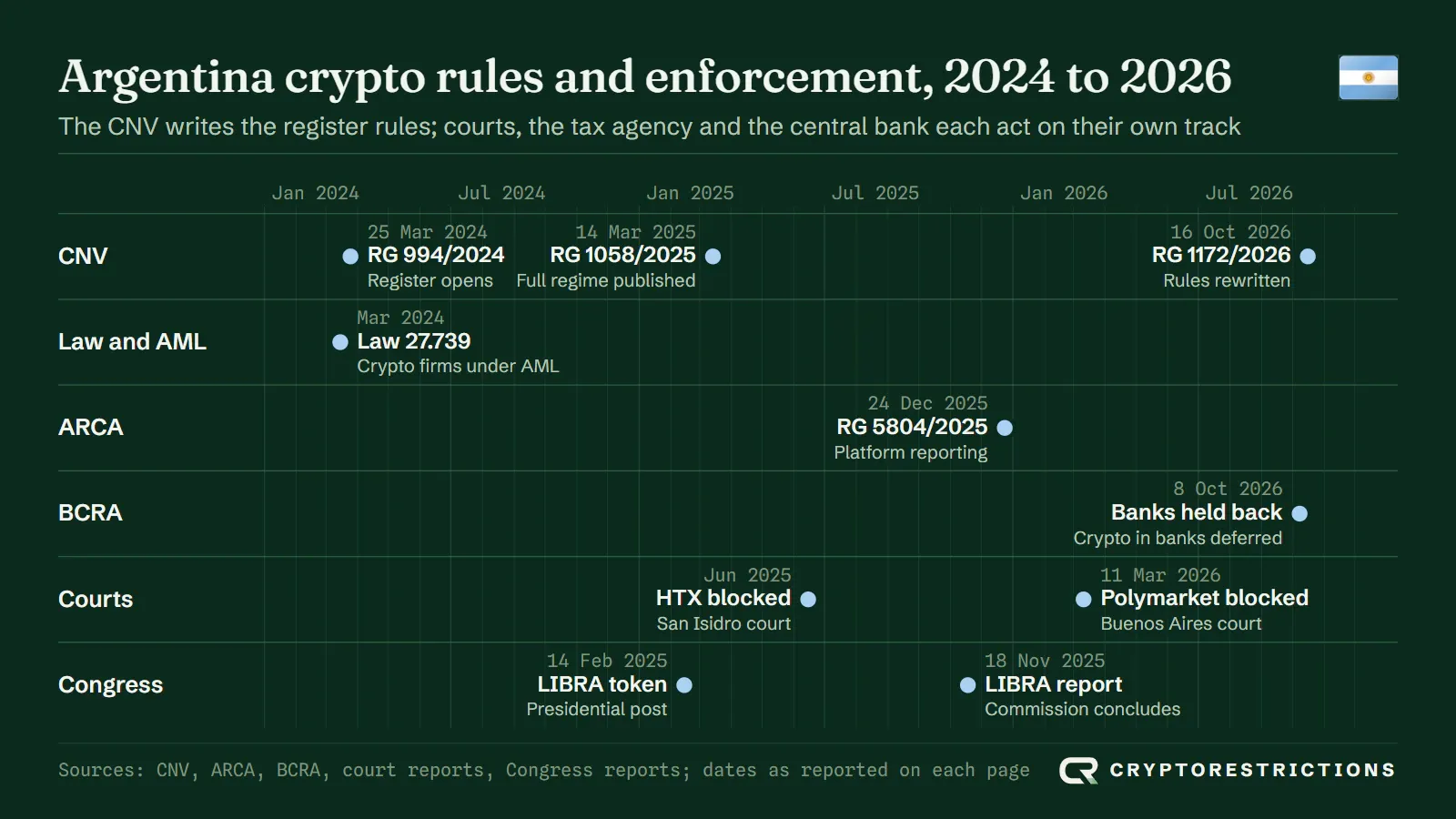
- CNV. Keeps the PSAV register and wrote General Resolutions 994/2024, 1058/2025 and 1172/2026 described above. Its register export lists the registration number, date and permitted services of each entity.
- UIF. A law firm summary says its Resolution 49/2024 makes providers obliged entities that must report suspicious activity and register with the UIF. We could not read the resolution, so we state no thresholds.
- BCRA. Its Communication A 7506 of May 2022 bars banks from operating or offering crypto to clients, according to a law firm. On 8 October 2026 iProUP reported that the bank superintendent sees crypto in banks as possible only in a later presidential term. We found no official text lifting the ban.
- ARCA. Covered in the tax section.
- Courts. A San Isidro court blocked HTX and a Buenos Aires court blocked Polymarket. Both are covered below, and neither case went through the CNV.
- Congress and the LIBRA token. The president promoted the LIBRA token on 14 February 2025 and it fell more than 90% from its peak, the Buenos Aires Herald reports. A congressional commission presented its final report on 18 November 2025. We traced no crypto statute to the affair.
Which crypto products are limited in Argentina?
Bank-offered crypto is the most closed product, and the platform data shows narrower limits on stocks, prediction markets and outcome markets.
- Crypto in banks. Banks may not offer crypto to clients under the BCRA’s 2022 rule, so residents go to the registered providers above or to self-custody.
- Stocks and prediction markets. Coinbase’s home page tells residents these are not available in their jurisdiction.
- Derivatives. Gemini lists Argentina on its perpetuals list, and Hyperliquid’s perpetuals loaded in our test. We hold no source that closes derivatives here.
- Outcome markets. Hyperliquid’s trading app hides them; see the prediction-market section.
- Staking and lending. We hold no Argentina-specific source for either, so we make no claim.
Are prediction markets legal in Argentina?
No prediction-market law exists that we found, and a court has treated Polymarket as unlicensed online betting; Kalshi is the one platform that does not list Argentina.
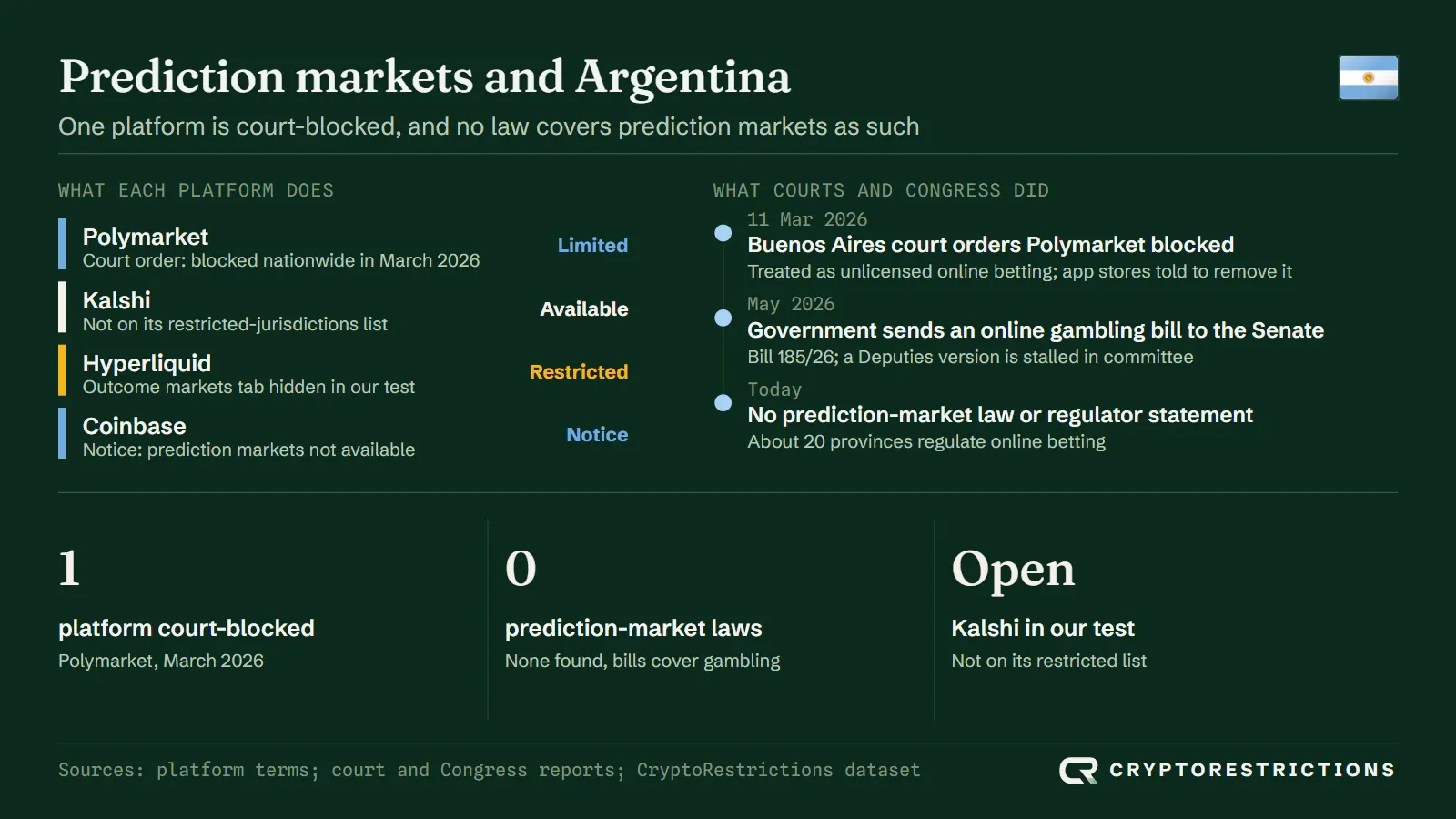
A Buenos Aires City court ordered Polymarket blocked nationwide on 11 March 2026, Cointelegraph reported on 17 March, after a complaint by the city’s lottery body (LOTBA). CoinDesk reports the same, with app stores told to remove the app. The ground was an unlicensed betting system without identity or age checks, so it was handled as gambling, not as a crypto matter. We found no appeal and no action against Kalshi, and we have not confirmed that the block is still in force.
On the legislative side, the government sent an online gambling bill to the Senate in May 2026, according to Focus Gaming News, and a version passed by Deputies is stalled in Senate committees. About 20 provinces already regulate online betting. None of this mentions prediction markets by name, so their status is unsettled.
On the platform side, Polymarket is limited because of the order. Kalshi does not list Argentina among its restricted jurisdictions and its site loaded in our test, but that is a platform’s choice, not a licence. Hyperliquid hid its outcome markets tab in our test.
How is crypto taxed in Argentina?
Individuals pay income tax on gains from selling crypto under a separate flat-rate regime, with no tax on price rises while they hold, and platforms now report large accounts to the tax agency.
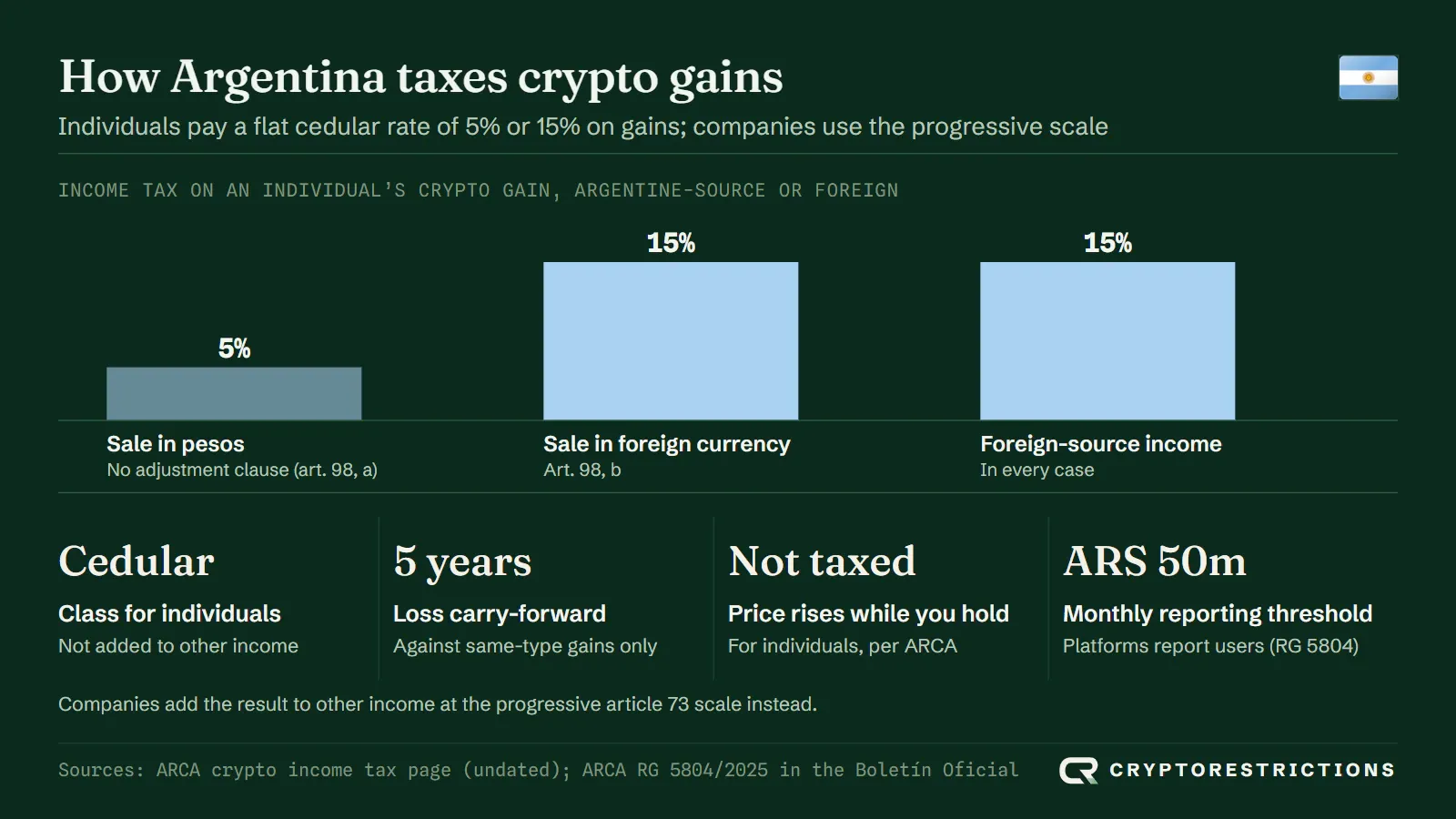
The rates come from ARCA’s crypto income tax page. It carries no date and works its example in fiscal year 2023, so confirm the current rates before filing. For an individual, a gain on an Argentine-source sale is taxed at 5% when the sale is in pesos with no adjustment clause (article 98, point a) and at 15% when it is in foreign currency (point b). Foreign-source income is taxed at 15% in every case. The special deduction under article 100 and the acquisition cost and related expenses come off the gain. Companies are taxed on the result at the progressive article 73 scale, with the oldest purchases counted as sold first.
Losses are specific: they offset only gains of the same type, in the same year or the next five. Yields from deposits at an exchange or in DeFi are taxable when collected, credited or reinvested, and proof-of-work mining rewards are taxable. Reporting is changing: ARCA’s General Resolution 5804/2025, published on 24 December 2025, has platforms report users whose monthly income, outflows or closing balance passes ARS 50 million (ARS 30 million for entities), and the origin and destination accounts of transfers above ARS 2.5 million, in filings due from May 2026. We did not read ARCA’s guidance on the wealth tax (Bienes Personales) for crypto, so check it separately. Working out your own position takes four steps:
 Chile
 Peru
 Uruguay
 Colombia
 Brazil
 Venezuela
 Ecuador
 Paraguay
 Bolivia
 Guyana
 Suriname