Is crypto legal in Spain?
Yes, through authorised providers. Spain regulates who may serve you, not whether you may hold crypto: since 1 July 2026 every provider needs a MiCA authorisation, from the CNMV or from another EU regulator.
The EU’s Markets in Crypto-Assets Regulation (MiCA) sets the licensing rules, and the CNMV, Spain’s securities regulator, is the authority that authorises and supervises crypto-asset service providers, according to its MiCA page. The same page treats crypto as lawful but risky: prices are volatile, you can lose everything, and no compensation scheme covers it.
Spain’s transition for existing firms took a while to settle. The CNMV said in December 2025 that it would end on 1 July 2026, not at the end of 2025 as the regulator had announced a year earlier. Its 15 June 2026 communiqué then said that after that date only authorised providers may operate in Spain, and that firms without authorisation need a plan to migrate their clients. ESMA’s statement of 23 June 2026 told unauthorised providers to wind down in an orderly way.
Which crypto exchanges work in Spain?
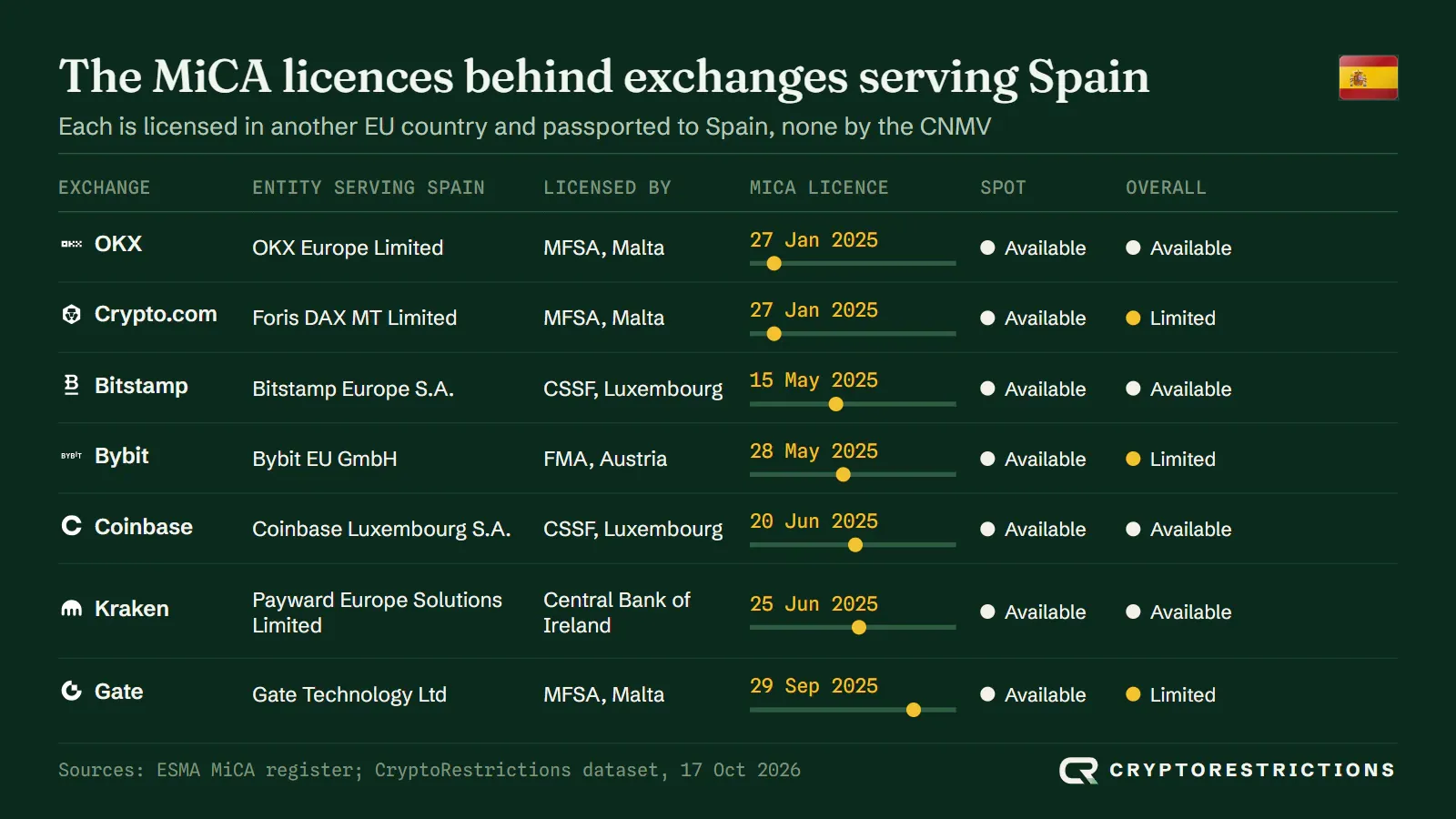
Seven of the exchanges we track serve Spanish users under a MiCA licence: Coinbase, Kraken, OKX, Bitstamp, Bybit, Crypto.com and Gate. Four are fully available; Bybit, Crypto.com and Gate are limited because they offer no derivatives here.
None of them is licensed by the CNMV. Each holds a licence from another EU regulator and serves Spain on a passport, which is why the chart names the regulator that granted it. The CNMV’s register lists these passported providers, and ESMA’s interim register carries the licence dates.
The firms the CNMV authorised itself are mostly Spanish and sit outside our platform set. The same register lists the exchange Bit2Me (Bitcoinforme, S.L.) from 31 October 2025, the banks BBVA and Kutxabank, and the crypto firms Criptan Trade, Crossmint Europe and Due Network. Binance, MEXC, Bitget, Bitfinex and HTX do not appear in the register at all, and their position is covered under the blocked platforms below.
Best crypto platforms for Spanish residents
By our access score, Bitstamp, Coinbase and Kraken (each 8.0 out of 10) are the most open exchanges for Spanish residents, OKX (7.5) comes next, and Uniswap, Jupiter, PancakeSwap, Lighter and Aster (8.0) are the most open DeFi platforms. No prediction market is fully open to them.
The score rates how fully a Spanish resident can use each platform, not its fees or safety. It is computed from our data and moves when a row changes: access status (4 points), the share of the platform’s products open here (3), the licences we hold on file for Spain (2) and what our geo-access test saw from a Spanish address (1). Nobody scores above 8.0, because every exchange here serves Spain on an EU passport or has no licence at all, and none holds a licence booked to Spain. Platforms that refuse Spanish users are not scored. The full method is on our methodology page.
Exchanges

Bitstamp
Best for Spot trading from a long-running EU licence
8.0/10- Access
- 4/4
- Products
- 3/3
- Licences
- 0/2
- Our test
- 1/1
Read our Bitstamp reportPros
- Bitstamp Europe S.A. holds a CSSF MiCA licence from 15 May 2025
- Our test loaded the home page from a Spanish address
Cons
- No Spanish entity: served from Luxembourg

Coinbase
Best for A MiCA-licensed exchange with the widest reach
8.0/10- Access
- 4/4
- Products
- 3/3
- Licences
- 0/2
- Our test
- 1/1
Read our Coinbase reportPros
- Coinbase Luxembourg S.A. holds a CSSF MiCA licence passported across the EEA
- Our test loaded sign-up from a Spanish address with no barrier
Cons
- No Spanish entity: served from Luxembourg

Kraken
Best for Spot trading under an Irish MiCA licence
8.0/10- Access
- 4/4
- Products
- 3/3
- Licences
- 0/2
- Our test
- 1/1
Read our Kraken reportPros
- Payward Europe Solutions holds a Central Bank of Ireland MiCA licence, passported across the EEA
- Our test loaded sign-up from a Spanish address with no barrier
Cons
- No Spanish entity: served from Ireland

OKX
Best for A global brand with a local EU site
7.5/10- Access
- 4/4
- Products
- 3/3
- Licences
- 0/2
- Our test
- 0.5/1
Read our OKX reportPros
- OKX Europe Limited holds an MFSA MiCA licence from 27 January 2025
- Our test sent Spanish sign-ups to OKX Europe
Cons
- Served from Malta, not by a Spanish entity

Bybit
Best for Spot trading only
6.9/10- Access
- 3.5/4
- Products
- 2.4/3
- Licences
- 0/2
- Our test
- 1/1
Read our Bybit reportPros
- Spot is served by Bybit EU GmbH under an Austrian MiCA licence
Cons
- Bybit EU offers no derivatives
- Global Bybit, which has them, is being wound down for the EEA

Crypto.com
Best for Spot trading in an app
6.3/10- Access
- 3.5/4
- Products
- 1.8/3
- Licences
- 0/2
- Our test
- 1/1
Read our Crypto.com reportPros
- Foris DAX MT Limited holds a Malta MiCA licence from 27 January 2025
- Spot trading and the app are offered
Cons
- Derivatives are on its geo-restrictions list for Spain

Gate
Best for Spot trading on a licensed EU arm
5.5/10- Access
- 3.5/4
- Products
- 1.5/3
- Licences
- 0/2
- Our test
- 0.5/1
Read our Gate reportPros
- Gate Technology Ltd holds a Maltese MiCA licence
- Spot trading is open to Spanish users
Cons
- No derivatives: global Gate lists Spain as restricted
- Our test showed an EU-region notice at sign-up
DeFi

Aster
Best for Perpetuals from your own wallet
8.0/10- Access
- 4/4
- Products
- 3/3
- Licences
- 0/2
- Our test
- 1/1
Read our Aster reportPros
- Spain is not on its prohibited-jurisdictions list
- Its trading app loaded in our test
Cons
- No licence on file for Spain

Jupiter
Best for Solana swaps
8.0/10- Access
- 4/4
- Products
- 3/3
- Licences
- 0/2
- Our test
- 1/1
Read our Jupiter reportPros
- Spain is not named in its terms
- Its app loaded in our test
Cons
- No licence on file for Spain

Lighter
Best for Perpetuals from your own wallet
8.0/10- Access
- 4/4
- Products
- 3/3
- Licences
- 0/2
- Our test
- 1/1
Read our Lighter reportPros
- Spain is not named in its terms
- Its trading app loaded in our test
Cons
- No licence on file for Spain

PancakeSwap
Best for BNB Chain swaps and pools
8.0/10- Access
- 4/4
- Products
- 3/3
- Licences
- 0/2
- Our test
- 1/1
Read our PancakeSwap reportPros
- Not excluded by its terms
- The swap page loaded in our test
Cons
- No licence on file for Spain

Uniswap
Best for Swapping tokens from your own wallet
8.0/10- Access
- 4/4
- Products
- 3/3
- Licences
- 0/2
- Our test
- 1/1
Read our Uniswap reportPros
- Its terms bar only places under comprehensive US sanctions
- Our test loaded the swap app from a Spanish address
Cons
- No licence on file for Spain

Hyperliquid
Best for Perpetuals and spot on its own chain
5.9/10- Access
- 3/4
- Products
- 1.9/3
- Licences
- 0/2
- Our test
- 1/1
Read our Hyperliquid reportPros
- Perpetuals and spot loaded in our test
- Not excluded by its terms
Cons
- Its outcome markets tab is hidden from Spanish addresses
Which platforms block Spanish users?
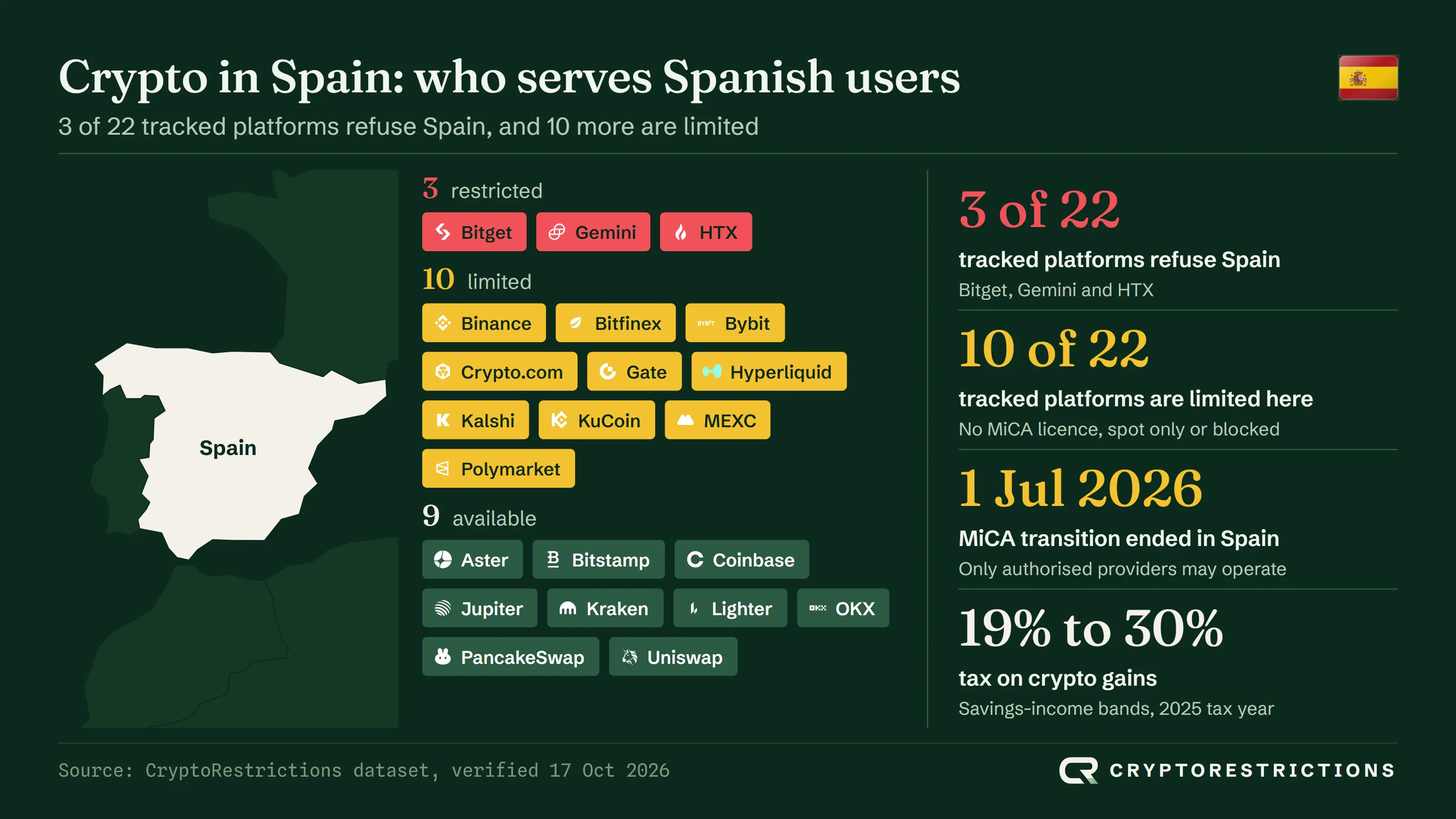
Three of the 22 platforms we track refuse Spanish users: Bitget, Gemini and HTX. Ten more are limited: Binance, Bybit, Crypto.com, Gate, KuCoin, MEXC, Bitfinex, Hyperliquid, Kalshi and Polymarket.
Most exits trace to MiCA. Gemini closed every account in the UK and EEA on 6 April 2026. Bitget is on the list of countries its verification page does not serve, and it holds no MiCA licence. KuCoin EU has had trading and deposits suspended since 4 February 2026. Binance told EU users it would stop services after failing to secure a licence; its sign-ups, deposits and trading are closed and existing users can withdraw. HTX’s terms bar every EU state, and since 23 August 2026 EU sanctions on Russia-linked providers ban dealings with it, under Regulation (EU) 2026/1848. MEXC has no MiCA licence and ESMA lists it as non-compliant. We found no CNMV warning naming any of these platforms, though the warnings search did not return entries for us, so that is not proof there is none.
What our geo-access test saw from Spain
From a Spanish address on 14 and 16 October 2026 we tested all 22 platforms we track: 1 refused us, 3 showed a notice or a redirect, and 18 loaded with no barrier.
An open page is not permission. Bitget, HTX and Binance all loaded their pages although Bitget does not serve Spain, HTX’s terms bar the EU and Binance has closed new sign-ups. Polymarket and Kalshi loaded too, even though the gambling regulator had ordered both blocked. The one refusal was Gemini (“Gemini does not currently operate in Spain”). The notices were an EU-region prompt at Gate, a suggestion to switch to KuCoin EU, and OKX’s redirect to its European site. Swipe through the screenshots below; each card quotes the message the page showed.
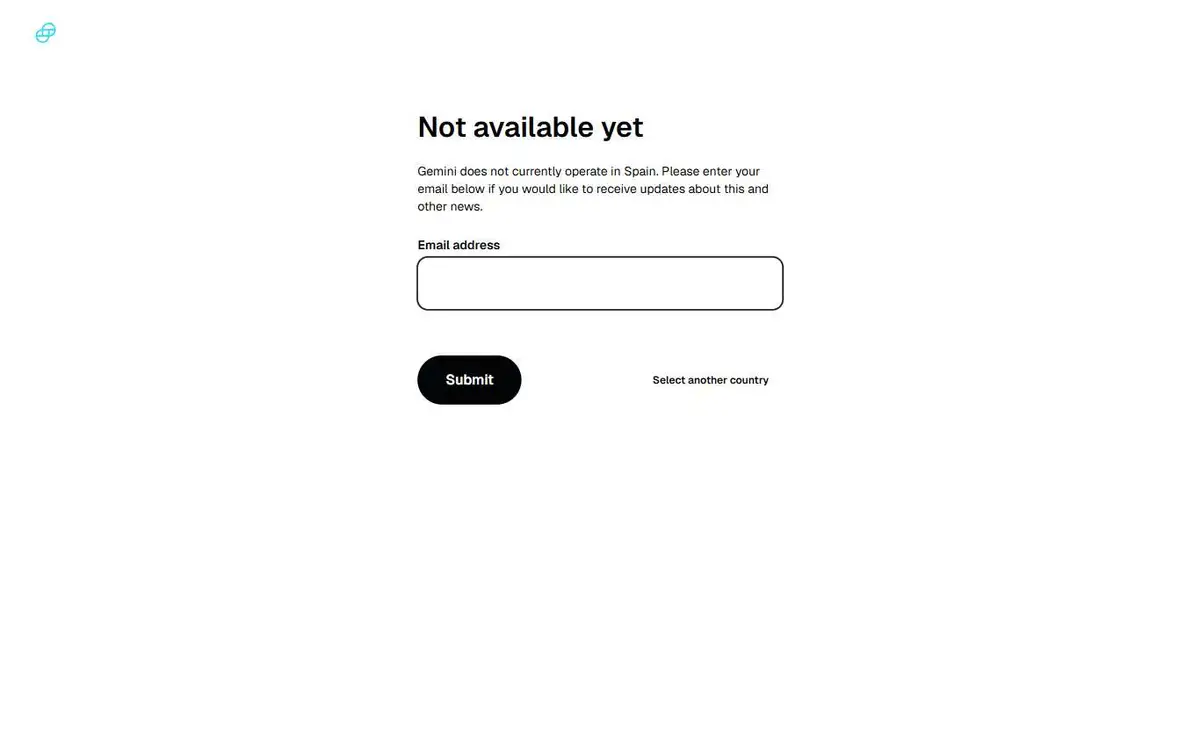
Blocked Gemini · Sign-up page
Spain is one of the EEA countries Gemini left, and its sign-up page says so
“Gemini does not currently operate in Spain.”
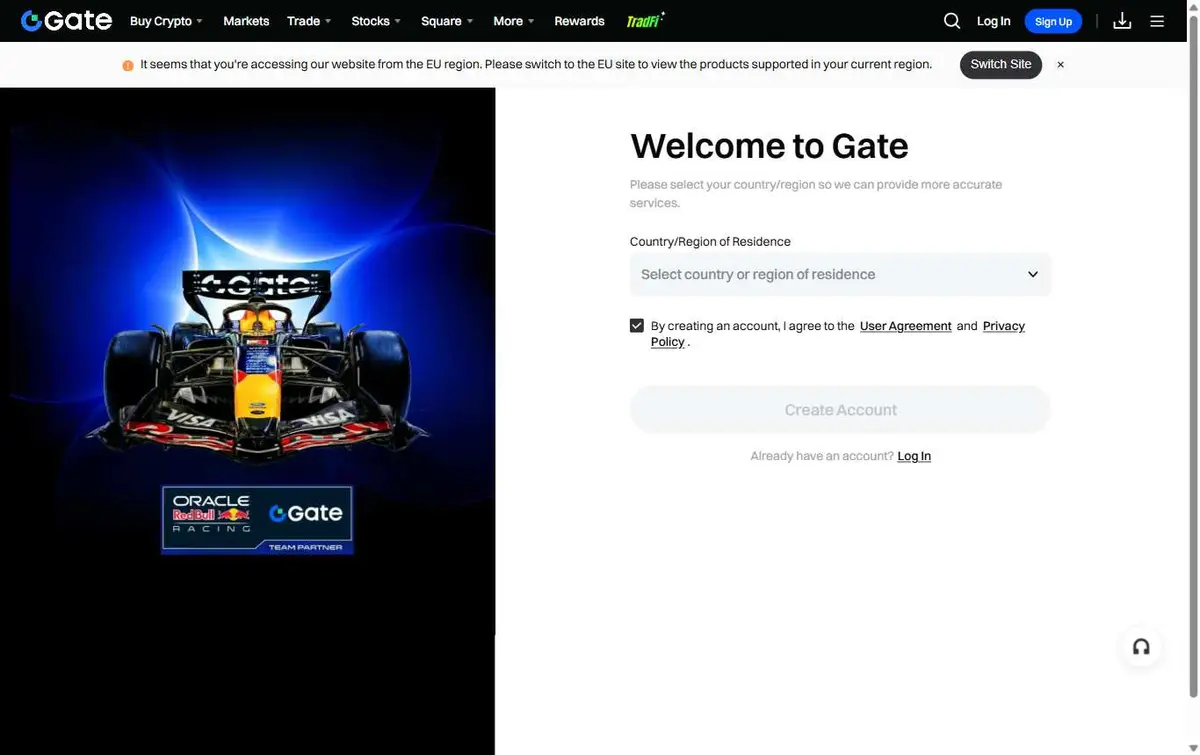
Notice shown Gate · Sign-up page
Spain: sign-up shows a prompt to switch to the EU site
“It seems that you're accessing our website from the EU region.”
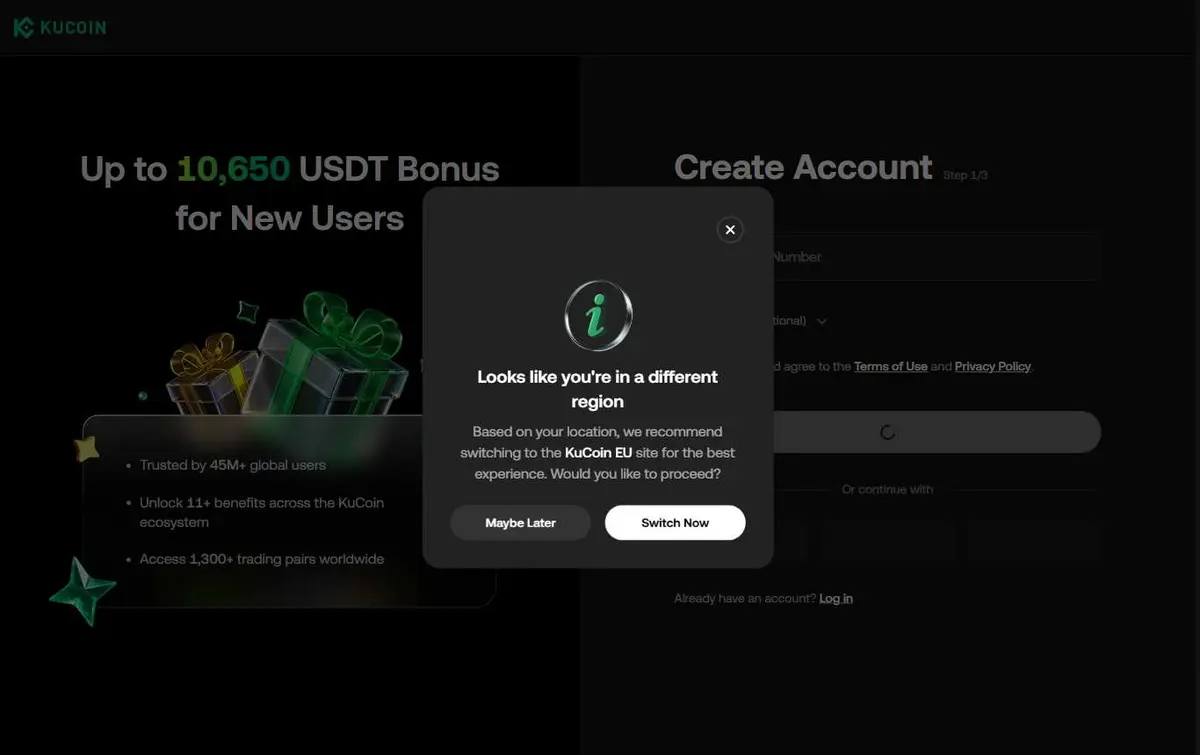
Notice shown KuCoin · Sign-up page
Spain: sign-up suggests the KuCoin EU site
“Looks like you're in a different region”
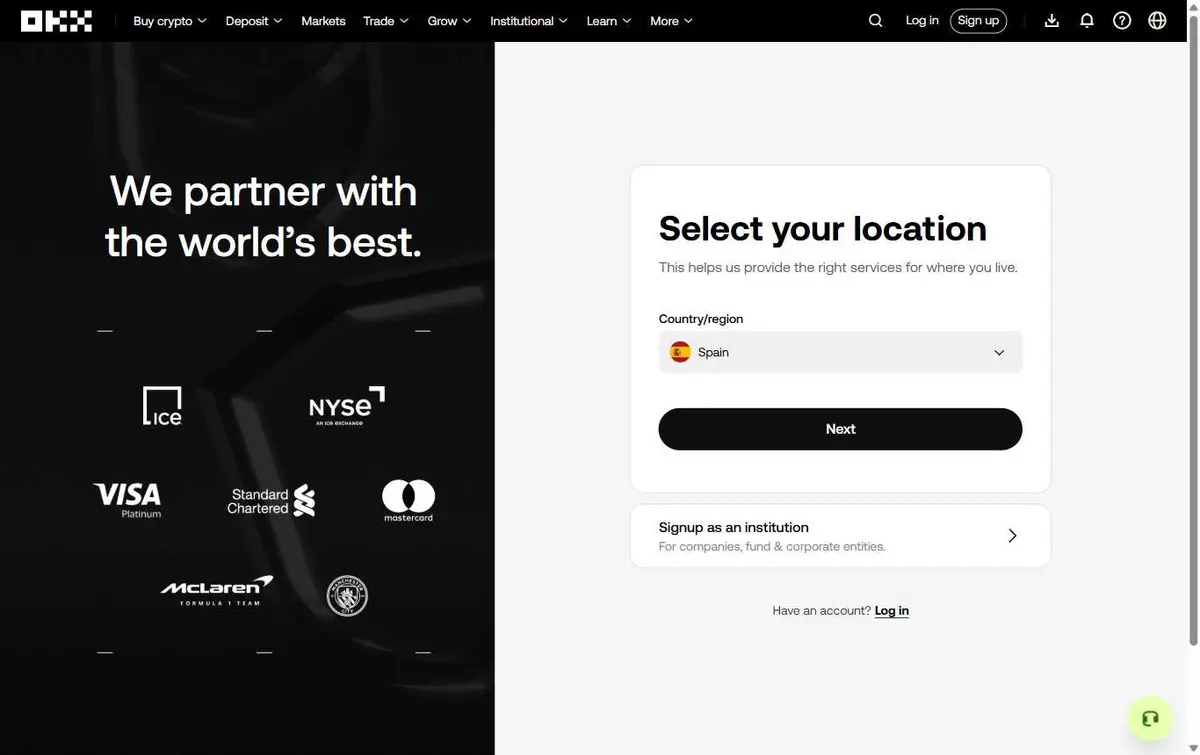
Notice shown OKX · Sign-up page
Spain: sign-up is served by OKX Europe
“Sign Up On OKX's Website | OKX Europe”
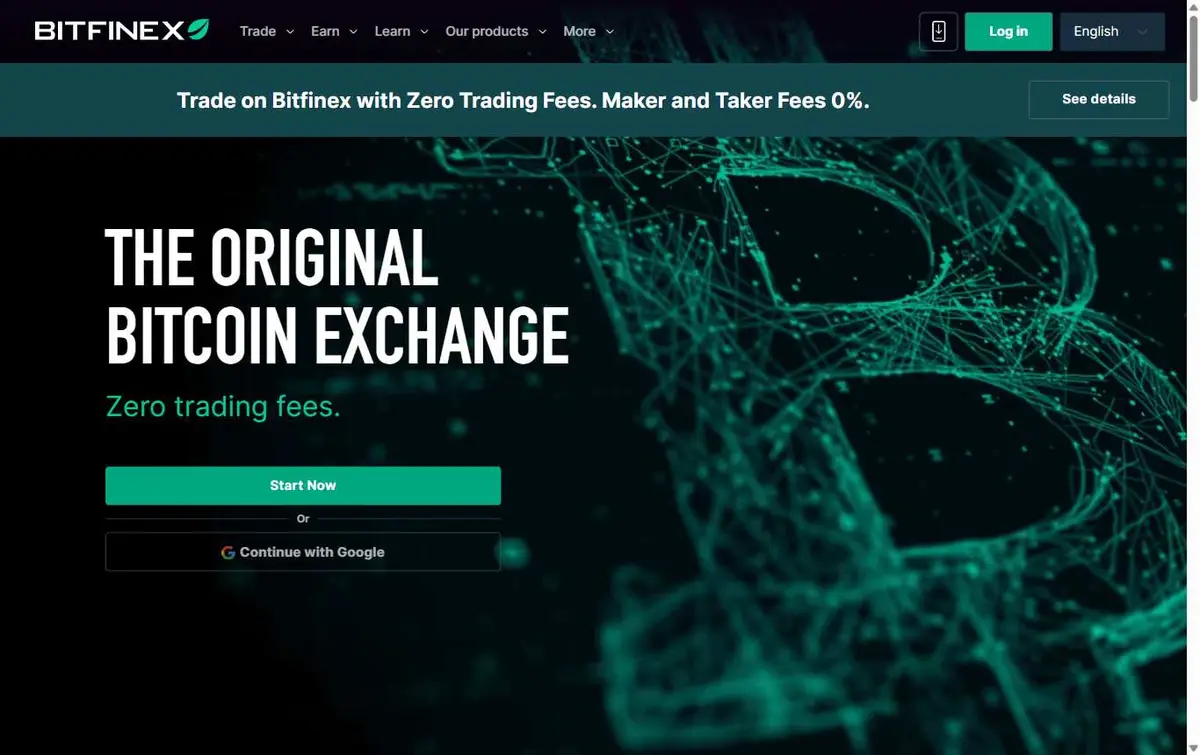
No barrier Bitfinex · Home page
Spain, the top source of desktop visits, loads the full home page
“THE ORIGINAL BITCOIN EXCHANGE”
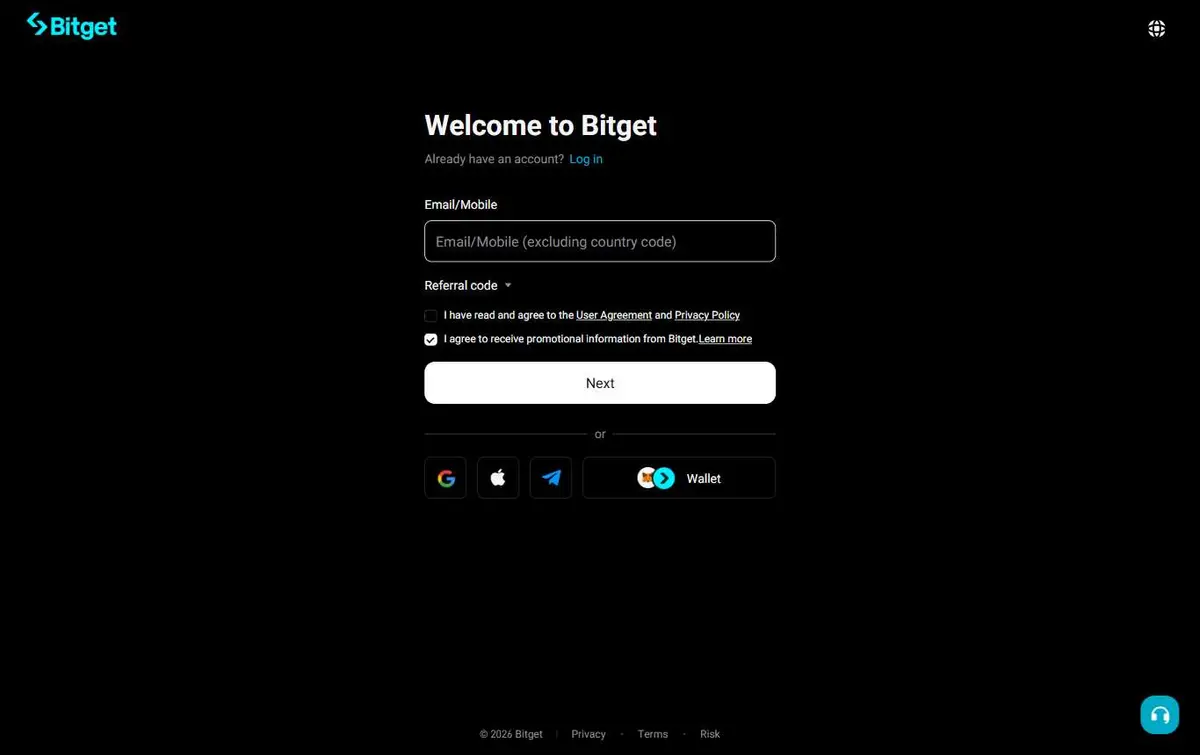
No barrier Bitget · Sign-up page
Spain is on the list Bitget does not serve, yet its sign-up form loads
“Welcome to Bitget”
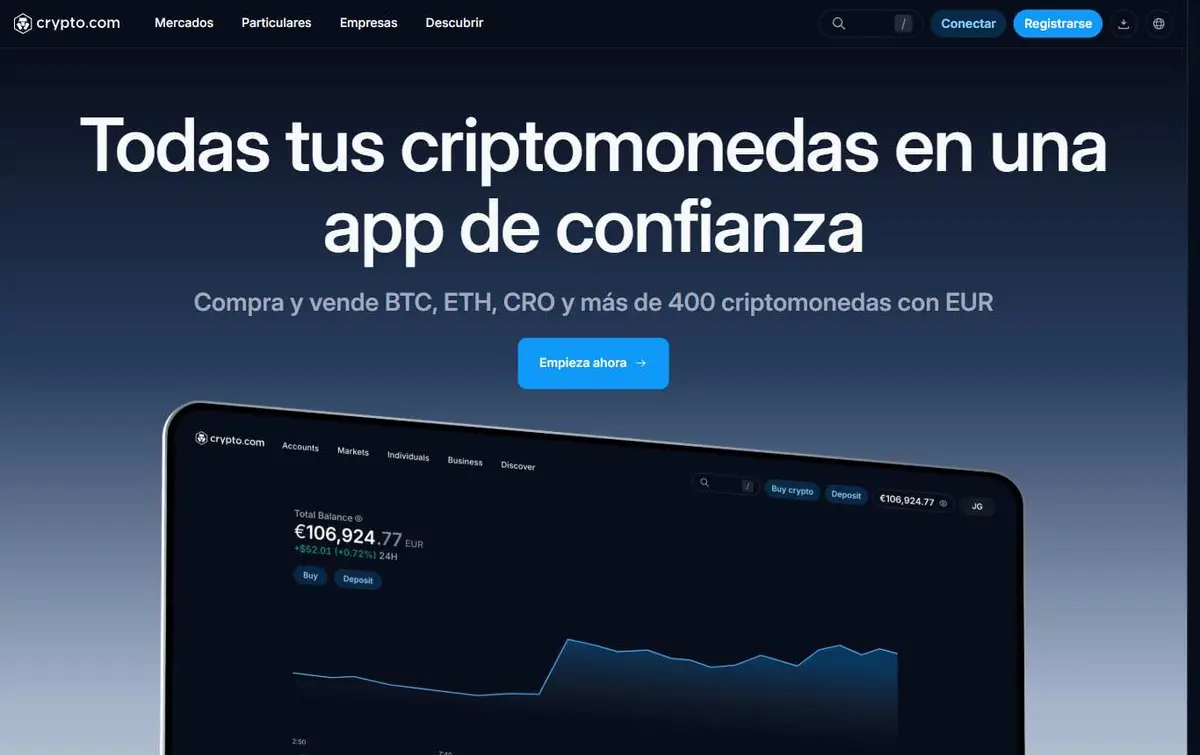
No barrier Crypto.com · Home page
Spain, one of 29 EEA states served under the Malta MiCA licence
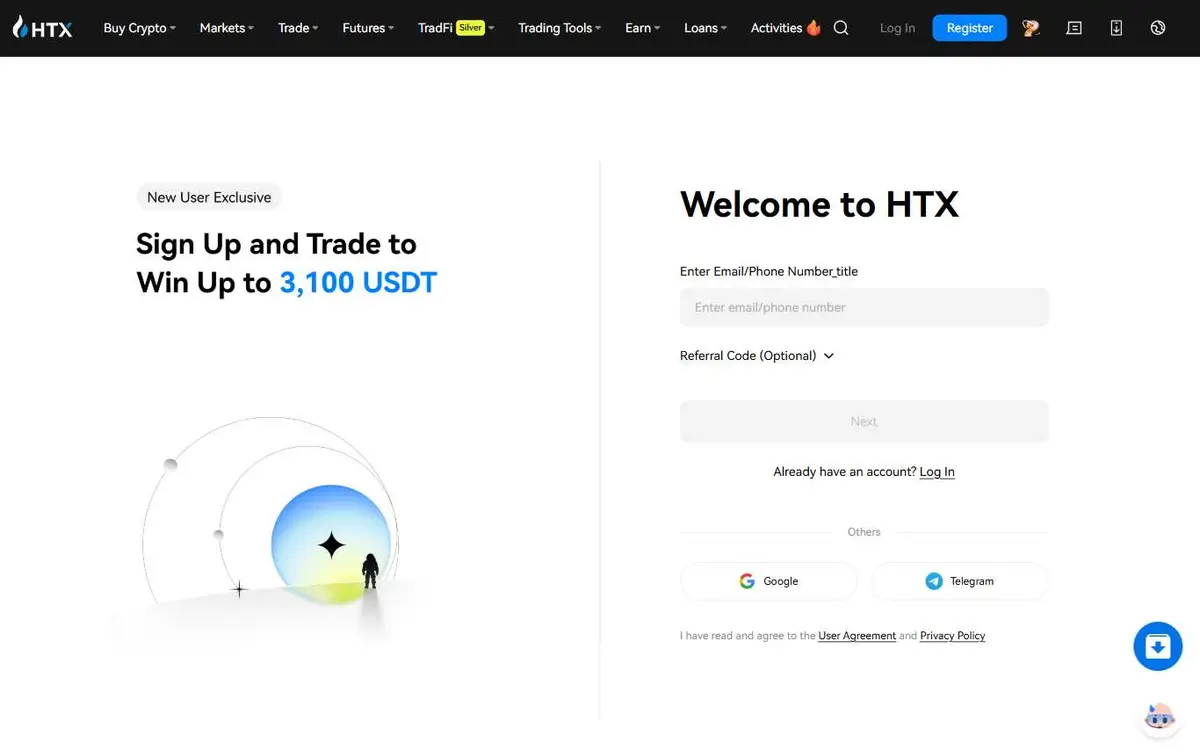
No barrier HTX · Sign-up page
HTX's terms bar the EU, yet the Spanish sign-up form loads
“Welcome to HTX”
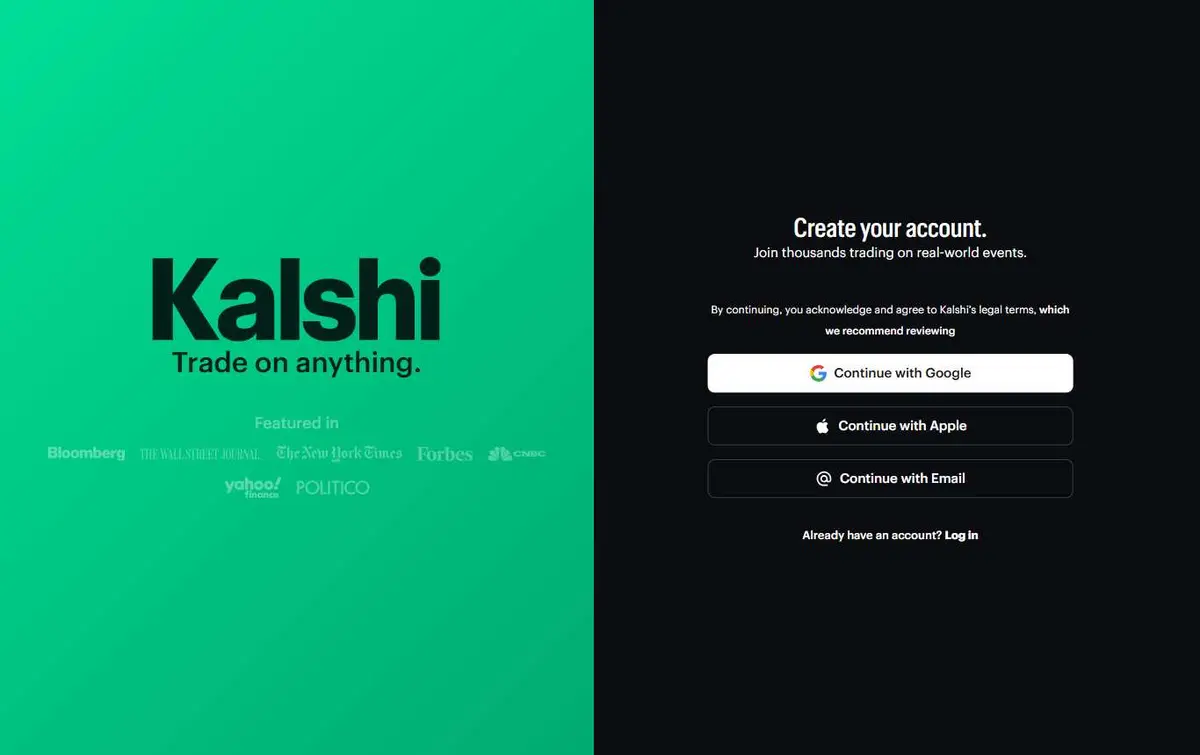
No barrier Kalshi · Sign-up page
Spain, where the gambling regulator ordered Kalshi blocked: not on Kalshi's list, and open through our VPN server
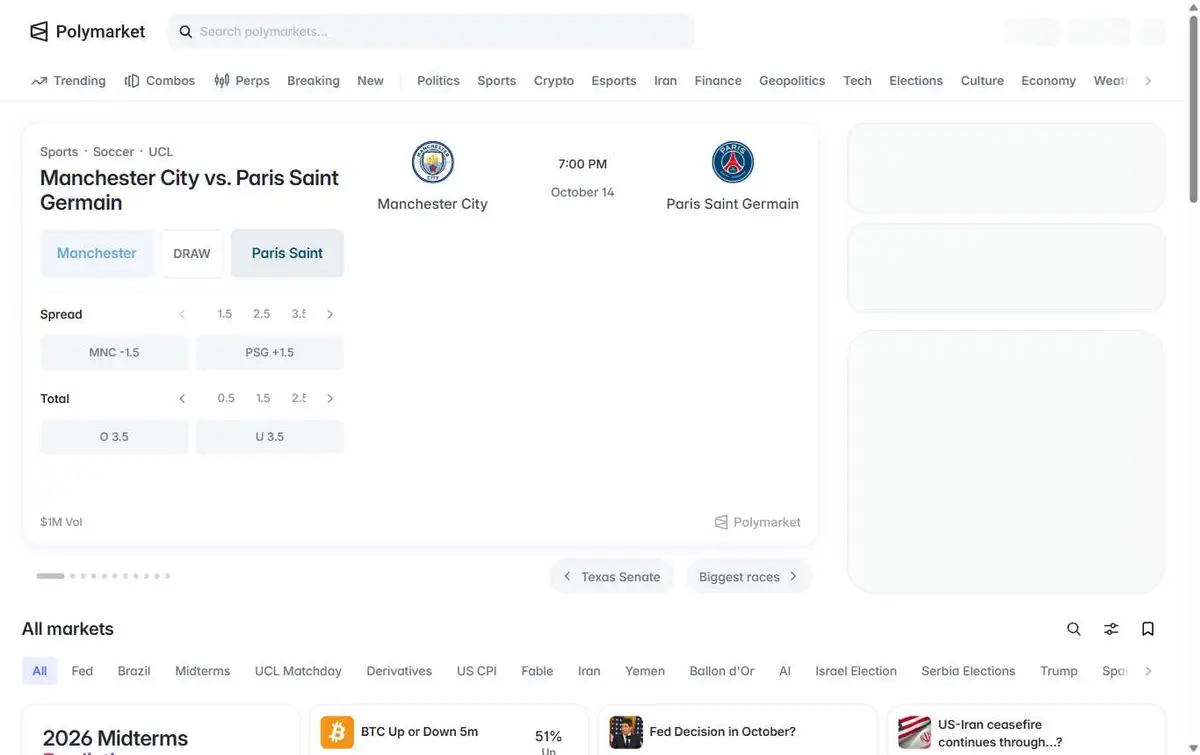
No barrier Polymarket · Home page
Spain, where the gambling regulator ordered internet providers to block Polymarket: open through our VPN server
 CRYPTORESTRICTIONS
Who regulates crypto in Spain?
The CNMV authorises and supervises crypto firms and their advertising. The Banco de España supervises stablecoin issuers, the gambling regulator (DGOJ) polices betting and prediction markets, and the tax agency (AEAT) collects crypto reports.
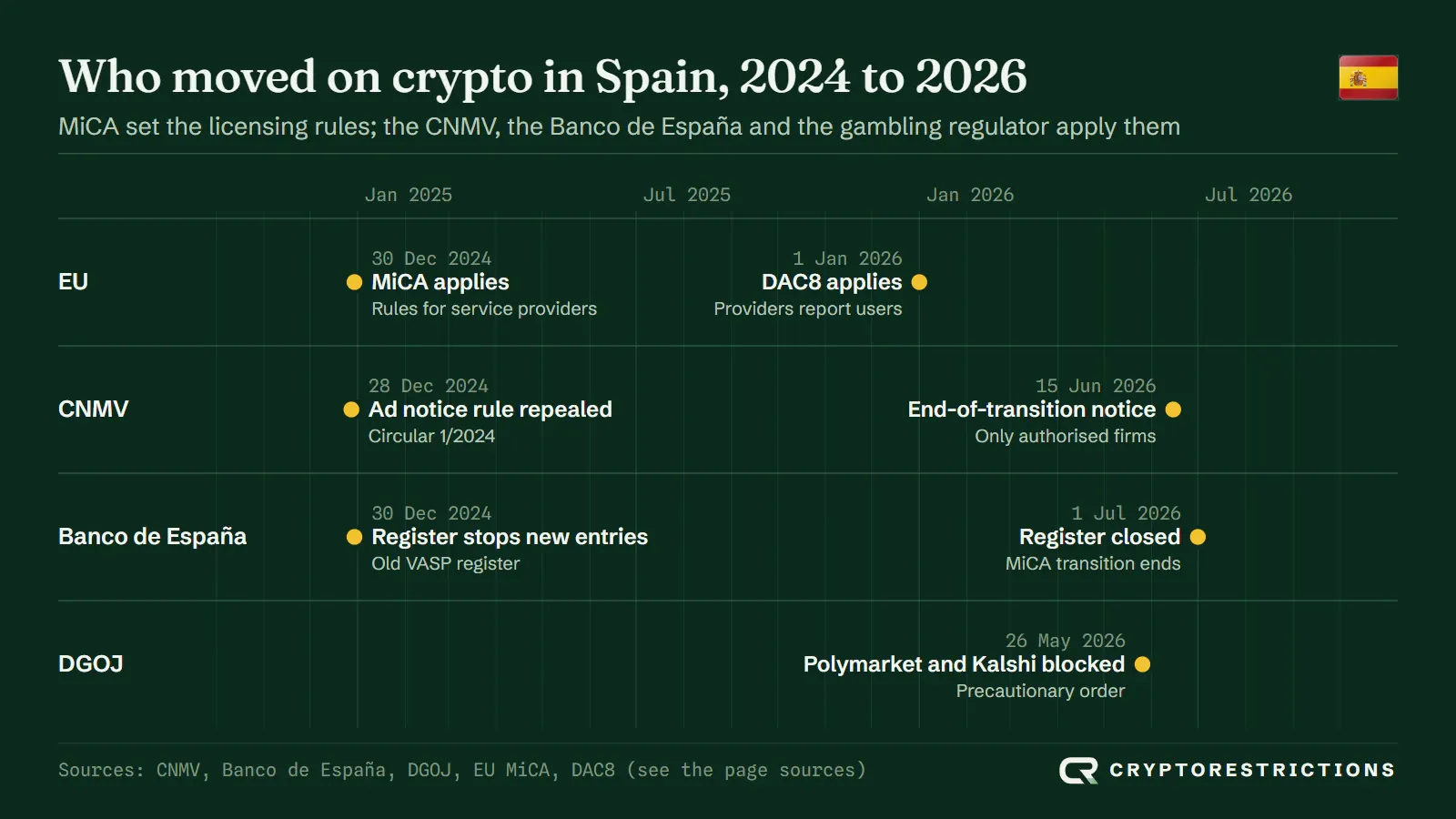
- CNMV. The Comisión Nacional del Mercado de Valores authorises crypto-asset service providers and publishes the register of those that may operate in Spain, per its MiCA page. Advertising is now governed by MiCA itself: the CNMV repealed its own advertising circular in December 2024, which ended the national prior-notice rule for mass campaigns. It can still require changes to an ad, suspend or prohibit it, and order a halt of up to 30 business days at a time, under article 247 of Law 6/2023 as quoted in a pending bill.
- Banco de España. The central bank supervises issuers of asset-referenced and e-money tokens, per the CNMV’s page. It also ran the register of crypto exchange and wallet providers, which stopped taking entries on 30 December 2024 and was closed on 1 July 2026. Registration there, the bank says, implied no approval or verification of the firm.
- DGOJ. The Dirección General de Ordenación del Juego, inside the Ministry of Consumer Affairs, licenses gambling and can have sites blocked; see the prediction markets section.
- AEAT. The tax agency sets how gains are declared and collects reports from custodians and exchanges, as covered in the tax section.
The same bill, published on 27 July 2026 and moving through Congress under the urgency procedure, would update the MiCA sanction regime, make crypto-asset service providers subject to the anti-money-laundering law and create a CNMV register of them. We found no sign that it has become law.
Which crypto products are limited in Spain?
Spot trading is the open product. Bybit, Crypto.com, Gate and Bitfinex offer no derivatives to Spanish users, and prediction trading is barred on Hyperliquid and blocked on Kalshi and Polymarket.
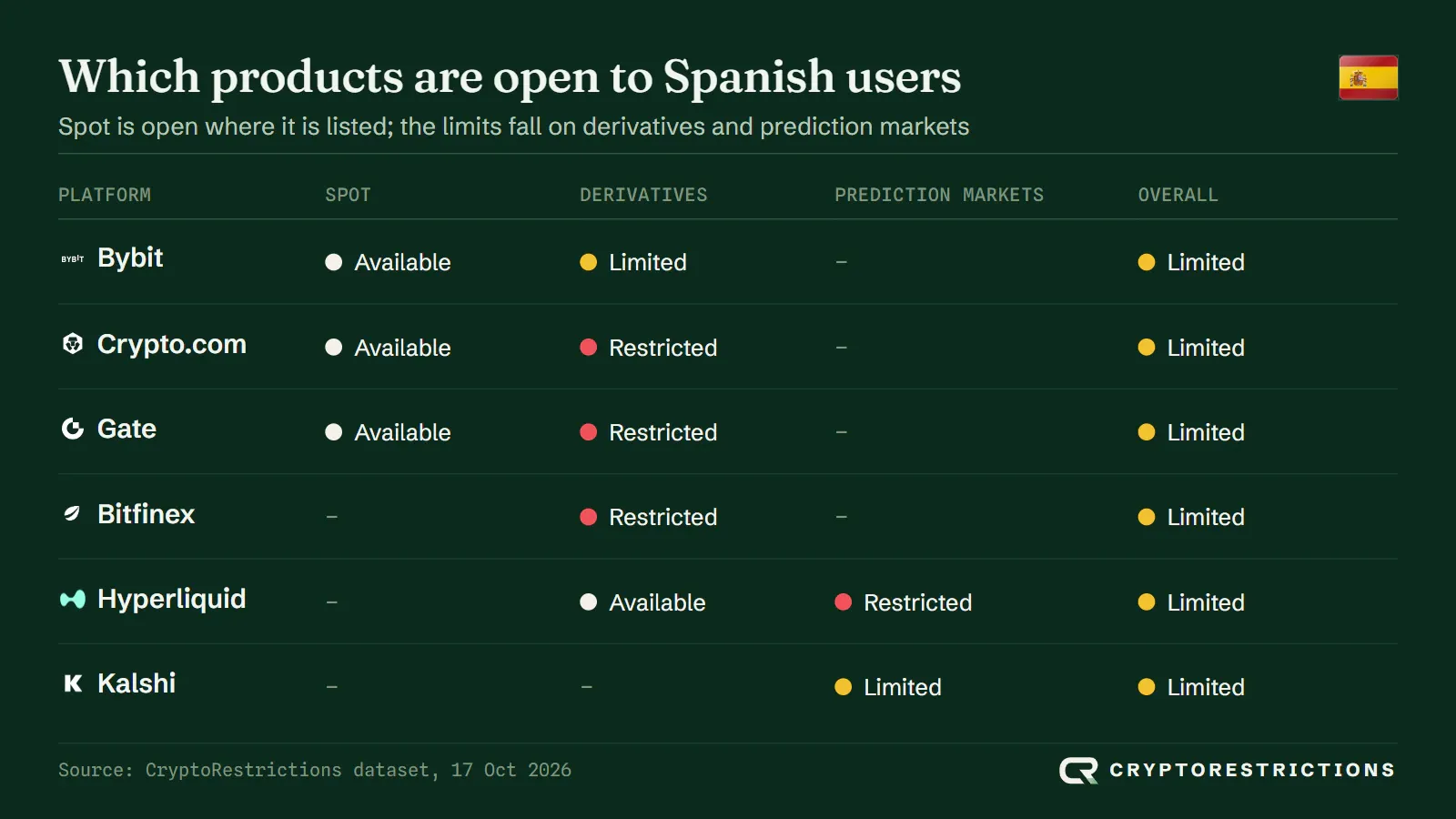
- Derivatives. Bybit EU offers none, and Crypto.com lists derivatives among its geo-restricted products for Spain. Global Gate, which has them, lists Spain as restricted, and Spanish persons are named as prohibited persons under Bitfinex’s derivative terms.
- Stablecoins. Issuers of asset-referenced and e-money tokens answer to the Banco de España, per the CNMV, so a stablecoin issuer is licensed separately from the exchange that lists it.
- Prediction markets. The tab is hidden by Hyperliquid’s location check from Spanish addresses; the legal position is below.
Are prediction markets legal in Spain?
Not without a licence. Spain’s gambling regulator treats prediction markets as games of chance and, since 26 May 2026, has had Polymarket and Kalshi blocked while a sanction case runs.
The Ministry of Consumer Affairs, which houses the DGOJ, opened the case against both platforms for operating without authorisation. Its reasoning is that betting on uncertain future outcomes is gambling and needs a specific licence, and it says the platforms lack identity, minor-protection and self-exclusion controls. The block applies nationwide as a precaution until the final decision. The case was notified through the official gazette after direct notice abroad failed, and the ministry estimated three to four months. We found no final decision by 17 October 2026, so the case is open. The release cites no article of the gambling law, and we found no Spanish bill that would licence prediction markets.
In our data both platforms are limited, not restricted: neither names Spain on its own list, and both loaded in our test, so the block is a regulator’s order against the sites rather than a platform exit. Hyperliquid, which runs outcome markets inside a wider product, hides them for Spanish addresses and is limited for that reason.
How is crypto taxed in Spain?
Gains on selling crypto are taxed as savings income, at 19% on the first 6,000 euros rising to 30% above 300,000 for the 2025 tax year. Swapping one crypto for another counts as a sale.
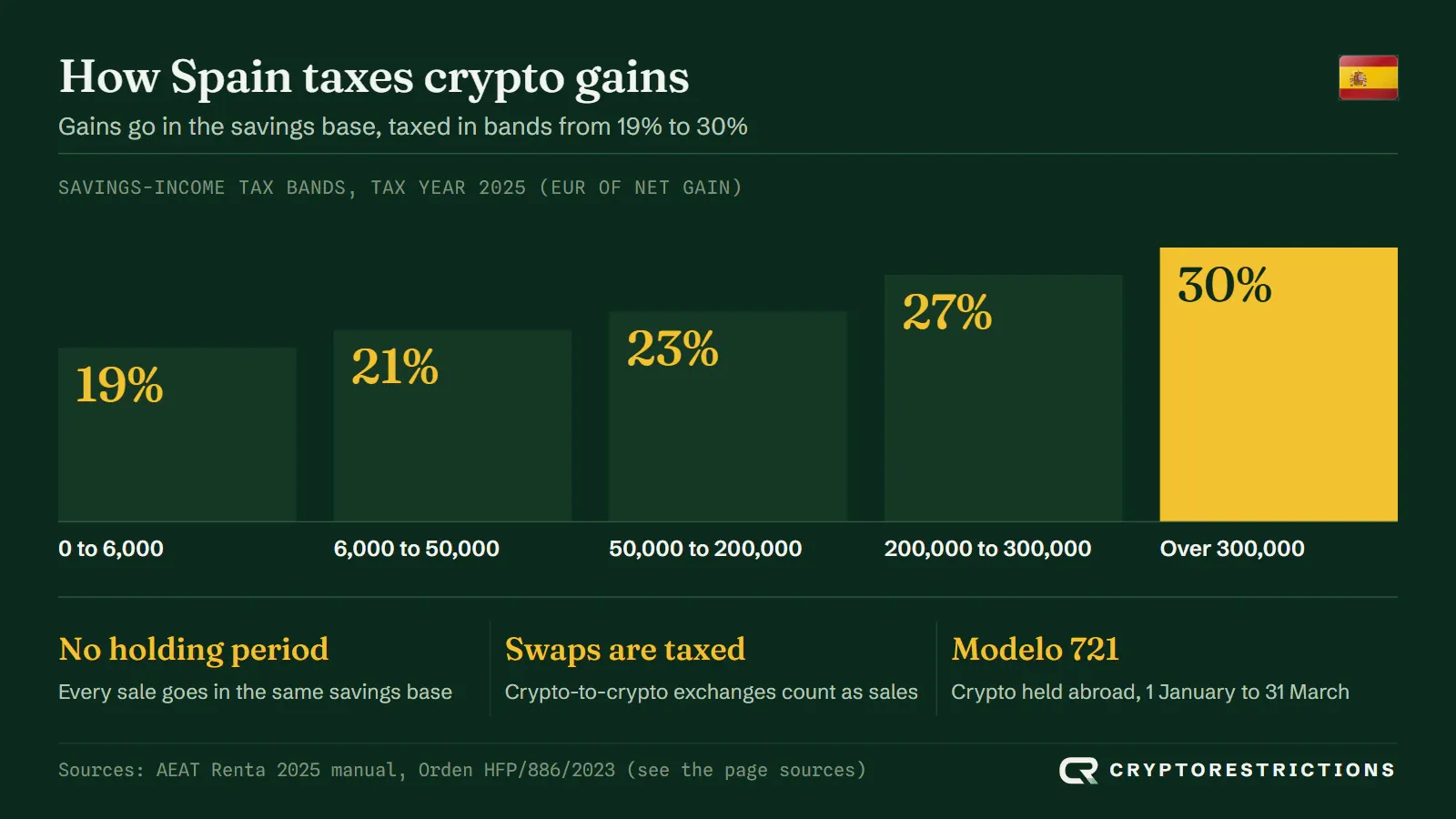
The tax agency’s Renta 2025 manual, updated 17 March 2026, treats a sale for euros as a capital gain or loss in the savings base, and says an exchange between two different virtual currencies also gives a gain or loss. Coins are matched first in, first out, even across exchanges, and gains go on the income tax return (Modelo 100). The agency’s savings scale for 2025 is 19%, 21%, 23%, 27% and 30%, with bands ending at 6,000, 50,000, 200,000 and 300,000 euros. The manual sets no holding-period rule, so a coin held for a day and one held for years are taxed alike. We found no change announced for 2026.
Two filings concern holders. Crypto held with a provider abroad is reported on Modelo 721, filed from 1 January to 31 March, according to the agency’s filing page; coins in a wallet where you hold the keys are not reported. Spanish providers report balances on Modelo 172. For the wealth tax, the euro balance of each coin is declared at 23:59 on 31 December, per the agency’s manual.
Reporting is due to change. The EU’s DAC8 directive applies from 1 January 2026, with providers reporting within nine months of year end, so the first report falls due by 30 September 2027. Spain’s transposing law has not come into force as far as we found, and a Hacienda draft order of March 2026 would scrap Modelo 173, rename Modelos 172 and 721 and add a new Modelo 175. It is only a draft.






 Serbia
 Turkey
 Switzerland
 Iceland
 Liechtenstein
 Norway
 Croatia
 Estonia
 Finland
 Greece
 Latvia