Is crypto legal in China?
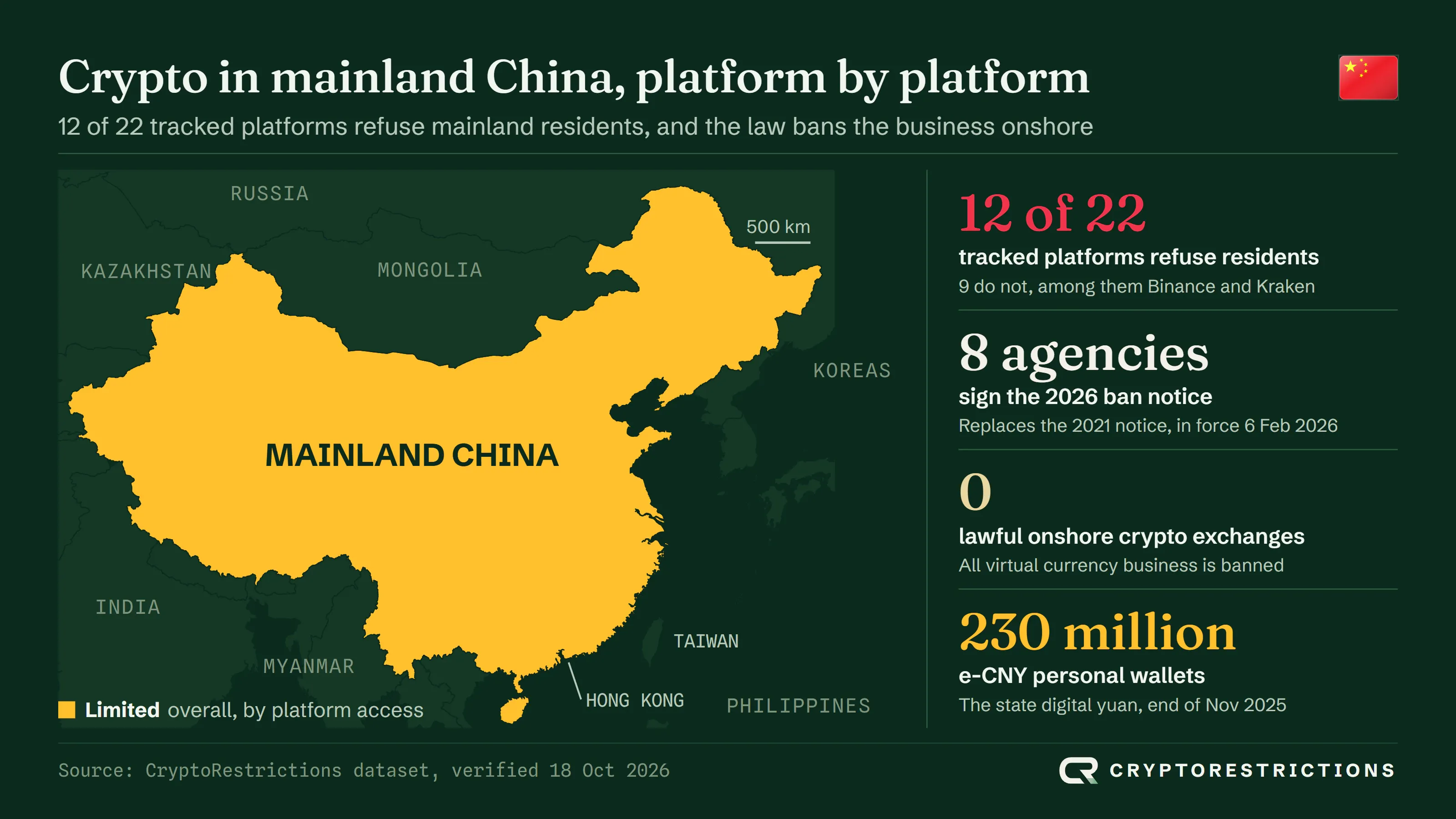
Not as a business. Mainland China bans all virtual currency business onshore and bars offshore platforms from serving mainland users, but the notices contain no ban on simply holding crypto and give holders no legal protection.
This guide covers mainland China. Hong Kong has its own licensing regime, covered in our Hong Kong guide, and Taiwan has its own rules, covered in our Taiwan guide.
The ban was built in steps. A notice of 3 December 2013 called bitcoin a virtual commodity that cannot be used as currency and barred financial institutions from bitcoin business. A joint announcement of 4 September 2017 ordered token issuance financing stopped at once. A notice published on 24 September 2021 declared all virtual currency business illegal, including offshore exchanges that serve mainland residents over the internet.
On 6 February 2026 eight agencies, the People’s Bank of China (PBoC), the National Development and Reform Commission (NDRC), the Ministry of Industry and Information Technology, the Ministry of Public Security, the market regulator, the financial regulator (NFRA), the securities regulator (CSRC) and the foreign exchange regulator (SAFE), issued Yinfa [2026] No. 42. It took effect on issue and repeals the 2021 notice by name. It restates that virtual currency has no status equal to legal tender and that related business is illegal financial activity, bars offshore entities from serving onshore parties, and makes mainland residents who knowingly help an offshore provider liable. It also says civil acts that offend public order are void, so investors carry their own losses.
What the notice does not do is ban a person from holding crypto: we found no such clause in it or in the 2021 notice. Holding is therefore unprotected rather than prohibited. A Han Kun analysis of 24 September 2024 argues the same reading, that holding is not banned and that courts can dispose of seized coins as ordinary virtual property, while noting that court rulings have not always matched regulators’ views.
Which crypto exchanges work in China?
None lawfully: the notices ban the business, so no exchange can hold a mainland licence and there is no register to check. Of the 14 exchanges we track, 8 refuse mainland residents in their own terms or tests and 6 do not.
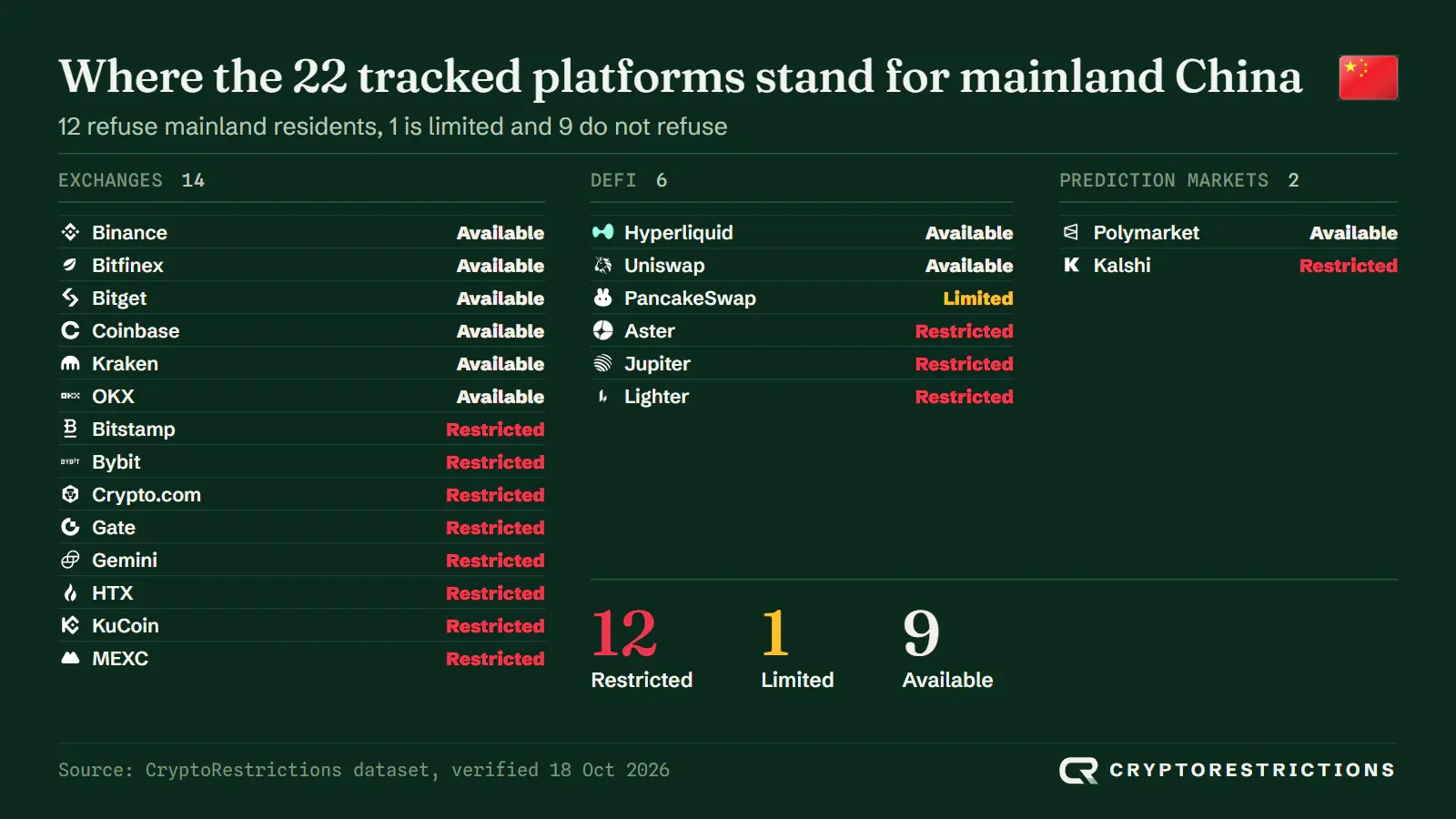
The six exchanges that do not refuse mainland residents are Binance, Bitfinex, Bitget, Coinbase, Kraken and OKX. That is the platform’s position, not the law’s: the 2026 notice makes it illegal for offshore firms to serve onshore users, and it makes mainland helpers liable. Coinbase is the notable change. Crypto Times reported on 14 July 2026 that Coinbase had reopened sign-ups for mainland China, accepting passports only, citing an update to its ID-document help page. We could not read that page ourselves, so the row says reported. Binance, Kraken, OKX, Bitget and Bitfinex do not name mainland China in the documents we read, and our geo-access test saw no barrier at Binance, Kraken, Bitget or Bitfinex.
Best crypto platforms for mainland Chinese residents
By our access score, Binance, Bitfinex, Bitget and Kraken (8.0 out of 10 each) are the exchanges most open to mainland residents, followed by Coinbase and OKX (7.5), and Uniswap, Hyperliquid and Polymarket also score 8.0. The score measures access, not legality.
The score rates how fully a mainland resident can use each platform, not its fees or safety, and not whether using it is lawful. It is computed from our data and moves when a row changes: access status (4 points), the share of the platform’s products open here (3), the mainland licences we hold on file (2, and none exists, because no licence can be issued) and what our geo-access test saw from a mainland address (1). Platforms that refuse mainland residents are not scored. The full method is on our methodology page. Every pick below carries the same legal risk from the 2026 notice.
Exchanges

Binance
Best for The widest product range
8.0/10- Access
- 4/4
- Products
- 3/3
- Licences
- 0/2
- Our test
- 1/1
Read our Binance reportPros
- China is not on its list of prohibited countries
- Loaded with no barrier in our test
Cons
- No mainland entity, and offshore service is illegal under the 2026 notice

Bitfinex
Best for Spot access without a local company
8.0/10- Access
- 4/4
- Products
- 3/3
- Licences
- 0/2
- Our test
- 1/1
Read our Bitfinex reportPros
- China is not a prohibited jurisdiction in its terms
- Loaded with no barrier in our test
Cons
- Offshore service is illegal under the 2026 notice

Bitget
Best for Spot and derivatives
8.0/10- Access
- 4/4
- Products
- 3/3
- Licences
- 0/2
- Our test
- 1/1
Read our Bitget reportPros
- China is not on its prohibited-countries list
- Loaded with no barrier in our test
Cons
- Offshore service is illegal under the 2026 notice

Kraken
Best for Spot trading with no barrier in our test
8.0/10- Access
- 4/4
- Products
- 3/3
- Licences
- 0/2
- Our test
- 1/1
Read our Kraken reportPros
- China is not on its do-not-serve list
- Loaded with no barrier in our test
Cons
- No mainland entity, and offshore service is illegal under the 2026 notice

Coinbase
Best for Passport-based sign-up, as reported
7.5/10- Access
- 4/4
- Products
- 3/3
- Licences
- 0/2
- Our test
- 0.5/1
Read our Coinbase reportPros
- Reported to accept mainland sign-ups with a passport since July 2026
Cons
- Our test showed a notice that stocks and prediction markets are unavailable
- We could not read the help page behind the report

OKX
Best for Spot and derivatives
7.5/10- Access
- 4/4
- Products
- 3/3
- Licences
- 0/2
- Our test
- 0.5/1
Read our OKX reportPros
- China is not on its restricted-locations list
Cons
- We did not test it from a mainland address
- Offshore service is illegal under the 2026 notice
DeFi

Hyperliquid
Best for Perpetuals from your own wallet
8.0/10- Access
- 4/4
- Products
- 3/3
- Licences
- 0/2
- Our test
- 1/1
Read our Hyperliquid reportPros
- China is not in its restricted list
- The app loaded in our test
Cons
- No mainland licence can exist

Uniswap
Best for Swapping tokens from your own wallet
8.0/10- Access
- 4/4
- Products
- 3/3
- Licences
- 0/2
- Our test
- 1/1
Read our Uniswap reportPros
- Its terms bar only places under comprehensive US sanctions
- The swap app loaded in our test
Cons
- No mainland licence can exist

PancakeSwap
Best for BNB Chain swaps and pools
6.3/10- Access
- 3.5/4
- Products
- 1.8/3
- Licences
- 0/2
- Our test
- 1/1
Read our PancakeSwap reportPros
- Swaps, pools and staking are not excluded by its terms
Cons
- Its perpetuals product bars users here
- No mainland licence can exist
Prediction markets

Polymarket
Best for Event contracts, with legal risk
8.0/10- Access
- 4/4
- Products
- 3/3
- Licences
- 0/2
- Our test
- 1/1
Read our Polymarket reportPros
- China is not on its blocked-countries list
Cons
- Reported blocked by the Great Firewall and reached by VPN
- Gambling law applies, as covered below
Which platforms block mainland Chinese users?
Twelve platforms refuse mainland residents, among them Bybit, MEXC, Gate, KuCoin and HTX, and PancakeSwap bars its perpetuals product. The others do not name mainland China in their documents.
Bitstamp is the exit we can date: it told customers on 29 October 2021 that it would stop serving PRC nationals in mainland China and close their accounts by 30 November 2021. The others name mainland China in current terms or lists. Jupiter is the least clear case: its terms name “the Republic of China”, a wording that could also mean Taiwan, and its mobile FAQ lists China as restricted, so we record it at medium confidence.


What our geo-access test saw from China
From a mainland China address on 14 and 16 October 2026 we loaded 20 of the 22 platforms we track: 5 refused us, 1 showed a notice and 14 loaded with no barrier. We did not test OKX or Crypto.com.
An open page is not permission. Bybit, Gate, HTX, Aster, Jupiter and Bitstamp loaded although their terms or notices exclude mainland China, because most platforms enforce at identity verification rather than at the page. KuCoin and MEXC refused the page itself, while Gemini, Kalshi and Lighter loaded and then refused at sign-up. Coinbase’s notice said stocks and prediction markets are not available. The test sees a platform’s geo-blocking only, not any national filtering on the way in, so a page that loads here may not load from inside the Great Firewall. Swipe through the screenshots below; each card quotes what the page showed.
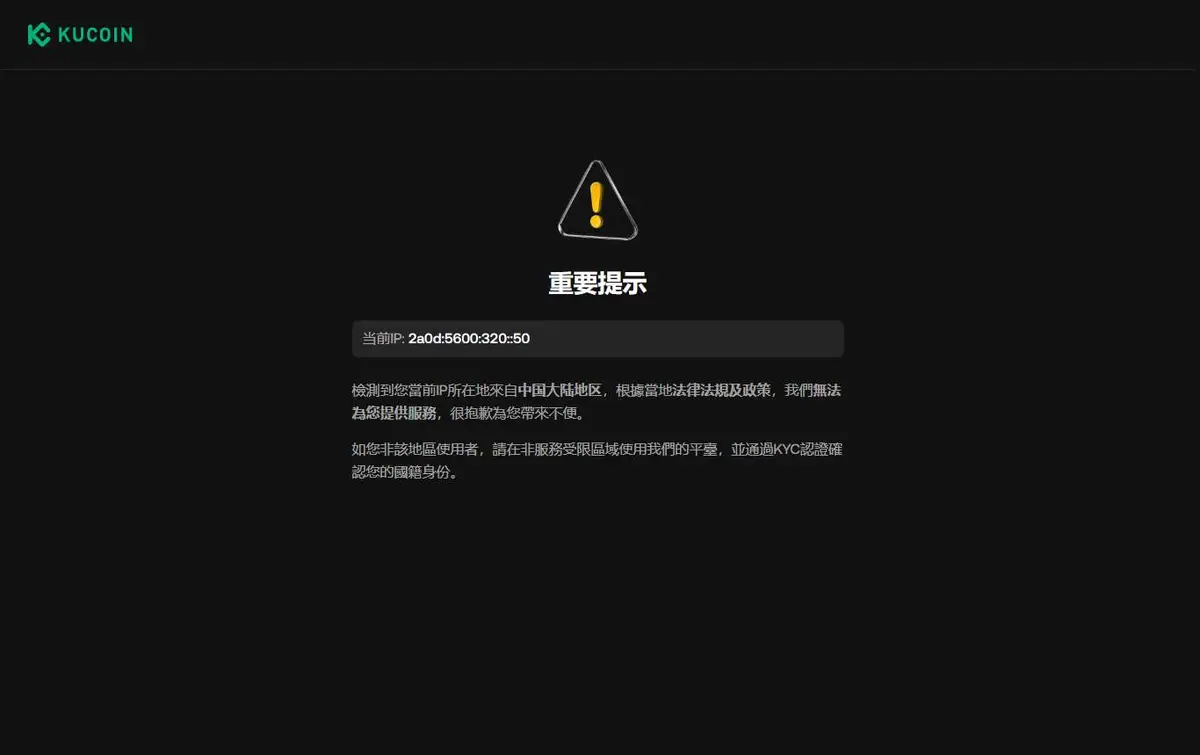
Blocked KuCoin · Home page
Blocked by IP from mainland China
“We've detected that your IP address or KYC region is from a restricted area.”
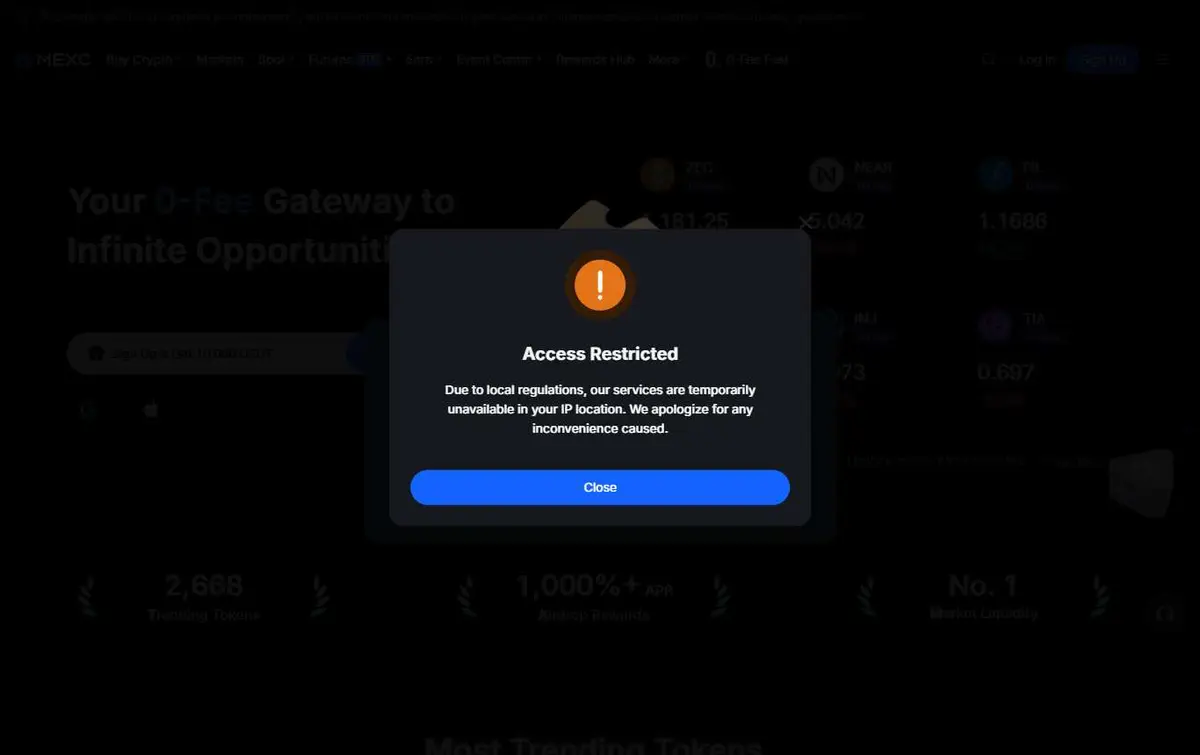
Blocked MEXC · Home page
China: an Access Restricted pop-up over the home page, under MEXC's not-available banner
“To comply with local regulatory requirements, services are not available in your location.”
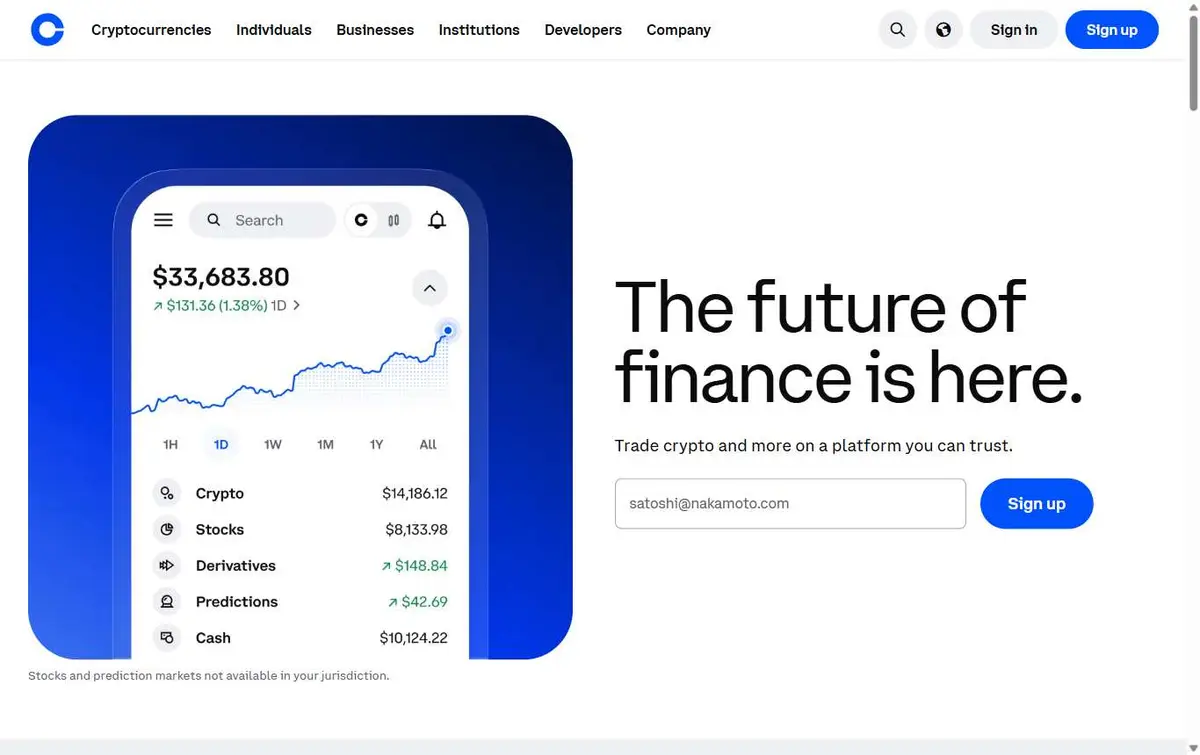
Notice shown Coinbase · Home page
Mainland China, which no Coinbase document restricts, loads with the product notice
“Stocks and prediction markets not available in your jurisdiction.”
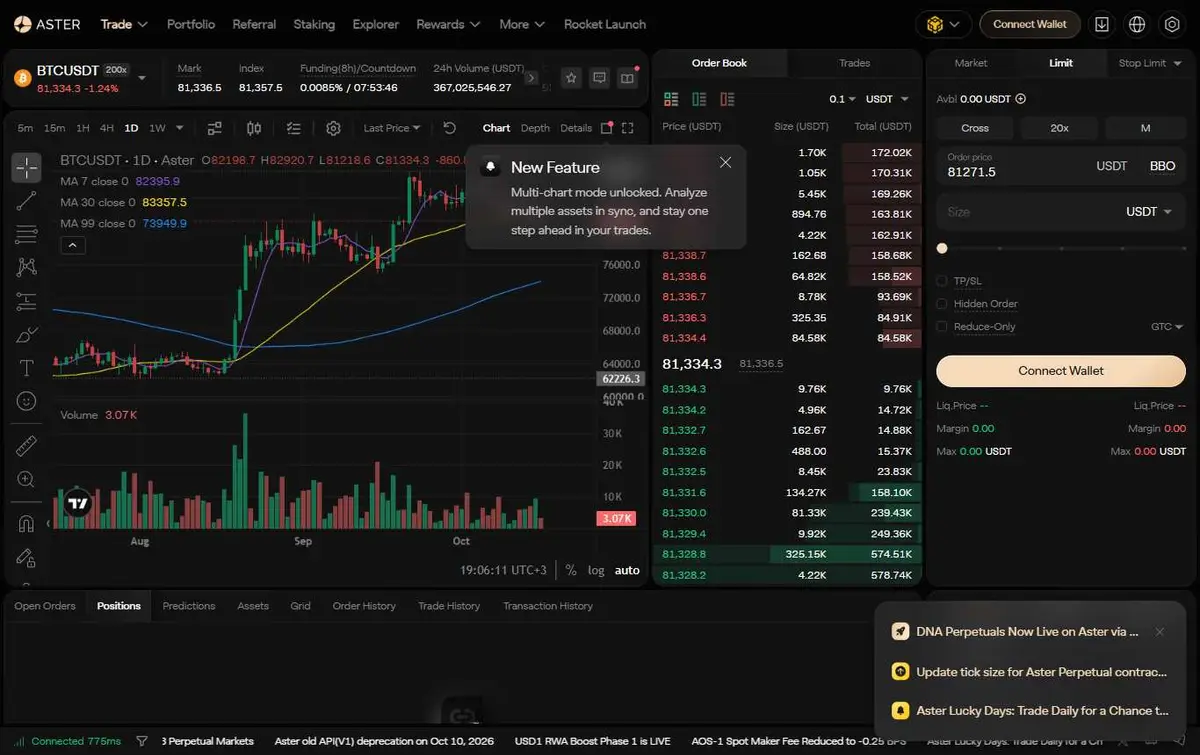
No barrier Aster · Trading app
China, named in the terms: the app loads in full

No barrier Bitstamp · Home page
Mainland China, closed to customers since 2021, loads the same page
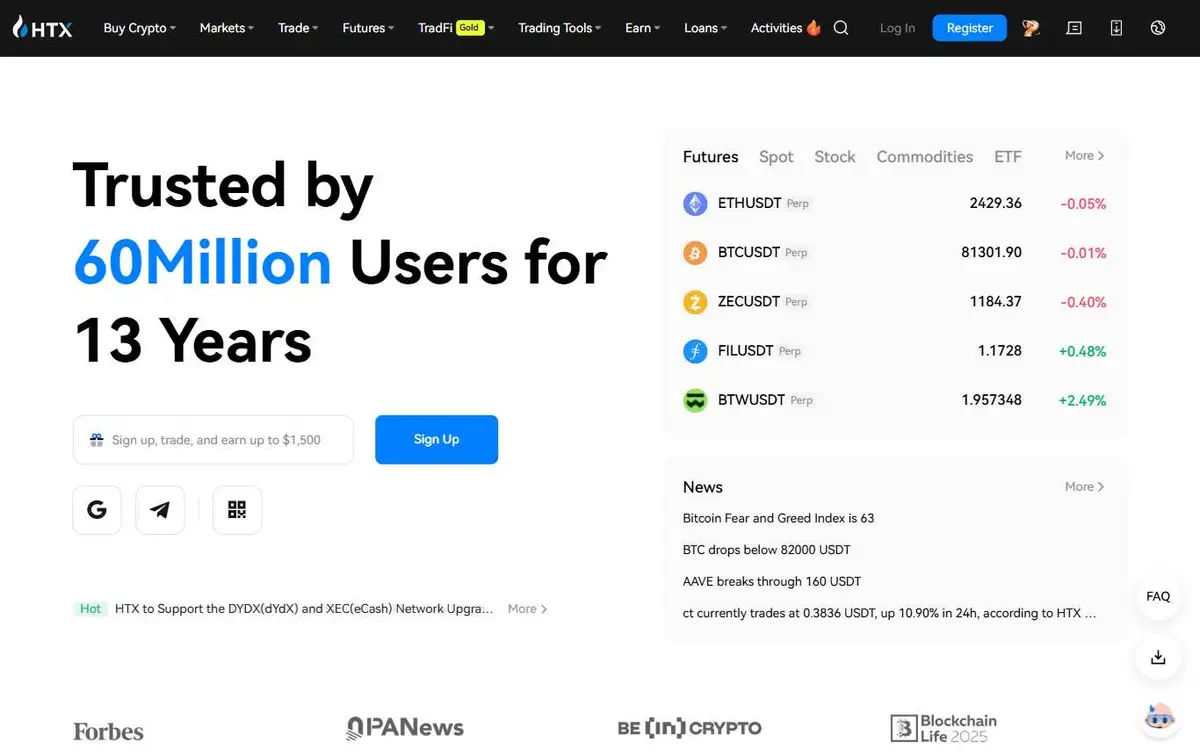
No barrier HTX · Home page
Mainland China, where HTX retired its accounts in 2021, loads with no barrier
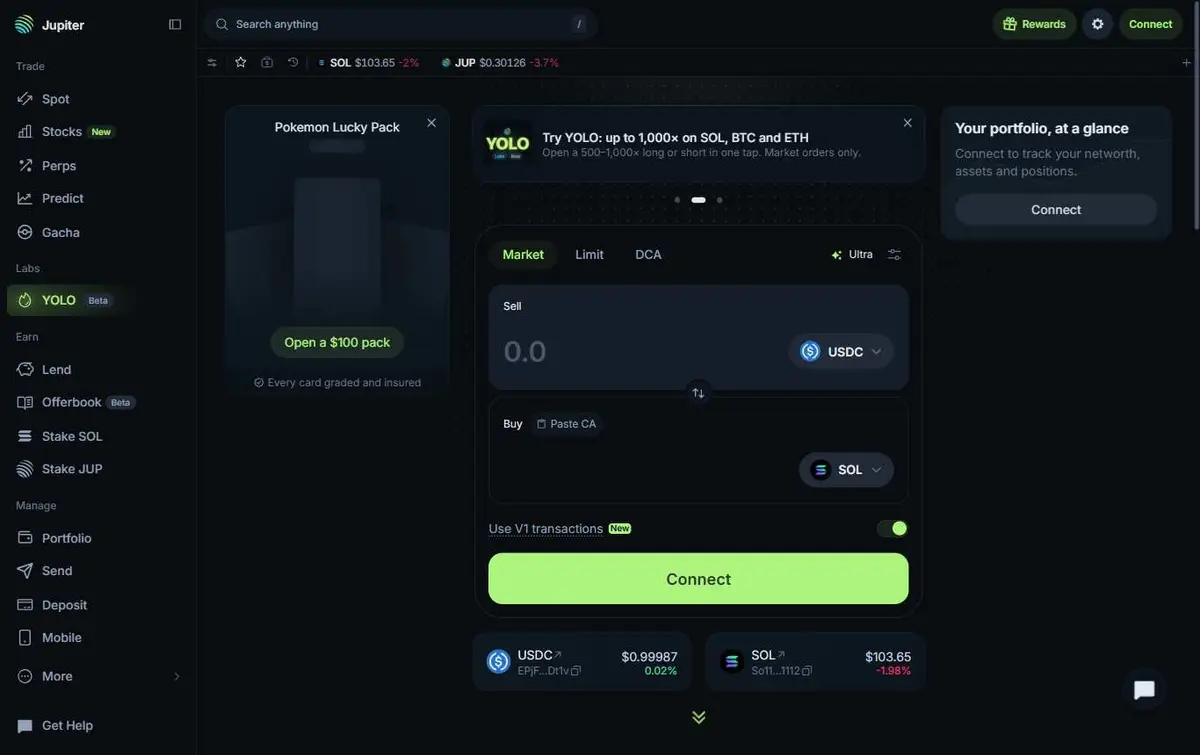
No barrier Jupiter · Trading app
China, which the terms name as the Republic of China: no gate
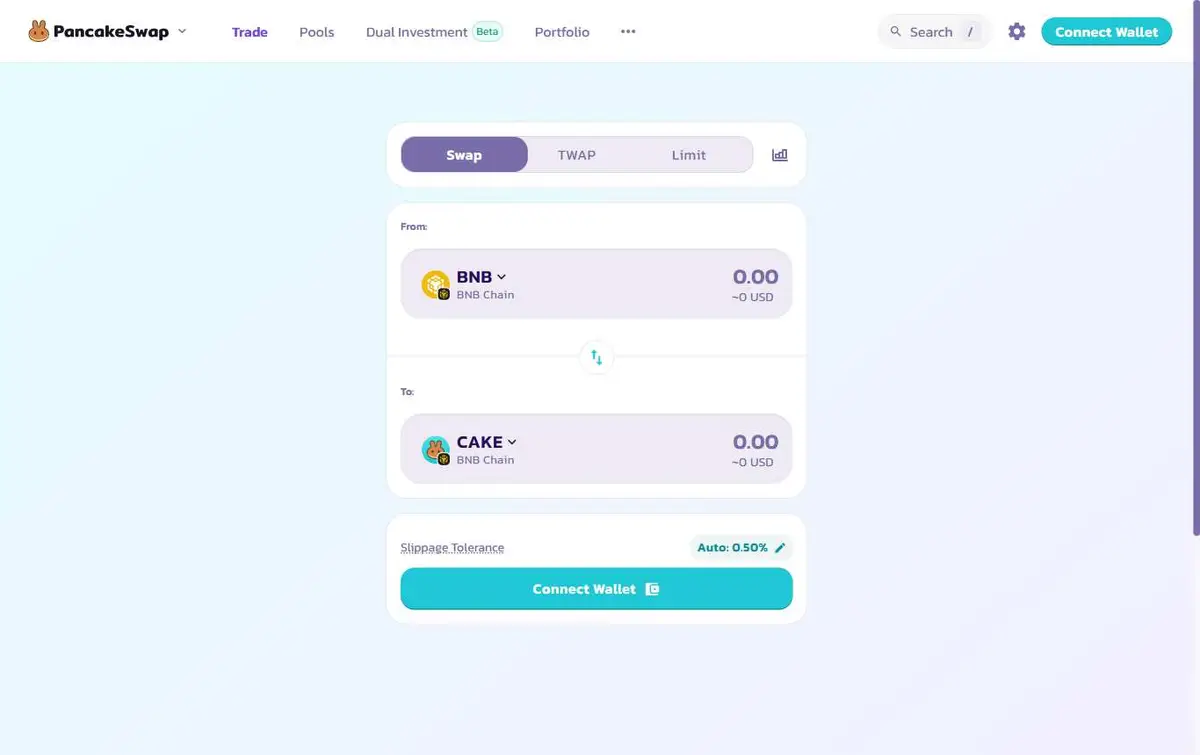
No barrier PancakeSwap · Trading app
China, another perps exclusion: the swap page loads
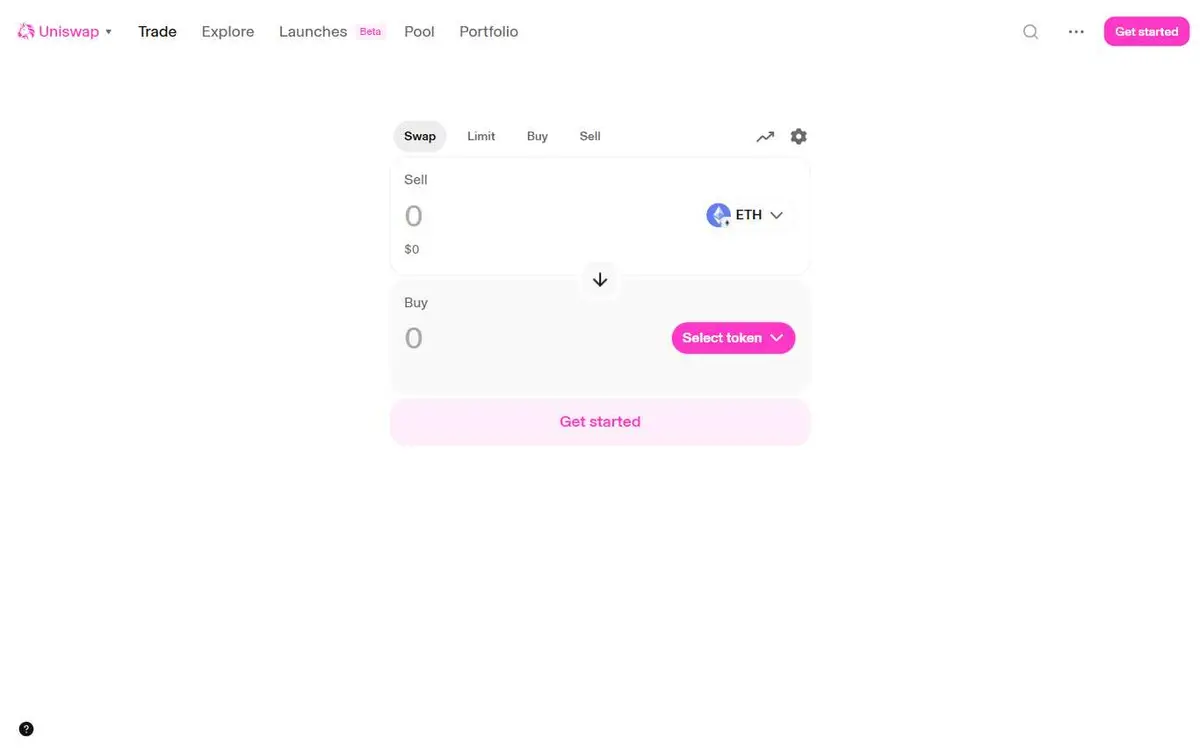
No barrier Uniswap · Trading app
China, where crypto trading is banned locally: the app still loads
 CRYPTORESTRICTIONS
Do crypto rules differ by region in China?
Yes, between the mainland and the special administrative regions. The 2026 notice applies to the mainland, while Hong Kong licenses its own platforms and Taiwan runs its own registration.
Within the mainland we found no provincial crypto rule that differs from the national ban, though provinces carry out its enforcement and, under the 2026 notice, close mining projects. For the rules in the two nearest places, read the Hong Kong guide, where the Securities and Futures Commission licenses trading platforms, and the Taiwan guide, where the Financial Supervisory Commission registers exchanges for anti-money-laundering supervision.
Who regulates crypto in China?
The PBoC leads the crypto ban, the CSRC leads tokenised real-world assets, the NDRC leads the mining shutdown, and five more agencies and the courts enforce it.
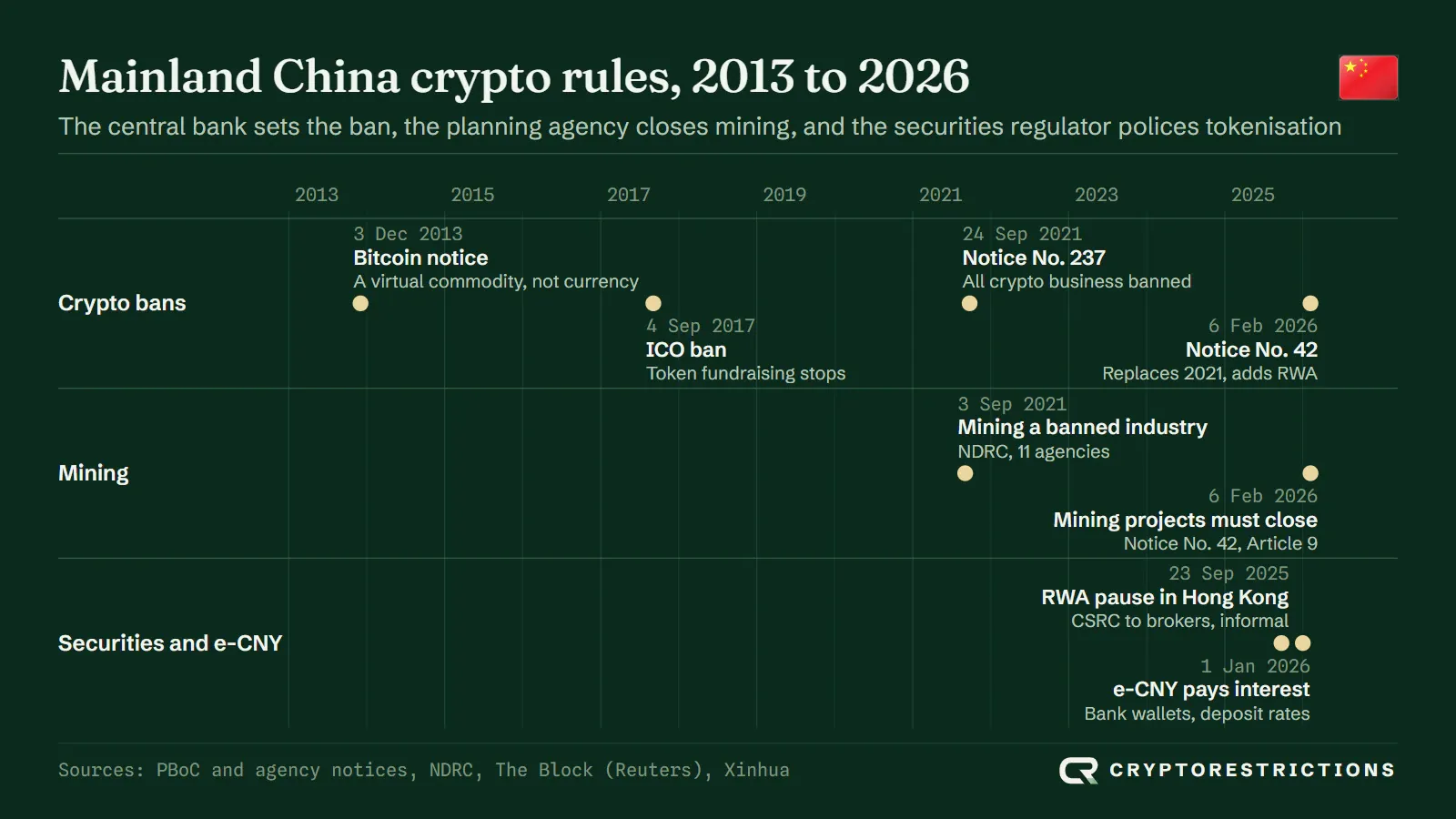
- PBoC. Leads coordination against virtual currency under the 2026 notice and runs payments oversight and anti-money-laundering. It also issues the e-CNY: Xinhua reported on 13 January 2026 that from 1 January 2026 banks pay interest on real-name e-CNY wallet balances, and that by the end of November 2025 there were 3.48 billion transactions worth RMB 16.7 trillion and 230 million personal wallets.
- CSRC. Leads the rules for real-world asset tokenisation under the 2026 notice. In September 2025 it reportedly told at least two brokerages to pause tokenisation work in Hong Kong, informally and with no order published.
- NDRC. Leads the mining shutdown. Its notice of 3 September 2021, issued with ten other agencies, put virtual currency mining on the eliminated list of the industrial catalogue and banned new projects. The 2026 notice orders existing projects closed and bars mining machine makers from selling onshore.
- NFRA, SAFE, SAMR, the Ministry of Industry and Information Technology and the Ministry of Public Security. The 2026 notice bars banks and payment firms from accounts, transfers and settlement for virtual currency, bars internet firms from marketing and traffic services and orders such sites and apps closed, bars company names with the words virtual currency, stablecoin or RWA, requires approval for offshore RWA by mainland entities, and sends criminal cases to the police and courts.
- Courts. Courts rule case by case. The Han Kun analysis above reports that they have treated virtual currency as property that can be disposed of, and that a Shanghai district procuratorate and police branch issued a guideline on 29 August 2024 for handling seized coins in criminal cases.
Which crypto products are limited in China?
Almost all of them. Trading, token issuance, mining and offshore services to mainland users are banned, while stablecoins and tokenised real-world assets are open only with approval.
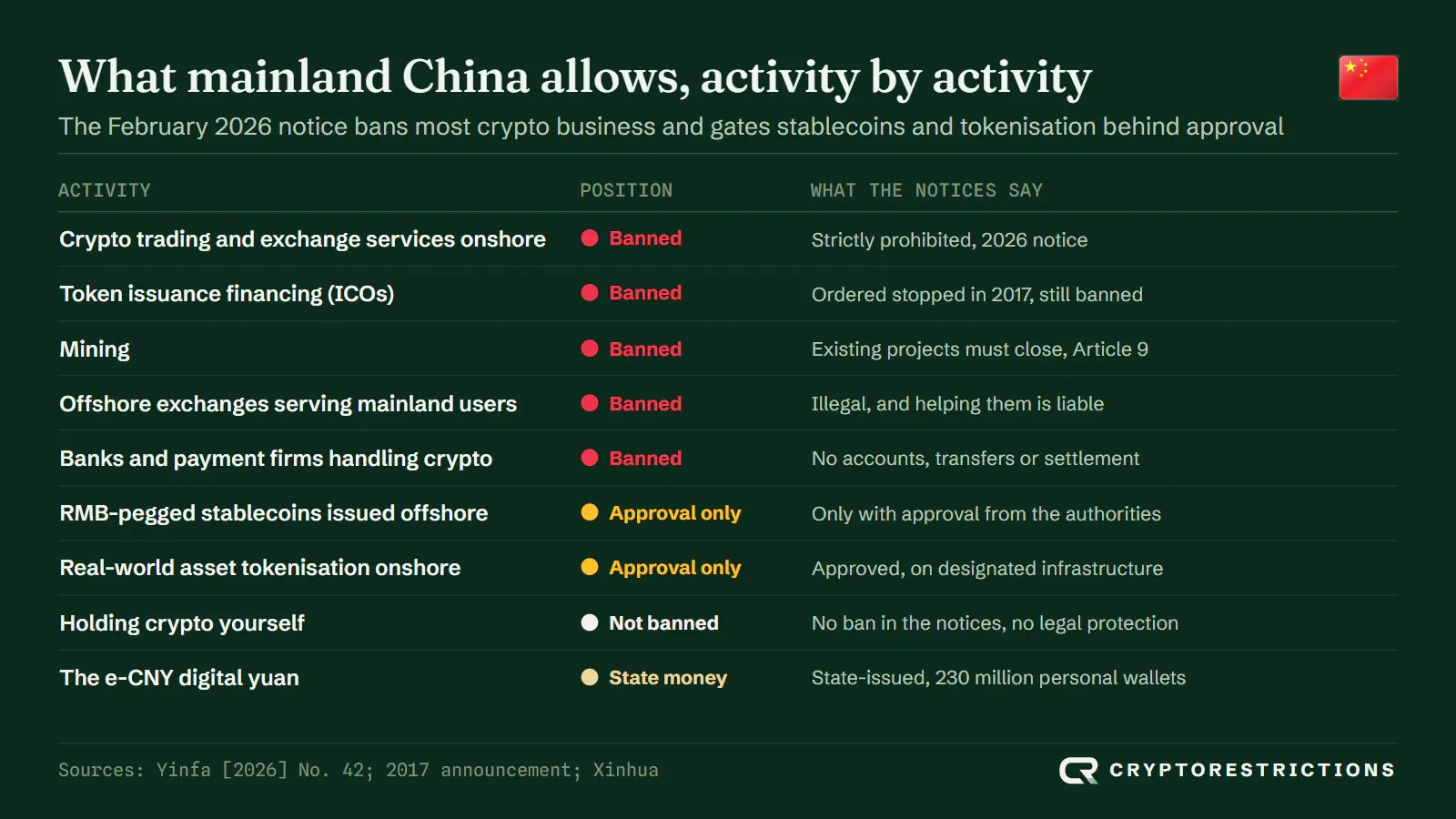
- Stablecoins. The 2026 notice says no domestic or foreign entity may issue a stablecoin pegged to the renminbi outside China without approval. We found no mainland rule that lets residents buy or hold dollar stablecoins lawfully, and the notice treats virtual currency as having no legal tender status.
- Tokenised real-world assets. Onshore tokenisation is banned unless the competent authority approves it and it runs on designated financial infrastructure. Offshore tokenisation backed by mainland assets needs approval or filing, and offshore firms may not serve onshore users.
- Derivatives. PancakeSwap’s perpetuals product bars users in mainland China, which is why our row for the platform is limited, and Gemini refuses mainland residents for all services. We hold no other mainland source for derivatives, staking or lending at the platforms we track.
- Mining. Banned. Existing projects must close and new ones are barred, and the NDRC ban dates from 2021.
- The e-CNY. The state’s digital currency is the product the state encourages. It is legal tender issued through banks, and the interest rule of 1 January 2026 makes its balances deposit-like.
Are prediction markets legal in China?
Probably not, but no authority has ruled on them. Betting for profit is gambling under Chinese criminal law, and Rest of World reported in February 2026 that Polymarket and Kalshi are blocked by the Great Firewall and used through VPNs.
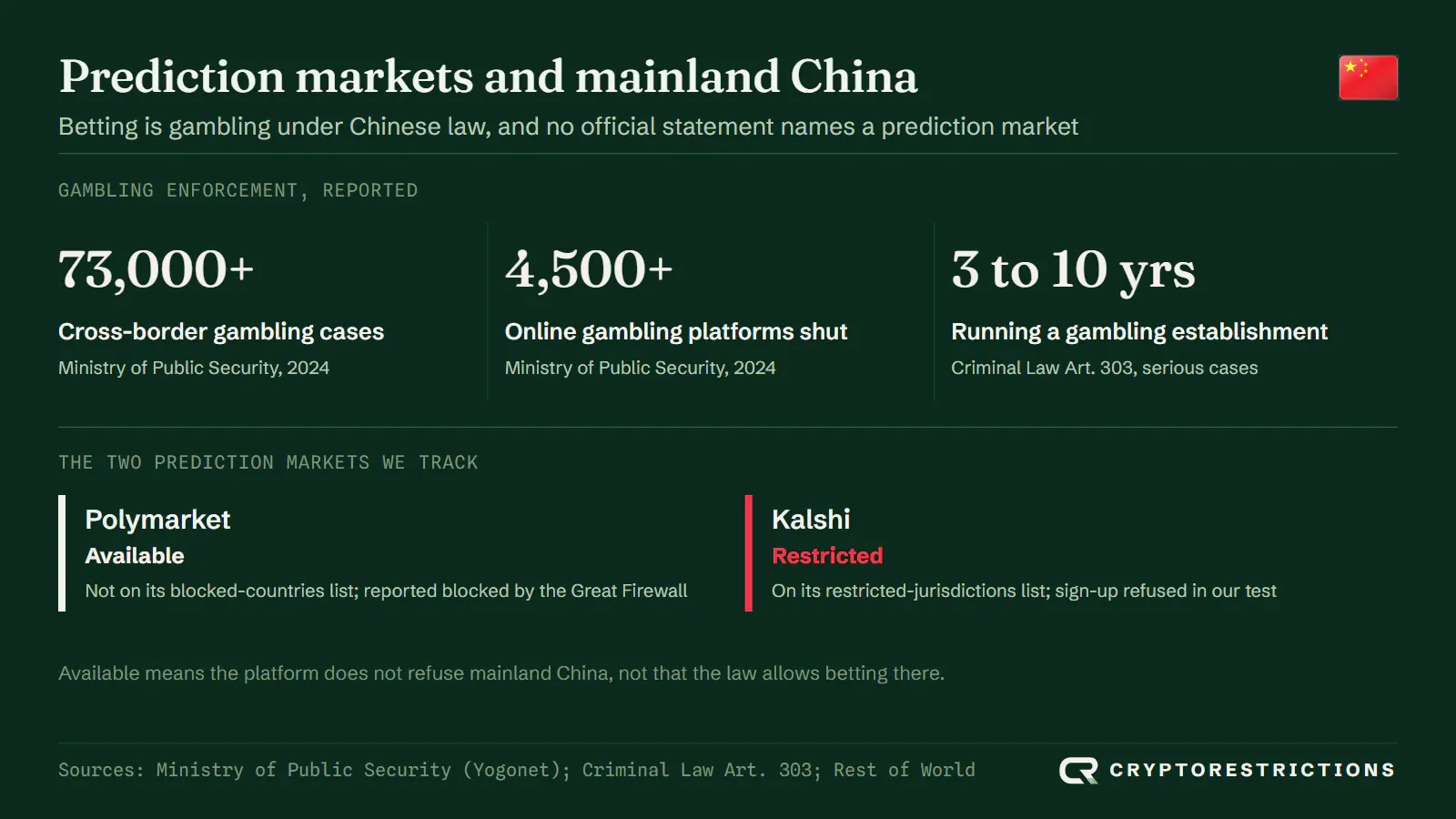
Criminal Law Article 303 covers gambling and running a gambling establishment; the Supreme People’s Court page on it gives three to ten years in prison plus a fine for opening a gambling establishment in serious cases. The Ministry of Public Security reported for 2024, as Yogonet relayed, more than 73,000 cross-border gambling cases and more than 4,500 online gambling platforms taken down.
Rest of World reported no official statement about Polymarket or Kalshi and no penalty on users or the platforms. It also reported that Polymarket was hiring Mandarin-speaking staff and planning a Chinese-language interface. Our reading, which is not an official position, is that a prediction market settled in crypto also falls inside the 2026 ban on offshore virtual currency services. On the platform side, Polymarket is recorded as available because it does not list China as blocked, and Kalshi as restricted because it does.

How is crypto taxed in China?
No tax rule names crypto. Gains would most likely fall under the flat 20% property-transfer or incidental-income lines of the income tax law, but we found no official guidance saying which, and because trading is banned there is no lawful reporting route.
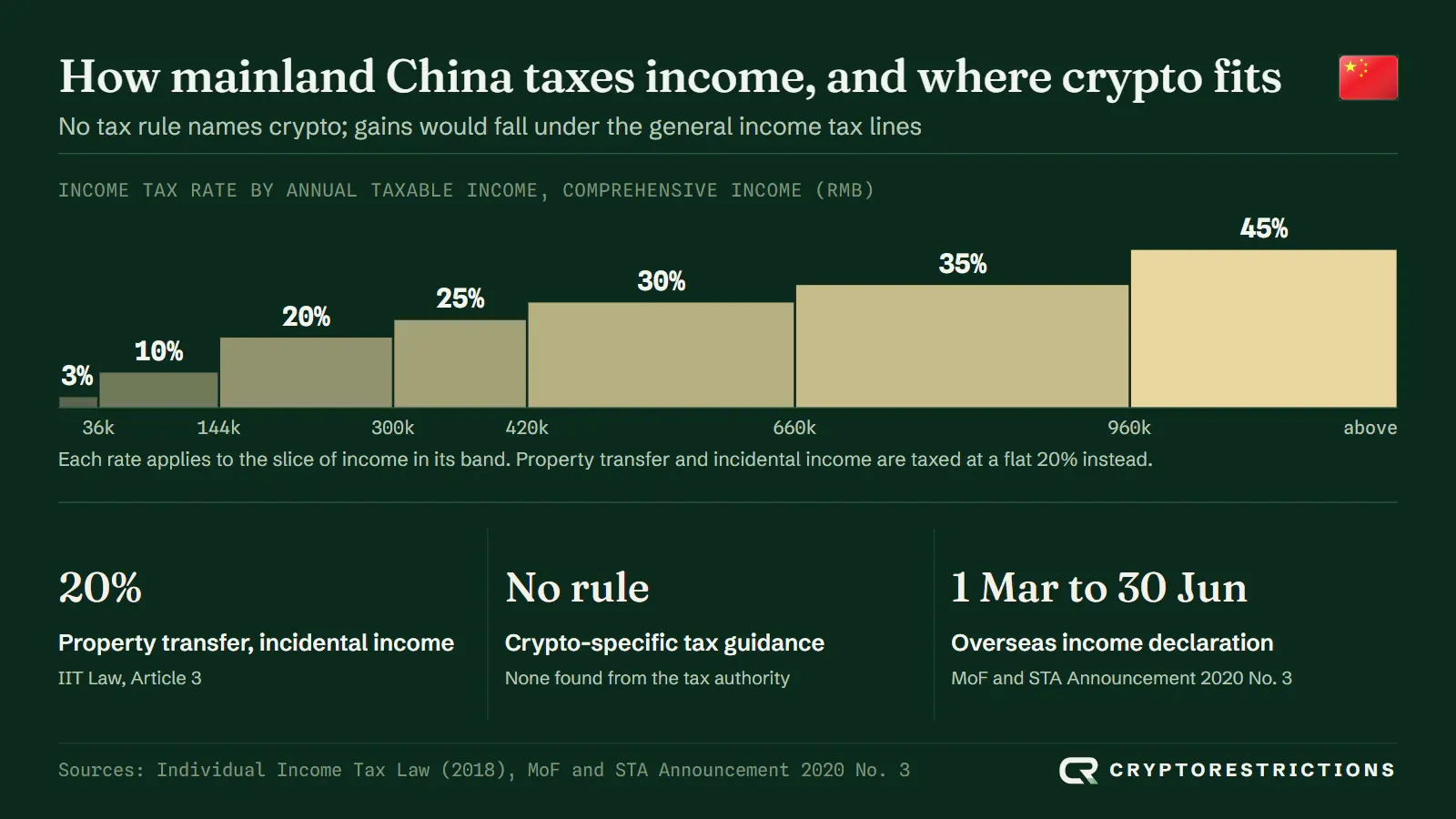
The rates come from Article 3 of the Individual Income Tax Law as amended in 2018: comprehensive income is taxed at 3% to 45% in seven bands up to RMB 960,000 a year, and interest, dividends, property leasing, property transfer and incidental income are taxed at a flat 20%. The closest official text we know of is a 2008 State Taxation Administration reply on game virtual currency, which treats reselling it at a markup as property transfer income. China News Service reported it on 9 January 2024, with experts split on whether it reaches crypto, and we did not read the reply itself.
Enforcement is thin and indirect. TechFlow reported a Zhejiang tax bureau notice of 26 March 2025 assessing an individual RMB 127,200 plus late fees for undeclared virtual currency trading profits. We could not find the notice, and it does not name the coin. Residents must also declare overseas income, under Announcement 2020 No. 3, between 1 March and 30 June of the following year. We found no tax rule for mining, and we found mainland China on no list of jurisdictions committed to the OECD crypto-asset reporting framework in the sources we read. Working out your own position takes four steps:





 Bahrain
 Georgia
 Qatar
 Israel
 Saudi Arabia
 Vietnam
 Pakistan
 Bangladesh
 Indonesia
 United Arab Emirates
 South Korea