Is crypto legal in Thailand?
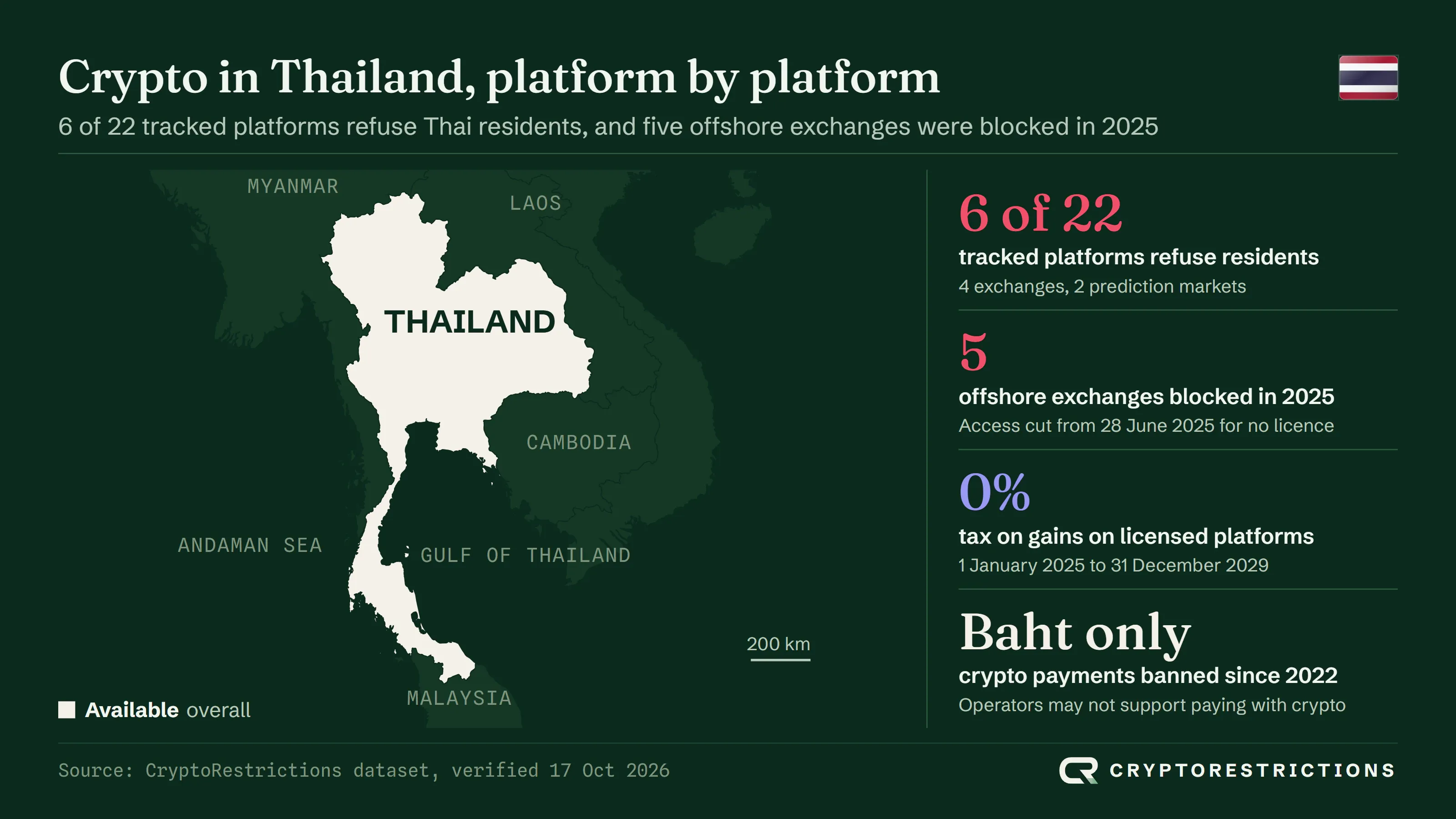
Yes. Residents may buy, hold and trade crypto through businesses licensed by the SEC, and the state blocks unlicensed exchanges instead of banning the people who use them. What is closed is paying for goods and services with crypto.
The licensing regime is the digital asset business law of 2018, which Elliptic describes as giving retail investors regulated access from the start. The SEC’s own order of 29 May 2025 treats running a digital asset business without that permission as the offence, and it was the platforms, not their users, that it named. The SEC still warns that users of unlicensed operators are not protected by law. The sections below cover who holds a licence, who was blocked, what licensed operators may not do and how gains are taxed.
Which crypto exchanges work in Thailand?
Ten of the exchanges we track serve Thailand. Two of them, Binance and KuCoin, say a Thai company holds a licence, and the SEC had five unlicensed offshore exchanges blocked on 28 June 2025.
Licences come in types: exchange, broker, dealer and custodian among them. Press reports of SEC data for July 2026 count seven exchanges and 14 brokers, and name Bitkub, Gulf Binance, Orbix Trade, TDX, Upbit, Waanx and Z.com among the exchanges. That list does not name KuCoin Thailand, which KuCoin says holds an exchange licence, and the SEC’s register itself would not load for us, so we quote no total from it.
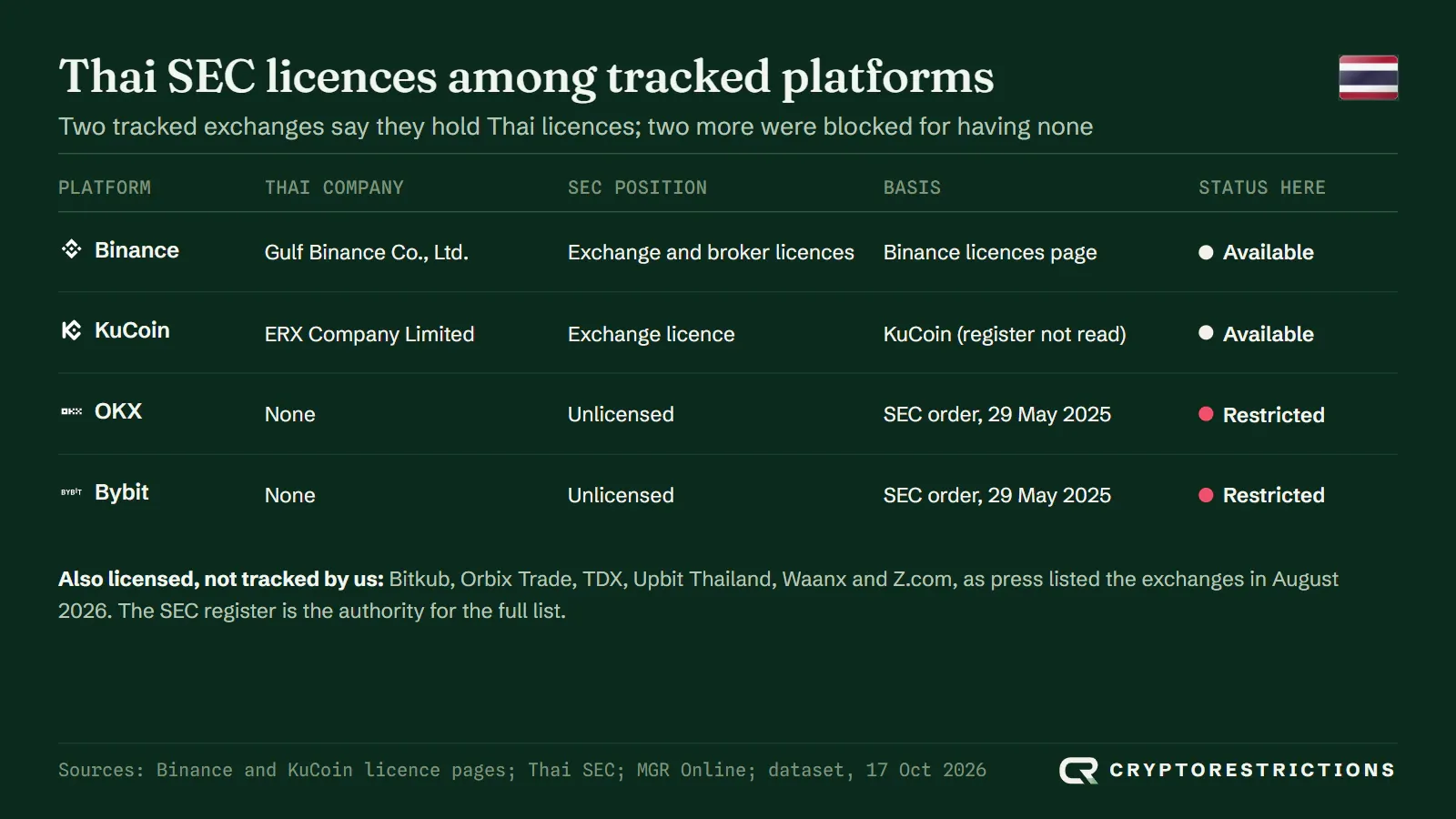
Binance lists Gulf Binance Co., Ltd., a joint venture with Gulf Edge, on its licences page. KuCoin says KuCoin Thailand is run by ERX Company Limited, which it describes as licensed under the SEC, and that it launched on 24 April 2025. OKX and Bybit are the two tracked exchanges the SEC named as unlicensed.


Best crypto platforms for Thai residents
By our access score, Binance and KuCoin (9.0 out of 10 each) are the exchanges most open to Thai residents, with Bitfinex, HTX and MEXC next at 8.0. Hyperliquid and Lighter (8.0 each) lead DeFi, and no prediction market is open to new positions.
The score rates how fully a Thai resident can use each platform, not its fees or safety. It is computed from our data and moves when a row changes: access status (4 points), the share of the platform’s products open here (3), the Thai licences we hold on file (2) and what our geo-access test saw from a Thai address (1). Platforms that refuse Thai residents are not scored. The full method is on our methodology page.
Exchanges

Binance
Best for A Thai-licensed company behind the brand
9.0/10- Access
- 4/4
- Products
- 3/3
- Licences
- 1/2
- Our test
- 1/1
Read our Binance reportPros
- Gulf Binance Co., Ltd. holds Thai exchange and broker licences, per Binance
- Thailand is not on its prohibited list
Cons
- We hold no Thai source for its derivatives or staking

KuCoin
Best for A local app run by a licensed company
9.0/10- Access
- 4/4
- Products
- 3/3
- Licences
- 1/2
- Our test
- 1/1
Read our KuCoin reportPros
- KuCoin Thailand is run by ERX Company Limited, which KuCoin says holds an SEC licence
- Launched in Thailand on 24 April 2025
Cons
- We could not read the SEC register to confirm the licence

Bitfinex
Best for Spot access without a Thai company
8.0/10- Access
- 4/4
- Products
- 3/3
- Licences
- 0/2
- Our test
- 1/1
Read our Bitfinex reportPros
- Thailand is not a prohibited jurisdiction in its terms
- Loaded without a block in our test
Cons
- No Thai licence on file

HTX
Best for Spot and derivatives without a Thai company
8.0/10- Access
- 4/4
- Products
- 3/3
- Licences
- 0/2
- Our test
- 1/1
Read our HTX reportPros
- Not on its restricted list of September 2026
- Loaded without a block in our test
Cons
- No Thai licence on file

MEXC
Best for Spot and derivatives without a Thai company
8.0/10- Access
- 4/4
- Products
- 3/3
- Licences
- 0/2
- Our test
- 1/1
Read our MEXC reportPros
- Not on its prohibited-jurisdictions list of 13 October 2026
- Loaded without a block in our test
Cons
- No Thai licence on file

Bitstamp
Best for Plain spot trading
7.5/10- Access
- 4/4
- Products
- 3/3
- Licences
- 0/2
- Our test
- 0.5/1
Read our Bitstamp reportPros
- No Bitstamp document excludes Thailand
Cons
- No Thai licence on file
- Not covered by our geo-access test

Coinbase
Best for Spot trading with a US-listed brand
7.5/10- Access
- 4/4
- Products
- 3/3
- Licences
- 0/2
- Our test
- 0.5/1
Read our Coinbase reportPros
- Thailand is a listed sign-up country in its identity verification guide
Cons
- No Thai licence on file
- We hold no Thai source for its derivatives or staking

Crypto.com
Best for Spot trading in the app
7.5/10- Access
- 4/4
- Products
- 3/3
- Licences
- 0/2
- Our test
- 0.5/1
Read our Crypto.com reportPros
- Not named in the SEC order of 29 May 2025
Cons
- No Thai licence on file

Kraken
Best for Spot trading outside the Thai regime
7.5/10- Access
- 4/4
- Products
- 3/3
- Licences
- 0/2
- Our test
- 0.5/1
Read our Kraken reportPros
- Thailand is not on its do-not-serve list
Cons
- No Thai licence on file

Gemini
Best for Perpetuals only
5.4/10- Access
- 3/4
- Products
- 1.9/3
- Licences
- 0/2
- Our test
- 0.5/1
Read our Gemini reportPros
- Thailand is on its perpetuals list
Cons
- Spot is not offered: Thailand is not on its main list
DeFi

Hyperliquid
Best for Perpetuals from your own wallet
8.0/10- Access
- 4/4
- Products
- 3/3
- Licences
- 0/2
- Our test
- 1/1
Read our Hyperliquid reportPros
- Not blocked in our geo-access test
Cons
- No Thai licence on file

Lighter
Best for Perpetuals on its trading app
8.0/10- Access
- 4/4
- Products
- 3/3
- Licences
- 0/2
- Our test
- 1/1
Read our Lighter reportPros
- Not named in its terms
- The trading app loaded in our test
Cons
- No Thai licence on file

Jupiter
Best for Solana swaps
7.5/10- Access
- 4/4
- Products
- 3/3
- Licences
- 0/2
- Our test
- 0.5/1
Read our Jupiter reportPros
- Thailand is not named in its terms
Cons
- No Thai licence on file

PancakeSwap
Best for BNB Chain swaps and pools
7.5/10- Access
- 4/4
- Products
- 3/3
- Licences
- 0/2
- Our test
- 0.5/1
Read our PancakeSwap reportPros
- Its terms bar only people and places under US sanctions
Cons
- No Thai licence on file

Uniswap
Best for Swapping tokens from your own wallet
7.5/10- Access
- 4/4
- Products
- 3/3
- Licences
- 0/2
- Our test
- 0.5/1
Read our Uniswap reportPros
- Its terms bar only places under comprehensive US sanctions
Cons
- No Thai licence on file

Aster
Best for Perpetuals and spot trading
5.9/10- Access
- 3/4
- Products
- 1.9/3
- Licences
- 0/2
- Our test
- 1/1
Read our Aster reportPros
- Perpetuals load in the trading app in our test
Cons
- Prediction trading is barred under its prediction rules
Which platforms block Thai users?
Four exchanges (Bybit, OKX, Bitget and Gate) and two prediction markets (Polymarket and Kalshi) refuse Thai residents. Bybit and OKX were blocked by the state, the others by their own terms.
The SEC announced on 29 May 2025 that access to five platforms would be restricted from 28 June 2025: Bybit, 1000X, CoinEx, OKX and XT.COM. It filed charges with the Economic Crime Suppression Division and passed the sites to the Ministry of Digital Economy and Society (MDES), which does the blocking. We track only Bybit and OKX of the five. The SEC urged investors to secure their assets before the block, and the allegations are the SEC’s, not a court’s finding.
Bitget added Thailand to the prohibited-countries list in its terms of use, updated on 15 September 2026, and gives no reason. Gate lists Thailand in its restricted locations (user agreement of 22 July 2026).
What our geo-access test saw from Thailand
From a Thai address on 14 and 16 October 2026 we loaded 12 of the 22 platforms we track: 11 loaded with no barrier and Gate refused us.
An open page is not permission, and a virtual Thai address cannot see a block applied by Thai internet providers. That is why Bybit and OKX loaded although the state has blocked both since 28 June 2025, and why Bitget loaded although its terms now prohibit Thailand. Gate showed its restricted-location notice. We have no Thai test for the other ten platforms. Swipe through the screenshots below; each card says what the page showed.
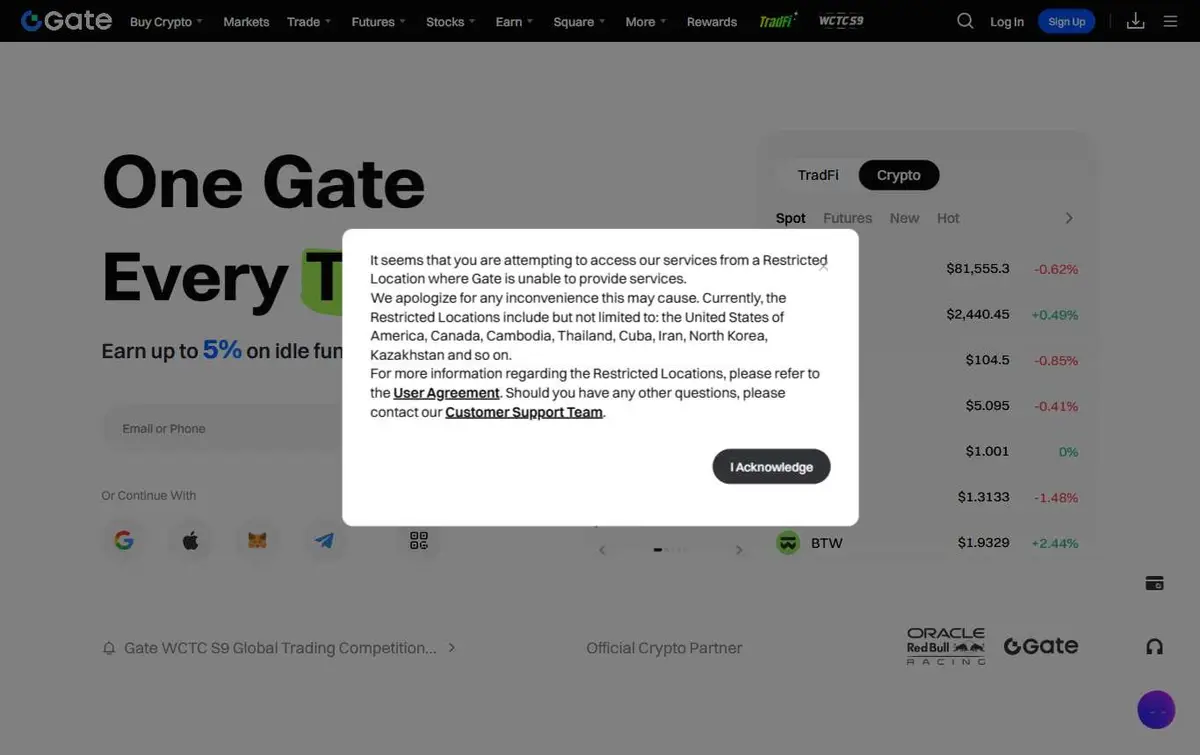
Blocked Gate · Home page
Thailand, on Gate's list, blocked by IP
“It seems that you are attempting to access our services from a Restricted Location where Gate is unable to provide services.”
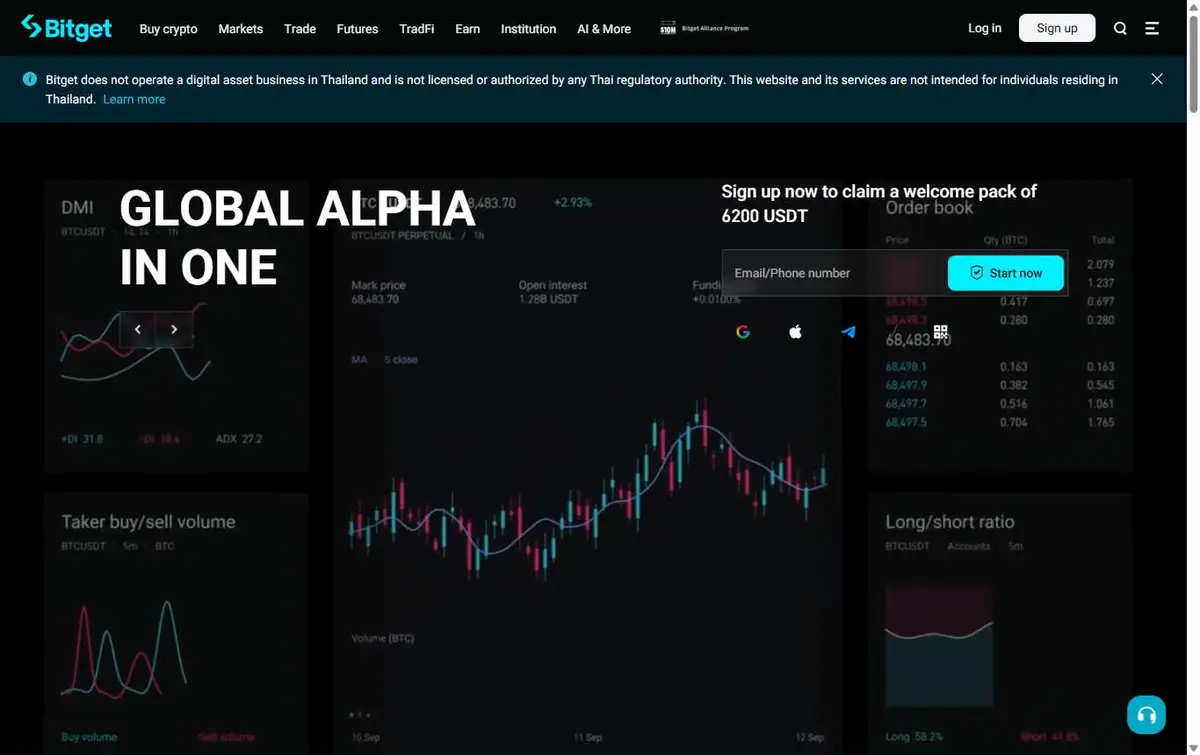
No barrier Bitget · Home page
Thailand, prohibited since September 2026, through a virtual location: no barrier
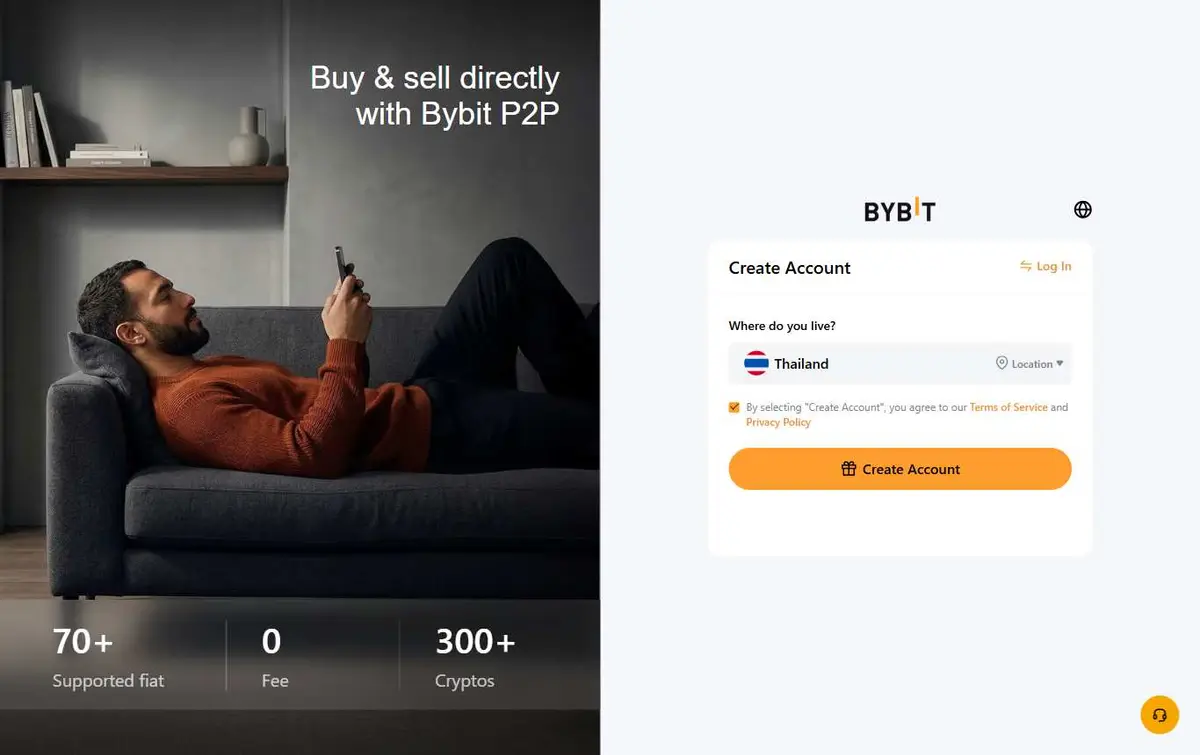
No barrier Bybit · Sign-up page
Blocked by Thai ISPs since June 2025; a virtual location cannot see that block
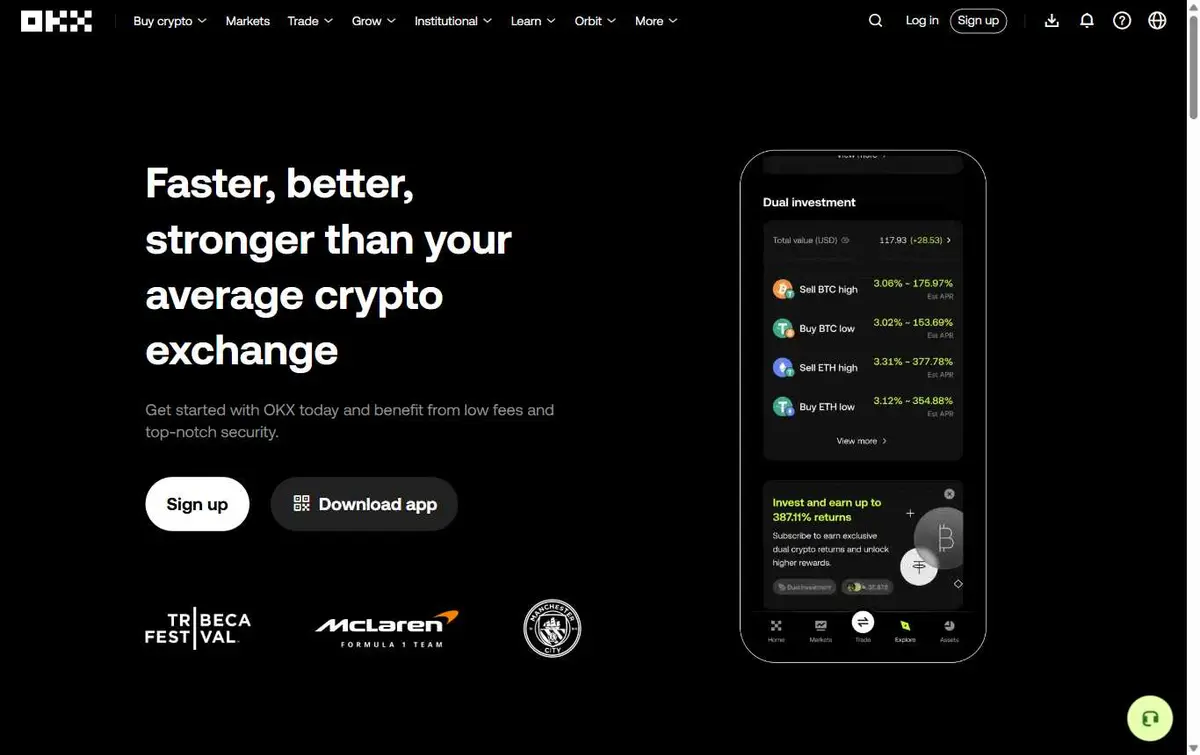
No barrier OKX · Home page
Blocked by Thai ISPs since June 2025; a virtual location cannot see that block
 CRYPTORESTRICTIONS
Who regulates crypto in Thailand?
The SEC licenses and supervises digital asset businesses, MDES blocks unlicensed sites, the police pursue gambling and crypto fraud, the Cabinet and Finance Ministry set tax relief, and the Bank of Thailand regulates the e-money side of payments.
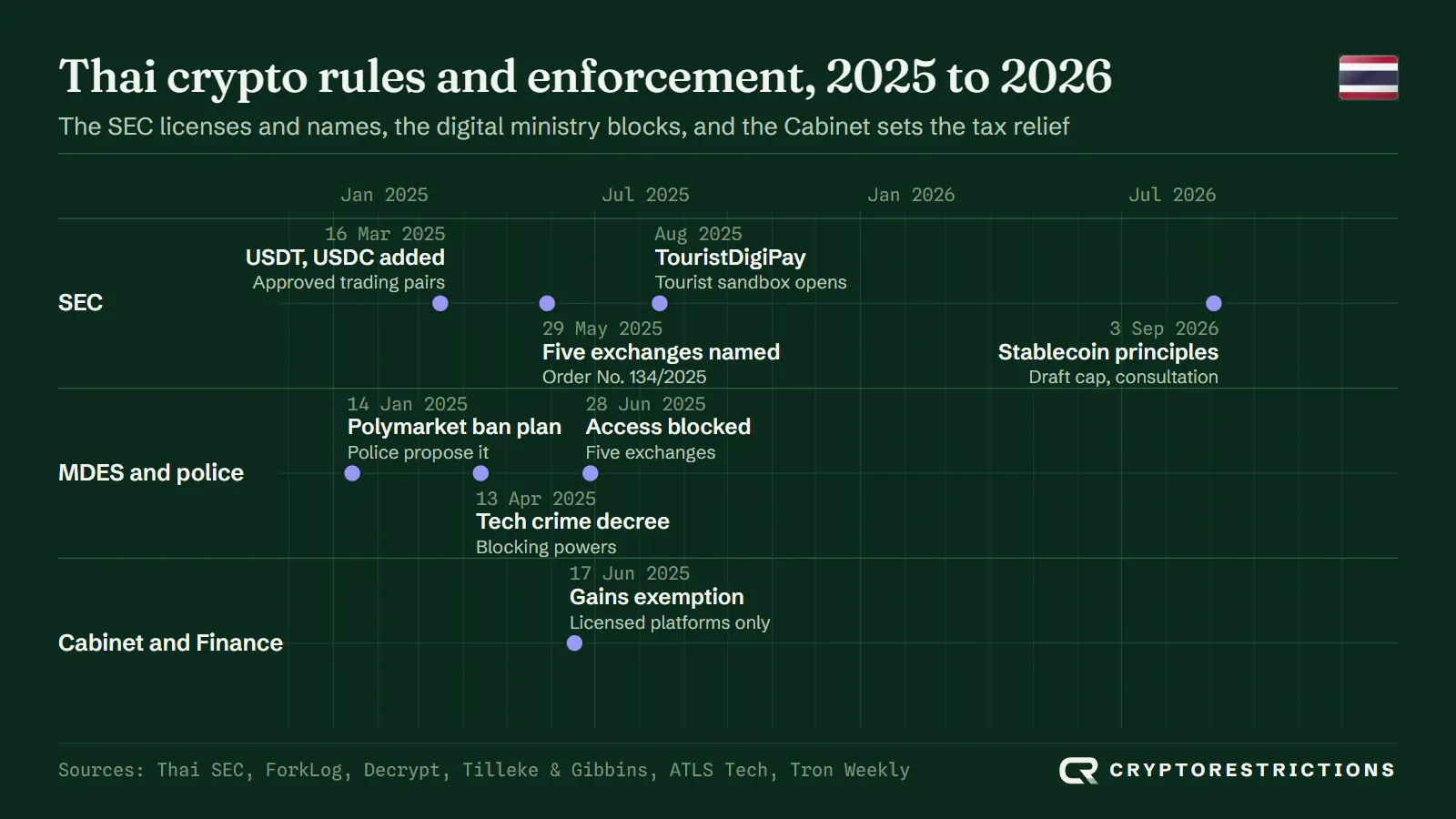
- SEC. Licenses exchanges, brokers and dealers under the 2018 digital asset business law and names unlicensed operators. It sets which cryptocurrencies licensed operators may use as trading pairs: from 16 March 2025, Bitcoin, Ether, XRP, Stellar, Tether and USD Coin.
- MDES. Blocks access to unauthorised platforms. ForkLog reports the legal basis as the technology crime decree in force from 13 April 2025.
- Police. The Cyber Crime Investigation Bureau said on 14 January 2025 it would propose blocking Polymarket (see the prediction markets section).
- Cabinet and Ministry of Finance. Approved the capital gains exemption on 17 June 2025 (see the tax section).
- Bank of Thailand. Regulates the e-money providers that hold tourists’ baht in the TouristDigiPay sandbox.
- Stablecoins. The SEC board adopted principles for tighter supervision on 3 September 2026, and a draft was open for comment from 11 to 25 September. It is not yet a rule.
Which crypto products are limited in Thailand?
Paying for goods and services with crypto is the closed use: the SEC has barred licensed operators from supporting it since 1 April 2022. Operators may also trade only approved cryptocurrencies against each other.
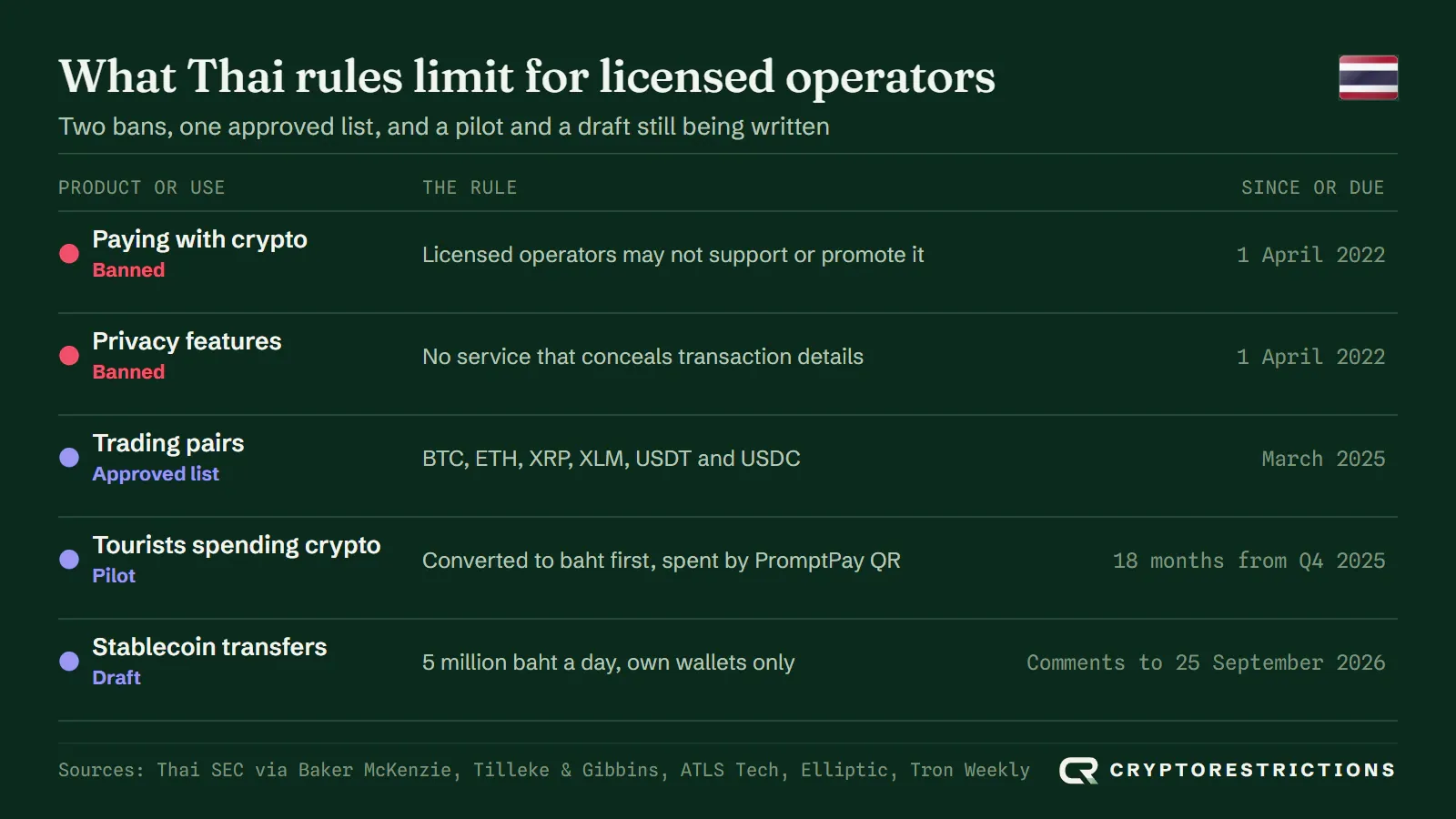
- Payments. The SEC announced the ban on 23 March 2022, in force from 1 April 2022. Operators must act against customers who use crypto to pay, but trading and investing stay allowed.
- Privacy. From the same date operators may not offer services that conceal transaction details.
- Tourists. The TouristDigiPay sandbox lets foreign visitors convert crypto to baht through a licensed operator and spend it by PromptPay QR from an e-money wallet, for 18 months. Merchants are paid in baht, spending is capped at 500,000 baht a month at verified merchants and 50,000 baht at small vendors, and cash withdrawals are blocked. It is not a way to pay merchants in crypto.
- Stablecoin transfers. The draft would cap inbound and outbound stablecoin transfers at 5 million baht a day and allow transfers only to and from wallets confirmed as the customer’s own.
- Derivatives. Elliptic reports that the Cabinet approved digital assets as underlying assets for derivatives, which opens the way to crypto futures on the Thailand Futures Exchange; the article does not date the step, so treat it as pending.
Are prediction markets legal in Thailand?
Not in practice. Thai police call crypto prediction markets illegal online gambling, and Polymarket, Kalshi and Aster all restrict Thailand in their own rules.
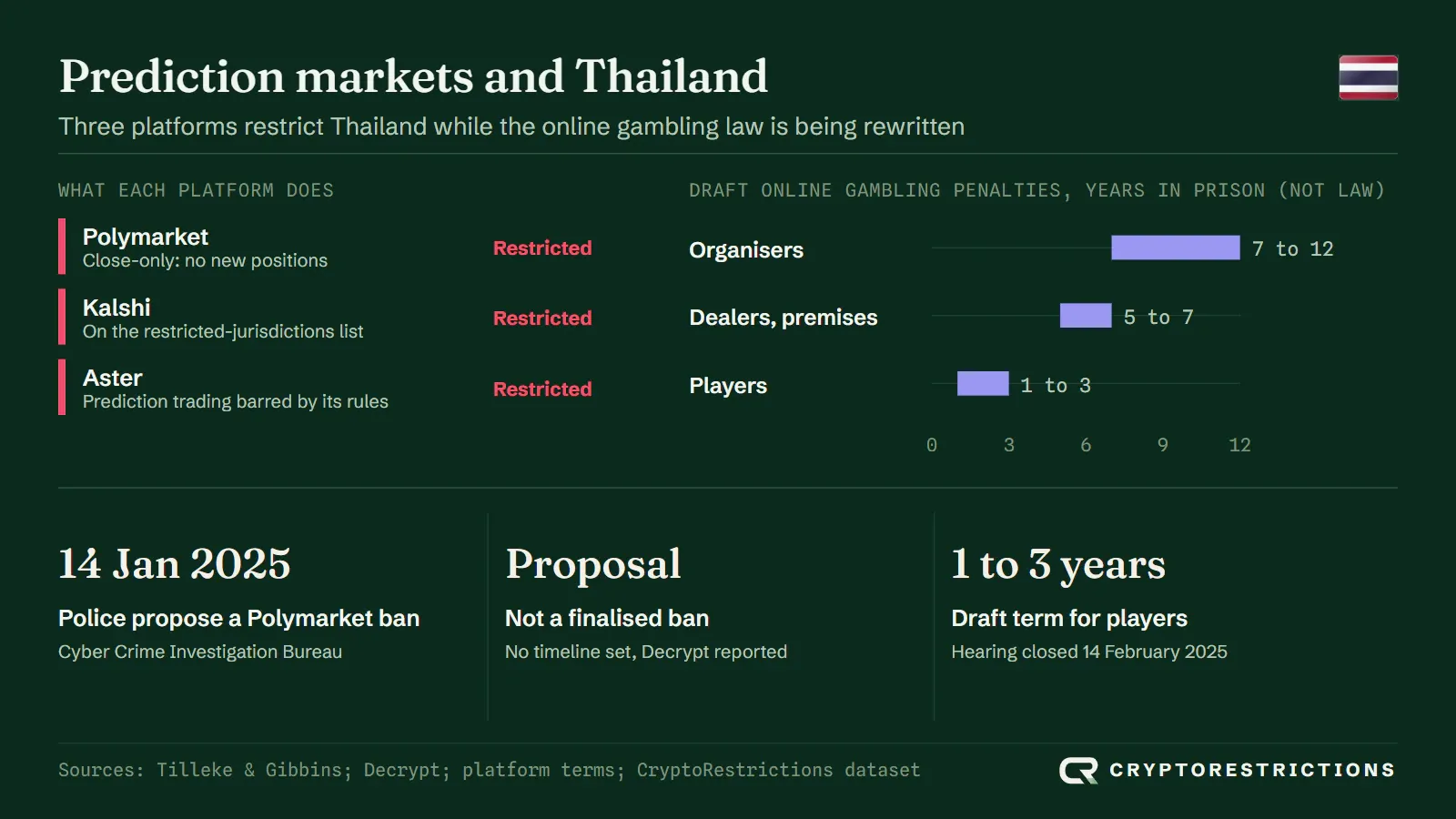
The Cyber Crime Investigation Bureau said on 14 January 2025 that it would propose banning Polymarket, because its crypto betting falls under illegal online gambling. Decrypt described that as a proposal with no timeline, and we found no later report of a formal ban. Polymarket now lists Thailand as close-only, Kalshi lists it among its restricted jurisdictions and Aster bars prediction trading under its prediction rules.


The Gambling Act of 1935 is the base law, and we could not read its text, so we state no penalty under it. A draft amendment put to public hearing until 14 February 2025 would ban organising or taking part in online gambling unless authorised, with 7 to 12 years in prison for organisers and 1 to 3 years for players. A draft is not law, and we found no report that it passed.
How is crypto taxed in Thailand?
Gains from selling crypto through SEC-licensed exchanges, brokers and dealers are exempt from personal income tax from 1 January 2025 to 31 December 2029. Outside licensed platforms, gains are assessable income with 15% withholding.
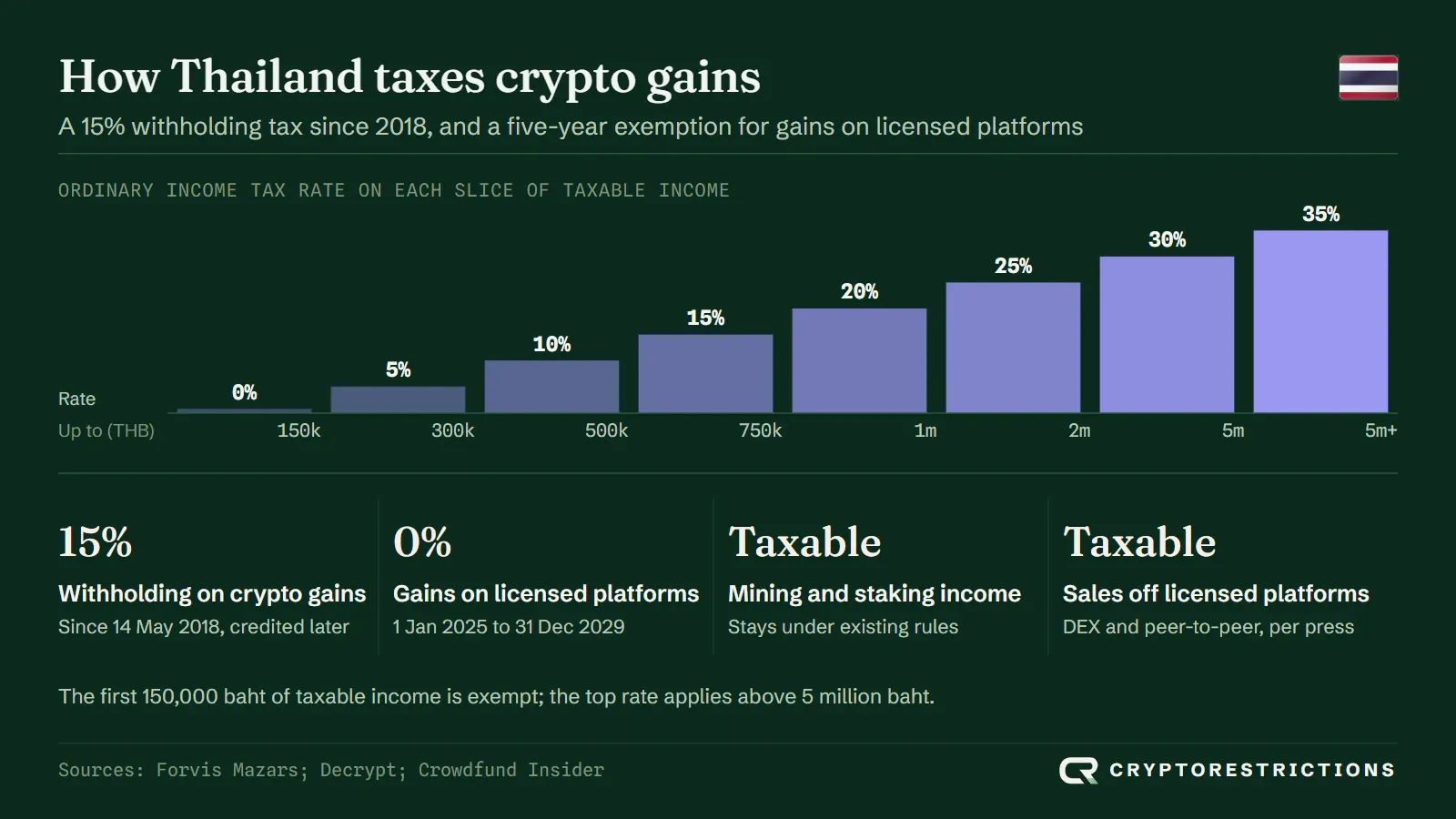
Royal Decree No. 19, published on 13 May 2018, made gains from transferring cryptocurrency or digital tokens assessable income and set a 15% withholding tax for resident and non-resident individuals. The tax withheld can be credited against the annual bill, which is taxed on the progressive bands in the chart above, from 5% above 150,000 baht to 35% above 5 million baht.
The Cabinet approved the exemption on 17 June 2025. It covers sales through licensed exchanges, brokers and dealers, and Crowdfund Insider reports that trades on unlicensed platforms, decentralised exchanges and peer-to-peer channels are not covered, and that mining and staking income stays taxable. The sources we read do not say how withholding is applied to exempt trades, and we read no Revenue Department page on it, so confirm the filing with the department. The sequence below follows what those sources state:


 Bahrain
 Georgia
 Qatar
 Israel
 Saudi Arabia
 Vietnam
 Pakistan
 Bangladesh
 Indonesia
 United Arab Emirates
 South Korea